




BeConfident vs. Cambridge Dictionary: which is the best?
BeConfident vs. Cambridge Dictionary: which is the best?
BeConfident vs. Cambridge Dictionary: which is the best?
to be
independent
to be
ready
to be
limitless
to be
empowered
to be
bold
to be
proud
to be
determinado
to be
fearless
to be
passionate
to be
inspired
When you want to unlock your English, the clearest path is to rely on tools that boost your presence and confidence. Cambridge Dictionary delivers world-renowned definitions and references, but learning with intention goes beyond the dictionary. At BeConfident, every step is designed to transform your English into practice with purpose.
When you want to unlock your English, the clearest path is to rely on tools that boost your presence and confidence. Cambridge Dictionary delivers world-renowned definitions and references, but learning with intention goes beyond the dictionary. At BeConfident, every step is designed to transform your English into practice with purpose.
BeConfident: advantages and disadvantages
BeConfident believes in your individual rhythm: you lead, and it guides you with AI-personalized activities and real community support. Virtual tutors bring diverse accents and are available 24/7, ensuring constant practice and real-time correction wherever you are, including on WhatsApp and smartwatches. As a concrete advantage, fluency is treated as a journey, celebrating every milestone and offering a free trial so you can experience it in practice before deciding.
As a disadvantage, the experience still depends on your digital connection and commitment to a routine, since progress is built with genuine autonomy. Because BeConfident doesn't focus on "perfect English," anyone looking for a rigid native standard might find the confident, human approach unusual. Even so, the commitment is to real transformation, respecting your time and unlocking the next level of confidence with every interaction.
Cambridge Dictionary: advantages and disadvantages
The Cambridge Dictionary is a global reference in clarity of definitions, featuring resources such as translations, audio-guides for British and American pronunciation, and vocabulary tailored for all levels of English. It facilitates quick and reliable searches, making it ideal for those seeking targeted reinforcement for exams like Cambridge and IELTS. Being free and offering quizzes and word lists supports self-study autonomy, making it one of the most trusted dictionaries in the world.
On the other hand, the Cambridge Dictionary is limited in customization: it does not identify your difficulties, nor does it track your pace or context. It lacks practical interaction – you look up words, but you do not practice with active correction or receive personalized feedback. The tool is great support, but the presence and evolution of your English depend entirely on other resources and your own study structure.
Which is the best?
If the goal is to develop fluency with confidence, presence, and real guidance, BeConfident delivers more value and connection to your journey. While the Cambridge Dictionary complements the understanding of words and offers academic support, BeConfident transforms knowledge into practice and tangible progress, always valuing your effort. This is how confidence is built: choose freedom, clarity, and an English that keeps up with your life – try it for free and unlock the next level.
BeConfident: advantages and disadvantages
BeConfident believes in your individual rhythm: you lead, and it guides you with AI-personalized activities and real community support. Virtual tutors bring diverse accents and are available 24/7, ensuring constant practice and real-time correction wherever you are, including on WhatsApp and smartwatches. As a concrete advantage, fluency is treated as a journey, celebrating every milestone and offering a free trial so you can experience it in practice before deciding.
As a disadvantage, the experience still depends on your digital connection and commitment to a routine, since progress is built with genuine autonomy. Because BeConfident doesn't focus on "perfect English," anyone looking for a rigid native standard might find the confident, human approach unusual. Even so, the commitment is to real transformation, respecting your time and unlocking the next level of confidence with every interaction.
Cambridge Dictionary: advantages and disadvantages
The Cambridge Dictionary is a global reference in clarity of definitions, featuring resources such as translations, audio-guides for British and American pronunciation, and vocabulary tailored for all levels of English. It facilitates quick and reliable searches, making it ideal for those seeking targeted reinforcement for exams like Cambridge and IELTS. Being free and offering quizzes and word lists supports self-study autonomy, making it one of the most trusted dictionaries in the world.
On the other hand, the Cambridge Dictionary is limited in customization: it does not identify your difficulties, nor does it track your pace or context. It lacks practical interaction – you look up words, but you do not practice with active correction or receive personalized feedback. The tool is great support, but the presence and evolution of your English depend entirely on other resources and your own study structure.
Which is the best?
If the goal is to develop fluency with confidence, presence, and real guidance, BeConfident delivers more value and connection to your journey. While the Cambridge Dictionary complements the understanding of words and offers academic support, BeConfident transforms knowledge into practice and tangible progress, always valuing your effort. This is how confidence is built: choose freedom, clarity, and an English that keeps up with your life – try it for free and unlock the next level.
BeConfident: advantages and disadvantages
BeConfident believes in your individual rhythm: you lead, and it guides you with AI-personalized activities and real community support. Virtual tutors bring diverse accents and are available 24/7, ensuring constant practice and real-time correction wherever you are, including on WhatsApp and smartwatches. As a concrete advantage, fluency is treated as a journey, celebrating every milestone and offering a free trial so you can experience it in practice before deciding.
As a disadvantage, the experience still depends on your digital connection and commitment to a routine, since progress is built with genuine autonomy. Because BeConfident doesn't focus on "perfect English," anyone looking for a rigid native standard might find the confident, human approach unusual. Even so, the commitment is to real transformation, respecting your time and unlocking the next level of confidence with every interaction.
Cambridge Dictionary: advantages and disadvantages
The Cambridge Dictionary is a global reference in clarity of definitions, featuring resources such as translations, audio-guides for British and American pronunciation, and vocabulary tailored for all levels of English. It facilitates quick and reliable searches, making it ideal for those seeking targeted reinforcement for exams like Cambridge and IELTS. Being free and offering quizzes and word lists supports self-study autonomy, making it one of the most trusted dictionaries in the world.
On the other hand, the Cambridge Dictionary is limited in customization: it does not identify your difficulties, nor does it track your pace or context. It lacks practical interaction – you look up words, but you do not practice with active correction or receive personalized feedback. The tool is great support, but the presence and evolution of your English depend entirely on other resources and your own study structure.
Which is the best?
If the goal is to develop fluency with confidence, presence, and real guidance, BeConfident delivers more value and connection to your journey. While the Cambridge Dictionary complements the understanding of words and offers academic support, BeConfident transforms knowledge into practice and tangible progress, always valuing your effort. This is how confidence is built: choose freedom, clarity, and an English that keeps up with your life – try it for free and unlock the next level.
BeConfident: advantages and disadvantages
BeConfident believes in your individual rhythm: you lead, and it guides you with AI-personalized activities and real community support. Virtual tutors bring diverse accents and are available 24/7, ensuring constant practice and real-time correction wherever you are, including on WhatsApp and smartwatches. As a concrete advantage, fluency is treated as a journey, celebrating every milestone and offering a free trial so you can experience it in practice before deciding.
As a disadvantage, the experience still depends on your digital connection and commitment to a routine, since progress is built with genuine autonomy. Because BeConfident doesn't focus on "perfect English," anyone looking for a rigid native standard might find the confident, human approach unusual. Even so, the commitment is to real transformation, respecting your time and unlocking the next level of confidence with every interaction.
Cambridge Dictionary: advantages and disadvantages
The Cambridge Dictionary is a global reference in clarity of definitions, featuring resources such as translations, audio-guides for British and American pronunciation, and vocabulary tailored for all levels of English. It facilitates quick and reliable searches, making it ideal for those seeking targeted reinforcement for exams like Cambridge and IELTS. Being free and offering quizzes and word lists supports self-study autonomy, making it one of the most trusted dictionaries in the world.
On the other hand, the Cambridge Dictionary is limited in customization: it does not identify your difficulties, nor does it track your pace or context. It lacks practical interaction – you look up words, but you do not practice with active correction or receive personalized feedback. The tool is great support, but the presence and evolution of your English depend entirely on other resources and your own study structure.
Which is the best?
If the goal is to develop fluency with confidence, presence, and real guidance, BeConfident delivers more value and connection to your journey. While the Cambridge Dictionary complements the understanding of words and offers academic support, BeConfident transforms knowledge into practice and tangible progress, always valuing your effort. This is how confidence is built: choose freedom, clarity, and an English that keeps up with your life – try it for free and unlock the next level.
BeConfident: advantages and disadvantages
BeConfident believes in your individual rhythm: you lead, and it guides you with AI-personalized activities and real community support. Virtual tutors bring diverse accents and are available 24/7, ensuring constant practice and real-time correction wherever you are, including on WhatsApp and smartwatches. As a concrete advantage, fluency is treated as a journey, celebrating every milestone and offering a free trial so you can experience it in practice before deciding.
As a disadvantage, the experience still depends on your digital connection and commitment to a routine, since progress is built with genuine autonomy. Because BeConfident doesn't focus on "perfect English," anyone looking for a rigid native standard might find the confident, human approach unusual. Even so, the commitment is to real transformation, respecting your time and unlocking the next level of confidence with every interaction.
Cambridge Dictionary: advantages and disadvantages
The Cambridge Dictionary is a global reference in clarity of definitions, featuring resources such as translations, audio-guides for British and American pronunciation, and vocabulary tailored for all levels of English. It facilitates quick and reliable searches, making it ideal for those seeking targeted reinforcement for exams like Cambridge and IELTS. Being free and offering quizzes and word lists supports self-study autonomy, making it one of the most trusted dictionaries in the world.
On the other hand, the Cambridge Dictionary is limited in customization: it does not identify your difficulties, nor does it track your pace or context. It lacks practical interaction – you look up words, but you do not practice with active correction or receive personalized feedback. The tool is great support, but the presence and evolution of your English depend entirely on other resources and your own study structure.
Which is the best?
If the goal is to develop fluency with confidence, presence, and real guidance, BeConfident delivers more value and connection to your journey. While the Cambridge Dictionary complements the understanding of words and offers academic support, BeConfident transforms knowledge into practice and tangible progress, always valuing your effort. This is how confidence is built: choose freedom, clarity, and an English that keeps up with your life – try it for free and unlock the next level.
BeConfident: advantages and disadvantages
BeConfident believes in your individual rhythm: you lead, and it guides you with AI-personalized activities and real community support. Virtual tutors bring diverse accents and are available 24/7, ensuring constant practice and real-time correction wherever you are, including on WhatsApp and smartwatches. As a concrete advantage, fluency is treated as a journey, celebrating every milestone and offering a free trial so you can experience it in practice before deciding.
As a disadvantage, the experience still depends on your digital connection and commitment to a routine, since progress is built with genuine autonomy. Because BeConfident doesn't focus on "perfect English," anyone looking for a rigid native standard might find the confident, human approach unusual. Even so, the commitment is to real transformation, respecting your time and unlocking the next level of confidence with every interaction.
Cambridge Dictionary: advantages and disadvantages
The Cambridge Dictionary is a global reference in clarity of definitions, featuring resources such as translations, audio-guides for British and American pronunciation, and vocabulary tailored for all levels of English. It facilitates quick and reliable searches, making it ideal for those seeking targeted reinforcement for exams like Cambridge and IELTS. Being free and offering quizzes and word lists supports self-study autonomy, making it one of the most trusted dictionaries in the world.
On the other hand, the Cambridge Dictionary is limited in customization: it does not identify your difficulties, nor does it track your pace or context. It lacks practical interaction – you look up words, but you do not practice with active correction or receive personalized feedback. The tool is great support, but the presence and evolution of your English depend entirely on other resources and your own study structure.
Which is the best?
If the goal is to develop fluency with confidence, presence, and real guidance, BeConfident delivers more value and connection to your journey. While the Cambridge Dictionary complements the understanding of words and offers academic support, BeConfident transforms knowledge into practice and tangible progress, always valuing your effort. This is how confidence is built: choose freedom, clarity, and an English that keeps up with your life – try it for free and unlock the next level.
BeConfident: advantages and disadvantages
BeConfident believes in your individual rhythm: you lead, and it guides you with AI-personalized activities and real community support. Virtual tutors bring diverse accents and are available 24/7, ensuring constant practice and real-time correction wherever you are, including on WhatsApp and smartwatches. As a concrete advantage, fluency is treated as a journey, celebrating every milestone and offering a free trial so you can experience it in practice before deciding.
As a disadvantage, the experience still depends on your digital connection and commitment to a routine, since progress is built with genuine autonomy. Because BeConfident doesn't focus on "perfect English," anyone looking for a rigid native standard might find the confident, human approach unusual. Even so, the commitment is to real transformation, respecting your time and unlocking the next level of confidence with every interaction.
Cambridge Dictionary: advantages and disadvantages
The Cambridge Dictionary is a global reference in clarity of definitions, featuring resources such as translations, audio-guides for British and American pronunciation, and vocabulary tailored for all levels of English. It facilitates quick and reliable searches, making it ideal for those seeking targeted reinforcement for exams like Cambridge and IELTS. Being free and offering quizzes and word lists supports self-study autonomy, making it one of the most trusted dictionaries in the world.
On the other hand, the Cambridge Dictionary is limited in customization: it does not identify your difficulties, nor does it track your pace or context. It lacks practical interaction – you look up words, but you do not practice with active correction or receive personalized feedback. The tool is great support, but the presence and evolution of your English depend entirely on other resources and your own study structure.
Which is the best?
If the goal is to develop fluency with confidence, presence, and real guidance, BeConfident delivers more value and connection to your journey. While the Cambridge Dictionary complements the understanding of words and offers academic support, BeConfident transforms knowledge into practice and tangible progress, always valuing your effort. This is how confidence is built: choose freedom, clarity, and an English that keeps up with your life – try it for free and unlock the next level.
BeConfident: advantages and disadvantages
BeConfident believes in your individual rhythm: you lead, and it guides you with AI-personalized activities and real community support. Virtual tutors bring diverse accents and are available 24/7, ensuring constant practice and real-time correction wherever you are, including on WhatsApp and smartwatches. As a concrete advantage, fluency is treated as a journey, celebrating every milestone and offering a free trial so you can experience it in practice before deciding.
As a disadvantage, the experience still depends on your digital connection and commitment to a routine, since progress is built with genuine autonomy. Because BeConfident doesn't focus on "perfect English," anyone looking for a rigid native standard might find the confident, human approach unusual. Even so, the commitment is to real transformation, respecting your time and unlocking the next level of confidence with every interaction.
Cambridge Dictionary: advantages and disadvantages
The Cambridge Dictionary is a global reference in clarity of definitions, featuring resources such as translations, audio-guides for British and American pronunciation, and vocabulary tailored for all levels of English. It facilitates quick and reliable searches, making it ideal for those seeking targeted reinforcement for exams like Cambridge and IELTS. Being free and offering quizzes and word lists supports self-study autonomy, making it one of the most trusted dictionaries in the world.
On the other hand, the Cambridge Dictionary is limited in customization: it does not identify your difficulties, nor does it track your pace or context. It lacks practical interaction – you look up words, but you do not practice with active correction or receive personalized feedback. The tool is great support, but the presence and evolution of your English depend entirely on other resources and your own study structure.
Which is the best?
If the goal is to develop fluency with confidence, presence, and real guidance, BeConfident delivers more value and connection to your journey. While the Cambridge Dictionary complements the understanding of words and offers academic support, BeConfident transforms knowledge into practice and tangible progress, always valuing your effort. This is how confidence is built: choose freedom, clarity, and an English that keeps up with your life – try it for free and unlock the next level.
BeConfident: advantages and disadvantages
BeConfident believes in your individual rhythm: you lead, and it guides you with AI-personalized activities and real community support. Virtual tutors bring diverse accents and are available 24/7, ensuring constant practice and real-time correction wherever you are, including on WhatsApp and smartwatches. As a concrete advantage, fluency is treated as a journey, celebrating every milestone and offering a free trial so you can experience it in practice before deciding.
As a disadvantage, the experience still depends on your digital connection and commitment to a routine, since progress is built with genuine autonomy. Because BeConfident doesn't focus on "perfect English," anyone looking for a rigid native standard might find the confident, human approach unusual. Even so, the commitment is to real transformation, respecting your time and unlocking the next level of confidence with every interaction.
Cambridge Dictionary: advantages and disadvantages
The Cambridge Dictionary is a global reference in clarity of definitions, featuring resources such as translations, audio-guides for British and American pronunciation, and vocabulary tailored for all levels of English. It facilitates quick and reliable searches, making it ideal for those seeking targeted reinforcement for exams like Cambridge and IELTS. Being free and offering quizzes and word lists supports self-study autonomy, making it one of the most trusted dictionaries in the world.
On the other hand, the Cambridge Dictionary is limited in customization: it does not identify your difficulties, nor does it track your pace or context. It lacks practical interaction – you look up words, but you do not practice with active correction or receive personalized feedback. The tool is great support, but the presence and evolution of your English depend entirely on other resources and your own study structure.
Which is the best?
If the goal is to develop fluency with confidence, presence, and real guidance, BeConfident delivers more value and connection to your journey. While the Cambridge Dictionary complements the understanding of words and offers academic support, BeConfident transforms knowledge into practice and tangible progress, always valuing your effort. This is how confidence is built: choose freedom, clarity, and an English that keeps up with your life – try it for free and unlock the next level.
BeConfident: advantages and disadvantages
BeConfident believes in your individual rhythm: you lead, and it guides you with AI-personalized activities and real community support. Virtual tutors bring diverse accents and are available 24/7, ensuring constant practice and real-time correction wherever you are, including on WhatsApp and smartwatches. As a concrete advantage, fluency is treated as a journey, celebrating every milestone and offering a free trial so you can experience it in practice before deciding.
As a disadvantage, the experience still depends on your digital connection and commitment to a routine, since progress is built with genuine autonomy. Because BeConfident doesn't focus on "perfect English," anyone looking for a rigid native standard might find the confident, human approach unusual. Even so, the commitment is to real transformation, respecting your time and unlocking the next level of confidence with every interaction.
Cambridge Dictionary: advantages and disadvantages
The Cambridge Dictionary is a global reference in clarity of definitions, featuring resources such as translations, audio-guides for British and American pronunciation, and vocabulary tailored for all levels of English. It facilitates quick and reliable searches, making it ideal for those seeking targeted reinforcement for exams like Cambridge and IELTS. Being free and offering quizzes and word lists supports self-study autonomy, making it one of the most trusted dictionaries in the world.
On the other hand, the Cambridge Dictionary is limited in customization: it does not identify your difficulties, nor does it track your pace or context. It lacks practical interaction – you look up words, but you do not practice with active correction or receive personalized feedback. The tool is great support, but the presence and evolution of your English depend entirely on other resources and your own study structure.
Which is the best?
If the goal is to develop fluency with confidence, presence, and real guidance, BeConfident delivers more value and connection to your journey. While the Cambridge Dictionary complements the understanding of words and offers academic support, BeConfident transforms knowledge into practice and tangible progress, always valuing your effort. This is how confidence is built: choose freedom, clarity, and an English that keeps up with your life – try it for free and unlock the next level.
BeConfident: advantages and disadvantages
BeConfident believes in your individual rhythm: you lead, and it guides you with AI-personalized activities and real community support. Virtual tutors bring diverse accents and are available 24/7, ensuring constant practice and real-time correction wherever you are, including on WhatsApp and smartwatches. As a concrete advantage, fluency is treated as a journey, celebrating every milestone and offering a free trial so you can experience it in practice before deciding.
As a disadvantage, the experience still depends on your digital connection and commitment to a routine, since progress is built with genuine autonomy. Because BeConfident doesn't focus on "perfect English," anyone looking for a rigid native standard might find the confident, human approach unusual. Even so, the commitment is to real transformation, respecting your time and unlocking the next level of confidence with every interaction.
Cambridge Dictionary: advantages and disadvantages
The Cambridge Dictionary is a global reference in clarity of definitions, featuring resources such as translations, audio-guides for British and American pronunciation, and vocabulary tailored for all levels of English. It facilitates quick and reliable searches, making it ideal for those seeking targeted reinforcement for exams like Cambridge and IELTS. Being free and offering quizzes and word lists supports self-study autonomy, making it one of the most trusted dictionaries in the world.
On the other hand, the Cambridge Dictionary is limited in customization: it does not identify your difficulties, nor does it track your pace or context. It lacks practical interaction – you look up words, but you do not practice with active correction or receive personalized feedback. The tool is great support, but the presence and evolution of your English depend entirely on other resources and your own study structure.
Which is the best?
If the goal is to develop fluency with confidence, presence, and real guidance, BeConfident delivers more value and connection to your journey. While the Cambridge Dictionary complements the understanding of words and offers academic support, BeConfident transforms knowledge into practice and tangible progress, always valuing your effort. This is how confidence is built: choose freedom, clarity, and an English that keeps up with your life – try it for free and unlock the next level.
BeConfident: advantages and disadvantages
BeConfident believes in your individual rhythm: you lead, and it guides you with AI-personalized activities and real community support. Virtual tutors bring diverse accents and are available 24/7, ensuring constant practice and real-time correction wherever you are, including on WhatsApp and smartwatches. As a concrete advantage, fluency is treated as a journey, celebrating every milestone and offering a free trial so you can experience it in practice before deciding.
As a disadvantage, the experience still depends on your digital connection and commitment to a routine, since progress is built with genuine autonomy. Because BeConfident doesn't focus on "perfect English," anyone looking for a rigid native standard might find the confident, human approach unusual. Even so, the commitment is to real transformation, respecting your time and unlocking the next level of confidence with every interaction.
Cambridge Dictionary: advantages and disadvantages
The Cambridge Dictionary is a global reference in clarity of definitions, featuring resources such as translations, audio-guides for British and American pronunciation, and vocabulary tailored for all levels of English. It facilitates quick and reliable searches, making it ideal for those seeking targeted reinforcement for exams like Cambridge and IELTS. Being free and offering quizzes and word lists supports self-study autonomy, making it one of the most trusted dictionaries in the world.
On the other hand, the Cambridge Dictionary is limited in customization: it does not identify your difficulties, nor does it track your pace or context. It lacks practical interaction – you look up words, but you do not practice with active correction or receive personalized feedback. The tool is great support, but the presence and evolution of your English depend entirely on other resources and your own study structure.
Which is the best?
If the goal is to develop fluency with confidence, presence, and real guidance, BeConfident delivers more value and connection to your journey. While the Cambridge Dictionary complements the understanding of words and offers academic support, BeConfident transforms knowledge into practice and tangible progress, always valuing your effort. This is how confidence is built: choose freedom, clarity, and an English that keeps up with your life – try it for free and unlock the next level.
Conclusion
Conclusion
The decision goes beyond the meaning of words: it's about transforming English into experience and presence. At BeConfident, every step reflects your purpose to learn and practice with clarity, welcoming, and constant evolution. Go beyond the dictionary, move forward with confidence, and lead your journey to the next level of fluency.
The decision goes beyond the meaning of words: it's about transforming English into experience and presence. At BeConfident, every step reflects your purpose to learn and practice with clarity, welcoming, and constant evolution. Go beyond the dictionary, move forward with confidence, and lead your journey to the next level of fluency.
Reconhecido por:
Reconhecido por:

Pilares
Pilares
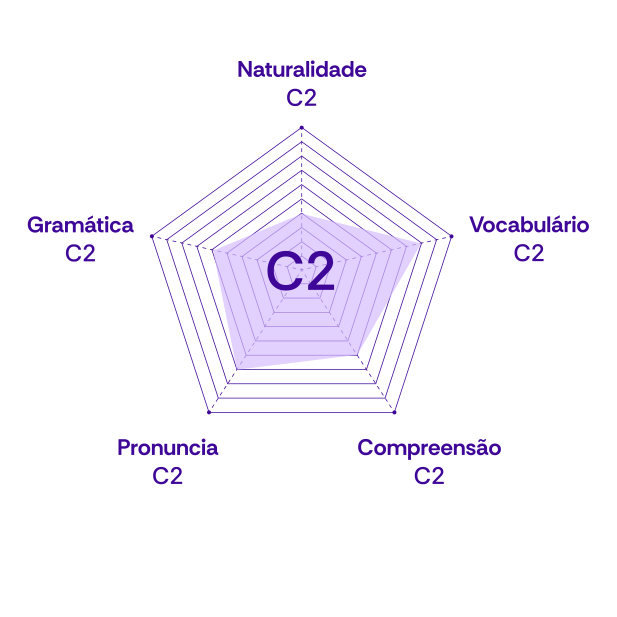
Naturalidade
__________________________________
Only constant practice will help you unlock your English and start speaking more naturally without having to "stop and think."
__________________________________
Gramática
I know it seems like a daunting task, but the secret is knowing how to use grammar in practice to build sentences…
and even if you make a mistake, receiving immediate feedback is the best way for you to understand what you got wrong and adjust
Pronúncia
__________________________________
Native speakers connect the sounds of one word with another when they are speaking… and from listening so much, you will start to reproduce the same sounds, especially when they correct you and show you the right pronunciation.
Vocabulário
__________________________________
Hearing new expressions and words being used in different contexts helps you memorize them better and know how to use them in other situations.
Compreensão
__________________________________
The more times you listen to native speakers talking, the better your
ability will be to understand English
regardless of the accent or
the speed.
Naturalidade
__________________________________
Only constant practice will help you unlock your English and start speaking more naturally without having to "stop and think."
__________________________________
Gramática
I know it seems like a daunting task, but the secret is knowing how to use grammar in practice to build sentences…
and even if you make a mistake, receiving immediate feedback is the best way for you to understand what you got wrong and adjust
Pronúncia
__________________________________
Native speakers connect the sounds of one word with another when they are speaking… and from listening so much, you will start to reproduce the same sounds, especially when they correct you and show you the right pronunciation.
Vocabulário
__________________________________
Hearing new expressions and words being used in different contexts helps you memorize them better and know how to use them in other situations.
Compreensão
__________________________________
The more times you listen to native speakers talking, the better your
ability will be to understand English
regardless of the accent or
the speed.
Why choose BeConfident
and not other solutions?
Why choose
BeConfident and not
other solutions?
Learning Method
Learning Method
Time Required per day
Time Required per day
Personalized feedback
Personalized feedback
Answer English questions
Answer English questions
Language Immersion
Language Immersion
Traditional English methods
Traditional English methods
Theoretical classes focused on grammar
Theoretical classes focused on grammar
1h to 2h
1h to 2h
Only a short feedback at the end of the class
Only a short feedback at the end of the class
Limited to class time
Limited to class time
Much theory, little practice
Much theory, little practice
English apps
English apps
Flashcards and Repetitive Quizzes
Flashcards and Repetitive Quizzes
10 to 30 minutes
10 to 30 minutes
There is no personalized feedback
There is no personalized feedback
They don't offer that
They don't offer that
No real conversational context
No real conversational context
Real conversation with Artificial Intelligence simulating everyday life
Real conversation with Artificial Intelligence simulating
daily life
20 minutes
20 minutes
Immediate correction for every sentence
Immediate correction for every sentence
24 hours a day
24 hours a day
Interactive practice focused on the situations you need
Interactive practice focused on the situations you need
Método de Aprendizado
Tempo necessário por aula
Feedback personalizado
Tirar dúvidas
Imersão no idioma
Métodos tradicionais
de inglês
Aulas teóricas
em gramática
1h a 2h
Somente feedback curto no
final da aula
Limitadas ao tempo da aula
Muita teoria, pouca prática
Apps de inglês
Flashcard e Quizzes repetitivos
10 a 30 minutos
Não tem feedback
personalizado
Não oferecem isso
Sem contexto real de conversação
Conversação real com Inteligência Artificial
20 minutos
Correção imediata a cada frase
24 horas
por dia
P´rática interativa focada nas situações que você precisa
+ 80,000 people are unlocking
their English with BeConfident
+ 80,000 people are
unlocking English
with BeConfident
Start Practicing
Ivano
Italy, IT
Mithidieri
Brazil, BR
Helliton
Brazil, BR
Start practicing
First and only artificial
Brazilian intelligence awarded
at Harvard for innovation
In 2024, BeConfident was awarded at Harvard for being the most innovative Brazilian startup
of the year, competing with over 350
companies and winning first place.




Voted by Reclame Aqui as the best
language course in Brazil in 2024
Voted by Reclame Aqui as the best
language course in Brazil in 2024
Voted by Reclame Aqui
as the best language
course in Brazil in 2024

Recognized by the national media
Recognized by the national media






Try for Free
Try for Free
Discover your English level and receive a study plan right now!
Take advantage of it before this opportunity goes offline.
Discover your English level and receive a study plan right now!
Take advantage of it before this opportunity goes offline.
Discover your English level and
receive a study plan right now.
Take advantage of this before this opportunity is gone!
Start Practicing
CNPJ: 28.705.111/0001-12 | BECONFIDENT INTELIGÊNCIA ARTIFICIAL EM IDIOMAS LTDA. Avenida Paulista, 1636 – Suite 1504 – Cerqueira César Neighborhood, São Paulo/SP – CEP 01310-200.
CNPJ: 28.705.111/0001-12 | BECONFIDENT INTELIGÊNCIA ARTIFICIAL EM IDIOMAS LTDA. Avenida Paulista, 1636 – Suite 1504 – Cerqueira César Neighborhood, São Paulo/SP – CEP 01310-200.
CNPJ: 28.705.111/0001-12 | BECONFIDENT INTELIGÊNCIA ARTIFICIAL EM IDIOMAS LTDA. Avenida Paulista, 1636 – Suite 1504 – Cerqueira César Neighborhood, São Paulo/SP – CEP 01310-200.
Start practicing