




English slang: 50 widely used expressions in 2026
English slang: 50 widely used expressions in 2026
English slang: 50 widely used expressions in 2026
Written by: Luan Cavallaro, Founder & CMO, BeConfident
Key takeaways from this article
Slang represents a large part of casual conversations in English and helps you sound natural in real-life situations.
Slang changes quickly on social media like TikTok, with terms like "rizz", "slay", and "delulu" present in daily interactions.
Using slang in formal contexts requires caution, as do regional differences, such as "pissed" (drunk in the UK, angry in the US).
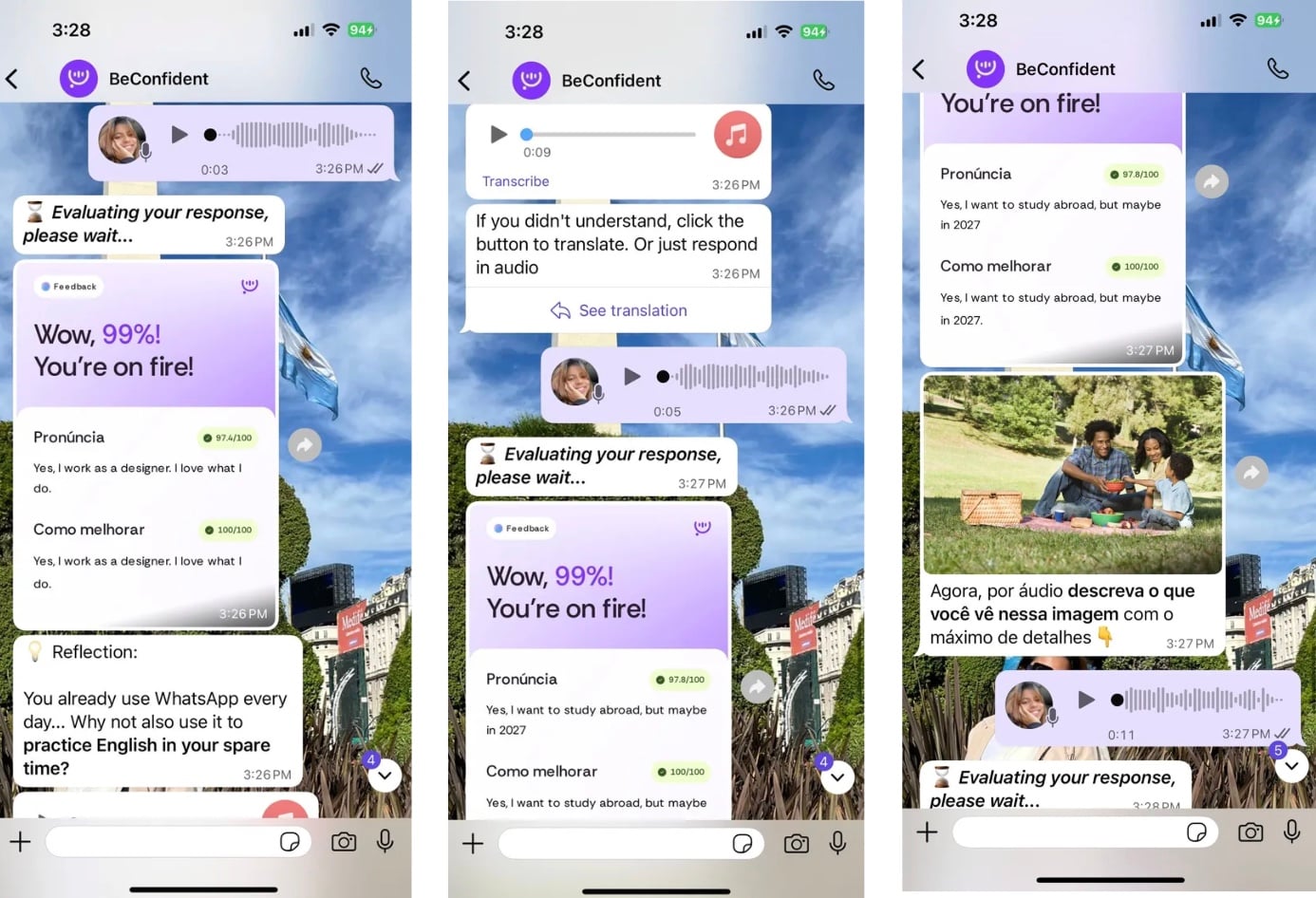
Constant practice with direct feedback makes it easier to use slang naturally, surpassing traditional methods and gamified-only apps.
With BeConfident, you can practice these 50 slang words 24/7 with AI tutors and native accents. Start your free trial and practice these 50 expressions today.
What is slang and why does it dominate conversations?
Slang consists of informal expressions that change rapidly, especially on social networks like TikTok, Instagram, and YouTube. Language evolves continuously online, with new phrases popping up with every scroll before they even make it into dictionaries.
Formal English taught in textbooks does not cover all everyday nuances. Slang fills specific gaps and builds emotional connection among speakers. Terms like "bet", "no cap", "rizz", and "slay" remain in use because they address clear communication needs.
Below, this list organizes 50 slang words into five practical groups, starting with everyday expressions that show up in almost any casual conversation.
50 English slang words widely used in conversation
Frequently used daily slang
These slang words appear in simple conversations about routines, plans, and quick comments. They form the foundation of informal English.
Slang | Meaning | Example translated to Portuguese | Pronunciation/Tip |
|---|---|---|---|
Dude | Cara, mano | "Hey dude, como vai?" | /duːd/, used as a casual greeting |
Chill | Relaxar, ficar de boa | "Vamos só chill hoje à noite" | /tʃɪl/, functions as a verb and adjective |
Epic | Incrível, marcante | "Aquele filme foi epic!" | /ˈepɪk/, highlights something impressive |
Basic | Sem graça, comum | "Essa festa tá muito basic" | /ˈbeɪsɪk/, subtle criticism |
Extra | Exagerado, dramático | "Não precisa ser tão extra!" | /ˈekstrə/, showy behavior |
Bestie | Melhor amigo(a) | "Minha bestie e eu vamos tomar café" | /ˈbesti/, affectionate tone |
You do you | Faça o que é melhor para você | "Vai mudar de curso? You do you" | Full phrase, sign of support for individuality |
All the feels | Todos os sentimentos | "Essa música me dá all the feels" | Expression of intense emotion |
Lowkey | Meio que, discretamente | "Tô lowkey animado para as provas" | /ˈloʊki/, subtle admission |
Bet | Concordo, pode crer | "Quer vir aqui?" "You bet!" | /bet/, quick confirmation |
Using these daily slang words with confidence helps unlock simple conversations in English. Start your free trial and practice these 10 expressions today.
Slang for gossip and social interaction
After mastering everyday vocabulary, the next step is talking about people, relationships, and social situations. These slang words appear in group chats, messages, and comments about behavior.
Slang | Meaning | Example translated to Portuguese | Pronunciation/Tip |
|---|---|---|---|
Spill the tea | Contar a fofoca | "Spill the tea, sis. O que ele disse?" | Full phrase to ask for details |
Tea | Fofoca, informação | "Sarah sempre tem o tea" | /tiː/, noun for gossip |
Sus | Suspeito, estranho | "Ele tá agindo muito sus ultimamente" | /sʌs/, short for suspicious |
Ghost | Sumir sem explicação | "Saímos e depois ele me ghosted" | /ɡoʊst/, cutting off communication |
Flex | Se exibir, ostentar | "Ele tá flexing com esses tênis" | /fleks/, showing something off proudly |
Simp | Pessoa desesperada por atenção | "Cara, você tá sendo um simp" | /sɪmp/, criticism of behavior |
Periodt | Ponto final, fim de papo | "Ele é o melhor dançarino, periodt" | /ˈpɪriət/, reinforces finality |
NGL | Não vou mentir | "Muita gente não gostou, mas NGL, eu amei" | Acronym for "not gonna lie" |
Canon event | Momento marcante da vida | "Se perder no primeiro dia foi um canon event" | An experience that shapes personal history |
Main character energy | Agir com confiança como protagonista | "Apresentar como TED Talk? Main character energy" | Confident attitude |
Internet slang and abbreviations
Internet slang appears in posts, comments, and chats. It helps you keep up with fast-paced conversations in digital spaces.
Slang | Meaning | Example translated to Portuguese | Pronunciation/Tip |
|---|---|---|---|
AF | Pra caramba | "O show estava lit AF!" | Intensifying acronym |
TL;DR | Muito longo, não li | "TL;DR: trabalho para sexta" | Summary of lengthy content |
GRWM | Se arrume comigo | "Indo para o jogo, GRWM!" | Get Ready With Me, used in vlogs |
IYKYK | Quem sabe, sabe | "Limonada do Toomer's é GOAT. IYKYK" | If You Know, You Know |
404 coded | Confuso, ausente | "Primeiro dia de aula e meu cérebro tá 404 coded" | Reference to an internet error |
Brain rot | Confusão mental por excesso de internet | "Três horas no TikTok = brain rot" | Effect of excessive consumption |
Touch grass | Sair de casa, conectar com realidade | "Você precisa touch grass" | Advice to log off the internet |
Aura farming | Tentar parecer legal online | "Postei foto com matcha e livro, aura farming" | Performative curation |
Chat | Pessoal, galera | "Chat, isso é real?" | Common term in streamer lives |
Ohio | Estranho, bizarro | "Essa situação tá muito Ohio" | Gen Alpha meme |
Current slang from 2026 for praising
Compliments in English go beyond "good" and "nice". These slang words show approval in a current and natural way.
Slang | Meaning | Example translated to Portuguese | Pronunciation/Tip |
|---|---|---|---|
Slay | Arrasar, mandar bem | "Você slayed na apresentação!" | /sleɪ/, praise for performance |
Bussin | Incrível, muito bom | "Esse burrito tá bussin!" | /ˈbʌsɪn/, widely used for food |
Fire | Incrível, demais | "Aquele tobogã é fire!" | /ˈfaɪər/, something impressive |
Lit | Incrível, animado | "O filme estava lit!" | /lɪt/, exciting atmosphere |
GOAT | O melhor de todos os tempos | "Meu técnico é o GOAT!" | Greatest Of All Time |
Drip | Estilo sofisticado | "Você tem drip com esses tênis novos" | /drɪp/, stylish appearance |
Serve/Serving | Entregar algo impressionante | "Você tá serving farmer's market com essa sacola" | Impressive performance or look |
Pop off | Fazer algo de forma excepcional | "Seu vídeo tem 1 milhão de views, pop off!" | Celebrating success |
Based | Autêntico, confiante | "Trouxe seus próprios snacks pro cinema? Based" | Being genuine |
Rich in life | Rico em experiências | "Rich in life porque valorizo as pequenas coisas" | Focus on non-material wealth |
Specific slang for 2026
These slang words reflect current trends in 2026 and frequently appear in content from young people and Gen Z/Alpha.
Slang | Meaning | Example translated to Portuguese | Pronunciation/Tip |
|---|---|---|---|
Rizz | Charme, carisma | "Ele tem muito rizz" | /rɪz/, seduction skill |
Delulu | Iludido, sonhador | "Ela tá delulu se acha que vai terminar em 10 min" | From "delusional", unrealistic hope |
Crashing out | Ter um colapso emocional | "Estudei a noite toda e crashed out depois da prova" | Sudden burnout |
Unc | Tio, pessoa mais velha | "Não consegui repostar no TikTok, me sinto unc" | Affectionate or teasing tone |
We ball | Seguir em frente | "Projeto em grupo deu errado, mas we ball" | Persisting despite challenges |
Secure the bag | Conquistar sucesso ou dinheiro | "Ela tá securing the bag esse semestre" | Achieving goals |
Grindset | Mentalidade de trabalho duro | "Acorda às 5h para estudar, grindset energy" | Focus on self-discipline |
Chopped | Não atender expectativas | "Essa playlist tá chopped, vibes confusas" | Disappointing outcome |
Mog | Superar fisicamente | "Ele mogged todo mundo na academia" | Standing out physically |
Skibidi | Absurdo, sem sentido | "Essa situação tá muito skibidi" | Gen Alpha meme |
Mastering these current slang words helps you understand 2026 references and join conversations with younger native speakers. Try it for free with native AI tutors.
Differences between American and British slang
Slang becomes globalized through the internet, but regional differences remain strong. In the UK, "bloke" replaces "dude" when referring to a man, and "mate" works as the equivalent of "buddy" or "pal".
Some terms change meaning depending on the country. "Pissed" means drunk in the UK, while in the United States, it indicates anger. "Chuffed" (very happy) and "gutted" (disappointed) appear more in British English and hardly ever surface in American English.
How to apply slang in real practice for fluency
Applying slang in real-life situations requires combining multiple expressions in the same conversation. Here are three scenarios where this happens naturally.
At the airport: "Dude, this flight delay is sus. The gate agent said 'technical issues' but won't spill the tea about what's actually happening." Here, "dude" creates a casual tone, "sus" shows suspicion, and "spill the tea" asks for more information.
Happy hour with colleagues: "That presentation today was fire! Sarah totally slayed it. No cap, she deserves that promotion." In this case, "fire" and "slayed" reinforce the praise, while "no cap" emphasizes sincerity in an informal professional context.
Commenting on a series: "This show is bussin! The plot twist in episode 5 was a total canon event for the main character." Here, "bussin" expresses strong approval, and "canon event" describes a turning point in the story.
These examples show that fluency in slang depends on context, combining terms, and guided repetition. BeConfident offers unlimited 24/7 conversation with AI tutors that adapt to each student's level and interests, allowing you to practice these combinations in various scenarios.
Why is BeConfident the best for practicing slang?
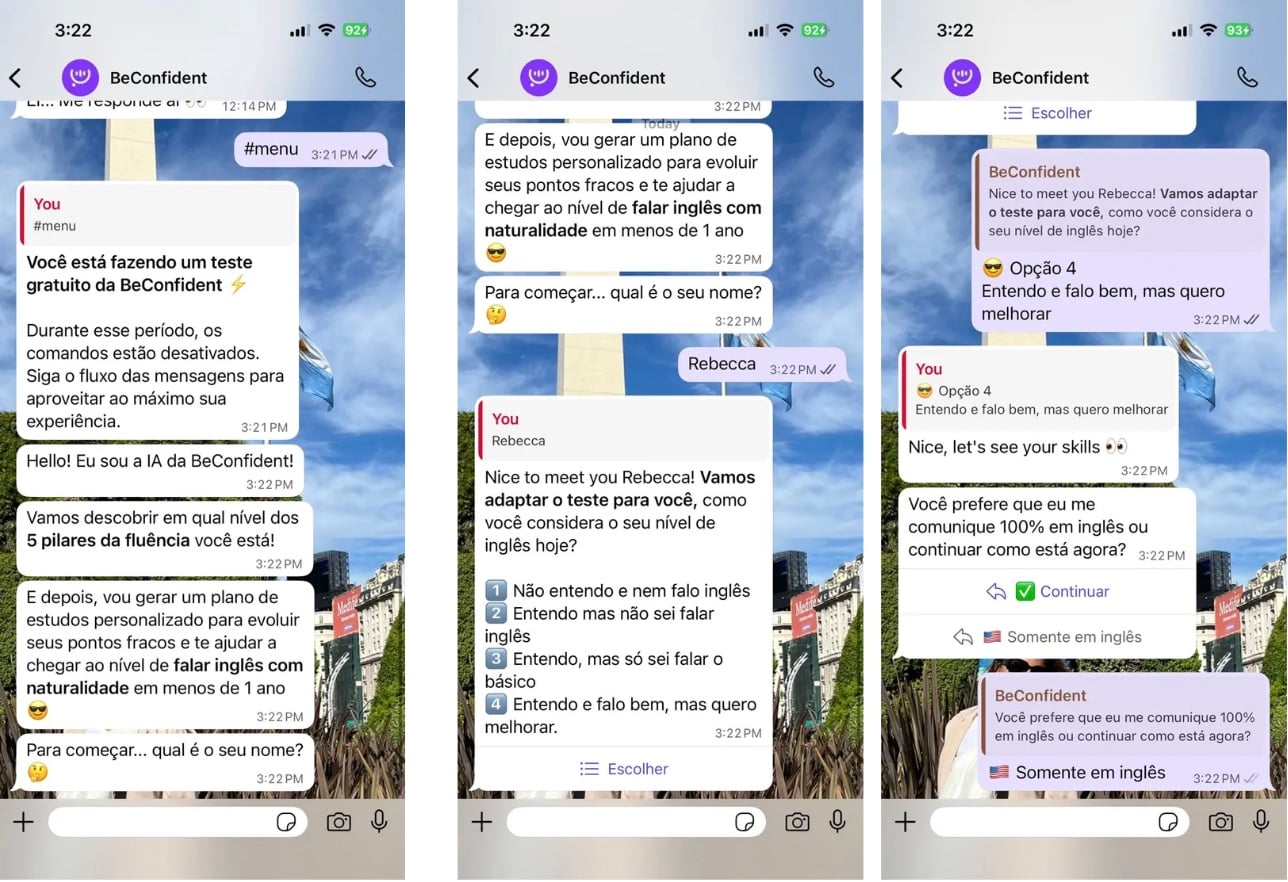
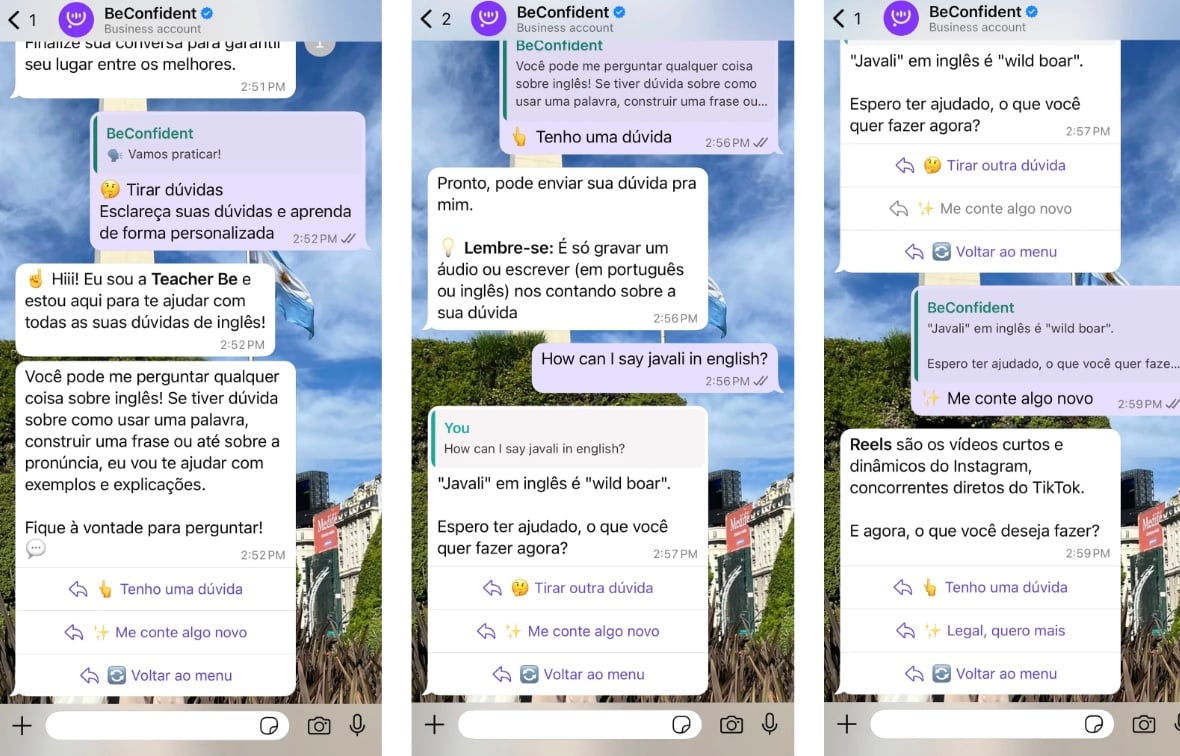
BeConfident uses personalized artificial intelligence to make learning slang feel closer to real conversation. Chosen by millions of users, the platform solves three common challenges faced by those trying to learn slang alone.
Exposure to native accents: it is necessary to hear slang in real voices. The AI tutors reproduce American, British, Australian variations and other accents.
Constant practice in context: slang only sticks with frequent use. 24/7 conversation allows you to test expressions without feeling self-conscious.
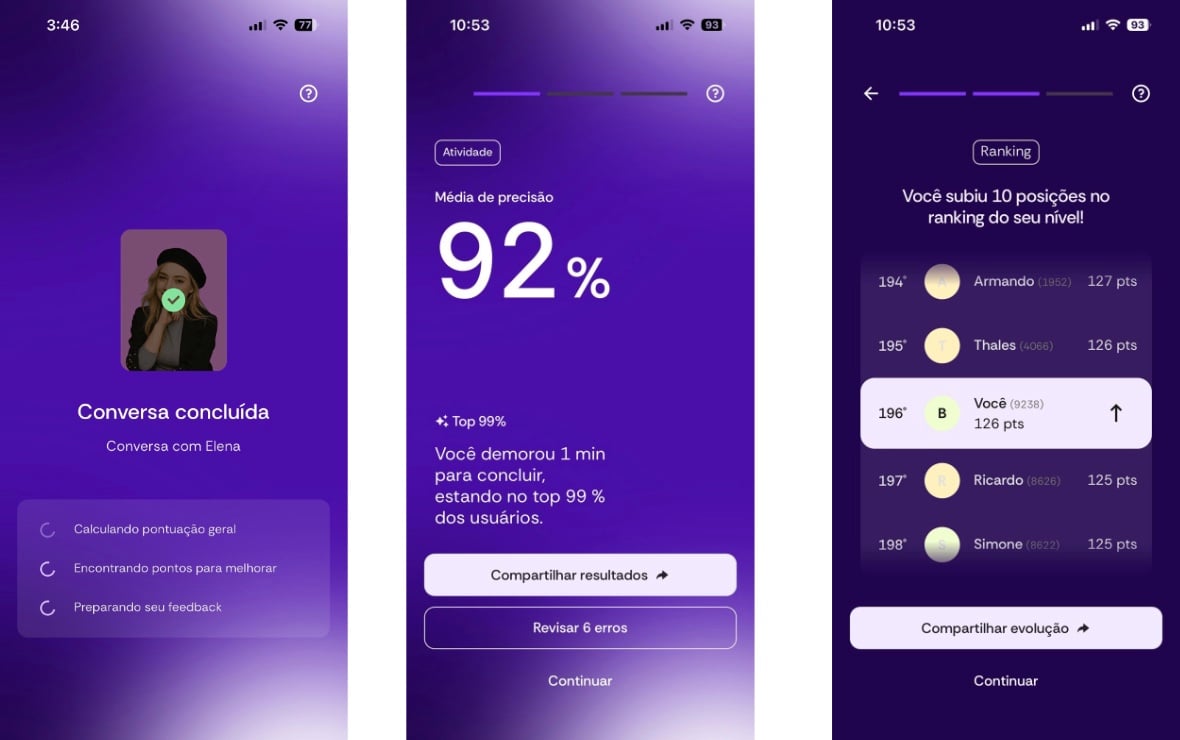
Proper usage without sounding forced: instant feedback corrects pronunciation and context on the spot, preventing embarrassing mistakes.
Personalized learning tracks: each student can focus on the slang most relevant to their personal or professional goals.
Instead of paying a high price for traditional methods with limited hours, BeConfident offers unlimited access for a fraction of the cost. Try for free and practice slang in real conversations with AI.
Common mistakes when using slang and how to avoid them
The most frequent mistake is using slang in formal contexts. Terms like "slay" or "bussin" do not fit in professional emails, academic presentations, or conversations with teachers. Non-native speakers can sound forced or outdated when using slang out of context.
Another common mistake is clinging to outdated slang. Expressions like "on fleek", popular a few years ago, can sound old-fashioned today.
A practical way to avoid these issues is to practice with an AI that provides contextual, non-judgmental feedback. This allows the student to test different slang words, adjust the tone, and quickly understand what sounds natural for each situation.
FAQ: frequently asked questions about English slang
What are the 20 most used English slang words?
The 20 most essential slang words include: slay, bussin, fire, lit, GOAT, bet, sus, rizz, delulu, tea, flex, ghost, chill, dude, epic, lowkey, periodt, NGL, canon event, and main character energy. These expressions cover everyday situations, compliments, gossip, and social interactions.
What does "slay" mean in English?
Slay means to do exceptionally well or kill it. The term mainly appears as praise for performances, presentations, or appearance. Example: "You slayed that presentation!" (Você arrasou naquela apresentação!).
Can I use English slang at work?
Using slang at work depends on the company culture. In startups or casual environments, mild slang like "awesome" or "cool" is usually accepted. Highly informal slang like "bussin" or "periodt" should be kept out of formal meetings, corporate emails, and client presentations.
How do I know if a slang word is outdated?
A few signs indicate that a slang word has become outdated: excessive use by brands and traditional media, adoption by parents and older adults, ironic use by young people, and a decline in social media hashtags. Following young content creators helps keep your vocabulary fresh.
What is the difference between American and British slang?
American speakers frequently use "dude", while Brits prefer "mate" or "bloke". "Pissed" means drunk in the UK and angry in the US. British speakers also use "chuffed" (happy) and "gutted" (disappointed), terms that are uncommon in the United States. While the internet brings many usages closer, these regional differences persist.
Conclusion
Mastering these 50 English slang words and their meanings helps you achieve a fluency that is closer to real conversation. Memorizing lists is only the beginning, and real progress comes from constant practice in natural contexts with quick correction.
BeConfident brings together AI tutors with personality, native accents, unlimited 24/7 conversation, and instant feedback to support this process. Unlock your conversation with these 50 slang words in weeks, not years.
Written by: Luan Cavallaro, Founder & CMO, BeConfident
Key takeaways from this article
Slang represents a large part of casual conversations in English and helps you sound natural in real-life situations.
Slang changes quickly on social media like TikTok, with terms like "rizz", "slay", and "delulu" present in daily interactions.
Using slang in formal contexts requires caution, as do regional differences, such as "pissed" (drunk in the UK, angry in the US).
Constant practice with direct feedback makes it easier to use slang naturally, surpassing traditional methods and gamified-only apps.
With BeConfident, you can practice these 50 slang words 24/7 with AI tutors and native accents. Start your free trial and practice these 50 expressions today.
What is slang and why does it dominate conversations?
Slang consists of informal expressions that change rapidly, especially on social networks like TikTok, Instagram, and YouTube. Language evolves continuously online, with new phrases popping up with every scroll before they even make it into dictionaries.
Formal English taught in textbooks does not cover all everyday nuances. Slang fills specific gaps and builds emotional connection among speakers. Terms like "bet", "no cap", "rizz", and "slay" remain in use because they address clear communication needs.
Below, this list organizes 50 slang words into five practical groups, starting with everyday expressions that show up in almost any casual conversation.
50 English slang words widely used in conversation
Frequently used daily slang
These slang words appear in simple conversations about routines, plans, and quick comments. They form the foundation of informal English.
Slang | Meaning | Example translated to Portuguese | Pronunciation/Tip |
|---|---|---|---|
Dude | Cara, mano | "Hey dude, como vai?" | /duːd/, used as a casual greeting |
Chill | Relaxar, ficar de boa | "Vamos só chill hoje à noite" | /tʃɪl/, functions as a verb and adjective |
Epic | Incrível, marcante | "Aquele filme foi epic!" | /ˈepɪk/, highlights something impressive |
Basic | Sem graça, comum | "Essa festa tá muito basic" | /ˈbeɪsɪk/, subtle criticism |
Extra | Exagerado, dramático | "Não precisa ser tão extra!" | /ˈekstrə/, showy behavior |
Bestie | Melhor amigo(a) | "Minha bestie e eu vamos tomar café" | /ˈbesti/, affectionate tone |
You do you | Faça o que é melhor para você | "Vai mudar de curso? You do you" | Full phrase, sign of support for individuality |
All the feels | Todos os sentimentos | "Essa música me dá all the feels" | Expression of intense emotion |
Lowkey | Meio que, discretamente | "Tô lowkey animado para as provas" | /ˈloʊki/, subtle admission |
Bet | Concordo, pode crer | "Quer vir aqui?" "You bet!" | /bet/, quick confirmation |
Using these daily slang words with confidence helps unlock simple conversations in English. Start your free trial and practice these 10 expressions today.
Slang for gossip and social interaction
After mastering everyday vocabulary, the next step is talking about people, relationships, and social situations. These slang words appear in group chats, messages, and comments about behavior.
Slang | Meaning | Example translated to Portuguese | Pronunciation/Tip |
|---|---|---|---|
Spill the tea | Contar a fofoca | "Spill the tea, sis. O que ele disse?" | Full phrase to ask for details |
Tea | Fofoca, informação | "Sarah sempre tem o tea" | /tiː/, noun for gossip |
Sus | Suspeito, estranho | "Ele tá agindo muito sus ultimamente" | /sʌs/, short for suspicious |
Ghost | Sumir sem explicação | "Saímos e depois ele me ghosted" | /ɡoʊst/, cutting off communication |
Flex | Se exibir, ostentar | "Ele tá flexing com esses tênis" | /fleks/, showing something off proudly |
Simp | Pessoa desesperada por atenção | "Cara, você tá sendo um simp" | /sɪmp/, criticism of behavior |
Periodt | Ponto final, fim de papo | "Ele é o melhor dançarino, periodt" | /ˈpɪriət/, reinforces finality |
NGL | Não vou mentir | "Muita gente não gostou, mas NGL, eu amei" | Acronym for "not gonna lie" |
Canon event | Momento marcante da vida | "Se perder no primeiro dia foi um canon event" | An experience that shapes personal history |
Main character energy | Agir com confiança como protagonista | "Apresentar como TED Talk? Main character energy" | Confident attitude |
Internet slang and abbreviations
Internet slang appears in posts, comments, and chats. It helps you keep up with fast-paced conversations in digital spaces.
Slang | Meaning | Example translated to Portuguese | Pronunciation/Tip |
|---|---|---|---|
AF | Pra caramba | "O show estava lit AF!" | Intensifying acronym |
TL;DR | Muito longo, não li | "TL;DR: trabalho para sexta" | Summary of lengthy content |
GRWM | Se arrume comigo | "Indo para o jogo, GRWM!" | Get Ready With Me, used in vlogs |
IYKYK | Quem sabe, sabe | "Limonada do Toomer's é GOAT. IYKYK" | If You Know, You Know |
404 coded | Confuso, ausente | "Primeiro dia de aula e meu cérebro tá 404 coded" | Reference to an internet error |
Brain rot | Confusão mental por excesso de internet | "Três horas no TikTok = brain rot" | Effect of excessive consumption |
Touch grass | Sair de casa, conectar com realidade | "Você precisa touch grass" | Advice to log off the internet |
Aura farming | Tentar parecer legal online | "Postei foto com matcha e livro, aura farming" | Performative curation |
Chat | Pessoal, galera | "Chat, isso é real?" | Common term in streamer lives |
Ohio | Estranho, bizarro | "Essa situação tá muito Ohio" | Gen Alpha meme |
Current slang from 2026 for praising
Compliments in English go beyond "good" and "nice". These slang words show approval in a current and natural way.
Slang | Meaning | Example translated to Portuguese | Pronunciation/Tip |
|---|---|---|---|
Slay | Arrasar, mandar bem | "Você slayed na apresentação!" | /sleɪ/, praise for performance |
Bussin | Incrível, muito bom | "Esse burrito tá bussin!" | /ˈbʌsɪn/, widely used for food |
Fire | Incrível, demais | "Aquele tobogã é fire!" | /ˈfaɪər/, something impressive |
Lit | Incrível, animado | "O filme estava lit!" | /lɪt/, exciting atmosphere |
GOAT | O melhor de todos os tempos | "Meu técnico é o GOAT!" | Greatest Of All Time |
Drip | Estilo sofisticado | "Você tem drip com esses tênis novos" | /drɪp/, stylish appearance |
Serve/Serving | Entregar algo impressionante | "Você tá serving farmer's market com essa sacola" | Impressive performance or look |
Pop off | Fazer algo de forma excepcional | "Seu vídeo tem 1 milhão de views, pop off!" | Celebrating success |
Based | Autêntico, confiante | "Trouxe seus próprios snacks pro cinema? Based" | Being genuine |
Rich in life | Rico em experiências | "Rich in life porque valorizo as pequenas coisas" | Focus on non-material wealth |
Specific slang for 2026
These slang words reflect current trends in 2026 and frequently appear in content from young people and Gen Z/Alpha.
Slang | Meaning | Example translated to Portuguese | Pronunciation/Tip |
|---|---|---|---|
Rizz | Charme, carisma | "Ele tem muito rizz" | /rɪz/, seduction skill |
Delulu | Iludido, sonhador | "Ela tá delulu se acha que vai terminar em 10 min" | From "delusional", unrealistic hope |
Crashing out | Ter um colapso emocional | "Estudei a noite toda e crashed out depois da prova" | Sudden burnout |
Unc | Tio, pessoa mais velha | "Não consegui repostar no TikTok, me sinto unc" | Affectionate or teasing tone |
We ball | Seguir em frente | "Projeto em grupo deu errado, mas we ball" | Persisting despite challenges |
Secure the bag | Conquistar sucesso ou dinheiro | "Ela tá securing the bag esse semestre" | Achieving goals |
Grindset | Mentalidade de trabalho duro | "Acorda às 5h para estudar, grindset energy" | Focus on self-discipline |
Chopped | Não atender expectativas | "Essa playlist tá chopped, vibes confusas" | Disappointing outcome |
Mog | Superar fisicamente | "Ele mogged todo mundo na academia" | Standing out physically |
Skibidi | Absurdo, sem sentido | "Essa situação tá muito skibidi" | Gen Alpha meme |
Mastering these current slang words helps you understand 2026 references and join conversations with younger native speakers. Try it for free with native AI tutors.
Differences between American and British slang
Slang becomes globalized through the internet, but regional differences remain strong. In the UK, "bloke" replaces "dude" when referring to a man, and "mate" works as the equivalent of "buddy" or "pal".
Some terms change meaning depending on the country. "Pissed" means drunk in the UK, while in the United States, it indicates anger. "Chuffed" (very happy) and "gutted" (disappointed) appear more in British English and hardly ever surface in American English.
How to apply slang in real practice for fluency
Applying slang in real-life situations requires combining multiple expressions in the same conversation. Here are three scenarios where this happens naturally.
At the airport: "Dude, this flight delay is sus. The gate agent said 'technical issues' but won't spill the tea about what's actually happening." Here, "dude" creates a casual tone, "sus" shows suspicion, and "spill the tea" asks for more information.
Happy hour with colleagues: "That presentation today was fire! Sarah totally slayed it. No cap, she deserves that promotion." In this case, "fire" and "slayed" reinforce the praise, while "no cap" emphasizes sincerity in an informal professional context.
Commenting on a series: "This show is bussin! The plot twist in episode 5 was a total canon event for the main character." Here, "bussin" expresses strong approval, and "canon event" describes a turning point in the story.
These examples show that fluency in slang depends on context, combining terms, and guided repetition. BeConfident offers unlimited 24/7 conversation with AI tutors that adapt to each student's level and interests, allowing you to practice these combinations in various scenarios.
Why is BeConfident the best for practicing slang?
BeConfident uses personalized artificial intelligence to make learning slang feel closer to real conversation. Chosen by millions of users, the platform solves three common challenges faced by those trying to learn slang alone.
Exposure to native accents: it is necessary to hear slang in real voices. The AI tutors reproduce American, British, Australian variations and other accents.
Constant practice in context: slang only sticks with frequent use. 24/7 conversation allows you to test expressions without feeling self-conscious.
Proper usage without sounding forced: instant feedback corrects pronunciation and context on the spot, preventing embarrassing mistakes.
Personalized learning tracks: each student can focus on the slang most relevant to their personal or professional goals.
Instead of paying a high price for traditional methods with limited hours, BeConfident offers unlimited access for a fraction of the cost. Try for free and practice slang in real conversations with AI.
Common mistakes when using slang and how to avoid them
The most frequent mistake is using slang in formal contexts. Terms like "slay" or "bussin" do not fit in professional emails, academic presentations, or conversations with teachers. Non-native speakers can sound forced or outdated when using slang out of context.
Another common mistake is clinging to outdated slang. Expressions like "on fleek", popular a few years ago, can sound old-fashioned today.
A practical way to avoid these issues is to practice with an AI that provides contextual, non-judgmental feedback. This allows the student to test different slang words, adjust the tone, and quickly understand what sounds natural for each situation.
FAQ: frequently asked questions about English slang
What are the 20 most used English slang words?
The 20 most essential slang words include: slay, bussin, fire, lit, GOAT, bet, sus, rizz, delulu, tea, flex, ghost, chill, dude, epic, lowkey, periodt, NGL, canon event, and main character energy. These expressions cover everyday situations, compliments, gossip, and social interactions.
What does "slay" mean in English?
Slay means to do exceptionally well or kill it. The term mainly appears as praise for performances, presentations, or appearance. Example: "You slayed that presentation!" (Você arrasou naquela apresentação!).
Can I use English slang at work?
Using slang at work depends on the company culture. In startups or casual environments, mild slang like "awesome" or "cool" is usually accepted. Highly informal slang like "bussin" or "periodt" should be kept out of formal meetings, corporate emails, and client presentations.
How do I know if a slang word is outdated?
A few signs indicate that a slang word has become outdated: excessive use by brands and traditional media, adoption by parents and older adults, ironic use by young people, and a decline in social media hashtags. Following young content creators helps keep your vocabulary fresh.
What is the difference between American and British slang?
American speakers frequently use "dude", while Brits prefer "mate" or "bloke". "Pissed" means drunk in the UK and angry in the US. British speakers also use "chuffed" (happy) and "gutted" (disappointed), terms that are uncommon in the United States. While the internet brings many usages closer, these regional differences persist.
Conclusion
Mastering these 50 English slang words and their meanings helps you achieve a fluency that is closer to real conversation. Memorizing lists is only the beginning, and real progress comes from constant practice in natural contexts with quick correction.
BeConfident brings together AI tutors with personality, native accents, unlimited 24/7 conversation, and instant feedback to support this process. Unlock your conversation with these 50 slang words in weeks, not years.