




8 consistency techniques for learning English in your daily routine
8 consistency techniques for learning English in your daily routine
8 consistency techniques for learning English in your daily routine
Written by: Luan Cavallaro, Founder & CMO, BeConfident
Key takeaways from this article
Habit stacking and micro-sessions of 10 to 15 minutes a day help fit English into a busy routine without relying solely on willpower.
Daily 30-minute sessions build stronger neural connections and better retention than weekly cramming sessions.
Turning input into output, by repeating sentences and recording summaries, develops real conversational fluency.
Streaks and micro-goals maintain motivation by releasing dopamine and reinforcing the habit with milestones like 7, 30, and 100 days.
BeConfident integrates all these techniques with 24/7 conversational AI, instant feedback, and gamified streaks. Try it for free now and fit English into your routine.
Why inconsistency holds back your English
Lack of time, fear of making mistakes, and passive methods stall progress in English, especially with speaking. Consuming English content without speaking keeps the language restricted to comprehension, not conversation. In 2026, personalized mobile AI enables 24/7 conversational practice, reducing time, cost, and location barriers.
Inconsistency directly impacts careers, travel, and international opportunities. On the other hand, focused daily practice of 30 to 60 minutes with AI can lead to fluency in 6 months to a year, with clear benefits for professional and personal life.
8 consistency techniques to learn English
Technique 1: create a flexible schedule for a busy routine
A flexible schedule with 10 to 15-minute blocks adapts better to a busy routine than rigid timetables. Professionals can practice English during breakfast or on their commute. Travelers can practice before bed or during workouts. Enthusiasts can integrate the language into series, games, and other hobbies.
Practical example: Monday to Friday, 15 minutes on public transit. On Saturday and Sunday, 20 minutes watching English content.
Potential risk: flexibility can turn into procrastination, so it is best to set at least two fixed times per week as anchors.
Technique 2: choose the best time between morning and night
The best time is whichever one allows you to stay consistent. Morning usually works for those who have more mental energy early on and want to start the day productively. Night usually works for those who prefer to study at the end of the day or have more free time after work.
2-week test: try 7:00 to 7:15 AM and 9:00 to 9:15 PM. Observe during which period you maintain the habit with less effort. Many professionals prefer the morning, while travelers and enthusiasts typically prefer the evening.
Technique 3: prioritize 30 minutes a day over 3 hours a week
Studying 30 minutes a day tends to be more efficient than sporadic long sessions because it keeps the language active in your memory. Daily repetition strengthens neural connections, whereas weekend marathons allow for forgetting between sessions.
Simple comparison: 30 minutes for 7 days adds up to 3h30 per week, while 3 hours in a single day totals less time and less repetition. For busy routines, four 15-minute sessions usually work better than one 1-hour session.
Technique 4: integrate music and podcasts with speaking practice
Music and podcasts help with comprehension, but they do not develop speaking skills if the engagement is strictly passive. Active practice starts when you pause to repeat sentences, comment out loud on what you heard, or record short summaries.
Example for professionals: listen to a business podcast in English on your commute and, immediately after, record a 2-minute audio summarizing the main points. Only consuming passively is comfortable, but it does not lead to consistent conversational fluency.
Technique 5: use habit stacking to fit English into daily habits
Habit stacking links English to routines that are already automatic. The recipe is simple: "After I [existing habit], I will [practice English for X minutes]." For example, after brushing your teeth, practice 5 minutes of conversation. After lunch, read an article in English.
For busy routines: you can stack English during micro-moments like waiting for the elevator, cooking, or exercising. You can practice vocabulary, listening, or shadowing in these moments. The goal is to automate the habit to reduce dependence on motivation.
Try for free and start learning English today by integrating AI conversation into your daily habits.
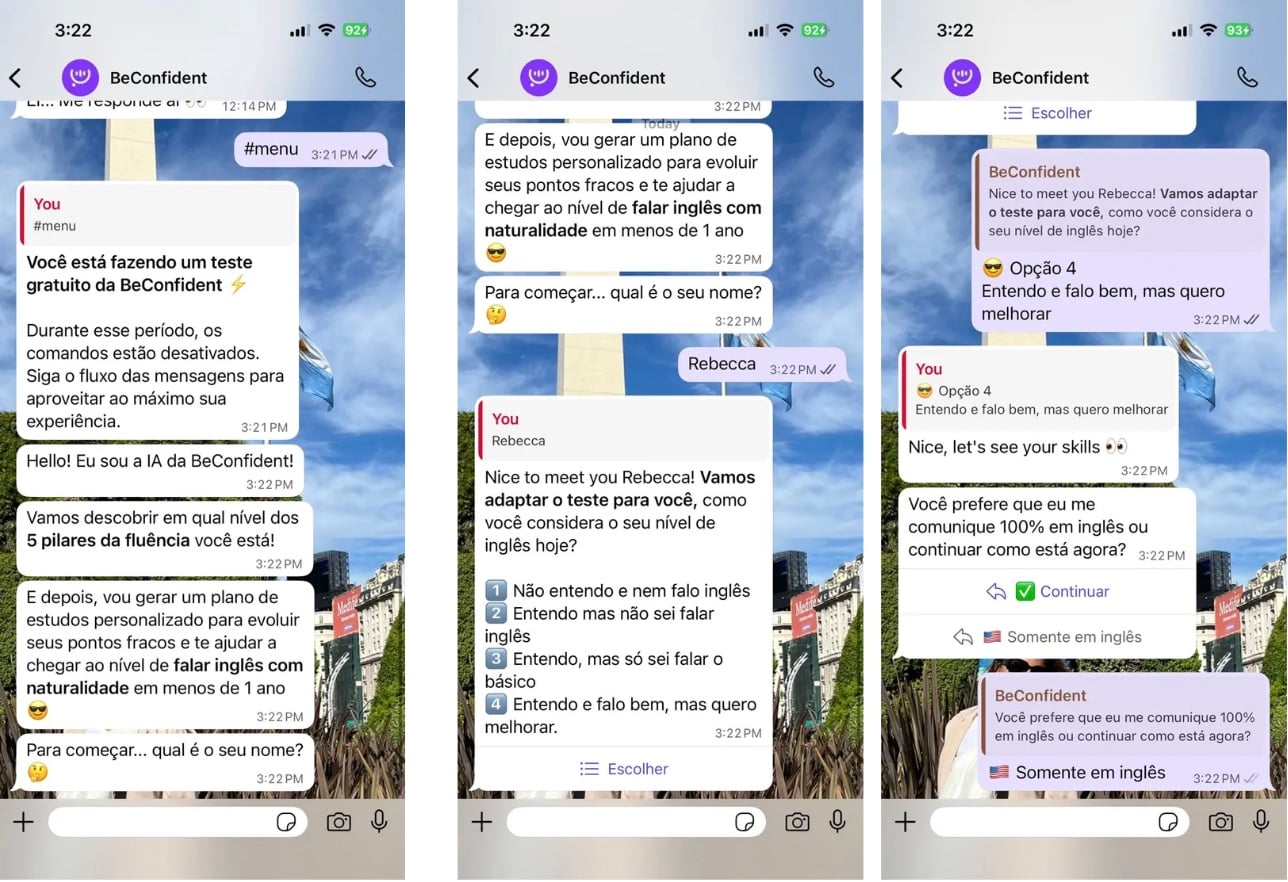
Technique 6: use streaks and micro-goals so you don't give up
Daily streaks create a sense of momentum that reinforces the habit. Micro-goals, like 5 minutes for 7 days and then 10 minutes for 14 daily, make the commitment lighter and more sustainable. Celebrating milestones like 1 week, 1 month, and 100 days boosts motivation.
Backup system: if you miss a day, treat it as a break and resume the next day, without overthinking it. Visual calendars and habit tracker apps help monitor progress. The main focus should be the volume of practice over time, not absolute perfection.
Technique 7: practice active conversation without embarrassment with support from BeConfident
The lack of real conversational practice is the main barrier to fluency. Traditional schools prioritize lecture-based classes with little speaking from students. Gamified apps focus on exercises and scores, but barely offer conversation. Speaking with native speakers can cause anxiety and high costs.
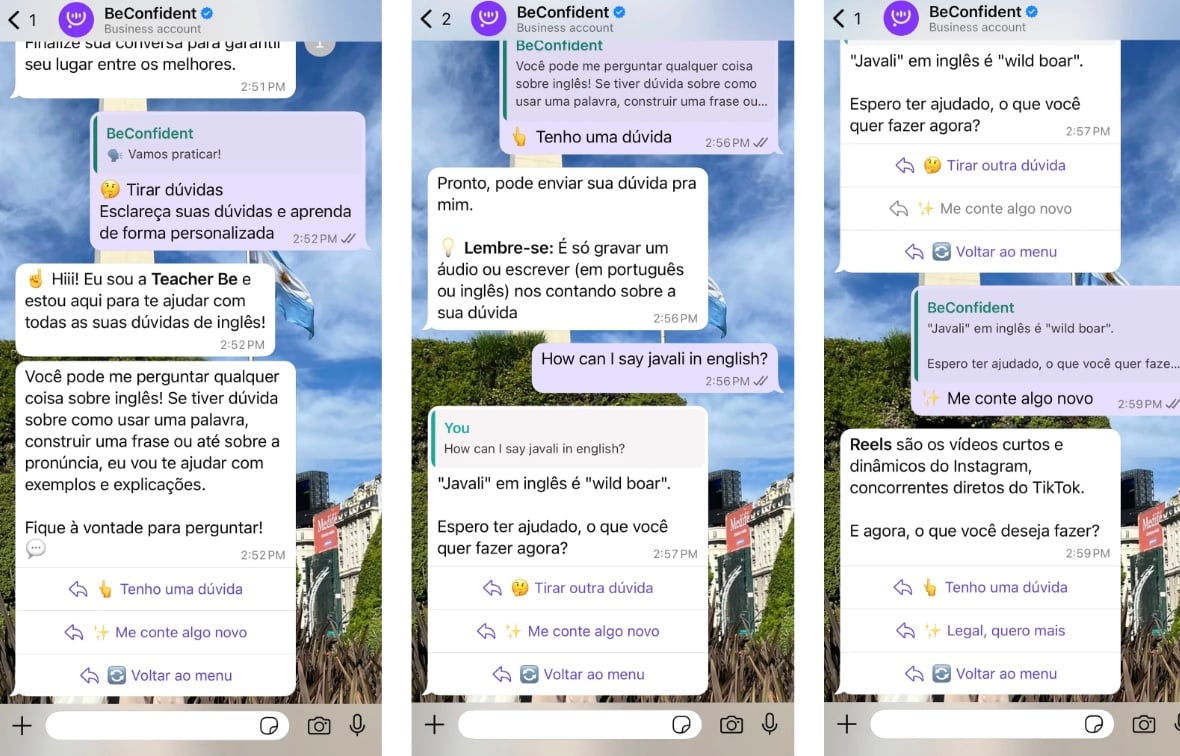
BeConfident offers:
AI Tutors with personality, to practice 24/7 without judgment.
Conversation via app, WhatsApp, or smartwatch, integrated into a busy routine.
Instant feedback, with on-the-spot error correction.
Multiple accents, such as American, British, and Australian.
Customized topics, such as business for professionals and travel for tourists.
Over 140,000 students use the platform, which has a RA 1000 reputation on Reclame Aqui. While solutions like Mairo Vergara prioritize input, Kumon and Fisk require commutes and higher monthly fees, Duolingo focuses on gamification without real conversation, and Cambly charges by the hour with variable quality, BeConfident offers unlimited active practice with more predictable pricing.
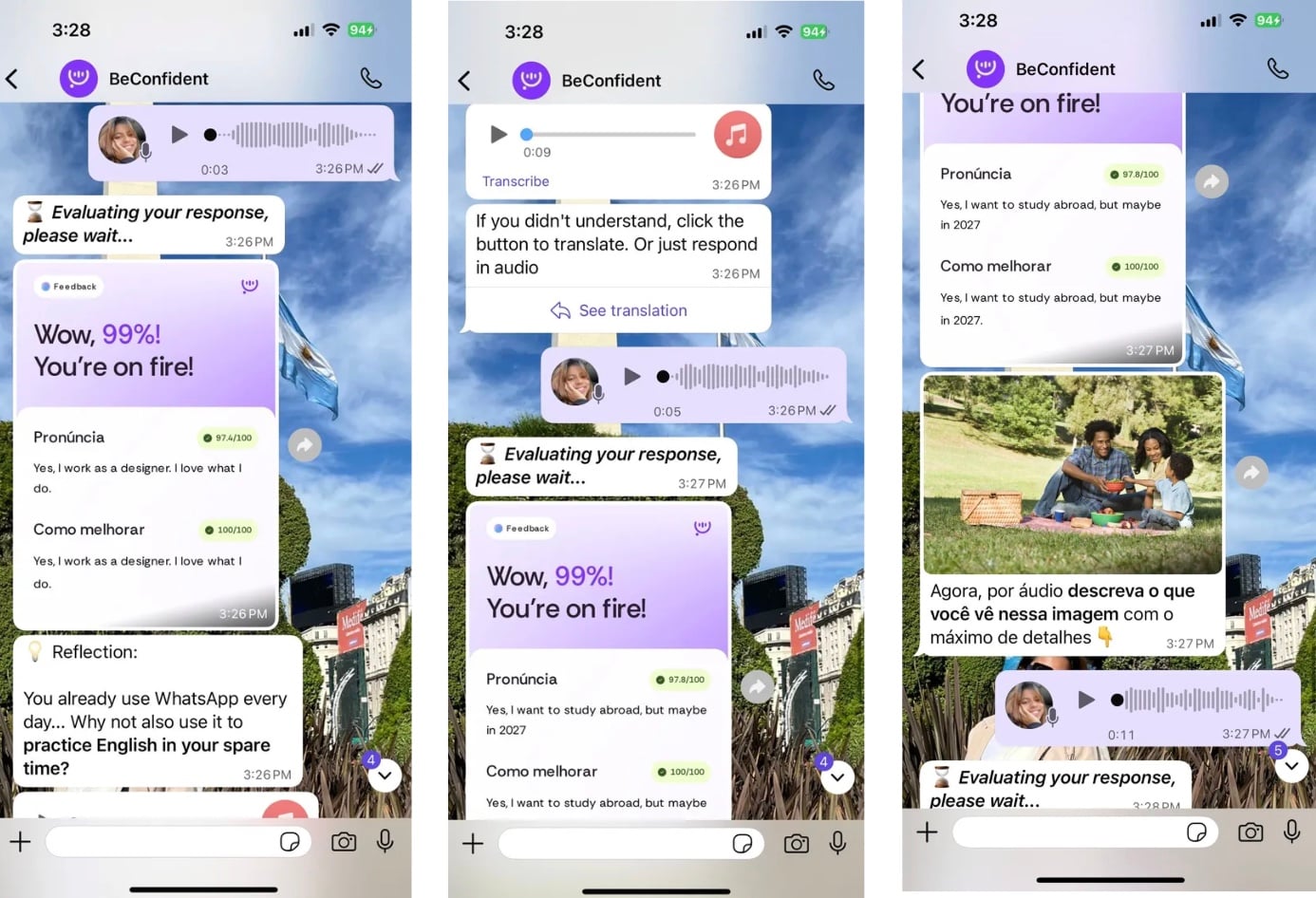
“I had a lot of trouble speaking, despite reading and listening well. I started using BeConfident and in a month I was speaking naturally, without getting stuck.”
Technique 8: review mistakes and track progress daily
Reviewing mistakes converts each session into cumulative learning. Common mistakes include translating in your head, focusing only on grammar, and waiting for perfect pronunciation to start speaking. Constant practice with immediate correction reduces these habits.
Simple review system: set aside 5 minutes a day to review mistakes from the previous session and focus on 1 or 2 specific points. Measuring progress through streaks, practice hours, and speaking confidence is usually more useful than focusing solely on perfect grammar.
How BeConfident puts these techniques into practice
BeConfident brings these techniques together into a single learning experience to make consistency easier.
Automatic habit stacking: the AI adapts to your context and allows you to practice while cooking, exercising, or walking.
Smart micro-sessions: 5 to 30-minute sessions with structured pathways that combine applied theory and immediate conversation.
Gamified streaks: tracking consecutive days, hours of practice, and improvement under the “My Evolution” menu, with rankings for those who like visual goals.
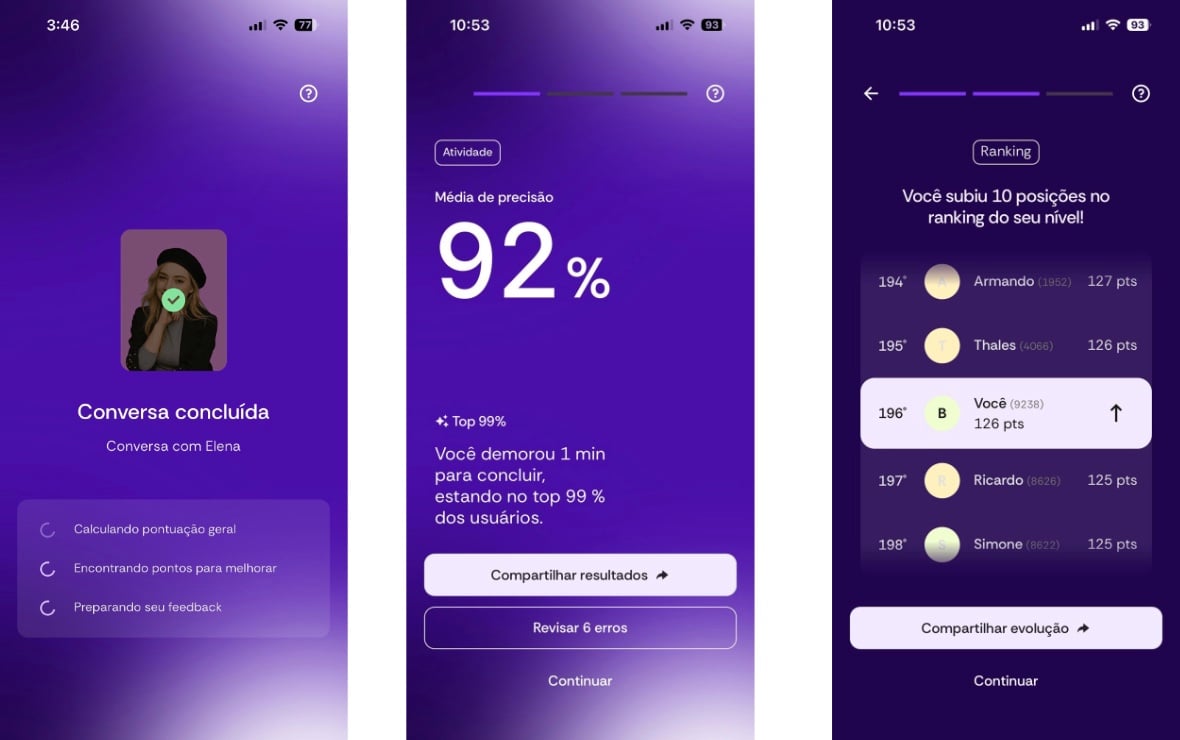
Judgment-free feedback: real-time correction of grammar, pronunciation, and natural expressions, without the embarrassment of traditional classrooms.
“The tool offers detailed feedback that I didn't get in traditional schools. It has been crucial for me to overcome my grammar difficulties, especially with prepositions.”
“When I tried to interact with foreigners at work, I didn't know what to say. Daily practice gave me the confidence to finally have conversations and earn my promotion.”
Common consistency pitfalls and how to avoid them
Overestimating available time: starting with 1 hour a day and giving up in a few days. Solution: start with 10 minutes and increase gradually.
Ignoring speaking practice: focusing only on reading and listening. Solution: reserve at least half of your time for active conversation with AI.
Translating in your head: thinking in Portuguese before speaking English. Solution: practice ready-made phrases and automatic structures.
Waiting for perfection: postponing speaking until you have mastered all of grammar. Solution: prioritize clear communication and refine accuracy over time.
Studying isolated words: memorizing vocabulary lists out of context. Solution: learn vocabulary within sentences and real-life conversation scenarios.
Readiness assessment: test your level for free
A quick assessment of your level helps define the focus of your study routine.
If you cannot hold a 5-minute conversation about work in English, you should prioritize basic professional conversation.
If you understand about 80% of an English podcast, the main challenge is usually speaking, not understanding.
If you freeze when speaking even though you know the words, you need intensive conversational practice in a judgment-free environment.
Try for free and start learning English today with a personalized assessment of your level and areas of improvement.
Frequently asked questions
Is studying 30 minutes a day good?
Studying 30 minutes a day is usually more effective than sporadic long sessions. Daily consistency keeps the language active in your memory and speeds up retention. In a busy schedule, you can split this into two 15-minute sessions, using the morning for input and the evening for output. The core point is to maintain daily contact, even in 10-minute micro-sessions.
Is it possible to become fluent in English in 1 year?
Achieving conversational fluency in 6 months to 1 year is possible with consistent dedication. Daily 30 to 60-minute study sessions focusing on active conversation and using AI accelerate this process. Those who already have an intermediate foundation can progress even faster by prioritizing speaking with immediate feedback.
How to create a routine to learn English in a busy daily schedule?
An efficient routine uses habit stacking and micro-sessions. You can define triggers such as "after coffee, 10 minutes of conversation" or "on my commute, listening to podcasts." Splitting study time into 10 to 15-minute blocks throughout the day is usually more feasible than setting aside 1 continuous hour. Apps that work on WhatsApp or smartwatch make practicing easy during daily activities.
How to not give up on English studies?
Daily streaks with micro-goals help maintain commitment. Starting with 5 minutes for 7 consecutive days already builds a foundation. Celebrating milestones like 30, 60, and 100 days boosts motivation. Methods without a fixed time or specific location remove barriers. Practicing an imperfect 10 minutes is better than not practicing at all. If you miss a day, resume the next without resetting your accumulated mental effort.
What is the difference between studying alone and with conversational AI?
Studying alone limits speaking practice, which is essential for fluency. Conversational AI offers 24/7 interaction, immediate feedback, and adapts to your level and interests. Unlike apps focused only on exercises or classes with little speaking time, AI allows for unlimited conversation on topics relevant to your career or travels, with more predictable costs and logistics.
Conclusion: turn your routine into fluency
The eight consistency techniques, such as a flexible schedule, choosing your study time, short daily sessions, habit stacking, streaks, active conversation, and systematic review, reduce the main barriers that prevent Brazilians from advancing in English.
BeConfident puts these techniques into practice with personalized AI, 24/7 conversation, integration into a busy routine, judgment-free feedback, and measurable progress through streaks and growth reports.
Stop putting off English due to lack of time or fear of making mistakes. Try for free and start learning English today and use your busy routine as an ally to gain conversational fluency.
Written by: Luan Cavallaro, Founder & CMO, BeConfident
Key takeaways from this article
Habit stacking and micro-sessions of 10 to 15 minutes a day help fit English into a busy routine without relying solely on willpower.
Daily 30-minute sessions build stronger neural connections and better retention than weekly cramming sessions.
Turning input into output, by repeating sentences and recording summaries, develops real conversational fluency.
Streaks and micro-goals maintain motivation by releasing dopamine and reinforcing the habit with milestones like 7, 30, and 100 days.
BeConfident integrates all these techniques with 24/7 conversational AI, instant feedback, and gamified streaks. Try it for free now and fit English into your routine.
Why inconsistency holds back your English
Lack of time, fear of making mistakes, and passive methods stall progress in English, especially with speaking. Consuming English content without speaking keeps the language restricted to comprehension, not conversation. In 2026, personalized mobile AI enables 24/7 conversational practice, reducing time, cost, and location barriers.
Inconsistency directly impacts careers, travel, and international opportunities. On the other hand, focused daily practice of 30 to 60 minutes with AI can lead to fluency in 6 months to a year, with clear benefits for professional and personal life.
8 consistency techniques to learn English
Technique 1: create a flexible schedule for a busy routine
A flexible schedule with 10 to 15-minute blocks adapts better to a busy routine than rigid timetables. Professionals can practice English during breakfast or on their commute. Travelers can practice before bed or during workouts. Enthusiasts can integrate the language into series, games, and other hobbies.
Practical example: Monday to Friday, 15 minutes on public transit. On Saturday and Sunday, 20 minutes watching English content.
Potential risk: flexibility can turn into procrastination, so it is best to set at least two fixed times per week as anchors.
Technique 2: choose the best time between morning and night
The best time is whichever one allows you to stay consistent. Morning usually works for those who have more mental energy early on and want to start the day productively. Night usually works for those who prefer to study at the end of the day or have more free time after work.
2-week test: try 7:00 to 7:15 AM and 9:00 to 9:15 PM. Observe during which period you maintain the habit with less effort. Many professionals prefer the morning, while travelers and enthusiasts typically prefer the evening.
Technique 3: prioritize 30 minutes a day over 3 hours a week
Studying 30 minutes a day tends to be more efficient than sporadic long sessions because it keeps the language active in your memory. Daily repetition strengthens neural connections, whereas weekend marathons allow for forgetting between sessions.
Simple comparison: 30 minutes for 7 days adds up to 3h30 per week, while 3 hours in a single day totals less time and less repetition. For busy routines, four 15-minute sessions usually work better than one 1-hour session.
Technique 4: integrate music and podcasts with speaking practice
Music and podcasts help with comprehension, but they do not develop speaking skills if the engagement is strictly passive. Active practice starts when you pause to repeat sentences, comment out loud on what you heard, or record short summaries.
Example for professionals: listen to a business podcast in English on your commute and, immediately after, record a 2-minute audio summarizing the main points. Only consuming passively is comfortable, but it does not lead to consistent conversational fluency.
Technique 5: use habit stacking to fit English into daily habits
Habit stacking links English to routines that are already automatic. The recipe is simple: "After I [existing habit], I will [practice English for X minutes]." For example, after brushing your teeth, practice 5 minutes of conversation. After lunch, read an article in English.
For busy routines: you can stack English during micro-moments like waiting for the elevator, cooking, or exercising. You can practice vocabulary, listening, or shadowing in these moments. The goal is to automate the habit to reduce dependence on motivation.
Try for free and start learning English today by integrating AI conversation into your daily habits.
Technique 6: use streaks and micro-goals so you don't give up
Daily streaks create a sense of momentum that reinforces the habit. Micro-goals, like 5 minutes for 7 days and then 10 minutes for 14 daily, make the commitment lighter and more sustainable. Celebrating milestones like 1 week, 1 month, and 100 days boosts motivation.
Backup system: if you miss a day, treat it as a break and resume the next day, without overthinking it. Visual calendars and habit tracker apps help monitor progress. The main focus should be the volume of practice over time, not absolute perfection.
Technique 7: practice active conversation without embarrassment with support from BeConfident
The lack of real conversational practice is the main barrier to fluency. Traditional schools prioritize lecture-based classes with little speaking from students. Gamified apps focus on exercises and scores, but barely offer conversation. Speaking with native speakers can cause anxiety and high costs.
BeConfident offers:
AI Tutors with personality, to practice 24/7 without judgment.
Conversation via app, WhatsApp, or smartwatch, integrated into a busy routine.
Instant feedback, with on-the-spot error correction.
Multiple accents, such as American, British, and Australian.
Customized topics, such as business for professionals and travel for tourists.
Over 140,000 students use the platform, which has a RA 1000 reputation on Reclame Aqui. While solutions like Mairo Vergara prioritize input, Kumon and Fisk require commutes and higher monthly fees, Duolingo focuses on gamification without real conversation, and Cambly charges by the hour with variable quality, BeConfident offers unlimited active practice with more predictable pricing.
“I had a lot of trouble speaking, despite reading and listening well. I started using BeConfident and in a month I was speaking naturally, without getting stuck.”
Technique 8: review mistakes and track progress daily
Reviewing mistakes converts each session into cumulative learning. Common mistakes include translating in your head, focusing only on grammar, and waiting for perfect pronunciation to start speaking. Constant practice with immediate correction reduces these habits.
Simple review system: set aside 5 minutes a day to review mistakes from the previous session and focus on 1 or 2 specific points. Measuring progress through streaks, practice hours, and speaking confidence is usually more useful than focusing solely on perfect grammar.
How BeConfident puts these techniques into practice
BeConfident brings these techniques together into a single learning experience to make consistency easier.
Automatic habit stacking: the AI adapts to your context and allows you to practice while cooking, exercising, or walking.
Smart micro-sessions: 5 to 30-minute sessions with structured pathways that combine applied theory and immediate conversation.
Gamified streaks: tracking consecutive days, hours of practice, and improvement under the “My Evolution” menu, with rankings for those who like visual goals.
Judgment-free feedback: real-time correction of grammar, pronunciation, and natural expressions, without the embarrassment of traditional classrooms.
“The tool offers detailed feedback that I didn't get in traditional schools. It has been crucial for me to overcome my grammar difficulties, especially with prepositions.”
“When I tried to interact with foreigners at work, I didn't know what to say. Daily practice gave me the confidence to finally have conversations and earn my promotion.”
Common consistency pitfalls and how to avoid them
Overestimating available time: starting with 1 hour a day and giving up in a few days. Solution: start with 10 minutes and increase gradually.
Ignoring speaking practice: focusing only on reading and listening. Solution: reserve at least half of your time for active conversation with AI.
Translating in your head: thinking in Portuguese before speaking English. Solution: practice ready-made phrases and automatic structures.
Waiting for perfection: postponing speaking until you have mastered all of grammar. Solution: prioritize clear communication and refine accuracy over time.
Studying isolated words: memorizing vocabulary lists out of context. Solution: learn vocabulary within sentences and real-life conversation scenarios.
Readiness assessment: test your level for free
A quick assessment of your level helps define the focus of your study routine.
If you cannot hold a 5-minute conversation about work in English, you should prioritize basic professional conversation.
If you understand about 80% of an English podcast, the main challenge is usually speaking, not understanding.
If you freeze when speaking even though you know the words, you need intensive conversational practice in a judgment-free environment.
Try for free and start learning English today with a personalized assessment of your level and areas of improvement.
Frequently asked questions
Is studying 30 minutes a day good?
Studying 30 minutes a day is usually more effective than sporadic long sessions. Daily consistency keeps the language active in your memory and speeds up retention. In a busy schedule, you can split this into two 15-minute sessions, using the morning for input and the evening for output. The core point is to maintain daily contact, even in 10-minute micro-sessions.
Is it possible to become fluent in English in 1 year?
Achieving conversational fluency in 6 months to 1 year is possible with consistent dedication. Daily 30 to 60-minute study sessions focusing on active conversation and using AI accelerate this process. Those who already have an intermediate foundation can progress even faster by prioritizing speaking with immediate feedback.
How to create a routine to learn English in a busy daily schedule?
An efficient routine uses habit stacking and micro-sessions. You can define triggers such as "after coffee, 10 minutes of conversation" or "on my commute, listening to podcasts." Splitting study time into 10 to 15-minute blocks throughout the day is usually more feasible than setting aside 1 continuous hour. Apps that work on WhatsApp or smartwatch make practicing easy during daily activities.
How to not give up on English studies?
Daily streaks with micro-goals help maintain commitment. Starting with 5 minutes for 7 consecutive days already builds a foundation. Celebrating milestones like 30, 60, and 100 days boosts motivation. Methods without a fixed time or specific location remove barriers. Practicing an imperfect 10 minutes is better than not practicing at all. If you miss a day, resume the next without resetting your accumulated mental effort.
What is the difference between studying alone and with conversational AI?
Studying alone limits speaking practice, which is essential for fluency. Conversational AI offers 24/7 interaction, immediate feedback, and adapts to your level and interests. Unlike apps focused only on exercises or classes with little speaking time, AI allows for unlimited conversation on topics relevant to your career or travels, with more predictable costs and logistics.
Conclusion: turn your routine into fluency
The eight consistency techniques, such as a flexible schedule, choosing your study time, short daily sessions, habit stacking, streaks, active conversation, and systematic review, reduce the main barriers that prevent Brazilians from advancing in English.
BeConfident puts these techniques into practice with personalized AI, 24/7 conversation, integration into a busy routine, judgment-free feedback, and measurable progress through streaks and growth reports.
Stop putting off English due to lack of time or fear of making mistakes. Try for free and start learning English today and use your busy routine as an ally to gain conversational fluency.