




How to improve your English grammar: 4 practical methods
How to improve your English grammar: 4 practical methods
How to improve your English grammar: 4 practical methods
Written by: Luan Cavallaro, Founder & CMO, BeConfident
Key takeaways from this article
Active listening of the SCHWA sound improves natural pronunciation and oral grammar comprehension in real life conversations.
Memorizing full sentences with the ACT method develops intuitive grammar without memorizing abstract rules.
Interactive quizzes with AI feedback identify and correct grammatical errors in real time during speaking.
Structured pathways integrating the 4 pillars (listening, speaking, reading, writing) accelerate grammar assimilation.
BeConfident combines all of these practices in unlimited conversation sessions with personalized AI. Take a free test and unlock your fluency now.
Why correct English grammar is essential for fluency
Correct English grammar underpins the four pillars of the language: listening, speaking, reading, and writing. For anyone seeking career growth or safety during travels, this mastery defines whether a person freezes in an important meeting or communicates with clarity.
Traditional methods follow a fragmented approach. Brazilians deal with strong differences between Portuguese and English grammar, as well as mental blocks when using what they already know. Schools dedicate many hours to theory and only a few minutes to actual speaking. Gamified apps like Duolingo maintain the habit, but work on basic exercises that do not build consistent conversational fluency.
Many people read complex texts and understand series with subtitles, but freeze when trying to express a simple idea. This gap between passive knowledge and active use is exactly what the following alternatives target, integrating grammar into natural conversation.
7 practical alternatives for correct English grammar
1. Daily active listening exercises with SCHWA (basic A1-A2)
The SCHWA sound is essential for natural pronunciation and listening comprehension in real-life conversations. This neutral sound appears in words like "about", "comfortable", and "banana", but many Brazilians ignore it and end up with hesitant, robotic speech.
Set aside 10 minutes a day to listen to native audio and focus on reduced sounds. Record your voice repeating sentences like "It's about time" and pay attention to the SCHWA. Compare it to the original audio and gradually adjust. In professional contexts, practice phrases like "The project is about to be completed" until they sound natural.
This training gets your ear used to real speech patterns. Oral grammar improves because you start reproducing structures the way people actually speak, rather than how they appear in unnatural textbook examples.
2. Memorizing full sentences in real-life contexts (ACT method)
The ACT method prioritizes practical immersion in real conversational situations. Learners study grammar in context without excessive theory. Instead of memorizing that "would" indicates a past habit, you use sentences like "When I was a child, I would play soccer every weekend" in real-life simulations.
Choose 5 complete sentences related to your goal, such as airport scenarios for travel or meetings for work. Use spaced repetition throughout the week. Frequent travelers can master "Could you help me find the boarding gate?" and create variations before moving on to more complex structures.
The benefit comes from contextualization. The brain associates the grammatical structure with a specific situation and creates a usage memory. When it is time to speak, the phrase comes out naturally without the need to recall the rule.
3. Interactive B1/B2 quizzes with self-assessment
Quizzes organized by CEFR levels offer practice aligned to your current level. Formats with 20 questions per level focus on negatives, verb tenses, and conditionals, allowing for immediate self-assessment.
To maximize results, use BeConfident's Teacher Be, which corrects grammar mistakes during speaking simulations. Instead of just selecting options, you receive corrections like changing "I'm good in English" to "I'm good at English" in real time.
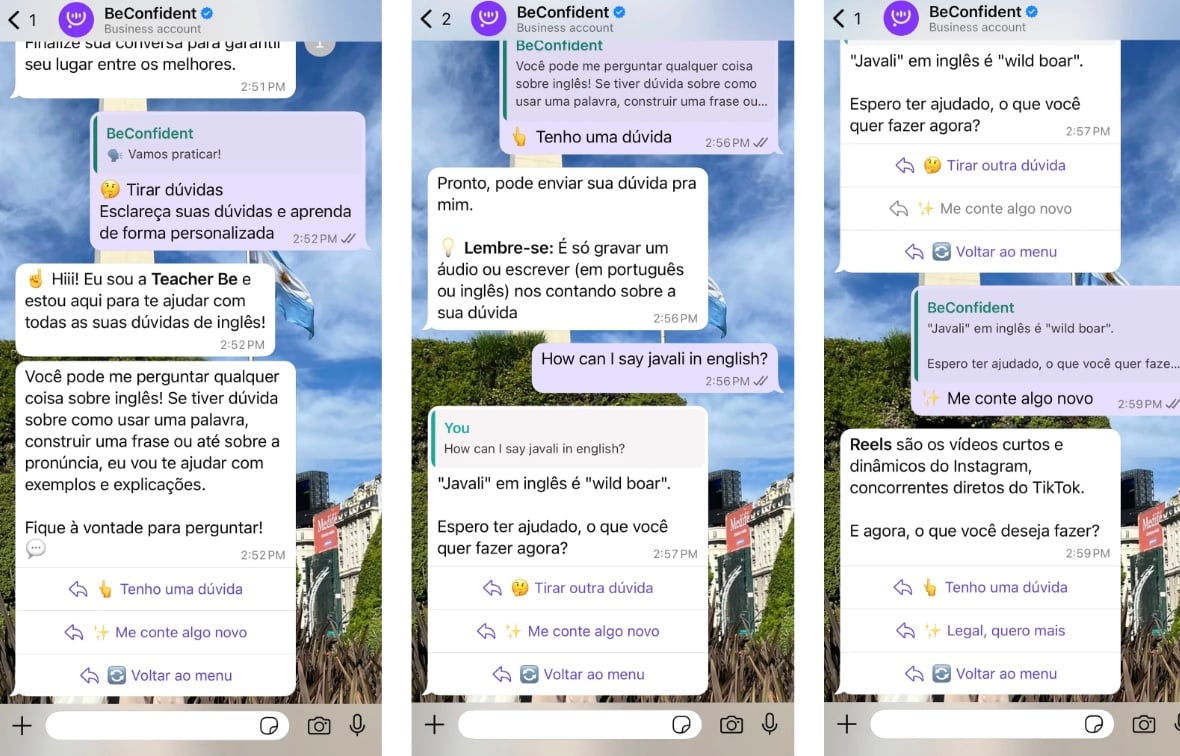
This combination of diagnostics and active correction helps identify specific gaps and fix them through speaking, not just by reading or clicking on answers.
4. Structured pathways applying the 4 pillars
A short, consistent routine integrates grammar into the four pillars. Daily sessions of 20 to 30 minutes generate more consistency than long, sporadic study periods. Each session should connect listening, speaking, reading, and writing.
Use a simple sequence. First, listen to a short dialogue. Then, read the text and identify the grammatical structures. Next, repeat those structures out loud. Finally, write your own sentences using the same pattern. After listening to a conversation about future plans, for example, practice saying "I'm going to travel next month" and write down your own plans.
This integration reinforces the same structure through different channels. Repeating it by listening, speaking, reading, and writing creates stronger connections and accelerates acquisition.
5. 24/7 personalized error review
BeConfident offers personalized error review focused on context, whereas Duolingo prioritizes gamification. The AI identifies patterns in your grammar mistakes and builds specific exercises to address those difficulties.
You can access the system through the app or WhatsApp and receive feedback on grammar, pronunciation, and native expressions. If you have recurring difficulties with prepositions in work contexts, exercises like "I'm responsible for the project" will appear, contrasting with "I'm responsible of the project".
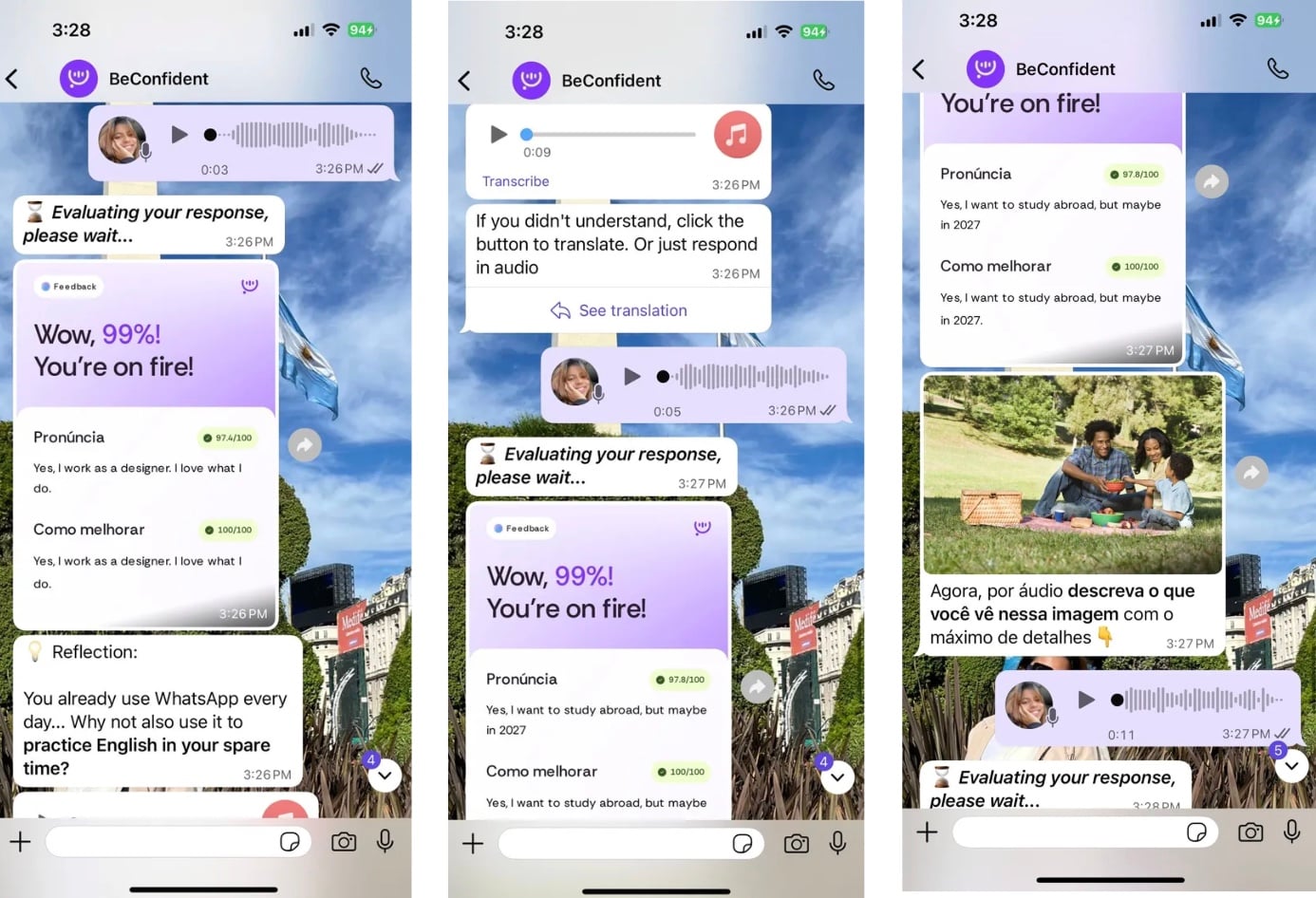
One student shares that "the tool offers detailed feedback that I never got in traditional schools" and that this support was decisive in overcoming struggles with prepositions. This continuous personalization allows for progress even outside of class hours.
6. Speaking practice with varied accents
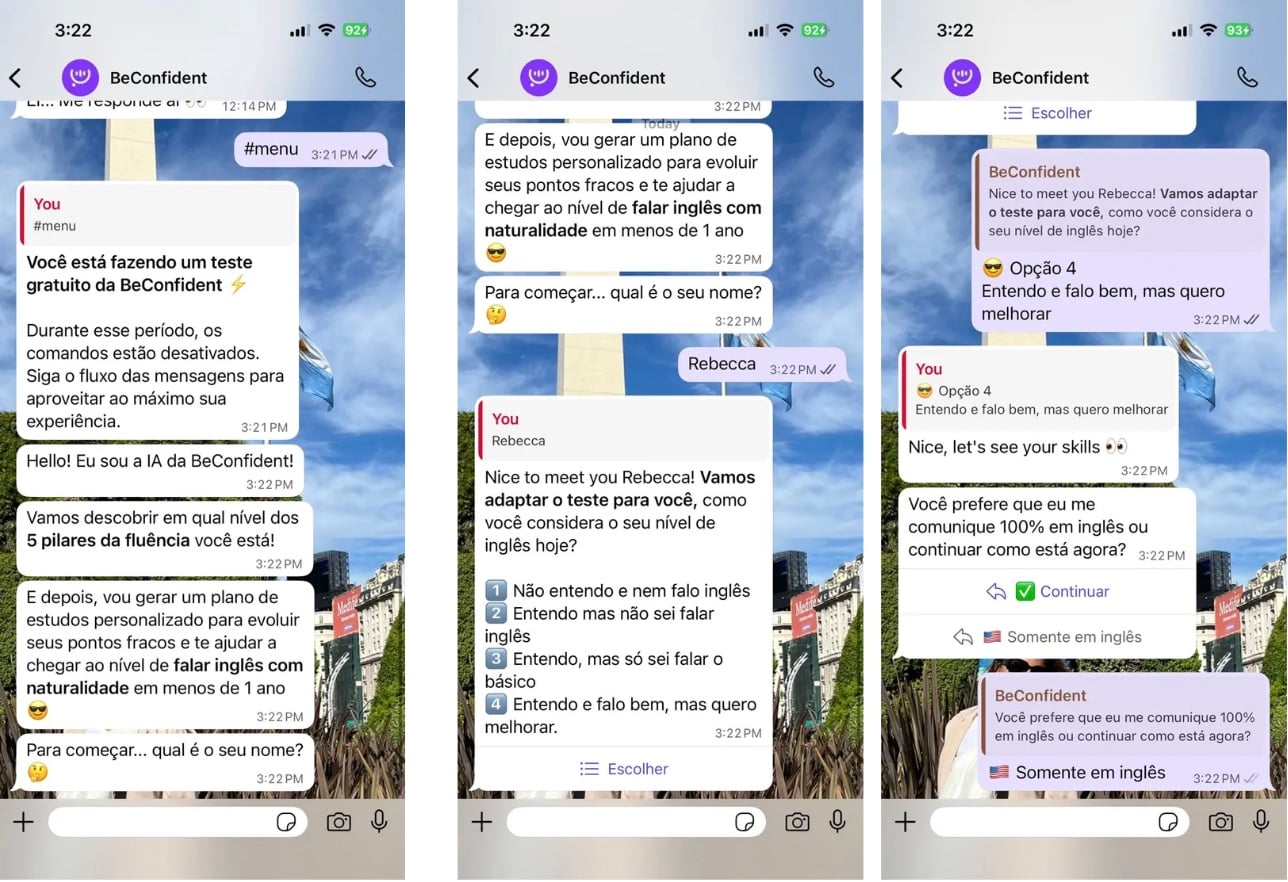
Exposure to multiple native accents, such as American, British, Australian, and Canadian, broadens listening comprehension and reduces surprises in real situations. BeConfident's AI tutors offer this variety without charging by the hour.
Set your priority accents according to your goals. Those who work with American companies can focus on the American accent. Those planning an exchange program in the UK can prioritize British. Use the same grammatical structures with different accents to train your flexibility.
A project manager, for example, practiced technical presentations with tutors of different nationalities and gained confidence for international meetings. This variation helps in recognizing grammatical structures even when the pronunciation changes.
7. Unlimited conversation with AI feedback (advanced C1)
BeConfident brings all these alternatives together into a single platform with unlimited conversation practice and instant feedback. The solution serves over 140,000 paying students and maintains a RA 1000 reputation on Reclame Aqui, combining grammar correction, speaking practice, and personalization.
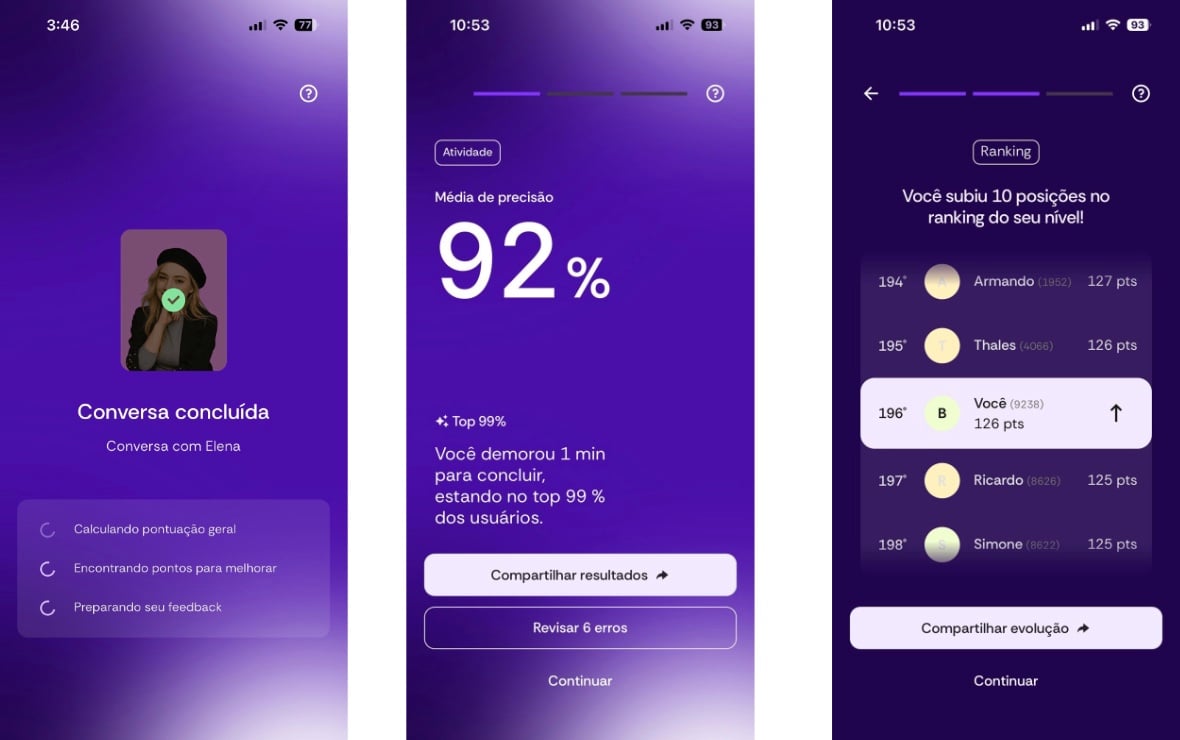
While traditional schools offer just a few minutes of speaking time per class and apps like Duolingo focus on isolated exercises, BeConfident's AI allows you to hold conversations about topics you are interested in and corrects your grammar in context.
Student testimonials show this impact. One professional shares that she used to freeze up when speaking to foreigners at work, but daily practice gave her the confidence to hold conversations and secure a promotion. Another student states that he used to read and listen well but struggled to speak, yet within a month of use, he was already expressing himself naturally.
FAQ: common questions about grammar and fluency in English
What is the best way to learn correct English grammar?
The most efficient approach combines theory in context with frequent conversational practice. Instead of focusing on isolated rules, prioritize structures within complete sentences used in real-life situations. BeConfident achieves this integration through AI-guided conversations that correct your grammar as you chat.
How can I improve my English grammar without memorizing rules?
Contextual immersion helps develop intuitive grammar. The ACT method suggests practicing complete sentences connected to your day-to-day life. For instance, people working in sales can use structures like "I'd like to propose a solution" in real-life simulations. Spaced repetition of these phrases across varied scenarios reduces the need to memorize abstract rules.
How can I practice speaking and grammar at the same time?
Guided conversation with immediate feedback allows for this joint practice. You speak about relevant topics and receive corrections instantly. BeConfident's AI tutors keep the conversation flowing while adjusting incorrect structures, strengthening both fluency and accuracy at once.
What do B1 and B2 levels mean in English grammar?
The B1 level indicates the ability to use basic structures in familiar situations, such as the simple present, past, and future. The B2 level includes more complex structures, like conditionals, passive voice, and perfect tenses. Moving between these levels depends on constant speaking practice rather than just theoretical study.
How long does it take to master correct English grammar?
With daily practice focused on conversation, many people notice clear progress within 4 to 8 weeks. Daily sessions of 20 to 30 minutes with feedback are usually more effective than studying a few hours of theory once a week. BeConfident's AI accelerates this process by identifying your specific difficulties and generating targeted exercises.
Conclusion: how to integrate these alternatives with BeConfident
The 7 alternatives presented offer practical ways to master correct English grammar without relying on memorizing rules. From training with the SCHWA sound to advanced conversation with AI, each method contributes to a more natural and confident fluency.
BeConfident integrates these strategies into a single experience, featuring contextualized theory, unlimited conversation, and personalized feedback 24 hours a day. The AI adapts to your level, goals, and primary difficulties, shortening the distance between studying and results.
Over 140,000 students already use this methodology to achieve fluency in a practical and accessible way. Instead of sticking with theory-heavy methods, you can focus on real language usage with continuous support.
Written by: Luan Cavallaro, Founder & CMO, BeConfident
Key takeaways from this article
Active listening of the SCHWA sound improves natural pronunciation and oral grammar comprehension in real life conversations.
Memorizing full sentences with the ACT method develops intuitive grammar without memorizing abstract rules.
Interactive quizzes with AI feedback identify and correct grammatical errors in real time during speaking.
Structured pathways integrating the 4 pillars (listening, speaking, reading, writing) accelerate grammar assimilation.
BeConfident combines all of these practices in unlimited conversation sessions with personalized AI. Take a free test and unlock your fluency now.
Why correct English grammar is essential for fluency
Correct English grammar underpins the four pillars of the language: listening, speaking, reading, and writing. For anyone seeking career growth or safety during travels, this mastery defines whether a person freezes in an important meeting or communicates with clarity.
Traditional methods follow a fragmented approach. Brazilians deal with strong differences between Portuguese and English grammar, as well as mental blocks when using what they already know. Schools dedicate many hours to theory and only a few minutes to actual speaking. Gamified apps like Duolingo maintain the habit, but work on basic exercises that do not build consistent conversational fluency.
Many people read complex texts and understand series with subtitles, but freeze when trying to express a simple idea. This gap between passive knowledge and active use is exactly what the following alternatives target, integrating grammar into natural conversation.
7 practical alternatives for correct English grammar
1. Daily active listening exercises with SCHWA (basic A1-A2)
The SCHWA sound is essential for natural pronunciation and listening comprehension in real-life conversations. This neutral sound appears in words like "about", "comfortable", and "banana", but many Brazilians ignore it and end up with hesitant, robotic speech.
Set aside 10 minutes a day to listen to native audio and focus on reduced sounds. Record your voice repeating sentences like "It's about time" and pay attention to the SCHWA. Compare it to the original audio and gradually adjust. In professional contexts, practice phrases like "The project is about to be completed" until they sound natural.
This training gets your ear used to real speech patterns. Oral grammar improves because you start reproducing structures the way people actually speak, rather than how they appear in unnatural textbook examples.
2. Memorizing full sentences in real-life contexts (ACT method)
The ACT method prioritizes practical immersion in real conversational situations. Learners study grammar in context without excessive theory. Instead of memorizing that "would" indicates a past habit, you use sentences like "When I was a child, I would play soccer every weekend" in real-life simulations.
Choose 5 complete sentences related to your goal, such as airport scenarios for travel or meetings for work. Use spaced repetition throughout the week. Frequent travelers can master "Could you help me find the boarding gate?" and create variations before moving on to more complex structures.
The benefit comes from contextualization. The brain associates the grammatical structure with a specific situation and creates a usage memory. When it is time to speak, the phrase comes out naturally without the need to recall the rule.
3. Interactive B1/B2 quizzes with self-assessment
Quizzes organized by CEFR levels offer practice aligned to your current level. Formats with 20 questions per level focus on negatives, verb tenses, and conditionals, allowing for immediate self-assessment.
To maximize results, use BeConfident's Teacher Be, which corrects grammar mistakes during speaking simulations. Instead of just selecting options, you receive corrections like changing "I'm good in English" to "I'm good at English" in real time.
This combination of diagnostics and active correction helps identify specific gaps and fix them through speaking, not just by reading or clicking on answers.
4. Structured pathways applying the 4 pillars
A short, consistent routine integrates grammar into the four pillars. Daily sessions of 20 to 30 minutes generate more consistency than long, sporadic study periods. Each session should connect listening, speaking, reading, and writing.
Use a simple sequence. First, listen to a short dialogue. Then, read the text and identify the grammatical structures. Next, repeat those structures out loud. Finally, write your own sentences using the same pattern. After listening to a conversation about future plans, for example, practice saying "I'm going to travel next month" and write down your own plans.
This integration reinforces the same structure through different channels. Repeating it by listening, speaking, reading, and writing creates stronger connections and accelerates acquisition.
5. 24/7 personalized error review
BeConfident offers personalized error review focused on context, whereas Duolingo prioritizes gamification. The AI identifies patterns in your grammar mistakes and builds specific exercises to address those difficulties.
You can access the system through the app or WhatsApp and receive feedback on grammar, pronunciation, and native expressions. If you have recurring difficulties with prepositions in work contexts, exercises like "I'm responsible for the project" will appear, contrasting with "I'm responsible of the project".
One student shares that "the tool offers detailed feedback that I never got in traditional schools" and that this support was decisive in overcoming struggles with prepositions. This continuous personalization allows for progress even outside of class hours.
6. Speaking practice with varied accents
Exposure to multiple native accents, such as American, British, Australian, and Canadian, broadens listening comprehension and reduces surprises in real situations. BeConfident's AI tutors offer this variety without charging by the hour.
Set your priority accents according to your goals. Those who work with American companies can focus on the American accent. Those planning an exchange program in the UK can prioritize British. Use the same grammatical structures with different accents to train your flexibility.
A project manager, for example, practiced technical presentations with tutors of different nationalities and gained confidence for international meetings. This variation helps in recognizing grammatical structures even when the pronunciation changes.
7. Unlimited conversation with AI feedback (advanced C1)
BeConfident brings all these alternatives together into a single platform with unlimited conversation practice and instant feedback. The solution serves over 140,000 paying students and maintains a RA 1000 reputation on Reclame Aqui, combining grammar correction, speaking practice, and personalization.
While traditional schools offer just a few minutes of speaking time per class and apps like Duolingo focus on isolated exercises, BeConfident's AI allows you to hold conversations about topics you are interested in and corrects your grammar in context.
Student testimonials show this impact. One professional shares that she used to freeze up when speaking to foreigners at work, but daily practice gave her the confidence to hold conversations and secure a promotion. Another student states that he used to read and listen well but struggled to speak, yet within a month of use, he was already expressing himself naturally.
FAQ: common questions about grammar and fluency in English
What is the best way to learn correct English grammar?
The most efficient approach combines theory in context with frequent conversational practice. Instead of focusing on isolated rules, prioritize structures within complete sentences used in real-life situations. BeConfident achieves this integration through AI-guided conversations that correct your grammar as you chat.
How can I improve my English grammar without memorizing rules?
Contextual immersion helps develop intuitive grammar. The ACT method suggests practicing complete sentences connected to your day-to-day life. For instance, people working in sales can use structures like "I'd like to propose a solution" in real-life simulations. Spaced repetition of these phrases across varied scenarios reduces the need to memorize abstract rules.
How can I practice speaking and grammar at the same time?
Guided conversation with immediate feedback allows for this joint practice. You speak about relevant topics and receive corrections instantly. BeConfident's AI tutors keep the conversation flowing while adjusting incorrect structures, strengthening both fluency and accuracy at once.
What do B1 and B2 levels mean in English grammar?
The B1 level indicates the ability to use basic structures in familiar situations, such as the simple present, past, and future. The B2 level includes more complex structures, like conditionals, passive voice, and perfect tenses. Moving between these levels depends on constant speaking practice rather than just theoretical study.
How long does it take to master correct English grammar?
With daily practice focused on conversation, many people notice clear progress within 4 to 8 weeks. Daily sessions of 20 to 30 minutes with feedback are usually more effective than studying a few hours of theory once a week. BeConfident's AI accelerates this process by identifying your specific difficulties and generating targeted exercises.
Conclusion: how to integrate these alternatives with BeConfident
The 7 alternatives presented offer practical ways to master correct English grammar without relying on memorizing rules. From training with the SCHWA sound to advanced conversation with AI, each method contributes to a more natural and confident fluency.
BeConfident integrates these strategies into a single experience, featuring contextualized theory, unlimited conversation, and personalized feedback 24 hours a day. The AI adapts to your level, goals, and primary difficulties, shortening the distance between studying and results.
Over 140,000 students already use this methodology to achieve fluency in a practical and accessible way. Instead of sticking with theory-heavy methods, you can focus on real language usage with continuous support.