




How to learn English from scratch by yourself: a quick and effective guide
How to learn English from scratch by yourself: a quick and effective guide
How to learn English from scratch by yourself: a quick and effective guide
Written by: Luan Cavallaro, Founder & CMO, BeConfident
Key takeaways from this article
Discovering your actual English level with a speaking test prevents wasting time on unsuitable content.
Maintaining a daily routine of 30 to 60 minutes focuses on 4 pillars in an integrated way: listening, speaking, vocabulary, and grammar.
Combining free apps for input with unlimited AI-powered speaking practice accelerates results.
Investing in immersion with TV shows and podcasts without subtitles, while clarifying doubts on the spot with AI tutors, consolidates learning.
Measuring progress weekly and correcting mistakes with instant feedback on BeConfident increases fluency. Try it for free now and advance your English in a few weeks.
The 4 pillars to learn English from scratch
Learning English with a focus on conversation requires attention to 4 main pillars. An effective routine integrates these skills every day, rather than treating them in isolation.
Pillar | Description | Practical example | How BeConfident helps |
Listening | Auditory comprehension of native speakers | 6-minute daily podcasts | Tutors with diverse accents |
Speaking | Fluent and natural oral production | Conversations for 20 minutes a day | Unlimited practice without judgment |
Vocabulary | Active words for conversation | 20 essential phrases per week | Contextualized vocabulary by theme |
Grammar | Structures applied in speech | Real-time correction | Personalized instant feedback |
Step 1: taking the first step to learn English on your own
The first step consists of finding out exactly where you are and where you need to go. Buying books or downloading random apps without this diagnostic usually leads to frustration and wasted time.
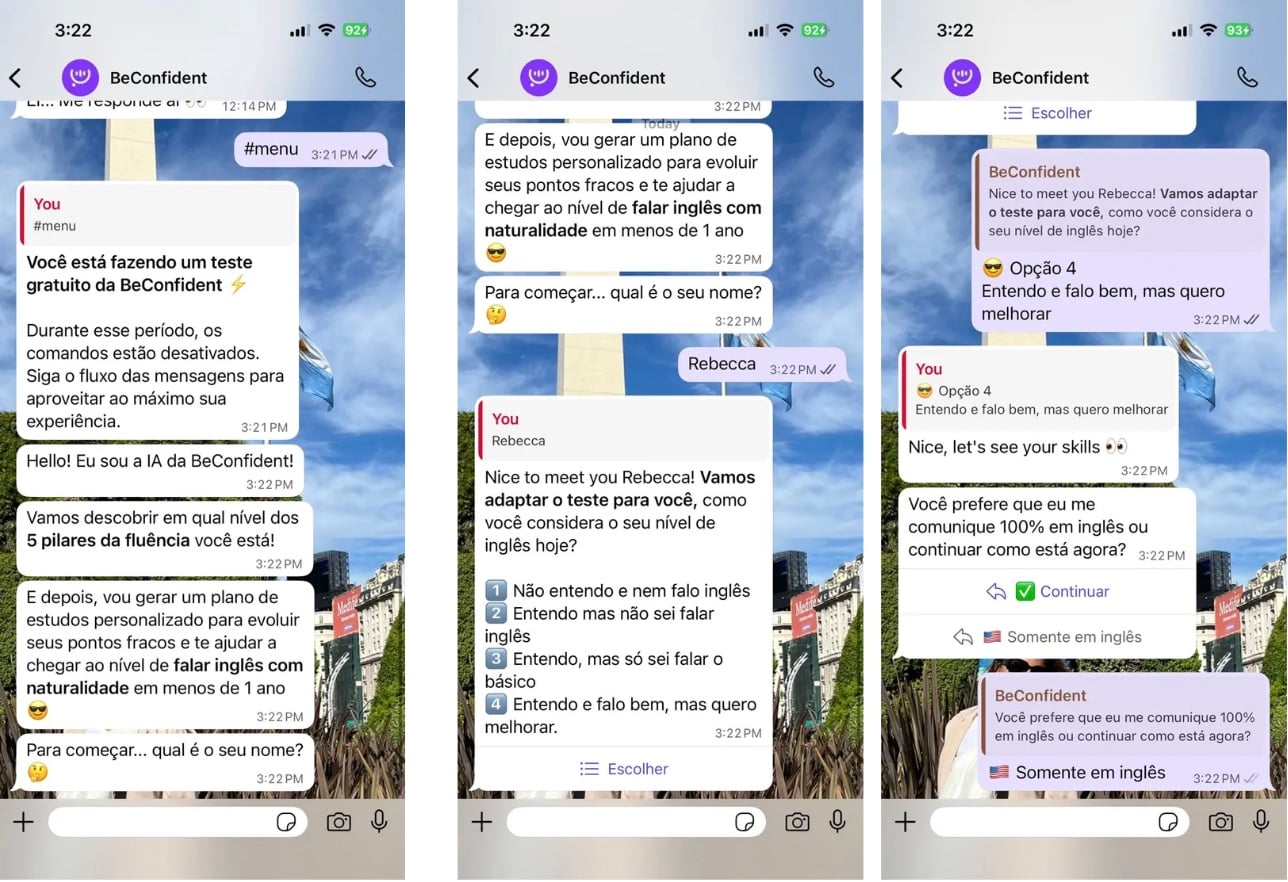
A comprehensive placement test must evaluate grammar, vocabulary, and, most importantly, your conversational ability. BeConfident offers a free test that identifies your CEFR level (A1, A2, B1, etc.) and maps out specific strengths and weaknesses.
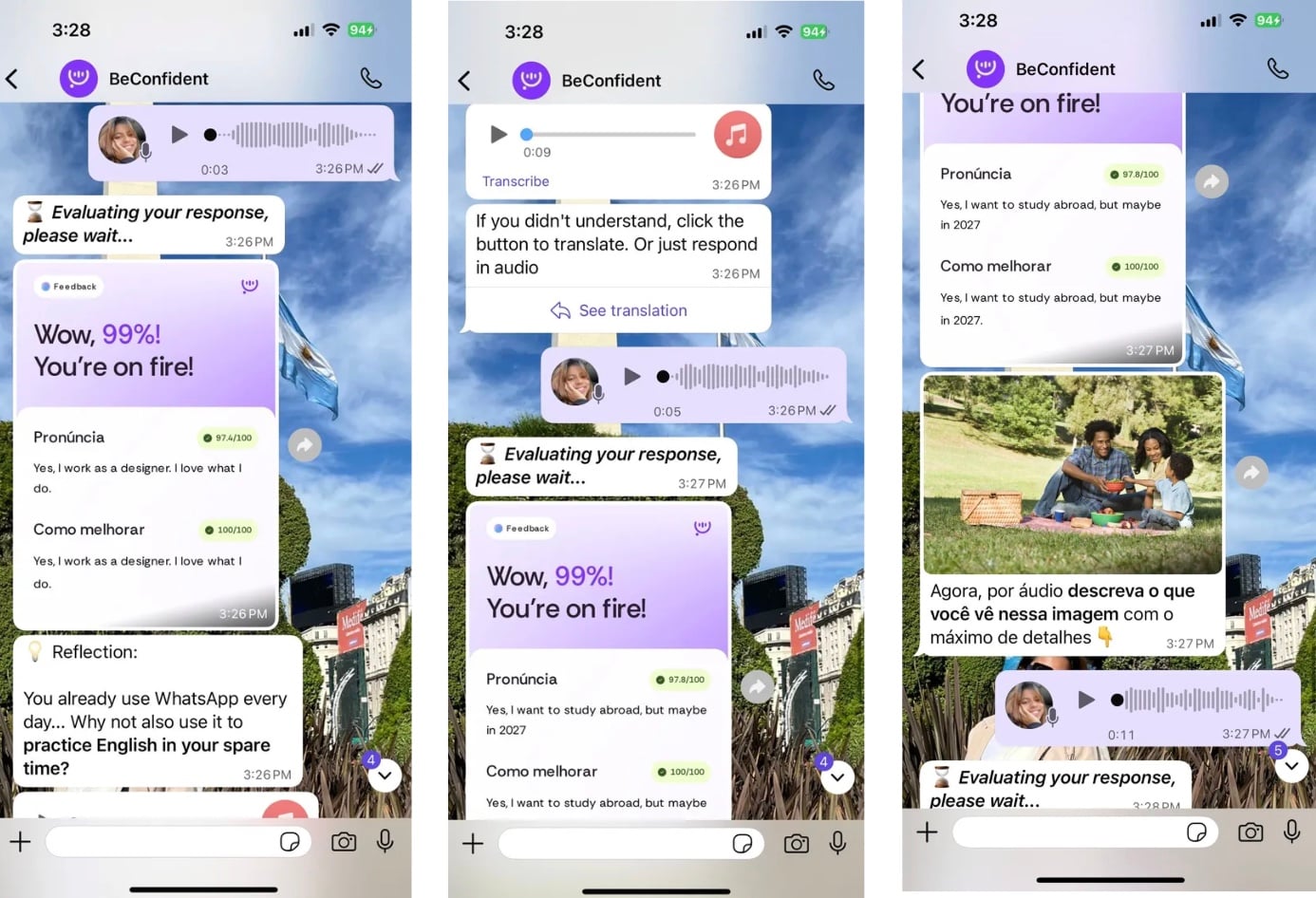
During the test, you already experience the AI conversational methodology and receive immediate feedback on pronunciation, grammar, and naturalness. This initial experience reduces the fear of speaking and builds a clear foundation for the next steps.
Take the free BeConfident test and find out your English level in a few minutes.
Step 2: setting up a daily routine of 30 to 60 minutes
Daily consistency yields better results than long, sporadic sessions. A focused 30-minute routine per day can get you to the A2 level in a few weeks to months, as long as it includes real conversation.
Here is a suggestion for a daily structure:
10 minutes: listening with slow podcasts, such as Coffee Break English and 6 Minute English.
10 minutes: contextualized vocabulary, memorizing 3 to 5 full sentences instead of isolated words.
20 to 30 minutes: conversation with an AI tutor on BeConfident about topics of your interest.
5 to 10 minutes: reviewing mistakes and the feedback received.
The focus on practice quality drives consistent progress.
Step 3: combining free apps with AI speaking practice
Combining free tools with AI technology increases the effectiveness of your studies. For vocabulary, it's worth using Anki, with smart flashcards, and YouTube channels like EnglishClass101. For listening, you can explore free apps like Duolingo and Memrise for basic vocabulary and auditory comprehension.
Traditional apps, however, barely develop speaking. Duolingo offers fun gamification, but does not work on spontaneous conversation. Cambly and Italki charge by the hour and depend on the availability of human tutors.
BeConfident fills this gap by offering unlimited conversation with AI tutors that simulate native American, British, and Australian accents and adapt to your topics of interest. You practice speaking anytime, with the freedom to make mistakes and repeat.
Take the free test and start practicing speaking today, with no commitment.
Step 4: creating immersion with TV shows and podcasts without subtitles
Daily immersion accelerates progress at any level. Children's content helps beginners because it uses essential vocabulary with clear pronunciation. Netflix Kids, with shows like Peppa Pig and Bluey, and slow podcasts, like 6 Minute English, work well in the beginning.
Daily exposure to native content can speed up progression from A2 to B1 in 3 to 6 months, especially when the student combines this exposure with active practice.
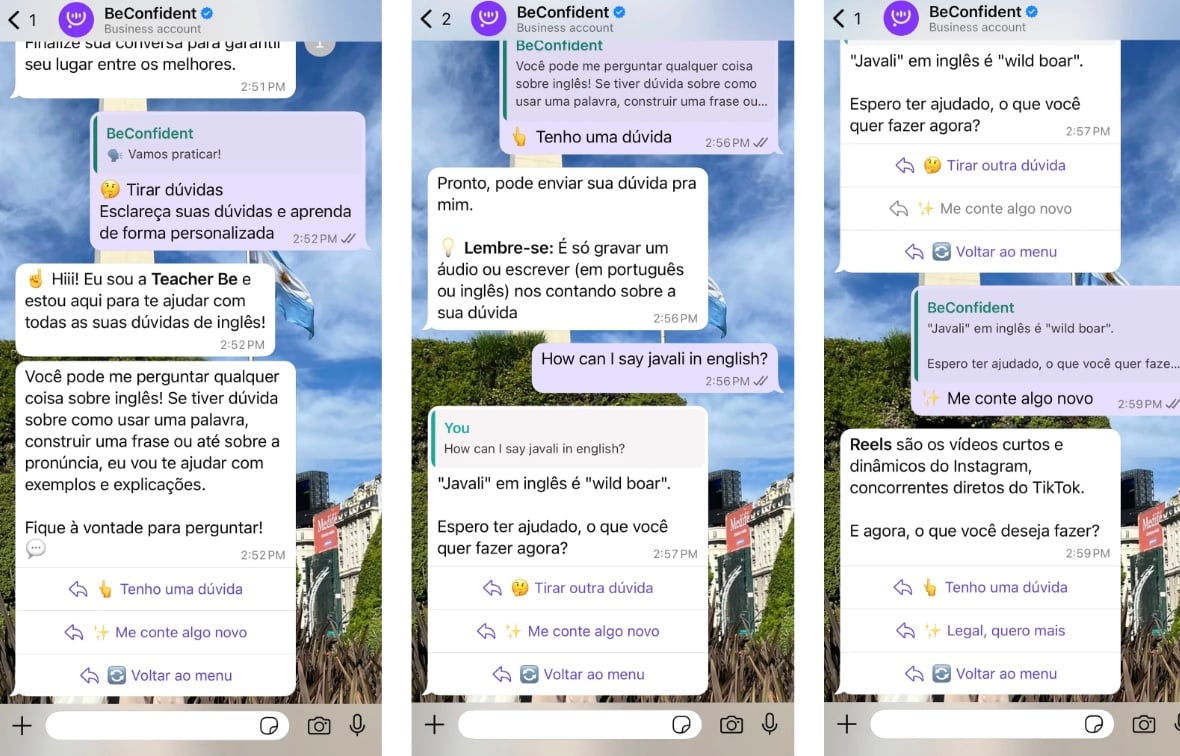
Reviewing doubts in the moment solidifies learning. When an expression or pronunciation comes up that you don't understand, pause and practice with the AI tutor on BeConfident. This connection between passive input and active practice anchors the new content.
Step 5: focusing on everyday phrases and technical vocabulary
Memorizing complete sentences makes spontaneous speech easier. The list below brings useful examples for common situations:
Airport: "Where is gate B12?" / "Is this seat taken?"
Meetings: "Could you repeat that?" / "I'd like to add something"
Restaurant: "What do you recommend?" / "Could I have the check, please?"
Small talk: "How was your weekend?" / "The weather is nice today"
Work: "I'm working on a project" / "Let me get back to you on that"
Professionals can advance faster by practicing technical vocabulary related to their own field. BeConfident offers personalized conversations by professional theme, with AI tutors that simulate real situations like presentations, meetings, and negotiations.
Step 6: measuring progress and avoiding the forgetting curve
Measuring progress keeps you focused and prevents the feeling of stagnation. For example: an intense but realistic goal includes a solid A1 in 1 month, A2 in 3 months, and approaching B1 in 6 months with consistent daily practice.
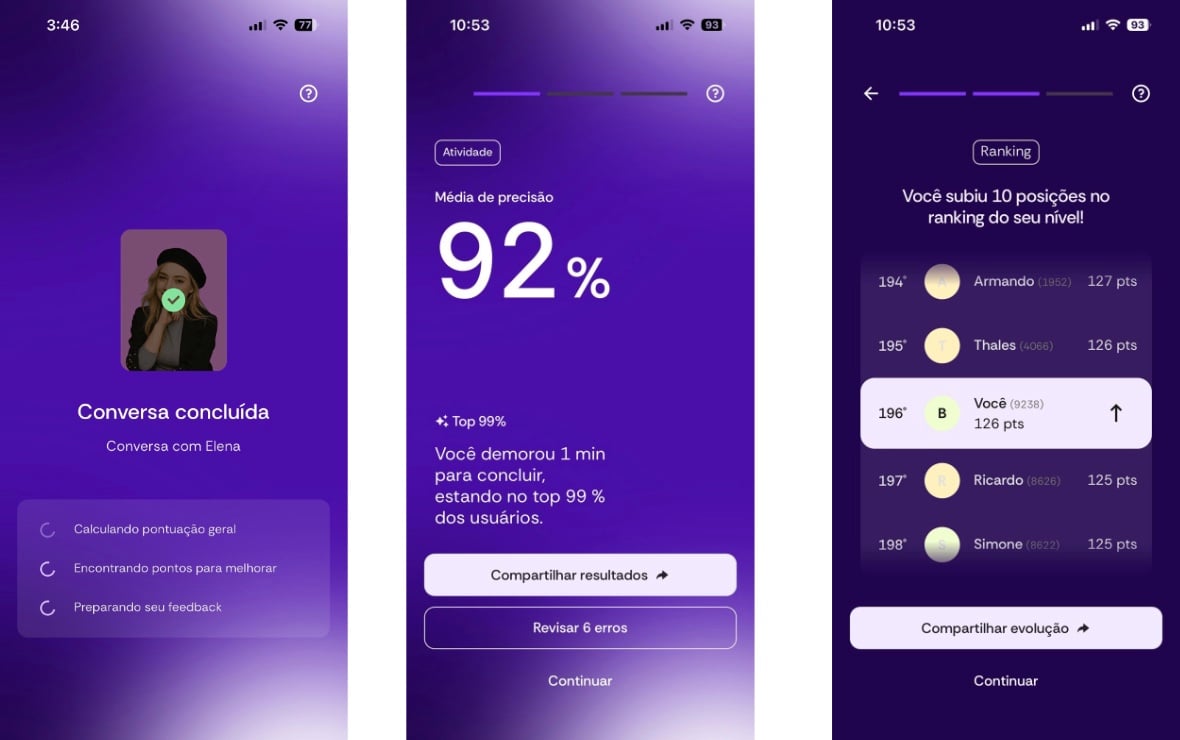
The "My Progress" feature on BeConfident automatically records important study data.
Consecutive days of practice (streak)
Total hours of conversation
Rank among student leaderboard
Certificates earned per level
These metrics help maintain motivation and identify patterns. If your streak breaks, resume the next day without guilt. Regularity over time yields better results than striving for daily perfection.
Step 7: correcting common errors and advancing to fluency
Brazilians often struggle with the pronunciation of the "th" sound, the use of prepositions, and translating expressions literally from Portuguese. Treating mistakes as a natural part of the process reduces the mental block when speaking.
BeConfident offers instant and personalized feedback, with clear and objective corrections. The "Review Mistakes" feature allows you to review corrections as many times as necessary, which reinforces learning and stops you from making the same slips.
Take the free test and start your journey to fluency today, along with thousands of students who have already improved their English conversation.
Frequently asked questions
What is the first step to learning English from scratch?
The first step is to discover your current level through a test that evaluates speaking and not just grammar. Many Brazilians have a theoretical foundation but freeze up when it's time to speak. The free BeConfident test shows you exactly where you stand and generates a study plan aligned with your level, avoiding content that is too easy or too advanced.
Do free apps work for learning English alone?
Free apps like Duolingo and Memrise help with basic vocabulary and initial listening comprehension, but they have major limitations when it comes to speaking. They prioritize simple exercises and gamification over spontaneous conversation. For a more comprehensive result, it is best to combine these input apps with a tool focused on speaking, like BeConfident, which offers unlimited conversational practice with AI.
How long does it take to advance studying alone?
A routine of 30 to 60 minutes of focused daily practice, with conversation from the very start, can lead to level A1 in 1 month, A2 in 3 months, and close to B1 in 6 months. Consistency and focus on speaking make the difference. Recent studies show that students who practice speaking every day advance up to three times faster than those who only study theory.
How to practice speaking alone without a teacher?
AI technology allows you to practice speaking alone with high quality. Platforms like BeConfident offer AI tutors with varied accents and personalities, available 24 hours a day on an app, WhatsApp, or smartwatch. You can talk about any topic, receive immediate feedback, and practice without feeling judged.
What are the most common mistakes when studying English on your own?
The most frequent mistakes include focusing only on grammar, studying isolated words instead of full sentences, not measuring progress, giving up after missing a few days, and avoiding speaking for fear of making mistakes. The most efficient path balances the four pillars—listening, speaking, vocabulary, and grammar—with a priority on conversational practice from day one.
Conclusion
Following these 7 steps makes studying English more objective and geared towards real conversation from the start. The combination of a consistent routine, immersion, and immediate feedback creates a favorable environment to advance a level in just a few months.
BeConfident reduces barriers such as embarrassment, rigid schedules, and high costs by offering unlimited conversation with specialized AI tutors. With a broad base of active students, the platform presents itself as a practical option for Brazilians who want to develop conversational fluency.
Written by: Luan Cavallaro, Founder & CMO, BeConfident
Key takeaways from this article
Discovering your actual English level with a speaking test prevents wasting time on unsuitable content.
Maintaining a daily routine of 30 to 60 minutes focuses on 4 pillars in an integrated way: listening, speaking, vocabulary, and grammar.
Combining free apps for input with unlimited AI-powered speaking practice accelerates results.
Investing in immersion with TV shows and podcasts without subtitles, while clarifying doubts on the spot with AI tutors, consolidates learning.
Measuring progress weekly and correcting mistakes with instant feedback on BeConfident increases fluency. Try it for free now and advance your English in a few weeks.
The 4 pillars to learn English from scratch
Learning English with a focus on conversation requires attention to 4 main pillars. An effective routine integrates these skills every day, rather than treating them in isolation.
Pillar | Description | Practical example | How BeConfident helps |
Listening | Auditory comprehension of native speakers | 6-minute daily podcasts | Tutors with diverse accents |
Speaking | Fluent and natural oral production | Conversations for 20 minutes a day | Unlimited practice without judgment |
Vocabulary | Active words for conversation | 20 essential phrases per week | Contextualized vocabulary by theme |
Grammar | Structures applied in speech | Real-time correction | Personalized instant feedback |
Step 1: taking the first step to learn English on your own
The first step consists of finding out exactly where you are and where you need to go. Buying books or downloading random apps without this diagnostic usually leads to frustration and wasted time.
A comprehensive placement test must evaluate grammar, vocabulary, and, most importantly, your conversational ability. BeConfident offers a free test that identifies your CEFR level (A1, A2, B1, etc.) and maps out specific strengths and weaknesses.
During the test, you already experience the AI conversational methodology and receive immediate feedback on pronunciation, grammar, and naturalness. This initial experience reduces the fear of speaking and builds a clear foundation for the next steps.
Take the free BeConfident test and find out your English level in a few minutes.
Step 2: setting up a daily routine of 30 to 60 minutes
Daily consistency yields better results than long, sporadic sessions. A focused 30-minute routine per day can get you to the A2 level in a few weeks to months, as long as it includes real conversation.
Here is a suggestion for a daily structure:
10 minutes: listening with slow podcasts, such as Coffee Break English and 6 Minute English.
10 minutes: contextualized vocabulary, memorizing 3 to 5 full sentences instead of isolated words.
20 to 30 minutes: conversation with an AI tutor on BeConfident about topics of your interest.
5 to 10 minutes: reviewing mistakes and the feedback received.
The focus on practice quality drives consistent progress.
Step 3: combining free apps with AI speaking practice
Combining free tools with AI technology increases the effectiveness of your studies. For vocabulary, it's worth using Anki, with smart flashcards, and YouTube channels like EnglishClass101. For listening, you can explore free apps like Duolingo and Memrise for basic vocabulary and auditory comprehension.
Traditional apps, however, barely develop speaking. Duolingo offers fun gamification, but does not work on spontaneous conversation. Cambly and Italki charge by the hour and depend on the availability of human tutors.
BeConfident fills this gap by offering unlimited conversation with AI tutors that simulate native American, British, and Australian accents and adapt to your topics of interest. You practice speaking anytime, with the freedom to make mistakes and repeat.
Take the free test and start practicing speaking today, with no commitment.
Step 4: creating immersion with TV shows and podcasts without subtitles
Daily immersion accelerates progress at any level. Children's content helps beginners because it uses essential vocabulary with clear pronunciation. Netflix Kids, with shows like Peppa Pig and Bluey, and slow podcasts, like 6 Minute English, work well in the beginning.
Daily exposure to native content can speed up progression from A2 to B1 in 3 to 6 months, especially when the student combines this exposure with active practice.
Reviewing doubts in the moment solidifies learning. When an expression or pronunciation comes up that you don't understand, pause and practice with the AI tutor on BeConfident. This connection between passive input and active practice anchors the new content.
Step 5: focusing on everyday phrases and technical vocabulary
Memorizing complete sentences makes spontaneous speech easier. The list below brings useful examples for common situations:
Airport: "Where is gate B12?" / "Is this seat taken?"
Meetings: "Could you repeat that?" / "I'd like to add something"
Restaurant: "What do you recommend?" / "Could I have the check, please?"
Small talk: "How was your weekend?" / "The weather is nice today"
Work: "I'm working on a project" / "Let me get back to you on that"
Professionals can advance faster by practicing technical vocabulary related to their own field. BeConfident offers personalized conversations by professional theme, with AI tutors that simulate real situations like presentations, meetings, and negotiations.
Step 6: measuring progress and avoiding the forgetting curve
Measuring progress keeps you focused and prevents the feeling of stagnation. For example: an intense but realistic goal includes a solid A1 in 1 month, A2 in 3 months, and approaching B1 in 6 months with consistent daily practice.
The "My Progress" feature on BeConfident automatically records important study data.
Consecutive days of practice (streak)
Total hours of conversation
Rank among student leaderboard
Certificates earned per level
These metrics help maintain motivation and identify patterns. If your streak breaks, resume the next day without guilt. Regularity over time yields better results than striving for daily perfection.
Step 7: correcting common errors and advancing to fluency
Brazilians often struggle with the pronunciation of the "th" sound, the use of prepositions, and translating expressions literally from Portuguese. Treating mistakes as a natural part of the process reduces the mental block when speaking.
BeConfident offers instant and personalized feedback, with clear and objective corrections. The "Review Mistakes" feature allows you to review corrections as many times as necessary, which reinforces learning and stops you from making the same slips.
Take the free test and start your journey to fluency today, along with thousands of students who have already improved their English conversation.
Frequently asked questions
What is the first step to learning English from scratch?
The first step is to discover your current level through a test that evaluates speaking and not just grammar. Many Brazilians have a theoretical foundation but freeze up when it's time to speak. The free BeConfident test shows you exactly where you stand and generates a study plan aligned with your level, avoiding content that is too easy or too advanced.
Do free apps work for learning English alone?
Free apps like Duolingo and Memrise help with basic vocabulary and initial listening comprehension, but they have major limitations when it comes to speaking. They prioritize simple exercises and gamification over spontaneous conversation. For a more comprehensive result, it is best to combine these input apps with a tool focused on speaking, like BeConfident, which offers unlimited conversational practice with AI.
How long does it take to advance studying alone?
A routine of 30 to 60 minutes of focused daily practice, with conversation from the very start, can lead to level A1 in 1 month, A2 in 3 months, and close to B1 in 6 months. Consistency and focus on speaking make the difference. Recent studies show that students who practice speaking every day advance up to three times faster than those who only study theory.
How to practice speaking alone without a teacher?
AI technology allows you to practice speaking alone with high quality. Platforms like BeConfident offer AI tutors with varied accents and personalities, available 24 hours a day on an app, WhatsApp, or smartwatch. You can talk about any topic, receive immediate feedback, and practice without feeling judged.
What are the most common mistakes when studying English on your own?
The most frequent mistakes include focusing only on grammar, studying isolated words instead of full sentences, not measuring progress, giving up after missing a few days, and avoiding speaking for fear of making mistakes. The most efficient path balances the four pillars—listening, speaking, vocabulary, and grammar—with a priority on conversational practice from day one.
Conclusion
Following these 7 steps makes studying English more objective and geared towards real conversation from the start. The combination of a consistent routine, immersion, and immediate feedback creates a favorable environment to advance a level in just a few months.
BeConfident reduces barriers such as embarrassment, rigid schedules, and high costs by offering unlimited conversation with specialized AI tutors. With a broad base of active students, the platform presents itself as a practical option for Brazilians who want to develop conversational fluency.