




How to stop being shy about speaking another language in 7 steps
How to stop being shy about speaking another language in 7 steps
How to stop being shy about speaking another language in 7 steps
Written by: Luan Cavallaro, Founder & CMO, BeConfident
Key takeaways from this article
Shift your mindset on mistakes: treat mistakes as data that accelerate fluency, not as failures.
Practice alone every day: use shadowing and reading out loud for 15 minutes to gain pronunciation and natural rhythm.
Use AI 24/7 without judgment: practice real conversations, like meetings or travels, in a safe environment.
Review mistakes and measure progress: track weekly goals to maintain motivation and see evolution.
Transition to conversations with humans: use the foundation built with AI to speak with confidence. Try BeConfident for free for unlimited practice.
Why embarrassment happens and how to change your mindset
The embarrassment of speaking another language usually stems from performance anxiety and fear of judgment. Performance anxiety affects millions of adults, especially in learning contexts. The traditional classroom model reinforces perfectionism and creates a cycle of avoiding speaking, which further increases fear.
Recognizing that making mistakes is part of the process reduces this pressure. The 5-4-3-2-1 technique also helps reduce anxiety before speaking. You identify 5 things you see, 4 you can touch, 3 you hear, 2 you smell, and 1 you taste. This sequence brings focus to the present and calms the body.
Step 1: shift your mindset on mistakes
Natives usually value effort more than perfection. Research indicates that daily self-talk for 5 minutes builds confidence progressively. Treating every mistake as learning data, and not as a personal failure, reduces embarrassment.
Using daily affirmations helps to consolidate this new perspective. Examples: "Every mistake brings me closer to fluency" and "My courage to try is more important than perfection." An engineer who applied this technique reported: "I stopped seeing meetings in English as tests and started seeing them as opportunities for practice."
Travelers benefit from remembering that natives are usually impressed by any attempt to communicate. People with personal goals can start by practicing alone, which decreases the feeling of exposure.
Step 2: practice alone with shadowing and reading out loud
Shadowing, which consists of repeating out loud what you hear, accelerates fluency. This technique trains ear, mouth, and brain at the same time.
Choosing content aligned with your goal makes practice more natural. Professionals can use business podcasts. Travelers can use travel guides. Those with personal goals can use clips from series or short videos. The goal is to practice 15 minutes a day, first focusing on intonation and rhythm, then on precision.
Reading out loud strengthens speech muscles and improves natural rhythm. You can start with texts you already know and, gradually, progress to more complex materials. Apps like BeConfident complement this routine with instant pronunciation feedback, which reduces doubt about whether you are speaking clearly.
Step 3: start safe conversations with AI 24/7
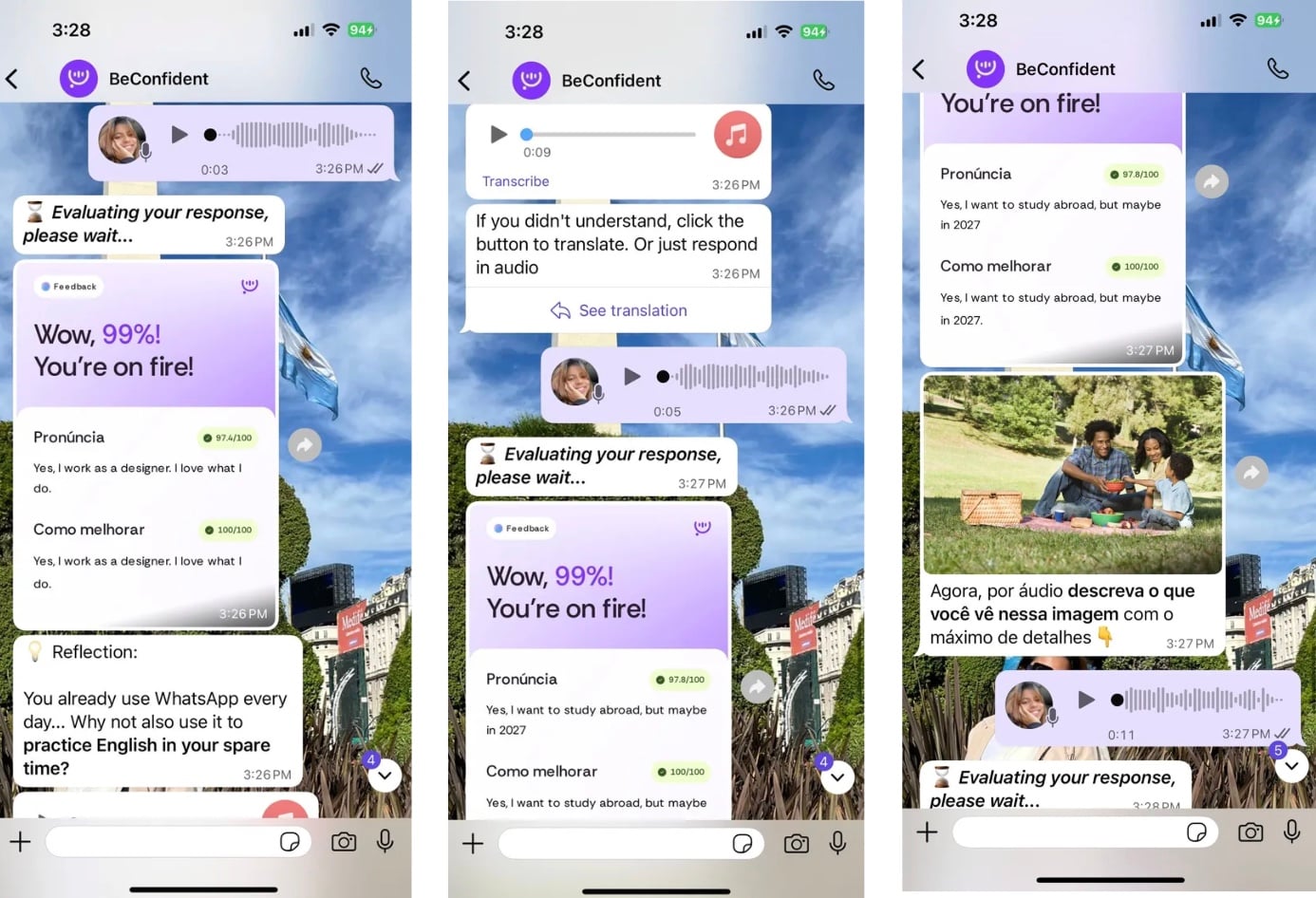
Artificial intelligence facilitates language practice by reducing the fear of judgment. BeConfident offers AI tutors with different personalities and native accents, such as American, British, Australian, Canadian, South African, and Indian. While Duolingo prioritizes gamification with a focus on exercises, BeConfident prioritizes natural conversations about topics relevant to your daily life.
Professionals can practice presentations, meetings, and negotiations. Travelers can simulate airport, hotel, and restaurant situations. People with personal goals can talk about pop culture, sports, or hobbies. Practice is unlimited and accessible via app, WhatsApp, or smartwatch, making it easy to fit study into the routine.
Try it for free and start learning English today.
Step 4: simulate real scenarios
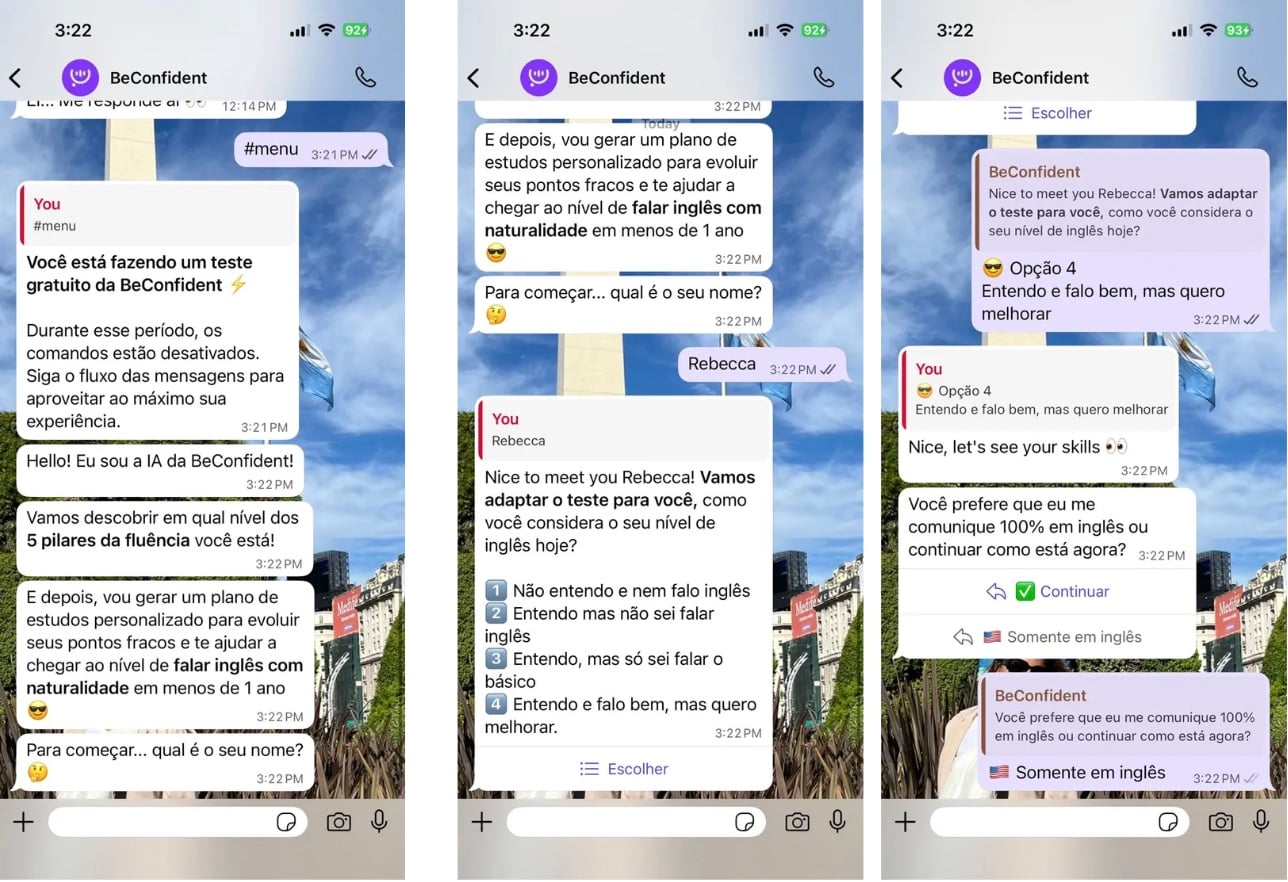
Simulating specific situations prepares the brain for the real moment. Role-play with AI allows you to practice challenging conversations in a low-stress environment and build confidence with 5 to 10 minutes of practice. This targeted repetition reduces drawing a blank when speaking to someone.
BeConfident offers structured tracks for different contexts. Some examples are corporate meetings, job interviews, hotel check-ins, restaurant ordering, and casual conversations with natives. Each track combines specific vocabulary with immediate speaking practice.
A lawyer reported: "I practiced contract negotiations with the AI before an international meeting. When the real moment came, the words flowed naturally." Repetition in a safe environment creates verbal muscle memory and diminishes the feeling of improvisation.
Step 5: review mistakes and measure progress
Receiving structured feedback accelerates learning and reduces insecurity. BeConfident's "Review Mistakes" feature gathers grammar corrections, pronunciation, and more natural expressions. You can review as many times as you want and spot error patterns.
The "My Progress" menu shows consecutive days of practice, ranking position, hours of conversation, and certificates. This view of progress creates continuous motivation without excessive pressure, as you see the accumulated effort.
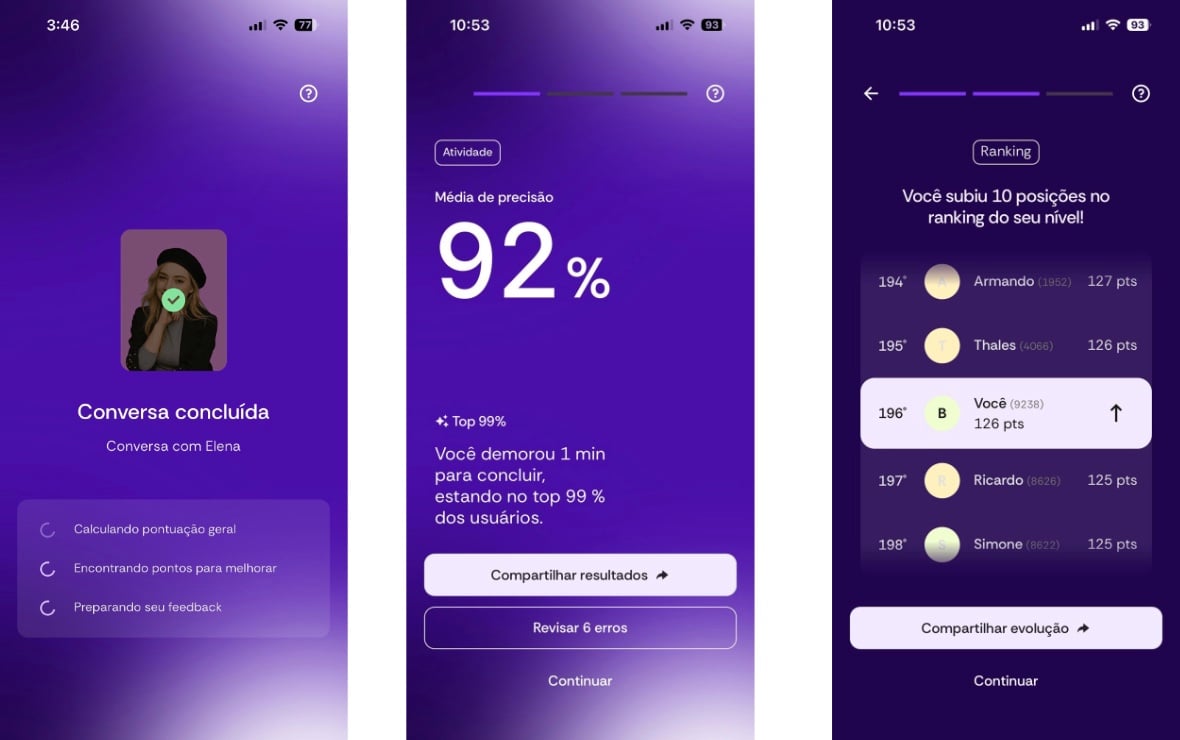
Setting clear weekly goals makes advancement more concrete. Some examples are 30 minutes of conversation, 5 new words used in full sentences, or 3 different scenarios practiced. Celebrating small victories strengthens confidence. Many students report noticeable fluency in 4 to 6 weeks of consistent practice.
Step 6: expand with curiosities and doubts
Using your own curiosity as a driving force for study makes the process lighter. BeConfident's "Tell me something new" and "I have a question" features expand the repertoire beyond a fixed curriculum. Trends from 2024 to 2026 show that AI companions work best when they combine structured learning with free exploration.
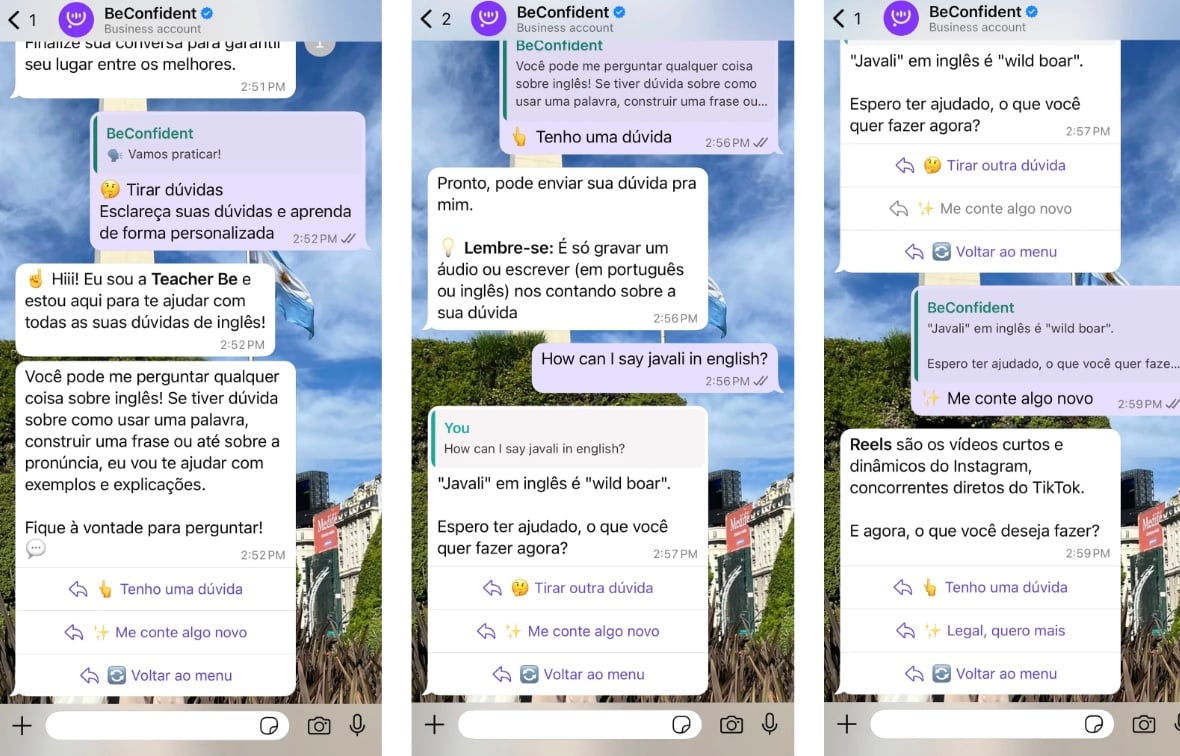
You can ask for curiosities about your professional area, travel destinations, or personal interests. For example, an accountant reported finding specific financial terms while practicing with Teacher Be. A fan of series learned current slang by discussing recent episodes.
This approach creates an emotional connection with the language and transforms study into discovery. Fluency starts to include naturalness of expression, and not just mastery of grammar rules.
Step 7: transition to conversations with humans with confidence
AI practice serves as a bridge to conversations with people. Self-talk techniques reduce isolation and build confidence for public speaking, which facilitates the transition to real interactions.
Language exchange platforms like Tandem or HelloTalk allow you to apply the vocabulary and structures trained in BeConfident. The confidence built in a judgment-free environment tends to transfer to these conversations.
Participating in local or online conversation groups reinforces this movement. Many students report that, after a few weeks of practicing with AI, talking to people becomes more natural, as there is already concrete proof that they can communicate.
Comparison: BeConfident vs alternatives
Solution | Accessible 24/7 | Unlimited practice | No judgment | Personalized |
BeConfident | ✓ | ✓ | ✓ | ✓ |
Duolingo | ✓ | ✗ | ✓ | ✗ |
Cambly | ✗ | ✗ | ✗ | ✓ |
Traditional schools | ✗ | ✗ | ✗ | ✗ |
User testimonials reinforce these results. Examples include reports like "In one month I was already speaking more naturally, without locking up" and "Daily practice gave me the confidence to get my promotion." With 3 million users in more than 100 countries, BeConfident shows that judgment-free practice generates consistent progress.
Try it for free to lose the embarrassment of speaking English today.
Frequently asked questions
How to lose the fear of speaking another language?
Losing fear requires a shift in mindset about mistakes and gradual exposure. Treat mistakes as learning data. Practice alone with shadowing and daily self-talk. Use AI for judgment-free conversations before talking to humans. BeConfident offers this progression in a structured environment.
How to stop being embarrassed to speak English?
Embarrassment decreases when you expose yourself in small doses and receive positive feedback. Practice specific scenarios linked to your goals, such as meetings, travel, or interviews. Recognize each step forward and remember that natives value effort. Tools like BeConfident reduce social pressure in the beginning.
Is it possible to speak English without fear?
Speaking English with less fear becomes possible with structured practice and a supportive environment. Combine mindfulness techniques, like the 5-4-3-2-1, with regular conversation. Confidence grows when you practice without judgment and receive clear and consistent corrections.
What is the 5-4-3-2-1 technique for anxiety?
The 5-4-3-2-1 technique is a grounding strategy to reduce anxiety. You identify 5 things you see, 4 you can touch, 3 you hear, 2 you smell, and 1 you taste. This sequence helps calm the body before speaking English and focus on the present moment.
How long does it take to overcome the embarrassment of speaking English?
The time varies, but many students report significant improvement in 4 to 6 weeks with 30 daily minutes of practice. The pace depends on the starting level, the frequency of study, and the quality of feedback. AI tools accelerate this process by allowing unlimited and targeted practice.
Conclusion: next steps to speak English without embarrassment
The 7 steps presented form a practical path to overcome the embarrassment of speaking English. The journey goes through mindset shift, solo practice, conversation with AI, scenario simulation, structured review, curiosity-guided exploration, and transition to conversations with humans.
BeConfident reduces common barriers like high cost, rigid schedules, fear of judgment, and lack of opportunity to speak. With personalized AI tutors, 24/7 practice, and instant feedback, you develop fluency in a controlled and predictable environment.
Do not let embarrassment limit professional opportunities, travel, or personal projects. Thousands of Brazilians have already moved forward with this kind of structured and judgment-free practice.
Written by: Luan Cavallaro, Founder & CMO, BeConfident
Key takeaways from this article
Shift your mindset on mistakes: treat mistakes as data that accelerate fluency, not as failures.
Practice alone every day: use shadowing and reading out loud for 15 minutes to gain pronunciation and natural rhythm.
Use AI 24/7 without judgment: practice real conversations, like meetings or travels, in a safe environment.
Review mistakes and measure progress: track weekly goals to maintain motivation and see evolution.
Transition to conversations with humans: use the foundation built with AI to speak with confidence. Try BeConfident for free for unlimited practice.
Why embarrassment happens and how to change your mindset
The embarrassment of speaking another language usually stems from performance anxiety and fear of judgment. Performance anxiety affects millions of adults, especially in learning contexts. The traditional classroom model reinforces perfectionism and creates a cycle of avoiding speaking, which further increases fear.
Recognizing that making mistakes is part of the process reduces this pressure. The 5-4-3-2-1 technique also helps reduce anxiety before speaking. You identify 5 things you see, 4 you can touch, 3 you hear, 2 you smell, and 1 you taste. This sequence brings focus to the present and calms the body.
Step 1: shift your mindset on mistakes
Natives usually value effort more than perfection. Research indicates that daily self-talk for 5 minutes builds confidence progressively. Treating every mistake as learning data, and not as a personal failure, reduces embarrassment.
Using daily affirmations helps to consolidate this new perspective. Examples: "Every mistake brings me closer to fluency" and "My courage to try is more important than perfection." An engineer who applied this technique reported: "I stopped seeing meetings in English as tests and started seeing them as opportunities for practice."
Travelers benefit from remembering that natives are usually impressed by any attempt to communicate. People with personal goals can start by practicing alone, which decreases the feeling of exposure.
Step 2: practice alone with shadowing and reading out loud
Shadowing, which consists of repeating out loud what you hear, accelerates fluency. This technique trains ear, mouth, and brain at the same time.
Choosing content aligned with your goal makes practice more natural. Professionals can use business podcasts. Travelers can use travel guides. Those with personal goals can use clips from series or short videos. The goal is to practice 15 minutes a day, first focusing on intonation and rhythm, then on precision.
Reading out loud strengthens speech muscles and improves natural rhythm. You can start with texts you already know and, gradually, progress to more complex materials. Apps like BeConfident complement this routine with instant pronunciation feedback, which reduces doubt about whether you are speaking clearly.
Step 3: start safe conversations with AI 24/7
Artificial intelligence facilitates language practice by reducing the fear of judgment. BeConfident offers AI tutors with different personalities and native accents, such as American, British, Australian, Canadian, South African, and Indian. While Duolingo prioritizes gamification with a focus on exercises, BeConfident prioritizes natural conversations about topics relevant to your daily life.
Professionals can practice presentations, meetings, and negotiations. Travelers can simulate airport, hotel, and restaurant situations. People with personal goals can talk about pop culture, sports, or hobbies. Practice is unlimited and accessible via app, WhatsApp, or smartwatch, making it easy to fit study into the routine.
Try it for free and start learning English today.
Step 4: simulate real scenarios
Simulating specific situations prepares the brain for the real moment. Role-play with AI allows you to practice challenging conversations in a low-stress environment and build confidence with 5 to 10 minutes of practice. This targeted repetition reduces drawing a blank when speaking to someone.
BeConfident offers structured tracks for different contexts. Some examples are corporate meetings, job interviews, hotel check-ins, restaurant ordering, and casual conversations with natives. Each track combines specific vocabulary with immediate speaking practice.
A lawyer reported: "I practiced contract negotiations with the AI before an international meeting. When the real moment came, the words flowed naturally." Repetition in a safe environment creates verbal muscle memory and diminishes the feeling of improvisation.
Step 5: review mistakes and measure progress
Receiving structured feedback accelerates learning and reduces insecurity. BeConfident's "Review Mistakes" feature gathers grammar corrections, pronunciation, and more natural expressions. You can review as many times as you want and spot error patterns.
The "My Progress" menu shows consecutive days of practice, ranking position, hours of conversation, and certificates. This view of progress creates continuous motivation without excessive pressure, as you see the accumulated effort.
Setting clear weekly goals makes advancement more concrete. Some examples are 30 minutes of conversation, 5 new words used in full sentences, or 3 different scenarios practiced. Celebrating small victories strengthens confidence. Many students report noticeable fluency in 4 to 6 weeks of consistent practice.
Step 6: expand with curiosities and doubts
Using your own curiosity as a driving force for study makes the process lighter. BeConfident's "Tell me something new" and "I have a question" features expand the repertoire beyond a fixed curriculum. Trends from 2024 to 2026 show that AI companions work best when they combine structured learning with free exploration.
You can ask for curiosities about your professional area, travel destinations, or personal interests. For example, an accountant reported finding specific financial terms while practicing with Teacher Be. A fan of series learned current slang by discussing recent episodes.
This approach creates an emotional connection with the language and transforms study into discovery. Fluency starts to include naturalness of expression, and not just mastery of grammar rules.
Step 7: transition to conversations with humans with confidence
AI practice serves as a bridge to conversations with people. Self-talk techniques reduce isolation and build confidence for public speaking, which facilitates the transition to real interactions.
Language exchange platforms like Tandem or HelloTalk allow you to apply the vocabulary and structures trained in BeConfident. The confidence built in a judgment-free environment tends to transfer to these conversations.
Participating in local or online conversation groups reinforces this movement. Many students report that, after a few weeks of practicing with AI, talking to people becomes more natural, as there is already concrete proof that they can communicate.
Comparison: BeConfident vs alternatives
Solution | Accessible 24/7 | Unlimited practice | No judgment | Personalized |
BeConfident | ✓ | ✓ | ✓ | ✓ |
Duolingo | ✓ | ✗ | ✓ | ✗ |
Cambly | ✗ | ✗ | ✗ | ✓ |
Traditional schools | ✗ | ✗ | ✗ | ✗ |
User testimonials reinforce these results. Examples include reports like "In one month I was already speaking more naturally, without locking up" and "Daily practice gave me the confidence to get my promotion." With 3 million users in more than 100 countries, BeConfident shows that judgment-free practice generates consistent progress.
Try it for free to lose the embarrassment of speaking English today.
Frequently asked questions
How to lose the fear of speaking another language?
Losing fear requires a shift in mindset about mistakes and gradual exposure. Treat mistakes as learning data. Practice alone with shadowing and daily self-talk. Use AI for judgment-free conversations before talking to humans. BeConfident offers this progression in a structured environment.
How to stop being embarrassed to speak English?
Embarrassment decreases when you expose yourself in small doses and receive positive feedback. Practice specific scenarios linked to your goals, such as meetings, travel, or interviews. Recognize each step forward and remember that natives value effort. Tools like BeConfident reduce social pressure in the beginning.
Is it possible to speak English without fear?
Speaking English with less fear becomes possible with structured practice and a supportive environment. Combine mindfulness techniques, like the 5-4-3-2-1, with regular conversation. Confidence grows when you practice without judgment and receive clear and consistent corrections.
What is the 5-4-3-2-1 technique for anxiety?
The 5-4-3-2-1 technique is a grounding strategy to reduce anxiety. You identify 5 things you see, 4 you can touch, 3 you hear, 2 you smell, and 1 you taste. This sequence helps calm the body before speaking English and focus on the present moment.
How long does it take to overcome the embarrassment of speaking English?
The time varies, but many students report significant improvement in 4 to 6 weeks with 30 daily minutes of practice. The pace depends on the starting level, the frequency of study, and the quality of feedback. AI tools accelerate this process by allowing unlimited and targeted practice.
Conclusion: next steps to speak English without embarrassment
The 7 steps presented form a practical path to overcome the embarrassment of speaking English. The journey goes through mindset shift, solo practice, conversation with AI, scenario simulation, structured review, curiosity-guided exploration, and transition to conversations with humans.
BeConfident reduces common barriers like high cost, rigid schedules, fear of judgment, and lack of opportunity to speak. With personalized AI tutors, 24/7 practice, and instant feedback, you develop fluency in a controlled and predictable environment.
Do not let embarrassment limit professional opportunities, travel, or personal projects. Thousands of Brazilians have already moved forward with this kind of structured and judgment-free practice.