




How to practice English conversation alone: the complete guide
How to practice English conversation alone: the complete guide
How to practice English conversation alone: the complete guide
Written by: Luan Cavallaro, Founder & CMO, BeConfident
Key Takeaways from This Article
The lack of conversational practice blocks fluency and impacts careers, travel, and self-confidence, even when the person already has good grammar knowledge.
Traditional methods such as shadowing, watching shows without subtitles, and self-talk help with training, but they have limitations because they do not offer real-time feedback and genuine interaction.
Apps like Duolingo, HelloTalk, and ChatGPT expand practice possibilities, but they rely on variable partner availability or lack a specific pedagogical structure for speaking.
Advanced AI in 2025-2026 scales learning with 24/7 tutors, instant feedback, and personalization, surpassing occasional human solutions and generic tools.
BeConfident brings together adaptable tutors, CEFR paths, and unlimited practice without judgment. Try it free now to accelerate your fluency.
The Problem: Lack of Conversational Practice Blocks Your Fluency
The lack of partners for conversational practice reduces professional growth opportunities, limits experiences during international travel, and weakens self-confidence. Many professionals freeze up during important negotiations, travelers feel insecure abroad, and self-taught students get stuck in theory without being able to apply what they know to speaking.
Consistency of 15-30 minutes daily is essential for developing fluency. Even so, traditional methods offer little actual opportunity for conversation. The main psychological blocks include fear of making mistakes, searching for perfect pronunciation, and performance anxiety. These factors reduce the spontaneity needed for natural conversation.
Traditional Solutions: 10 Tips to Practice Speaking Alone
These techniques bring together practices recognized as effective for practicing English on your own.
1. Shadowing: Repeat exactly what native speakers say in videos to mimic natural pronunciation and intonation.
2. Ready-made phrases: Memorize everyday expressions like "I want to go to the mall" or "I need help" to build initial confidence.
3. Reading aloud: Read English texts aloud to practice speech articulation and rhythm.
4. Shows with English subtitles: Watch your favorite content with English subtitles to train listening and learn context.
5. Daily podcasts: Listen to English frequently to increase auditory exposure naturally.
6. Lists in English: Take day-to-day notes, such as shopping lists, in the language to integrate writing and vocabulary.
7. Hobbies in English: Use the language in enjoyable activities to maintain constant motivation.
8. Comments on social media: Follow English profiles and leave comments to practice written expression in real contexts.
9. Self-talk: Speak to yourself without fear of making mistakes to develop fluency, patience, and resilience.
10. 15-30 minute routine: Prioritize consistency over intense, sporadic effort to consolidate learning.
Limitations of Traditional Methods
These techniques help maintain contact with the language, but they do not offer real-time feedback, detailed correction, or personalized adaptation. Mechanical repetition and the lack of real interaction slow down conversational progress.
Modern Apps and Tools: From Tandem to ChatGPT
Apps like HelloTalk and Tandem connect users with native speakers, but they depend on the availability and varying quality of human partners. Duolingo prioritizes gamification with basic lessons and offers little continuous conversation practice.
ChatGPT allows conversational practice using specific prompts, but it does not follow a pedagogical structure designed for speaking. Tools like Preply offer online private lessons, with prices varying by tutor.
The evolution of AI in 2025-2026 has expanded the potential of these tools. Google's NotebookLM began creating personalized content for listening and speaking. Assistants like Gemini evolved into autonomous "agents" with proactive executive capacity, paving the way for more personalized educational experiences.
The Solution Focused on Conversation: BeConfident, AI for Speaking English Safely
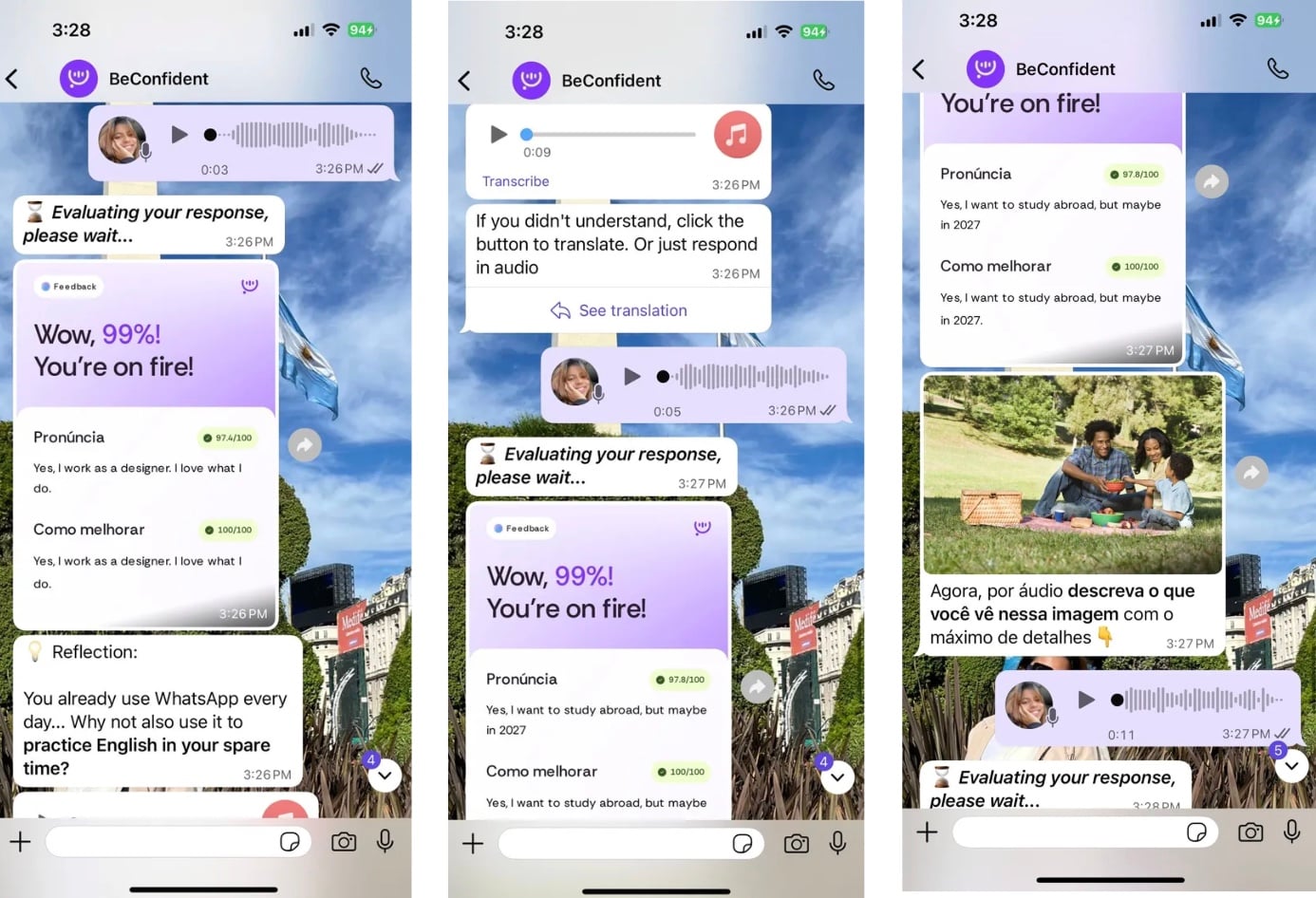
BeConfident offers AI tutors with distinct personalities and native accents, such as American, British, and South African, available 24/7 via the app, WhatsApp, or smartwatch. The solution combines personalized instant feedback with a specific pedagogical structure for conversation.
Key Features:
Adaptable Tutors: Specific profiles such as a photographer, lawyer, or writer to simulate real-world contexts.
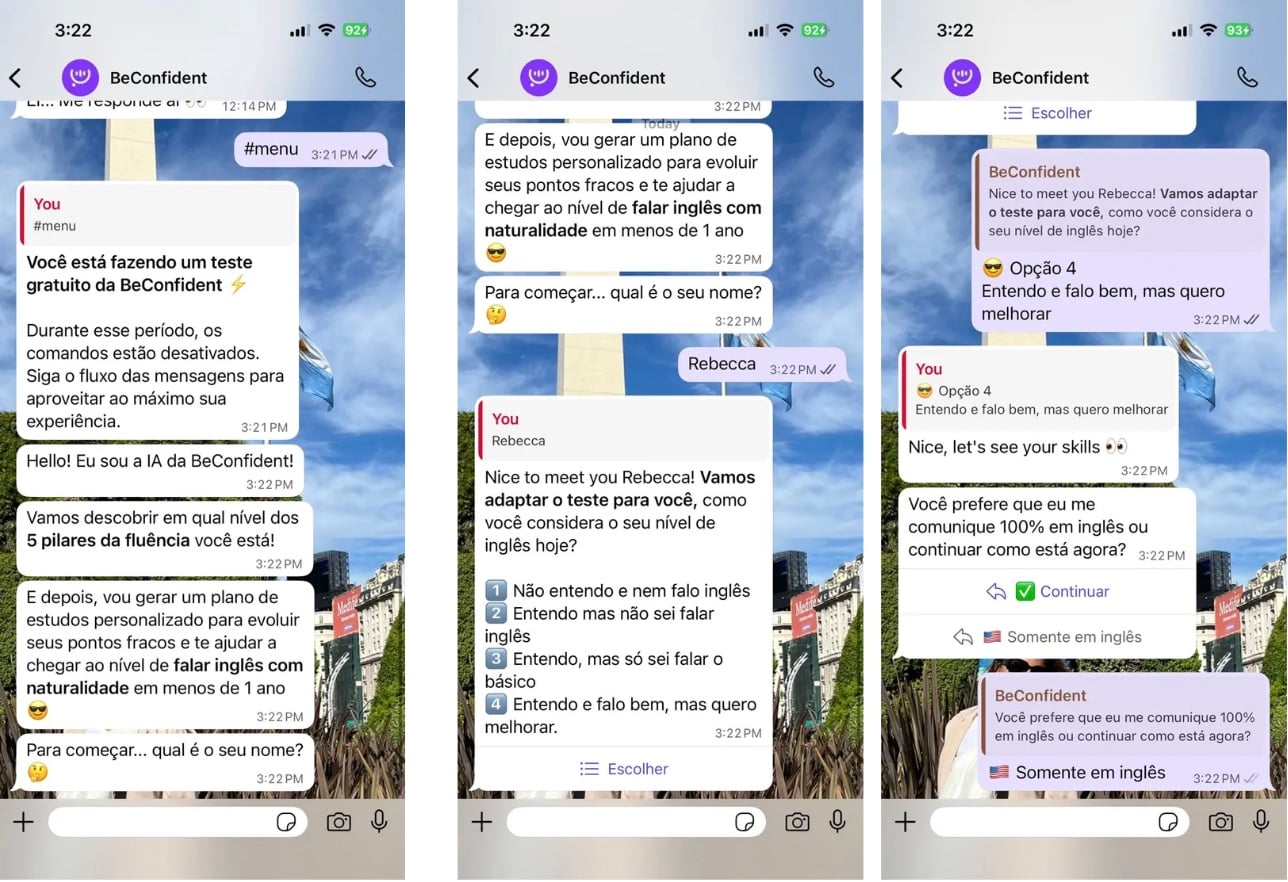
Structured Learning Paths: Lessons organized by level, identified by the free test that follows the CEFR standard.
Detailed Review: Error analysis in grammar, pronunciation, and the use of native expressions.
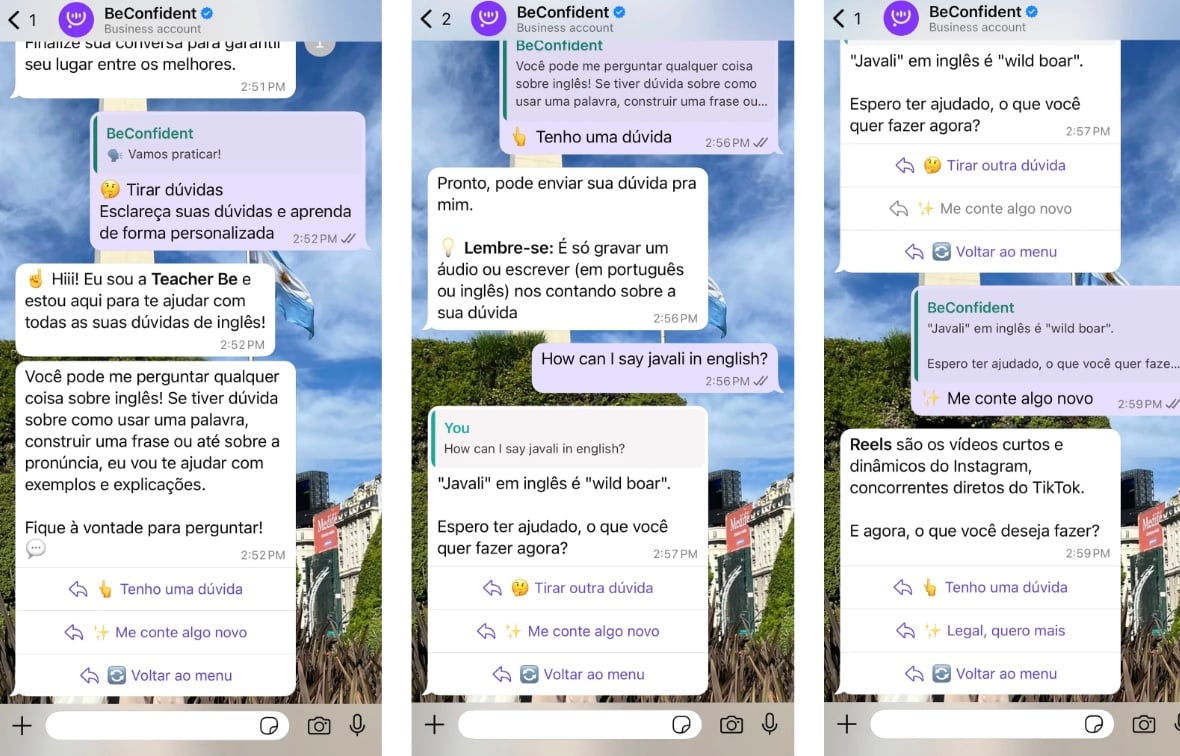
"I have a question" Feature: Direct channel to clarify questions in real time.
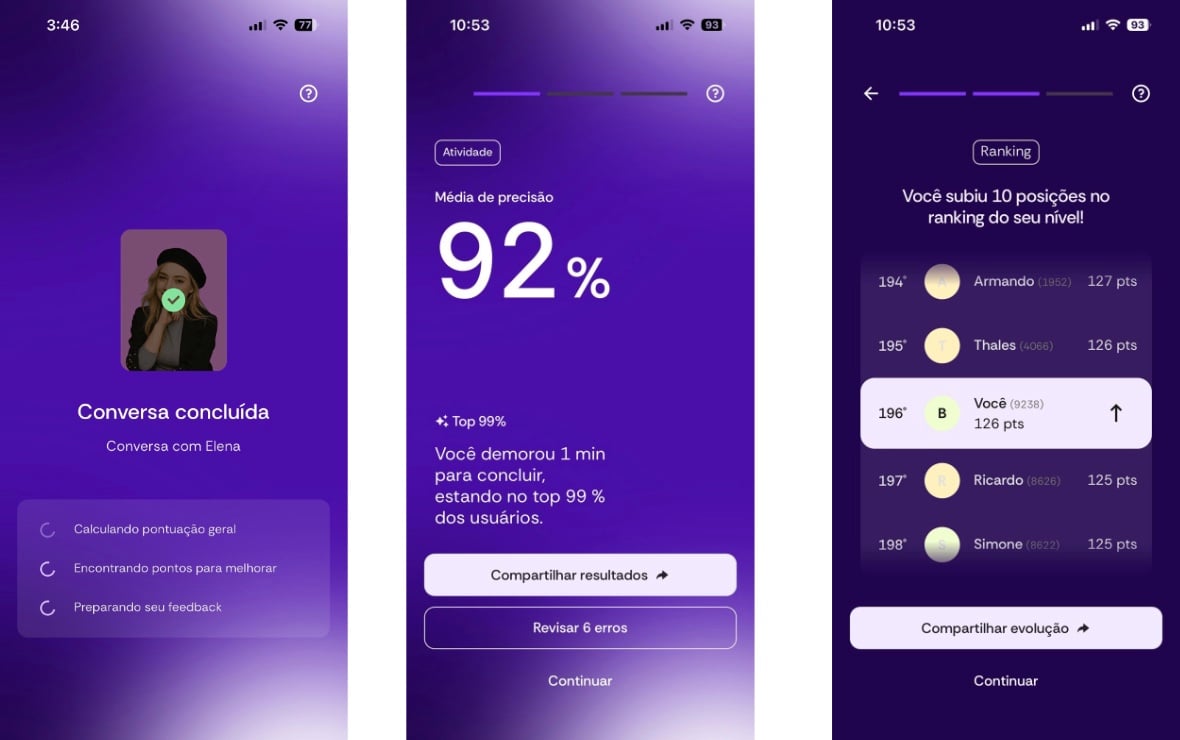
"My Progress" Menu: Track progress with metrics and certificates.
Try for free and start learning English today.
Comparison: BeConfident and Main Competitors
Tool | Unlimited Practice? | Personalized Speaking Feedback? | Affordable Price / No Judgment? | Focus on 24/7 Fluency? |
Duolingo | Yes, under the paid plan | No | Yes | No |
Cambly | Per minute | Yes, with a variable human tutor | No | No |
ChatGPT | Yes | Basic | Yes | No, lacks structured paths |
Traditional Schools | Limited practice | Restricted feedback | No | No |
BeConfident | Yes | Yes, with advanced AI | Yes | Yes |
User reports show consistent gains in fluency. One student comments: "I had a hard time speaking, even though I could read and listen well. I started using BeConfident and in one month I was already speaking more naturally, without freezing." Another user reports: "Daily practice gave me the confidence to finally converse and get my promotion."
Frequently Asked Questions (FAQ)
How to practice English speaking alone?
A good strategy combines traditional techniques, like shadowing and reading aloud, with advanced technology. BeConfident offers structured practice with AI tutors that simulate real conversations and provide instant feedback without judgment. Keeping a daily routine of 15-30 minutes increases the consistency of your results.
How to practice English speaking with ChatGPT?
ChatGPT allows basic conversation with specific prompts and helps you gain vocabulary and initial confidence. Even so, it does not follow a specific methodology for speaking. BeConfident complements this type of tool with specialized tutors, real-time pronunciation correction, and structured learning paths focused on conversational fluency.
Where to practice English without a human partner?
BeConfident offers comprehensive practice via its own app, WhatsApp, or smartwatch. The AI tutors are available 24/7 for unlimited practice and adapt to your schedule and goals. This approach reduces dependency on human partners and eliminates the risk of cancellations and scheduling conflicts.
Does BeConfident work for beginners?
Yes. The free test identifies the student's level based on the international CEFR standard and highlights strengths and areas to develop. Based on this diagnosis, the platform creates personalized learning paths from basic to advanced levels.
Is BeConfident more complete than HelloTalk?
HelloTalk depends on the availability and quality of human partners for conversation. BeConfident offers unlimited practice with consistent AI tutors, with no embarrassment and no need to coordinate schedules. The focus remains on your development, with professional, real-time feedback.
How long does it take to see results with BeConfident?
Users who practice 15 to 30 minutes a day report noticeable improvements within a few weeks. Daily consistency tends to be more effective than long, sporadic sessions. A judgment-free environment accelerates the process of unlocking your speech.
Is speaking English with AI really effective?
The evolution of AI in 2025-2026 has turned virtual assistants into robust educational tools. BeConfident uses technology that simulates natural conversations with native speakers, offers instant correction, and adjusts the content to each student's profile. Testimonials from over 140,000 students indicate consistent gains in confidence and fluency.
Conclusion: Use BeConfident to Overcome the Speaking Barrier
Not having anyone to practice English conversation with is no longer an absolute obstacle. While traditional methods and basic apps offer occasional support, BeConfident combines advanced AI, unlimited practice, and personalized feedback in a single environment.
Practicing 24/7 at your own pace builds confidence and accelerates conversational fluency. More than 140,000 students have already improved their English with BeConfident's technology, which holds a RA 1000 badge on Reclame Aqui. Try it for free and start learning English today.
Written by: Luan Cavallaro, Founder & CMO, BeConfident
Key Takeaways from This Article
The lack of conversational practice blocks fluency and impacts careers, travel, and self-confidence, even when the person already has good grammar knowledge.
Traditional methods such as shadowing, watching shows without subtitles, and self-talk help with training, but they have limitations because they do not offer real-time feedback and genuine interaction.
Apps like Duolingo, HelloTalk, and ChatGPT expand practice possibilities, but they rely on variable partner availability or lack a specific pedagogical structure for speaking.
Advanced AI in 2025-2026 scales learning with 24/7 tutors, instant feedback, and personalization, surpassing occasional human solutions and generic tools.
BeConfident brings together adaptable tutors, CEFR paths, and unlimited practice without judgment. Try it free now to accelerate your fluency.
The Problem: Lack of Conversational Practice Blocks Your Fluency
The lack of partners for conversational practice reduces professional growth opportunities, limits experiences during international travel, and weakens self-confidence. Many professionals freeze up during important negotiations, travelers feel insecure abroad, and self-taught students get stuck in theory without being able to apply what they know to speaking.
Consistency of 15-30 minutes daily is essential for developing fluency. Even so, traditional methods offer little actual opportunity for conversation. The main psychological blocks include fear of making mistakes, searching for perfect pronunciation, and performance anxiety. These factors reduce the spontaneity needed for natural conversation.
Traditional Solutions: 10 Tips to Practice Speaking Alone
These techniques bring together practices recognized as effective for practicing English on your own.
1. Shadowing: Repeat exactly what native speakers say in videos to mimic natural pronunciation and intonation.
2. Ready-made phrases: Memorize everyday expressions like "I want to go to the mall" or "I need help" to build initial confidence.
3. Reading aloud: Read English texts aloud to practice speech articulation and rhythm.
4. Shows with English subtitles: Watch your favorite content with English subtitles to train listening and learn context.
5. Daily podcasts: Listen to English frequently to increase auditory exposure naturally.
6. Lists in English: Take day-to-day notes, such as shopping lists, in the language to integrate writing and vocabulary.
7. Hobbies in English: Use the language in enjoyable activities to maintain constant motivation.
8. Comments on social media: Follow English profiles and leave comments to practice written expression in real contexts.
9. Self-talk: Speak to yourself without fear of making mistakes to develop fluency, patience, and resilience.
10. 15-30 minute routine: Prioritize consistency over intense, sporadic effort to consolidate learning.
Limitations of Traditional Methods
These techniques help maintain contact with the language, but they do not offer real-time feedback, detailed correction, or personalized adaptation. Mechanical repetition and the lack of real interaction slow down conversational progress.
Modern Apps and Tools: From Tandem to ChatGPT
Apps like HelloTalk and Tandem connect users with native speakers, but they depend on the availability and varying quality of human partners. Duolingo prioritizes gamification with basic lessons and offers little continuous conversation practice.
ChatGPT allows conversational practice using specific prompts, but it does not follow a pedagogical structure designed for speaking. Tools like Preply offer online private lessons, with prices varying by tutor.
The evolution of AI in 2025-2026 has expanded the potential of these tools. Google's NotebookLM began creating personalized content for listening and speaking. Assistants like Gemini evolved into autonomous "agents" with proactive executive capacity, paving the way for more personalized educational experiences.
The Solution Focused on Conversation: BeConfident, AI for Speaking English Safely
BeConfident offers AI tutors with distinct personalities and native accents, such as American, British, and South African, available 24/7 via the app, WhatsApp, or smartwatch. The solution combines personalized instant feedback with a specific pedagogical structure for conversation.
Key Features:
Adaptable Tutors: Specific profiles such as a photographer, lawyer, or writer to simulate real-world contexts.
Structured Learning Paths: Lessons organized by level, identified by the free test that follows the CEFR standard.
Detailed Review: Error analysis in grammar, pronunciation, and the use of native expressions.
"I have a question" Feature: Direct channel to clarify questions in real time.
"My Progress" Menu: Track progress with metrics and certificates.
Try for free and start learning English today.
Comparison: BeConfident and Main Competitors
Tool | Unlimited Practice? | Personalized Speaking Feedback? | Affordable Price / No Judgment? | Focus on 24/7 Fluency? |
Duolingo | Yes, under the paid plan | No | Yes | No |
Cambly | Per minute | Yes, with a variable human tutor | No | No |
ChatGPT | Yes | Basic | Yes | No, lacks structured paths |
Traditional Schools | Limited practice | Restricted feedback | No | No |
BeConfident | Yes | Yes, with advanced AI | Yes | Yes |
User reports show consistent gains in fluency. One student comments: "I had a hard time speaking, even though I could read and listen well. I started using BeConfident and in one month I was already speaking more naturally, without freezing." Another user reports: "Daily practice gave me the confidence to finally converse and get my promotion."
Frequently Asked Questions (FAQ)
How to practice English speaking alone?
A good strategy combines traditional techniques, like shadowing and reading aloud, with advanced technology. BeConfident offers structured practice with AI tutors that simulate real conversations and provide instant feedback without judgment. Keeping a daily routine of 15-30 minutes increases the consistency of your results.
How to practice English speaking with ChatGPT?
ChatGPT allows basic conversation with specific prompts and helps you gain vocabulary and initial confidence. Even so, it does not follow a specific methodology for speaking. BeConfident complements this type of tool with specialized tutors, real-time pronunciation correction, and structured learning paths focused on conversational fluency.
Where to practice English without a human partner?
BeConfident offers comprehensive practice via its own app, WhatsApp, or smartwatch. The AI tutors are available 24/7 for unlimited practice and adapt to your schedule and goals. This approach reduces dependency on human partners and eliminates the risk of cancellations and scheduling conflicts.
Does BeConfident work for beginners?
Yes. The free test identifies the student's level based on the international CEFR standard and highlights strengths and areas to develop. Based on this diagnosis, the platform creates personalized learning paths from basic to advanced levels.
Is BeConfident more complete than HelloTalk?
HelloTalk depends on the availability and quality of human partners for conversation. BeConfident offers unlimited practice with consistent AI tutors, with no embarrassment and no need to coordinate schedules. The focus remains on your development, with professional, real-time feedback.
How long does it take to see results with BeConfident?
Users who practice 15 to 30 minutes a day report noticeable improvements within a few weeks. Daily consistency tends to be more effective than long, sporadic sessions. A judgment-free environment accelerates the process of unlocking your speech.
Is speaking English with AI really effective?
The evolution of AI in 2025-2026 has turned virtual assistants into robust educational tools. BeConfident uses technology that simulates natural conversations with native speakers, offers instant correction, and adjusts the content to each student's profile. Testimonials from over 140,000 students indicate consistent gains in confidence and fluency.
Conclusion: Use BeConfident to Overcome the Speaking Barrier
Not having anyone to practice English conversation with is no longer an absolute obstacle. While traditional methods and basic apps offer occasional support, BeConfident combines advanced AI, unlimited practice, and personalized feedback in a single environment.
Practicing 24/7 at your own pace builds confidence and accelerates conversational fluency. More than 140,000 students have already improved their English with BeConfident's technology, which holds a RA 1000 badge on Reclame Aqui. Try it for free and start learning English today.