




How to use ChatGPT to learn English by having conversations?
How to use ChatGPT to learn English by having conversations?
How to use ChatGPT to learn English by having conversations?
Written by: Luan Cavallaro, Founder & CMO, BeConfident
Key Takeaways from This Article
Setting up ChatGPT with GPT-4o, advanced voice mode, and a native persona creates real conversation simulations tailored to your CEFR level.
Using ready-made prompts by level (beginner, intermediate, advanced) guides practice in role-plays such as ordering in restaurants, job interviews, and complex debates.
Enabling auto-corrections and recording sessions helps track recurring mistakes and weekly progress, with alternating topics to avoid stagnation.
Recognizing the limitations of ChatGPT, such as inaccurate pronunciation feedback and artificial conversations, avoids unrealistic expectations about preparing for real interactions.
To maintain sustainable fluency, migrating to BeConfident with native tutors and 24/7 practice is a natural step: start your transition with a free trial.
How to Set Up ChatGPT to Practice English Conversation
A good setup defines the quality of conversations and results. Follow these 5 steps in sequence to build a consistent practice environment.
1. Activate GPT-4o with advanced voice mode: access settings and enable Advanced Voice Mode. This feature allows for more natural and fluid conversations, building the technical foundation for subsequent adjustments.
2. Define a native persona: with voice mode active, personalize the speaker. Instruct ChatGPT to assume the role of a specific native speaker, such as "Act as a New Yorker, casual and friendly." This makes interactions more authentic than speaking with a generic voice.
3. Adjust your CEFR level: next, state your level (A2, B1, B2) so that ChatGPT adapts the vocabulary and complexity of the conversations. This adjustment avoids dialogues that are too easy or too advanced.
4. Enable auto-corrections: after setting the persona and level, request immediate feedback on grammar and the naturalness of expressions. This turns every speech into an opportunity for timely correction.
5. Record your sessions: finally, use recording apps to review conversations and identify error patterns. This review complements real-time feedback and shows your evolution over the weeks.
ChatGPT's advanced voice mode in 2026 integrates audio and text, allowing you to switch between speaking and writing in the same conversation. You can ask spoken questions and receive visual responses with charts, or type silently and listen to responses on headphones.
Best Prompts for Learning English by Chatting with ChatGPT
Clear prompts guide the type of situation you will practice. The list below organizes examples by level to make selection easier.
Beginner (A2-B1):
1. Greetings and introductions: "Let's practice introductions. You're meeting me at a coffee shop for the first time. Start the conversation and correct any mistakes I make."
2. Ordering food: "Roleplay: You're a waiter at an American restaurant. I'll order food. Correct my pronunciation and suggest more natural expressions."
3. Asking for directions in the city: "I'm lost in New York. You're a local helping me find the subway. Practice giving and asking for directions with me."
Intermediate (B1-B2):
4. Job interview: "Conduct a job interview for a software engineer position. Ask typical questions and give feedback on my answers' clarity and professionalism."
5. Hotel complaint: "I'm complaining about my hotel room. You're the manager. Help me practice expressing dissatisfaction politely but firmly."
6. Planning a trip: "Let's plan a weekend trip to California. Discuss activities, budget, and logistics. Correct my grammar and suggest better vocabulary."
7. Work meeting: "We're colleagues discussing a project deadline. Practice professional English and meeting vocabulary with immediate corrections."
Advanced (B2-C1):
8. Tech debate: "Debate the pros and cons of artificial intelligence in education. Challenge my arguments and help me express complex ideas more naturally."
9. Business negotiation: "We're negotiating a business contract. Practice persuasive language, conditional sentences, and professional terminology."
10. Cultural discussion: "Compare Brazilian and American work cultures. Help me articulate nuanced opinions and use advanced connectors."
How to Use ChatGPT's Voice Mode for Pronunciation and Listening
Voice mode makes practice feel closer to a real conversation. Use this feature to train for specific situations and reinforce listening comprehension.
Practice role-plays such as airport simulations ("I need to check in for my flight to São Paulo") or professional meetings ("Let's discuss the quarterly results"). These scenes help connect vocabulary to concrete contexts.
To improve pronunciation, use prompts like "Listen to my pronunciation and explain specifically what sounds wrong. Repeat the correct version slowly." Afterwards, experiment with different accents by requesting "Switch to British accent" or "Use Australian pronunciation" to broaden your exposure.
ChatGPT cannot accurately evaluate pronunciation or intonation, which are essential elements for real communication. Conversations can also feel artificial and choppy, requiring higher proficiency for voice recognition to work consistently.
Correcting Mistakes and Tracking Progress in ChatGPT
Well-defined feedback prompts turn every conversation into a structured study session. Use different types of commands throughout the interaction.
"Correct this sentence and explain the mistake:": use this prompt during the conversation when you notice you have made a specific mistake. This immediate correction prevents the mistake from being repeated in the same session.
"Summarize my main mistakes from this conversation:": at the end of each session, use this prompt to get an overview of your error patterns. This summary complements individual corrections and shows which issues appear most frequently.
"Suggest three more natural ways to say this:": once you have identified your recurring mistakes, use this prompt to expand your repertoire with more natural alternatives for the problematic expressions.
Reviewing your conversation history regularly helps identify patterns of progress. Rotate topics weekly to avoid stagnation: week 1, work; week 2, travel; week 3, hobbies. This variation reduces the frustration of forgetting words when the context changes.
Limitations of ChatGPT and Why BeConfident is the Best Alternative
Despite configuration strategies, ChatGPT has significant limitations for sustainable learning. The table below compares essential resources and shows why BeConfident stands out in critical areas for fluency.
Feature | ChatGPT | BeConfident | BeConfident Advantage |
Availability | Browser / basic app | App, WhatsApp, smartwatch | 24/7 practice integrated into daily life |
Accents | Limited, artificial | Native accents (American, British, South African, etc.) | Authentic exposure to variations |
Personalization | Generic, no memory | Customized paths by level | Learning tailored to needs |
Feedback | Inconsistent, inaccurate | Instant specialized correction | Faster and more accurate evolution |
Conversations with ChatGPT sound artificial and do not fully prepare you for real interactions. Additionally, ChatGPT makes mistakes in grammar, vocabulary, and explanations, mixing formal and informal language.
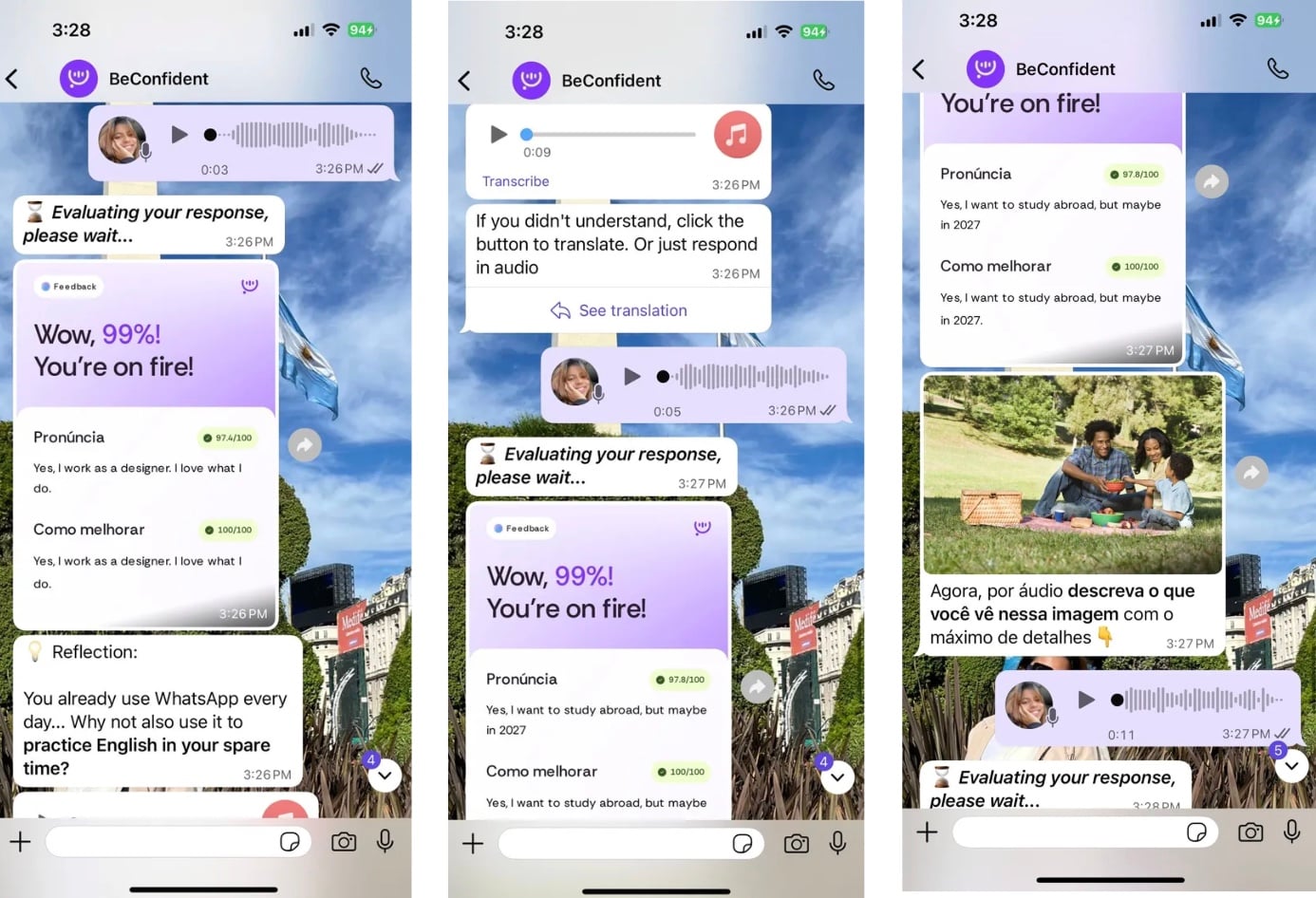
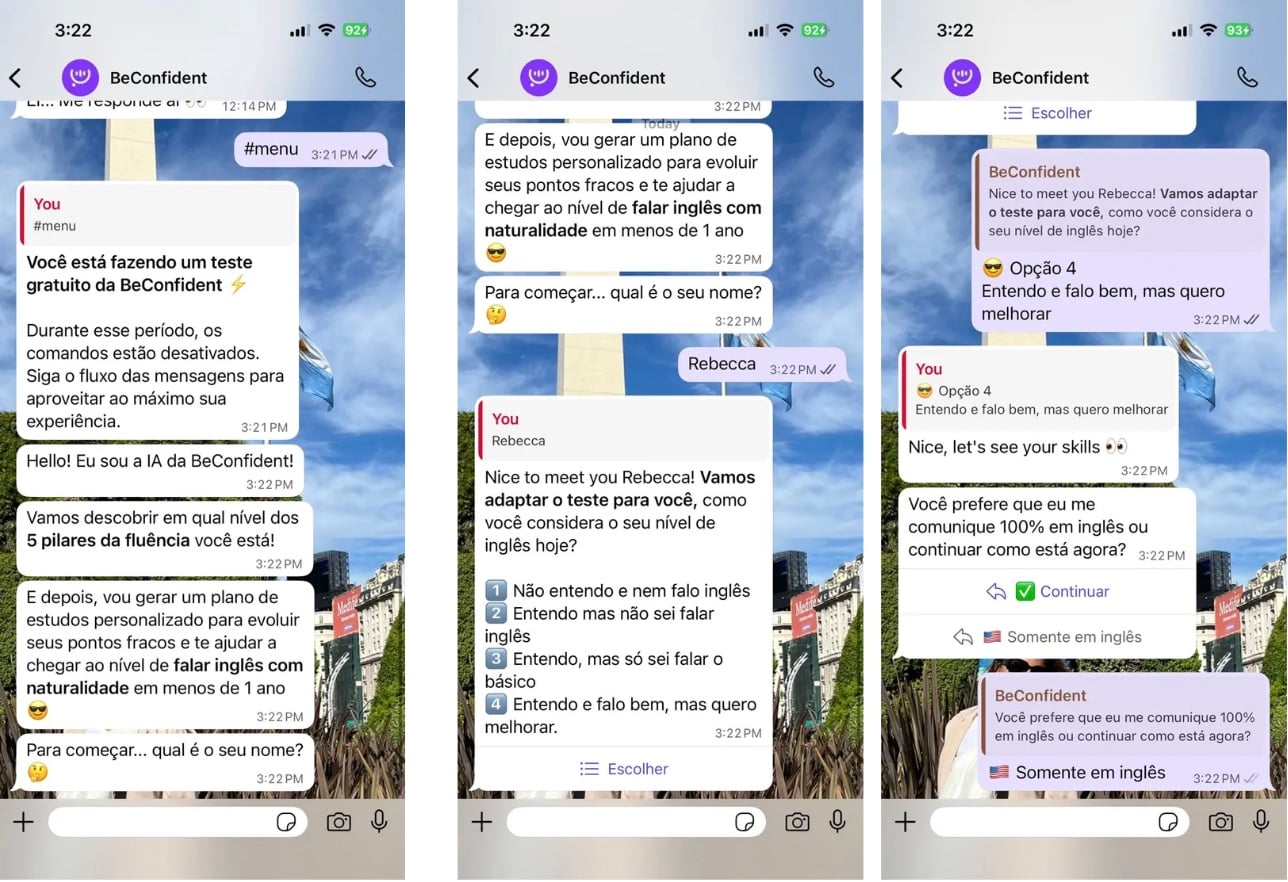
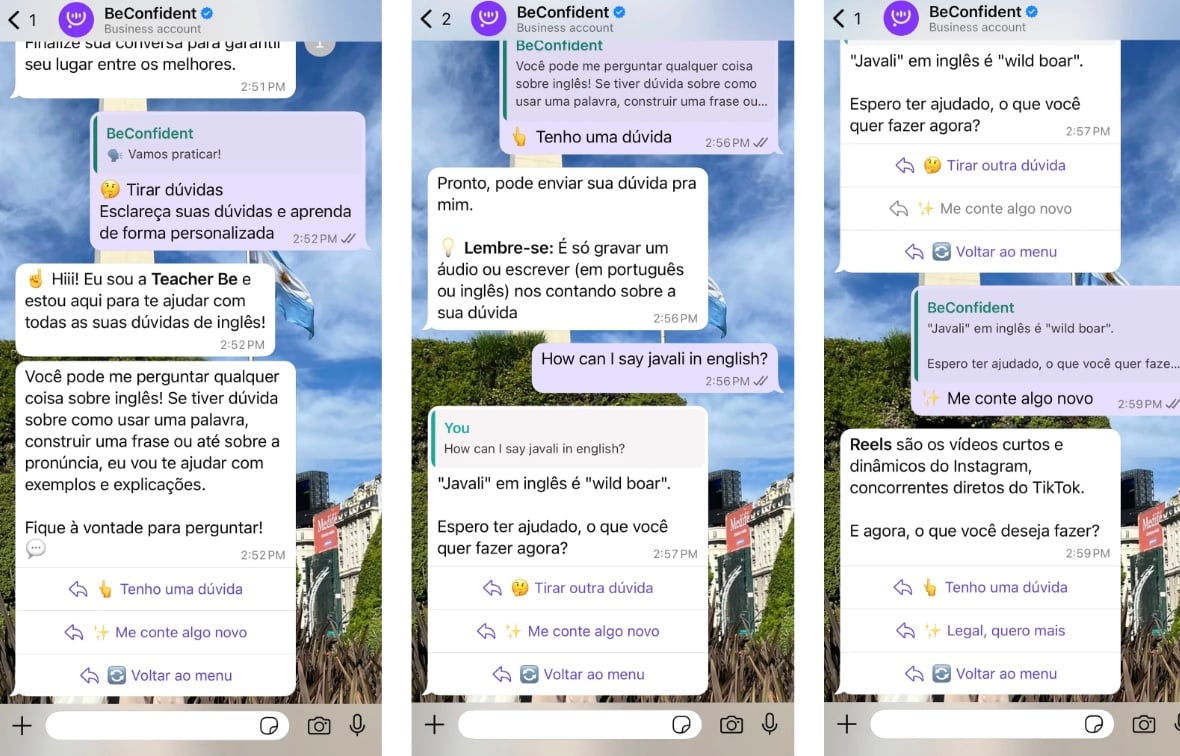
BeConfident overcomes these limitations with over 200,000 paying students and 3 million users across more than 100 countries. With a reputation of RA 1000 on Reclame Aqui, it offers conversation-focused AI tutors, precise feedback, and unlimited practice for a fraction of the cost of traditional courses.
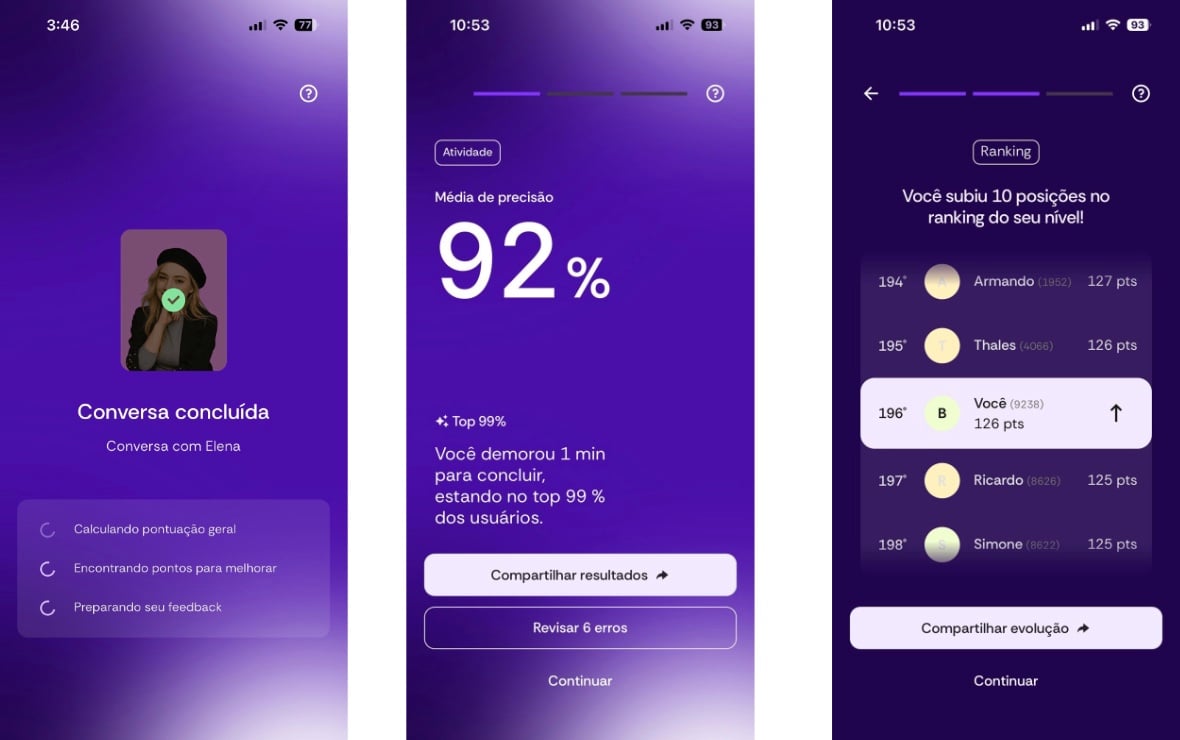
Try the superior alternative with a free trial and see the difference specialized tutors make in your conversation skills.
Comparison: BeConfident vs Duolingo, Cambly, and Traditional Schools
Comparing BeConfident with other options helps to understand where each solution is strongest. The table below highlights aspects that directly impact your fluency.
Aspect | BeConfident | Duolingo | Cambly/Schools |
Focus | Fluent conversation | Basic gamification | Varies by tutor/method |
Cost | Unlimited, affordable | Limited Freemium | Hourly rate, expensive |
Availability | 24/7 anywhere | App only | Cambly: 24/7 flexible, Schools: fixed hours |
Personalization | Adaptive AI | Generic algorithm | Cambly: choice of tutors, Schools: depends on the teacher |
Conclusion and Next Steps
ChatGPT offers a good introduction to conversational practice in English when you use structured prompts and proper configurations. This initial use helps break the barrier of speaking and gain basic confidence.
For sustainable evolution and fluency in real-life situations, specialized tools like BeConfident deliver a more comprehensive experience, featuring native tutors, consistent feedback, and unlimited practice across multiple channels.
Starting today with ChatGPT and the prompts in this guide yields quick results in the first few weeks. To accelerate your journey toward fluency, try BeConfident on your smartwatch during walks or on WhatsApp between appointments.
Accelerate your fluency with a free trial of the most advanced solution for English conversation.
Frequently Asked Questions (FAQ)
Does free ChatGPT work for learning English through conversation?
The free version works to start with, but with clear limitations. Access to voice chat is restricted and GPT-4o usage is limited. The prompts in this guide work best with ChatGPT Plus. For unlimited practice and specialized feedback, BeConfident offers a more complete alternative.
What is the best AI for learning English through conversation?
BeConfident was developed specifically for English conversation. The platform offers tutors with native accents, level-based personalization, and instant feedback. Unlike a generic ChatGPT, it focuses all its resources on conversational fluency with 24/7 practice via app, WhatsApp, or smartwatch.
How to practice speaking English alone?
Using ChatGPT's voice mode with the prompts in this guide allows for basic simulations of real-life situations. Practicing daily 15-to-30-minute role-plays in contexts of work, travel, and casual conversations builds consistency. To progress faster, migrating to BeConfident adds specialized tutors and structured paths.
Does ChatGPT correct pronunciation well?
Performance is partial. As mentioned before, ChatGPT has limitations in evaluating pronunciation, especially regarding intonation and fine nuances. BeConfident utilizes AI tutors with native accents, such as American, British, Australian, Canadian, South African, and Indian, for more effective correction.
What are the best prompts for beginners?
For beginners, prompts simulating everyday situations work best, such as coffee shop introductions, ordering at restaurants, and asking for directions in the city. Always ask for immediate corrections and simple explanations. The 10 detailed prompts in this guide cover progression from basic to advanced and can be reused with variations in context.
Written by: Luan Cavallaro, Founder & CMO, BeConfident
Key Takeaways from This Article
Setting up ChatGPT with GPT-4o, advanced voice mode, and a native persona creates real conversation simulations tailored to your CEFR level.
Using ready-made prompts by level (beginner, intermediate, advanced) guides practice in role-plays such as ordering in restaurants, job interviews, and complex debates.
Enabling auto-corrections and recording sessions helps track recurring mistakes and weekly progress, with alternating topics to avoid stagnation.
Recognizing the limitations of ChatGPT, such as inaccurate pronunciation feedback and artificial conversations, avoids unrealistic expectations about preparing for real interactions.
To maintain sustainable fluency, migrating to BeConfident with native tutors and 24/7 practice is a natural step: start your transition with a free trial.
How to Set Up ChatGPT to Practice English Conversation
A good setup defines the quality of conversations and results. Follow these 5 steps in sequence to build a consistent practice environment.
1. Activate GPT-4o with advanced voice mode: access settings and enable Advanced Voice Mode. This feature allows for more natural and fluid conversations, building the technical foundation for subsequent adjustments.
2. Define a native persona: with voice mode active, personalize the speaker. Instruct ChatGPT to assume the role of a specific native speaker, such as "Act as a New Yorker, casual and friendly." This makes interactions more authentic than speaking with a generic voice.
3. Adjust your CEFR level: next, state your level (A2, B1, B2) so that ChatGPT adapts the vocabulary and complexity of the conversations. This adjustment avoids dialogues that are too easy or too advanced.
4. Enable auto-corrections: after setting the persona and level, request immediate feedback on grammar and the naturalness of expressions. This turns every speech into an opportunity for timely correction.
5. Record your sessions: finally, use recording apps to review conversations and identify error patterns. This review complements real-time feedback and shows your evolution over the weeks.
ChatGPT's advanced voice mode in 2026 integrates audio and text, allowing you to switch between speaking and writing in the same conversation. You can ask spoken questions and receive visual responses with charts, or type silently and listen to responses on headphones.
Best Prompts for Learning English by Chatting with ChatGPT
Clear prompts guide the type of situation you will practice. The list below organizes examples by level to make selection easier.
Beginner (A2-B1):
1. Greetings and introductions: "Let's practice introductions. You're meeting me at a coffee shop for the first time. Start the conversation and correct any mistakes I make."
2. Ordering food: "Roleplay: You're a waiter at an American restaurant. I'll order food. Correct my pronunciation and suggest more natural expressions."
3. Asking for directions in the city: "I'm lost in New York. You're a local helping me find the subway. Practice giving and asking for directions with me."
Intermediate (B1-B2):
4. Job interview: "Conduct a job interview for a software engineer position. Ask typical questions and give feedback on my answers' clarity and professionalism."
5. Hotel complaint: "I'm complaining about my hotel room. You're the manager. Help me practice expressing dissatisfaction politely but firmly."
6. Planning a trip: "Let's plan a weekend trip to California. Discuss activities, budget, and logistics. Correct my grammar and suggest better vocabulary."
7. Work meeting: "We're colleagues discussing a project deadline. Practice professional English and meeting vocabulary with immediate corrections."
Advanced (B2-C1):
8. Tech debate: "Debate the pros and cons of artificial intelligence in education. Challenge my arguments and help me express complex ideas more naturally."
9. Business negotiation: "We're negotiating a business contract. Practice persuasive language, conditional sentences, and professional terminology."
10. Cultural discussion: "Compare Brazilian and American work cultures. Help me articulate nuanced opinions and use advanced connectors."
How to Use ChatGPT's Voice Mode for Pronunciation and Listening
Voice mode makes practice feel closer to a real conversation. Use this feature to train for specific situations and reinforce listening comprehension.
Practice role-plays such as airport simulations ("I need to check in for my flight to São Paulo") or professional meetings ("Let's discuss the quarterly results"). These scenes help connect vocabulary to concrete contexts.
To improve pronunciation, use prompts like "Listen to my pronunciation and explain specifically what sounds wrong. Repeat the correct version slowly." Afterwards, experiment with different accents by requesting "Switch to British accent" or "Use Australian pronunciation" to broaden your exposure.
ChatGPT cannot accurately evaluate pronunciation or intonation, which are essential elements for real communication. Conversations can also feel artificial and choppy, requiring higher proficiency for voice recognition to work consistently.
Correcting Mistakes and Tracking Progress in ChatGPT
Well-defined feedback prompts turn every conversation into a structured study session. Use different types of commands throughout the interaction.
"Correct this sentence and explain the mistake:": use this prompt during the conversation when you notice you have made a specific mistake. This immediate correction prevents the mistake from being repeated in the same session.
"Summarize my main mistakes from this conversation:": at the end of each session, use this prompt to get an overview of your error patterns. This summary complements individual corrections and shows which issues appear most frequently.
"Suggest three more natural ways to say this:": once you have identified your recurring mistakes, use this prompt to expand your repertoire with more natural alternatives for the problematic expressions.
Reviewing your conversation history regularly helps identify patterns of progress. Rotate topics weekly to avoid stagnation: week 1, work; week 2, travel; week 3, hobbies. This variation reduces the frustration of forgetting words when the context changes.
Limitations of ChatGPT and Why BeConfident is the Best Alternative
Despite configuration strategies, ChatGPT has significant limitations for sustainable learning. The table below compares essential resources and shows why BeConfident stands out in critical areas for fluency.
Feature | ChatGPT | BeConfident | BeConfident Advantage |
Availability | Browser / basic app | App, WhatsApp, smartwatch | 24/7 practice integrated into daily life |
Accents | Limited, artificial | Native accents (American, British, South African, etc.) | Authentic exposure to variations |
Personalization | Generic, no memory | Customized paths by level | Learning tailored to needs |
Feedback | Inconsistent, inaccurate | Instant specialized correction | Faster and more accurate evolution |
Conversations with ChatGPT sound artificial and do not fully prepare you for real interactions. Additionally, ChatGPT makes mistakes in grammar, vocabulary, and explanations, mixing formal and informal language.
BeConfident overcomes these limitations with over 200,000 paying students and 3 million users across more than 100 countries. With a reputation of RA 1000 on Reclame Aqui, it offers conversation-focused AI tutors, precise feedback, and unlimited practice for a fraction of the cost of traditional courses.
Try the superior alternative with a free trial and see the difference specialized tutors make in your conversation skills.
Comparison: BeConfident vs Duolingo, Cambly, and Traditional Schools
Comparing BeConfident with other options helps to understand where each solution is strongest. The table below highlights aspects that directly impact your fluency.
Aspect | BeConfident | Duolingo | Cambly/Schools |
Focus | Fluent conversation | Basic gamification | Varies by tutor/method |
Cost | Unlimited, affordable | Limited Freemium | Hourly rate, expensive |
Availability | 24/7 anywhere | App only | Cambly: 24/7 flexible, Schools: fixed hours |
Personalization | Adaptive AI | Generic algorithm | Cambly: choice of tutors, Schools: depends on the teacher |
Conclusion and Next Steps
ChatGPT offers a good introduction to conversational practice in English when you use structured prompts and proper configurations. This initial use helps break the barrier of speaking and gain basic confidence.
For sustainable evolution and fluency in real-life situations, specialized tools like BeConfident deliver a more comprehensive experience, featuring native tutors, consistent feedback, and unlimited practice across multiple channels.
Starting today with ChatGPT and the prompts in this guide yields quick results in the first few weeks. To accelerate your journey toward fluency, try BeConfident on your smartwatch during walks or on WhatsApp between appointments.
Accelerate your fluency with a free trial of the most advanced solution for English conversation.
Frequently Asked Questions (FAQ)
Does free ChatGPT work for learning English through conversation?
The free version works to start with, but with clear limitations. Access to voice chat is restricted and GPT-4o usage is limited. The prompts in this guide work best with ChatGPT Plus. For unlimited practice and specialized feedback, BeConfident offers a more complete alternative.
What is the best AI for learning English through conversation?
BeConfident was developed specifically for English conversation. The platform offers tutors with native accents, level-based personalization, and instant feedback. Unlike a generic ChatGPT, it focuses all its resources on conversational fluency with 24/7 practice via app, WhatsApp, or smartwatch.
How to practice speaking English alone?
Using ChatGPT's voice mode with the prompts in this guide allows for basic simulations of real-life situations. Practicing daily 15-to-30-minute role-plays in contexts of work, travel, and casual conversations builds consistency. To progress faster, migrating to BeConfident adds specialized tutors and structured paths.
Does ChatGPT correct pronunciation well?
Performance is partial. As mentioned before, ChatGPT has limitations in evaluating pronunciation, especially regarding intonation and fine nuances. BeConfident utilizes AI tutors with native accents, such as American, British, Australian, Canadian, South African, and Indian, for more effective correction.
What are the best prompts for beginners?
For beginners, prompts simulating everyday situations work best, such as coffee shop introductions, ordering at restaurants, and asking for directions in the city. Always ask for immediate corrections and simple explanations. The 10 detailed prompts in this guide cover progression from basic to advanced and can be reused with variations in context.