




How to use AI to learn English faster in 2026?
How to use AI to learn English faster in 2026?
How to use AI to learn English faster in 2026?
Written by: Luan Cavallaro, Founder & CMO, BeConfident
Key takeaways from this article
AI enhances English learning with 24/7 conversational practice, instant pronunciation feedback, and personalization, overcoming the limitations of traditional apps like Duolingo.
BeConfident is the most complete tool in 2026, with a 10/10 rating in conversation, AI tutors with native accents, and access via WhatsApp and smartwatch for over 200,000 students.
Ready-to-use prompts in ChatGPT, Gemini, and Copilot help with vocabulary, grammar, and role-plays, but students need to complement this with an AI specialized in voice and real pronunciation.
A daily routine of 15 to 30 minutes with a structured track, free conversation, and error review builds consistency and allows tracking of progress.
Avoiding a focus solely on theory or rigid schedules accelerates results. Try BeConfident for free now and advance to conversational fluency in a few weeks.
Step 1: understand the power of AI tools for English in 2026
The market for AI in language learning has grown in 2026, offering everything from conversational assistants to platforms focused on pronunciation. Tools like Duolingo use adaptive algorithms and voice recognition, while ChatGPT and Bard offer simulated conversations with feedback.
Tool | Pros | Cons | Conversation rating (1-10) |
ChatGPT | Free prompts, versatility | Voice with limitations in some scenarios, generalist AIs | 7 |
Gemini | Integration with Google, speed | Less personalization | 7 |
Copilot | Integration with Microsoft ecosystem, content generation | Limited audio features | 6 |
ELSA Speak | Detailed pronunciation correction | Little free conversation | 8 |
Loora | Simulation-based voice conversation | High price, English only focus | 8 |
TalkPal | Interactive dialogues | Highly gamified and less structured experience | 7 |
BeConfident | 24/7 service via WhatsApp and app, native accents, over 200,000 students, RA 1000 reputation | AI focused on English, affordable | 10 |
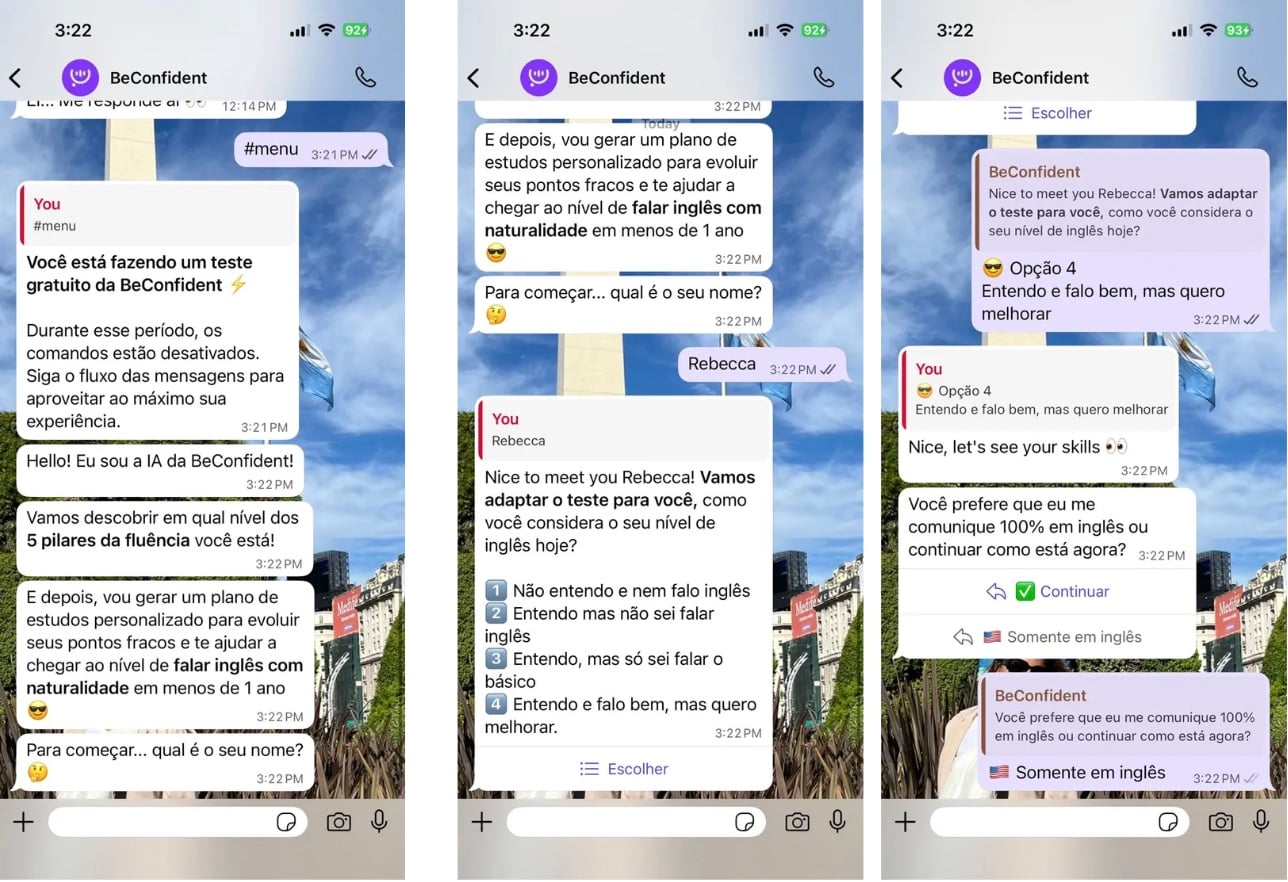
BeConfident bridges the gaps of other tools by offering personalized conversation via WhatsApp and smartwatch, with AI tutors that simulate native accents and adapt to each student's professional or personal topics.
Step 2: choose the best AI to learn English in 2026
Criteria such as conversation quality, personalization, and flexibility define the main options for 2026.
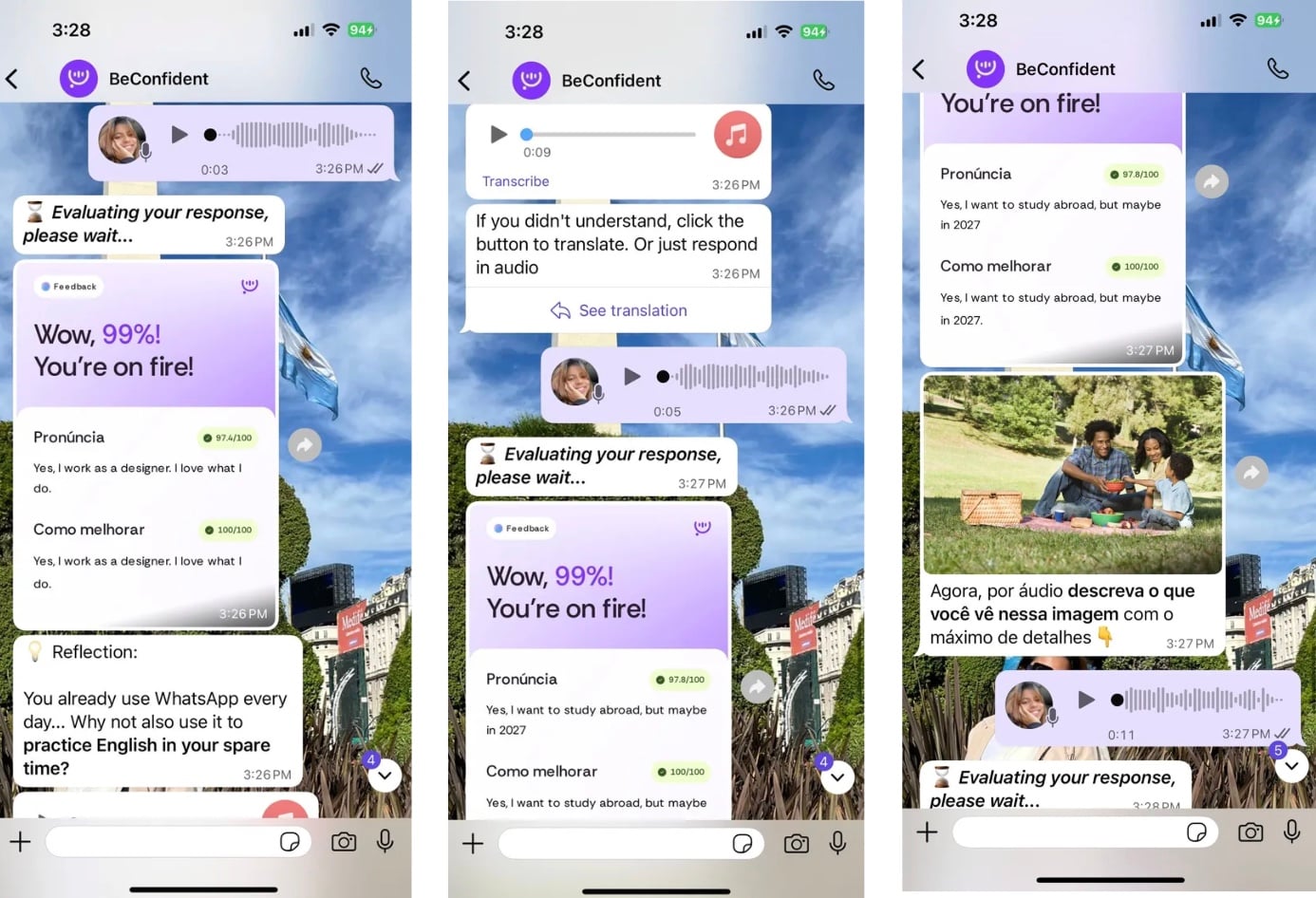
BeConfident, with tutors with their own personalities, structured tracks, automatic error correction, and 24/7 practice via app, WhatsApp, or smartwatch
ELSA Speak, focusing on specific pronunciation correction
Loora, with voice-simulated conversation, limited
TalkPal, with interactive dialogues and gamification
ChatGPT, with versatility for custom prompts
A testimonial illustrates this impact: "I had a lot of trouble speaking, despite reading and listening well. I started using BeConfident, and within a month I was already talking naturally, without getting stuck."
See the comparison between BeConfident and other players:
Aspect | BeConfident | Duolingo | Cambly |
Price | Affordable plan with unlimited use | Free basic version | High cost per minute |
Conversation | Personalized AI 24/7 | Gamified activities focused on exercises | Human teachers with variable quality |
Flexibility | Use via WhatsApp and smartwatch | App-only use | Scheduling required |
Feedback | Instant pronunciation and structure correction | Limited feedback | Dependence on each tutor's style |
Try it for free and start learning English today to experience first-hand an AI truly focused on conversation.
Step 3: understand the limitations of ChatGPT for learning English
Well-defined prompts turn ChatGPT into a useful tutor, especially for grammar correction and vocabulary expansion.
Grammar correction: "Ask me 5 questions in English and correct my answers". The student responds in English and practices thinking directly in the language.
Contextual vocabulary: "Teach me 5 new phrasal verbs and use them in context". Memorization occurs through practical examples.
Guided conversation: "You are a native English speaker. Let's talk for 10 minutes about [topic]. Correct my errors and suggest more natural expressions".
Comparative pronunciation: "Give me a pronunciation tip for the word [word] and compare it with a similar one".
Personalized quiz: "Create a 10-question quiz about [grammar topic]. Explain each error with correct examples".
ChatGPT supports structure and vocabulary well, but has limitations in real voice scenarios. BeConfident complements this with voice conversation featuring a native accent and real-time pronunciation correction.
Step 4: understand the limitations of Gemini for learning English
Google's Gemini offers rapid integration with other services and contextual answers, which benefits daily study.
Phonetic explanation: "Explain phrasal verbs for daily routines with audio examples".
Real situations: "Create a business meeting dialogue and highlight formal expressions".
Cultural comparison: "Compare American vs British expressions for [situation]".
Listening practice: "Generate listening exercises about travel with comprehension questions".
Despite its speed, Gemini does not offer the same level of deep personalization and variety of native accents that BeConfident delivers with its specialized tutors.
Step 5: understand the limitations of Copilot for learning English
Microsoft's Copilot excels at creating organized content and tasks related to the work environment.
Interactive quiz: "Create a B1 grammar quiz with immediate feedback".
Assisted writing: "Help me write a professional email and suggest improvements".
Thematic vocabulary: "Generate business English terms with example sentences".
Role-play scenarios: "Create interview questions for software engineer position".
For consistent voice and pronunciation practice, BeConfident surpasses all of these generalist tools, as it directly focuses on fluent conversation.
Step 6: create a daily conversational practice of 15 to 30 minutes
Conversation is usually the biggest challenge for Brazilians, with difficulties in pronunciation, limited vocabulary, fear of making mistakes, and lack of consistency. Speech recognition technologies with an accuracy rate over 90% allow immediate correction of pronunciation, rhythm, and intonation.
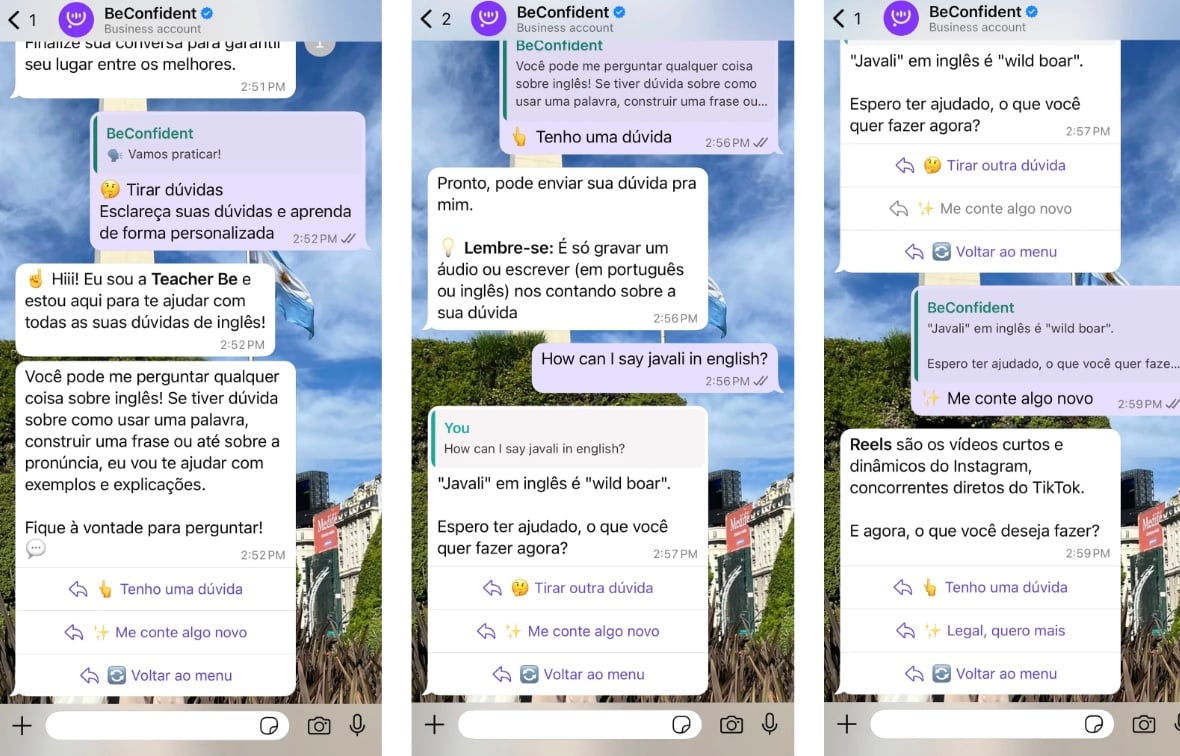
BeConfident addresses these points with natural prompts like "I have a question" or "Tell me something new", which initiate contextualized conversations on professional or personal topics.
Suggested daily routine for 2026:
5 minutes: structured track with applied theory followed by immediate conversation.
10 minutes: free conversation with an AI tutor about a professional or travel topic.
5 minutes: error review and streak maintenance in the "My Evolution" menu.
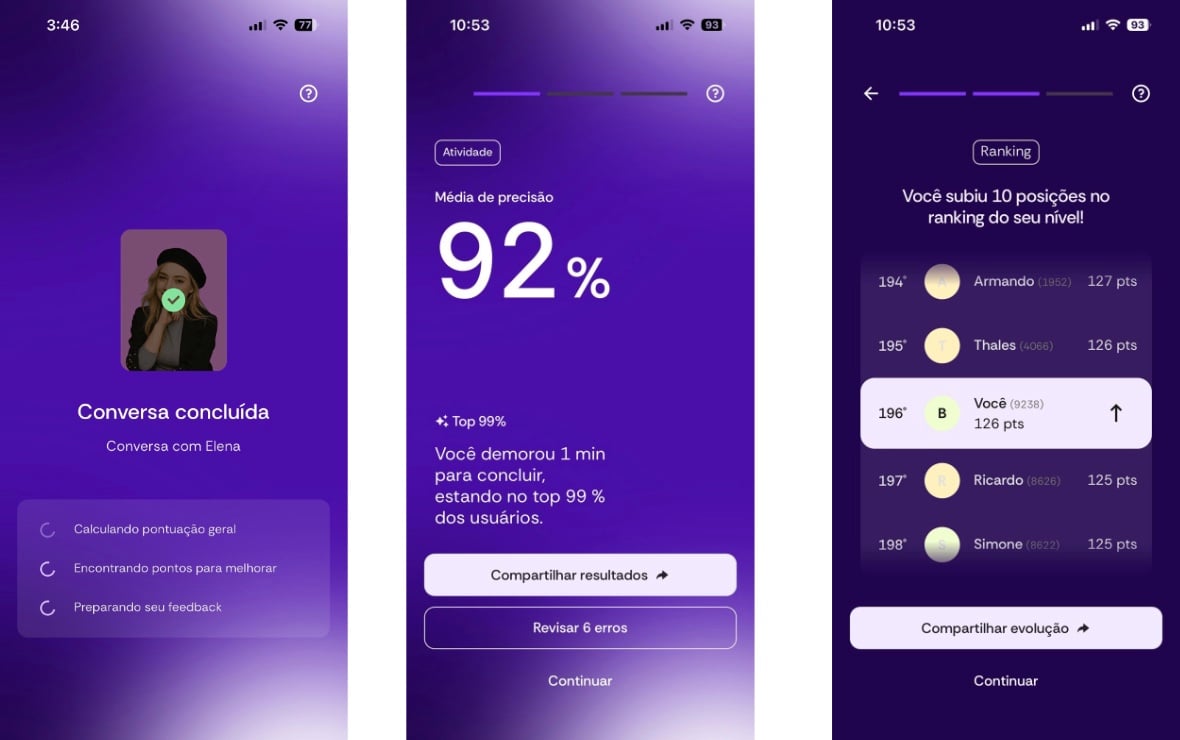
Metrics such as consecutive days of study, hours of practice, ranking position, and CEFR certificates keep motivation high with visible results.
Step 7: follow a daily plan and avoid common pitfalls
A simple plan makes habit formation easier and fits studying into your routine.
Morning: voice vocabulary practice during breakfast via WhatsApp.
Lunch: quick chat about current news.
Evening: free conversation about personal interests.
Some behaviors hinder progress and need attention.
Focusing only on theory without oral practice.
Using only gamified apps without real conversation.
Relying on fixed and long hours to study.
Avoiding correction for fear of making mistakes.
The "My Evolution" menu in BeConfident tracks progress with streak, ranking, practice hours, and certificates, which makes learning a measurable journey.
Frequently Asked Questions (FAQ)
What is the best artificial intelligence to learn English?
BeConfident stands out in personalized conversation, featuring AI tutors with distinct personalities, varied native accents, and 24/7 practice via app, WhatsApp, or smartwatch. Its base of over 200,000 paying students and its RA 1000 reputation show consistency. The combination of structured theory with unlimited conversation overcomes the limitations of tools like ChatGPT, which is generalist, or Duolingo, which prioritizes gamification without in-depth conversation.
How to use artificial intelligence to speak English?
Students need to integrate AI into their daily routine through natural conversations on topics of interest. Prompts like "Let's discuss my work project" or "Help me practice job interview questions" create a real context. Consistent practice of 15 to 30 minutes a day, alternating vocabulary, applied grammar, and free conversation, with instant pronunciation and structure feedback, accelerates fluency.
How to use ChatGPT to learn English?
Structured prompts guide study better. An example is "Act as my English tutor, ask me 5 questions about [topic] and correct my responses" for guided conversation. For vocabulary, the student can use "Teach me 10 business terms with examples and memory tricks". For grammar, "Create exercises about past perfect with immediate feedback". ChatGPT supports the written part well, but still has limitations in native voice for real pronunciation practice.
How to use Gemini and Copilot to learn English?
Gemini works well for quick explanations, with prompts like "Compare American vs British pronunciation for [words]" or "Create travel dialogues with cultural context". Copilot is stronger in structured content, with requests like "Generate business email templates with formality levels" or "Create interview scenarios for my profession". These tools reinforce theoretical study but still require a complementary solution for fluent conversation.
What is the best free AI to learn English?
ChatGPT offers a robust free version for vocabulary and grammar prompts. Duolingo provides basic gamified lessons at no cost. These options help in the beginning, but limit real conversation and pronunciation feedback. To achieve conversational fluency, investing in specialized platforms like BeConfident tends to yield better results due to unlimited practice and personalized correction.
Conclusion: achieve fluency with AI support
The 7 steps presented update traditional English learning through the use of artificial intelligence, from choosing the tool to creating daily routines focused on conversation. In 2026, AI already personalizes learning paths and adapts content to the needs of each student.
BeConfident represents the evolution of this movement by combining structured theory with unlimited conversational practice and reducing barriers such as embarrassment, rigid schedules, and high costs. Personalized AI tutors, native accents, and access via WhatsApp or smartwatch turn free moments into real practice opportunities.
The next step is to step out of theory and put your voice into practice. Try it for free and start learning English today and join the more than 200,000 paying students who are already using AI to accelerate conversational fluency.
Written by: Luan Cavallaro, Founder & CMO, BeConfident
Key takeaways from this article
AI enhances English learning with 24/7 conversational practice, instant pronunciation feedback, and personalization, overcoming the limitations of traditional apps like Duolingo.
BeConfident is the most complete tool in 2026, with a 10/10 rating in conversation, AI tutors with native accents, and access via WhatsApp and smartwatch for over 200,000 students.
Ready-to-use prompts in ChatGPT, Gemini, and Copilot help with vocabulary, grammar, and role-plays, but students need to complement this with an AI specialized in voice and real pronunciation.
A daily routine of 15 to 30 minutes with a structured track, free conversation, and error review builds consistency and allows tracking of progress.
Avoiding a focus solely on theory or rigid schedules accelerates results. Try BeConfident for free now and advance to conversational fluency in a few weeks.
Step 1: understand the power of AI tools for English in 2026
The market for AI in language learning has grown in 2026, offering everything from conversational assistants to platforms focused on pronunciation. Tools like Duolingo use adaptive algorithms and voice recognition, while ChatGPT and Bard offer simulated conversations with feedback.
Tool | Pros | Cons | Conversation rating (1-10) |
ChatGPT | Free prompts, versatility | Voice with limitations in some scenarios, generalist AIs | 7 |
Gemini | Integration with Google, speed | Less personalization | 7 |
Copilot | Integration with Microsoft ecosystem, content generation | Limited audio features | 6 |
ELSA Speak | Detailed pronunciation correction | Little free conversation | 8 |
Loora | Simulation-based voice conversation | High price, English only focus | 8 |
TalkPal | Interactive dialogues | Highly gamified and less structured experience | 7 |
BeConfident | 24/7 service via WhatsApp and app, native accents, over 200,000 students, RA 1000 reputation | AI focused on English, affordable | 10 |
BeConfident bridges the gaps of other tools by offering personalized conversation via WhatsApp and smartwatch, with AI tutors that simulate native accents and adapt to each student's professional or personal topics.
Step 2: choose the best AI to learn English in 2026
Criteria such as conversation quality, personalization, and flexibility define the main options for 2026.
BeConfident, with tutors with their own personalities, structured tracks, automatic error correction, and 24/7 practice via app, WhatsApp, or smartwatch
ELSA Speak, focusing on specific pronunciation correction
Loora, with voice-simulated conversation, limited
TalkPal, with interactive dialogues and gamification
ChatGPT, with versatility for custom prompts
A testimonial illustrates this impact: "I had a lot of trouble speaking, despite reading and listening well. I started using BeConfident, and within a month I was already talking naturally, without getting stuck."
See the comparison between BeConfident and other players:
Aspect | BeConfident | Duolingo | Cambly |
Price | Affordable plan with unlimited use | Free basic version | High cost per minute |
Conversation | Personalized AI 24/7 | Gamified activities focused on exercises | Human teachers with variable quality |
Flexibility | Use via WhatsApp and smartwatch | App-only use | Scheduling required |
Feedback | Instant pronunciation and structure correction | Limited feedback | Dependence on each tutor's style |
Try it for free and start learning English today to experience first-hand an AI truly focused on conversation.
Step 3: understand the limitations of ChatGPT for learning English
Well-defined prompts turn ChatGPT into a useful tutor, especially for grammar correction and vocabulary expansion.
Grammar correction: "Ask me 5 questions in English and correct my answers". The student responds in English and practices thinking directly in the language.
Contextual vocabulary: "Teach me 5 new phrasal verbs and use them in context". Memorization occurs through practical examples.
Guided conversation: "You are a native English speaker. Let's talk for 10 minutes about [topic]. Correct my errors and suggest more natural expressions".
Comparative pronunciation: "Give me a pronunciation tip for the word [word] and compare it with a similar one".
Personalized quiz: "Create a 10-question quiz about [grammar topic]. Explain each error with correct examples".
ChatGPT supports structure and vocabulary well, but has limitations in real voice scenarios. BeConfident complements this with voice conversation featuring a native accent and real-time pronunciation correction.
Step 4: understand the limitations of Gemini for learning English
Google's Gemini offers rapid integration with other services and contextual answers, which benefits daily study.
Phonetic explanation: "Explain phrasal verbs for daily routines with audio examples".
Real situations: "Create a business meeting dialogue and highlight formal expressions".
Cultural comparison: "Compare American vs British expressions for [situation]".
Listening practice: "Generate listening exercises about travel with comprehension questions".
Despite its speed, Gemini does not offer the same level of deep personalization and variety of native accents that BeConfident delivers with its specialized tutors.
Step 5: understand the limitations of Copilot for learning English
Microsoft's Copilot excels at creating organized content and tasks related to the work environment.
Interactive quiz: "Create a B1 grammar quiz with immediate feedback".
Assisted writing: "Help me write a professional email and suggest improvements".
Thematic vocabulary: "Generate business English terms with example sentences".
Role-play scenarios: "Create interview questions for software engineer position".
For consistent voice and pronunciation practice, BeConfident surpasses all of these generalist tools, as it directly focuses on fluent conversation.
Step 6: create a daily conversational practice of 15 to 30 minutes
Conversation is usually the biggest challenge for Brazilians, with difficulties in pronunciation, limited vocabulary, fear of making mistakes, and lack of consistency. Speech recognition technologies with an accuracy rate over 90% allow immediate correction of pronunciation, rhythm, and intonation.
BeConfident addresses these points with natural prompts like "I have a question" or "Tell me something new", which initiate contextualized conversations on professional or personal topics.
Suggested daily routine for 2026:
5 minutes: structured track with applied theory followed by immediate conversation.
10 minutes: free conversation with an AI tutor about a professional or travel topic.
5 minutes: error review and streak maintenance in the "My Evolution" menu.
Metrics such as consecutive days of study, hours of practice, ranking position, and CEFR certificates keep motivation high with visible results.
Step 7: follow a daily plan and avoid common pitfalls
A simple plan makes habit formation easier and fits studying into your routine.
Morning: voice vocabulary practice during breakfast via WhatsApp.
Lunch: quick chat about current news.
Evening: free conversation about personal interests.
Some behaviors hinder progress and need attention.
Focusing only on theory without oral practice.
Using only gamified apps without real conversation.
Relying on fixed and long hours to study.
Avoiding correction for fear of making mistakes.
The "My Evolution" menu in BeConfident tracks progress with streak, ranking, practice hours, and certificates, which makes learning a measurable journey.
Frequently Asked Questions (FAQ)
What is the best artificial intelligence to learn English?
BeConfident stands out in personalized conversation, featuring AI tutors with distinct personalities, varied native accents, and 24/7 practice via app, WhatsApp, or smartwatch. Its base of over 200,000 paying students and its RA 1000 reputation show consistency. The combination of structured theory with unlimited conversation overcomes the limitations of tools like ChatGPT, which is generalist, or Duolingo, which prioritizes gamification without in-depth conversation.
How to use artificial intelligence to speak English?
Students need to integrate AI into their daily routine through natural conversations on topics of interest. Prompts like "Let's discuss my work project" or "Help me practice job interview questions" create a real context. Consistent practice of 15 to 30 minutes a day, alternating vocabulary, applied grammar, and free conversation, with instant pronunciation and structure feedback, accelerates fluency.
How to use ChatGPT to learn English?
Structured prompts guide study better. An example is "Act as my English tutor, ask me 5 questions about [topic] and correct my responses" for guided conversation. For vocabulary, the student can use "Teach me 10 business terms with examples and memory tricks". For grammar, "Create exercises about past perfect with immediate feedback". ChatGPT supports the written part well, but still has limitations in native voice for real pronunciation practice.
How to use Gemini and Copilot to learn English?
Gemini works well for quick explanations, with prompts like "Compare American vs British pronunciation for [words]" or "Create travel dialogues with cultural context". Copilot is stronger in structured content, with requests like "Generate business email templates with formality levels" or "Create interview scenarios for my profession". These tools reinforce theoretical study but still require a complementary solution for fluent conversation.
What is the best free AI to learn English?
ChatGPT offers a robust free version for vocabulary and grammar prompts. Duolingo provides basic gamified lessons at no cost. These options help in the beginning, but limit real conversation and pronunciation feedback. To achieve conversational fluency, investing in specialized platforms like BeConfident tends to yield better results due to unlimited practice and personalized correction.
Conclusion: achieve fluency with AI support
The 7 steps presented update traditional English learning through the use of artificial intelligence, from choosing the tool to creating daily routines focused on conversation. In 2026, AI already personalizes learning paths and adapts content to the needs of each student.
BeConfident represents the evolution of this movement by combining structured theory with unlimited conversational practice and reducing barriers such as embarrassment, rigid schedules, and high costs. Personalized AI tutors, native accents, and access via WhatsApp or smartwatch turn free moments into real practice opportunities.
The next step is to step out of theory and put your voice into practice. Try it for free and start learning English today and join the more than 200,000 paying students who are already using AI to accelerate conversational fluency.