




How to develop professional technical conversational English
How to develop professional technical conversational English
How to develop professional technical conversational English
Written by: Luan Cavallaro, Founder & CMO, BeConfident
Key takeaways from this article
Professionals with conversational technical English access salaries of $4,000-$8,000 per month in international opportunities.
Building specialized vocabulary and memorizing 50 ready-made phrases helps in meetings and technical negotiations.
Practicing shadowing with professional podcasts and using specific prompts in conversational AI creates simulation exercises close to reality.
Integrating the 4 pillars of fluency—pronunciation, grammar, vocabulary, and listening—into a daily 30-minute practice accelerates results.
BeConfident offers 24/7 AI tutors for unlimited practice and personalized feedback, start your free practice.
Before you start
This method requires a B1+ level under the CEFR standard and 30 minutes of daily availability. With these prerequisites, consistent practice with AI can clearly accelerate technical conversational fluency. Avoid common mistakes such as focusing solely on theory or using gamified apps without real conversation, because these approaches do not develop the spontaneous communication that the professional environment demands.
Technical English at work: the 7 steps to fluency
The process follows a logical sequence, featuring vocabulary prep, structured practice, feedback, and repetition. The complete method involves seven sequential stages, with each building on the previous one.
Train English conversation: 7 practical steps
The next topics detail each of the seven steps to develop technical conversational English geared toward work.
Step 1 - Build technical vocabulary by area
Start by identifying essential terms in your field. For IT, it is worth including terms like "encryption", "bandwidth", "firewall", "DHCP" (dynamic host configuration protocol). For engineering, prioritize expressions like "deliverables timeline", "project scope", and "stakeholder alignment". Organize this vocabulary into lists by topic, such as meetings, status reports, and deadline negotiations.
Step 2 - Memorize 50 ready-made phrases
Memorizing ready-made phrases reduces response time in meetings and prevents blocking. Focus on expressions for recurring situations:
"Let's discuss the deliverables timeline"
"Could you walk me through the technical requirements?"
"I'd like to address some concerns about the implementation"
"What's our bandwidth for this quarter?"
Use these phrases as ready-made blocks to open meetings, ask for clarification, and raise risks. Once you feel comfortable with these structures, adapt technical terms within the same phrase models.
Step 3 - Practice English with shadowing
Shadowing consists of listening to an audio in English and repeating it simultaneously, copying rhythm, intonation, and pauses. This practice improves pronunciation, fluency, and natural intonation. To start, choose podcasts with technical vocabulary relevant to your area, such as "Software Engineering Daily" or "The Changelog". Repeat short clips, from 10 to 30 seconds, until you can keep up without major pauses.
After gaining confidence in pronunciation through shadowing, the next step is to apply this vocabulary in active conversation. At this stage, conversational AI tools become especially useful.
Step 4 - Use conversational AI to train: best prompts
Users fluent in drafting prompts include context and specify output formats. When training conversation, describe your role, the scenario, and the type of feedback desired. Try prompts like:
"Simulate an IT project manager meeting. Correct my speech and suggest improvements."
"Create a technical negotiation scenario. I am an engineer presenting solutions."
"Practice presenting deliverables with me with real-time feedback."
Keep the same conversation going for multiple turns to build context, and always ask for explicit corrections, alternative examples, and suggestions for more natural phrasing.
Step 5 - Simulate real professional scenarios
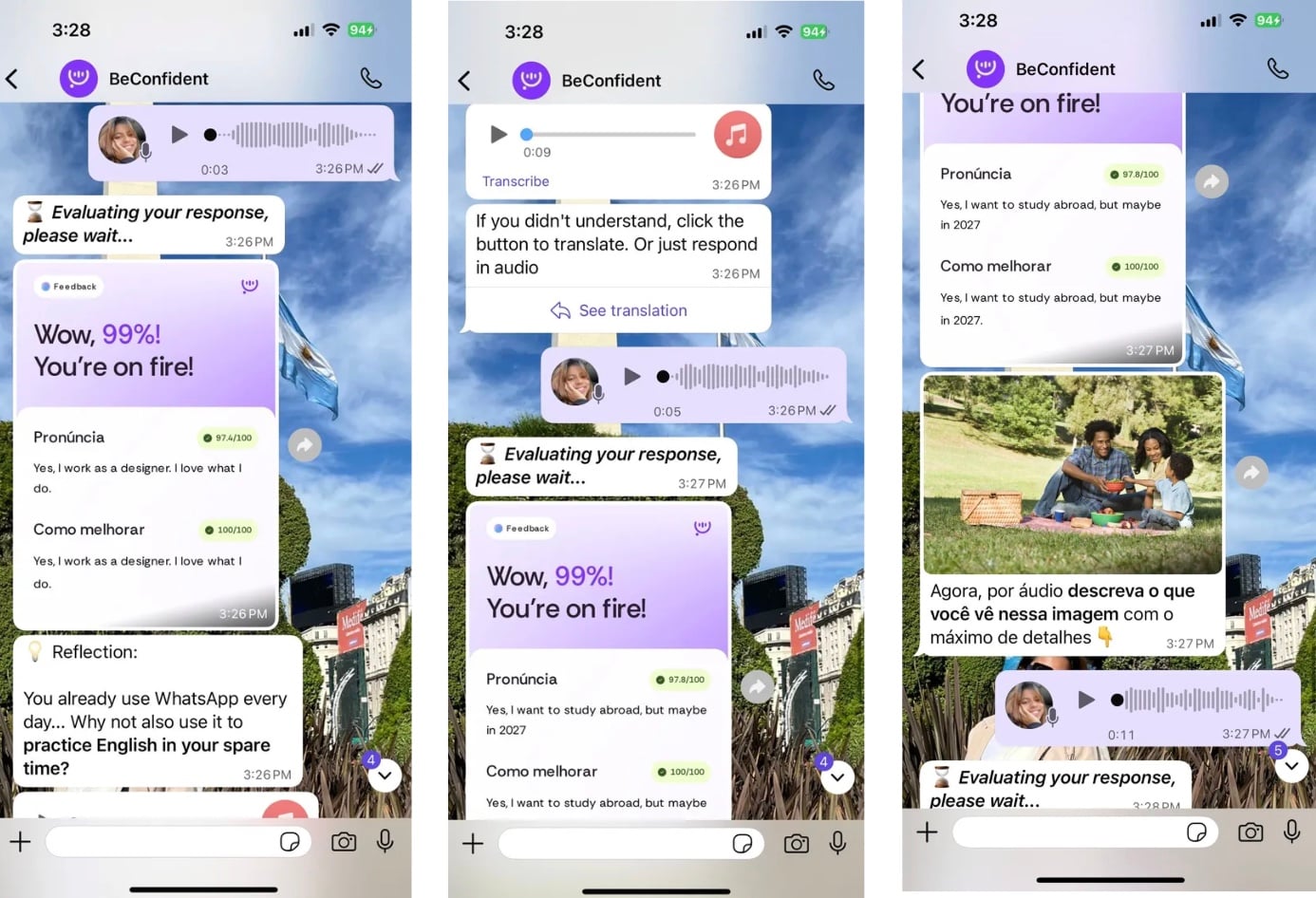
Simulating real situations brings training closer to what actually happens at work. Practice scenarios like sprint meetings, presentations to stakeholders, and scope negotiations. Record yourself presenting a technical project, then listen to the audio and identify points of hesitation, missing vocabulary, and unclear phrases. Redo the same presentation after adjusting the phrasing with the support of conversational AI.
Step 6 - Review errors systematically
Dealing with recurring errors in an organized way accelerates growth. Keep a document of frequent errors and their corrections, both for grammar and for vocabulary and pronunciation. After each practice session, record phrases that raised doubts, the suggested correction, and a more natural alternative version. Turn these points into short, focused exercises, like repeating a corrected structure ten times or creating three new phrases using the same pattern.
Step 7 - Track progress daily
Tracking simple metrics helps maintain consistency. Use BeConfident's My Progress Menu to track active day streaks, practice hours, and certificates earned. Set measurable weekly goals, such as completing a minimum number of conversation minutes, reviewing a set of ready-made phrases, or completing a specific learning path.
Practice these 7 steps with AI tutors available 24/7 to accelerate your development.
4 pillars of fluency in everyday English
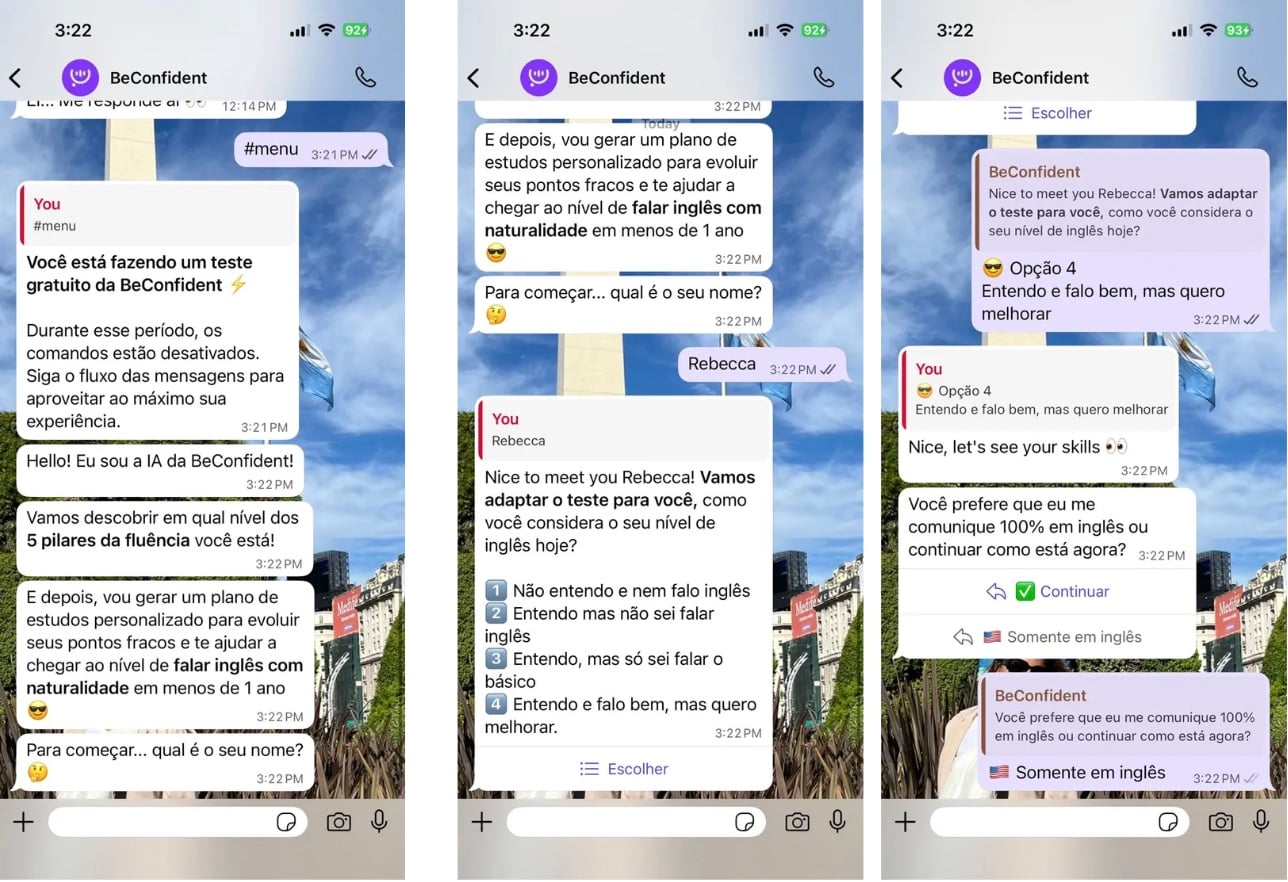
The previous 7 steps work together to develop four main pillars of fluency: pronunciation, grammar, vocabulary, and listening. Understanding these pillars helps assess progress more accurately.
A common mistake is letting the fear of judgment paralyze practice. To overcome this block, conversational AI environments offer a space free of embarrassment, where you can make mistakes without feeling ashamed. When practicing in this type of environment, keep the focus on developing the 4 pillars in an integrated way, always within conversational situations rather than in isolated exercises.
A clear sign of progress appears when you can speak for about 5 minutes about a technical topic without long pauses to search for words. This milestone indicates that vocabulary, structures, and listening are already combining in a more automatic way.
Develop the 4 pillars with unlimited practice and personalized feedback through BeConfident.
How to measure if it is working?
Measuring results objectively sustains motivation and guides study adjustments. In BeConfident's My Progress Menu, track your active day streak, accumulated practice hours, and position on the internal engagement leaderboard. Combine this data with your own recordings where you explain technical concepts, and compare your clarity and confidence over the weeks.
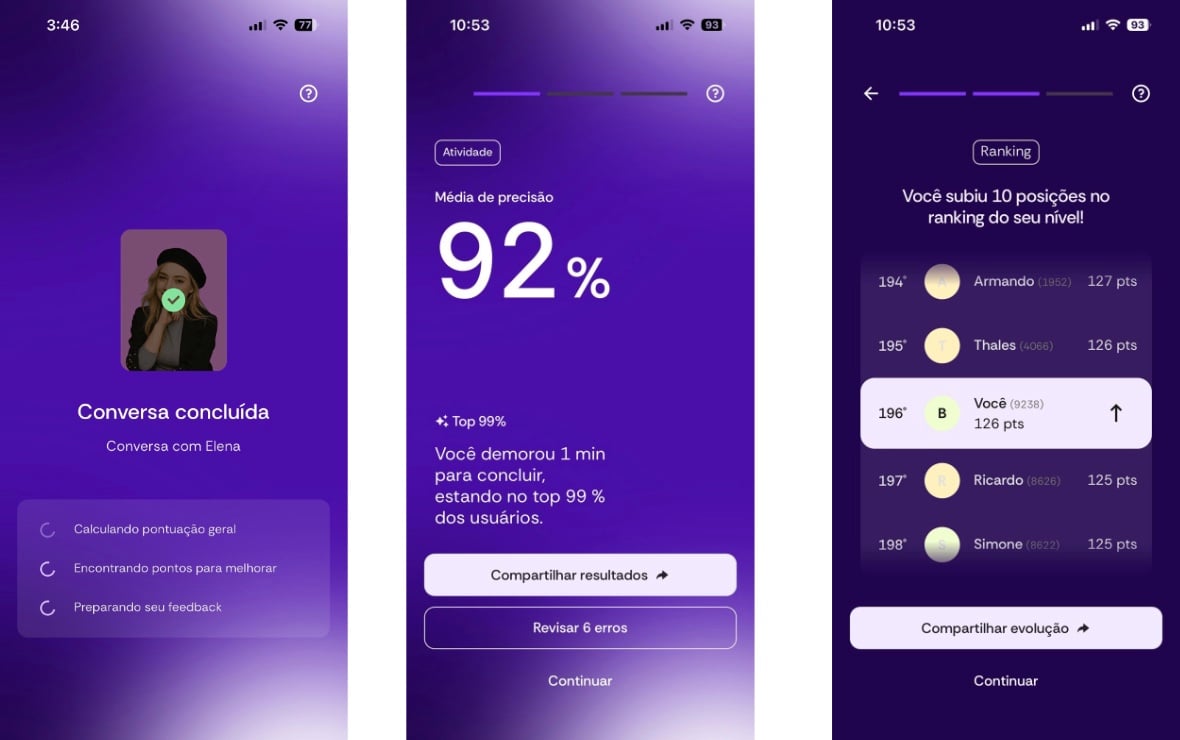
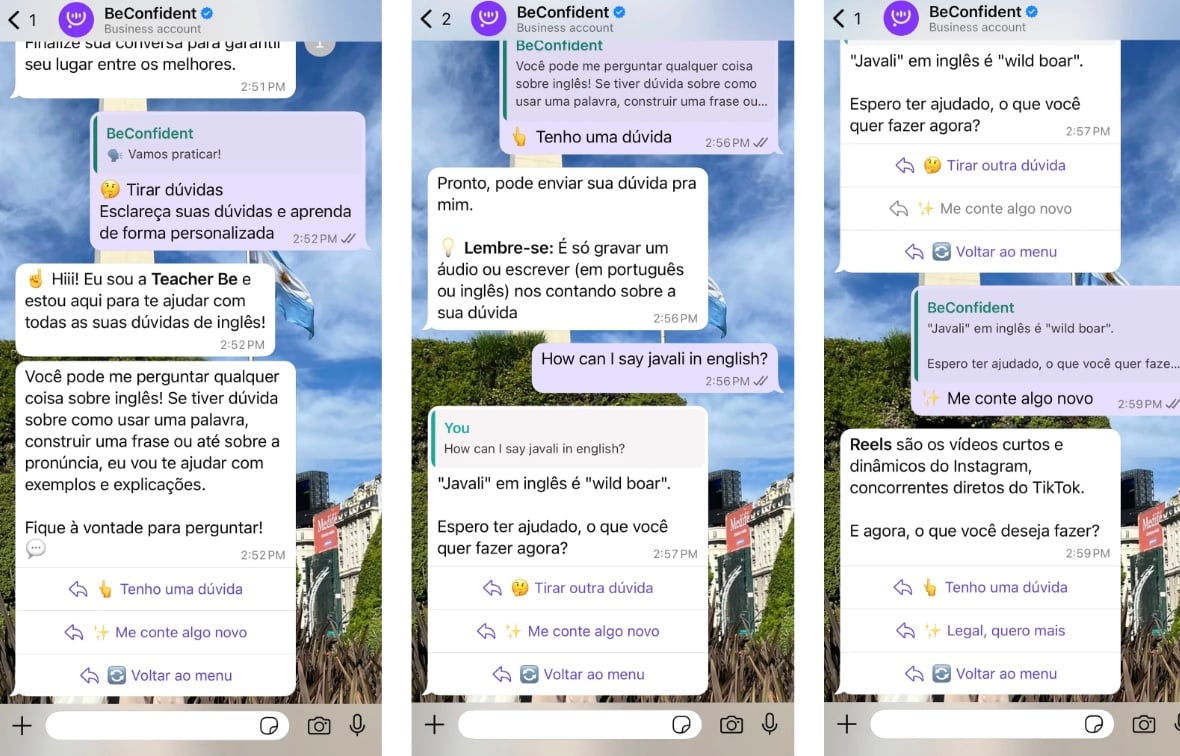
BeConfident differs from apps focused on gamified exercises by prioritizing real conversation, and becomes more accessible and flexible than traditional one-on-one classes because it offers personalized practice 24 hours a day.
Common problems and solution
Problem | Cause | BeConfident Solution |
|---|---|---|
Lack of practice partner | Incompatible schedules | AI tutors available 24/7 |
Fear of making mistakes | Judgment in traditional classes | Environment without feeling embarrassed |
Limited technical vocabulary | Lack of professional context | Specialized paths by area |
One user reported: "Daily practice gave me the confidence to converse and get my promotion." This type of result shows the direct impact of consistent practice in real work situations.
Next steps
After solidifying your technical conversation foundation, move on to specific accents, such as American and British, and to more complex topics, such as technical leadership and international project management. BeConfident's specialized paths organize these contents by level and professional context, which facilitates continuous progression.
FAQ
How to use conversational AI to train English conversation?
Using specific prompts that include professional context and clear requests for feedback makes practice more efficient. An example is: "Simulate a sprint planning meeting. I am a scrum master presenting the backlog. Correct my grammar and suggest more natural expressions." Keeping continuous conversations with the same AI tutor helps build context, and asking for clarification whenever doubts arise deepens learning.
What are the 4 pillars of English fluency?
The 4 pillars are: pronunciation, which involves clarity and accent; grammar, which ensures correct structures; vocabulary, which includes technical and general terms; and listening, which allows you to understand native speakers in different contexts. Developing all these points at the same time, within conversational practice, generates faster results than working on each one in isolation in theoretical exercises.
How long does it take to achieve technical fluency?
With consistent practice of 30 minutes daily using conversational AI, professionals with a B1+ base usually reach technical conversational fluency in about 2 to 3 months. Progress accelerates when there is frequent exposure to real scenarios and immediate feedback on errors. Many users notice initial results, such as greater confidence in meetings, in approximately 2 to 3 weeks of regular practice.
Does BeConfident work for technical English?
Yes, BeConfident offers specialized learning paths for different professional fields, AI tutors trained in technical contexts, and sector-specific vocabulary. The platform adapts to the needs of engineers, project managers, and IT professionals, with study journeys aligned with real work situations.
Conclusion
Developing technical conversational English requires a structured method and consistent practice. The 7 steps presented, combined with BeConfident's AI technology, help professionals who get stuck in meetings to become more confident communicators in international contexts. Transform into a confident communicator with free practice.
Written by: Luan Cavallaro, Founder & CMO, BeConfident
Key takeaways from this article
Professionals with conversational technical English access salaries of $4,000-$8,000 per month in international opportunities.
Building specialized vocabulary and memorizing 50 ready-made phrases helps in meetings and technical negotiations.
Practicing shadowing with professional podcasts and using specific prompts in conversational AI creates simulation exercises close to reality.
Integrating the 4 pillars of fluency—pronunciation, grammar, vocabulary, and listening—into a daily 30-minute practice accelerates results.
BeConfident offers 24/7 AI tutors for unlimited practice and personalized feedback, start your free practice.
Before you start
This method requires a B1+ level under the CEFR standard and 30 minutes of daily availability. With these prerequisites, consistent practice with AI can clearly accelerate technical conversational fluency. Avoid common mistakes such as focusing solely on theory or using gamified apps without real conversation, because these approaches do not develop the spontaneous communication that the professional environment demands.
Technical English at work: the 7 steps to fluency
The process follows a logical sequence, featuring vocabulary prep, structured practice, feedback, and repetition. The complete method involves seven sequential stages, with each building on the previous one.
Train English conversation: 7 practical steps
The next topics detail each of the seven steps to develop technical conversational English geared toward work.
Step 1 - Build technical vocabulary by area
Start by identifying essential terms in your field. For IT, it is worth including terms like "encryption", "bandwidth", "firewall", "DHCP" (dynamic host configuration protocol). For engineering, prioritize expressions like "deliverables timeline", "project scope", and "stakeholder alignment". Organize this vocabulary into lists by topic, such as meetings, status reports, and deadline negotiations.
Step 2 - Memorize 50 ready-made phrases
Memorizing ready-made phrases reduces response time in meetings and prevents blocking. Focus on expressions for recurring situations:
"Let's discuss the deliverables timeline"
"Could you walk me through the technical requirements?"
"I'd like to address some concerns about the implementation"
"What's our bandwidth for this quarter?"
Use these phrases as ready-made blocks to open meetings, ask for clarification, and raise risks. Once you feel comfortable with these structures, adapt technical terms within the same phrase models.
Step 3 - Practice English with shadowing
Shadowing consists of listening to an audio in English and repeating it simultaneously, copying rhythm, intonation, and pauses. This practice improves pronunciation, fluency, and natural intonation. To start, choose podcasts with technical vocabulary relevant to your area, such as "Software Engineering Daily" or "The Changelog". Repeat short clips, from 10 to 30 seconds, until you can keep up without major pauses.
After gaining confidence in pronunciation through shadowing, the next step is to apply this vocabulary in active conversation. At this stage, conversational AI tools become especially useful.
Step 4 - Use conversational AI to train: best prompts
Users fluent in drafting prompts include context and specify output formats. When training conversation, describe your role, the scenario, and the type of feedback desired. Try prompts like:
"Simulate an IT project manager meeting. Correct my speech and suggest improvements."
"Create a technical negotiation scenario. I am an engineer presenting solutions."
"Practice presenting deliverables with me with real-time feedback."
Keep the same conversation going for multiple turns to build context, and always ask for explicit corrections, alternative examples, and suggestions for more natural phrasing.
Step 5 - Simulate real professional scenarios
Simulating real situations brings training closer to what actually happens at work. Practice scenarios like sprint meetings, presentations to stakeholders, and scope negotiations. Record yourself presenting a technical project, then listen to the audio and identify points of hesitation, missing vocabulary, and unclear phrases. Redo the same presentation after adjusting the phrasing with the support of conversational AI.
Step 6 - Review errors systematically
Dealing with recurring errors in an organized way accelerates growth. Keep a document of frequent errors and their corrections, both for grammar and for vocabulary and pronunciation. After each practice session, record phrases that raised doubts, the suggested correction, and a more natural alternative version. Turn these points into short, focused exercises, like repeating a corrected structure ten times or creating three new phrases using the same pattern.
Step 7 - Track progress daily
Tracking simple metrics helps maintain consistency. Use BeConfident's My Progress Menu to track active day streaks, practice hours, and certificates earned. Set measurable weekly goals, such as completing a minimum number of conversation minutes, reviewing a set of ready-made phrases, or completing a specific learning path.
Practice these 7 steps with AI tutors available 24/7 to accelerate your development.
4 pillars of fluency in everyday English
The previous 7 steps work together to develop four main pillars of fluency: pronunciation, grammar, vocabulary, and listening. Understanding these pillars helps assess progress more accurately.
A common mistake is letting the fear of judgment paralyze practice. To overcome this block, conversational AI environments offer a space free of embarrassment, where you can make mistakes without feeling ashamed. When practicing in this type of environment, keep the focus on developing the 4 pillars in an integrated way, always within conversational situations rather than in isolated exercises.
A clear sign of progress appears when you can speak for about 5 minutes about a technical topic without long pauses to search for words. This milestone indicates that vocabulary, structures, and listening are already combining in a more automatic way.
Develop the 4 pillars with unlimited practice and personalized feedback through BeConfident.
How to measure if it is working?
Measuring results objectively sustains motivation and guides study adjustments. In BeConfident's My Progress Menu, track your active day streak, accumulated practice hours, and position on the internal engagement leaderboard. Combine this data with your own recordings where you explain technical concepts, and compare your clarity and confidence over the weeks.
BeConfident differs from apps focused on gamified exercises by prioritizing real conversation, and becomes more accessible and flexible than traditional one-on-one classes because it offers personalized practice 24 hours a day.
Common problems and solution
Problem | Cause | BeConfident Solution |
|---|---|---|
Lack of practice partner | Incompatible schedules | AI tutors available 24/7 |
Fear of making mistakes | Judgment in traditional classes | Environment without feeling embarrassed |
Limited technical vocabulary | Lack of professional context | Specialized paths by area |
One user reported: "Daily practice gave me the confidence to converse and get my promotion." This type of result shows the direct impact of consistent practice in real work situations.
Next steps
After solidifying your technical conversation foundation, move on to specific accents, such as American and British, and to more complex topics, such as technical leadership and international project management. BeConfident's specialized paths organize these contents by level and professional context, which facilitates continuous progression.
FAQ
How to use conversational AI to train English conversation?
Using specific prompts that include professional context and clear requests for feedback makes practice more efficient. An example is: "Simulate a sprint planning meeting. I am a scrum master presenting the backlog. Correct my grammar and suggest more natural expressions." Keeping continuous conversations with the same AI tutor helps build context, and asking for clarification whenever doubts arise deepens learning.
What are the 4 pillars of English fluency?
The 4 pillars are: pronunciation, which involves clarity and accent; grammar, which ensures correct structures; vocabulary, which includes technical and general terms; and listening, which allows you to understand native speakers in different contexts. Developing all these points at the same time, within conversational practice, generates faster results than working on each one in isolation in theoretical exercises.
How long does it take to achieve technical fluency?
With consistent practice of 30 minutes daily using conversational AI, professionals with a B1+ base usually reach technical conversational fluency in about 2 to 3 months. Progress accelerates when there is frequent exposure to real scenarios and immediate feedback on errors. Many users notice initial results, such as greater confidence in meetings, in approximately 2 to 3 weeks of regular practice.
Does BeConfident work for technical English?
Yes, BeConfident offers specialized learning paths for different professional fields, AI tutors trained in technical contexts, and sector-specific vocabulary. The platform adapts to the needs of engineers, project managers, and IT professionals, with study journeys aligned with real work situations.
Conclusion
Developing technical conversational English requires a structured method and consistent practice. The 7 steps presented, combined with BeConfident's AI technology, help professionals who get stuck in meetings to become more confident communicators in international contexts. Transform into a confident communicator with free practice.