




10 tips to overcome your fear of speaking English
10 tips to overcome your fear of speaking English
10 tips to overcome your fear of speaking English
Written by: Luan Cavallaro, Founder & CMO, BeConfident
Key takeaways from this article
Treating mistakes as learning opportunities helps focus on clear communication rather than grammatical perfection.
Practicing shadowing with podcasts and recording your own speech develops automatic fluency and allows for objective self-assessment.
Using AI for 24/7 conversation reduces anxiety, allows simulating real-life situations, and offers immediate feedback.
Following a 30-day plan with daily goals builds consistency, expands useful vocabulary, and increases exposure to realistic, varied accents.
Monitoring progress metrics keeps motivation high. Try BeConfident for free and boost your confidence in English in 4 weeks.
Why the fear of speaking English is so common among Brazilians
Many professionals can read reports, emails, and technical documents in English, but freeze in negotiations, meetings, or presentations. Seasoned travelers feel insecure when asking for information at airports or ordering in restaurants. This gap between theoretical knowledge and oral practice limits promotions, exchange programs, and travel experiences.
BeConfident, with over 200,000 paying students, 3 million users in more than 100 countries, and an RA 1000 reputation on Reclame Aqui, developed a specific approach to this problem. The platform combines 24/7 conversational practice with AI tutors that reduce the fear of judgment and accelerate the development of oral fluency.
Tip 1: Shift your mindset to speak more freely
How to overcome the fear of making mistakes when speaking English
Overcoming embarrassment begins with accepting that mistakes are part of the process. Native speakers also make mistakes and continue to communicate effectively. The goal becomes communicating the message clearly, not speaking flawlessly.
Some practical strategies to change your mindset:
Redefining mistakes as learning opportunities.
Keeping the focus on the message, not perfect grammar.
Remembering that most people tend to help, not judge.
Tracking and celebrating small communication successes.
Practicing self-compassion whenever a mistake happens.
Tip 2: Practice shadowing with podcasts and videos
Simultaneous repetition technique to gain fluency
Shadowing is the practice of repeating out loud, almost at the same time, what a person is saying in an audio or video. This technique trains rhythm, intonation, and pronunciation, builds speaks automatism, and reduces the time spent thinking before answering.
A simple way to apply shadowing:
Choosing content slightly above your current level.
Starting with 5 to 10 minutes a day.
Preferring podcasts related to your professional field or interests.
Recording your practice to compare afterwards.
Imitating the melody of speech, not just isolated words.
Travelers can prioritize videos featuring check-in, immigration, and restaurant situations. Professionals can use business podcasts or TED talks related to their field.
Tip 3: Record your own speech and track your progress
Self-feedback to identify areas for improvement
Recording your own speech reduces the pressure of having an audience and allows for a more objective analysis. Many students realize, when listening to themselves, that they speak better than they imagined.
A simple recording routine includes:
Recording for 2 to 3 minutes a day on varied topics.
Choosing relevant topics such as work, travel, and hobbies.
Listening to the recording the next day to have more distance.
Listing recurring patterns of mistakes.
Comparing weekly recordings to see the progress.
Tip 4: Practice with AI in a judgment-free environment
How to use artificial intelligence to practice conversation
AI tools like ChatGPT have already proven effective in reducing presentation anxiety and improving speaking skills, as they offer a controlled and judgment-free environment for practice.
BeConfident goes further by offering AI tutors with different personalities and varied native accents. Users can practice conversation 24/7 via the app, WhatsApp, or smartwatch, receiving immediate feedback without embarrassment.
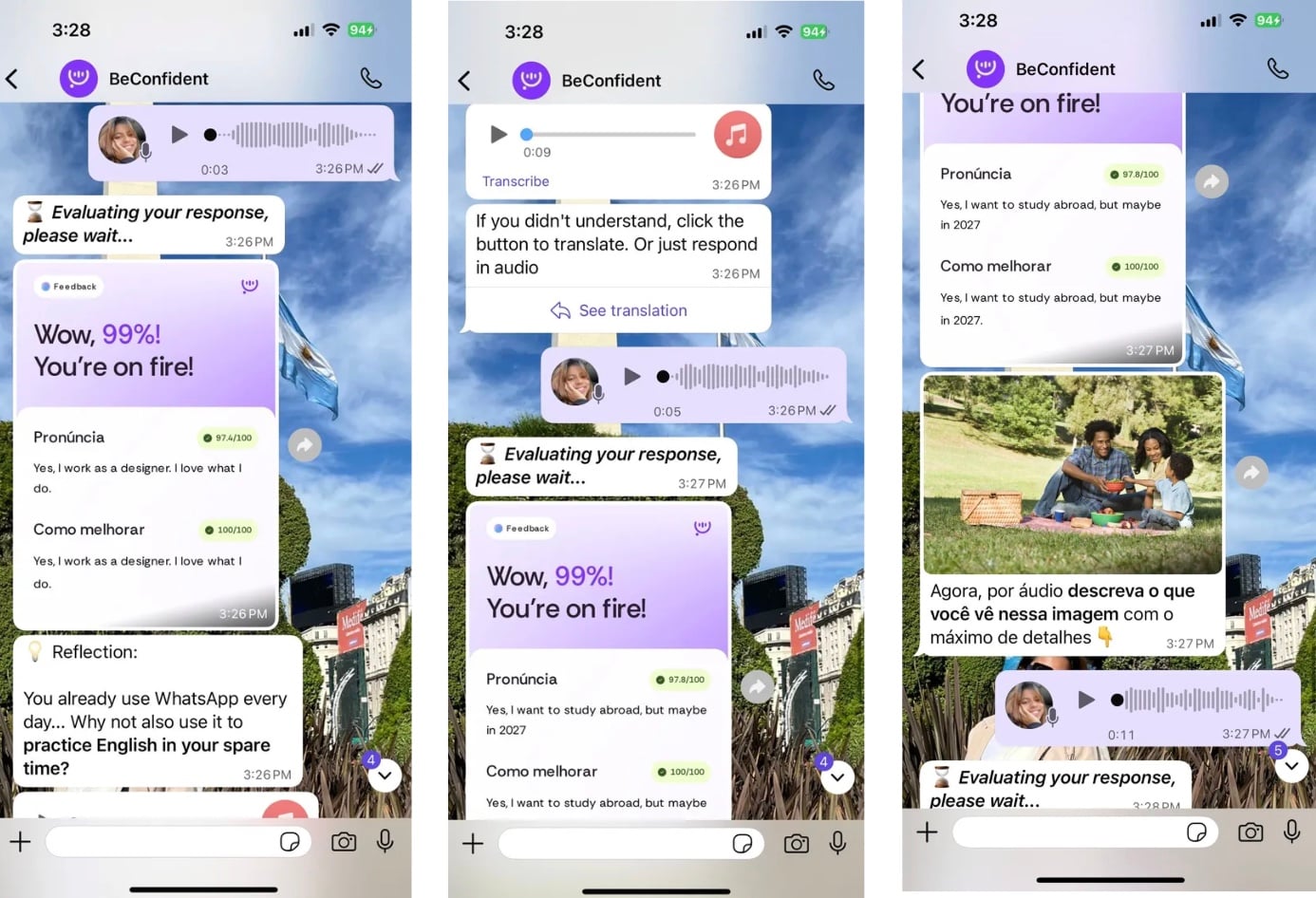
Main advantages of practicing with AI:
24-hour availability, making it easy to fit into your routine.
Immediate feedback on grammar and pronunciation.
Simulation of professional and travel scenarios.
Adaptation to each student's level and interests.
Significant reduction in the fear of judgment.
Try for free and start learning English today with AI tutors that adapt to your profile.
Tip 5: Simulate professional and travel role-plays
Practicing real-life situations to gain confidence
Role-plays prepare you for specific situations that usually cause anxiety, such as negotiations, interviews, or travel interactions. Repeating these scenes in a safe environment reduces nervousness when they happen in real life.
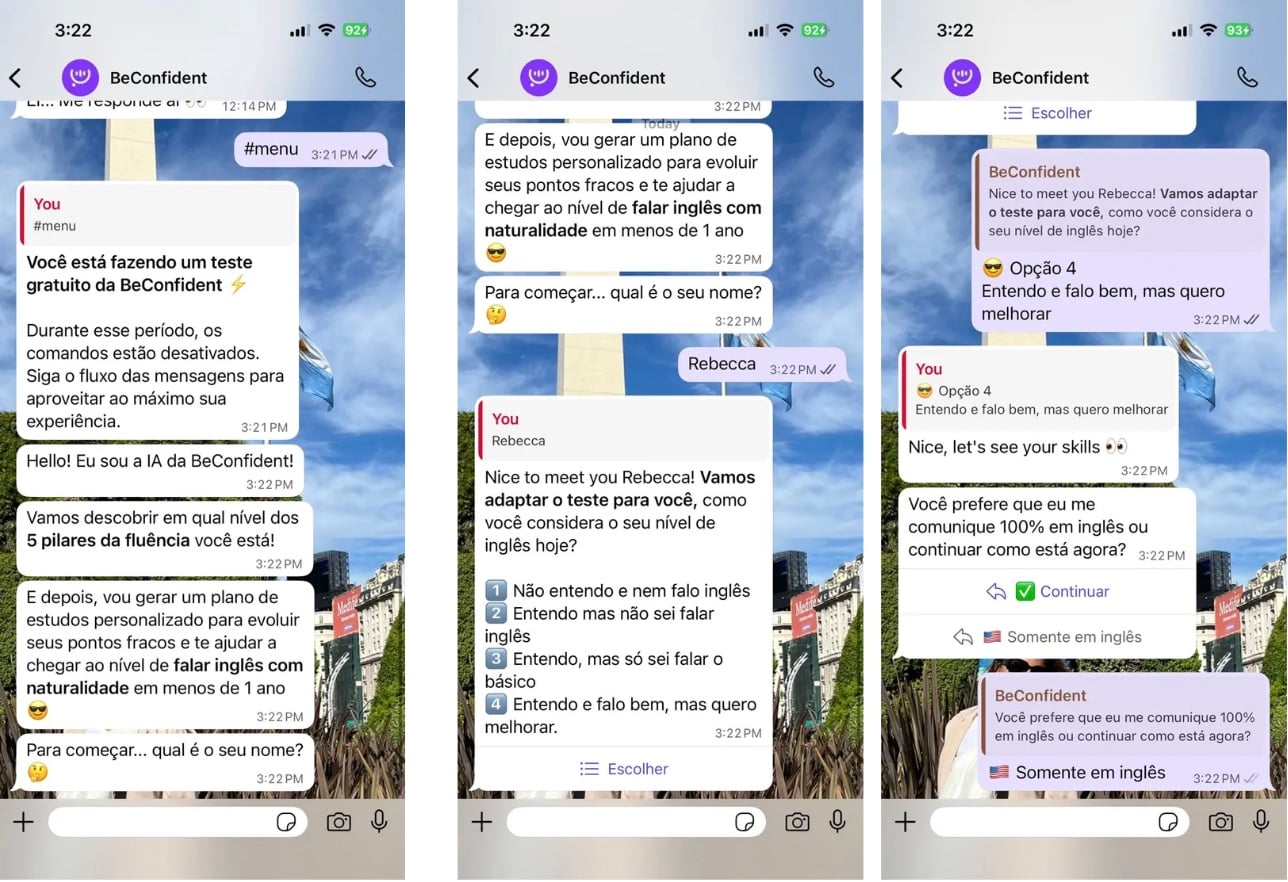
On BeConfident, you can practice with AI tutors focused on different contexts:
Business meetings and technical presentations.
Job interviews at multinational companies.
Airport, hotel, and restaurant situations.
Informal conversations with foreign colleagues.
Customer service in an international context.
Tip 6: Use instant feedback to correct in real time
How immediate corrections accelerate learning
BeConfident's "Review Mistakes" feature offers:
Feedback review on grammar, pronunciation, and natural flow.
Repeated correction of specific errors until they are mastered.
Focus on each individual's areas of greatest difficulty.
An organized history of feedback to track progress.
The option to skip reviews that are not a priority.
Tip 7: Create a 30-day plan with daily goals
Progressive structure for consistent development
Maintaining daily consistency usually yields better results than studying for many hours sporadically. A 30-day plan with simple goals builds rhythm and gradually increases confidence.
A suggested structure for 30 days:
Week 1: Focus on mindset and individual practice, such as shadowing and recordings.
Week 2: Starting conversation with AI on familiar topics.
Week 3: Specific role-plays for professional or travel needs.
Week 4: Simulation of more complex real-life situations.
Daily goal: 15 to 20 minutes of conversational practice.
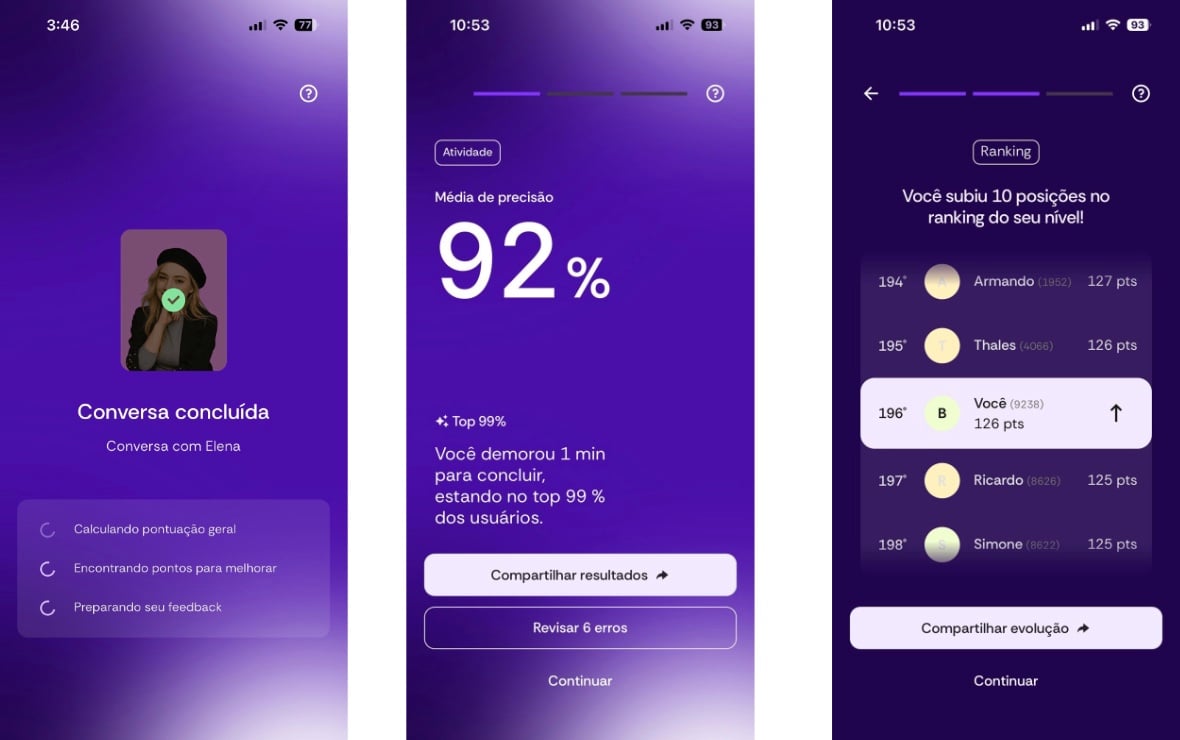
The "My Progress" menu on BeConfident shows active day streaks, ranking position, hours of practice, and certificates, making tracking more visual and motivating.
Tip 8: Learn survival phrases for common situations
How to express insecurity and ask for help in English
Having a set of ready-to-use phrases reduces tension in unexpected situations. Knowing how to explain that you are still learning or that you need help makes interaction much smoother.
Some useful phrases for moments of insecurity:
"I'm still learning English, please be patient."
"Could you speak a bit slower, please?"
"I'm not sure how to say this in English."
"Let me rephrase that."
"I feel a bit nervous speaking English."
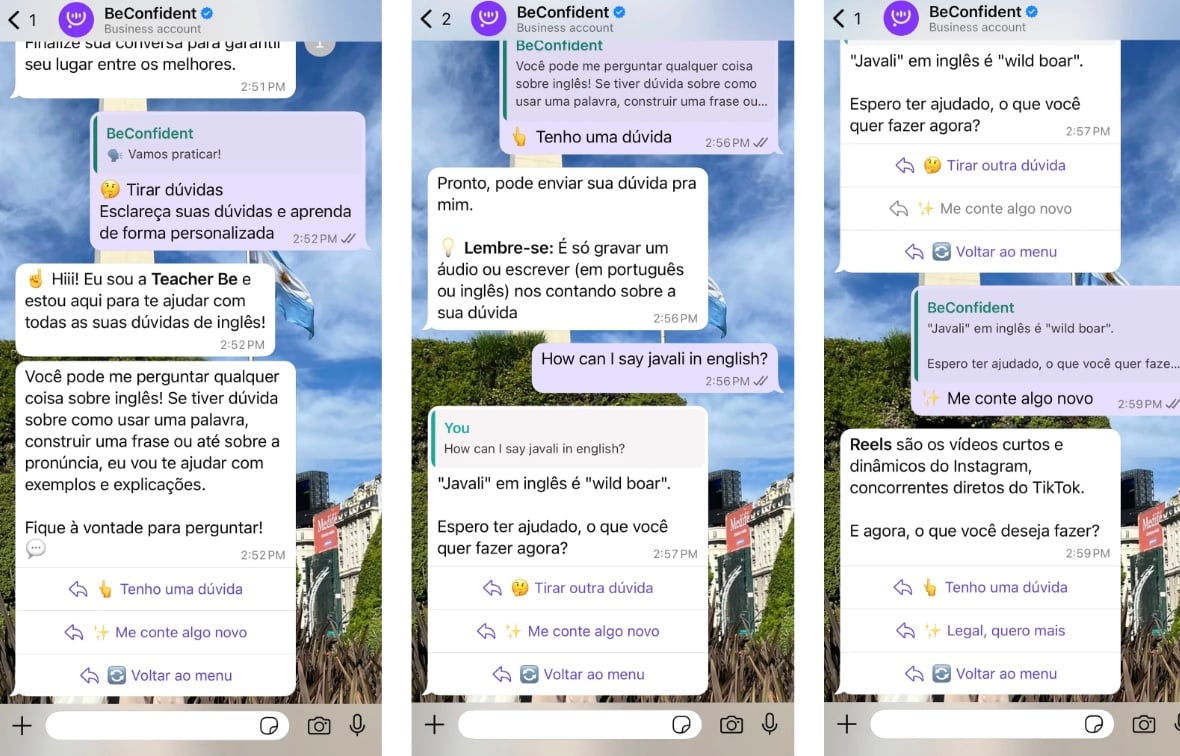
BeConfident’s "Tell Me Something New" feature introduces expressions in context and interesting language facts, naturally expanding your repertoire.
Tip 9: Expose yourself to varied accents with the support of AI
Preparing for global communication
Professionals and travelers interact with English speakers from various countries. Getting exposure to American, British, Australian, Indian, and South African accents better prepares you for meetings, travel, and day-to-day interactions.
BeConfident's AI tutors simulate different native accents and allow for:
Gradual adaptation to pronunciation variations.
Exposure to regional expressions and vocabulary.
Increased confidence when speaking with people from any country.
Specific preparation for travel destinations.
A competitive edge in multinational environments.
Try for free and start learning English today by practicing with tutors of different nationalities.
Tip 10: Monitor your progress with objective metrics
Tracking progress to keep motivation high
AI-powered instruction platforms already record course completion rates up to 70% higher than traditional approaches, reinforcing the impact of progress tracking.
Some useful metrics to track:
Weekly conversation time.
Number of identified and corrected mistakes.
Variety of topics covered in conversations.
Self-reported confidence level on a scale from 1 to 10.
Concrete results in real situations, such as meetings and trips.
Applying the tips by profile
For rising professionals
Focusing on tips 4, 5, and 6 usually brings the best results. Prioritize role-plays of meetings, presentations, and negotiations, in addition to technical vocabulary feedback. Use BeConfident to simulate specific situations from your field.
For international travelers
Paying more attention to tips 8 and 9 helps gain confidence in airports, hotels, and restaurants. Practice with AI tutors representing the accents of the destinations you visit most.
For personal goals
Combining all the tips with topics of personal interest makes the process more enjoyable. Use BeConfident's 24/7 availability to fit English practice into small blocks throughout your day.
Frequently Asked Questions
How to overcome the fear of speaking English at work?
A practical way is to start with simulations of professional situations using AI in a judgment-free environment. Role-plays of meetings, presentations, and negotiations allow you to test phrases, receive feedback, and build confidence gradually. BeConfident offers tutors focused on corporate contexts.
Which app to use to practice English without feeling embarrassed?
BeConfident was designed to reduce embarrassment through AI tutors available 24/7 via the app, WhatsApp, or smartwatch. The focus is on real conversation, with personalized feedback and a safe environment, rather than just games or multiple-choice exercises.
How long does it take to lose the fear of speaking English?
With 15 to 20 minutes of daily practice using the techniques in this article, many people report a clear improvement in confidence within 2 to 4 weeks. The combination of shifting mindsets, guided practice, and a safe environment accelerates this process.
How to speak English with more confidence while traveling?
Learning survival phrases, practicing typical travel scenarios, and getting exposure to different accents increases confidence. BeConfident lets you simulate airport, hotel, and restaurant situations with native tutors from various countries.
Is it possible to learn to speak English alone?
Learning alone is possible when combining individual techniques, like shadowing and recordings, with conversational practice via AI. BeConfident offers structured paths, instant feedback, and progress tracking to support this journey.
Conclusion: Transform your relationship with English in 4 weeks
Overcoming the embarrassment of speaking English becomes highly achievable when combining a mindset shift, structured individual practice, and regular conversation with AI in a safe environment. The 10 tips in this article form a progressive system already applied by thousands of BeConfident students.
While many traditional methods focus solely on theory and memorization, BeConfident prioritizes unlimited conversational practice with AI tutors that adapt to each user's needs. In 4 weeks of consistent practice, it is entirely possible to go from blanking out when speaking to a much more confident level of communication.
Try for free and start learning English today, and join the group of Brazilians who have already reduced their embarrassment and gained more safety in conversation using the BeConfident methodology.
Written by: Luan Cavallaro, Founder & CMO, BeConfident
Key takeaways from this article
Treating mistakes as learning opportunities helps focus on clear communication rather than grammatical perfection.
Practicing shadowing with podcasts and recording your own speech develops automatic fluency and allows for objective self-assessment.
Using AI for 24/7 conversation reduces anxiety, allows simulating real-life situations, and offers immediate feedback.
Following a 30-day plan with daily goals builds consistency, expands useful vocabulary, and increases exposure to realistic, varied accents.
Monitoring progress metrics keeps motivation high. Try BeConfident for free and boost your confidence in English in 4 weeks.
Why the fear of speaking English is so common among Brazilians
Many professionals can read reports, emails, and technical documents in English, but freeze in negotiations, meetings, or presentations. Seasoned travelers feel insecure when asking for information at airports or ordering in restaurants. This gap between theoretical knowledge and oral practice limits promotions, exchange programs, and travel experiences.
BeConfident, with over 200,000 paying students, 3 million users in more than 100 countries, and an RA 1000 reputation on Reclame Aqui, developed a specific approach to this problem. The platform combines 24/7 conversational practice with AI tutors that reduce the fear of judgment and accelerate the development of oral fluency.
Tip 1: Shift your mindset to speak more freely
How to overcome the fear of making mistakes when speaking English
Overcoming embarrassment begins with accepting that mistakes are part of the process. Native speakers also make mistakes and continue to communicate effectively. The goal becomes communicating the message clearly, not speaking flawlessly.
Some practical strategies to change your mindset:
Redefining mistakes as learning opportunities.
Keeping the focus on the message, not perfect grammar.
Remembering that most people tend to help, not judge.
Tracking and celebrating small communication successes.
Practicing self-compassion whenever a mistake happens.
Tip 2: Practice shadowing with podcasts and videos
Simultaneous repetition technique to gain fluency
Shadowing is the practice of repeating out loud, almost at the same time, what a person is saying in an audio or video. This technique trains rhythm, intonation, and pronunciation, builds speaks automatism, and reduces the time spent thinking before answering.
A simple way to apply shadowing:
Choosing content slightly above your current level.
Starting with 5 to 10 minutes a day.
Preferring podcasts related to your professional field or interests.
Recording your practice to compare afterwards.
Imitating the melody of speech, not just isolated words.
Travelers can prioritize videos featuring check-in, immigration, and restaurant situations. Professionals can use business podcasts or TED talks related to their field.
Tip 3: Record your own speech and track your progress
Self-feedback to identify areas for improvement
Recording your own speech reduces the pressure of having an audience and allows for a more objective analysis. Many students realize, when listening to themselves, that they speak better than they imagined.
A simple recording routine includes:
Recording for 2 to 3 minutes a day on varied topics.
Choosing relevant topics such as work, travel, and hobbies.
Listening to the recording the next day to have more distance.
Listing recurring patterns of mistakes.
Comparing weekly recordings to see the progress.
Tip 4: Practice with AI in a judgment-free environment
How to use artificial intelligence to practice conversation
AI tools like ChatGPT have already proven effective in reducing presentation anxiety and improving speaking skills, as they offer a controlled and judgment-free environment for practice.
BeConfident goes further by offering AI tutors with different personalities and varied native accents. Users can practice conversation 24/7 via the app, WhatsApp, or smartwatch, receiving immediate feedback without embarrassment.
Main advantages of practicing with AI:
24-hour availability, making it easy to fit into your routine.
Immediate feedback on grammar and pronunciation.
Simulation of professional and travel scenarios.
Adaptation to each student's level and interests.
Significant reduction in the fear of judgment.
Try for free and start learning English today with AI tutors that adapt to your profile.
Tip 5: Simulate professional and travel role-plays
Practicing real-life situations to gain confidence
Role-plays prepare you for specific situations that usually cause anxiety, such as negotiations, interviews, or travel interactions. Repeating these scenes in a safe environment reduces nervousness when they happen in real life.
On BeConfident, you can practice with AI tutors focused on different contexts:
Business meetings and technical presentations.
Job interviews at multinational companies.
Airport, hotel, and restaurant situations.
Informal conversations with foreign colleagues.
Customer service in an international context.
Tip 6: Use instant feedback to correct in real time
How immediate corrections accelerate learning
BeConfident's "Review Mistakes" feature offers:
Feedback review on grammar, pronunciation, and natural flow.
Repeated correction of specific errors until they are mastered.
Focus on each individual's areas of greatest difficulty.
An organized history of feedback to track progress.
The option to skip reviews that are not a priority.
Tip 7: Create a 30-day plan with daily goals
Progressive structure for consistent development
Maintaining daily consistency usually yields better results than studying for many hours sporadically. A 30-day plan with simple goals builds rhythm and gradually increases confidence.
A suggested structure for 30 days:
Week 1: Focus on mindset and individual practice, such as shadowing and recordings.
Week 2: Starting conversation with AI on familiar topics.
Week 3: Specific role-plays for professional or travel needs.
Week 4: Simulation of more complex real-life situations.
Daily goal: 15 to 20 minutes of conversational practice.
The "My Progress" menu on BeConfident shows active day streaks, ranking position, hours of practice, and certificates, making tracking more visual and motivating.
Tip 8: Learn survival phrases for common situations
How to express insecurity and ask for help in English
Having a set of ready-to-use phrases reduces tension in unexpected situations. Knowing how to explain that you are still learning or that you need help makes interaction much smoother.
Some useful phrases for moments of insecurity:
"I'm still learning English, please be patient."
"Could you speak a bit slower, please?"
"I'm not sure how to say this in English."
"Let me rephrase that."
"I feel a bit nervous speaking English."
BeConfident’s "Tell Me Something New" feature introduces expressions in context and interesting language facts, naturally expanding your repertoire.
Tip 9: Expose yourself to varied accents with the support of AI
Preparing for global communication
Professionals and travelers interact with English speakers from various countries. Getting exposure to American, British, Australian, Indian, and South African accents better prepares you for meetings, travel, and day-to-day interactions.
BeConfident's AI tutors simulate different native accents and allow for:
Gradual adaptation to pronunciation variations.
Exposure to regional expressions and vocabulary.
Increased confidence when speaking with people from any country.
Specific preparation for travel destinations.
A competitive edge in multinational environments.
Try for free and start learning English today by practicing with tutors of different nationalities.
Tip 10: Monitor your progress with objective metrics
Tracking progress to keep motivation high
AI-powered instruction platforms already record course completion rates up to 70% higher than traditional approaches, reinforcing the impact of progress tracking.
Some useful metrics to track:
Weekly conversation time.
Number of identified and corrected mistakes.
Variety of topics covered in conversations.
Self-reported confidence level on a scale from 1 to 10.
Concrete results in real situations, such as meetings and trips.
Applying the tips by profile
For rising professionals
Focusing on tips 4, 5, and 6 usually brings the best results. Prioritize role-plays of meetings, presentations, and negotiations, in addition to technical vocabulary feedback. Use BeConfident to simulate specific situations from your field.
For international travelers
Paying more attention to tips 8 and 9 helps gain confidence in airports, hotels, and restaurants. Practice with AI tutors representing the accents of the destinations you visit most.
For personal goals
Combining all the tips with topics of personal interest makes the process more enjoyable. Use BeConfident's 24/7 availability to fit English practice into small blocks throughout your day.
Frequently Asked Questions
How to overcome the fear of speaking English at work?
A practical way is to start with simulations of professional situations using AI in a judgment-free environment. Role-plays of meetings, presentations, and negotiations allow you to test phrases, receive feedback, and build confidence gradually. BeConfident offers tutors focused on corporate contexts.
Which app to use to practice English without feeling embarrassed?
BeConfident was designed to reduce embarrassment through AI tutors available 24/7 via the app, WhatsApp, or smartwatch. The focus is on real conversation, with personalized feedback and a safe environment, rather than just games or multiple-choice exercises.
How long does it take to lose the fear of speaking English?
With 15 to 20 minutes of daily practice using the techniques in this article, many people report a clear improvement in confidence within 2 to 4 weeks. The combination of shifting mindsets, guided practice, and a safe environment accelerates this process.
How to speak English with more confidence while traveling?
Learning survival phrases, practicing typical travel scenarios, and getting exposure to different accents increases confidence. BeConfident lets you simulate airport, hotel, and restaurant situations with native tutors from various countries.
Is it possible to learn to speak English alone?
Learning alone is possible when combining individual techniques, like shadowing and recordings, with conversational practice via AI. BeConfident offers structured paths, instant feedback, and progress tracking to support this journey.
Conclusion: Transform your relationship with English in 4 weeks
Overcoming the embarrassment of speaking English becomes highly achievable when combining a mindset shift, structured individual practice, and regular conversation with AI in a safe environment. The 10 tips in this article form a progressive system already applied by thousands of BeConfident students.
While many traditional methods focus solely on theory and memorization, BeConfident prioritizes unlimited conversational practice with AI tutors that adapt to each user's needs. In 4 weeks of consistent practice, it is entirely possible to go from blanking out when speaking to a much more confident level of communication.
Try for free and start learning English today, and join the group of Brazilians who have already reduced their embarrassment and gained more safety in conversation using the BeConfident methodology.