




Duolingo, Babbel, BeConfident: which is the best in Brazil?
Duolingo, Babbel, BeConfident: which is the best in Brazil?
Duolingo, Babbel, BeConfident: which is the best in Brazil?
Written by: Luan Cavallaro, Founder & CMO, BeConfident
Key takeaways from this article
Duolingo helps build a study habit and basic vocabulary, but does not develop natural conversation for Brazilians.
Babbel offers structured grammar and practical phrases, but limits oral practice to controlled exercises.
Both apps do not adequately prepare for fast native accents and real professional situations.
BeConfident uses AI for unlimited 24/7 conversation, personalized feedback, and exposure to multiple accents.
Combining traditional apps with BeConfident accelerates fluency: start your conversation journey today.
Is it possible to become fluent with Duolingo?
Duolingo has won over millions of Brazilian users with a gamified approach and a daily streak system. In 2026, the app introduced the Energy system, which replaced the old Heart system and created more restrictions for free users. The Super plan costs R$ 179.90 annually in Brazil and offers unlimited access to lessons and ad removal.
Duolingo works well for building a study habit and expanding basic vocabulary. The short 5 to 10-minute lessons fit easily into daily routines, and the points system keeps users engaged. For Brazilian beginners, the app provides a foundation in fundamental grammar and word recognition.
Even so, Duolingo does not develop real conversation skills. The focus on translating isolated sentences does not prepare for natural dialogues. Many Brazilians report specific difficulties, such as pronunciation poorly adjusted to the Portuguese accent, a lack of American cultural context, and an absence of significant oral practice. The app prioritizes memorization over fluent communication.
After months or years of using Duolingo, many Brazilians still freeze in real conversations, especially in professional situations or international travels.
Is Babbel worth it for Brazilians?
Babbel takes a more structured approach than Duolingo, focusing on applied grammar and real-world phrases. 15-minute lessons teach practical phrases with real context, which differs from the superficial gamification of other apps.
For Brazilians, Babbel offers clear advantages. The app provides detailed grammatical explanations in Portuguese, logical progression between levels, and a focus on relevant everyday situations. The platform includes pronunciation exercises with voice recognition and simulated dialogues that help with listening comprehension.
Lessons cover practical topics like travel, work, and relationships, with immediately applicable vocabulary. Babbel reduces the mixing of verb tenses through integrated grammar tips, a common problem in apps heavily focused on gaming.
Babbel still has significant limitations for conversational fluency. Oral practice remains restricted to repetition exercises, without free conversation or truly personalized feedback. Brazilians need more exposure to native accents and spontaneous speaking situations, something Babbel does not sufficiently provide.
The alternative to Duolingo and Babbel: why BeConfident is superior for fluency
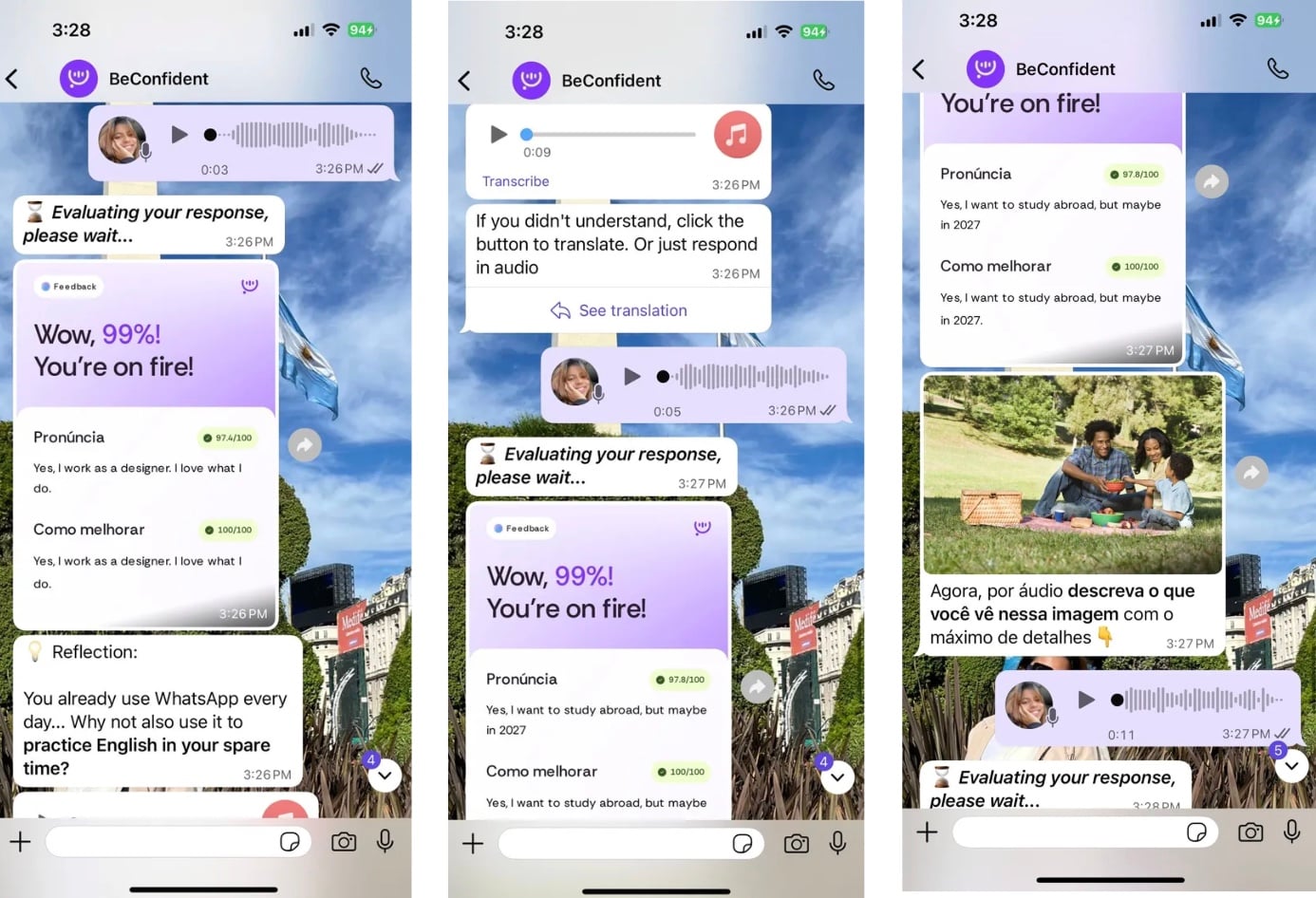
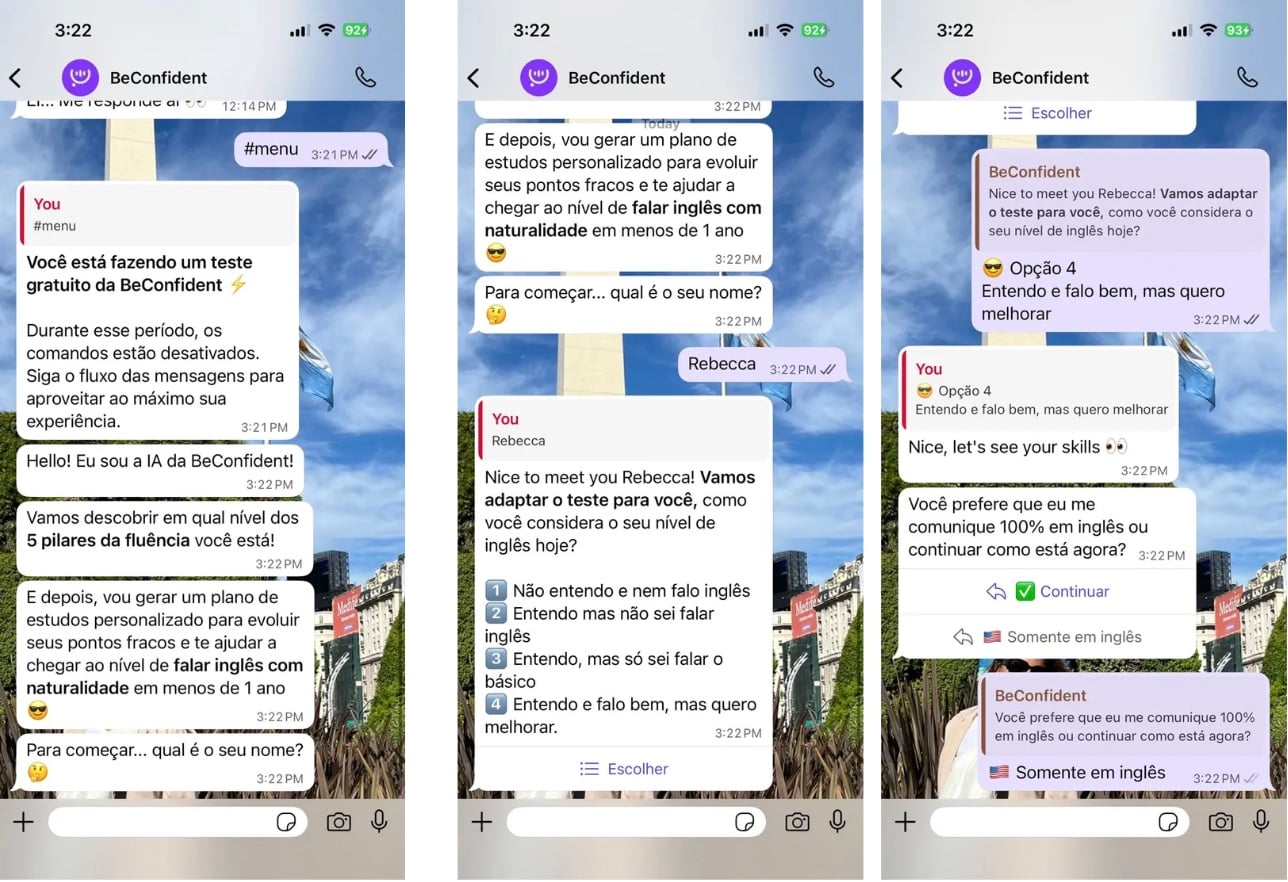
BeConfident solves the core limitations of traditional apps using AI technology. The platform serves over 200,000 paying students and 3 million total users, maintaining an RA 1000 reputation on Reclame Aqui. The solution offers unlimited 24/7 conversational practice via app, WhatsApp, or smartwatch.
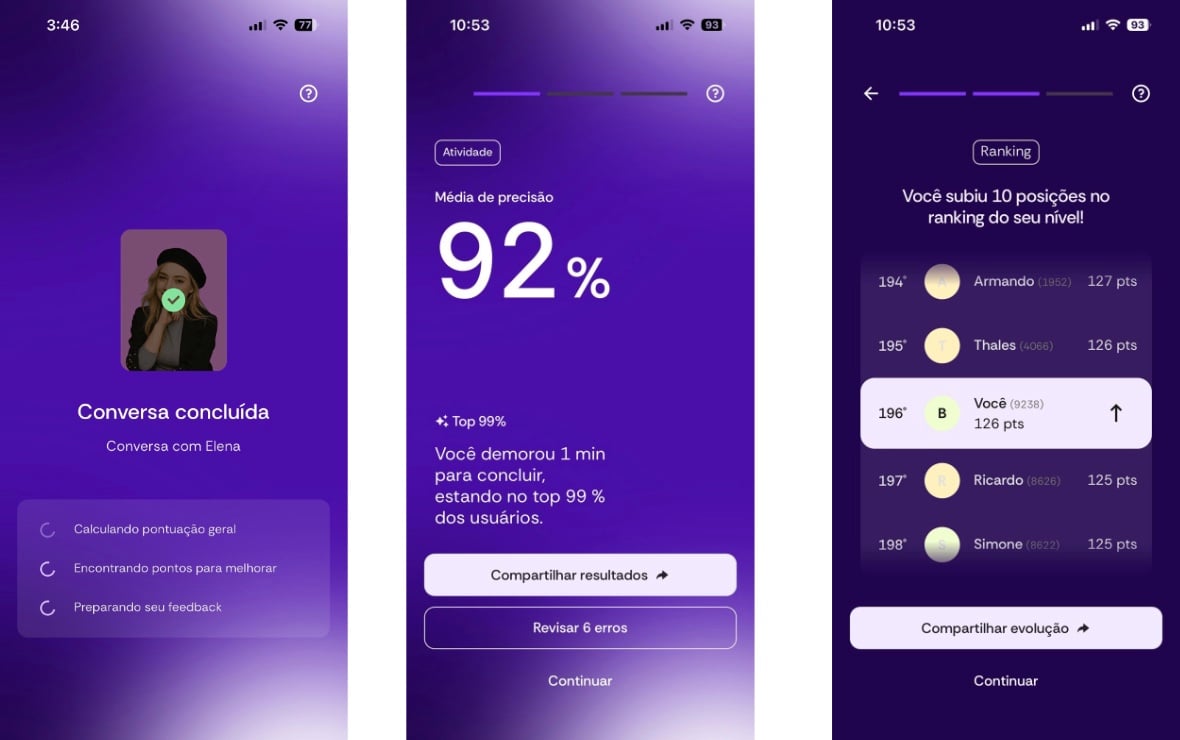
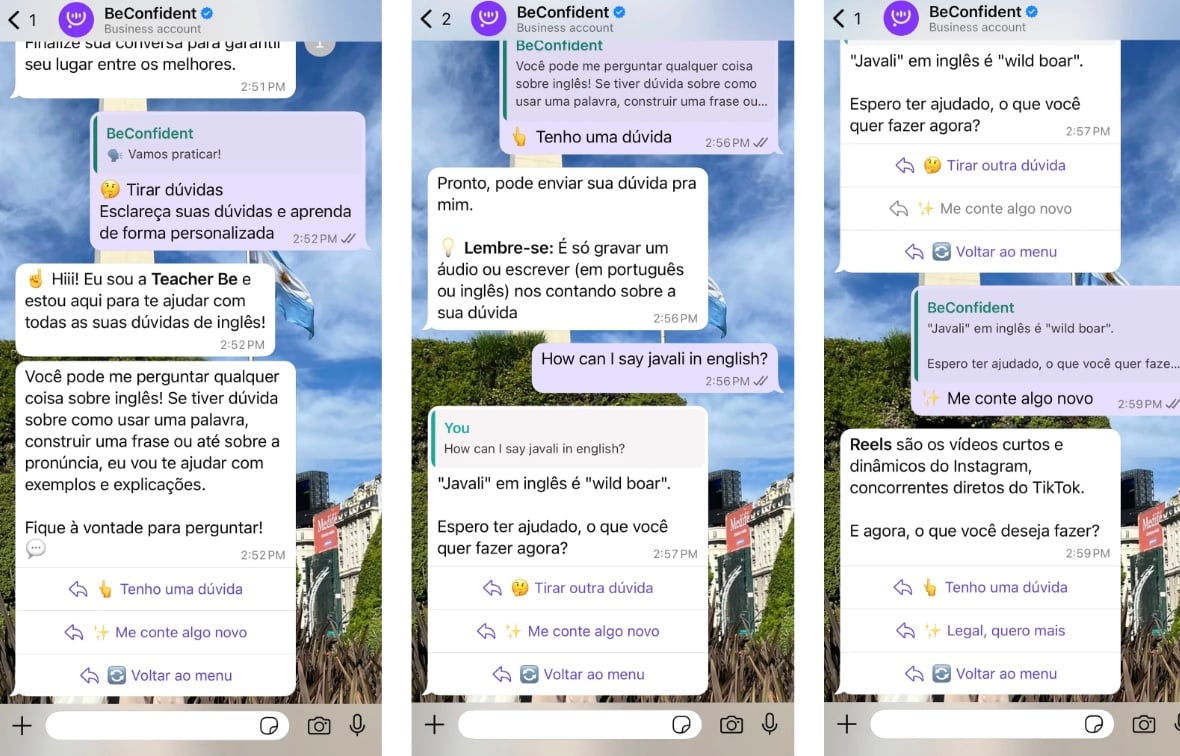
The AI tutors simulate native accents, including American, British, Australian, Canadian, South African, and Indian. Each tutor can have a specific personality, such as a photographer, lawyer, or writer, allowing conversations on professional topics or personal interests. The instant feedback corrects pronunciation, grammar, and naturalness objectively, without judgment.
BeConfident integrates theory and conversational practice into structured class tracks, something Duolingo and Babbel do not do with the same depth. Brazilians practice real situations like work presentations, international negotiations, and casual travel conversations. This targeted practice builds genuine confidence to speak English naturally.
Duolingo vs Babbel vs BeConfident for conversation
Duolingo and Babbel contribute to vocabulary and grammar but leave major gaps in conversation. Directly comparing the two apps for speaking development, both show significant gaps for Brazilians seeking real fluency. The table below shows how BeConfident outperforms both precisely in the critical areas for speaking naturally.
Aspect | Duolingo | Babbel | BeConfident |
|---|---|---|---|
Oral practice | Basic exercises | Structured dialogues | Unlimited 24/7 conversation |
Feedback | Simple auto-correction | Grammar tips | Instant personalized analysis |
Accents | Standard American | British and American | Multiple native accents (American, British, South African, among others) |
Personalization | Limited | Pre-defined themes | Tailored professional and personal topics |
Duolingo prioritizes gamification over real conversation, as described in the previous section, while Babbel offers solid grammar structure but, as discussed, limits oral practice to structured exercises. Both fail to simulate natural conversations that Brazilians face at work or while traveling.
If you need this real conversational practice that traditional apps do not offer, try unlimited conversation with AI now on BeConfident.
Results after a 30-day test
The 30-day tests with Duolingo and Babbel confirm the limitations for fluent conversation. With Duolingo, a user can maintain a 30-day streak, complete about 3 units, and learn approximately 200 new words. Vocabulary increases, but confidence to speak remains low.
Babbel provides better grammatical understanding and more useful phrases for real situations. In 30 days, it is possible to complete about 15 lessons focused on travel and work, showing measurable progress in verb structures. Even so, when trying to converse with natives, frequent freezing still occurs.
These results show that both apps fail at the primary goal of many Brazilians, which is to develop natural conversational fluency for real situations of work, study, and travel. This critical gap in real conversation led to the development of BeConfident with a different approach, focusing on continuous and personalized oral practice.
Roadmap to fluency: Duolingo/Babbel + BeConfident
A combination of traditional apps and intensive conversational practice yields faster results. Use Duolingo or Babbel to build vocabulary and basic grammar for 15 to 20 minutes a day to create a consistent theoretical foundation. With that base established, practice conversation on BeConfident for 10 to 15 minutes daily to apply the knowledge in real situations.
During these conversations, focus on topics directly related to your goals, such as technical English for your career, travel vocabulary, or casual everyday conversation. This contextualized practice accelerates retention and makes language use more automatic. Next, monitor your progress by noticing increasingly longer and more natural conversations, indicating that the tool combination is working.
Frequently Asked Questions (FAQ)
Is it possible to become fluent in English with Duolingo?
Duolingo efficiently builds basic vocabulary and grammar, but does not provide real conversational fluency. The app focuses on translation and memorization, not natural communication. To achieve fluency, Brazilians need to supplement their studies with intensive oral practice through platforms like BeConfident.
Does Babbel really work for Brazilians?
Babbel offers a solid grammar structure and practical phrases, performing better than Duolingo in comprehension. As detailed in the testing section, the app helps organize knowledge, but still requires additional conversational practice through platforms like BeConfident for students to reach natural fluency.
Is BeConfident better than Duolingo for speaking?
BeConfident focuses directly on fluent conversation supported by AI, while Duolingo prioritizes gamification and vocabulary. The platform offers unlimited oral practice with personalized feedback, building real confidence to speak English in professional and personal situations.
How much does BeConfident cost in 2026?
BeConfident offers a full free trial and affordable plans for Brazilians, costing less than traditional private tutoring. The investment includes unlimited 24/7 conversational practice and accelerates progress toward fluency.
What is the disadvantage of Duolingo?
The main disadvantage remains the lack of consistent conversational practice. Duolingo builds study habits and vocabulary, but does not sufficiently prepare for natural conversations. Many Brazilians report frustration when trying to apply what they learned in real work or travel situations, as discussed in the section about Duolingo.
Conclusion: decide now and speak English with confidence
Duolingo and Babbel are useful for building fundamentals, but alone they do not deliver the conversational fluency that many Brazilians seek. BeConfident offers personalized and unlimited oral practice, an essential element for speaking English confidently and naturally.
Written by: Luan Cavallaro, Founder & CMO, BeConfident
Key takeaways from this article
Duolingo helps build a study habit and basic vocabulary, but does not develop natural conversation for Brazilians.
Babbel offers structured grammar and practical phrases, but limits oral practice to controlled exercises.
Both apps do not adequately prepare for fast native accents and real professional situations.
BeConfident uses AI for unlimited 24/7 conversation, personalized feedback, and exposure to multiple accents.
Combining traditional apps with BeConfident accelerates fluency: start your conversation journey today.
Is it possible to become fluent with Duolingo?
Duolingo has won over millions of Brazilian users with a gamified approach and a daily streak system. In 2026, the app introduced the Energy system, which replaced the old Heart system and created more restrictions for free users. The Super plan costs R$ 179.90 annually in Brazil and offers unlimited access to lessons and ad removal.
Duolingo works well for building a study habit and expanding basic vocabulary. The short 5 to 10-minute lessons fit easily into daily routines, and the points system keeps users engaged. For Brazilian beginners, the app provides a foundation in fundamental grammar and word recognition.
Even so, Duolingo does not develop real conversation skills. The focus on translating isolated sentences does not prepare for natural dialogues. Many Brazilians report specific difficulties, such as pronunciation poorly adjusted to the Portuguese accent, a lack of American cultural context, and an absence of significant oral practice. The app prioritizes memorization over fluent communication.
After months or years of using Duolingo, many Brazilians still freeze in real conversations, especially in professional situations or international travels.
Is Babbel worth it for Brazilians?
Babbel takes a more structured approach than Duolingo, focusing on applied grammar and real-world phrases. 15-minute lessons teach practical phrases with real context, which differs from the superficial gamification of other apps.
For Brazilians, Babbel offers clear advantages. The app provides detailed grammatical explanations in Portuguese, logical progression between levels, and a focus on relevant everyday situations. The platform includes pronunciation exercises with voice recognition and simulated dialogues that help with listening comprehension.
Lessons cover practical topics like travel, work, and relationships, with immediately applicable vocabulary. Babbel reduces the mixing of verb tenses through integrated grammar tips, a common problem in apps heavily focused on gaming.
Babbel still has significant limitations for conversational fluency. Oral practice remains restricted to repetition exercises, without free conversation or truly personalized feedback. Brazilians need more exposure to native accents and spontaneous speaking situations, something Babbel does not sufficiently provide.
The alternative to Duolingo and Babbel: why BeConfident is superior for fluency
BeConfident solves the core limitations of traditional apps using AI technology. The platform serves over 200,000 paying students and 3 million total users, maintaining an RA 1000 reputation on Reclame Aqui. The solution offers unlimited 24/7 conversational practice via app, WhatsApp, or smartwatch.
The AI tutors simulate native accents, including American, British, Australian, Canadian, South African, and Indian. Each tutor can have a specific personality, such as a photographer, lawyer, or writer, allowing conversations on professional topics or personal interests. The instant feedback corrects pronunciation, grammar, and naturalness objectively, without judgment.
BeConfident integrates theory and conversational practice into structured class tracks, something Duolingo and Babbel do not do with the same depth. Brazilians practice real situations like work presentations, international negotiations, and casual travel conversations. This targeted practice builds genuine confidence to speak English naturally.
Duolingo vs Babbel vs BeConfident for conversation
Duolingo and Babbel contribute to vocabulary and grammar but leave major gaps in conversation. Directly comparing the two apps for speaking development, both show significant gaps for Brazilians seeking real fluency. The table below shows how BeConfident outperforms both precisely in the critical areas for speaking naturally.
Aspect | Duolingo | Babbel | BeConfident |
|---|---|---|---|
Oral practice | Basic exercises | Structured dialogues | Unlimited 24/7 conversation |
Feedback | Simple auto-correction | Grammar tips | Instant personalized analysis |
Accents | Standard American | British and American | Multiple native accents (American, British, South African, among others) |
Personalization | Limited | Pre-defined themes | Tailored professional and personal topics |
Duolingo prioritizes gamification over real conversation, as described in the previous section, while Babbel offers solid grammar structure but, as discussed, limits oral practice to structured exercises. Both fail to simulate natural conversations that Brazilians face at work or while traveling.
If you need this real conversational practice that traditional apps do not offer, try unlimited conversation with AI now on BeConfident.
Results after a 30-day test
The 30-day tests with Duolingo and Babbel confirm the limitations for fluent conversation. With Duolingo, a user can maintain a 30-day streak, complete about 3 units, and learn approximately 200 new words. Vocabulary increases, but confidence to speak remains low.
Babbel provides better grammatical understanding and more useful phrases for real situations. In 30 days, it is possible to complete about 15 lessons focused on travel and work, showing measurable progress in verb structures. Even so, when trying to converse with natives, frequent freezing still occurs.
These results show that both apps fail at the primary goal of many Brazilians, which is to develop natural conversational fluency for real situations of work, study, and travel. This critical gap in real conversation led to the development of BeConfident with a different approach, focusing on continuous and personalized oral practice.
Roadmap to fluency: Duolingo/Babbel + BeConfident
A combination of traditional apps and intensive conversational practice yields faster results. Use Duolingo or Babbel to build vocabulary and basic grammar for 15 to 20 minutes a day to create a consistent theoretical foundation. With that base established, practice conversation on BeConfident for 10 to 15 minutes daily to apply the knowledge in real situations.
During these conversations, focus on topics directly related to your goals, such as technical English for your career, travel vocabulary, or casual everyday conversation. This contextualized practice accelerates retention and makes language use more automatic. Next, monitor your progress by noticing increasingly longer and more natural conversations, indicating that the tool combination is working.
Frequently Asked Questions (FAQ)
Is it possible to become fluent in English with Duolingo?
Duolingo efficiently builds basic vocabulary and grammar, but does not provide real conversational fluency. The app focuses on translation and memorization, not natural communication. To achieve fluency, Brazilians need to supplement their studies with intensive oral practice through platforms like BeConfident.
Does Babbel really work for Brazilians?
Babbel offers a solid grammar structure and practical phrases, performing better than Duolingo in comprehension. As detailed in the testing section, the app helps organize knowledge, but still requires additional conversational practice through platforms like BeConfident for students to reach natural fluency.
Is BeConfident better than Duolingo for speaking?
BeConfident focuses directly on fluent conversation supported by AI, while Duolingo prioritizes gamification and vocabulary. The platform offers unlimited oral practice with personalized feedback, building real confidence to speak English in professional and personal situations.
How much does BeConfident cost in 2026?
BeConfident offers a full free trial and affordable plans for Brazilians, costing less than traditional private tutoring. The investment includes unlimited 24/7 conversational practice and accelerates progress toward fluency.
What is the disadvantage of Duolingo?
The main disadvantage remains the lack of consistent conversational practice. Duolingo builds study habits and vocabulary, but does not sufficiently prepare for natural conversations. Many Brazilians report frustration when trying to apply what they learned in real work or travel situations, as discussed in the section about Duolingo.
Conclusion: decide now and speak English with confidence
Duolingo and Babbel are useful for building fundamentals, but alone they do not deliver the conversational fluency that many Brazilians seek. BeConfident offers personalized and unlimited oral practice, an essential element for speaking English confidently and naturally.