




Phrases for traveling without feeling embarrassed when speaking English
Phrases for traveling without feeling embarrassed when speaking English
Phrases for traveling without feeling embarrassed when speaking English
Written by Luan Cavallaro, Founder & CMO, BeConfident
Key Takeaways from This Article
Simply memorizing phrases is not enough: you must practice real conversation to overcome fear in authentic travel situations.
The essential phrases in this guide cover the airport, hotel, restaurant, transportation, and emergencies, featuring realistic dialogues for immediate use.
Traditional methods like Duolingo do not prioritize fluent conversation; AI tutors simulate native accents and provide instant feedback.
BeConfident stands out with continuous practice via app and WhatsApp, an RA 1000 rating on Reclame Aqui, and a user base of millions.
You can implement a 5-step plan: try BeConfident for free now and travel without feeling embarrassed when speaking English.
Why Just Reading Phrases Doesn't Solve the Problem
Static lists of phrases create a false sense of preparedness. The main obstacles Brazilians face are incorrect pronunciation, lack of practice in real-life situations, and fear of interacting with native speakers.
Traditional methods fail because they do not offer adequate conversational practice. Duolingo focuses on streaks and gamification rather than fluent conversation, which prepares you for exercises but not for speaking to an attendant or a taxi driver. Brick-and-mortar schools do offer human interaction, but they are usually expensive and have rigid schedules, which limits the frequency of practice needed to build confidence.
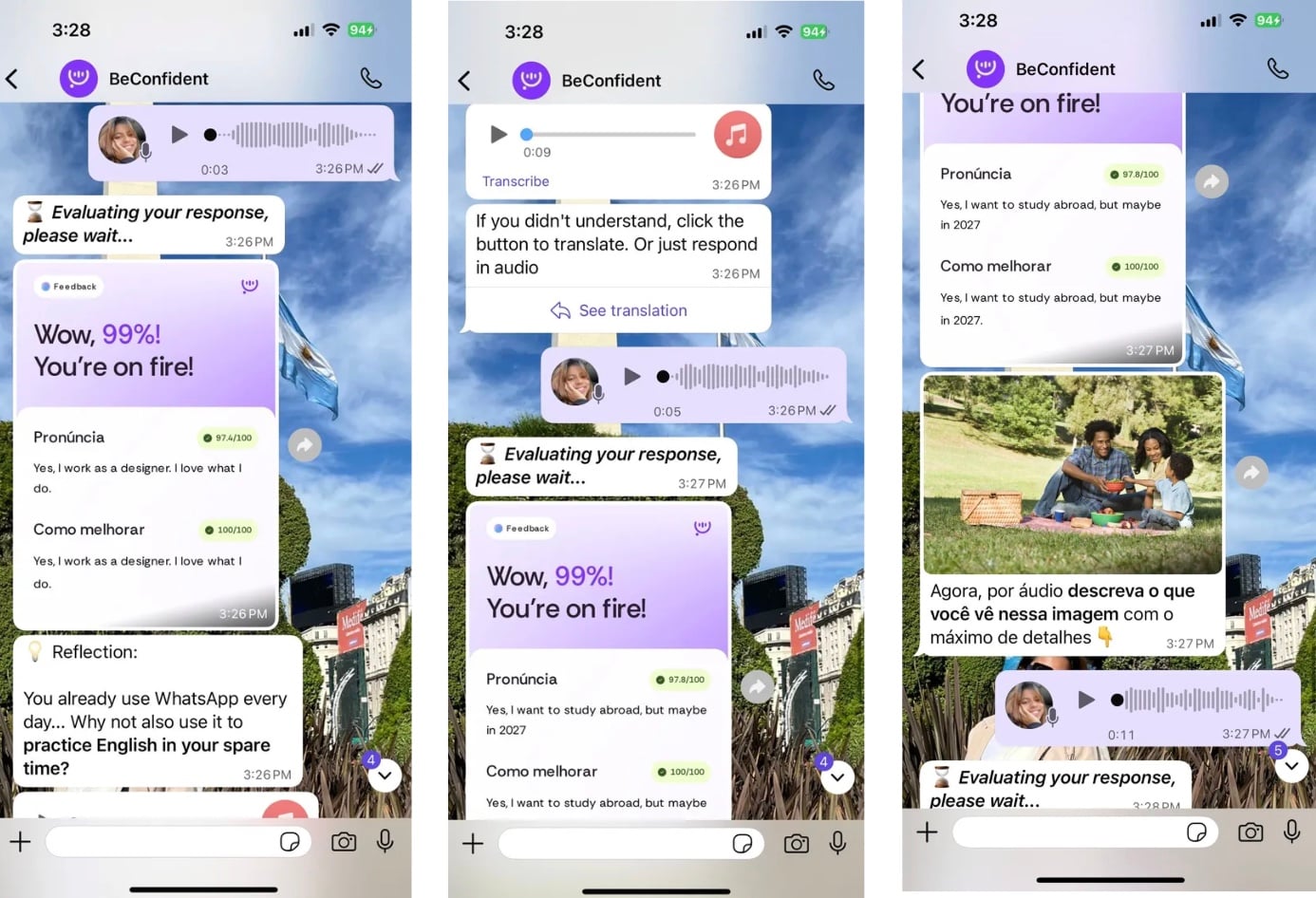
BeConfident solves this challenge with AI tutors that simulate native accents—such as American, British, and Australian—offer instant feedback on pronunciation and grammar, and allow practice across different devices like the app, WhatsApp, or smartwatch. With the boom in Brazilian travel projected for 2025-2026, this preparation becomes even more relevant.
Now that you understand why conversational practice is key, it's time to move on to the phrases that come up most often during trips. The following sections compile over 150 expressions organized by real-life situations, complete with approximate phonetic guides and practical dialogues.
Complete Guide: 150+ Essential Categorized Phrases
Basics, for Any Situation
• Hello / Hi [hê-lôu / hai] - Olá
• Good morning [gud mór-ning] - Bom dia
• Good afternoon [gud áf-ter-nun] - Boa tarde
• Good evening [gud í-vning] - Boa noite
• Please [plíz] - Por favor
• Thank you [thénk yu] - Obrigado
• You're welcome [yór uél-kâm] - De nada
• Excuse me [iks-kyúz mi] - Com licença
• I'm sorry [aim sóri] - Desculpe
• Do you speak Portuguese? [du yu spík por-chu-gíz] - Você fala português?
• I don't speak English very well [ai dônt spík ínglish véri uél] - Não falo inglês muito bem
• Can you help me? [kén yu hélp mi] - Você pode me ajudar?
• I don't understand [ai dônt ân-der-sténd] - Não entendo
• Can you repeat that? [kén yu ri-pít dhét] - Pode repetir?
• How much does it cost? [hau mâch dâz it kóst] - Quanto custa?
• Where is the bathroom? [uér iz dhi báth-rum] - Onde fica o banheiro?
• What time is it? [uót taim iz it] - Que horas são?
• I need help [ai níd hélp] - Preciso de ajuda
• Can you speak slowly? [kén yu spík slôu-li] - Pode falar devagar?
• I'm from Brazil [aim frâm bra-zíl] - Sou do Brasil
• Nice to meet you [nais tu mít yu] - Prazer em conhecê-lo
• Have a good day [hév â gud déi] - Tenha um bom dia
• See you later [sí yu léi-ter] - Até mais
• My name is... [mai néim iz] - Meu nome é...
• What's your name? [uóts yór néim] - Qual é o seu nome?
Realistic Dialogue:
Tourist: "Excuse me, do you speak Portuguese?"
Local: "No, sorry. But I can help you in English."
Tourist: "Thank you. Can you speak slowly? I don't speak English very well."
Local: "Of course! What do you need?"
Practicing these phrases out loud helps break the ice when speaking. BeConfident allows you to practice personal introductions and basic travel situations with AI tutors without feeling embarrassed.
English Phrases for Travel, Airport, and Immigration
• Where is the check-in? [uér iz chék-in] - Onde é o check-in?
• I have a reservation [ai hév â re-zer-véi-shân] - Tenho uma reserva
• Here's my passport [hírs mai pás-port] - Aqui está meu passaporte
• I'm here for tourism [aim hír for túr-izm] - Estou aqui a turismo
• How long is your stay? [hau lóng iz yór stéi] - Quanto tempo vai ficar?
• I'm staying for one week [aim stéi-ing for uân uík] - Vou ficar uma semana
• Where are you staying? [uér ar yu stéi-ing] - Onde vai se hospedar?
• I'm staying at a hotel [aim stéi-ing ét â ho-tél] - Vou ficar em um hotel
• What's the purpose of your visit? [uóts dhi pér-pâs âv yór ví-zit] - Qual o propósito da sua visita?
• Where is baggage claim? [uér iz bá-gij kléim] - Onde é a esteira de bagagem?
• My luggage is missing [mai lâ-gij iz mí-sing] - Minha bagagem está perdida
• I need to declare something [ai níd tu di-klér sâm-thing] - Preciso declarar algo
• Nothing to declare [nâ-thing tu di-klér] - Nada a declarar
• Where is the exit? [uér iz dhi ég-zit] - Onde é a saída?
• Is this the gate for flight...? [iz dhis dhi géit for flait] - Esta é a porta do voo...?
• What time does boarding start? [uót taim dâz bór-ding start] - Que horas começa o embarque?
• My flight is delayed [mai flait iz di-léid] - Meu voo está atrasado
• I missed my connection [ai míst mai ka-nék-shân] - Perdi minha conexão
• Can I get a window seat? [kén ai gét â uín-dou sít] - Posso pegar um assento na janela?
• Where can I exchange money? [uér kén ai iks-chéinj mâ-ni] - Onde posso trocar dinheiro?
• Is there free WiFi? [iz dhér frí uái-fai] - Há WiFi grátis?
• Where is the information desk? [uér iz dhi in-for-méi-shân désk] - Onde é o balcão de informações?
• I need a taxi [ai níd â ták-si] - Preciso de um táxi
• Where is the bus stop? [uér iz dhi bâs stóp] - Onde é o ponto de ônibus?
• How do I get to the city center? [hau du ai gét tu dhi sí-ti sén-ter] - Como chego ao centro da cidade?
Realistic Dialogue:
Officer: "What's the purpose of your visit?"
Tourist: "I'm here for tourism."
Officer: "How long is your stay?"
Tourist: "I'm staying for one week."
Officer: "Where are you staying?"
Tourist: "I'm staying at the Marriott Hotel downtown."
English Phrases for Hotel
• I have a reservation [ai hév â re-zer-véi-shân] - Tenho uma reserva
• I'd like to check in [aid laik tu chék in] - Gostaria de fazer check-in
• What time is check-out? [uót taim iz chék aut] - Que horas é o check-out?
• Can I have a wake-up call? [kén ai hév â uéik âp kól] - Posso ter um despertador?
• Where is the elevator? [uér iz dhi é-li-véi-ter] - Onde fica o elevador?
• My room key doesn't work [mai rum kí dâznt uérk] - Minha chave do quarto não funciona
• Can I get extra towels? [kén ai gét ék-stra táu-els] - Posso ter toalhas extras?
• The air conditioning isn't working [dhi ér kan-dí-sha-ning í-znt uér-king] - O ar condicionado não está funcionando
• Can you call a taxi for me? [kén yu kól â ták-si for mi] - Pode chamar um táxi para mim?
• Where is the gym? [uér iz dhi jim] - Onde fica a academia?
• What time does the pool close? [uót taim dâz dhi pul klôuz] - Que horas a piscina fecha?
• Is breakfast included? [iz brék-fast in-klú-did] - O café da manhã está incluído?
• Can I store my luggage here? [kén ai stór mai lâ-gij hír] - Posso guardar minha bagagem aqui?
• I'd like to extend my stay [aid laik tu iks-ténd mai stéi] - Gostaria de estender minha estadia
• Can I get a receipt? [kén ai gét â ri-sít] - Posso ter um recibo?
• Where can I do laundry? [uér kén ai du lón-dri] - Onde posso lavar roupa?
• Is there room service? [iz dhér rum sér-vis] - Há serviço de quarto?
• The WiFi password, please [dhi uái-fai pás-uerd plíz] - A senha do WiFi, por favor
• Can I change rooms? [kén ai chéinj rums] - Posso trocar de quarto?
• What time does housekeeping come? [uót taim dâz háus-kí-ping kâm] - Que horas vem a arrumação?
• I locked myself out [ai lókt mai-sélf aut] - Me tranquei para fora do quarto
• Can you recommend a restaurant? [kén yu re-ka-ménd â rés-to-rant] - Pode recomendar um restaurante?
• Where is the nearest ATM? [uér iz dhi nír-est éi-ti-ém] - Onde fica o caixa eletrônico mais próximo?
• I'd like to check out [aid laik tu chék aut] - Gostaria de fazer check-out
• Thank you for your hospitality [thénk yu for yór hós-pi-tá-li-ti] - Obrigado pela hospitalidade
Realistic Dialogue:
Receptionist: "Good evening! How can I help you?"
Tourist: "I have a reservation under the name Silva."
Receptionist: "Let me check... Yes, here it is. Can I see your passport?"
Tourist: "Here's my passport. What time is check-out?"
Receptionist: "Check-out is at 11 AM. Here's your room key."
English Phrases for Restaurant
• Table for two, please [téi-bâl for tu plíz] - Mesa para dois, por favor
• Do you have a menu in Portuguese? [du yu hév â mé-nyu in por-chu-gíz] - Vocês têm cardápio em português?
• What do you recommend? [uót du yu re-ka-ménd] - O que você recomenda?
• I'm vegetarian [aim ve-je-té-ri-ân] - Sou vegetariano
• I'm allergic to nuts [aim a-lér-jik tu nâts] - Sou alérgico a nozes
• Can I see the wine list? [kén ai sí dhi uain list] - Posso ver a carta de vinhos?
• I'll have the chicken [ail hév dhi chí-ken] - Vou querer o frango
• How is this cooked? [hau iz dhis kúkt] - Como isso é preparado?
• Can I get this without onions? [kén ai gét dhis ui-dhaut â-nyâns] - Posso pedir isso sem cebola?
• Is this spicy? [iz dhis spái-si] - Isso é picante?
• Can we get the check, please? [kén ui gét dhi chék plíz] - Podemos pegar a conta, por favor?
• Is service included? [iz sér-vis in-klú-did] - O serviço está incluído?
• Can I pay with credit card? [kén ai péi uidh kré-dit kard] - Posso pagar com cartão de crédito?
• This is delicious [dhis iz di-lí-shâs] - Isso está delicioso
• Can I get a to-go box? [kén ai gét â tu gôu bóks] - Posso pegar uma embalagem para levar?
• What's the soup of the day? [uóts dhi sup âv dhi déi] - Qual é a sopa do dia?
• I'd like a glass of water [aid laik â glás âv uó-ter] - Gostaria de um copo d'água
• Can we sit outside? [kén ui sit áut-said] - Podemos sentar do lado de fora?
• The food is cold [dhi fud iz kôuld] - A comida está fria
• Can you heat this up? [kén yu hít dhis âp] - Pode esquentar isso?
• What's in this dish? [uóts in dhis dish] - O que tem neste prato?
• I didn't order this [ai dí-dnt ór-der dhis] - Não pedi isso
• Can I get extra sauce? [kén ai gét ék-stra sós] - Posso ter molho extra?
• The service was excellent [dhi sér-vis uóz ék-se-lânt] - O atendimento foi excelente
• Keep the change [kíp dhi chéinj] - Pode ficar com o troco
Realistic Dialogue:
Waiter: "Good evening! Table for how many?"
Tourist: "Table for two, please."
Waiter: "Right this way. Here are your menus."
Tourist: "What do you recommend?"
Waiter: "Our grilled salmon is very popular."
Tourist: "I'll have the chicken, please. Is this spicy?"
English Phrases for Transportation and Directions
• How do I get to...? [hau du ai gét tu] - Como chego a...?
• Where is the nearest subway station? [uér iz dhi nír-est sâb-uéi stéi-shân] - Onde fica a estação de metrô mais próxima?
• How much is a taxi to downtown? [hau mâch iz â ták-si tu dáun-taun] - Quanto custa um táxi para o centro?
• Can you take me to this address? [kén yu téik mi tu dhis a-drés] - Pode me levar a este endereço?
• Stop here, please [stóp hír plíz] - Pare aqui, por favor
• How long does it take? [hau lóng dâz it téik] - Quanto tempo demora?
• Is it walking distance? [iz it uó-king dís-tâns] - Dá para ir andando?
• Which way is north? [uích uéi iz north] - Que direção é o norte?
• Turn left at the corner [tern léft ét dhi kór-ner] - Vire à esquerda na esquina
• Go straight ahead [gôu stréit a-héd] - Siga em frente
• It's on your right [its ón yór rait] - Está à sua direita
• Can I walk there? [kén ai uók dhér] - Posso ir andando?
• Where can I buy a metro card? [uér kén ai bai â mé-tro kard] - Onde posso comprar um cartão do metrô?
• What time does the last train leave? [uót taim dâz dhi lást tréin lív] - Que horas sai o último trem?
• Is this the right platform? [iz dhis dhi rait plát-form] - Esta é a plataforma certa?
• How many stops is it? [hau mé-ni stóps iz it] - Quantas paradas são?
• Can you call me an Uber? [kén yu kól mi ân ú-ber] - Pode chamar um Uber para mim?
• Where is the bus terminal? [uér iz dhi bâs tér-mi-nâl] - Onde fica a rodoviária?
• What time does the bus arrive? [uót taim dâz dhi bâs a-raiv] - Que horas o ônibus chega?
• I'm lost [aim lóst] - Estou perdido
• Can you show me on the map? [kén yu shôu mi ón dhi mép] - Pode me mostrar no mapa?
• Is there traffic? [iz dhér trá-fik] - Há trânsito?
• Take the highway [téik dhi hái-uéi] - Pegue a rodovia
• Exit at the next street [ég-zit ét dhi nékst strít] - Saia na próxima rua
• Can I get a receipt? [kén ai gét â ri-sít] - Posso ter um recibo?
Realistic Dialogue:
Tourist: "Excuse me, how do I get to Times Square?"
Local: "Take the subway. The nearest station is two blocks away."
Tourist: "How long does it take?"
Local: "About 15 minutes. Take the red line downtown."
Tourist: "Thank you! Is it walking distance from here?"
English Phrases for Emergencies
• Help! [hélp] - Socorro!
• Call the police [kól dhi po-lís] - Chame a polícia
• I need a doctor [ai níd â dók-ter] - Preciso de um médico
• Where is the hospital? [uér iz dhi hós-pi-tâl] - Onde fica o hospital?
• I'm hurt [aim hért] - Estou machucado
• I lost my passport [ai lóst mai pás-port] - Perdi meu passaporte
• My wallet was stolen [mai uó-let uóz stôu-lân] - Minha carteira foi roubada
• I need to contact my embassy [ai níd tu kón-takt mai ém-ba-si] - Preciso contatar minha embaixada
• Can you call an ambulance? [kén yu kól ân ám-byu-lâns] - Pode chamar uma ambulância?
• I have chest pain [ai hév chést péin] - Estou com dor no peito
• I'm allergic to... [aim a-lér-jik tu] - Sou alérgico a...
• I take medication for... [ai téik me-di-kéi-shân for] - Tomo remédio para...
• Where is the pharmacy? [uér iz dhi fár-ma-si] - Onde fica a farmácia?
• I need insurance information [ai níd in-shúr-âns in-for-méi-shân] - Preciso de informações do seguro
• Can you help me file a report? [kén yu hélp mi fail â ri-pórt] - Pode me ajudar a fazer um boletim?
• I missed my flight [ai míst mai flait] - Perdi meu voo
• My phone was stolen [mai fôun uóz stôu-lân] - Meu telefone foi roubado
• I'm having trouble breathing [aim há-ving trâ-bâl brí-dhing] - Estou com dificuldade para respirar
• I feel dizzy [ai fíl dí-zi] - Estou com tontura
• Can you translate this for me? [kén yu trans-léit dhis for mi] - Pode traduzir isso para mim?
• I need to cancel my credit card [ai níd tu kán-sâl mai kré-dit kard] - Preciso cancelar meu cartão de crédito
• Where is the police station? [uér iz dhi po-lís stéi-shân] - Onde fica a delegacia?
• I need a lawyer [ai níd â lói-yer] - Preciso de um advogado
• This is an emergency [dhis iz ân i-mér-jân-si] - Isso é uma emergência
• I don't feel well [ai dônt fíl uél] - Não me sinto bem
Realistic Dialogue:
Tourist: "Help! I need a doctor!"
Local: "What happened? Are you hurt?"
Tourist: "I fell and I think I broke my arm."
Local: "I'll call an ambulance. Where does it hurt?"
Tourist: "My arm and my shoulder. I'm in a lot of pain."
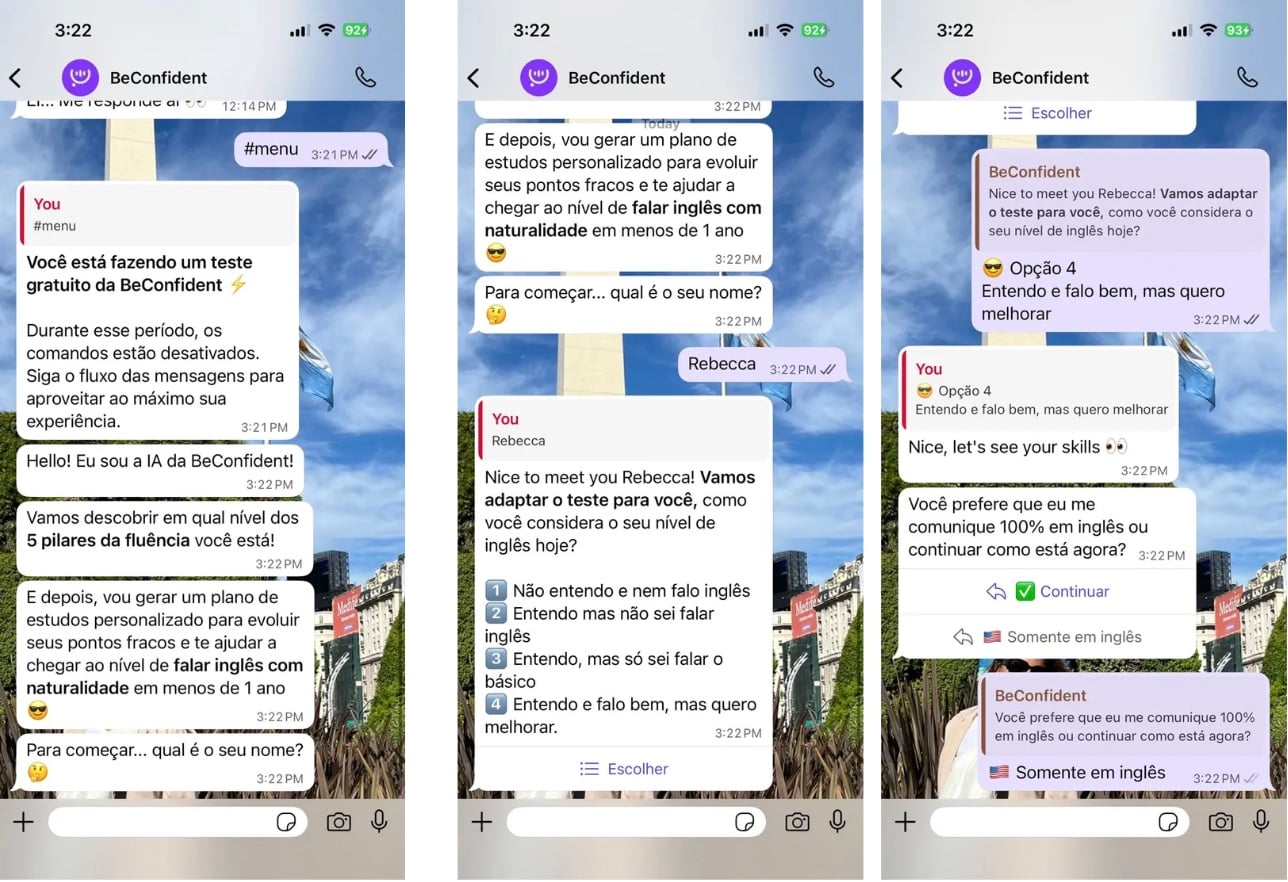
Practice these emergency scenarios now: use AI tutors specialized in travel to train before you actually need these phrases in real life.
Now you have access to over 150 essential travel phrases. This foundation helps a lot, but a list alone does not guarantee you'll be able to use expressions naturally under pressure. What makes the difference is the kind of practice you adopt from now on.
Comparison: Lists vs. Real Practice with AI
There is a huge difference between memorizing phrases and being able to use them naturally. See how BeConfident easily outclasses traditional methods:
Aspect | Standard Lists | BeConfident |
|---|---|---|
Practice | Static, without audio | Continuous conversation featuring native accents like American and British |
Feedback | None | Fast feedback on pronunciation and grammar, personalized via app and WhatsApp |
Cost | Free, but has little impact on actual speaking skills | A fraction of the cost of traditional courses, with a RA 1000 rating on Reclame Aqui |
Progress Track | No tracking | Progress monitored and validated by our user base |
Popular apps prioritize daily engagement and gamification over real conversational practice. Traditional languages schools are often expensive and inflexible. Platforms like Cambly charge by the hour and depend on varying tutor quality.
BeConfident offers consistent practice with AI tutors, including exercises targeted at realistic travel dialogues, free of embarrassment, and backed by the confidence of having helped many Brazilians travel more safely.
A Plan to Speak English While Traveling Without Feeling Embarrassed: Put It in Action with BeConfident
A simple 5-step plan will help translate this list into automatic speech. Each phase gets you ready for the next and establishes an easy study routine.
1. Test for free and identify your level: start by taking the free CEFR test to discover your strengths and key areas for improvement. This diagnosis focuses your practice on the scenarios where you need confidence the most.
2. Choose your AI tutor: once your level is set, select specific accents for your destination, such as American for the US or British for the UK. This choice aligns your practice with what you will actually hear on your trip.
3. Practice phrases with audio and calls: after configuring your tutor, use the voice conversation feature to simulate real-life travel situations. This spoken practice turns passive knowledge into active skills.
4. Review mistakes and discover new terms: use the "Review mistakes" command to correct specific errors and the "Tell me something new" command to build your vocabulary. This combination reinforces what you already know while adding useful expressions to your repertoire.
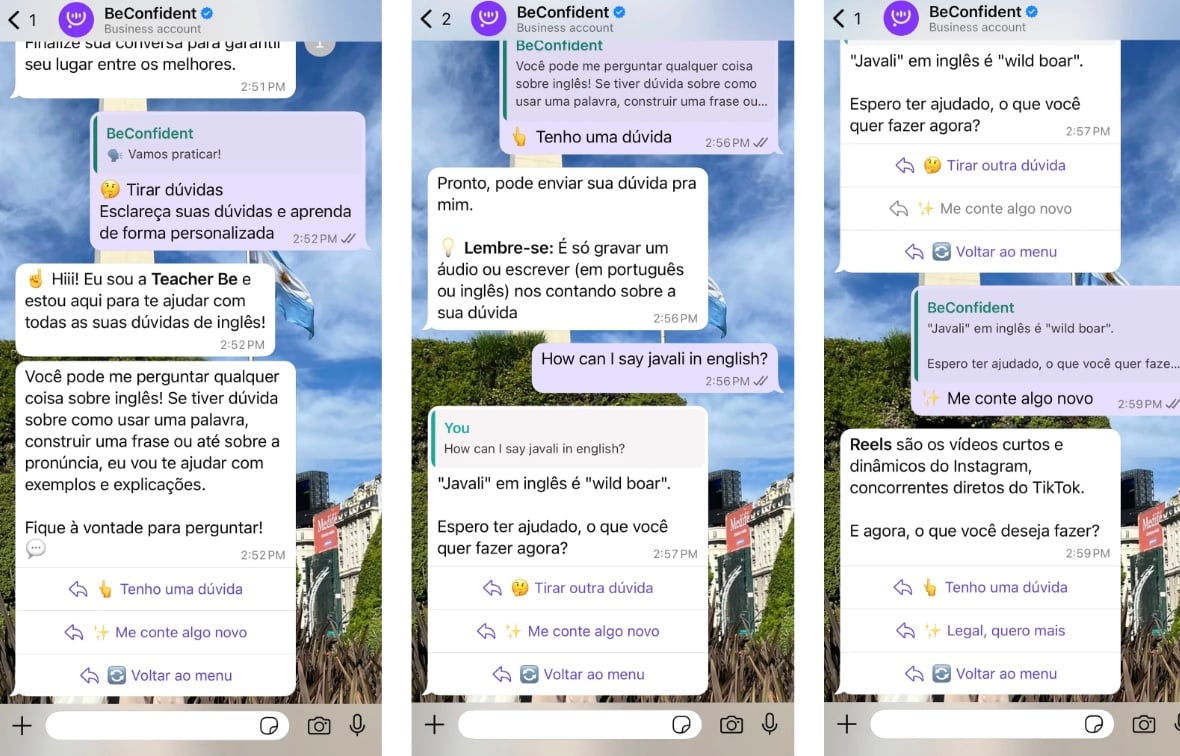
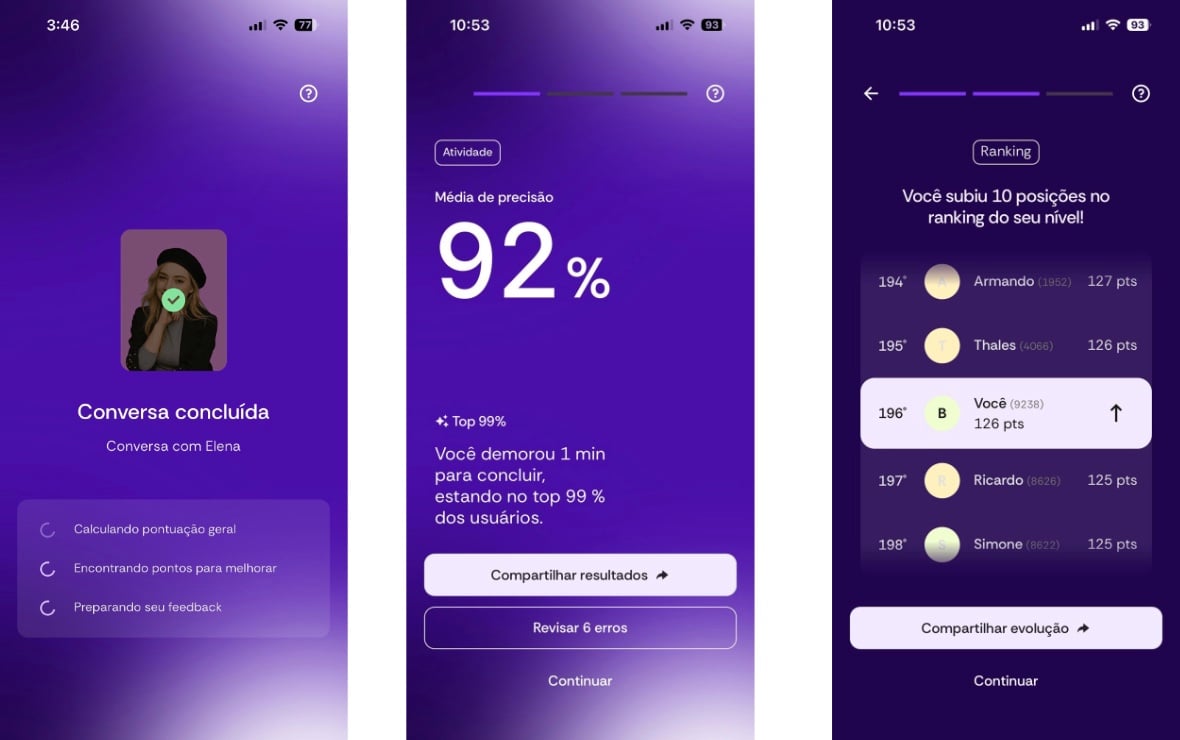
5. Monitor your progress: use the "My Progress" menu to view practice days, content covered, and certificates earned. Tracking your progress helps you stay consistent and notice your improvement over the weeks.
Start preparing today with no obligation: download the app and practice at your own pace, without feeling embarrassed.
FAQ
What are the key English phrases for travel?
The most vital phrases include basic greetings like "Hello" and "Thank you", airport navigation like "Where is the check-in?" and "My luggage is missing", hotel phrases like "I have a reservation" and "Can I get extra towels?", restaurant phrases like "Table for two" and "What do you recommend?", and emergency phrases like "Help!" and "I need a doctor". The full list in this article brings together over 150 phrases organized by situation.
How do I get through immigration without speaking fluent English?
Preparing key phrases beforehand greatly improves your chances of passing smoothly. Use expressions like "I'm here for tourism", "I'm staying for one week", and "I'm staying at [hotel name]". Keep your paperwork organized and practice short, direct answers. BeConfident offers targeted immigration simulations with AI tutors so you can practice these answers stress-free.
What phrases should I use at US immigration?
For the US, it is best to focus on the most common questions. "What's the purpose of your visit?" can be answered with "Tourism" or "Business". "How long is your stay?" can be answered with "One week". "Where are you staying?" requires the name of your hotel. "What do you do for work?" requires you to know your profession in English. Repetitive practice of these answers until they become second nature helps significantly during the interview.
How long does it take to speak without feeling embarrassed?
With consistent practice on BeConfident, many students report clear improvement within 2 to 4 weeks. The key is to practice daily with AI tutors in an environment free of judgment. Many students are able to converse more naturally in travel settings after about a month of regular practice.
Is BeConfident better than Duolingo for travel?
For travel-oriented preparation, BeConfident is often more effective. While Duolingo focuses on gamification and basic drills, BeConfident provides real conversation with AI tutors geared toward travel scenarios. You practice airport, hotel, and restaurant dialogues and get immediate feedback on your pronunciation and natural speech flow.
Written by Luan Cavallaro, Founder & CMO, BeConfident
Key Takeaways from This Article
Simply memorizing phrases is not enough: you must practice real conversation to overcome fear in authentic travel situations.
The essential phrases in this guide cover the airport, hotel, restaurant, transportation, and emergencies, featuring realistic dialogues for immediate use.
Traditional methods like Duolingo do not prioritize fluent conversation; AI tutors simulate native accents and provide instant feedback.
BeConfident stands out with continuous practice via app and WhatsApp, an RA 1000 rating on Reclame Aqui, and a user base of millions.
You can implement a 5-step plan: try BeConfident for free now and travel without feeling embarrassed when speaking English.
Why Just Reading Phrases Doesn't Solve the Problem
Static lists of phrases create a false sense of preparedness. The main obstacles Brazilians face are incorrect pronunciation, lack of practice in real-life situations, and fear of interacting with native speakers.
Traditional methods fail because they do not offer adequate conversational practice. Duolingo focuses on streaks and gamification rather than fluent conversation, which prepares you for exercises but not for speaking to an attendant or a taxi driver. Brick-and-mortar schools do offer human interaction, but they are usually expensive and have rigid schedules, which limits the frequency of practice needed to build confidence.
BeConfident solves this challenge with AI tutors that simulate native accents—such as American, British, and Australian—offer instant feedback on pronunciation and grammar, and allow practice across different devices like the app, WhatsApp, or smartwatch. With the boom in Brazilian travel projected for 2025-2026, this preparation becomes even more relevant.
Now that you understand why conversational practice is key, it's time to move on to the phrases that come up most often during trips. The following sections compile over 150 expressions organized by real-life situations, complete with approximate phonetic guides and practical dialogues.
Complete Guide: 150+ Essential Categorized Phrases
Basics, for Any Situation
• Hello / Hi [hê-lôu / hai] - Olá
• Good morning [gud mór-ning] - Bom dia
• Good afternoon [gud áf-ter-nun] - Boa tarde
• Good evening [gud í-vning] - Boa noite
• Please [plíz] - Por favor
• Thank you [thénk yu] - Obrigado
• You're welcome [yór uél-kâm] - De nada
• Excuse me [iks-kyúz mi] - Com licença
• I'm sorry [aim sóri] - Desculpe
• Do you speak Portuguese? [du yu spík por-chu-gíz] - Você fala português?
• I don't speak English very well [ai dônt spík ínglish véri uél] - Não falo inglês muito bem
• Can you help me? [kén yu hélp mi] - Você pode me ajudar?
• I don't understand [ai dônt ân-der-sténd] - Não entendo
• Can you repeat that? [kén yu ri-pít dhét] - Pode repetir?
• How much does it cost? [hau mâch dâz it kóst] - Quanto custa?
• Where is the bathroom? [uér iz dhi báth-rum] - Onde fica o banheiro?
• What time is it? [uót taim iz it] - Que horas são?
• I need help [ai níd hélp] - Preciso de ajuda
• Can you speak slowly? [kén yu spík slôu-li] - Pode falar devagar?
• I'm from Brazil [aim frâm bra-zíl] - Sou do Brasil
• Nice to meet you [nais tu mít yu] - Prazer em conhecê-lo
• Have a good day [hév â gud déi] - Tenha um bom dia
• See you later [sí yu léi-ter] - Até mais
• My name is... [mai néim iz] - Meu nome é...
• What's your name? [uóts yór néim] - Qual é o seu nome?
Realistic Dialogue:
Tourist: "Excuse me, do you speak Portuguese?"
Local: "No, sorry. But I can help you in English."
Tourist: "Thank you. Can you speak slowly? I don't speak English very well."
Local: "Of course! What do you need?"
Practicing these phrases out loud helps break the ice when speaking. BeConfident allows you to practice personal introductions and basic travel situations with AI tutors without feeling embarrassed.
English Phrases for Travel, Airport, and Immigration
• Where is the check-in? [uér iz chék-in] - Onde é o check-in?
• I have a reservation [ai hév â re-zer-véi-shân] - Tenho uma reserva
• Here's my passport [hírs mai pás-port] - Aqui está meu passaporte
• I'm here for tourism [aim hír for túr-izm] - Estou aqui a turismo
• How long is your stay? [hau lóng iz yór stéi] - Quanto tempo vai ficar?
• I'm staying for one week [aim stéi-ing for uân uík] - Vou ficar uma semana
• Where are you staying? [uér ar yu stéi-ing] - Onde vai se hospedar?
• I'm staying at a hotel [aim stéi-ing ét â ho-tél] - Vou ficar em um hotel
• What's the purpose of your visit? [uóts dhi pér-pâs âv yór ví-zit] - Qual o propósito da sua visita?
• Where is baggage claim? [uér iz bá-gij kléim] - Onde é a esteira de bagagem?
• My luggage is missing [mai lâ-gij iz mí-sing] - Minha bagagem está perdida
• I need to declare something [ai níd tu di-klér sâm-thing] - Preciso declarar algo
• Nothing to declare [nâ-thing tu di-klér] - Nada a declarar
• Where is the exit? [uér iz dhi ég-zit] - Onde é a saída?
• Is this the gate for flight...? [iz dhis dhi géit for flait] - Esta é a porta do voo...?
• What time does boarding start? [uót taim dâz bór-ding start] - Que horas começa o embarque?
• My flight is delayed [mai flait iz di-léid] - Meu voo está atrasado
• I missed my connection [ai míst mai ka-nék-shân] - Perdi minha conexão
• Can I get a window seat? [kén ai gét â uín-dou sít] - Posso pegar um assento na janela?
• Where can I exchange money? [uér kén ai iks-chéinj mâ-ni] - Onde posso trocar dinheiro?
• Is there free WiFi? [iz dhér frí uái-fai] - Há WiFi grátis?
• Where is the information desk? [uér iz dhi in-for-méi-shân désk] - Onde é o balcão de informações?
• I need a taxi [ai níd â ták-si] - Preciso de um táxi
• Where is the bus stop? [uér iz dhi bâs stóp] - Onde é o ponto de ônibus?
• How do I get to the city center? [hau du ai gét tu dhi sí-ti sén-ter] - Como chego ao centro da cidade?
Realistic Dialogue:
Officer: "What's the purpose of your visit?"
Tourist: "I'm here for tourism."
Officer: "How long is your stay?"
Tourist: "I'm staying for one week."
Officer: "Where are you staying?"
Tourist: "I'm staying at the Marriott Hotel downtown."
English Phrases for Hotel
• I have a reservation [ai hév â re-zer-véi-shân] - Tenho uma reserva
• I'd like to check in [aid laik tu chék in] - Gostaria de fazer check-in
• What time is check-out? [uót taim iz chék aut] - Que horas é o check-out?
• Can I have a wake-up call? [kén ai hév â uéik âp kól] - Posso ter um despertador?
• Where is the elevator? [uér iz dhi é-li-véi-ter] - Onde fica o elevador?
• My room key doesn't work [mai rum kí dâznt uérk] - Minha chave do quarto não funciona
• Can I get extra towels? [kén ai gét ék-stra táu-els] - Posso ter toalhas extras?
• The air conditioning isn't working [dhi ér kan-dí-sha-ning í-znt uér-king] - O ar condicionado não está funcionando
• Can you call a taxi for me? [kén yu kól â ták-si for mi] - Pode chamar um táxi para mim?
• Where is the gym? [uér iz dhi jim] - Onde fica a academia?
• What time does the pool close? [uót taim dâz dhi pul klôuz] - Que horas a piscina fecha?
• Is breakfast included? [iz brék-fast in-klú-did] - O café da manhã está incluído?
• Can I store my luggage here? [kén ai stór mai lâ-gij hír] - Posso guardar minha bagagem aqui?
• I'd like to extend my stay [aid laik tu iks-ténd mai stéi] - Gostaria de estender minha estadia
• Can I get a receipt? [kén ai gét â ri-sít] - Posso ter um recibo?
• Where can I do laundry? [uér kén ai du lón-dri] - Onde posso lavar roupa?
• Is there room service? [iz dhér rum sér-vis] - Há serviço de quarto?
• The WiFi password, please [dhi uái-fai pás-uerd plíz] - A senha do WiFi, por favor
• Can I change rooms? [kén ai chéinj rums] - Posso trocar de quarto?
• What time does housekeeping come? [uót taim dâz háus-kí-ping kâm] - Que horas vem a arrumação?
• I locked myself out [ai lókt mai-sélf aut] - Me tranquei para fora do quarto
• Can you recommend a restaurant? [kén yu re-ka-ménd â rés-to-rant] - Pode recomendar um restaurante?
• Where is the nearest ATM? [uér iz dhi nír-est éi-ti-ém] - Onde fica o caixa eletrônico mais próximo?
• I'd like to check out [aid laik tu chék aut] - Gostaria de fazer check-out
• Thank you for your hospitality [thénk yu for yór hós-pi-tá-li-ti] - Obrigado pela hospitalidade
Realistic Dialogue:
Receptionist: "Good evening! How can I help you?"
Tourist: "I have a reservation under the name Silva."
Receptionist: "Let me check... Yes, here it is. Can I see your passport?"
Tourist: "Here's my passport. What time is check-out?"
Receptionist: "Check-out is at 11 AM. Here's your room key."
English Phrases for Restaurant
• Table for two, please [téi-bâl for tu plíz] - Mesa para dois, por favor
• Do you have a menu in Portuguese? [du yu hév â mé-nyu in por-chu-gíz] - Vocês têm cardápio em português?
• What do you recommend? [uót du yu re-ka-ménd] - O que você recomenda?
• I'm vegetarian [aim ve-je-té-ri-ân] - Sou vegetariano
• I'm allergic to nuts [aim a-lér-jik tu nâts] - Sou alérgico a nozes
• Can I see the wine list? [kén ai sí dhi uain list] - Posso ver a carta de vinhos?
• I'll have the chicken [ail hév dhi chí-ken] - Vou querer o frango
• How is this cooked? [hau iz dhis kúkt] - Como isso é preparado?
• Can I get this without onions? [kén ai gét dhis ui-dhaut â-nyâns] - Posso pedir isso sem cebola?
• Is this spicy? [iz dhis spái-si] - Isso é picante?
• Can we get the check, please? [kén ui gét dhi chék plíz] - Podemos pegar a conta, por favor?
• Is service included? [iz sér-vis in-klú-did] - O serviço está incluído?
• Can I pay with credit card? [kén ai péi uidh kré-dit kard] - Posso pagar com cartão de crédito?
• This is delicious [dhis iz di-lí-shâs] - Isso está delicioso
• Can I get a to-go box? [kén ai gét â tu gôu bóks] - Posso pegar uma embalagem para levar?
• What's the soup of the day? [uóts dhi sup âv dhi déi] - Qual é a sopa do dia?
• I'd like a glass of water [aid laik â glás âv uó-ter] - Gostaria de um copo d'água
• Can we sit outside? [kén ui sit áut-said] - Podemos sentar do lado de fora?
• The food is cold [dhi fud iz kôuld] - A comida está fria
• Can you heat this up? [kén yu hít dhis âp] - Pode esquentar isso?
• What's in this dish? [uóts in dhis dish] - O que tem neste prato?
• I didn't order this [ai dí-dnt ór-der dhis] - Não pedi isso
• Can I get extra sauce? [kén ai gét ék-stra sós] - Posso ter molho extra?
• The service was excellent [dhi sér-vis uóz ék-se-lânt] - O atendimento foi excelente
• Keep the change [kíp dhi chéinj] - Pode ficar com o troco
Realistic Dialogue:
Waiter: "Good evening! Table for how many?"
Tourist: "Table for two, please."
Waiter: "Right this way. Here are your menus."
Tourist: "What do you recommend?"
Waiter: "Our grilled salmon is very popular."
Tourist: "I'll have the chicken, please. Is this spicy?"
English Phrases for Transportation and Directions
• How do I get to...? [hau du ai gét tu] - Como chego a...?
• Where is the nearest subway station? [uér iz dhi nír-est sâb-uéi stéi-shân] - Onde fica a estação de metrô mais próxima?
• How much is a taxi to downtown? [hau mâch iz â ták-si tu dáun-taun] - Quanto custa um táxi para o centro?
• Can you take me to this address? [kén yu téik mi tu dhis a-drés] - Pode me levar a este endereço?
• Stop here, please [stóp hír plíz] - Pare aqui, por favor
• How long does it take? [hau lóng dâz it téik] - Quanto tempo demora?
• Is it walking distance? [iz it uó-king dís-tâns] - Dá para ir andando?
• Which way is north? [uích uéi iz north] - Que direção é o norte?
• Turn left at the corner [tern léft ét dhi kór-ner] - Vire à esquerda na esquina
• Go straight ahead [gôu stréit a-héd] - Siga em frente
• It's on your right [its ón yór rait] - Está à sua direita
• Can I walk there? [kén ai uók dhér] - Posso ir andando?
• Where can I buy a metro card? [uér kén ai bai â mé-tro kard] - Onde posso comprar um cartão do metrô?
• What time does the last train leave? [uót taim dâz dhi lást tréin lív] - Que horas sai o último trem?
• Is this the right platform? [iz dhis dhi rait plát-form] - Esta é a plataforma certa?
• How many stops is it? [hau mé-ni stóps iz it] - Quantas paradas são?
• Can you call me an Uber? [kén yu kól mi ân ú-ber] - Pode chamar um Uber para mim?
• Where is the bus terminal? [uér iz dhi bâs tér-mi-nâl] - Onde fica a rodoviária?
• What time does the bus arrive? [uót taim dâz dhi bâs a-raiv] - Que horas o ônibus chega?
• I'm lost [aim lóst] - Estou perdido
• Can you show me on the map? [kén yu shôu mi ón dhi mép] - Pode me mostrar no mapa?
• Is there traffic? [iz dhér trá-fik] - Há trânsito?
• Take the highway [téik dhi hái-uéi] - Pegue a rodovia
• Exit at the next street [ég-zit ét dhi nékst strít] - Saia na próxima rua
• Can I get a receipt? [kén ai gét â ri-sít] - Posso ter um recibo?
Realistic Dialogue:
Tourist: "Excuse me, how do I get to Times Square?"
Local: "Take the subway. The nearest station is two blocks away."
Tourist: "How long does it take?"
Local: "About 15 minutes. Take the red line downtown."
Tourist: "Thank you! Is it walking distance from here?"
English Phrases for Emergencies
• Help! [hélp] - Socorro!
• Call the police [kól dhi po-lís] - Chame a polícia
• I need a doctor [ai níd â dók-ter] - Preciso de um médico
• Where is the hospital? [uér iz dhi hós-pi-tâl] - Onde fica o hospital?
• I'm hurt [aim hért] - Estou machucado
• I lost my passport [ai lóst mai pás-port] - Perdi meu passaporte
• My wallet was stolen [mai uó-let uóz stôu-lân] - Minha carteira foi roubada
• I need to contact my embassy [ai níd tu kón-takt mai ém-ba-si] - Preciso contatar minha embaixada
• Can you call an ambulance? [kén yu kól ân ám-byu-lâns] - Pode chamar uma ambulância?
• I have chest pain [ai hév chést péin] - Estou com dor no peito
• I'm allergic to... [aim a-lér-jik tu] - Sou alérgico a...
• I take medication for... [ai téik me-di-kéi-shân for] - Tomo remédio para...
• Where is the pharmacy? [uér iz dhi fár-ma-si] - Onde fica a farmácia?
• I need insurance information [ai níd in-shúr-âns in-for-méi-shân] - Preciso de informações do seguro
• Can you help me file a report? [kén yu hélp mi fail â ri-pórt] - Pode me ajudar a fazer um boletim?
• I missed my flight [ai míst mai flait] - Perdi meu voo
• My phone was stolen [mai fôun uóz stôu-lân] - Meu telefone foi roubado
• I'm having trouble breathing [aim há-ving trâ-bâl brí-dhing] - Estou com dificuldade para respirar
• I feel dizzy [ai fíl dí-zi] - Estou com tontura
• Can you translate this for me? [kén yu trans-léit dhis for mi] - Pode traduzir isso para mim?
• I need to cancel my credit card [ai níd tu kán-sâl mai kré-dit kard] - Preciso cancelar meu cartão de crédito
• Where is the police station? [uér iz dhi po-lís stéi-shân] - Onde fica a delegacia?
• I need a lawyer [ai níd â lói-yer] - Preciso de um advogado
• This is an emergency [dhis iz ân i-mér-jân-si] - Isso é uma emergência
• I don't feel well [ai dônt fíl uél] - Não me sinto bem
Realistic Dialogue:
Tourist: "Help! I need a doctor!"
Local: "What happened? Are you hurt?"
Tourist: "I fell and I think I broke my arm."
Local: "I'll call an ambulance. Where does it hurt?"
Tourist: "My arm and my shoulder. I'm in a lot of pain."
Practice these emergency scenarios now: use AI tutors specialized in travel to train before you actually need these phrases in real life.
Now you have access to over 150 essential travel phrases. This foundation helps a lot, but a list alone does not guarantee you'll be able to use expressions naturally under pressure. What makes the difference is the kind of practice you adopt from now on.
Comparison: Lists vs. Real Practice with AI
There is a huge difference between memorizing phrases and being able to use them naturally. See how BeConfident easily outclasses traditional methods:
Aspect | Standard Lists | BeConfident |
|---|---|---|
Practice | Static, without audio | Continuous conversation featuring native accents like American and British |
Feedback | None | Fast feedback on pronunciation and grammar, personalized via app and WhatsApp |
Cost | Free, but has little impact on actual speaking skills | A fraction of the cost of traditional courses, with a RA 1000 rating on Reclame Aqui |
Progress Track | No tracking | Progress monitored and validated by our user base |
Popular apps prioritize daily engagement and gamification over real conversational practice. Traditional languages schools are often expensive and inflexible. Platforms like Cambly charge by the hour and depend on varying tutor quality.
BeConfident offers consistent practice with AI tutors, including exercises targeted at realistic travel dialogues, free of embarrassment, and backed by the confidence of having helped many Brazilians travel more safely.
A Plan to Speak English While Traveling Without Feeling Embarrassed: Put It in Action with BeConfident
A simple 5-step plan will help translate this list into automatic speech. Each phase gets you ready for the next and establishes an easy study routine.
1. Test for free and identify your level: start by taking the free CEFR test to discover your strengths and key areas for improvement. This diagnosis focuses your practice on the scenarios where you need confidence the most.
2. Choose your AI tutor: once your level is set, select specific accents for your destination, such as American for the US or British for the UK. This choice aligns your practice with what you will actually hear on your trip.
3. Practice phrases with audio and calls: after configuring your tutor, use the voice conversation feature to simulate real-life travel situations. This spoken practice turns passive knowledge into active skills.
4. Review mistakes and discover new terms: use the "Review mistakes" command to correct specific errors and the "Tell me something new" command to build your vocabulary. This combination reinforces what you already know while adding useful expressions to your repertoire.
5. Monitor your progress: use the "My Progress" menu to view practice days, content covered, and certificates earned. Tracking your progress helps you stay consistent and notice your improvement over the weeks.
Start preparing today with no obligation: download the app and practice at your own pace, without feeling embarrassed.
FAQ
What are the key English phrases for travel?
The most vital phrases include basic greetings like "Hello" and "Thank you", airport navigation like "Where is the check-in?" and "My luggage is missing", hotel phrases like "I have a reservation" and "Can I get extra towels?", restaurant phrases like "Table for two" and "What do you recommend?", and emergency phrases like "Help!" and "I need a doctor". The full list in this article brings together over 150 phrases organized by situation.
How do I get through immigration without speaking fluent English?
Preparing key phrases beforehand greatly improves your chances of passing smoothly. Use expressions like "I'm here for tourism", "I'm staying for one week", and "I'm staying at [hotel name]". Keep your paperwork organized and practice short, direct answers. BeConfident offers targeted immigration simulations with AI tutors so you can practice these answers stress-free.
What phrases should I use at US immigration?
For the US, it is best to focus on the most common questions. "What's the purpose of your visit?" can be answered with "Tourism" or "Business". "How long is your stay?" can be answered with "One week". "Where are you staying?" requires the name of your hotel. "What do you do for work?" requires you to know your profession in English. Repetitive practice of these answers until they become second nature helps significantly during the interview.
How long does it take to speak without feeling embarrassed?
With consistent practice on BeConfident, many students report clear improvement within 2 to 4 weeks. The key is to practice daily with AI tutors in an environment free of judgment. Many students are able to converse more naturally in travel settings after about a month of regular practice.
Is BeConfident better than Duolingo for travel?
For travel-oriented preparation, BeConfident is often more effective. While Duolingo focuses on gamification and basic drills, BeConfident provides real conversation with AI tutors geared toward travel scenarios. You practice airport, hotel, and restaurant dialogues and get immediate feedback on your pronunciation and natural speech flow.