




English phrases for corporate meetings and presentations
English phrases for corporate meetings and presentations
English phrases for corporate meetings and presentations
Written by: Luan Cavallaro, Founder & CMO, BeConfident
Key takeaways from this article
Starting meetings with confidence establishes an immediate professional presence with phrases like "Good morning, everyone. Let's get started."
Making a clear self-introduction with expressions like "I'm [Name], and I lead the engineering team" strengthens credibility and networking.
Presenting data and ideas with phrases like "Let me walk you through the numbers" and "Based on our analysis, we recommend..." makes communication more objective.
Leading discussions with questions like "What are your thoughts?" and using phrases like "That’s a valid point, however..." helps manage disagreements diplomatically.
Turning these phrases into real fluency requires continuous practice with 24/7 AI on BeConfident, simulating professional meetings.
Starting the meeting: English expressions for meetings
Starting a meeting with confidence establishes your professional presence from the very first moment. The phrases below follow a pattern: they begin with an inclusive greeting and then provide a clear intent that shows control of the agenda.
"Good morning/afternoon, everyone. Let's get started." - "Good morning/afternoon, everyone. Let's get started." /gúd mórnin/afitrnun, évriuan. lets get stártid/
"Thank you all for joining today's meeting." - "Thank you all for joining today's meeting." /zénk iu ól for djoinin tudéis mítin/
"Let's kick things off with the agenda." - "Let's kick things off with the agenda." /lets kik zings óf uiz zi adjénda/
"I'd like to welcome everyone to this session." - "I'd like to welcome everyone to this session." /áid láik tu uélkam évriuan tu zis séshan/
"Before we begin, let me introduce our team." - "Before we begin, let me introduce our team." /bifór ui bigín, let mi introdús áuar tím/
"Today's objective is to discuss..." - "Today's objective is to discuss..." /tudéis obdjéktiv iz tu diskás/
"We have a lot to cover, so let's dive in." - "We have a lot to cover, so let's dive in." /ui hév a lót tu kávir, sou lets dáiv in/
"First on our agenda is..." - "First on our agenda is..." /fírst on áuar adjénda iz/
"Let's start by reviewing last week's action items." - "Let's start by reviewing last week's action items." /lets stárt bái rivíuin last uíks ékshan áitims/
"I'll be facilitating today's discussion." - "I'll be facilitating today's discussion." /áil bi fasíliteitin tudéis diskáshan/
For engineers and technical managers, it is worth including specific phrases like "We'll be focusing on the technical specifications" or "Let's review the project milestones".
Self-introduction: how to introduce yourself in English in a meeting
Making an objective self-introduction establishes credibility and quickly shows your role in the meeting. The following phrases combine function, experience, and context, which helps create a professional connection from the start.
"I'm [Name], and I lead the engineering team." - "I'm [Name], and I lead the engineering team." /áim [neim], énd ái líd zi endjinírrin tím/
"My role involves overseeing project development." - "My role involves overseeing project development." /mái roul invólvs óvirsíin prodject divélapmint/
"I've been with the company for three years." - "I've been with the company for three years." /áiv bín uiz zi kámpani for zrí íirs/
"I specialize in software architecture." - "I specialize in software architecture." /ái spéshalàiz in sóftuér árkitékchir/
"I'm responsible for quality assurance." - "I'm responsible for quality assurance." /áim rispónsibil for kuáliti ashúrans/
"My background is in project management." - "My background is in project management." /mái bákgraund iz in prodject mánidjimt/
"I handle client relationships for this account." - "I handle client relationships for this account." /ái héndil kláint riléishonships for zis akáunt/
"I'm joining from our São Paulo office." - "I'm joining from our São Paulo office." /áim djóinin from áuar sáu páulu ófis/
"I coordinate between development and operations." - "I coordinate between development and operations." /ái kordíneit bituín divélapmint énd operéishons/
"I'm here to represent the legal department." - "I'm here to represent the legal department." /áim hír tu riprízent zi lígal dipártmint/
Presenting data and ideas: phrases for presentations in English
Presenting data and proposals clearly shows command of the content and helps the group follow your reasoning. The phrases below organize the explanation in stages, highlight conclusions, and connect analysis to practical recommendations.
"Let me walk you through the numbers." - "Let me walk you through the numbers." /let mi uók iu zru zi námbirs/
"The data shows a significant improvement." - "The data shows a significant improvement." /zi déita shous a signíficant imprúvmint/
"Here's what I propose..." - "Here's what I propose..." /hírs uót ái propóuz/
"Based on our analysis, we recommend..." - "Based on our analysis, we recommend..." /béist on áuar análisis, ui rekóménd/
"The key findings indicate..." - "The key findings indicate..." /zi kí fáindins índikeit/
"Our research suggests that..." - "Our research suggests that..." /áuar risírch sadjésts zét/
"The metrics demonstrate clear progress." - "The metrics demonstrate clear progress." /zi métriks démonstréit klír prógres/
"I'd like to highlight three main points." - "I'd like to highlight three main points." /áid láik tu háilàit zrí méin póints/
"The ROI for this initiative is..." - "The ROI for this initiative is..." /zi ár-ou-ái for zis iníshatív iz/
"Let me break down the implementation phases." - "Let me break down the implementation phases." /let mi bréik daun zi implimintéishon féizis/
Try for free and start learning English today and practice technical presentations with AI tutors focused on professional vocabulary.
Interacting and asking for opinions: most used phrases in English at work
Leading productive discussions requires open questions, requests for clarification, and invitations to participate. The following phrases help engage the group, check understanding, and deepen ideas.
"What are your thoughts on this approach?" - "What are your thoughts on this approach?" /uót ár iór zóts on zis apróuch/
"I'd love to hear your perspective." - "I'd love to hear your perspective." /áid láv tu hír iór pirspéktiv/
"Does anyone have questions so far?" - "Does anyone have questions so far?" /dáz éniuan hév kuéschons sou fár/
"Let's brainstorm some solutions." - "Let's brainstorm some solutions." /lets bréinstorm sam solúshons/
"I can add a quick point here." - "I can add a quick point here." /ái kén éd a kuík póint hír/
"Just to clarify, do we mean..." - "Just to clarify, do we mean..." /djást tu klérífài, du ui mín/
"How does this align with our goals?" - "How does this align with our goals?" /háu dáz zis aláin uiz áuar góuls/
"What's the timeline for implementation?" - "What's the timeline for implementation?" /uóts zi táimlàin for implimintéishon/
"Can you elaborate on that point?" - "Can you elaborate on that point?" /kén iu iléboreít on zét póint/
"Let's explore this idea further." - "Let's explore this idea further." /lets iksplór zis aidía fírdir/
Agreeing, disagreeing, and negotiating
Managing agreement and disagreement respectfully maintains healthy professional relationships. The expressions below combine validation, expressing concerns, and seeking diplomatic and effective alternatives.
"I agree with the direction, and I'd add..." - "I agree with the direction, and I'd add..." /ái agrí uiz zi dirékshn, énd áid éd/
"I see the intent. My concern is..." - "I see the intent. My concern is..." /ái sí zi intént. mái kansírn iz/
"That's a valid point, however..." - "That's a valid point, however..." /zéts a válid póint, hauévir/
"I'm on the same page with this proposal." - "I'm on the same page with this proposal." /áim on zi séim péidj uiz zis propóuzal/
"What do you all think about Plan B?" - "What do you all think about Plan B?" /uót du iu ól zink abáut plén bí/
"Let's find a middle ground here." - "Let's find a middle ground here." /lets fáind a mídil graund hír/
"I have some reservations about..." - "I have some reservations about..." /ái hév sam rezirveishons abáut/
"That makes perfect sense to me." - "That makes perfect sense to me." /zét méiks pírfikt séns tu mí/
"I'd like to propose an alternative." - "I'd like to propose an alternative." /áid láik tu propóuz an oltírnatív/
"We need to weigh the pros and cons." - "We need to weigh the pros and cons." /ui níd tu uéi zi próus énd kóns/
Managing time and closing
Closing a meeting clearly reinforces decisions, next steps, and respect for everyone's time. The following phrases help signal the end of the discussion, organize actions, and arrange what happens next.
"We're running short on time." - "We're running short on time." /uír ránin short on táim/
"Let's circle back to this next week." - "Let's circle back to this next week." /lets sírkil bék tu zis nékst uík/
"Quick recap: we agreed to..." - "Quick recap: we agreed to..." /kuík ríkép: ui agríd tu/
"Next steps: I'll follow up by Friday." - "Next steps: I'll follow up by Friday." /nékst stéps: áil fólou áp bái fráidei/
"Let's wrap up with action items." - "Let's wrap up with action items." /lets rép áp uiz ékshan áitims/
"We'll need to table this discussion." - "We'll need to table this discussion." /uíl níd tu téibil zis diskáshan/
"Thank you for your time today." - "Thank you for your time today." /zénk iu for iór táim tudéi/
"I'll send out meeting notes shortly." - "I'll send out meeting notes shortly." /ái sénd áut mítin nóuts shórtli/
"Our next meeting is scheduled for..." - "Our next meeting is scheduled for..." /áuar nékst mítin iz skédjiuld for/
"Any final questions before we close?" - "Any final questions before we close?" /éni fáinal kuéschons bifór ui klóuz/
Phrases for online meetings and video conferences
Online meetings require specific vocabulary to deal with audio, video, and interaction through the chat. The phrases below help solve technical problems quickly and guide the participation of those who are remote.
"Can everyone see my screen?" - "Can everyone see my screen?" /kén évriuan sí mái skrín/
"You're on mute, could you unmute?" - "You're on mute, could you unmute?" /iór on miút, kúd iu anmiút/
"I'm having connection issues." - "I'm having connection issues." /áim hévin kanékshn íshius/
"Let me share my screen now." - "Let me share my screen now." /let mi shér mái skrín náu/
"Can you hear me clearly?" - "Can you hear me clearly?" /kén iu hír mi klírli/
"I'll record this session for those who couldn't join." - "I'll record this session for those who couldn't join." /áil rikórd zis séshan for zóuz hu kúdnt djóin/
"Please use the chat for questions." - "Please use the chat for questions." /plíz iúz zi chét for kuéschons/
"I'll put you in a breakout room." - "I'll put you in a breakout room." /áil pút iu in a bréikaut rúm/
"The audio is cutting out." - "The audio is cutting out." /zi ódio iz kátin áut/
"Let's switch to phone if the video fails." - "Let's switch to phone if the video fails." /lets suích tu fóun if zi vídio féils/
In video conferences, inclusive communication depends on neutral language, objective explanations, and reducing jargon that can confuse non-native speakers.
How to turn these phrases into real fluency through AI practice
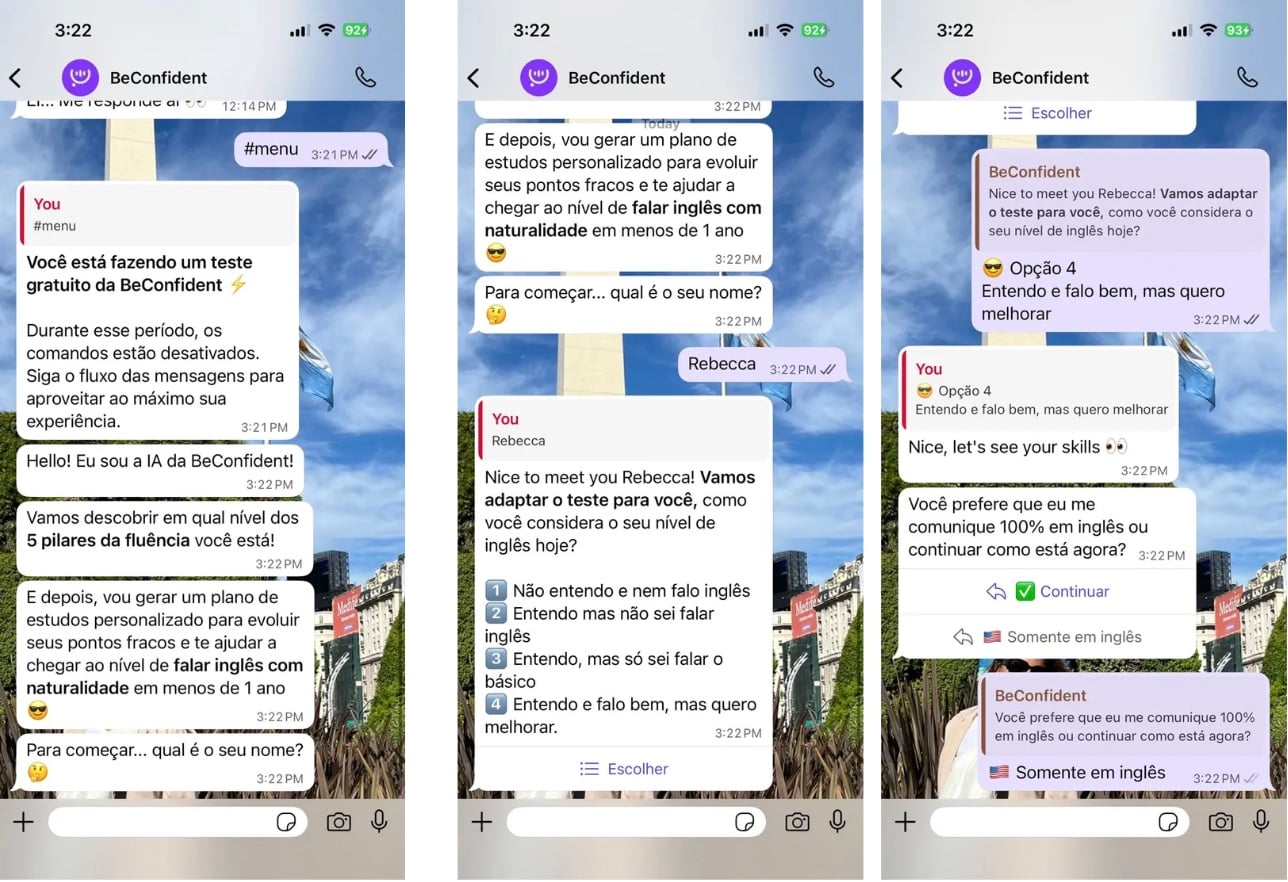
Memorizing phrases is only the first step. True fluency comes from constant practice in real-world contexts, and this transition from passive knowledge to active use is what BeConfident helps you develop.
Instead of static lists, the platform offers 24/7 interactive practice with AI tutors who have different personalities and native American, British, Australian, Canadian, South African, and Indian accents.
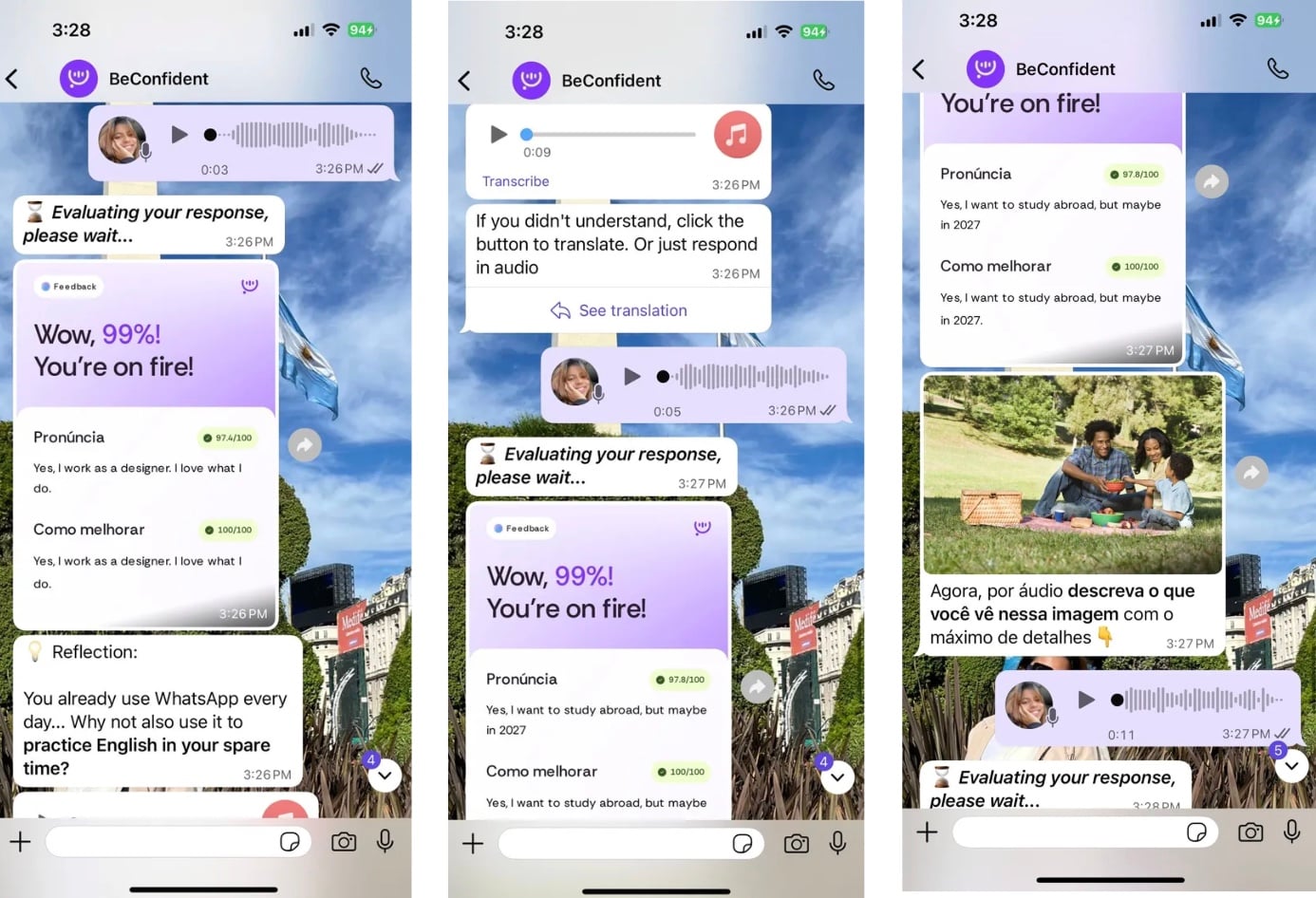
With over 200,000 paid students and 3 million users in more than 100 countries, BeConfident has proven effectiveness on a global scale. This base trusts the platform for its quality, reflected in its RA 1000 reputation on Reclame Aqui, and for the flexibility of practicing via app, WhatsApp, or smartwatch, which allows fitting study into your routine without relying on fixed schedules.
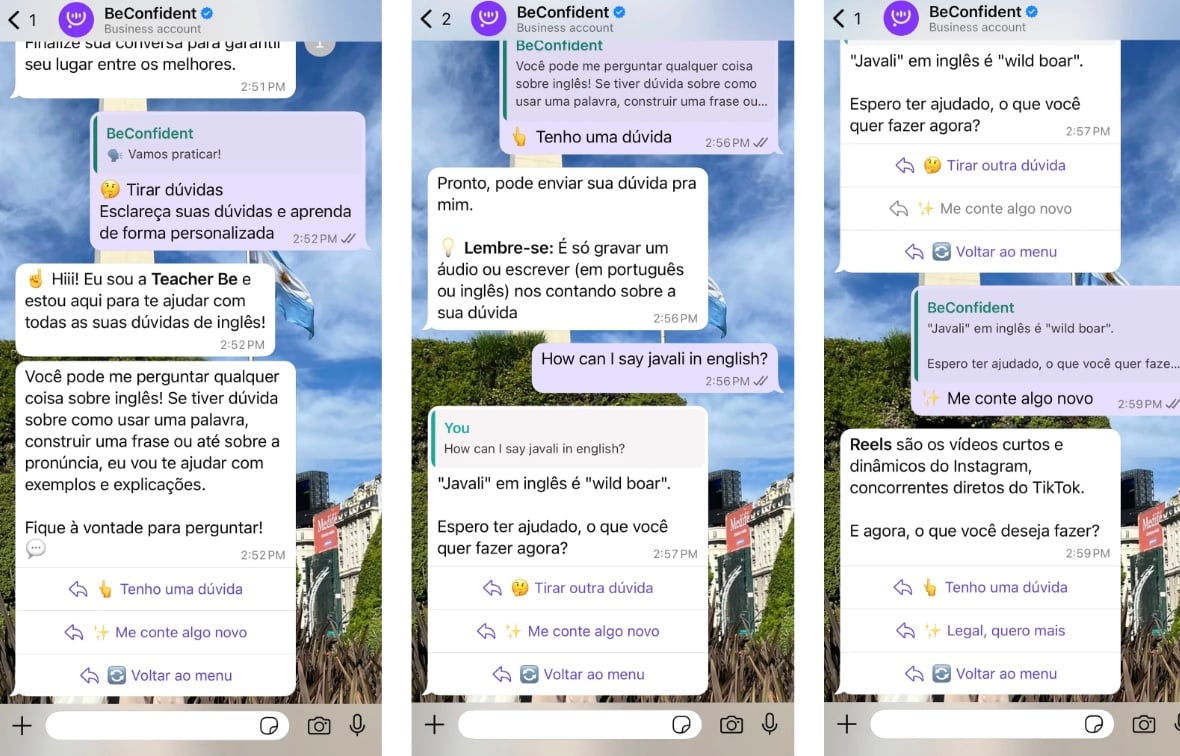
An example of practice is saying "Here's my proposal for the new system architecture" and receiving a response from an AI tutor simulating an American colleague: "That sounds interesting. Can you walk me through the technical specifications?". The instant feedback corrects pronunciation and grammar and even suggests more natural expressions.
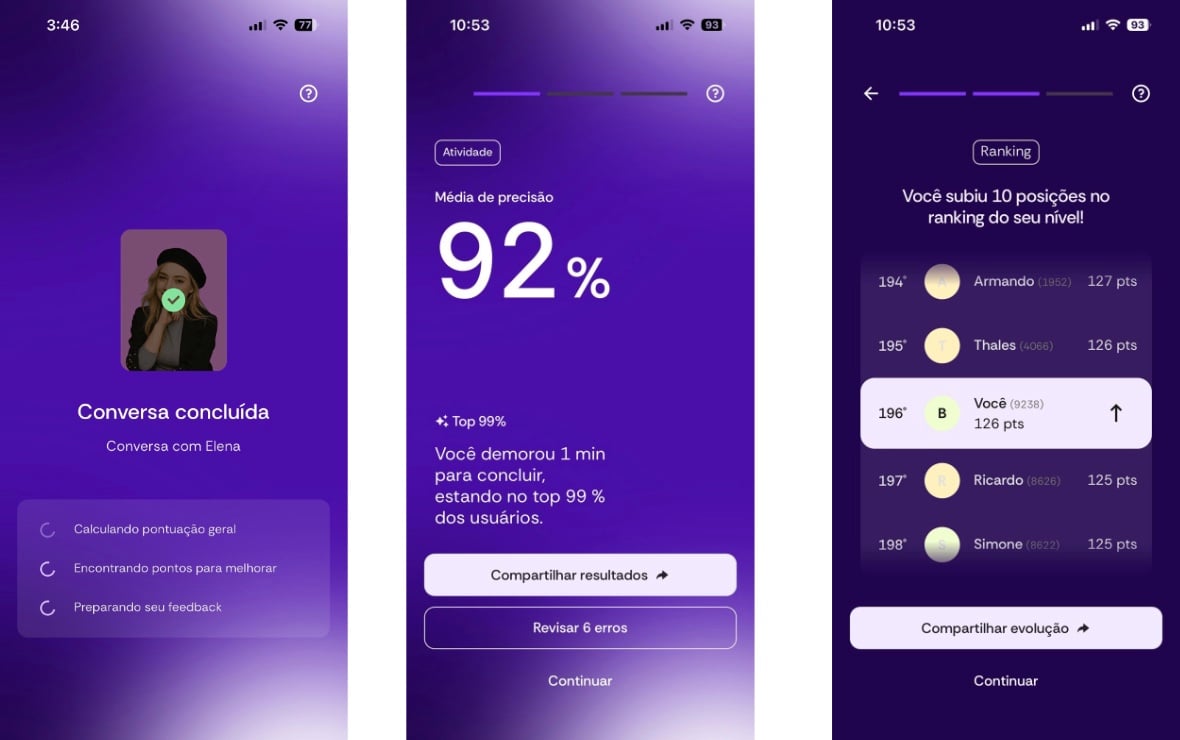
Compared to Duolingo, which prioritizes gamification, Cambly, which charges by the hour, and traditional schools, which require rigid schedules, BeConfident offers unlimited and customized practice for specific professional topics.
Frequently Asked Questions
What are the most used phrases in English at work?
The most common phrases include greetings like "Good morning, everyone," requests for opinions like "What are your thoughts?," expressions of agreement like "I agree with that approach," and wrap-ups like "Let's wrap up." BeConfident offers contextualized practice of these expressions in real meeting simulations.
How to pronounce these phrases correctly?
Correct pronunciation depends on practice with immediate feedback. On BeConfident, AI tutors correct your pronunciation in real-time and provide models with different native accents for you to choose the one that is closest to your professional environment.
What is the best way to practice a meeting in English?
Doing simulated role-plays is an effective way to train. BeConfident allows you to simulate full meetings, from the opening to the closing, with feedback on fluency, grammar, and naturalness of conversation.
How to overcome anxiety when speaking English in meetings?
Practicing in a non-judgmental environment reduces anxiety. BeConfident's AI tutors offer constructive correction without exposure, allowing you to make mistakes, adjust, and gain confidence before participating in real meetings.
Mastering these 70 English phrases for meetings and presentations represents a concrete first step toward standing out professionally in a global context. Fluency comes from constant and contextualized practice.
Try for free and start learning English today with BeConfident, using your free time to develop fluent conversation with AI tutors available 24/7. Download the app and start practicing for your next international meeting now.
Written by: Luan Cavallaro, Founder & CMO, BeConfident
Key takeaways from this article
Starting meetings with confidence establishes an immediate professional presence with phrases like "Good morning, everyone. Let's get started."
Making a clear self-introduction with expressions like "I'm [Name], and I lead the engineering team" strengthens credibility and networking.
Presenting data and ideas with phrases like "Let me walk you through the numbers" and "Based on our analysis, we recommend..." makes communication more objective.
Leading discussions with questions like "What are your thoughts?" and using phrases like "That’s a valid point, however..." helps manage disagreements diplomatically.
Turning these phrases into real fluency requires continuous practice with 24/7 AI on BeConfident, simulating professional meetings.
Starting the meeting: English expressions for meetings
Starting a meeting with confidence establishes your professional presence from the very first moment. The phrases below follow a pattern: they begin with an inclusive greeting and then provide a clear intent that shows control of the agenda.
"Good morning/afternoon, everyone. Let's get started." - "Good morning/afternoon, everyone. Let's get started." /gúd mórnin/afitrnun, évriuan. lets get stártid/
"Thank you all for joining today's meeting." - "Thank you all for joining today's meeting." /zénk iu ól for djoinin tudéis mítin/
"Let's kick things off with the agenda." - "Let's kick things off with the agenda." /lets kik zings óf uiz zi adjénda/
"I'd like to welcome everyone to this session." - "I'd like to welcome everyone to this session." /áid láik tu uélkam évriuan tu zis séshan/
"Before we begin, let me introduce our team." - "Before we begin, let me introduce our team." /bifór ui bigín, let mi introdús áuar tím/
"Today's objective is to discuss..." - "Today's objective is to discuss..." /tudéis obdjéktiv iz tu diskás/
"We have a lot to cover, so let's dive in." - "We have a lot to cover, so let's dive in." /ui hév a lót tu kávir, sou lets dáiv in/
"First on our agenda is..." - "First on our agenda is..." /fírst on áuar adjénda iz/
"Let's start by reviewing last week's action items." - "Let's start by reviewing last week's action items." /lets stárt bái rivíuin last uíks ékshan áitims/
"I'll be facilitating today's discussion." - "I'll be facilitating today's discussion." /áil bi fasíliteitin tudéis diskáshan/
For engineers and technical managers, it is worth including specific phrases like "We'll be focusing on the technical specifications" or "Let's review the project milestones".
Self-introduction: how to introduce yourself in English in a meeting
Making an objective self-introduction establishes credibility and quickly shows your role in the meeting. The following phrases combine function, experience, and context, which helps create a professional connection from the start.
"I'm [Name], and I lead the engineering team." - "I'm [Name], and I lead the engineering team." /áim [neim], énd ái líd zi endjinírrin tím/
"My role involves overseeing project development." - "My role involves overseeing project development." /mái roul invólvs óvirsíin prodject divélapmint/
"I've been with the company for three years." - "I've been with the company for three years." /áiv bín uiz zi kámpani for zrí íirs/
"I specialize in software architecture." - "I specialize in software architecture." /ái spéshalàiz in sóftuér árkitékchir/
"I'm responsible for quality assurance." - "I'm responsible for quality assurance." /áim rispónsibil for kuáliti ashúrans/
"My background is in project management." - "My background is in project management." /mái bákgraund iz in prodject mánidjimt/
"I handle client relationships for this account." - "I handle client relationships for this account." /ái héndil kláint riléishonships for zis akáunt/
"I'm joining from our São Paulo office." - "I'm joining from our São Paulo office." /áim djóinin from áuar sáu páulu ófis/
"I coordinate between development and operations." - "I coordinate between development and operations." /ái kordíneit bituín divélapmint énd operéishons/
"I'm here to represent the legal department." - "I'm here to represent the legal department." /áim hír tu riprízent zi lígal dipártmint/
Presenting data and ideas: phrases for presentations in English
Presenting data and proposals clearly shows command of the content and helps the group follow your reasoning. The phrases below organize the explanation in stages, highlight conclusions, and connect analysis to practical recommendations.
"Let me walk you through the numbers." - "Let me walk you through the numbers." /let mi uók iu zru zi námbirs/
"The data shows a significant improvement." - "The data shows a significant improvement." /zi déita shous a signíficant imprúvmint/
"Here's what I propose..." - "Here's what I propose..." /hírs uót ái propóuz/
"Based on our analysis, we recommend..." - "Based on our analysis, we recommend..." /béist on áuar análisis, ui rekóménd/
"The key findings indicate..." - "The key findings indicate..." /zi kí fáindins índikeit/
"Our research suggests that..." - "Our research suggests that..." /áuar risírch sadjésts zét/
"The metrics demonstrate clear progress." - "The metrics demonstrate clear progress." /zi métriks démonstréit klír prógres/
"I'd like to highlight three main points." - "I'd like to highlight three main points." /áid láik tu háilàit zrí méin póints/
"The ROI for this initiative is..." - "The ROI for this initiative is..." /zi ár-ou-ái for zis iníshatív iz/
"Let me break down the implementation phases." - "Let me break down the implementation phases." /let mi bréik daun zi implimintéishon féizis/
Try for free and start learning English today and practice technical presentations with AI tutors focused on professional vocabulary.
Interacting and asking for opinions: most used phrases in English at work
Leading productive discussions requires open questions, requests for clarification, and invitations to participate. The following phrases help engage the group, check understanding, and deepen ideas.
"What are your thoughts on this approach?" - "What are your thoughts on this approach?" /uót ár iór zóts on zis apróuch/
"I'd love to hear your perspective." - "I'd love to hear your perspective." /áid láv tu hír iór pirspéktiv/
"Does anyone have questions so far?" - "Does anyone have questions so far?" /dáz éniuan hév kuéschons sou fár/
"Let's brainstorm some solutions." - "Let's brainstorm some solutions." /lets bréinstorm sam solúshons/
"I can add a quick point here." - "I can add a quick point here." /ái kén éd a kuík póint hír/
"Just to clarify, do we mean..." - "Just to clarify, do we mean..." /djást tu klérífài, du ui mín/
"How does this align with our goals?" - "How does this align with our goals?" /háu dáz zis aláin uiz áuar góuls/
"What's the timeline for implementation?" - "What's the timeline for implementation?" /uóts zi táimlàin for implimintéishon/
"Can you elaborate on that point?" - "Can you elaborate on that point?" /kén iu iléboreít on zét póint/
"Let's explore this idea further." - "Let's explore this idea further." /lets iksplór zis aidía fírdir/
Agreeing, disagreeing, and negotiating
Managing agreement and disagreement respectfully maintains healthy professional relationships. The expressions below combine validation, expressing concerns, and seeking diplomatic and effective alternatives.
"I agree with the direction, and I'd add..." - "I agree with the direction, and I'd add..." /ái agrí uiz zi dirékshn, énd áid éd/
"I see the intent. My concern is..." - "I see the intent. My concern is..." /ái sí zi intént. mái kansírn iz/
"That's a valid point, however..." - "That's a valid point, however..." /zéts a válid póint, hauévir/
"I'm on the same page with this proposal." - "I'm on the same page with this proposal." /áim on zi séim péidj uiz zis propóuzal/
"What do you all think about Plan B?" - "What do you all think about Plan B?" /uót du iu ól zink abáut plén bí/
"Let's find a middle ground here." - "Let's find a middle ground here." /lets fáind a mídil graund hír/
"I have some reservations about..." - "I have some reservations about..." /ái hév sam rezirveishons abáut/
"That makes perfect sense to me." - "That makes perfect sense to me." /zét méiks pírfikt séns tu mí/
"I'd like to propose an alternative." - "I'd like to propose an alternative." /áid láik tu propóuz an oltírnatív/
"We need to weigh the pros and cons." - "We need to weigh the pros and cons." /ui níd tu uéi zi próus énd kóns/
Managing time and closing
Closing a meeting clearly reinforces decisions, next steps, and respect for everyone's time. The following phrases help signal the end of the discussion, organize actions, and arrange what happens next.
"We're running short on time." - "We're running short on time." /uír ránin short on táim/
"Let's circle back to this next week." - "Let's circle back to this next week." /lets sírkil bék tu zis nékst uík/
"Quick recap: we agreed to..." - "Quick recap: we agreed to..." /kuík ríkép: ui agríd tu/
"Next steps: I'll follow up by Friday." - "Next steps: I'll follow up by Friday." /nékst stéps: áil fólou áp bái fráidei/
"Let's wrap up with action items." - "Let's wrap up with action items." /lets rép áp uiz ékshan áitims/
"We'll need to table this discussion." - "We'll need to table this discussion." /uíl níd tu téibil zis diskáshan/
"Thank you for your time today." - "Thank you for your time today." /zénk iu for iór táim tudéi/
"I'll send out meeting notes shortly." - "I'll send out meeting notes shortly." /ái sénd áut mítin nóuts shórtli/
"Our next meeting is scheduled for..." - "Our next meeting is scheduled for..." /áuar nékst mítin iz skédjiuld for/
"Any final questions before we close?" - "Any final questions before we close?" /éni fáinal kuéschons bifór ui klóuz/
Phrases for online meetings and video conferences
Online meetings require specific vocabulary to deal with audio, video, and interaction through the chat. The phrases below help solve technical problems quickly and guide the participation of those who are remote.
"Can everyone see my screen?" - "Can everyone see my screen?" /kén évriuan sí mái skrín/
"You're on mute, could you unmute?" - "You're on mute, could you unmute?" /iór on miút, kúd iu anmiút/
"I'm having connection issues." - "I'm having connection issues." /áim hévin kanékshn íshius/
"Let me share my screen now." - "Let me share my screen now." /let mi shér mái skrín náu/
"Can you hear me clearly?" - "Can you hear me clearly?" /kén iu hír mi klírli/
"I'll record this session for those who couldn't join." - "I'll record this session for those who couldn't join." /áil rikórd zis séshan for zóuz hu kúdnt djóin/
"Please use the chat for questions." - "Please use the chat for questions." /plíz iúz zi chét for kuéschons/
"I'll put you in a breakout room." - "I'll put you in a breakout room." /áil pút iu in a bréikaut rúm/
"The audio is cutting out." - "The audio is cutting out." /zi ódio iz kátin áut/
"Let's switch to phone if the video fails." - "Let's switch to phone if the video fails." /lets suích tu fóun if zi vídio féils/
In video conferences, inclusive communication depends on neutral language, objective explanations, and reducing jargon that can confuse non-native speakers.
How to turn these phrases into real fluency through AI practice
Memorizing phrases is only the first step. True fluency comes from constant practice in real-world contexts, and this transition from passive knowledge to active use is what BeConfident helps you develop.
Instead of static lists, the platform offers 24/7 interactive practice with AI tutors who have different personalities and native American, British, Australian, Canadian, South African, and Indian accents.
With over 200,000 paid students and 3 million users in more than 100 countries, BeConfident has proven effectiveness on a global scale. This base trusts the platform for its quality, reflected in its RA 1000 reputation on Reclame Aqui, and for the flexibility of practicing via app, WhatsApp, or smartwatch, which allows fitting study into your routine without relying on fixed schedules.
An example of practice is saying "Here's my proposal for the new system architecture" and receiving a response from an AI tutor simulating an American colleague: "That sounds interesting. Can you walk me through the technical specifications?". The instant feedback corrects pronunciation and grammar and even suggests more natural expressions.
Compared to Duolingo, which prioritizes gamification, Cambly, which charges by the hour, and traditional schools, which require rigid schedules, BeConfident offers unlimited and customized practice for specific professional topics.
Frequently Asked Questions
What are the most used phrases in English at work?
The most common phrases include greetings like "Good morning, everyone," requests for opinions like "What are your thoughts?," expressions of agreement like "I agree with that approach," and wrap-ups like "Let's wrap up." BeConfident offers contextualized practice of these expressions in real meeting simulations.
How to pronounce these phrases correctly?
Correct pronunciation depends on practice with immediate feedback. On BeConfident, AI tutors correct your pronunciation in real-time and provide models with different native accents for you to choose the one that is closest to your professional environment.
What is the best way to practice a meeting in English?
Doing simulated role-plays is an effective way to train. BeConfident allows you to simulate full meetings, from the opening to the closing, with feedback on fluency, grammar, and naturalness of conversation.
How to overcome anxiety when speaking English in meetings?
Practicing in a non-judgmental environment reduces anxiety. BeConfident's AI tutors offer constructive correction without exposure, allowing you to make mistakes, adjust, and gain confidence before participating in real meetings.
Mastering these 70 English phrases for meetings and presentations represents a concrete first step toward standing out professionally in a global context. Fluency comes from constant and contextualized practice.
Try for free and start learning English today with BeConfident, using your free time to develop fluent conversation with AI tutors available 24/7. Download the app and start practicing for your next international meeting now.