




8 best apps to learn English vocabulary quickly
8 best apps to learn English vocabulary quickly
8 best apps to learn English vocabulary quickly
Written by: Luan Cavallaro, Founder & CMO, BeConfident
Key takeaways from this article
BeConfident leads as an app for vocabulary in real conversational contexts, featuring 24/7 AI and instant feedback.
Memrise stands out for its spaced repetition system (SRS) with native videos, allowing you to learn more than 20 words per day with good retention.
Apps like Quizlet and Anki offer full customization of flashcards, ideal for technical vocabulary and advanced study.
The combination of visual methods, gamification, and contextual practice accelerates fluency with just 5 to 10 minutes a day.
To get quick results, it is worth trying BeConfident for free and solidifying vocabulary in real conversations.
Ranking criteria: methodology of this list for 2026
This article prioritizes speed for real fluency over isolated memorization. AI trends in 2025 and 2026 show adaptive tutors, native voice recognition, and pronunciation tools that map mouth movements, which strengthens conversational retention. With these criteria in mind, the following list presents the apps that contribute the most to vocabulary applied in conversation.
1. BeConfident: vocabulary that enters the conversation
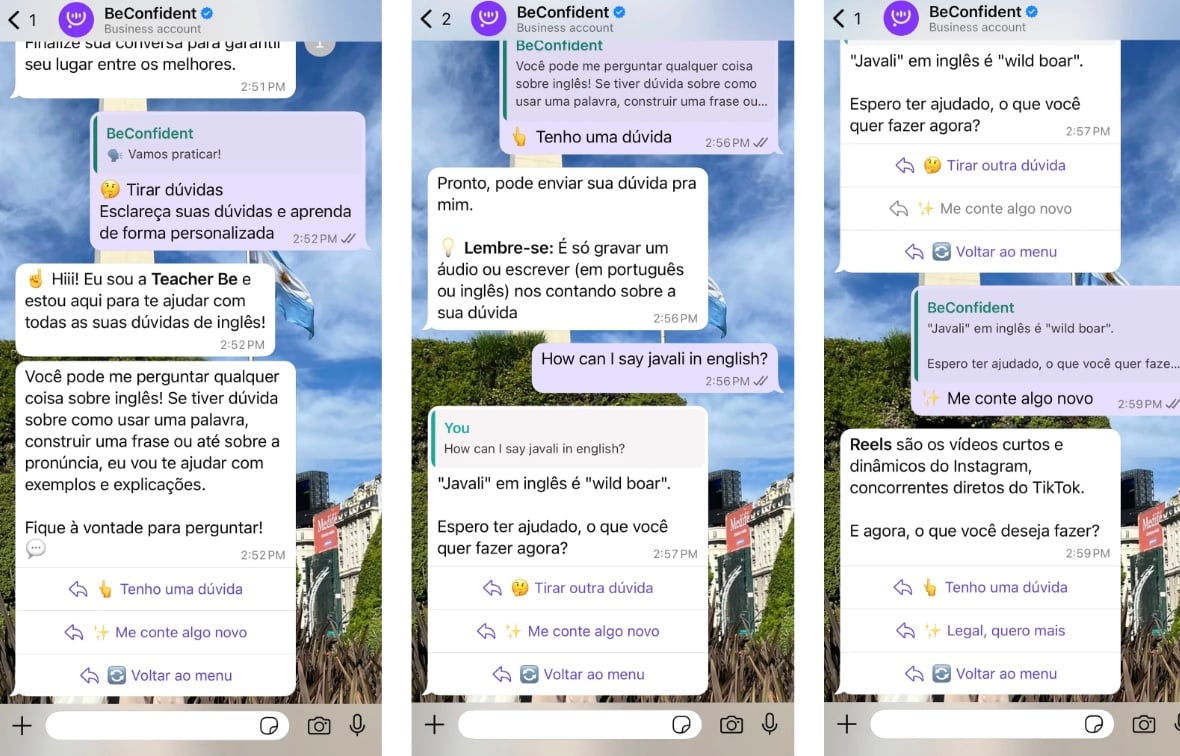
BeConfident uses AI tutors available 24 hours a day in the app, WhatsApp, or smartwatch to turn free time into conversation practice. The company achieves a RA 1000 reputation on Reclame Aqui.
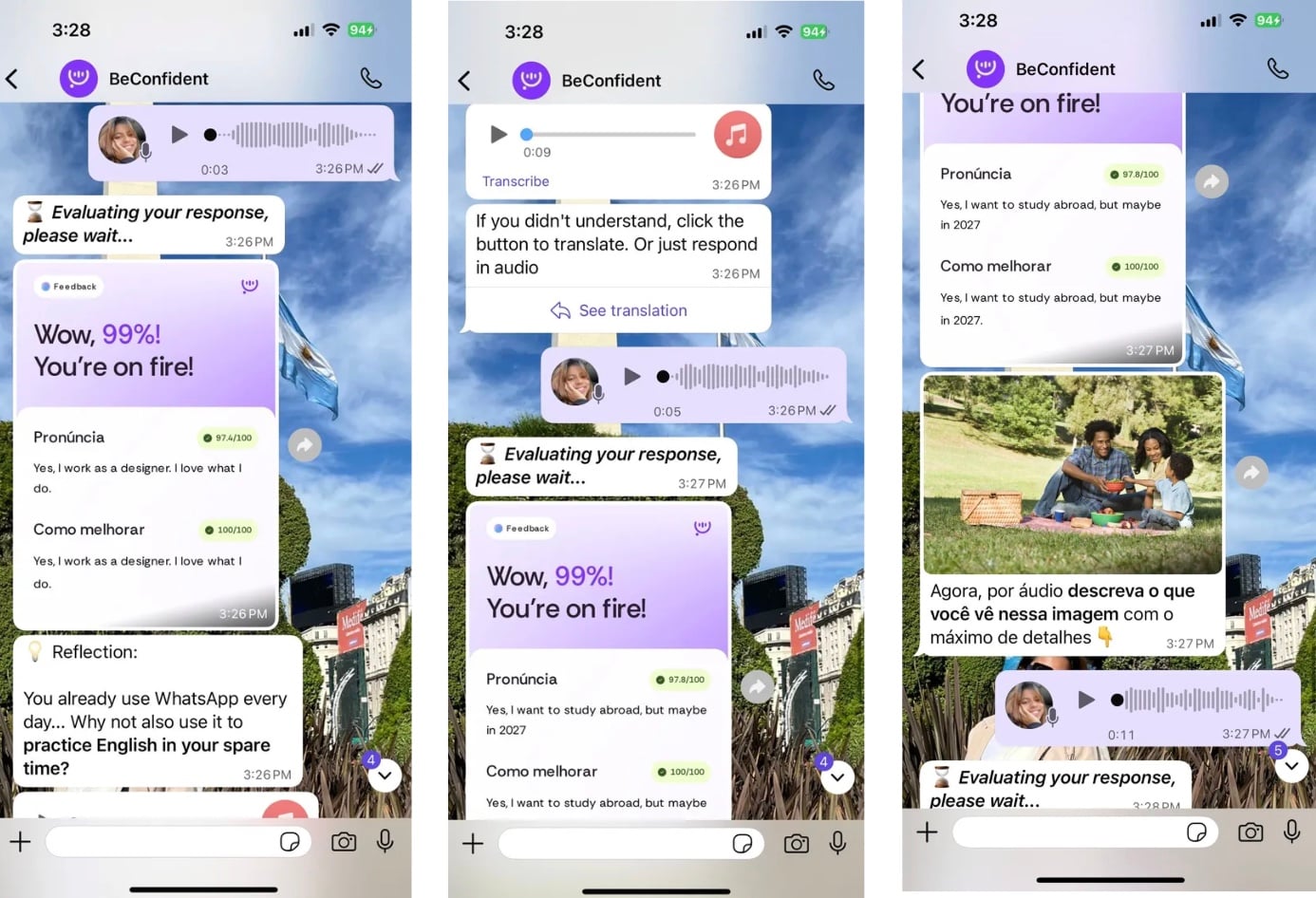
The key differentiator lies in the structured lesson paths that integrate vocabulary into immediate conversational practice. Within these paths, students choose tutors with different accents, such as American, British, and South African, and with specific professional profiles, such as photographer, lawyer, or writer. This combination allows practicing the same vocabulary in multiple real contexts aligned with each person's interest.
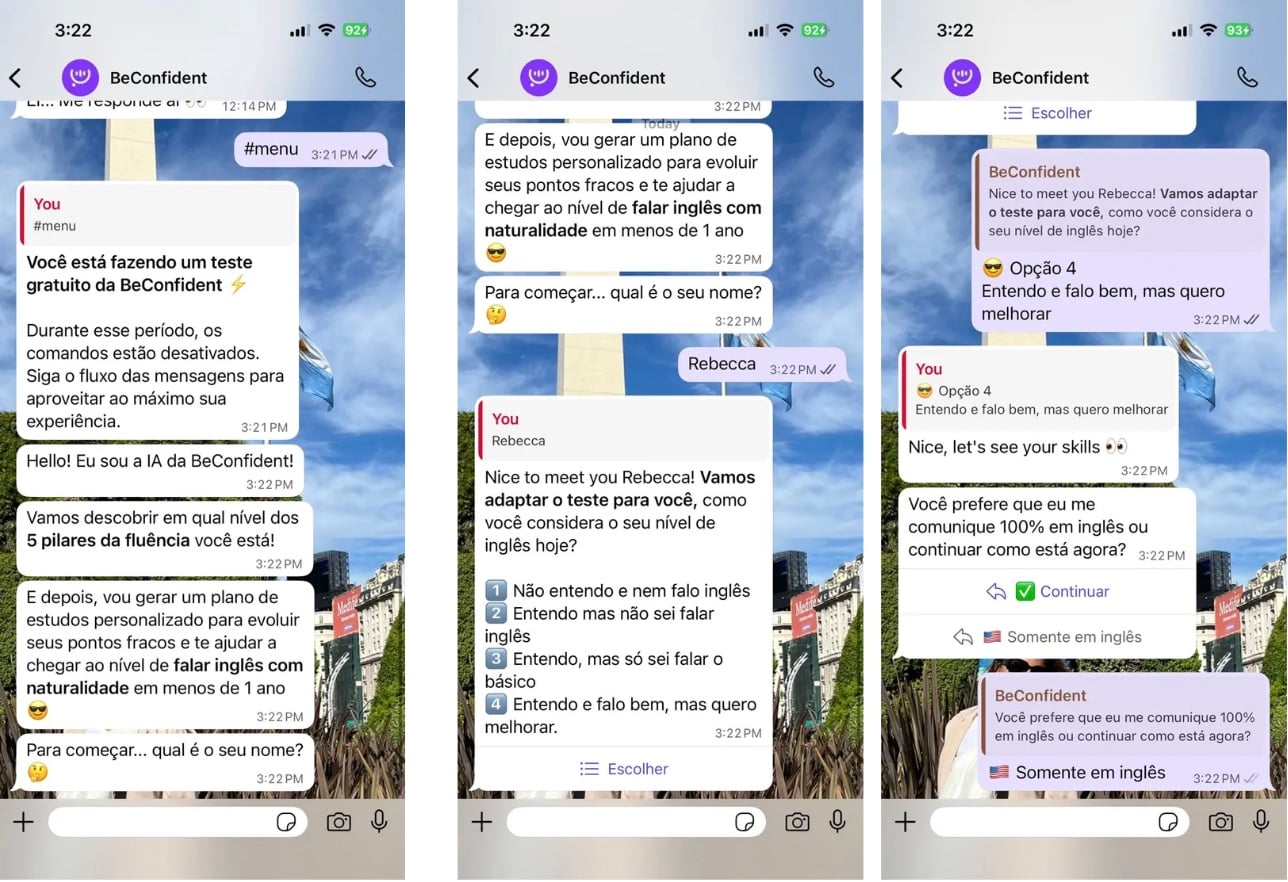
Specific features include the "Tell me something new" command to expand repertory, personalized review of mistakes, and instant feedback on grammar, pronunciation, and native expressions. The free trial identifies the CEFR level and presents a clear analysis of strengths and areas to develop.
Pros: unlimited conversation, multiple accents, instant feedback, affordable price
2. Memrise: spaced repetition with native videos
Memrise stands out as a pleasant vocabulary app, featuring gamified flashcards, efficient SRS, and official courses with videos of native speakers. The app allows learning more than 20 words per day with good retention.
The spaced repetition system improves long-term memorization, while contextual videos show the natural use of words. The user can choose between American or British English.
Pros: consolidated SRS, videos with native speakers, engaging gamification
Cons: limited focus on real conversational context
3. Quizlet: custom flashcards and games
Quizlet allows you to create custom flashcard sets and access millions of sets created by other users. The app offers various study modes, such as traditional flashcards, matching games, and timed tests.
This format works well for specific technical vocabulary and test preparation. The free version already offers robust features for self-study.
Pros: wide customization, active community, multiple practice formats
Cons: content quality varies by creator, visual focus is more on memorization
4. Drops: visual learning in 5 minutes
Drops works on vocabulary with visual associations in five-minute daily sessions. Each word appears with simple illustrations that facilitate memorization.
This format suits beginners who prefer visual learning and have little time available. The time limit encourages focus and consistency.
Pros: pleasant design, short sessions, visual memorization
Cons: more basic vocabulary, little context of use
5. Anki: customizable repetition system
Anki offers detailed control over the SRS system. Advanced users create custom decks with audio, images, and specific context.
Language students seeking high performance use Anki frequently, as the app allows synchronization across devices and adjustable repetition algorithms.
Pros: high level of customization, strong algorithm, free access
Cons: steeper learning curve, simple interface
6. Busuu: structured courses with community
Busuu offers free basic vocabulary and grammar lessons with feedback from the community of native speakers. The app follows CEFR standards to ensure structured progression.
Pros: feedback from native speakers, paths aligned with CEFR, active community
Cons: more static repetition, limited sentence variation
7. WordUp: vocabulary in contextual sentences
WordUp teaches vocabulary with real sentences taken from movies, series, and news. Each word appears in various authentic contexts.
Pros: real context, updated content, native pronunciation
Cons: less focus on active speaking production
8. HelloTalk: practice with native speakers in real time
HelloTalk connects English learners with native speakers for text, audio, and voice call exchanges. The core proposal is to practice vocabulary in real interactions with people from other countries.
The app includes text corrections made by native speakers themselves, occasional translation features, and short voice messages. This combination helps test the vocabulary learned in other apps in practice.
Pros: direct contact with native speakers, real speaking and writing practice, functional free version
Cons: interaction quality varies by partner, lack of structured study path
9. Speakly: vocabulary for daily use
Speakly prioritizes about four thousand of the most used words in daily English. The app combines frequency statistics with practical exercises.
Pros: focus on high-utility words, clear progress statistics
Cons: narrower variety of topics, limited customization
10. Lingvist: simple interface with SRS
Lingvist offers a clean interface, SRS system, and instructions available in nine languages.
Pros: modern design, broad lexical database, multilingual support
Cons: little usage context, focus on word recognition
11. Duolingo: gamification for beginners
Meanwhile, Duolingo Max integrates GPT for interactive AI explanations and conversation practice.
Pros: free access, strong gamification, integrated AI features
Cons: lower conversational retention, focus on recognition and short exercises
Direct comparisons: Duolingo, Memrise, and BeConfident
To make it easier to choose among the three most popular options, the following table compares vocabulary focus, conversation retention, and pricing model.
App | Vocabulary focus | Conversation retention | Price |
BeConfident | Context with AI | High | Free trial |
Memrise | SRS with videos | Medium | Freemium |
Duolingo | Gamification | Basic | Freemium |
Learning with complete sentences improves conversational retention because context broadens comprehension: grammar becomes more intuitive through patterns, and active recall strengthens long-term memory.
BeConfident combines unlimited practice with personalized feedback, offering a greater gain in conversation than Duolingo's gamification and reducing the need to invest in more expensive in-person courses.
Daily 5-minute routine: learn words that actually stick in your mind
Busy professionals can maintain a short, consistent routine to advance their vocabulary.
2 minutes: review on Memrise to reactivate previous day's words in memory
3 minutes: conversation practice on BeConfident to use those same words in real context while they are still fresh
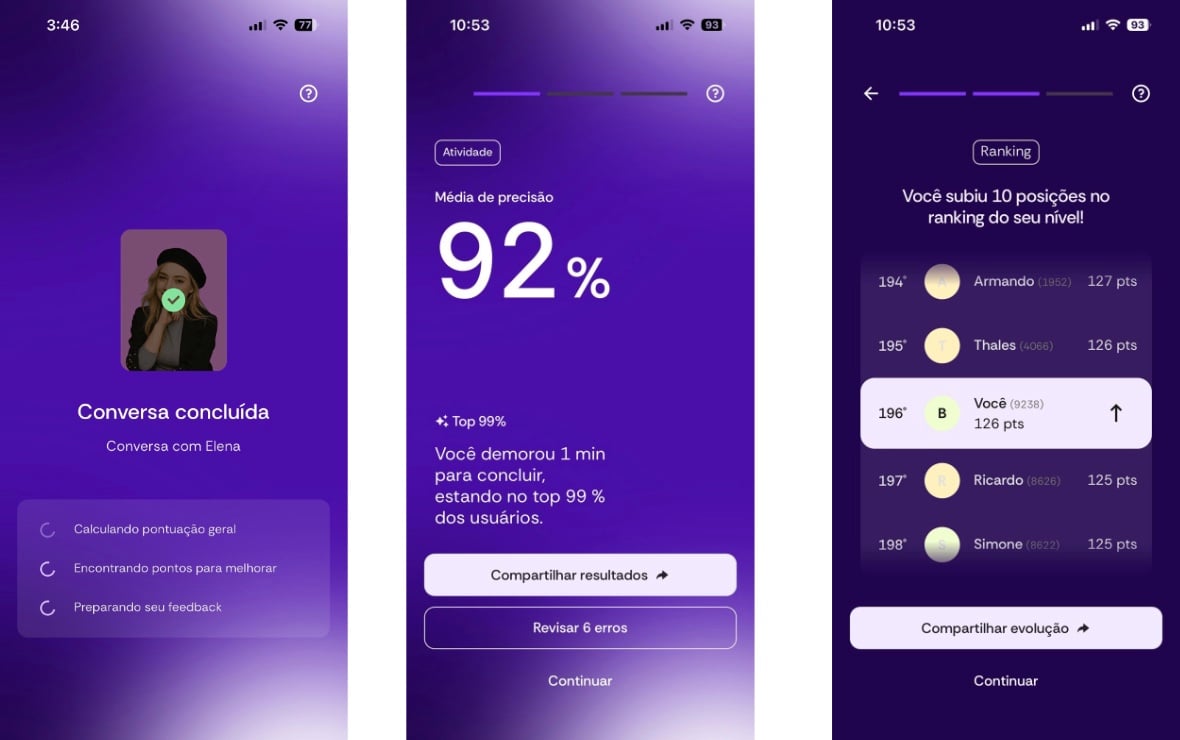
The combination of SRS with AI context accelerates retention through multiple exposures and immediate application. Constant practice with AI reduces the frustration of forgetting words at important moments and helps incorporate contextualized expressions.
Try this 5-minute routine in the free trial and see how the conversational retention method works in practice.
Frequently asked questions
What is the best free English vocabulary app?
BeConfident offers a free trial with CEFR level analysis and AI conversational practice. Next, Memrise and Duolingo appear as freemium options. HelloTalk allows free practice with native speakers, while ChatGPT works as an unlimited tutor at no cost in the open version.
Duolingo or Memrise for fast vocabulary?
Memrise tends to yield better retention because it uses structured SRS and videos with native speakers. Duolingo focuses on gamification for beginners, while Memrise works on a larger volume of words per day focusing on long-term locking.
Which app helps to learn English vocabulary fast and free?
BeConfident stands out with a free trial that identifies your level and offers AI conversation to lock vocabulary in context. For fully free options, a good strategy combines Anki, with custom SRS, HelloTalk, with practice with native speakers, and ChatGPT, with instant feedback.
How long does it take to master a thousand words?
With BeConfident, evolution occurs faster because of contextual conversation with AI. With Memrise, the average time is between 12 and 16 weeks using SRS. With Duolingo, the interval is usually 20 to 24 weeks with a focus on gamification. Apps focused on conversation accelerate retention because they stimulate immediate practical use.
What methods do the best apps to learn English combine?
The most complete apps combine SRS for initial memorization, conversation with AI for consolidation in context, and feedback from native speakers for correction. BeConfident integrates these three elements, while other apps tend to focus on only one or two of them.
Conclusion: accelerate your fluency in 2026
The best apps to learn English vocabulary fast in 2026 combine artificial intelligence, spaced repetition, and conversational context. BeConfident integrates vocabulary with unlimited conversation practice, while Memrise stands out for structured SRS and Quizlet for content customization.
To obtain consistent results, it is worth combining apps. A practical strategy uses Memrise for initial memorization and BeConfident for conversational consolidation. Many Brazilian professionals who follow this approach report development in weeks, and not just in months.
Start your free trial and accelerate your fluency in weeks - join the Brazilian professionals who already apply this strategy.
Written by: Luan Cavallaro, Founder & CMO, BeConfident
Key takeaways from this article
BeConfident leads as an app for vocabulary in real conversational contexts, featuring 24/7 AI and instant feedback.
Memrise stands out for its spaced repetition system (SRS) with native videos, allowing you to learn more than 20 words per day with good retention.
Apps like Quizlet and Anki offer full customization of flashcards, ideal for technical vocabulary and advanced study.
The combination of visual methods, gamification, and contextual practice accelerates fluency with just 5 to 10 minutes a day.
To get quick results, it is worth trying BeConfident for free and solidifying vocabulary in real conversations.
Ranking criteria: methodology of this list for 2026
This article prioritizes speed for real fluency over isolated memorization. AI trends in 2025 and 2026 show adaptive tutors, native voice recognition, and pronunciation tools that map mouth movements, which strengthens conversational retention. With these criteria in mind, the following list presents the apps that contribute the most to vocabulary applied in conversation.
1. BeConfident: vocabulary that enters the conversation
BeConfident uses AI tutors available 24 hours a day in the app, WhatsApp, or smartwatch to turn free time into conversation practice. The company achieves a RA 1000 reputation on Reclame Aqui.
The key differentiator lies in the structured lesson paths that integrate vocabulary into immediate conversational practice. Within these paths, students choose tutors with different accents, such as American, British, and South African, and with specific professional profiles, such as photographer, lawyer, or writer. This combination allows practicing the same vocabulary in multiple real contexts aligned with each person's interest.
Specific features include the "Tell me something new" command to expand repertory, personalized review of mistakes, and instant feedback on grammar, pronunciation, and native expressions. The free trial identifies the CEFR level and presents a clear analysis of strengths and areas to develop.
Pros: unlimited conversation, multiple accents, instant feedback, affordable price
2. Memrise: spaced repetition with native videos
Memrise stands out as a pleasant vocabulary app, featuring gamified flashcards, efficient SRS, and official courses with videos of native speakers. The app allows learning more than 20 words per day with good retention.
The spaced repetition system improves long-term memorization, while contextual videos show the natural use of words. The user can choose between American or British English.
Pros: consolidated SRS, videos with native speakers, engaging gamification
Cons: limited focus on real conversational context
3. Quizlet: custom flashcards and games
Quizlet allows you to create custom flashcard sets and access millions of sets created by other users. The app offers various study modes, such as traditional flashcards, matching games, and timed tests.
This format works well for specific technical vocabulary and test preparation. The free version already offers robust features for self-study.
Pros: wide customization, active community, multiple practice formats
Cons: content quality varies by creator, visual focus is more on memorization
4. Drops: visual learning in 5 minutes
Drops works on vocabulary with visual associations in five-minute daily sessions. Each word appears with simple illustrations that facilitate memorization.
This format suits beginners who prefer visual learning and have little time available. The time limit encourages focus and consistency.
Pros: pleasant design, short sessions, visual memorization
Cons: more basic vocabulary, little context of use
5. Anki: customizable repetition system
Anki offers detailed control over the SRS system. Advanced users create custom decks with audio, images, and specific context.
Language students seeking high performance use Anki frequently, as the app allows synchronization across devices and adjustable repetition algorithms.
Pros: high level of customization, strong algorithm, free access
Cons: steeper learning curve, simple interface
6. Busuu: structured courses with community
Busuu offers free basic vocabulary and grammar lessons with feedback from the community of native speakers. The app follows CEFR standards to ensure structured progression.
Pros: feedback from native speakers, paths aligned with CEFR, active community
Cons: more static repetition, limited sentence variation
7. WordUp: vocabulary in contextual sentences
WordUp teaches vocabulary with real sentences taken from movies, series, and news. Each word appears in various authentic contexts.
Pros: real context, updated content, native pronunciation
Cons: less focus on active speaking production
8. HelloTalk: practice with native speakers in real time
HelloTalk connects English learners with native speakers for text, audio, and voice call exchanges. The core proposal is to practice vocabulary in real interactions with people from other countries.
The app includes text corrections made by native speakers themselves, occasional translation features, and short voice messages. This combination helps test the vocabulary learned in other apps in practice.
Pros: direct contact with native speakers, real speaking and writing practice, functional free version
Cons: interaction quality varies by partner, lack of structured study path
9. Speakly: vocabulary for daily use
Speakly prioritizes about four thousand of the most used words in daily English. The app combines frequency statistics with practical exercises.
Pros: focus on high-utility words, clear progress statistics
Cons: narrower variety of topics, limited customization
10. Lingvist: simple interface with SRS
Lingvist offers a clean interface, SRS system, and instructions available in nine languages.
Pros: modern design, broad lexical database, multilingual support
Cons: little usage context, focus on word recognition
11. Duolingo: gamification for beginners
Meanwhile, Duolingo Max integrates GPT for interactive AI explanations and conversation practice.
Pros: free access, strong gamification, integrated AI features
Cons: lower conversational retention, focus on recognition and short exercises
Direct comparisons: Duolingo, Memrise, and BeConfident
To make it easier to choose among the three most popular options, the following table compares vocabulary focus, conversation retention, and pricing model.
App | Vocabulary focus | Conversation retention | Price |
BeConfident | Context with AI | High | Free trial |
Memrise | SRS with videos | Medium | Freemium |
Duolingo | Gamification | Basic | Freemium |
Learning with complete sentences improves conversational retention because context broadens comprehension: grammar becomes more intuitive through patterns, and active recall strengthens long-term memory.
BeConfident combines unlimited practice with personalized feedback, offering a greater gain in conversation than Duolingo's gamification and reducing the need to invest in more expensive in-person courses.
Daily 5-minute routine: learn words that actually stick in your mind
Busy professionals can maintain a short, consistent routine to advance their vocabulary.
2 minutes: review on Memrise to reactivate previous day's words in memory
3 minutes: conversation practice on BeConfident to use those same words in real context while they are still fresh
The combination of SRS with AI context accelerates retention through multiple exposures and immediate application. Constant practice with AI reduces the frustration of forgetting words at important moments and helps incorporate contextualized expressions.
Try this 5-minute routine in the free trial and see how the conversational retention method works in practice.
Frequently asked questions
What is the best free English vocabulary app?
BeConfident offers a free trial with CEFR level analysis and AI conversational practice. Next, Memrise and Duolingo appear as freemium options. HelloTalk allows free practice with native speakers, while ChatGPT works as an unlimited tutor at no cost in the open version.
Duolingo or Memrise for fast vocabulary?
Memrise tends to yield better retention because it uses structured SRS and videos with native speakers. Duolingo focuses on gamification for beginners, while Memrise works on a larger volume of words per day focusing on long-term locking.
Which app helps to learn English vocabulary fast and free?
BeConfident stands out with a free trial that identifies your level and offers AI conversation to lock vocabulary in context. For fully free options, a good strategy combines Anki, with custom SRS, HelloTalk, with practice with native speakers, and ChatGPT, with instant feedback.
How long does it take to master a thousand words?
With BeConfident, evolution occurs faster because of contextual conversation with AI. With Memrise, the average time is between 12 and 16 weeks using SRS. With Duolingo, the interval is usually 20 to 24 weeks with a focus on gamification. Apps focused on conversation accelerate retention because they stimulate immediate practical use.
What methods do the best apps to learn English combine?
The most complete apps combine SRS for initial memorization, conversation with AI for consolidation in context, and feedback from native speakers for correction. BeConfident integrates these three elements, while other apps tend to focus on only one or two of them.
Conclusion: accelerate your fluency in 2026
The best apps to learn English vocabulary fast in 2026 combine artificial intelligence, spaced repetition, and conversational context. BeConfident integrates vocabulary with unlimited conversation practice, while Memrise stands out for structured SRS and Quizlet for content customization.
To obtain consistent results, it is worth combining apps. A practical strategy uses Memrise for initial memorization and BeConfident for conversational consolidation. Many Brazilian professionals who follow this approach report development in weeks, and not just in months.
Start your free trial and accelerate your fluency in weeks - join the Brazilian professionals who already apply this strategy.