




English idioms for natural conversation
English idioms for natural conversation
English idioms for natural conversation
Key takeaways from this article
Idiomatic expressions like "piece of cake" and "break the ice" help you sound more natural in everyday English conversations and avoid a robotic tone.
Idioms convey cultural and emotional meanings and frequently appear in informal dialogues, movies, and media, according to linguistic studies.
Practicing in real-life contexts, such as work, travel, and emotions, with examples and mini-dialogues, accelerates conversational fluency.
Avoid common mistakes like literal translation and out-of-context use. Focus on 5 to 7 expressions per week with constant speaking practice.
Elevate your fluency with the BeConfident AI conversation platform: try for free and practice idioms 24/7 with personalized tutors.
What are idiomatic expressions and why are they essential for conversation?
Idiomatic expressions are phrases whose meaning cannot be literally deduced from the words that make them up. For example, "kick the bucket" does not mean "to kick physical bucket", but rather "to die". Oxford International English highlights that mastering idiomatic expressions is an essential skill to achieve fluency in English, as they constantly appear in conversations, movies, TV shows, and media in general.
Idioms enrich communication because they convey cultural and emotional meanings and make speech more natural. When you master these expressions, you understand natives more easily, respond with agility, and demonstrate real conversational fluency.
Most commonly used English idioms in daily life
Break the ice (/breɪk ðə aɪs/), initiate a conversation and ease the tension.
Example: "To break the ice at the party, I said hello to the person next to me."
Mini-dialogue:
A: "I'm nervous about meeting new people."
B: "Just break the ice with a simple compliment. It works every time!"
Piece of cake (/piːs ʌv keɪk/), something very easy, a breeze.
Example: "The test was a piece of cake; I finished it very quickly."
Mini-dialogue:
A: "How was the driving test?"
B: "Piece of cake! I passed on the first try."
Pull someone's leg (/pʊl ˈsʌmwʌnz leg/), to play a joke and tease someone.
Example: "Don't worry, I'm just pulling your leg; I didn't really sell your bike."
Mini-dialogue:
A: "Did you really eat the whole pizza?"
B: "No way! I'm just pulling your leg."
Speak of the devil (/spiːk ʌv ðə ˈdevəl/), speaking of someone who appears at that very moment.
Example: "Speak of the devil! We were just talking about you when you walked in."
Once in a blue moon (/wʌns ɪn ə bluː muːn/), something that happens very rarely.
Example: "I only eat fast food once in a blue moon."
Hit the nail on the head (/hɪt ðə neɪl ɒn ðə hed/), to get it exactly right and describe something perfectly.
Example: "You've hit the nail on the head with your idea about the problem."
Spill the beans (/spɪl ðə biːnz/), to reveal a secret.
Example: "Come on, spill the beans! What's the surprise?"
Better late than never (/ˈbetər leɪt ðæn ˈnevər/), doing something late is better than not doing it at all.
Example: "I know I'm 30 minutes late, but better late than never, right?"
Expressions for reactions and emotions
Under the weather (/ˈʌndər ðə ˈweðər/), feeling slightly sick or unwell.
Example: "I'm feeling a bit under the weather today; I might stay home and rest."
Mini-dialogue:
A: "You look tired. Everything okay?"
B: "I'm just under the weather. Nothing serious."
Feel like a million bucks (/fiːl laɪk ə ˈmɪljən bʌks/), feeling extremely good and healthy.
Example: "I feel like a million bucks after that workout."
All ears (/ɔːl ɪərz/), paying full attention.
Example: "Tell me about your trip! I'm all ears."
I'm beat (/aɪm biːt/), being exhausted.
Example: "After working 12 hours, I'm completely beat."
Hang in there (/hæŋ ɪn ðeər/), to keep going and persist.
Example: "I know work is stressful, but hang in there. It'll get better."
Cut some slack (/kʌt sʌm slæk/), to give someone a break and be more tolerant.
Example: "Cut him some slack, it's his first day on the job."
After mastering these everyday reactions, you can advance to more specific contexts. The workplace is one of the settings where idioms appear frequently.
Idioms for work and networking
Burn the midnight oil (/bɜːrn ðə ˈmɪdnaɪt ɔɪl/), to work late into the night.
Example: "I've been burning the midnight oil to finish this project before the deadline."
Mini-dialogue:
A: "You look exhausted!"
B: "I've been burning the midnight oil all week to meet the deadline."
Go the extra mile (/goʊ ðə ˈekstrə maɪl/), to make an extra effort.
Example: "Our teachers always go the extra mile to help students understand difficult topics."
Call it a day (/kɔːl ɪt ə deɪ/), to stop working for the rest of the day.
Example: "We've done a lot of work on the report. Let's call it a day and continue tomorrow."
On the ball (/ɒn ðə bɔːl/), being alert, attentive, and efficient.
Example: "Thanks for the reminder, you're on the ball!"
Bite the bullet (/baɪt ðə ˈbʊlɪt/), to face a difficult situation with courage.
Example: "I finally bit the bullet and went to the dentist."
Be on the same page (/biː ɒn ðə seɪm peɪdʒ/), to be in agreement and think alike.
Example: "Let's make sure we're all on the same page before the meeting."
Once you feel confident with work expressions, it's worth including idioms related to travel and casual meetups, which are very common in informal conversations.
Expressions for travel and casual meetups
Break a leg (/breɪk ə leg/), wishing good luck before a performance.
Example: "You're presenting tomorrow? Break a leg!"
Miss the boat (/mɪs ðə boʊt/), to lose an opportunity.
Example: "Don't miss the boat on this great deal, it ends tomorrow."
By the skin of your teeth (/baɪ ðə skɪn ʌv jʊr tiːθ/), to manage to do something by a very narrow margin.
Example: "You passed that course by the skin of your teeth."
Cost an arm and a leg (/kɔːst æn ɑːrm ænd ə leg/), to be very expensive.
Example: "That new phone costs an arm and a leg."
In addition to these contexts, idioms also appear when you talk about routine and time, which helps make any conversation flow more naturally.
Idioms of time and routine
Hit the sack (/hɪt ðə sæk/), to go to sleep.
Example: "I'm exhausted. Time to hit the sack."
In the blink of an eye (/ɪn ðə blɪŋk ʌv æn aɪ/), something that happens extremely quickly.
Example: "The vacation went by in the blink of an eye."
Never mind (/ˈnevər maɪnd/), to say "forget about it" or "it doesn't matter".
Example: "Can you help me with... never mind, I figured it out."
After learning these classic idioms, you can include newer expressions that appear in casual conversations, especially among younger speakers.
Emerging expressions for instant fluency
Some more recent expressions have gained popularity in casual conversations and help you better understand movies, series, and social media.
You do you (/juː duː juː/), do whatever you think is best for yourself.
Example: "I think I'm going to change careers." "You do you!"
Lowkey (/ˈloʊki/), in a quiet, subtle, or secret way.
Example: "I'm lowkey excited about the weekend."
Bet (/bet/), to agree or confirm something, like "sure" or "deal".
Example: "Can you pick me up at 8?" "Bet."
A blessing in disguise (/ə ˈblesɪŋ ɪn dɪsˈɡaɪz/), something that seems bad at first, but results in something good later.
Example: "Losing that job was a blessing in disguise, now I found something better."
How to practice these expressions for real fluency
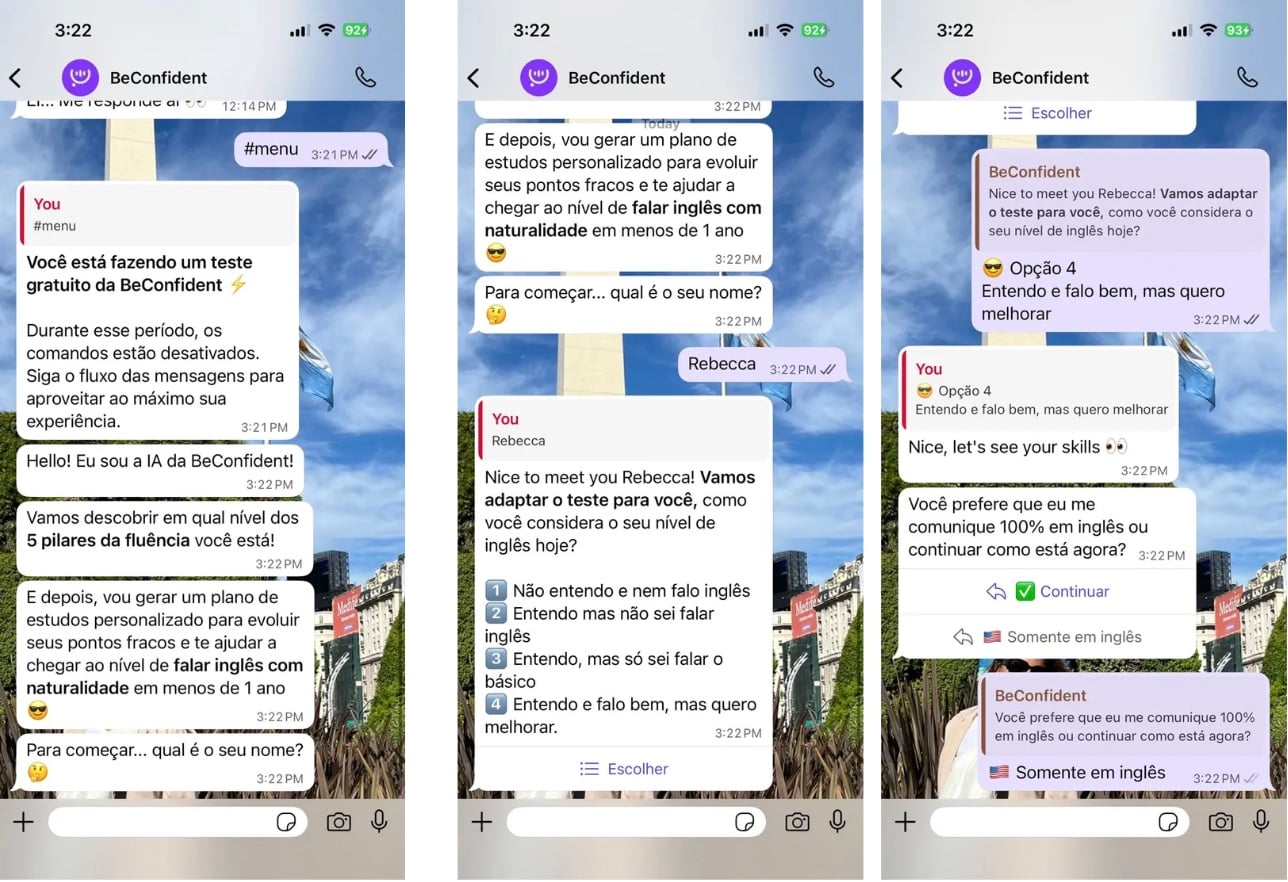
Knowing these expressions is just the first step. To use them naturally, you need constant conversational practice, focusing on pronunciation, listening, and application in context.
This is exactly where many traditional methods fail. English schools offer little oral practice and put too much emphasis on grammar. Apps like Duolingo focus more on gamification than deep conversation.
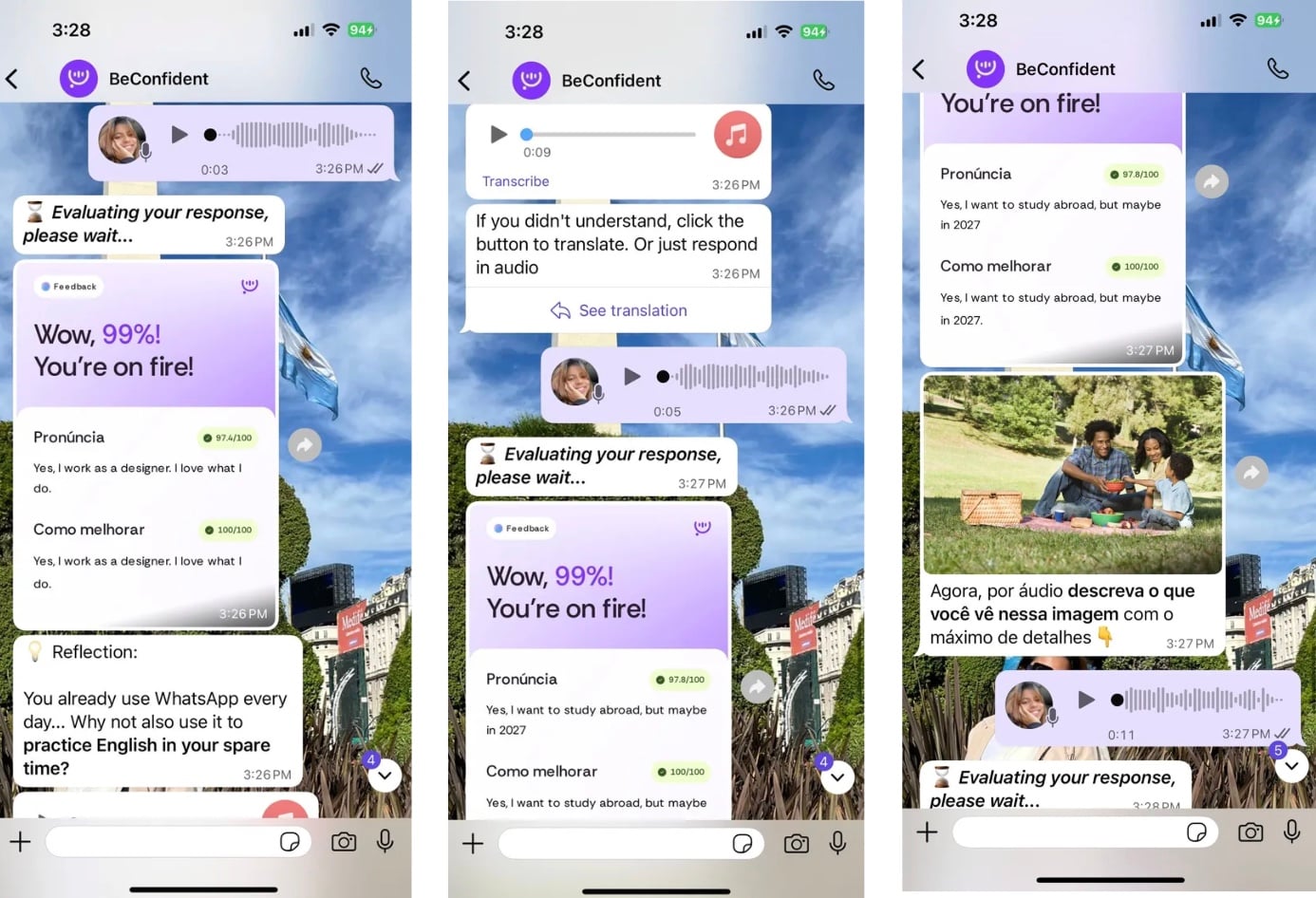
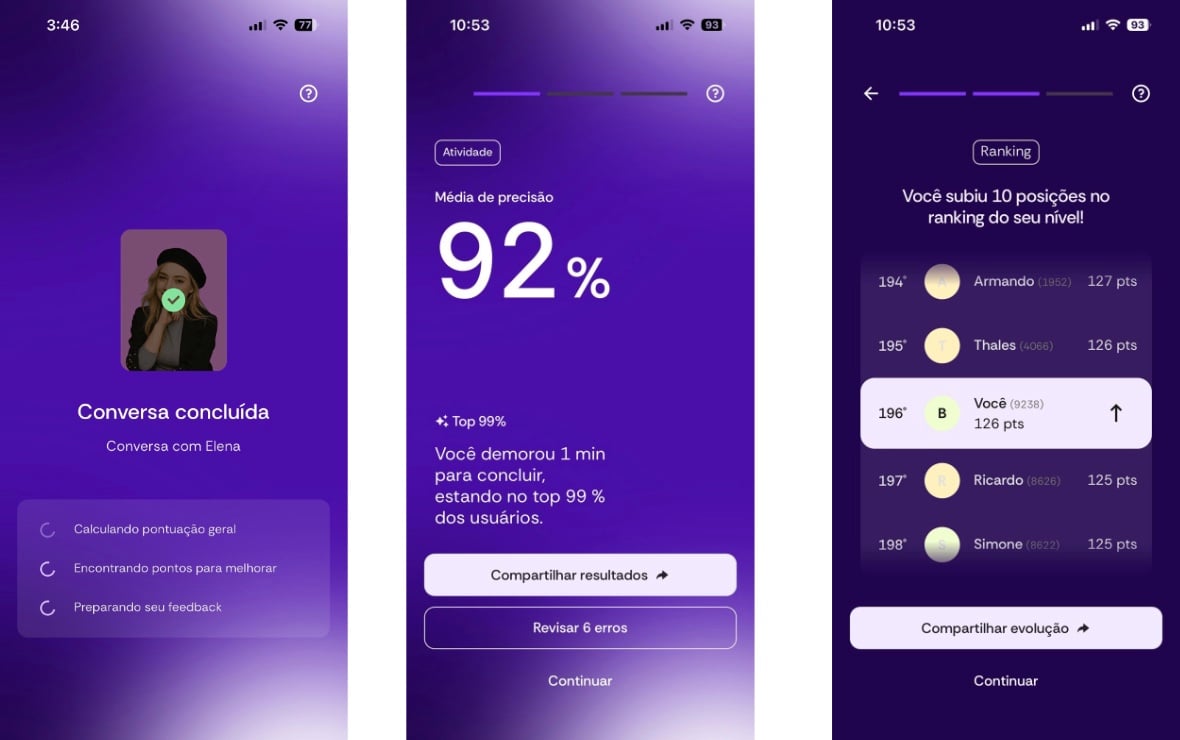
BeConfident fills this gap by offering 24/7 conversation practice with AI tutors that adapt to your interests and needs. With 200,000 paying students and 3 million total users, the platform allows you to practice these idiomatic expressions in real-world contexts and receive instant feedback on pronunciation and usage.
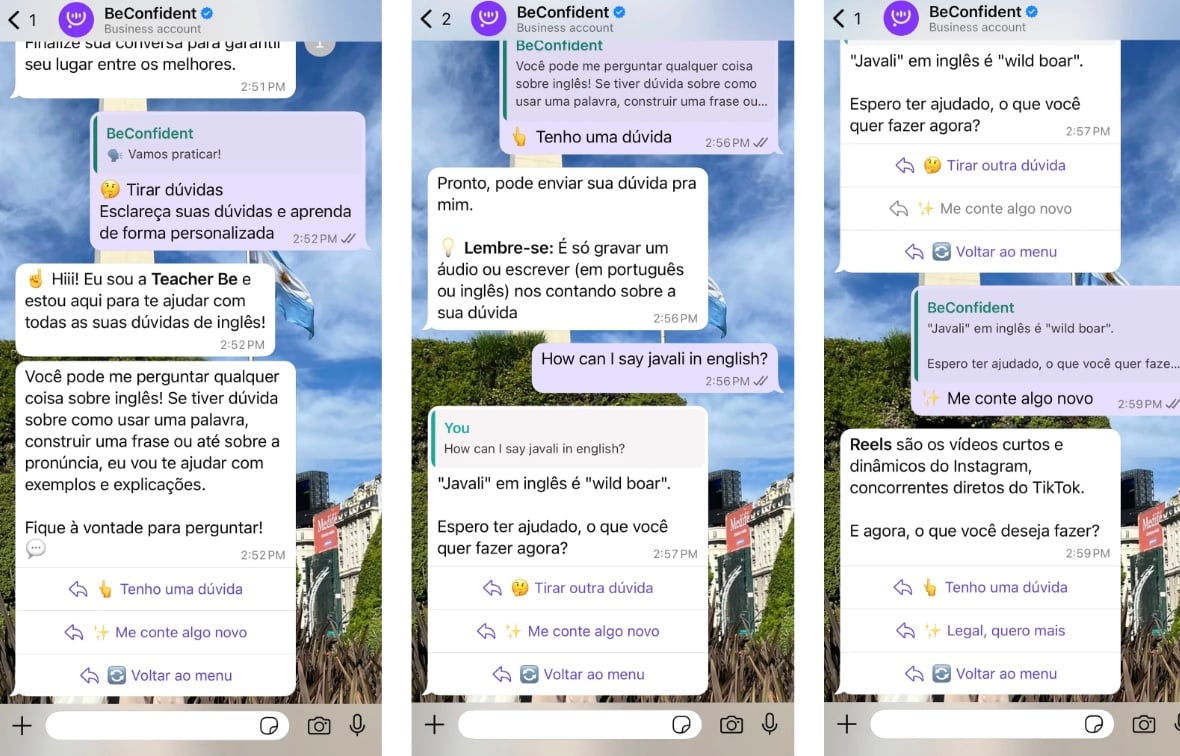
Practice these expressions with instant feedback through AI tutors available on the app, WhatsApp, or smartwatch, with a free trial.
Common mistakes and tips for mastering them
The main mistakes when using idiomatic expressions include literal translation, like translating "break a leg" literally into another language, using them out of context, and a lack of oral practice. To avoid these issues, practice with real dialogues, record yourself speaking, and use AI tools for immediate correction, just as BeConfident offers.
As mentioned earlier, idiomatic expressions are essential for fluency because native speakers use these structures daily in conversation, writing, and media. Therefore, it is best to prioritize a few expressions at a time and review them frequently.
Frequently Asked Questions
What are the 20 most commonly used English idioms?
The 20 most common expressions include "piece of cake", "break the ice", "hit the nail on the head", "under the weather", "pull someone's leg", "speak of the devil", "once in a blue moon", "better late than never", "call it a day", "go the extra mile", "burn the midnight oil", "on the ball", "bite the bullet", "break a leg", "cost an arm and a leg", "miss the boat", "hit the sack", "all ears", "hang in there", and "cut some slack".
How to use idioms in conversation without sounding forced?
Use idiomatic expressions gradually, starting with the simplest ones, like "piece of cake" or "break the ice". Practice in specific contexts and avoid using too many expressions in a single conversation. The key is constant practice with feedback, which BeConfident offers through conversations with AI.
Is there a difference between American and British idiomatic expressions?
There is a difference between some idioms used in each country. Americans say "hit the sack", while Brits prefer "hit the hay" for "going to sleep". BeConfident offers practice with different accents, such as American, British, and Australian, so you can become familiar with these variations.
How many idiomatic expressions should I learn per week?
It is best to focus on 5 to 7 expressions per week and practice them in real-world contexts until you master each one. It is better to know a few expressions well than to know many superficially. BeConfident personalizes the learning pace according to your progress.
Can I use idiomatic expressions in professional situations?
You can use idioms in more informal professional contexts. Expressions like "go the extra mile", "on the ball", and "call it a day" work well in everyday work conversations. Avoid idioms in formal presentations, official reports, or communications with important clients. BeConfident offers specific practice for professional situations.
Conclusion
Mastering these 33 idiomatic expressions strengthens your conversational English fluency and brings your speech closer to how native speakers actually talk. With daily practice and personalized feedback, you will start to sound natural in different situations, from work to travel.
Improve your conversation skills with BeConfident's AI platform and try the idiom training for free with 24/7 support.
Key takeaways from this article
Idiomatic expressions like "piece of cake" and "break the ice" help you sound more natural in everyday English conversations and avoid a robotic tone.
Idioms convey cultural and emotional meanings and frequently appear in informal dialogues, movies, and media, according to linguistic studies.
Practicing in real-life contexts, such as work, travel, and emotions, with examples and mini-dialogues, accelerates conversational fluency.
Avoid common mistakes like literal translation and out-of-context use. Focus on 5 to 7 expressions per week with constant speaking practice.
Elevate your fluency with the BeConfident AI conversation platform: try for free and practice idioms 24/7 with personalized tutors.
What are idiomatic expressions and why are they essential for conversation?
Idiomatic expressions are phrases whose meaning cannot be literally deduced from the words that make them up. For example, "kick the bucket" does not mean "to kick physical bucket", but rather "to die". Oxford International English highlights that mastering idiomatic expressions is an essential skill to achieve fluency in English, as they constantly appear in conversations, movies, TV shows, and media in general.
Idioms enrich communication because they convey cultural and emotional meanings and make speech more natural. When you master these expressions, you understand natives more easily, respond with agility, and demonstrate real conversational fluency.
Most commonly used English idioms in daily life
Break the ice (/breɪk ðə aɪs/), initiate a conversation and ease the tension.
Example: "To break the ice at the party, I said hello to the person next to me."
Mini-dialogue:
A: "I'm nervous about meeting new people."
B: "Just break the ice with a simple compliment. It works every time!"
Piece of cake (/piːs ʌv keɪk/), something very easy, a breeze.
Example: "The test was a piece of cake; I finished it very quickly."
Mini-dialogue:
A: "How was the driving test?"
B: "Piece of cake! I passed on the first try."
Pull someone's leg (/pʊl ˈsʌmwʌnz leg/), to play a joke and tease someone.
Example: "Don't worry, I'm just pulling your leg; I didn't really sell your bike."
Mini-dialogue:
A: "Did you really eat the whole pizza?"
B: "No way! I'm just pulling your leg."
Speak of the devil (/spiːk ʌv ðə ˈdevəl/), speaking of someone who appears at that very moment.
Example: "Speak of the devil! We were just talking about you when you walked in."
Once in a blue moon (/wʌns ɪn ə bluː muːn/), something that happens very rarely.
Example: "I only eat fast food once in a blue moon."
Hit the nail on the head (/hɪt ðə neɪl ɒn ðə hed/), to get it exactly right and describe something perfectly.
Example: "You've hit the nail on the head with your idea about the problem."
Spill the beans (/spɪl ðə biːnz/), to reveal a secret.
Example: "Come on, spill the beans! What's the surprise?"
Better late than never (/ˈbetər leɪt ðæn ˈnevər/), doing something late is better than not doing it at all.
Example: "I know I'm 30 minutes late, but better late than never, right?"
Expressions for reactions and emotions
Under the weather (/ˈʌndər ðə ˈweðər/), feeling slightly sick or unwell.
Example: "I'm feeling a bit under the weather today; I might stay home and rest."
Mini-dialogue:
A: "You look tired. Everything okay?"
B: "I'm just under the weather. Nothing serious."
Feel like a million bucks (/fiːl laɪk ə ˈmɪljən bʌks/), feeling extremely good and healthy.
Example: "I feel like a million bucks after that workout."
All ears (/ɔːl ɪərz/), paying full attention.
Example: "Tell me about your trip! I'm all ears."
I'm beat (/aɪm biːt/), being exhausted.
Example: "After working 12 hours, I'm completely beat."
Hang in there (/hæŋ ɪn ðeər/), to keep going and persist.
Example: "I know work is stressful, but hang in there. It'll get better."
Cut some slack (/kʌt sʌm slæk/), to give someone a break and be more tolerant.
Example: "Cut him some slack, it's his first day on the job."
After mastering these everyday reactions, you can advance to more specific contexts. The workplace is one of the settings where idioms appear frequently.
Idioms for work and networking
Burn the midnight oil (/bɜːrn ðə ˈmɪdnaɪt ɔɪl/), to work late into the night.
Example: "I've been burning the midnight oil to finish this project before the deadline."
Mini-dialogue:
A: "You look exhausted!"
B: "I've been burning the midnight oil all week to meet the deadline."
Go the extra mile (/goʊ ðə ˈekstrə maɪl/), to make an extra effort.
Example: "Our teachers always go the extra mile to help students understand difficult topics."
Call it a day (/kɔːl ɪt ə deɪ/), to stop working for the rest of the day.
Example: "We've done a lot of work on the report. Let's call it a day and continue tomorrow."
On the ball (/ɒn ðə bɔːl/), being alert, attentive, and efficient.
Example: "Thanks for the reminder, you're on the ball!"
Bite the bullet (/baɪt ðə ˈbʊlɪt/), to face a difficult situation with courage.
Example: "I finally bit the bullet and went to the dentist."
Be on the same page (/biː ɒn ðə seɪm peɪdʒ/), to be in agreement and think alike.
Example: "Let's make sure we're all on the same page before the meeting."
Once you feel confident with work expressions, it's worth including idioms related to travel and casual meetups, which are very common in informal conversations.
Expressions for travel and casual meetups
Break a leg (/breɪk ə leg/), wishing good luck before a performance.
Example: "You're presenting tomorrow? Break a leg!"
Miss the boat (/mɪs ðə boʊt/), to lose an opportunity.
Example: "Don't miss the boat on this great deal, it ends tomorrow."
By the skin of your teeth (/baɪ ðə skɪn ʌv jʊr tiːθ/), to manage to do something by a very narrow margin.
Example: "You passed that course by the skin of your teeth."
Cost an arm and a leg (/kɔːst æn ɑːrm ænd ə leg/), to be very expensive.
Example: "That new phone costs an arm and a leg."
In addition to these contexts, idioms also appear when you talk about routine and time, which helps make any conversation flow more naturally.
Idioms of time and routine
Hit the sack (/hɪt ðə sæk/), to go to sleep.
Example: "I'm exhausted. Time to hit the sack."
In the blink of an eye (/ɪn ðə blɪŋk ʌv æn aɪ/), something that happens extremely quickly.
Example: "The vacation went by in the blink of an eye."
Never mind (/ˈnevər maɪnd/), to say "forget about it" or "it doesn't matter".
Example: "Can you help me with... never mind, I figured it out."
After learning these classic idioms, you can include newer expressions that appear in casual conversations, especially among younger speakers.
Emerging expressions for instant fluency
Some more recent expressions have gained popularity in casual conversations and help you better understand movies, series, and social media.
You do you (/juː duː juː/), do whatever you think is best for yourself.
Example: "I think I'm going to change careers." "You do you!"
Lowkey (/ˈloʊki/), in a quiet, subtle, or secret way.
Example: "I'm lowkey excited about the weekend."
Bet (/bet/), to agree or confirm something, like "sure" or "deal".
Example: "Can you pick me up at 8?" "Bet."
A blessing in disguise (/ə ˈblesɪŋ ɪn dɪsˈɡaɪz/), something that seems bad at first, but results in something good later.
Example: "Losing that job was a blessing in disguise, now I found something better."
How to practice these expressions for real fluency
Knowing these expressions is just the first step. To use them naturally, you need constant conversational practice, focusing on pronunciation, listening, and application in context.
This is exactly where many traditional methods fail. English schools offer little oral practice and put too much emphasis on grammar. Apps like Duolingo focus more on gamification than deep conversation.
BeConfident fills this gap by offering 24/7 conversation practice with AI tutors that adapt to your interests and needs. With 200,000 paying students and 3 million total users, the platform allows you to practice these idiomatic expressions in real-world contexts and receive instant feedback on pronunciation and usage.
Practice these expressions with instant feedback through AI tutors available on the app, WhatsApp, or smartwatch, with a free trial.
Common mistakes and tips for mastering them
The main mistakes when using idiomatic expressions include literal translation, like translating "break a leg" literally into another language, using them out of context, and a lack of oral practice. To avoid these issues, practice with real dialogues, record yourself speaking, and use AI tools for immediate correction, just as BeConfident offers.
As mentioned earlier, idiomatic expressions are essential for fluency because native speakers use these structures daily in conversation, writing, and media. Therefore, it is best to prioritize a few expressions at a time and review them frequently.
Frequently Asked Questions
What are the 20 most commonly used English idioms?
The 20 most common expressions include "piece of cake", "break the ice", "hit the nail on the head", "under the weather", "pull someone's leg", "speak of the devil", "once in a blue moon", "better late than never", "call it a day", "go the extra mile", "burn the midnight oil", "on the ball", "bite the bullet", "break a leg", "cost an arm and a leg", "miss the boat", "hit the sack", "all ears", "hang in there", and "cut some slack".
How to use idioms in conversation without sounding forced?
Use idiomatic expressions gradually, starting with the simplest ones, like "piece of cake" or "break the ice". Practice in specific contexts and avoid using too many expressions in a single conversation. The key is constant practice with feedback, which BeConfident offers through conversations with AI.
Is there a difference between American and British idiomatic expressions?
There is a difference between some idioms used in each country. Americans say "hit the sack", while Brits prefer "hit the hay" for "going to sleep". BeConfident offers practice with different accents, such as American, British, and Australian, so you can become familiar with these variations.
How many idiomatic expressions should I learn per week?
It is best to focus on 5 to 7 expressions per week and practice them in real-world contexts until you master each one. It is better to know a few expressions well than to know many superficially. BeConfident personalizes the learning pace according to your progress.
Can I use idiomatic expressions in professional situations?
You can use idioms in more informal professional contexts. Expressions like "go the extra mile", "on the ball", and "call it a day" work well in everyday work conversations. Avoid idioms in formal presentations, official reports, or communications with important clients. BeConfident offers specific practice for professional situations.
Conclusion
Mastering these 33 idiomatic expressions strengthens your conversational English fluency and brings your speech closer to how native speakers actually talk. With daily practice and personalized feedback, you will start to sound natural in different situations, from work to travel.
Improve your conversation skills with BeConfident's AI platform and try the idiom training for free with 24/7 support.