




How to use microlearning for faster English fluency
How to use microlearning for faster English fluency
How to use microlearning for faster English fluency
Written by: Luan Cavallaro, Founder & CMO, BeConfident
Key takeaways from this article
Studying in 5 to 15-minute sessions using spaced repetition can double retention compared to traditional methods, with a focus on long-term memory.
An efficient routine combines a quick 5-minute input, intensive output with shadowing and AI conversation for 15 minutes, and error review for 10 minutes to make the most of each study day.
Practicing conversational output is essential. AI tutors reduce the fear of making mistakes and provide immediate feedback 24 hours a day, outperforming apps that work almost exclusively with input, like Duolingo.
Setting personalized micro-goals and tracking metrics like streak and practice hours helps maintain consistency and get closer to B2 fluency in about 90 days with 30 minutes a day.
BeConfident focuses on fluency with unlimited conversation via WhatsApp or the app. Take a free test and see how your English evolves in practice.
Before you start: prerequisites and expectations
This methodology works best for those who already have an A2-B1 English level, access to a smartphone or WhatsApp, and 30 minutes daily. With 90 days of consistency, it is possible to achieve conversational fluency close to the B2 level.
The most common mistake is focusing strictly on input, such as videos, texts, and gamified apps like Duolingo, without practicing conversational output.
BeConfident reduces this problem by offering unlimited conversation with AI tutors 24 hours a day, with zero embarrassment and without relying on fixed schedules. With 200,000 paying students, 3 million total users, and an RA 1000 reputation on Reclame Aqui, BeConfident proves that constant conversation practice accelerates fluency.
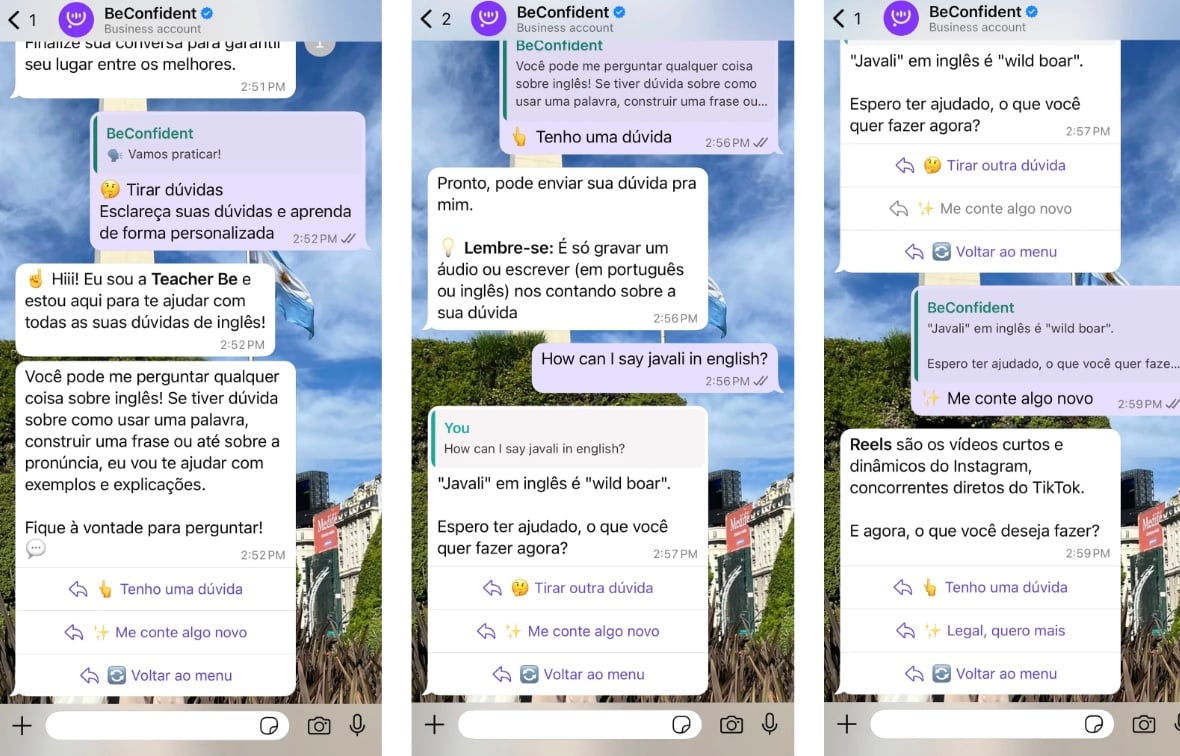
Process Overview: Routine of 30 Minutes a Day
The daily microlearning routine follows a clear sequence. First, you set a micro study goal. Next, you do a quick 5-minute input. After that, you practice shadowing for 5 minutes and AI conversation for 10 minutes. Finally, you review errors for 10 minutes to consolidate what you learned.
Session | Activities | Time | Tool |
|---|---|---|---|
Morning | Set micro goal and review vocabulary with spaced repetition | 10 min | BeConfident Pathways |
Lunch | Shadowing and AI conversation | 15 min | App or WhatsApp |
Night | Daily error review | 10 min | "Review errors" feature |
See your personalized routine with a free trial.
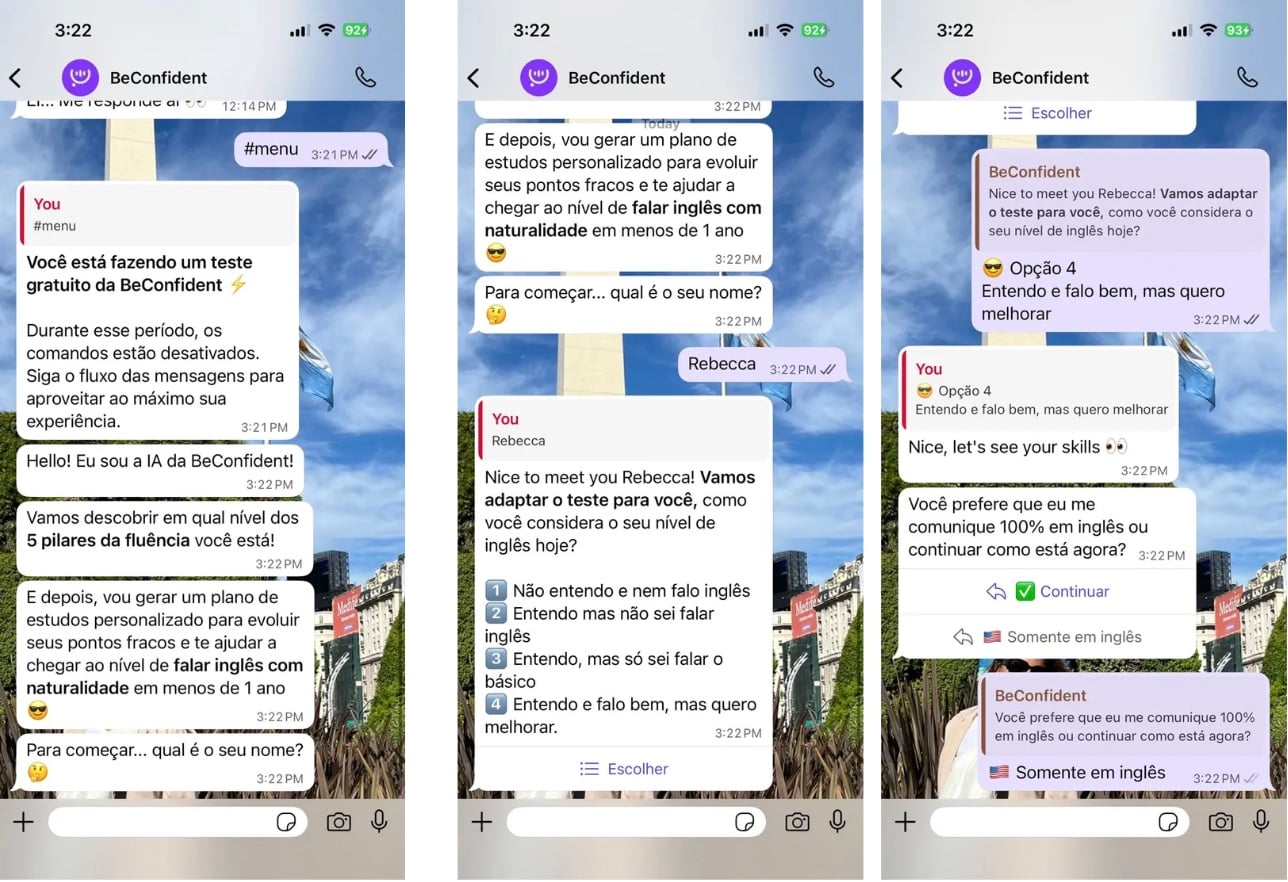
Step 1: Set micro goals (5 minutes)
Start each day by defining a specific goal tied to your professional, travel, or personal context. For example, an engineer might focus on "negotiating a technical project," a traveler on "checking in at the airport," and someone with a personal focus on "discussing a movie."
By connecting each session to a real situation you will face, this customization maintains engagement and makes learning immediately applicable.
Step 2: Take quick input with spaced repetition (5 minutes)
Dedicate 5 minutes daily to reviewing vocabulary and grammar structures using spaced repetition. Studying for 30 minutes distributed over several days yields better retention than cramming everything into one long session.
The structured learning pathways of BeConfident apply these scientific principles. The platform presents content in small doses and revisits concepts at planned intervals to strengthen long-term memory.
Step 3: Practice output with shadowing (5 minutes)
Use 5 minutes to practice shadowing by repeating native audio in real time. This technique improves pronunciation, rhythm, and intonation. Choose audio aligned with your micro-goal of the day to stay focused.
Shadowing prepares your mouth and mind for fluent conversation. This practice creates muscle memory for English sound patterns and reduces the effort when speaking with the AI.
Step 4: Speak with the AI (10 minutes)
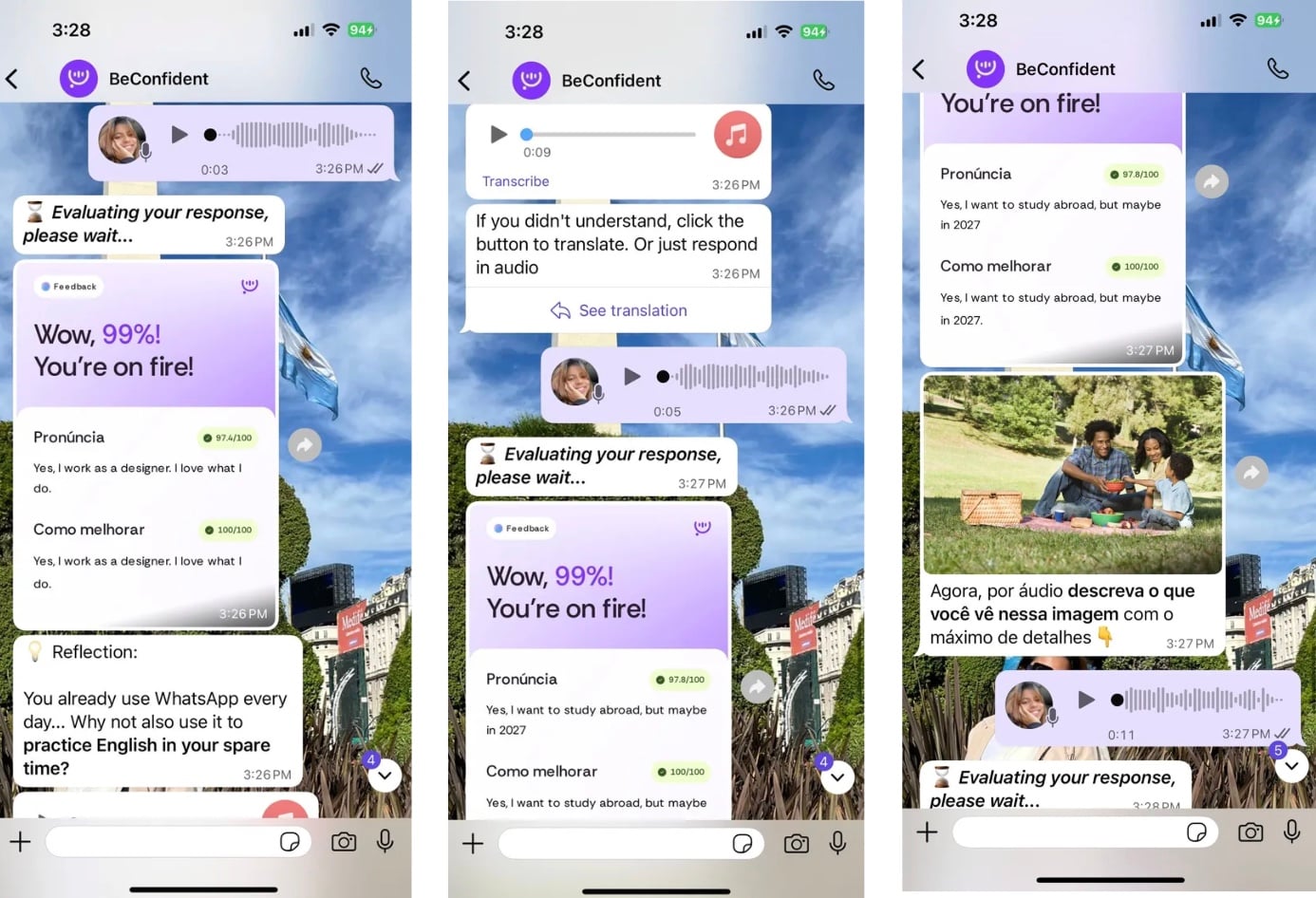
Conversing with AI is the core of the routine. Chat with BeConfident's AI tutors who simulate different accents, such as American, British, and Australian, and different professional profiles, such as lawyer, photographer, or writer. Immediate and specific feedback helps correct mistakes while you speak.
You can interact through text, audio, or simulated "calls" on WhatsApp and receive instant corrections without judgment. While Duolingo focuses on gamified input, BeConfident prioritizes actual conversational output.
Step 5: Review your errors (10 minutes)
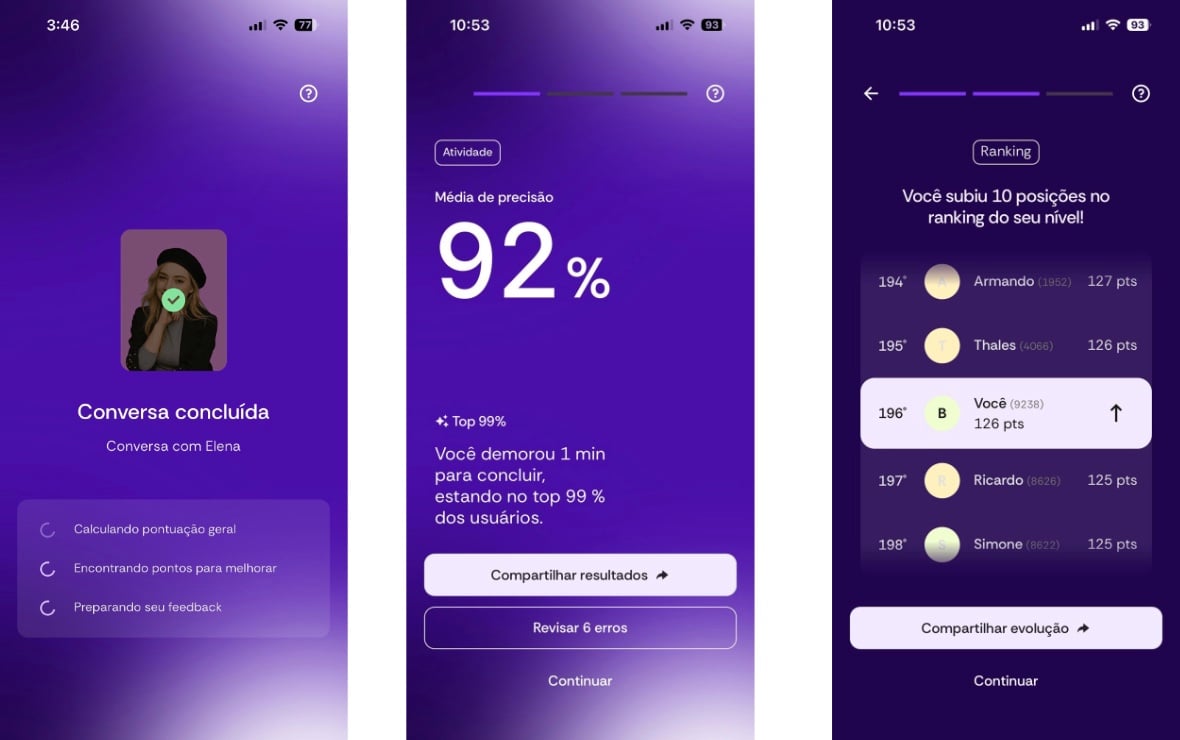
Close out the day by reviewing the errors identified by the AI in grammar, pronunciation, and flow. The "Review errors" feature of BeConfident organizes your feedback history and allows you to work on specific points as many times as you need.
This review consolidates learning and reduces the chance of repeating the same mistakes in future conversations.
Practical tips to maximize results
Maintaining output practice is decisive for moving forward. Many students consume a lot of content but avoid speaking out of fear of making mistakes. BeConfident's AI tutors reduce this barrier by offering a judgment-free environment where you can make mistakes and try again as many times as you want.
For people with ADHD or irregular routines, studies from 2025 indicate that micro-interactions of 1 to 5 minutes are more sustainable than long sessions. BeConfident allows practice via WhatsApp during activities like cooking or walking, so you can break up your 30 minutes into micro-sessions that fit best into your day.
Tracking progress helps maintain motivation. The "My Progress" menu shows streak days, position on the list, and practice hours. Instead of paying high fees in traditional schools with little conversation, you get access to frequent conversation for an affordable annual subscription.
Start your free trial and put this routine into practice today.
How to measure if the routine is working?
Measuring results objectively avoids frustration. Keep track of practice hours per week, maintaining your daily streak, and your sense of ease of conversation. BeConfident presents detailed metrics to monitor this evolution.
Week | Practice goal | Progress indicator |
|---|---|---|
1 to 4 | 3.5 hours weekly | Basic conversation with fewer long pauses |
5 to 8 | 3.5 hours weekly | Ability to express more complex opinions |
9 to 12 | 3.5 hours weekly | More natural fluency across varied topics |
Common issues and solutions
Issue | BeConfident Solution | Evidence |
|---|---|---|
Lack of discipline | AI available 24 hours a day | Ability to converse at any time |
Feeling embarrassed | Judgment-free environment | Large base of students practicing without feeling self-conscious |
Difficulty with native speakers | Multiple accents | Simulation of several variations of native English |
AI speaking partners allow for consistent practice and reduce scheduling errors and quality variations that often occur in human-to-human exchanges.
Next Steps
Once you consolidate the basic routine, broaden the conversation topics and explore more advanced goals, such as certifications. The combination of microlearning and conversational AI builds a seamless path to scaling complexity without losing pace.
Frequently Asked Questions
Does microlearning really work in 2 months?
Microlearning can generate visible results in just a few weeks when it includes output practice. Spaced repetition accelerates retention compared to traditional methods, and BeConfident reinforces this effect by offering frequent conversation with AI, which allows you to apply content in short sessions. Many students report clear improvement in fluency within 4 to 8 weeks of consistent practice.
What is the best microlearning app for conversation?
BeConfident stands out by focusing on conversational output, while apps like Duolingo prioritize gamified input exercises. With AI tutors simulating different accents and profiles, instant feedback, and 24/7 access via app or WhatsApp, the platform offers ongoing speaking practice that other apps have yet to deliver with the same intensity.
How to adapt microlearning for ADHD?
People with ADHD tend to benefit from short 1 to 5-minute sessions integrated into daily tasks. BeConfident allows conversation via WhatsApp during routine tasks, reducing the feeling of effort. Short sessions maintain focus, and immediate feedback from the AI creates frequent positive reinforcement.
Is it possible to achieve fluency practicing only 30 minutes a day?
Achieving fluency is possible when those 30 minutes include focused output practice. The quality of practice matters more than the quantity of hours. Conversing with AI for about 15 minutes daily, combined with targeted input and error review, typically yields better results than long hours of passive study.
Does microlearning replace traditional English classes?
Microlearning with conversational AI can be more efficient for developing fluency than many traditional classes. While schools usually dedicate little time to speaking in each class, BeConfident channels most of the time toward conversation. The combination of short sessions, immediate feedback, and constant practice drives measurable progress.
Conclusion
Microlearning paired with AI conversation offers a practical path for busy Brazilians to learn English. A 30-minute daily routine focused on conversational output tends to consistently speed up fluency. BeConfident focuses its resources on real conversation rather than just gamification. Start your free trial and put this routine into practice today.
Written by: Luan Cavallaro, Founder & CMO, BeConfident
Key takeaways from this article
Studying in 5 to 15-minute sessions using spaced repetition can double retention compared to traditional methods, with a focus on long-term memory.
An efficient routine combines a quick 5-minute input, intensive output with shadowing and AI conversation for 15 minutes, and error review for 10 minutes to make the most of each study day.
Practicing conversational output is essential. AI tutors reduce the fear of making mistakes and provide immediate feedback 24 hours a day, outperforming apps that work almost exclusively with input, like Duolingo.
Setting personalized micro-goals and tracking metrics like streak and practice hours helps maintain consistency and get closer to B2 fluency in about 90 days with 30 minutes a day.
BeConfident focuses on fluency with unlimited conversation via WhatsApp or the app. Take a free test and see how your English evolves in practice.
Before you start: prerequisites and expectations
This methodology works best for those who already have an A2-B1 English level, access to a smartphone or WhatsApp, and 30 minutes daily. With 90 days of consistency, it is possible to achieve conversational fluency close to the B2 level.
The most common mistake is focusing strictly on input, such as videos, texts, and gamified apps like Duolingo, without practicing conversational output.
BeConfident reduces this problem by offering unlimited conversation with AI tutors 24 hours a day, with zero embarrassment and without relying on fixed schedules. With 200,000 paying students, 3 million total users, and an RA 1000 reputation on Reclame Aqui, BeConfident proves that constant conversation practice accelerates fluency.
Process Overview: Routine of 30 Minutes a Day
The daily microlearning routine follows a clear sequence. First, you set a micro study goal. Next, you do a quick 5-minute input. After that, you practice shadowing for 5 minutes and AI conversation for 10 minutes. Finally, you review errors for 10 minutes to consolidate what you learned.
Session | Activities | Time | Tool |
|---|---|---|---|
Morning | Set micro goal and review vocabulary with spaced repetition | 10 min | BeConfident Pathways |
Lunch | Shadowing and AI conversation | 15 min | App or WhatsApp |
Night | Daily error review | 10 min | "Review errors" feature |
See your personalized routine with a free trial.
Step 1: Set micro goals (5 minutes)
Start each day by defining a specific goal tied to your professional, travel, or personal context. For example, an engineer might focus on "negotiating a technical project," a traveler on "checking in at the airport," and someone with a personal focus on "discussing a movie."
By connecting each session to a real situation you will face, this customization maintains engagement and makes learning immediately applicable.
Step 2: Take quick input with spaced repetition (5 minutes)
Dedicate 5 minutes daily to reviewing vocabulary and grammar structures using spaced repetition. Studying for 30 minutes distributed over several days yields better retention than cramming everything into one long session.
The structured learning pathways of BeConfident apply these scientific principles. The platform presents content in small doses and revisits concepts at planned intervals to strengthen long-term memory.
Step 3: Practice output with shadowing (5 minutes)
Use 5 minutes to practice shadowing by repeating native audio in real time. This technique improves pronunciation, rhythm, and intonation. Choose audio aligned with your micro-goal of the day to stay focused.
Shadowing prepares your mouth and mind for fluent conversation. This practice creates muscle memory for English sound patterns and reduces the effort when speaking with the AI.
Step 4: Speak with the AI (10 minutes)
Conversing with AI is the core of the routine. Chat with BeConfident's AI tutors who simulate different accents, such as American, British, and Australian, and different professional profiles, such as lawyer, photographer, or writer. Immediate and specific feedback helps correct mistakes while you speak.
You can interact through text, audio, or simulated "calls" on WhatsApp and receive instant corrections without judgment. While Duolingo focuses on gamified input, BeConfident prioritizes actual conversational output.
Step 5: Review your errors (10 minutes)
Close out the day by reviewing the errors identified by the AI in grammar, pronunciation, and flow. The "Review errors" feature of BeConfident organizes your feedback history and allows you to work on specific points as many times as you need.
This review consolidates learning and reduces the chance of repeating the same mistakes in future conversations.
Practical tips to maximize results
Maintaining output practice is decisive for moving forward. Many students consume a lot of content but avoid speaking out of fear of making mistakes. BeConfident's AI tutors reduce this barrier by offering a judgment-free environment where you can make mistakes and try again as many times as you want.
For people with ADHD or irregular routines, studies from 2025 indicate that micro-interactions of 1 to 5 minutes are more sustainable than long sessions. BeConfident allows practice via WhatsApp during activities like cooking or walking, so you can break up your 30 minutes into micro-sessions that fit best into your day.
Tracking progress helps maintain motivation. The "My Progress" menu shows streak days, position on the list, and practice hours. Instead of paying high fees in traditional schools with little conversation, you get access to frequent conversation for an affordable annual subscription.
Start your free trial and put this routine into practice today.
How to measure if the routine is working?
Measuring results objectively avoids frustration. Keep track of practice hours per week, maintaining your daily streak, and your sense of ease of conversation. BeConfident presents detailed metrics to monitor this evolution.
Week | Practice goal | Progress indicator |
|---|---|---|
1 to 4 | 3.5 hours weekly | Basic conversation with fewer long pauses |
5 to 8 | 3.5 hours weekly | Ability to express more complex opinions |
9 to 12 | 3.5 hours weekly | More natural fluency across varied topics |
Common issues and solutions
Issue | BeConfident Solution | Evidence |
|---|---|---|
Lack of discipline | AI available 24 hours a day | Ability to converse at any time |
Feeling embarrassed | Judgment-free environment | Large base of students practicing without feeling self-conscious |
Difficulty with native speakers | Multiple accents | Simulation of several variations of native English |
AI speaking partners allow for consistent practice and reduce scheduling errors and quality variations that often occur in human-to-human exchanges.
Next Steps
Once you consolidate the basic routine, broaden the conversation topics and explore more advanced goals, such as certifications. The combination of microlearning and conversational AI builds a seamless path to scaling complexity without losing pace.
Frequently Asked Questions
Does microlearning really work in 2 months?
Microlearning can generate visible results in just a few weeks when it includes output practice. Spaced repetition accelerates retention compared to traditional methods, and BeConfident reinforces this effect by offering frequent conversation with AI, which allows you to apply content in short sessions. Many students report clear improvement in fluency within 4 to 8 weeks of consistent practice.
What is the best microlearning app for conversation?
BeConfident stands out by focusing on conversational output, while apps like Duolingo prioritize gamified input exercises. With AI tutors simulating different accents and profiles, instant feedback, and 24/7 access via app or WhatsApp, the platform offers ongoing speaking practice that other apps have yet to deliver with the same intensity.
How to adapt microlearning for ADHD?
People with ADHD tend to benefit from short 1 to 5-minute sessions integrated into daily tasks. BeConfident allows conversation via WhatsApp during routine tasks, reducing the feeling of effort. Short sessions maintain focus, and immediate feedback from the AI creates frequent positive reinforcement.
Is it possible to achieve fluency practicing only 30 minutes a day?
Achieving fluency is possible when those 30 minutes include focused output practice. The quality of practice matters more than the quantity of hours. Conversing with AI for about 15 minutes daily, combined with targeted input and error review, typically yields better results than long hours of passive study.
Does microlearning replace traditional English classes?
Microlearning with conversational AI can be more efficient for developing fluency than many traditional classes. While schools usually dedicate little time to speaking in each class, BeConfident channels most of the time toward conversation. The combination of short sessions, immediate feedback, and constant practice drives measurable progress.
Conclusion
Microlearning paired with AI conversation offers a practical path for busy Brazilians to learn English. A 30-minute daily routine focused on conversational output tends to consistently speed up fluency. BeConfident focuses its resources on real conversation rather than just gamification. Start your free trial and put this routine into practice today.