




How to overcome the fear of speaking English: 7 effective techniques
How to overcome the fear of speaking English: 7 effective techniques
How to overcome the fear of speaking English: 7 effective techniques
Written by: Luan Cavallaro, Founder & CMO, BeConfident
Key takeaways from this article
The embarrassment of speaking English stems from the fear of judgment and a lack of real practice, but you can overcome this barrier by accepting mistakes as a natural part of learning.
Daily practices such as recording audio, shadowing with podcasts, and simulating real-life scenarios build confidence without external pressure.
AI offers unlimited 24/7 practice with instant feedback, which reduces the embarrassment of making mistakes in front of other people.
Consistency in daily streaks and systematic review of mistakes accelerates conversational fluency in just a few weeks.
BeConfident outperforms traditional methods by providing affordable and effective AI tutors for professional and personal speaking: try for free now.
Causes of embarrassment when speaking English and how to overcome it
The embarrassment of speaking English usually arises from automatic thoughts like "they're going to laugh at me" or "I'm going to look stupid" in situations of social anxiety.
The fear of judgment due to a Brazilian accent or grammatical errors paralyzes even competent professionals. The lack of real practice worsens the problem, as many traditional schools offer only a few minutes of conversation per class.
These difficulties appear in different daily contexts and impact both professional and personal life.
Professionals in meetings
Engineers, lawyers, and managers generally master the technical content, but freeze when presenting in English. The formal environment increases the pressure for perfection and reinforces the fear of making mistakes in front of colleagues and leaders.
Travelers in airports
Practical situations such as check-in, immigration, or ordering at restaurants generate anxiety because they are unpredictable and have real consequences, like missing a flight or failing to get a reservation.
Personal goals
Watching series without subtitles or chatting with foreigners becomes frustrating when embarrassment gets in the way of natural practice. The student understands, but avoids speaking and feels constantly "stuck."
BeConfident reduces these barriers by offering practice with AI tutors that eliminate human judgment and allow you to make mistakes without feeling embarrassed.
How to stop feeling embarrassed to speak English (conversation): 10 simple steps
1. Accept mistakes as a natural part of learning: accepting that you will stutter and get words wrong, an approach known as "embrace the mumble," helps break the perfectionism that paralyzes.
2. Record daily 2-to-3-minute audios: talk about your day, plans, or opinions. Hearing your own voice in English reduces the strangeness and helps identify areas for improvement without external pressure.
3. Practice shadowing with podcasts: shadowing means listening to a sentence in English and repeating it out loud immediately after, mimicking rhythm, intonation, and pronunciation. Dedicating a significant portion of time to this type of practice strengthens speaking muscles and builds confidence in a safe environment.
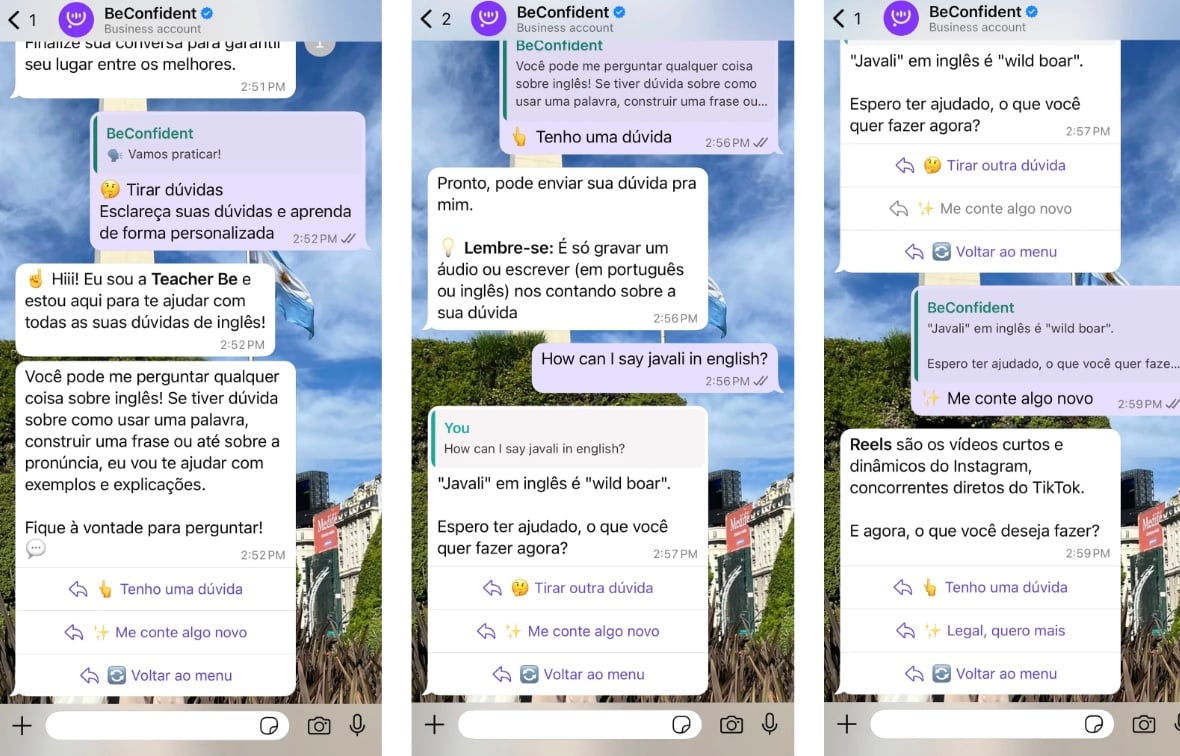
4. Use AI for practice without judgment: BeConfident offers tutors with diverse personalities and accents, available 24/7 on the app, on WhatsApp, or on your smartwatch. This availability allows you to practice whenever you want, without the embarrassment of making mistakes in front of others.
5. Focus on everyday topics: practice real scenarios like work presentations, travel conversations, or discussing hobbies. The relevance of the topics increases motivation and facilitates vocabulary retention.
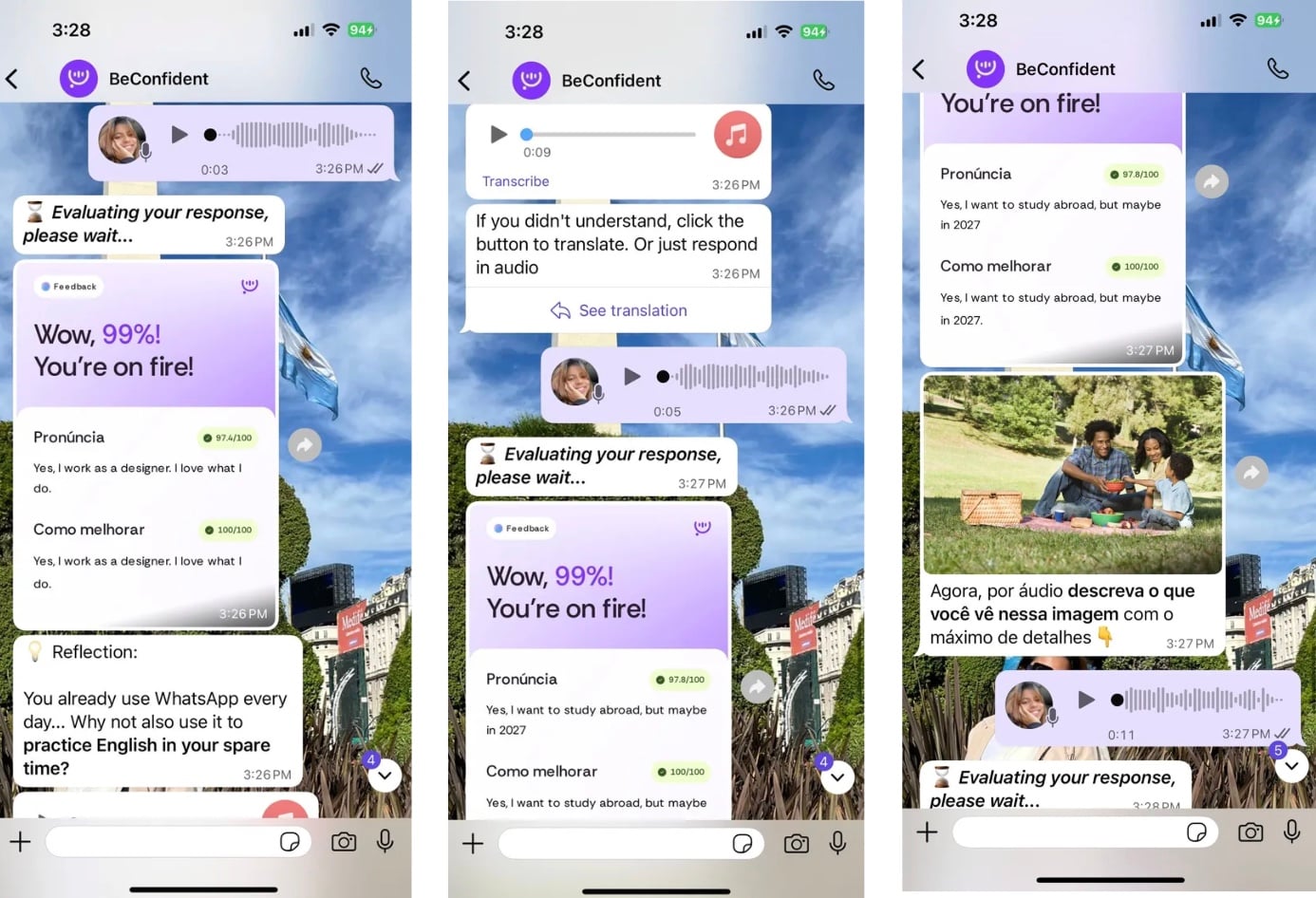
6. Receive instant feedback: AI tools provide insights on fluency, pronunciation, and grammar. This quick feedback accelerates corrections and prevents mistakes from becoming habits.
7. Keep daily streaks: consistency usually beats marathons. Short, daily practices yield more progress than long, sporadic sessions. This regularity becomes even stronger when you organize what you have learned.
8. Systematically review mistakes: during your daily practice, write down error patterns in grammar, pronunciation, or vocabulary. Active review transforms weak points into strong points and makes each session more efficient.
9. Simulate specific scenarios: simulate meetings, interviews, or travel situations. These role-plays prepare you for real contexts with less anxiety, as the brain already recognizes the type of situation.
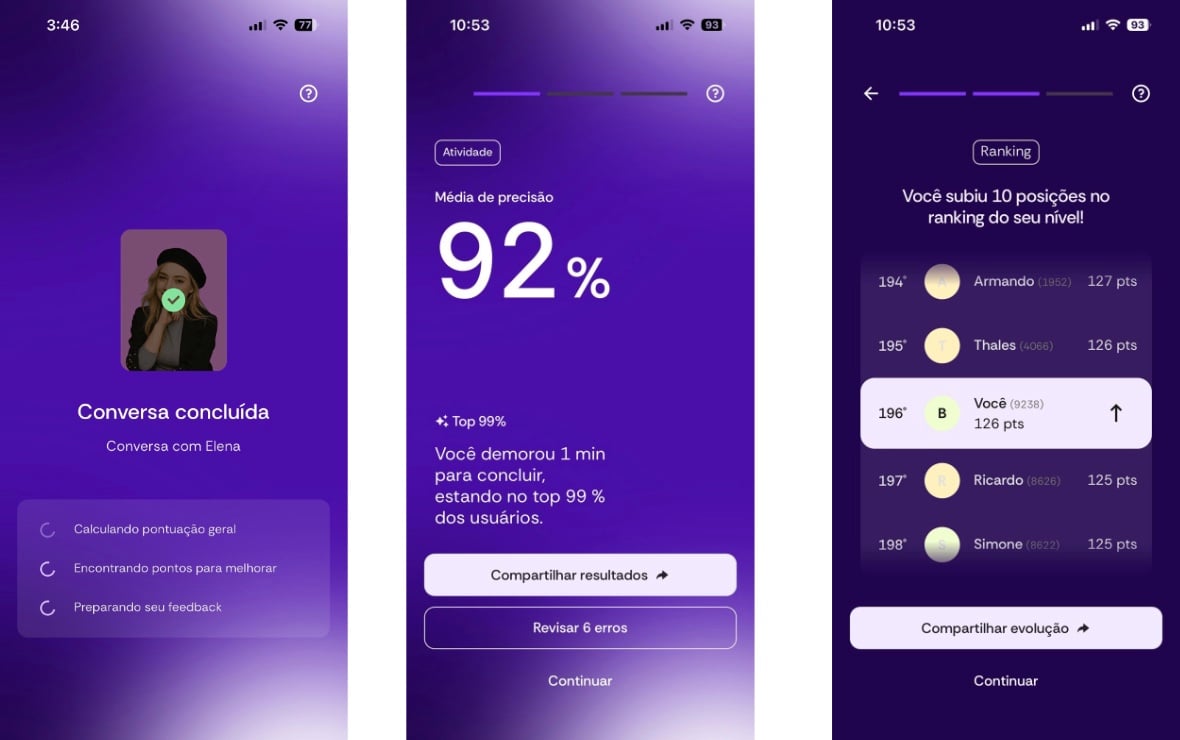
10. Monitor your evolution: track practice time, topics you have mastered, and feedback received. Visualizing progress increases motivation and reduces the feeling of insecurity.
Start your unlimited practice with BeConfident and see results in just a few weeks. Try it for free.
Why is practice with AI like BeConfident superior?
Method | Real speaking (real conversation) | Cost/accessibility | Results |
|---|---|---|---|
Traditional schools | Low, few minutes per class | High, fixed schedule | Slow, with embarrassment |
Duolingo | None, gamified, no real speaking | Cheap, but empty streaks | No conversational fluency |
Cambly | Medium, highly variable human quality | Hourly, expensive | Inconsistent results |
BeConfident | High, 24/7 AI with multiple accents | Unlimited, affordable | Fast progress, with 200 thousand paying students |
BeConfident has 3 million total users and an RA 1000 reputation on Reclame Aqui. Out of these users, 200 thousand are paying students, which reinforces the effectiveness of the platform.
7-day practical plan to unlock your speaking
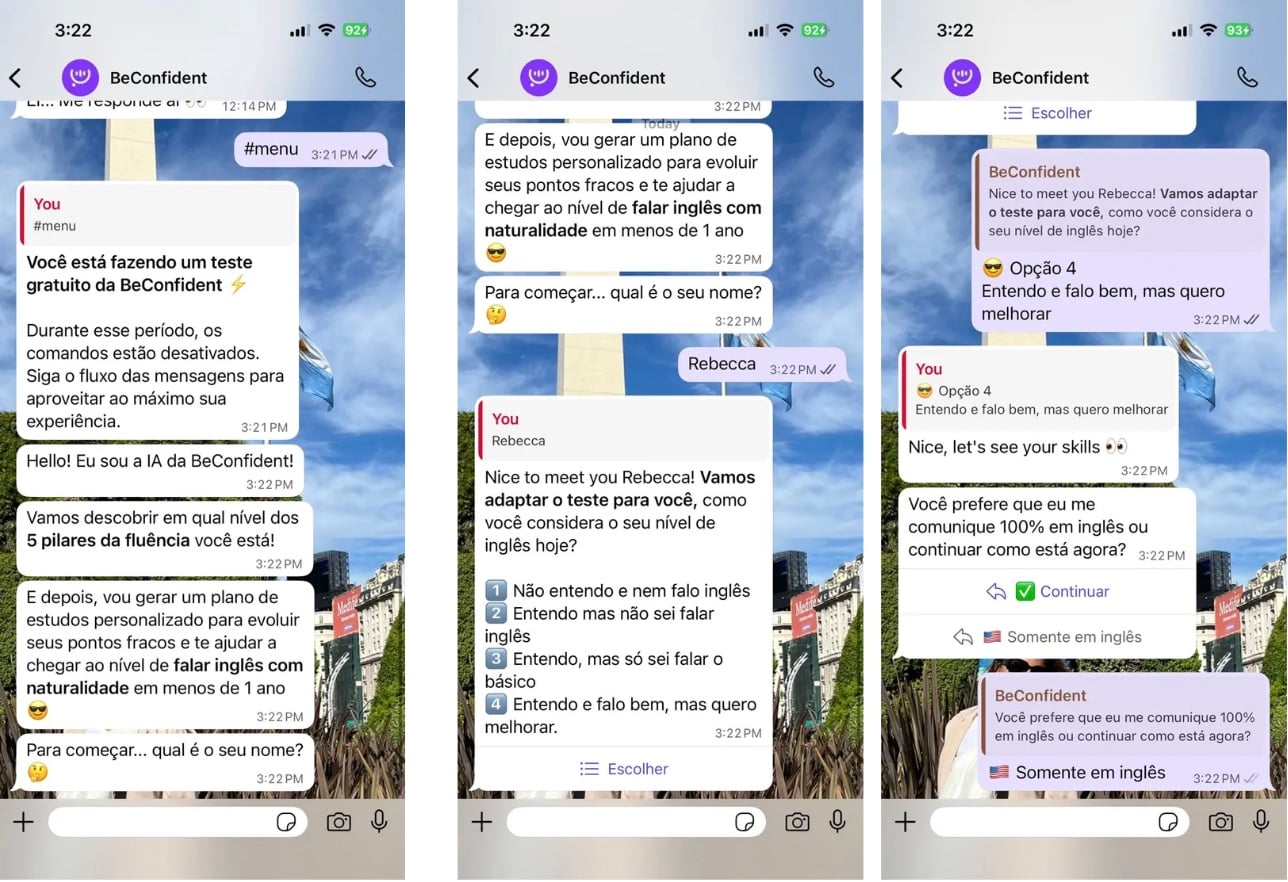
Day 1: take the free BeConfident test and identify your CEFR level. Then, record a 2-minute audio about your goals with English.
Day 2: practice shadowing for 15 minutes with an English podcast. Afterwards, talk to yourself about your morning routine, using expressions you just heard.
Day 3: chat with a BeConfident AI tutor about your job. Record the feedback received and highlight the main areas for improvement.
Day 4: use the previous day's feedback to focus on specific points. Simulate a travel scenario, like an airport or hotel, and review the pronunciation errors you identified.
Day 5: practice a 3-minute professional presentation. Use technical vocabulary from your field and, if possible, record the presentation to compare with future practices.
Day 6: talk about hobbies with a tutor who has a different accent, like British or Australian. Take the opportunity to expand your personal vocabulary on topics you enjoy.
Day 7: simulate a complete meeting or a longer casual conversation. Compare this recording with the audio from Day 1 to notice the development in fluency and confidence.
Consistency beats intensity, so it is worth keeping the habit after the 7 days to achieve lasting results.
Frequently Asked Questions
How long does it take to stop feeling embarrassed to speak English?
With a daily practice of 15 to 20 minutes, most students notice an improvement in confidence within 2 to 3 weeks. Full fluency usually takes 6 months to 2 years, depending on the starting level and consistency. BeConfident accelerates this process by offering instant feedback and unlimited practice.
Does AI practice work for speaking at work?
Yes, it does. BeConfident offers specialized tutors for professional contexts. You can practice presentations, meetings, negotiations, and technical vocabulary specific to your field. Many users report an increase in confidence in corporate situations after just a few weeks of use.
Is BeConfident free?
BeConfident offers a full free trial where you can evaluate your English level and experience conversations with AI tutors. After the free period, there are affordable plans for unlimited practice via app, WhatsApp, or smartwatch.
What is the difference between BeConfident and Duolingo?
Duolingo focuses on gamification and basic vocabulary exercises, without real conversation practice. BeConfident specializes in fluent speaking through natural conversations with AI and offers detailed feedback on pronunciation, grammar, and fluency.
How to unlock speaking quickly?
You can combine the 10 steps presented: accept mistakes, practice shadowing, use AI without judgment, maintain daily consistency, and focus on relevant scenarios. The key is to practice frequently in a safe environment, such as the one BeConfident offers.
Conclusion
The embarrassment of speaking English holds back many Brazilians at an intermediate level, but you can overcome this barrier with practical techniques and consistent practice. The 10 steps presented, combined with AI technology like BeConfident, reduce the fear of judgment and accelerate the development of conversational fluency. With the user base mentioned earlier, BeConfident offers a structured environment to unlock your speaking (conversation) without feeling embarrassed.
Download BeConfident and take the next step in your speaking today. Try it for free now.
Written by: Luan Cavallaro, Founder & CMO, BeConfident
Key takeaways from this article
The embarrassment of speaking English stems from the fear of judgment and a lack of real practice, but you can overcome this barrier by accepting mistakes as a natural part of learning.
Daily practices such as recording audio, shadowing with podcasts, and simulating real-life scenarios build confidence without external pressure.
AI offers unlimited 24/7 practice with instant feedback, which reduces the embarrassment of making mistakes in front of other people.
Consistency in daily streaks and systematic review of mistakes accelerates conversational fluency in just a few weeks.
BeConfident outperforms traditional methods by providing affordable and effective AI tutors for professional and personal speaking: try for free now.
Causes of embarrassment when speaking English and how to overcome it
The embarrassment of speaking English usually arises from automatic thoughts like "they're going to laugh at me" or "I'm going to look stupid" in situations of social anxiety.
The fear of judgment due to a Brazilian accent or grammatical errors paralyzes even competent professionals. The lack of real practice worsens the problem, as many traditional schools offer only a few minutes of conversation per class.
These difficulties appear in different daily contexts and impact both professional and personal life.
Professionals in meetings
Engineers, lawyers, and managers generally master the technical content, but freeze when presenting in English. The formal environment increases the pressure for perfection and reinforces the fear of making mistakes in front of colleagues and leaders.
Travelers in airports
Practical situations such as check-in, immigration, or ordering at restaurants generate anxiety because they are unpredictable and have real consequences, like missing a flight or failing to get a reservation.
Personal goals
Watching series without subtitles or chatting with foreigners becomes frustrating when embarrassment gets in the way of natural practice. The student understands, but avoids speaking and feels constantly "stuck."
BeConfident reduces these barriers by offering practice with AI tutors that eliminate human judgment and allow you to make mistakes without feeling embarrassed.
How to stop feeling embarrassed to speak English (conversation): 10 simple steps
1. Accept mistakes as a natural part of learning: accepting that you will stutter and get words wrong, an approach known as "embrace the mumble," helps break the perfectionism that paralyzes.
2. Record daily 2-to-3-minute audios: talk about your day, plans, or opinions. Hearing your own voice in English reduces the strangeness and helps identify areas for improvement without external pressure.
3. Practice shadowing with podcasts: shadowing means listening to a sentence in English and repeating it out loud immediately after, mimicking rhythm, intonation, and pronunciation. Dedicating a significant portion of time to this type of practice strengthens speaking muscles and builds confidence in a safe environment.
4. Use AI for practice without judgment: BeConfident offers tutors with diverse personalities and accents, available 24/7 on the app, on WhatsApp, or on your smartwatch. This availability allows you to practice whenever you want, without the embarrassment of making mistakes in front of others.
5. Focus on everyday topics: practice real scenarios like work presentations, travel conversations, or discussing hobbies. The relevance of the topics increases motivation and facilitates vocabulary retention.
6. Receive instant feedback: AI tools provide insights on fluency, pronunciation, and grammar. This quick feedback accelerates corrections and prevents mistakes from becoming habits.
7. Keep daily streaks: consistency usually beats marathons. Short, daily practices yield more progress than long, sporadic sessions. This regularity becomes even stronger when you organize what you have learned.
8. Systematically review mistakes: during your daily practice, write down error patterns in grammar, pronunciation, or vocabulary. Active review transforms weak points into strong points and makes each session more efficient.
9. Simulate specific scenarios: simulate meetings, interviews, or travel situations. These role-plays prepare you for real contexts with less anxiety, as the brain already recognizes the type of situation.
10. Monitor your evolution: track practice time, topics you have mastered, and feedback received. Visualizing progress increases motivation and reduces the feeling of insecurity.
Start your unlimited practice with BeConfident and see results in just a few weeks. Try it for free.
Why is practice with AI like BeConfident superior?
Method | Real speaking (real conversation) | Cost/accessibility | Results |
|---|---|---|---|
Traditional schools | Low, few minutes per class | High, fixed schedule | Slow, with embarrassment |
Duolingo | None, gamified, no real speaking | Cheap, but empty streaks | No conversational fluency |
Cambly | Medium, highly variable human quality | Hourly, expensive | Inconsistent results |
BeConfident | High, 24/7 AI with multiple accents | Unlimited, affordable | Fast progress, with 200 thousand paying students |
BeConfident has 3 million total users and an RA 1000 reputation on Reclame Aqui. Out of these users, 200 thousand are paying students, which reinforces the effectiveness of the platform.
7-day practical plan to unlock your speaking
Day 1: take the free BeConfident test and identify your CEFR level. Then, record a 2-minute audio about your goals with English.
Day 2: practice shadowing for 15 minutes with an English podcast. Afterwards, talk to yourself about your morning routine, using expressions you just heard.
Day 3: chat with a BeConfident AI tutor about your job. Record the feedback received and highlight the main areas for improvement.
Day 4: use the previous day's feedback to focus on specific points. Simulate a travel scenario, like an airport or hotel, and review the pronunciation errors you identified.
Day 5: practice a 3-minute professional presentation. Use technical vocabulary from your field and, if possible, record the presentation to compare with future practices.
Day 6: talk about hobbies with a tutor who has a different accent, like British or Australian. Take the opportunity to expand your personal vocabulary on topics you enjoy.
Day 7: simulate a complete meeting or a longer casual conversation. Compare this recording with the audio from Day 1 to notice the development in fluency and confidence.
Consistency beats intensity, so it is worth keeping the habit after the 7 days to achieve lasting results.
Frequently Asked Questions
How long does it take to stop feeling embarrassed to speak English?
With a daily practice of 15 to 20 minutes, most students notice an improvement in confidence within 2 to 3 weeks. Full fluency usually takes 6 months to 2 years, depending on the starting level and consistency. BeConfident accelerates this process by offering instant feedback and unlimited practice.
Does AI practice work for speaking at work?
Yes, it does. BeConfident offers specialized tutors for professional contexts. You can practice presentations, meetings, negotiations, and technical vocabulary specific to your field. Many users report an increase in confidence in corporate situations after just a few weeks of use.
Is BeConfident free?
BeConfident offers a full free trial where you can evaluate your English level and experience conversations with AI tutors. After the free period, there are affordable plans for unlimited practice via app, WhatsApp, or smartwatch.
What is the difference between BeConfident and Duolingo?
Duolingo focuses on gamification and basic vocabulary exercises, without real conversation practice. BeConfident specializes in fluent speaking through natural conversations with AI and offers detailed feedback on pronunciation, grammar, and fluency.
How to unlock speaking quickly?
You can combine the 10 steps presented: accept mistakes, practice shadowing, use AI without judgment, maintain daily consistency, and focus on relevant scenarios. The key is to practice frequently in a safe environment, such as the one BeConfident offers.
Conclusion
The embarrassment of speaking English holds back many Brazilians at an intermediate level, but you can overcome this barrier with practical techniques and consistent practice. The 10 steps presented, combined with AI technology like BeConfident, reduce the fear of judgment and accelerate the development of conversational fluency. With the user base mentioned earlier, BeConfident offers a structured environment to unlock your speaking (conversation) without feeling embarrassed.
Download BeConfident and take the next step in your speaking today. Try it for free now.