




Why do I feel so embarrassed to speak English? 5 reasons
Why do I feel so embarrassed to speak English? 5 reasons
Why do I feel so embarrassed to speak English? 5 reasons
Written by: Luan Cavallaro, Founder & CMO, BeConfident
Key takeaways from this article
The embarrassment of speaking English stems from perfectionism, a lack of real practice, classroom traumas, comparison with native speakers, and Brazilian cultural pressure.
Traditional methods such as schools, Duolingo, and human tutors fail because they create judgment and do not prioritize flexible conversation.
AI practice reduces fear by offering instant feedback without judgment, available 24/7 via app or WhatsApp.
With 30 to 60 minutes of daily conversation, it is possible to achieve B1 fluency in 350 to 400 hours and B2 in 600 to 800 hours, provided there is consistency.
Overcome your anxiety now with BeConfident: access your free CEFR level test.
5 main psychological reasons that explain the embarrassment of speaking English
Understanding why you feel embarrassed is the first step to overcoming this block. The five most common psychological causes are as follows:
Perfectionism and fear of making mistakes: Brazilians tend to seek perfection before speaking, which creates a mental barrier that prevents natural practice. The fear of making mistakes paralyzes conversation.
Lack of real conversational practice: years of grammatical theory without speaking opportunities create a gap between theoretical knowledge and practical skill. This mismatch breeds insecurity.
Trauma from classroom experiences: memories of laughter, public corrections, or comparisons with classmates create lasting negative associations with the act of speaking English.
Constant comparison with native speakers: the pressure to sound like a native speaker, including target perfect pronunciation, increases anxiety and reinforces feelings of inadequacy.
Brazilian cultural pressure: national culture values modesty and often discourages attempts that look like "showboating." This pressure creates internal resistance to using English.
Identifying your biggest block helps direct your practice. The vast majority of Brazilians experience some level of anxiety when speaking English, making this experience common and conquerable.
Now that you understand the psychological causes of the embarrassment, it is worth analyzing why traditional teaching methods often reinforce these blocks instead of resolving them.
Why do traditional methods fail?
Traditional schools, gamified apps, and human tutors frequently intensify embarrassment instead of eliminating it. Schools exemplify this problem with fixed hours and group environments that create additional pressure.
Apps like Duolingo take a different approach, but still limited, as they focus on gamification without developing real conversation. Even human tutors, although they offer speaking practice, can be expensive and generate judgment anxiety.
The table below compares how each method stands on three critical points to overcome embarrassment: schedule flexibility, the relationship between cost and judgment, and a proven reputation user base.
Method | Flexibility | Cost and judgment | Users and reputation |
|---|---|---|---|
Traditional schools | Fixed hours | High cost, classmates judge | N/A |
Duolingo | App 24/7 | Low cost, no conversation | Large user base, focused on streaks |
Cambly and Italki | By appointment | High hourly cost, variable experience | N/A |
BeConfident | App and WhatsApp 24/7 | Fraction of the cost, no human judgment | 200 thousand paying and 3 million total users, RA1000 |
If traditional methods create embarrassment because of judgment, rigid hours, and high costs, artificial intelligence offers the opposite. AI creates a judgment-free environment, available all the time and at a more affordable cost.
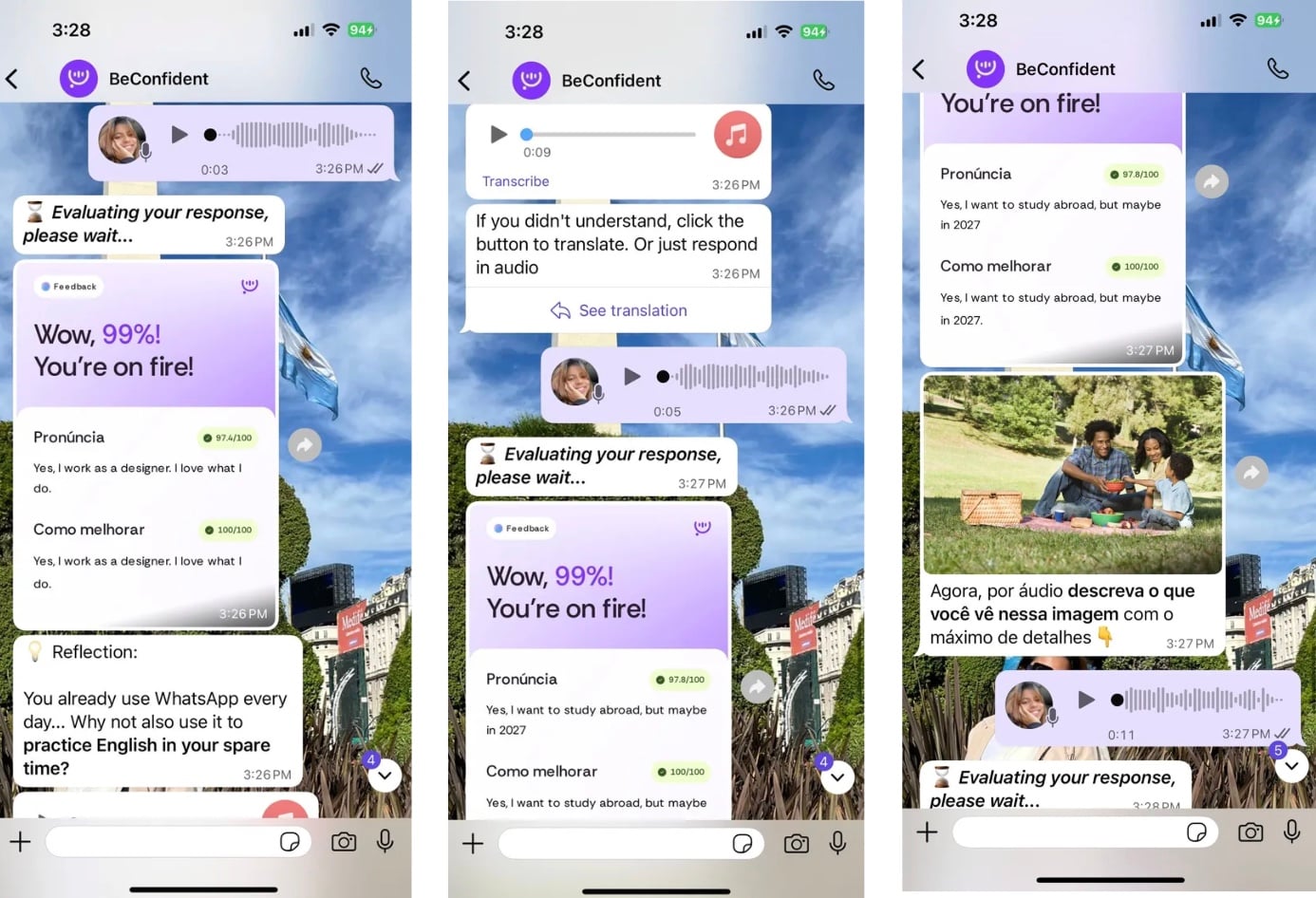
How to stop feeling embarrassed to speak English with AI (7 steps)
Artificial intelligence changes the way we learn by reducing the impact of human judgment. You can follow these 7 steps with BeConfident to unlock conversation:
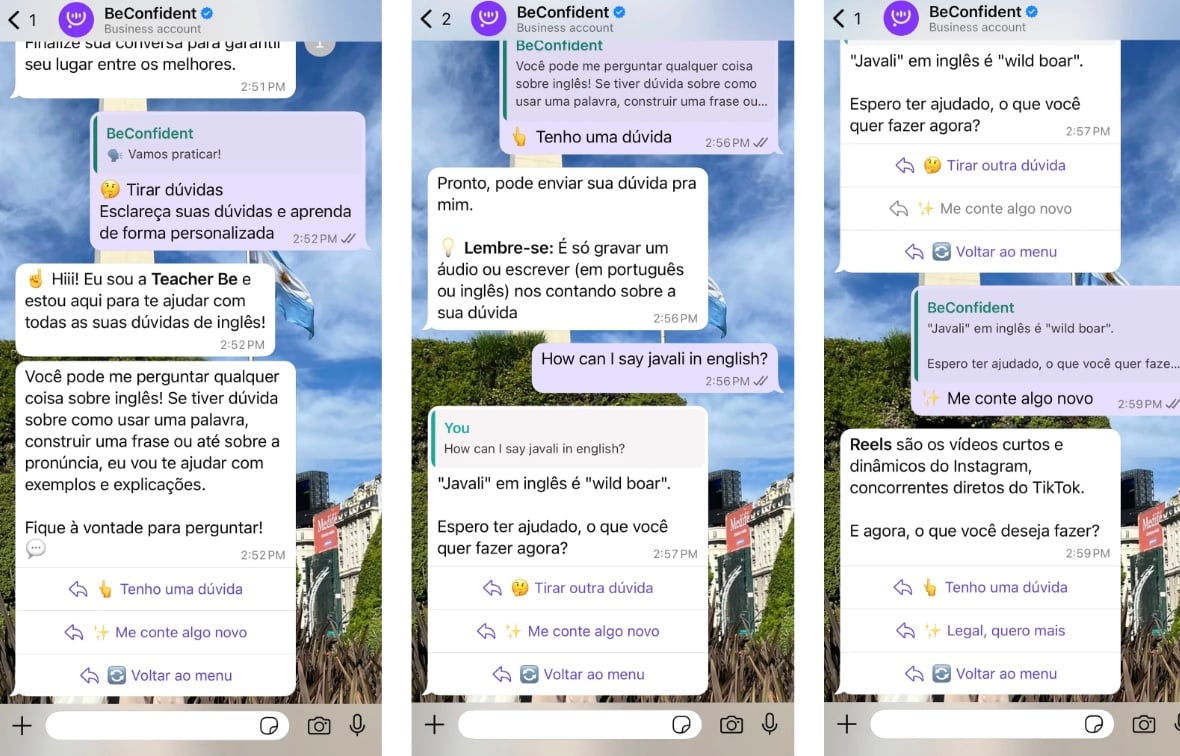
Take the free CEFR test: identify your current level and receive a personalized analysis of points to develop.
Choose your AI tutor: select from different personalities and accents, such as American, British, or Australian, according to your goals.
Practice by app or WhatsApp: converse via text, audio, or simulated calls and integrate practice into your daily routine.
Receive instant feedback: allow AI to correct mistakes immediately, without judgment, focusing on grammar, pronunciation, and naturalness.
Follow structured pathways: use modules focused on applied pronunciation that combine theory with immediate conversational practice.
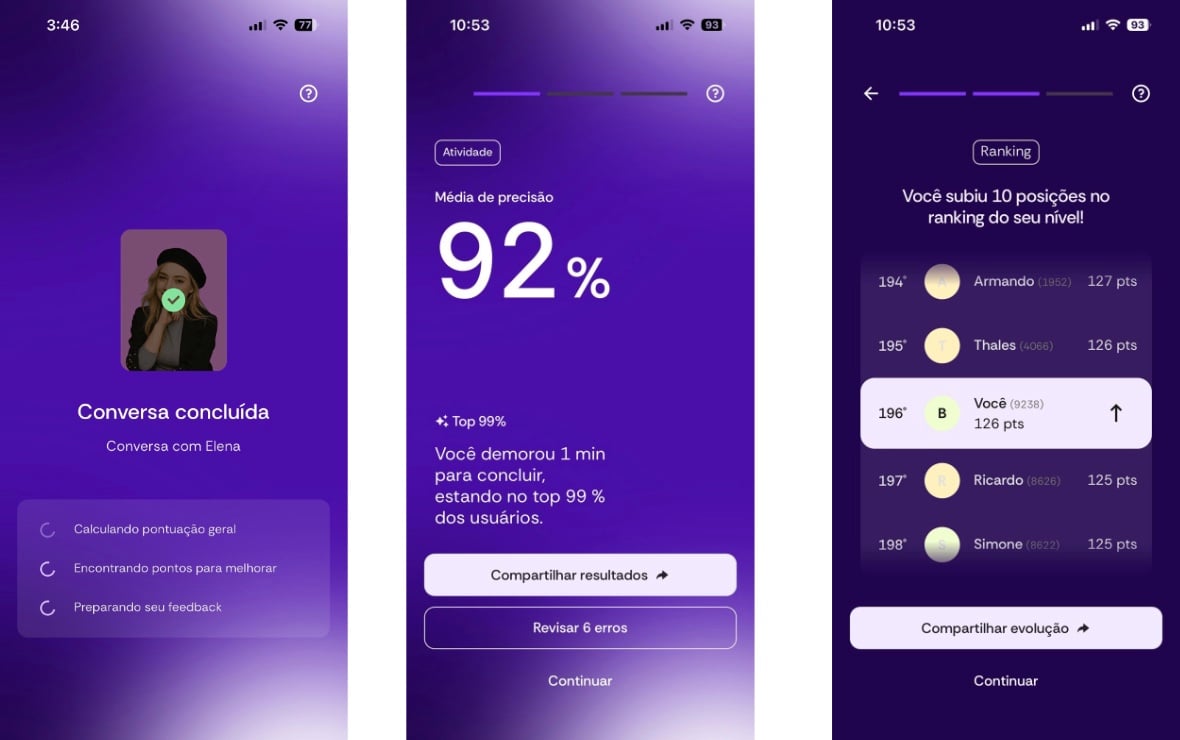
Review mistakes 24/7: access feedback history and practice specific points as many times as necessary.
Track your progress: monitor consecutive practice days, hours of conversation, and position in an evolution list.
BeConfident adapts the experience to your context. An engineer can focus on technical vocabulary, a traveler can prioritize idioms and slang, and those with personal goals can work on daily situations. Experience judgment-free conversation now and feel the difference of practicing without feeling embarrassed.
How long does it take to speak fluently?
Having a realistic expectation of time reduces anxiety and helps maintain consistency. With consistent daily practice, conversational fluency at the B2 level requires 600 to 800 hours of study. To reach the B1 level of conversational independence, the required volume is around 350 to 400 cumulative hours.
The key is to keep regular consistency and prioritize conversation from day one, rather than staying only on grammar theory.
Frequently asked questions
How to lose the embarrassment of speaking English quickly?
The most effective way involves daily practice in a judgment-free environment. Artificial intelligence helps create this safe space, where you can make mistakes, repeat, and test sentences as many times as you need. BeConfident offers unlimited 24/7 conversation, allowing you to practice without feeling embarrassed and with instant and personalized feedback, until speaking English becomes natural.
Can someone with ADHD learn English?
People with ADHD can learn English effectively when they find a flexible format. BeConfident’s flexibility favors different attention styles, as you can practice in short sessions during moments of high focus, pause when necessary, and resume at any time. The conversation dynamic with AI keeps you engaged without overwhelming you.
Is it possible to become fluent in English in 1 year?
This goal is possible, but it requires intense dedication. As previously mentioned, reaching the B2 level usually requires 600 to 800 hours of focused practice. With about 2 hours daily well-directed, you can reach this level in approximately 12 to 16 months. Consistency and focus on conversation from the beginning increase the chances of getting there faster.
BeConfident contributes to this process by offering unlimited and affordable conversational practice.
What is the difference between BeConfident and Cambly?
BeConfident offers unlimited conversation with AI for a fraction of the cost of human tutors per hour. While Cambly depends on scheduling and payment per session, BeConfident is available 24/7 via app, WhatsApp, or smartwatch. You practice without time pressure or human judgment and receive consistent, personalized feedback.
What is the ideal daily practice to lose the embarrassment?
An effective routine includes 30 to 60 minutes of active conversation daily. You can break this time down into smaller sessions throughout the day. The BeConfident app, WhatsApp, or smartwatch allow you to integrate practice into your routine, such as whilst cooking, walking, or enjoying open breaks. Daily regularity yields better results than long, sporadic sessions.
Why do I struggle so much to learn English?
The main cause is usually the lack of real conversational practice. Traditional methods focus too much on grammar theory and too little on speaking, which creates passive knowledge that does not translate into active fluency. Prioritizing conversation from the beginning, as BeConfident proposes, helps turn what you know into spontaneous speech.
Embarrassment about speaking English is a common and conquerable experience. With proper conversational practice supported by artificial intelligence, you reduce the weight of judgment and build confidence gradually. Start your embarrassment-free journey today with BeConfident and consistently change your relationship with English.
Written by: Luan Cavallaro, Founder & CMO, BeConfident
Key takeaways from this article
The embarrassment of speaking English stems from perfectionism, a lack of real practice, classroom traumas, comparison with native speakers, and Brazilian cultural pressure.
Traditional methods such as schools, Duolingo, and human tutors fail because they create judgment and do not prioritize flexible conversation.
AI practice reduces fear by offering instant feedback without judgment, available 24/7 via app or WhatsApp.
With 30 to 60 minutes of daily conversation, it is possible to achieve B1 fluency in 350 to 400 hours and B2 in 600 to 800 hours, provided there is consistency.
Overcome your anxiety now with BeConfident: access your free CEFR level test.
5 main psychological reasons that explain the embarrassment of speaking English
Understanding why you feel embarrassed is the first step to overcoming this block. The five most common psychological causes are as follows:
Perfectionism and fear of making mistakes: Brazilians tend to seek perfection before speaking, which creates a mental barrier that prevents natural practice. The fear of making mistakes paralyzes conversation.
Lack of real conversational practice: years of grammatical theory without speaking opportunities create a gap between theoretical knowledge and practical skill. This mismatch breeds insecurity.
Trauma from classroom experiences: memories of laughter, public corrections, or comparisons with classmates create lasting negative associations with the act of speaking English.
Constant comparison with native speakers: the pressure to sound like a native speaker, including target perfect pronunciation, increases anxiety and reinforces feelings of inadequacy.
Brazilian cultural pressure: national culture values modesty and often discourages attempts that look like "showboating." This pressure creates internal resistance to using English.
Identifying your biggest block helps direct your practice. The vast majority of Brazilians experience some level of anxiety when speaking English, making this experience common and conquerable.
Now that you understand the psychological causes of the embarrassment, it is worth analyzing why traditional teaching methods often reinforce these blocks instead of resolving them.
Why do traditional methods fail?
Traditional schools, gamified apps, and human tutors frequently intensify embarrassment instead of eliminating it. Schools exemplify this problem with fixed hours and group environments that create additional pressure.
Apps like Duolingo take a different approach, but still limited, as they focus on gamification without developing real conversation. Even human tutors, although they offer speaking practice, can be expensive and generate judgment anxiety.
The table below compares how each method stands on three critical points to overcome embarrassment: schedule flexibility, the relationship between cost and judgment, and a proven reputation user base.
Method | Flexibility | Cost and judgment | Users and reputation |
|---|---|---|---|
Traditional schools | Fixed hours | High cost, classmates judge | N/A |
Duolingo | App 24/7 | Low cost, no conversation | Large user base, focused on streaks |
Cambly and Italki | By appointment | High hourly cost, variable experience | N/A |
BeConfident | App and WhatsApp 24/7 | Fraction of the cost, no human judgment | 200 thousand paying and 3 million total users, RA1000 |
If traditional methods create embarrassment because of judgment, rigid hours, and high costs, artificial intelligence offers the opposite. AI creates a judgment-free environment, available all the time and at a more affordable cost.
How to stop feeling embarrassed to speak English with AI (7 steps)
Artificial intelligence changes the way we learn by reducing the impact of human judgment. You can follow these 7 steps with BeConfident to unlock conversation:
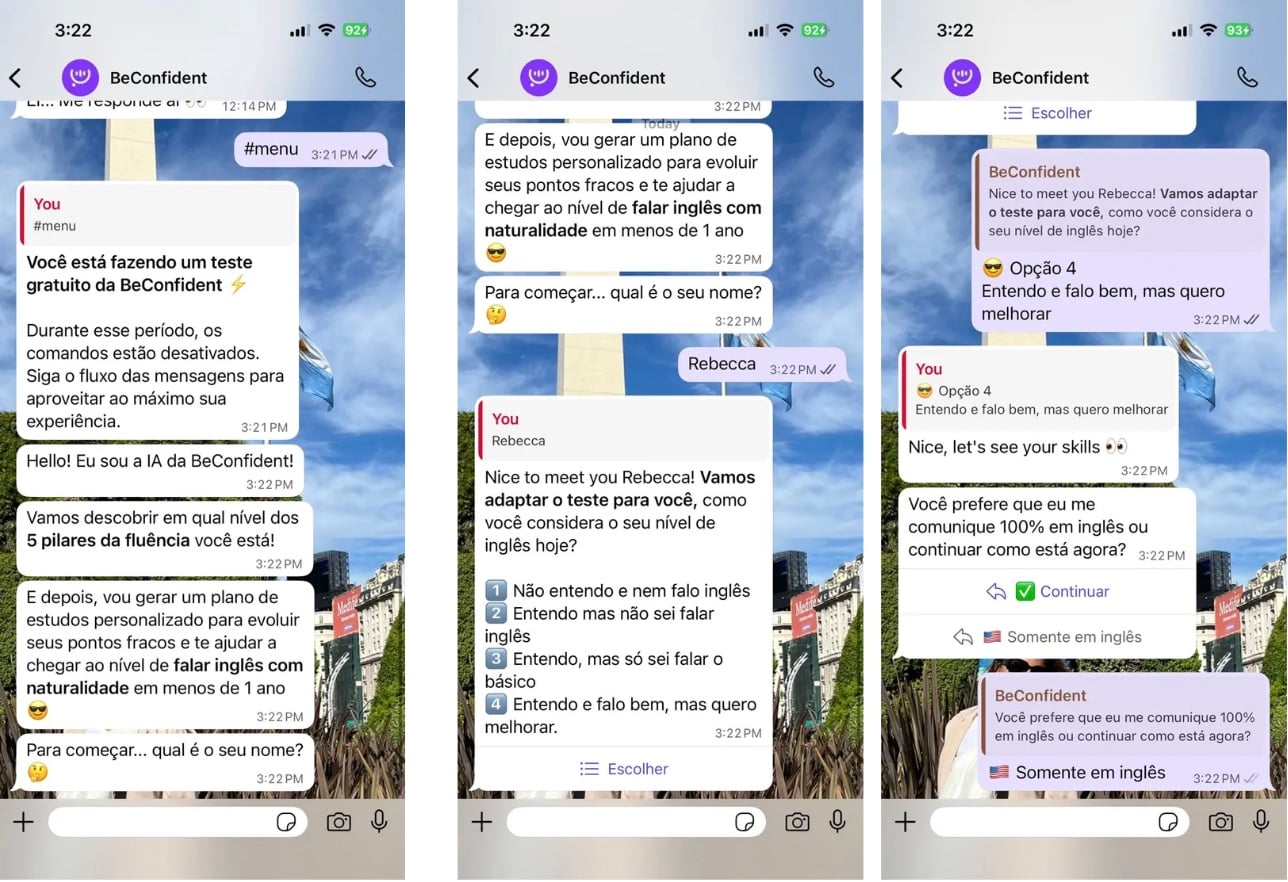
Take the free CEFR test: identify your current level and receive a personalized analysis of points to develop.
Choose your AI tutor: select from different personalities and accents, such as American, British, or Australian, according to your goals.
Practice by app or WhatsApp: converse via text, audio, or simulated calls and integrate practice into your daily routine.
Receive instant feedback: allow AI to correct mistakes immediately, without judgment, focusing on grammar, pronunciation, and naturalness.
Follow structured pathways: use modules focused on applied pronunciation that combine theory with immediate conversational practice.
Review mistakes 24/7: access feedback history and practice specific points as many times as necessary.
Track your progress: monitor consecutive practice days, hours of conversation, and position in an evolution list.
BeConfident adapts the experience to your context. An engineer can focus on technical vocabulary, a traveler can prioritize idioms and slang, and those with personal goals can work on daily situations. Experience judgment-free conversation now and feel the difference of practicing without feeling embarrassed.
How long does it take to speak fluently?
Having a realistic expectation of time reduces anxiety and helps maintain consistency. With consistent daily practice, conversational fluency at the B2 level requires 600 to 800 hours of study. To reach the B1 level of conversational independence, the required volume is around 350 to 400 cumulative hours.
The key is to keep regular consistency and prioritize conversation from day one, rather than staying only on grammar theory.
Frequently asked questions
How to lose the embarrassment of speaking English quickly?
The most effective way involves daily practice in a judgment-free environment. Artificial intelligence helps create this safe space, where you can make mistakes, repeat, and test sentences as many times as you need. BeConfident offers unlimited 24/7 conversation, allowing you to practice without feeling embarrassed and with instant and personalized feedback, until speaking English becomes natural.
Can someone with ADHD learn English?
People with ADHD can learn English effectively when they find a flexible format. BeConfident’s flexibility favors different attention styles, as you can practice in short sessions during moments of high focus, pause when necessary, and resume at any time. The conversation dynamic with AI keeps you engaged without overwhelming you.
Is it possible to become fluent in English in 1 year?
This goal is possible, but it requires intense dedication. As previously mentioned, reaching the B2 level usually requires 600 to 800 hours of focused practice. With about 2 hours daily well-directed, you can reach this level in approximately 12 to 16 months. Consistency and focus on conversation from the beginning increase the chances of getting there faster.
BeConfident contributes to this process by offering unlimited and affordable conversational practice.
What is the difference between BeConfident and Cambly?
BeConfident offers unlimited conversation with AI for a fraction of the cost of human tutors per hour. While Cambly depends on scheduling and payment per session, BeConfident is available 24/7 via app, WhatsApp, or smartwatch. You practice without time pressure or human judgment and receive consistent, personalized feedback.
What is the ideal daily practice to lose the embarrassment?
An effective routine includes 30 to 60 minutes of active conversation daily. You can break this time down into smaller sessions throughout the day. The BeConfident app, WhatsApp, or smartwatch allow you to integrate practice into your routine, such as whilst cooking, walking, or enjoying open breaks. Daily regularity yields better results than long, sporadic sessions.
Why do I struggle so much to learn English?
The main cause is usually the lack of real conversational practice. Traditional methods focus too much on grammar theory and too little on speaking, which creates passive knowledge that does not translate into active fluency. Prioritizing conversation from the beginning, as BeConfident proposes, helps turn what you know into spontaneous speech.
Embarrassment about speaking English is a common and conquerable experience. With proper conversational practice supported by artificial intelligence, you reduce the weight of judgment and build confidence gradually. Start your embarrassment-free journey today with BeConfident and consistently change your relationship with English.