




How to practice English conversation alone: 15 ways
How to practice English conversation alone: 15 ways
How to practice English conversation alone: 15 ways
Written by: Luan Cavallaro, Founder & CMO, BeConfident
Key takeaways from this article
Practicing English conversation alone is viable with 15 minutes daily, using techniques like monologues, shadowing, and recordings to consistently gain fluency.
AI apps like BeConfident outperform traditional methods, as they offer personalized practice 24/7 with real-time feedback on pronunciation and grammar.
Maintaining daily consistency generates better results than sporadic long sessions, and using streaks and progress metrics accelerates advancement through CEFR levels.
Avoiding mistakes like skipping error reviews or prioritizing grammatical perfection helps focus on natural communication and continuous self-assessment.
For results proven by 200,000 students, test BeConfident for free now: join the 200,000 students who have already grown.
Before you start: what you need to know
To take advantage of these techniques, you need to have an intermediate level (B1-B2), access to a cell phone or computer with internet, and a willingness to practice 15 to 30 minutes a day. Focused daily practice helps you advance through CEFR levels over time and is usually more effective than sporadic long sessions.
Common mistakes are skipping the review of your own errors and neglecting pronunciation. They happen when students prioritize grammatical perfection from the start.
Fluency comes before flawless grammar. When you focus on communicating naturally first, you can adjust grammatical details later without freezing during the conversation.
With this mindset established, it is worth moving on to the practical techniques you can apply immediately.
12 best ways to practice English conversation alone
1. Talking to yourself (daily monologues)
Narrating everyday actions in English as you perform them creates automatic response. This type of practice trains the brain to think in English more directly. Set aside 5 to 10 minutes daily to describe what you see, feel, or plan to do.
2. Shadowing with podcasts
Shadowing, or simultaneous repetition, consists of repeating what native speakers say at the same time, which trains mouth muscles and helps internalize the natural flow of speech. Choose a podcast or short video of 2 to 3 minutes, pause after each sentence, and repeat, imitating rhythm, intonation, and pronunciation. Focus on the "music" of the language, not on complete comprehension of every single word.
3. Record and self-evaluate audios
Recording daily 60-second audios on your cell phone talking about your day or a specific topic allows you to identify patterns. Then, listen to it once and choose just one area to improve, such as clarity, rhythm, or pronunciation.
4. Social apps for exchange
Apps like HelloTalk and Tandem connect you with native speakers, but the quality of interactions varies and depends on partner availability. These apps work best as a complement, not as a main method, because practice tends to be sporadic and lacks a clear pedagogical structure.
5. BeConfident: AI app for personalized conversation
BeConfident offers solo practice with AI tutors simulating native accents, such as American, British, and Australian, and specific personalities, such as a photographer, lawyer, or writer. You can converse via the app, WhatsApp, or smartwatch, receiving corrections in real time without feeling embarrassed. With 200,000 paying students and 3 million total users, the platform offers unlimited 24/7 practice tailored to your interests and level.
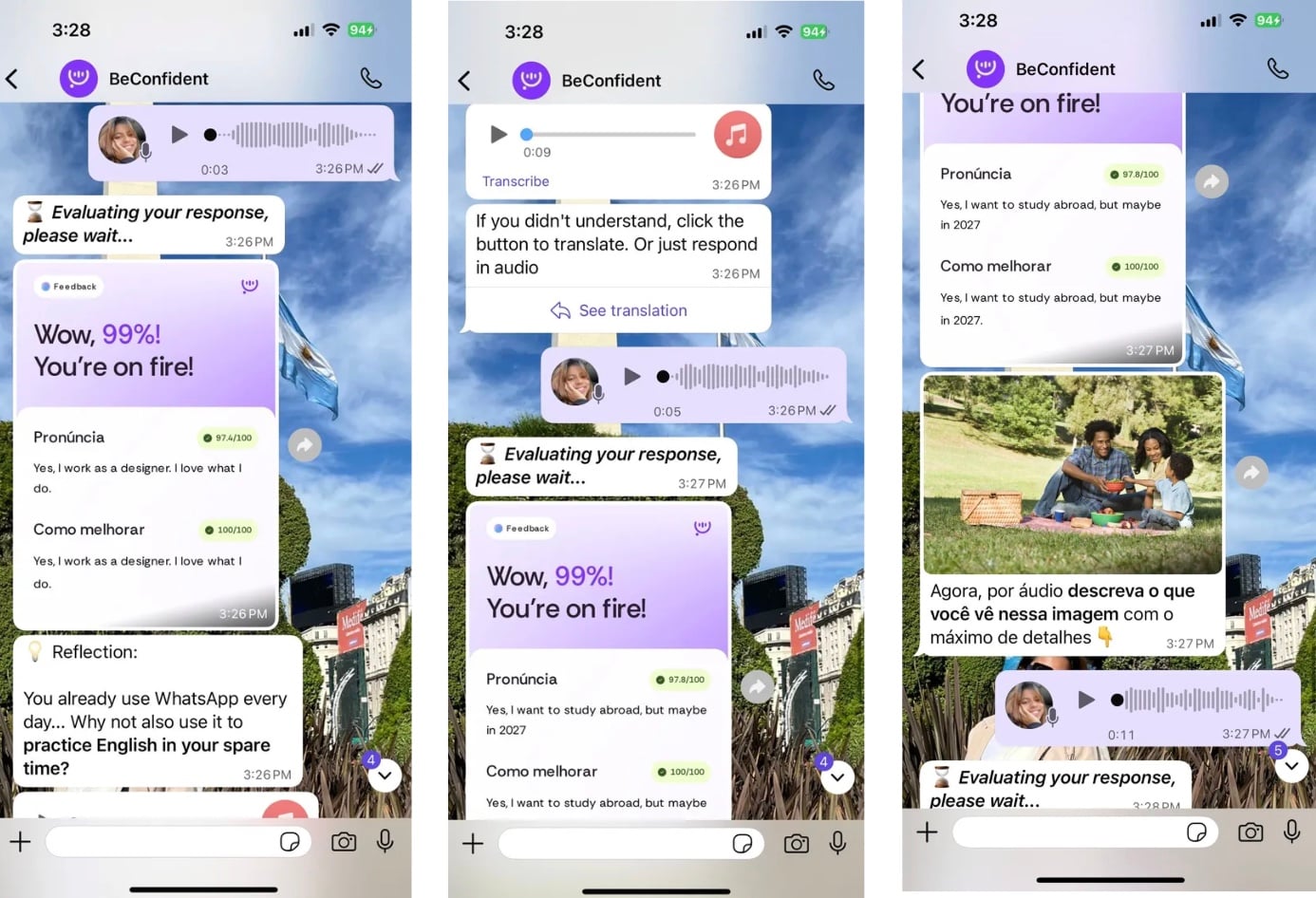
Try having a conversation with BeConfident's AI for free.
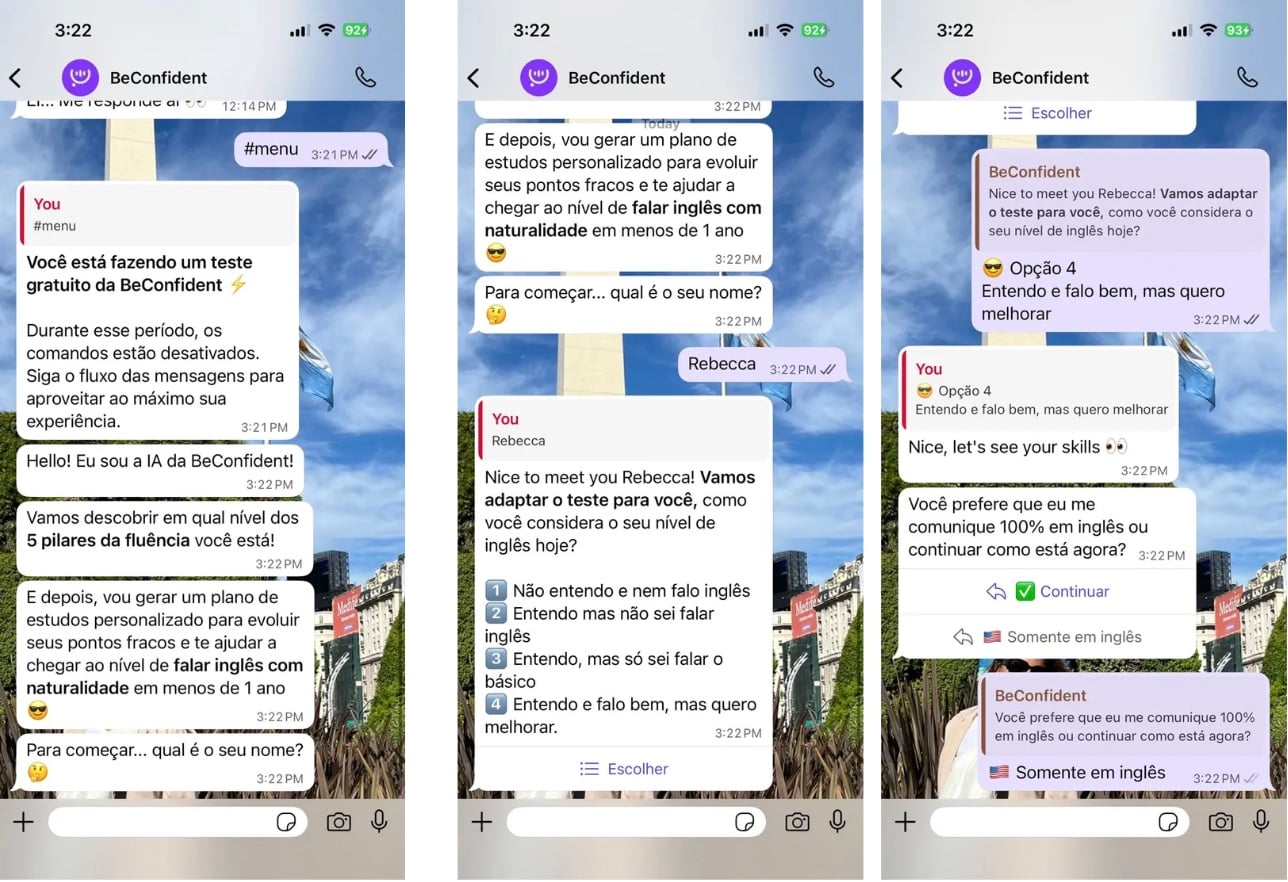
6. ChatGPT prompts for dialogues
Using specific prompts like "Roleplay: job interview for marketing position" or "Casual conversation about weekend plans" creates clear practice situations. ChatGPT Voice Mode allows flexible conversations with grammatical feedback when you ask for it, but it does not offer the same level of pedagogical personalization and structure as BeConfident.
7. Daily scripted dialogues
Creating scripts for real situations, such as ordering food at a restaurant, checking in at a hotel, or introducing yourself in a meeting, helps you prepare for specific contexts. Practice until you memorize the basic script, and then improvise variations. This combination increases confidence in predictable day-to-day situations.
8. Use Duolingo as a complement, and BeConfident for real fluency
Apps like Duolingo prioritize gamification and theoretical lessons, while BeConfident focuses on practical conversation from the start. Interacting with conversational AI tends to generate more pleasure in learning than purely receptive methods. BeConfident offers unlimited speaking practice, without the daily usage limits found in generalist apps.
9. Pronunciation and grammar paths with speaking
Combining theory with immediate practice prevents content from remaining only in passive memory. Study a grammar rule and apply it in conversation immediately afterward. BeConfident integrates structured modules that always end in conversational practice, ensuring real application of knowledge.
10. Review errors with AI on BeConfident
BeConfident's "Review Errors" feature gathers your history of corrections in grammar, pronunciation, and native expressions. You can review this material as many times as you want and focus on specific areas for improvement that the AI has already identified throughout your conversations.
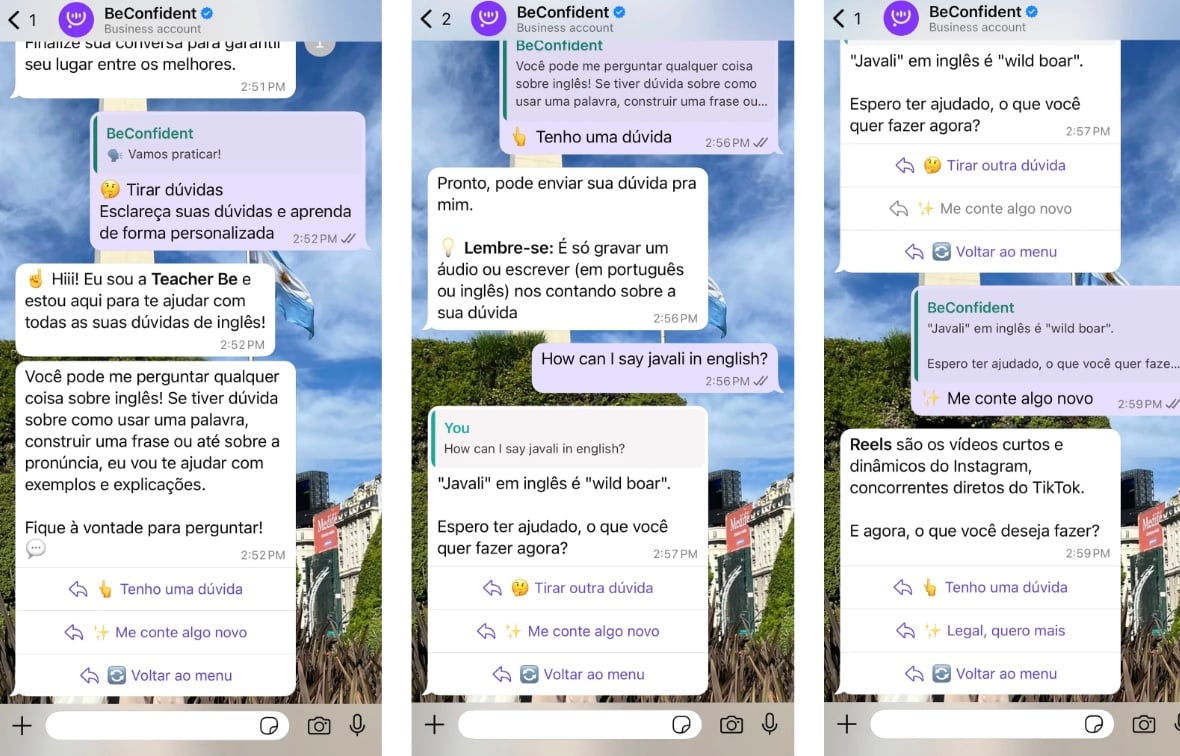
11. Daily challenges and streaks
Short daily sessions are usually more effective than sporadic long sessions because they keep the language active in memory without causing fatigue. Therefore, set modest goals like "5 minutes of daily conversation" and track your progress. Over time, you will realize that consistency beats intensity for developing automatic speech habits.
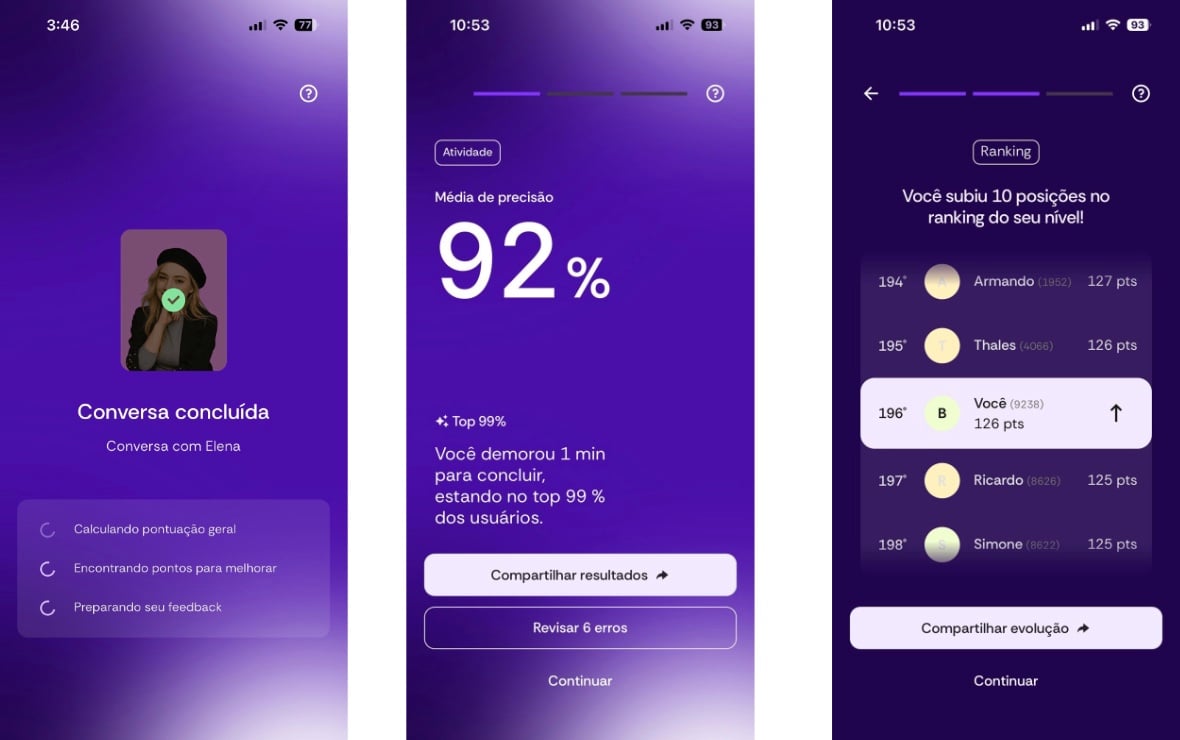
12. Measure progress: BeConfident's My Evolution menu
The "My Evolution" menu shows your streak days, ranking, practice hours, and certificates earned. With this user base growing on the platform, you gain concrete metrics of your conversational development and can adjust your routine based on data.
Summary: the 7 fastest techniques to start today
If you have little time or want to test what brings quick results first, these 7 techniques from the list above can be applied in less than 15 minutes and usually generate visible progress in the very first week:
1. Convert with AI on BeConfident: personalized 24/7 practice with real-time corrections.
2. Talk to yourself: narrate everyday actions in English throughout the day.
3. Shadowing: repeat podcasts or videos simultaneously to copy rhythm and intonation.
4. 60-second recordings: record short audios and do daily self-evaluation.
5. Prompts on ChatGPT: create specific guided conversation scenarios.
6. Reading aloud: read texts aloud to train articulation and fluency.
7. Review errors: use physical corrections history to guide your next practice.
How to measure if it's working?
Progress indicators follow a natural sequence. First, you stop freezing in simple day-to-day conversations. Then, you start using vocabulary more automatically, without mentally translating every word.
The result is feeling real confidence in high-pressure situations, such as work calls or international trips. BeConfident's "My Evolution" menu offers objective metrics with data from this community of millions of students for comparison.
Start measuring your progress today with a free trial.
Common problems and solutions
The four obstacles below represent frequent barriers that prevent students from practicing conversation regularly. The table shows how BeConfident addresses each of them in a specific way.
Problem | Cause | BeConfident's Solution |
|---|---|---|
No practice partner | Lack of availability | 24/7 AI tutors always available |
Embarrassment of making mistakes | Fear of judgment | AI environment with zero human judgment |
Lack of time | Rigid schedules | Quick practice via WhatsApp and smartwatch |
Slow progress | Absence of corrections | Real-time correction tailored to your level |
Frequently Asked Questions
Is it possible to become fluent by practicing alone?
Yes, it is possible to develop conversational fluency by practicing alone, and research shows that focused daily practice can help you advance through CEFR levels over time. The secret to achieving this advancement lies in the combination of consistency with the right tools. Because of this, BeConfident offers ongoing analysis of your performance and structured practice, without relying on human partners who may not always be available.
What is the best free app to practice conversation?
BeConfident offers a free trial that already allows you to experience the complete methodology, including conversation with AI tutors, CEFR level analysis, and personalized feedback. Unlike apps with restricted access, BeConfident's trial unlocks features that actually contribute to fluency, and not just basic vocabulary exercises.
How can I use ChatGPT to improve my English?
Using specific prompts like "Let’s roleplay a job interview" or "Help me practice ordering food at a restaurant" directs the conversation to useful situations. Then, you can ask for feedback on grammar and vocabulary. Even so, ChatGPT does not offer the same pedagogical customization or the different native accents of BeConfident, which was specifically developed for language teaching with a structured methodology.
Does BeConfident work for travelers?
It works very well for this purpose. BeConfident offers tutors with different accents, including American, British, Australian, Canadian, South African, and Indian. It also allows you to practice specific travel situations, such as airports, hotels, restaurants, and casual conversations. You can train for real scenarios before your trip and arrive at your destination with more confidence to communicate.
What are the 7 best tips for learning English alone?
The 7 best tips are: 1) practice conversation daily with AI, 2) talk to yourself narrating your day, 3) use shadowing with podcasts, 4) record yourself talking and do self-evaluations, 5) maintain a 15-minute daily routine, 6) focus on fluency before grammatical perfection, and 7) measure progress with tools like BeConfident's "My Evolution" menu. Daily consistency tends to outperform sporadic intensity in solo learning.
Conclusion
These 12 ways to practice conversation on your own can elevate your English fluency in just a few weeks, especially when you combine the techniques with BeConfident's AI technology. This proven student base shows that BeConfident is an effective option for developing natural conversation without depending on fixed schedules or human partners.
Written by: Luan Cavallaro, Founder & CMO, BeConfident
Key takeaways from this article
Practicing English conversation alone is viable with 15 minutes daily, using techniques like monologues, shadowing, and recordings to consistently gain fluency.
AI apps like BeConfident outperform traditional methods, as they offer personalized practice 24/7 with real-time feedback on pronunciation and grammar.
Maintaining daily consistency generates better results than sporadic long sessions, and using streaks and progress metrics accelerates advancement through CEFR levels.
Avoiding mistakes like skipping error reviews or prioritizing grammatical perfection helps focus on natural communication and continuous self-assessment.
For results proven by 200,000 students, test BeConfident for free now: join the 200,000 students who have already grown.
Before you start: what you need to know
To take advantage of these techniques, you need to have an intermediate level (B1-B2), access to a cell phone or computer with internet, and a willingness to practice 15 to 30 minutes a day. Focused daily practice helps you advance through CEFR levels over time and is usually more effective than sporadic long sessions.
Common mistakes are skipping the review of your own errors and neglecting pronunciation. They happen when students prioritize grammatical perfection from the start.
Fluency comes before flawless grammar. When you focus on communicating naturally first, you can adjust grammatical details later without freezing during the conversation.
With this mindset established, it is worth moving on to the practical techniques you can apply immediately.
12 best ways to practice English conversation alone
1. Talking to yourself (daily monologues)
Narrating everyday actions in English as you perform them creates automatic response. This type of practice trains the brain to think in English more directly. Set aside 5 to 10 minutes daily to describe what you see, feel, or plan to do.
2. Shadowing with podcasts
Shadowing, or simultaneous repetition, consists of repeating what native speakers say at the same time, which trains mouth muscles and helps internalize the natural flow of speech. Choose a podcast or short video of 2 to 3 minutes, pause after each sentence, and repeat, imitating rhythm, intonation, and pronunciation. Focus on the "music" of the language, not on complete comprehension of every single word.
3. Record and self-evaluate audios
Recording daily 60-second audios on your cell phone talking about your day or a specific topic allows you to identify patterns. Then, listen to it once and choose just one area to improve, such as clarity, rhythm, or pronunciation.
4. Social apps for exchange
Apps like HelloTalk and Tandem connect you with native speakers, but the quality of interactions varies and depends on partner availability. These apps work best as a complement, not as a main method, because practice tends to be sporadic and lacks a clear pedagogical structure.
5. BeConfident: AI app for personalized conversation
BeConfident offers solo practice with AI tutors simulating native accents, such as American, British, and Australian, and specific personalities, such as a photographer, lawyer, or writer. You can converse via the app, WhatsApp, or smartwatch, receiving corrections in real time without feeling embarrassed. With 200,000 paying students and 3 million total users, the platform offers unlimited 24/7 practice tailored to your interests and level.
Try having a conversation with BeConfident's AI for free.
6. ChatGPT prompts for dialogues
Using specific prompts like "Roleplay: job interview for marketing position" or "Casual conversation about weekend plans" creates clear practice situations. ChatGPT Voice Mode allows flexible conversations with grammatical feedback when you ask for it, but it does not offer the same level of pedagogical personalization and structure as BeConfident.
7. Daily scripted dialogues
Creating scripts for real situations, such as ordering food at a restaurant, checking in at a hotel, or introducing yourself in a meeting, helps you prepare for specific contexts. Practice until you memorize the basic script, and then improvise variations. This combination increases confidence in predictable day-to-day situations.
8. Use Duolingo as a complement, and BeConfident for real fluency
Apps like Duolingo prioritize gamification and theoretical lessons, while BeConfident focuses on practical conversation from the start. Interacting with conversational AI tends to generate more pleasure in learning than purely receptive methods. BeConfident offers unlimited speaking practice, without the daily usage limits found in generalist apps.
9. Pronunciation and grammar paths with speaking
Combining theory with immediate practice prevents content from remaining only in passive memory. Study a grammar rule and apply it in conversation immediately afterward. BeConfident integrates structured modules that always end in conversational practice, ensuring real application of knowledge.
10. Review errors with AI on BeConfident
BeConfident's "Review Errors" feature gathers your history of corrections in grammar, pronunciation, and native expressions. You can review this material as many times as you want and focus on specific areas for improvement that the AI has already identified throughout your conversations.
11. Daily challenges and streaks
Short daily sessions are usually more effective than sporadic long sessions because they keep the language active in memory without causing fatigue. Therefore, set modest goals like "5 minutes of daily conversation" and track your progress. Over time, you will realize that consistency beats intensity for developing automatic speech habits.
12. Measure progress: BeConfident's My Evolution menu
The "My Evolution" menu shows your streak days, ranking, practice hours, and certificates earned. With this user base growing on the platform, you gain concrete metrics of your conversational development and can adjust your routine based on data.
Summary: the 7 fastest techniques to start today
If you have little time or want to test what brings quick results first, these 7 techniques from the list above can be applied in less than 15 minutes and usually generate visible progress in the very first week:
1. Convert with AI on BeConfident: personalized 24/7 practice with real-time corrections.
2. Talk to yourself: narrate everyday actions in English throughout the day.
3. Shadowing: repeat podcasts or videos simultaneously to copy rhythm and intonation.
4. 60-second recordings: record short audios and do daily self-evaluation.
5. Prompts on ChatGPT: create specific guided conversation scenarios.
6. Reading aloud: read texts aloud to train articulation and fluency.
7. Review errors: use physical corrections history to guide your next practice.
How to measure if it's working?
Progress indicators follow a natural sequence. First, you stop freezing in simple day-to-day conversations. Then, you start using vocabulary more automatically, without mentally translating every word.
The result is feeling real confidence in high-pressure situations, such as work calls or international trips. BeConfident's "My Evolution" menu offers objective metrics with data from this community of millions of students for comparison.
Start measuring your progress today with a free trial.
Common problems and solutions
The four obstacles below represent frequent barriers that prevent students from practicing conversation regularly. The table shows how BeConfident addresses each of them in a specific way.
Problem | Cause | BeConfident's Solution |
|---|---|---|
No practice partner | Lack of availability | 24/7 AI tutors always available |
Embarrassment of making mistakes | Fear of judgment | AI environment with zero human judgment |
Lack of time | Rigid schedules | Quick practice via WhatsApp and smartwatch |
Slow progress | Absence of corrections | Real-time correction tailored to your level |
Frequently Asked Questions
Is it possible to become fluent by practicing alone?
Yes, it is possible to develop conversational fluency by practicing alone, and research shows that focused daily practice can help you advance through CEFR levels over time. The secret to achieving this advancement lies in the combination of consistency with the right tools. Because of this, BeConfident offers ongoing analysis of your performance and structured practice, without relying on human partners who may not always be available.
What is the best free app to practice conversation?
BeConfident offers a free trial that already allows you to experience the complete methodology, including conversation with AI tutors, CEFR level analysis, and personalized feedback. Unlike apps with restricted access, BeConfident's trial unlocks features that actually contribute to fluency, and not just basic vocabulary exercises.
How can I use ChatGPT to improve my English?
Using specific prompts like "Let’s roleplay a job interview" or "Help me practice ordering food at a restaurant" directs the conversation to useful situations. Then, you can ask for feedback on grammar and vocabulary. Even so, ChatGPT does not offer the same pedagogical customization or the different native accents of BeConfident, which was specifically developed for language teaching with a structured methodology.
Does BeConfident work for travelers?
It works very well for this purpose. BeConfident offers tutors with different accents, including American, British, Australian, Canadian, South African, and Indian. It also allows you to practice specific travel situations, such as airports, hotels, restaurants, and casual conversations. You can train for real scenarios before your trip and arrive at your destination with more confidence to communicate.
What are the 7 best tips for learning English alone?
The 7 best tips are: 1) practice conversation daily with AI, 2) talk to yourself narrating your day, 3) use shadowing with podcasts, 4) record yourself talking and do self-evaluations, 5) maintain a 15-minute daily routine, 6) focus on fluency before grammatical perfection, and 7) measure progress with tools like BeConfident's "My Evolution" menu. Daily consistency tends to outperform sporadic intensity in solo learning.
Conclusion
These 12 ways to practice conversation on your own can elevate your English fluency in just a few weeks, especially when you combine the techniques with BeConfident's AI technology. This proven student base shows that BeConfident is an effective option for developing natural conversation without depending on fixed schedules or human partners.