




How long should I study English a day to become fluent?
How long should I study English a day to become fluent?
How long should I study English a day to become fluent?
Written by: Luan Cavallaro, Founder & CMO, BeConfident
Key takeaways from this article
English fluency requires about 700-800 total hours for a C1 level. Daily sessions of 30-60 minutes focusing on conversation reduce the time to about 2-3 years.
Traditional methods fail due to a lack of consistent speaking practice. AI immersion available 24/7 offers a more efficient alternative for Brazilians with busy schedules.
A 30-minute daily routine works when it prioritizes active conversation. This approach outperforms long, sporadic sessions.
BeConfident offers unlimited AI tutors, affordable costs, and immediate feedback, which generates more real speaking practice than gamification-focused schools and apps.
You can start now with BeConfident's free trial and turn 30 daily minutes into consistent conversational progress.
Why conversational fluency changes everything, and how AI immersion accelerates it
Conversational English fluency broadens professional opportunities, facilitates travel, and deepens cultural experiences. The difference between just understanding English and speaking it confidently determines whether you land an international promotion, make the most of an exchange program, or watch series without subtitles.
The time required varies depending on your current level in the CEFR standard, age, proximity between Portuguese and English, and, above all, the study method. Systematic methods with a focus on real conversation accelerate progress compared to loose, unplanned study.
Conversational immersion with artificial intelligence is a game-changer. Traditional methods limit speaking practice to a few hours a week. In contrast, immersion at home generates daily exposure that creates brain patterns similar to those of native speakers. With AI available at all times, you can accelerate the roughly 1,200 hours needed for mastery by practicing real conversation at any time. Before exploring how to leverage this technology, it is worth understanding why so many Brazilians still get stuck in inefficient methods.
Why do common methods fail?
Most Brazilians get stuck in methods that waste time and energy. The problem starts with the lack of speaking practice. Many apps prioritize gamification and mechanical repetition over fluent conversation.
Even when there is an opportunity to speak, inconsistency hinders progress. Weekly 2-hour classes yield fewer results than 30 consistent, daily minutes. The long gap between one class and another makes you forget what you learned.
Shame of making mistakes in traditional classrooms further reduces speaking practice. Many students avoid speaking, remain silent, and leave class with the feeling that they "understand, but cannot express themselves."
This scenario leads to an excessive focus on theory. The student studies grammar, does written exercises, and accumulates rules, but rarely applies anything in real conversations. Without practical use, knowledge does not consolidate into fluency.
Is 1 hour of study per day good?
One hour a day works well when you direct that time toward real contact with the language, including passive listening during daily tasks. The key point is consistency and the balance between input, such as listening and reading, and output, such as speaking and writing.
Once you understand that 1 daily hour brings results, the next step is to adjust this time to your reality and your English level.
How much time should I study English per day? 30-60 minute plans by CEFR level
The ideal study time depends on your current level and your goals. Experts in 2026 recommend structured routines that prioritize consistency over intensity. The table below shows how to distribute your daily time according to the CEFR level. The main insight is that beginners can make progress with short, focused sessions, while higher levels require more refinement.
CEFR Level | Recommended daily time | Main focus | Estimated time to next level |
|---|---|---|---|
A1-A2 (beginner) | 30-45 minutes | Vocabulary and basic conversation | 3-6 months |
B1-B2 (intermediate) | 30-60 minutes | Conversational immersion | Several months |
C1+ (advanced) | 45-60 minutes | Complex conversation and refinement | More than 12 months |
Does studying 30 minutes a day work?
A half-hour routine per day yields results when you organize that time. A BeConfident routine of about 30-45 minutes follows a simple and practical sequence:
Choose an AI tutor with an American, British, or other accent, to align the experience with your professional or personal goal.
Talk about topics of interest to you through the app, WhatsApp, or smartwatch, making it easy to keep practicing even on busy days.
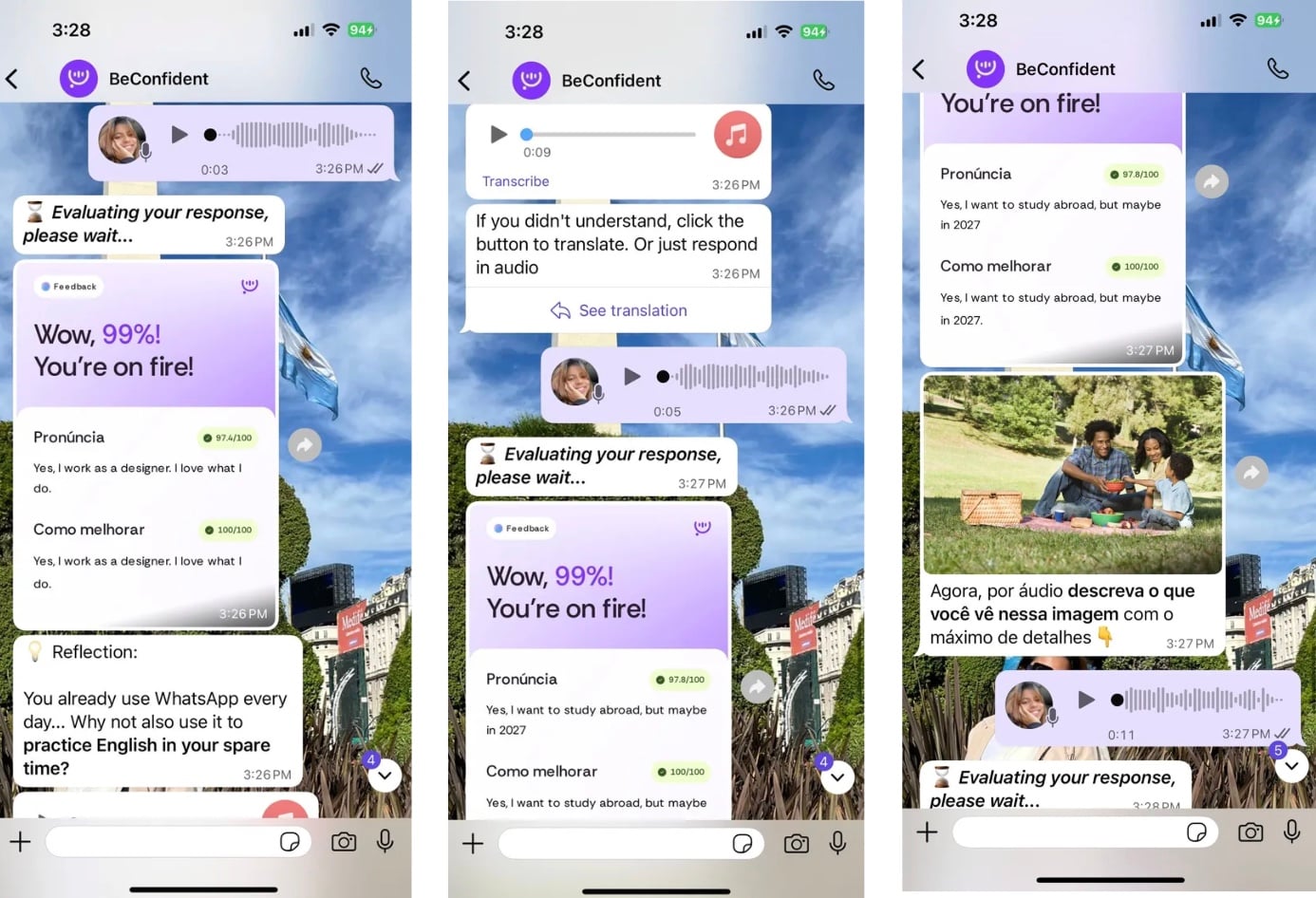
Receive instant feedback on grammar, pronunciation, and natural flow, without waiting days for corrections like in traditional classes.
Review errors and practice corrections, turning every slip to immediate learning.
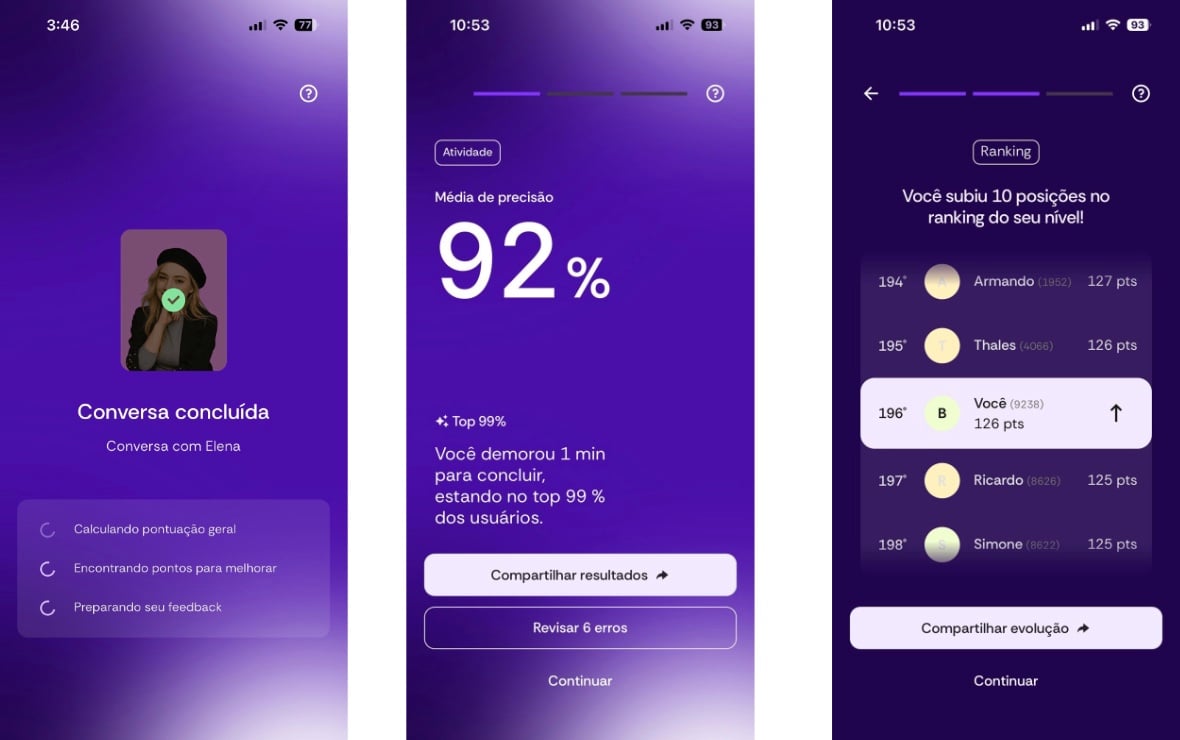
Maintain streaks and track evolution in internal rankings, which helps sustain motivation without losing focus on real conversation.
Daily flexibility increases the chance of keeping up the habit. You can practice in traffic, during exercises, or on work breaks. Try this flexible routine with unlimited access to BeConfident's AI tutors.
Is it possible to become fluent in 1 year?
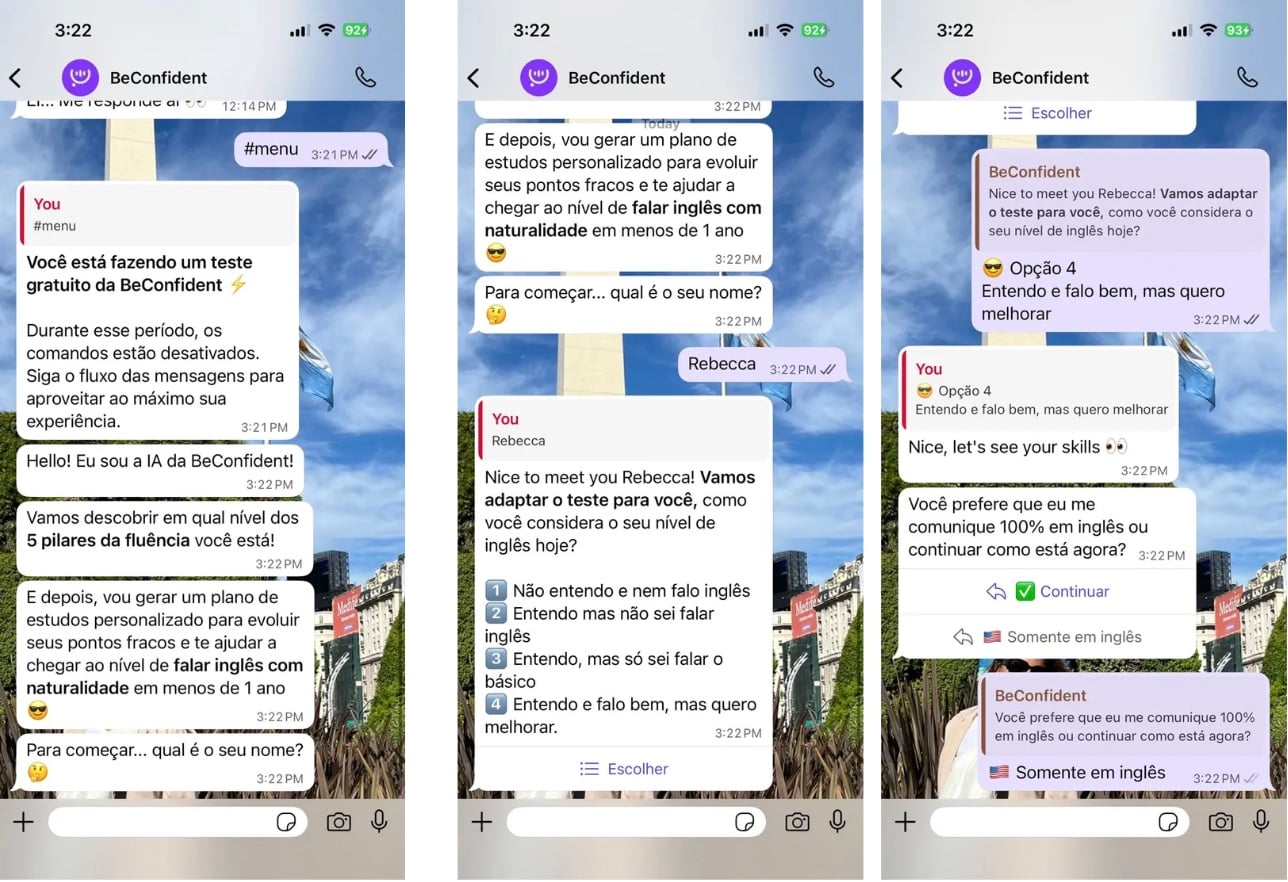
Achieving fluency in about 1 year is possible in specific scenarios. Those who are already at an intermediate level and maintain consistent practice can reach a C1 in 12-18 months. BeConfident accelerates this path by offering unlimited AI conversation, which allows accumulating far more speaking hours than methods limited to a few weekly classes.
BeConfident vs. competitors: how to choose the most efficient option?
Comparing study methods helps to understand where you actually gain speaking practice hours. Four factors weigh most on your progress: daily time you can sustain, focus on conversation, schedule flexibility, and monthly cost. The table below shows how each alternative positions itself on these points.
Method | Typical daily time | Focus on speaking | Approximate monthly cost |
|---|---|---|---|
BeConfident | 30-60 flexible minutes | AI-oriented for conversation | A fraction of the price of schools |
Traditional schools | 2 hours a week at a fixed time | Group conversation and limited speaking time | R$ 300-800 or more |
Duolingo | About 15 gamified minutes | Almost nonexistent conversation | Free basic version |
Cambly/Italki | Time per scheduled session | Quality dependent on the tutor | Around R$ 50 per hour |
This combination of flexibility, focus on speaking, and cost explains why BeConfident holds an RA 1000 reputation on Reclame Aqui and offers unlimited conversation with AI tutors covering different accents and professional areas.
How to start in a few weeks?
A straightforward checklist helps put the plan into action:
Identify your level by taking a free CEFR test on BeConfident to know where to begin.
Define a daily routine of about half an hour to an hour, at times you can maintain.
Prioritize speaking with AI tutors every day, using Portuguese only when necessary to clear up doubts.
Track your progress through streaks, reports, and certificates, adjusting focus according to your goals.
Frequently Asked Questions
How long does it take to learn English alone?
Completely self-guided study usually takes 2 to 4 years to achieve conversational fluency. The use of conversational AI, as in BeConfident, reduces this timeframe by increasing the volume of oral practice. The deciding factor is consistency in speaking, not just isolated theoretical study.
How long to go from basic to intermediate?
Transitioning from level A1 to B1 usually takes 6 to 12 months with 30-45 daily minutes of practice focused on conversation. BeConfident accelerates this shift with structured paths that combine applied theory and immediate speaking practice.
Is it possible to become fluent in 1 year with BeConfident?
Those who are already at an intermediate level, such as B1 or B2, have good chances of reaching advanced fluency in about 12-18 months. Unlimited conversation with AI tutors increases the hours of practice and shortens the path compared to methods that offer few classes per week.
Are 30 minutes of study a day enough for fluency?
Thirty daily minutes can lead to fluency when you use this time for active and structured conversation. This short, consistent routine typically yields better results than 2 weekly hours focused only on theory. In language learning, regularity beats isolated intensity.
What is the difference between studying with AI and with human teachers?
An AI system offers continuous availability, immediate feedback, a judgment-free environment, and lower costs. Human teachers bring cultural experience and fine adaptation to your context, but work with limited schedules and higher rates. BeConfident combines these aspects by using AI tutors that simulate the personalities and accents of native speakers.
Summary: 30-60 minutes a day with AI generate faster fluency
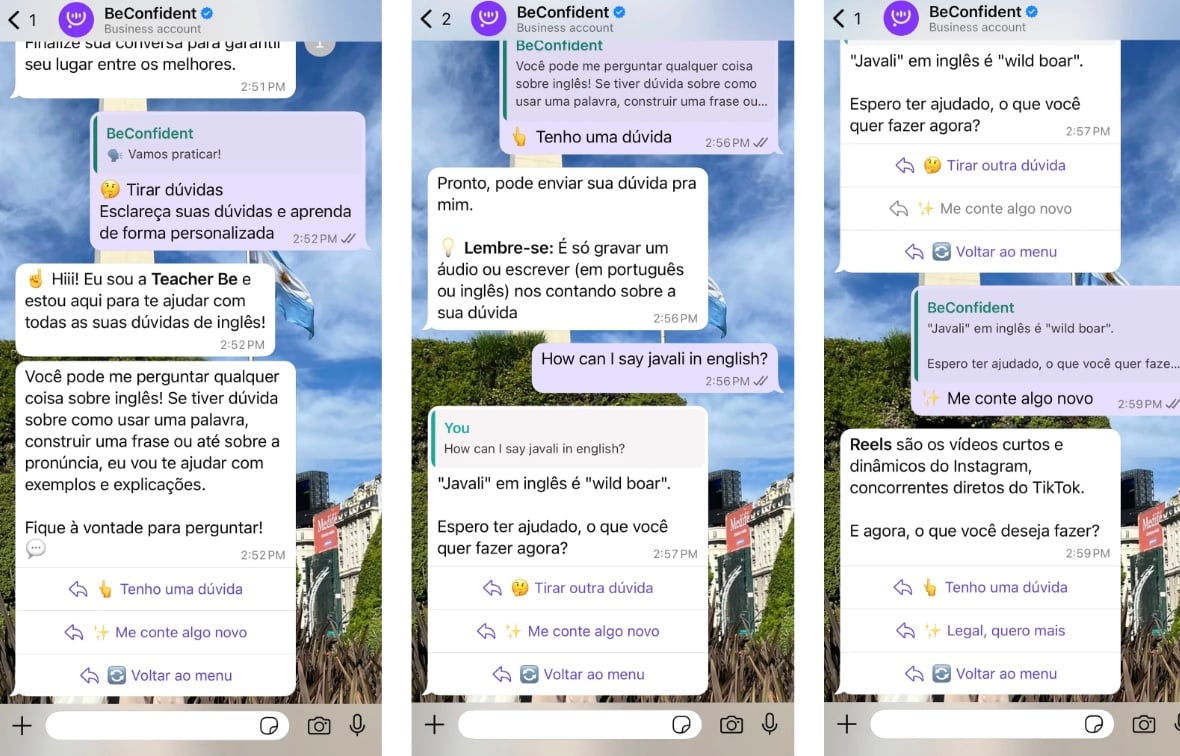
The answer to "how much time do I need to study English per day for fluency" is objective. Daily sessions of 30 to 60 minutes of focused conversational practice accelerate progress compared to traditional methods based on theory and sporadic classes. With conversational AI available all the time, you turn daily breaks into real practice opportunities and shorten the path to fluency.
Written by: Luan Cavallaro, Founder & CMO, BeConfident
Key takeaways from this article
English fluency requires about 700-800 total hours for a C1 level. Daily sessions of 30-60 minutes focusing on conversation reduce the time to about 2-3 years.
Traditional methods fail due to a lack of consistent speaking practice. AI immersion available 24/7 offers a more efficient alternative for Brazilians with busy schedules.
A 30-minute daily routine works when it prioritizes active conversation. This approach outperforms long, sporadic sessions.
BeConfident offers unlimited AI tutors, affordable costs, and immediate feedback, which generates more real speaking practice than gamification-focused schools and apps.
You can start now with BeConfident's free trial and turn 30 daily minutes into consistent conversational progress.
Why conversational fluency changes everything, and how AI immersion accelerates it
Conversational English fluency broadens professional opportunities, facilitates travel, and deepens cultural experiences. The difference between just understanding English and speaking it confidently determines whether you land an international promotion, make the most of an exchange program, or watch series without subtitles.
The time required varies depending on your current level in the CEFR standard, age, proximity between Portuguese and English, and, above all, the study method. Systematic methods with a focus on real conversation accelerate progress compared to loose, unplanned study.
Conversational immersion with artificial intelligence is a game-changer. Traditional methods limit speaking practice to a few hours a week. In contrast, immersion at home generates daily exposure that creates brain patterns similar to those of native speakers. With AI available at all times, you can accelerate the roughly 1,200 hours needed for mastery by practicing real conversation at any time. Before exploring how to leverage this technology, it is worth understanding why so many Brazilians still get stuck in inefficient methods.
Why do common methods fail?
Most Brazilians get stuck in methods that waste time and energy. The problem starts with the lack of speaking practice. Many apps prioritize gamification and mechanical repetition over fluent conversation.
Even when there is an opportunity to speak, inconsistency hinders progress. Weekly 2-hour classes yield fewer results than 30 consistent, daily minutes. The long gap between one class and another makes you forget what you learned.
Shame of making mistakes in traditional classrooms further reduces speaking practice. Many students avoid speaking, remain silent, and leave class with the feeling that they "understand, but cannot express themselves."
This scenario leads to an excessive focus on theory. The student studies grammar, does written exercises, and accumulates rules, but rarely applies anything in real conversations. Without practical use, knowledge does not consolidate into fluency.
Is 1 hour of study per day good?
One hour a day works well when you direct that time toward real contact with the language, including passive listening during daily tasks. The key point is consistency and the balance between input, such as listening and reading, and output, such as speaking and writing.
Once you understand that 1 daily hour brings results, the next step is to adjust this time to your reality and your English level.
How much time should I study English per day? 30-60 minute plans by CEFR level
The ideal study time depends on your current level and your goals. Experts in 2026 recommend structured routines that prioritize consistency over intensity. The table below shows how to distribute your daily time according to the CEFR level. The main insight is that beginners can make progress with short, focused sessions, while higher levels require more refinement.
CEFR Level | Recommended daily time | Main focus | Estimated time to next level |
|---|---|---|---|
A1-A2 (beginner) | 30-45 minutes | Vocabulary and basic conversation | 3-6 months |
B1-B2 (intermediate) | 30-60 minutes | Conversational immersion | Several months |
C1+ (advanced) | 45-60 minutes | Complex conversation and refinement | More than 12 months |
Does studying 30 minutes a day work?
A half-hour routine per day yields results when you organize that time. A BeConfident routine of about 30-45 minutes follows a simple and practical sequence:
Choose an AI tutor with an American, British, or other accent, to align the experience with your professional or personal goal.
Talk about topics of interest to you through the app, WhatsApp, or smartwatch, making it easy to keep practicing even on busy days.
Receive instant feedback on grammar, pronunciation, and natural flow, without waiting days for corrections like in traditional classes.
Review errors and practice corrections, turning every slip to immediate learning.
Maintain streaks and track evolution in internal rankings, which helps sustain motivation without losing focus on real conversation.
Daily flexibility increases the chance of keeping up the habit. You can practice in traffic, during exercises, or on work breaks. Try this flexible routine with unlimited access to BeConfident's AI tutors.
Is it possible to become fluent in 1 year?
Achieving fluency in about 1 year is possible in specific scenarios. Those who are already at an intermediate level and maintain consistent practice can reach a C1 in 12-18 months. BeConfident accelerates this path by offering unlimited AI conversation, which allows accumulating far more speaking hours than methods limited to a few weekly classes.
BeConfident vs. competitors: how to choose the most efficient option?
Comparing study methods helps to understand where you actually gain speaking practice hours. Four factors weigh most on your progress: daily time you can sustain, focus on conversation, schedule flexibility, and monthly cost. The table below shows how each alternative positions itself on these points.
Method | Typical daily time | Focus on speaking | Approximate monthly cost |
|---|---|---|---|
BeConfident | 30-60 flexible minutes | AI-oriented for conversation | A fraction of the price of schools |
Traditional schools | 2 hours a week at a fixed time | Group conversation and limited speaking time | R$ 300-800 or more |
Duolingo | About 15 gamified minutes | Almost nonexistent conversation | Free basic version |
Cambly/Italki | Time per scheduled session | Quality dependent on the tutor | Around R$ 50 per hour |
This combination of flexibility, focus on speaking, and cost explains why BeConfident holds an RA 1000 reputation on Reclame Aqui and offers unlimited conversation with AI tutors covering different accents and professional areas.
How to start in a few weeks?
A straightforward checklist helps put the plan into action:
Identify your level by taking a free CEFR test on BeConfident to know where to begin.
Define a daily routine of about half an hour to an hour, at times you can maintain.
Prioritize speaking with AI tutors every day, using Portuguese only when necessary to clear up doubts.
Track your progress through streaks, reports, and certificates, adjusting focus according to your goals.
Frequently Asked Questions
How long does it take to learn English alone?
Completely self-guided study usually takes 2 to 4 years to achieve conversational fluency. The use of conversational AI, as in BeConfident, reduces this timeframe by increasing the volume of oral practice. The deciding factor is consistency in speaking, not just isolated theoretical study.
How long to go from basic to intermediate?
Transitioning from level A1 to B1 usually takes 6 to 12 months with 30-45 daily minutes of practice focused on conversation. BeConfident accelerates this shift with structured paths that combine applied theory and immediate speaking practice.
Is it possible to become fluent in 1 year with BeConfident?
Those who are already at an intermediate level, such as B1 or B2, have good chances of reaching advanced fluency in about 12-18 months. Unlimited conversation with AI tutors increases the hours of practice and shortens the path compared to methods that offer few classes per week.
Are 30 minutes of study a day enough for fluency?
Thirty daily minutes can lead to fluency when you use this time for active and structured conversation. This short, consistent routine typically yields better results than 2 weekly hours focused only on theory. In language learning, regularity beats isolated intensity.
What is the difference between studying with AI and with human teachers?
An AI system offers continuous availability, immediate feedback, a judgment-free environment, and lower costs. Human teachers bring cultural experience and fine adaptation to your context, but work with limited schedules and higher rates. BeConfident combines these aspects by using AI tutors that simulate the personalities and accents of native speakers.
Summary: 30-60 minutes a day with AI generate faster fluency
The answer to "how much time do I need to study English per day for fluency" is objective. Daily sessions of 30 to 60 minutes of focused conversational practice accelerate progress compared to traditional methods based on theory and sporadic classes. With conversational AI available all the time, you turn daily breaks into real practice opportunities and shorten the path to fluency.