




12 proven methods to speak English naturally
12 proven methods to speak English naturally
12 proven methods to speak English naturally
Written by: Luan Cavallaro, Founder & CMO, BeConfident
Key Takeaways from This Article
Practicing shadowing with AI improves pronunciation, rhythm, and intonation by mimicking native speakers simultaneously, which builds a more natural fluency.
Memorizing daily conversational chunks like "What's up?" and "No big deal" allows you to speak like a native without assembling sentences word by word.
Using self-talk in daily activities in English rewires the brain for fast responses and reduces mental translation.
Applying fillers like "well" and "you know" with natural intonation helps buy time and sounds more authentic in conversation.
Practicing with BeConfident offers 24/7 conversation with personalized AI, instant feedback, and structured learning paths to gain fluency in just a few weeks: start your free trial now.
What does it mean to speak English naturally?
Speaking English naturally means prioritizing intonation, rhythm, and real everyday expressions, not just perfect grammar. This includes using fillers like "you know" and "well" and applying idiomatic chunks that native speakers use in casual and professional conversations. Portuguese speakers score, on average, 130 points lower in speaking than in reading, which shows that isolated theory does not guarantee oral fluency.
BeConfident addresses this directly with over 200,000 paying students, an RA1000 rating on Reclame Aqui, and 3 million global users. The personalized AI offers 24/7 conversation practice with native accents, with no scheduling limits and without the pressure of a classroom setting.
12 techniques to speak English naturally in conversation
1. Use AI shadowing for more natural pronunciation
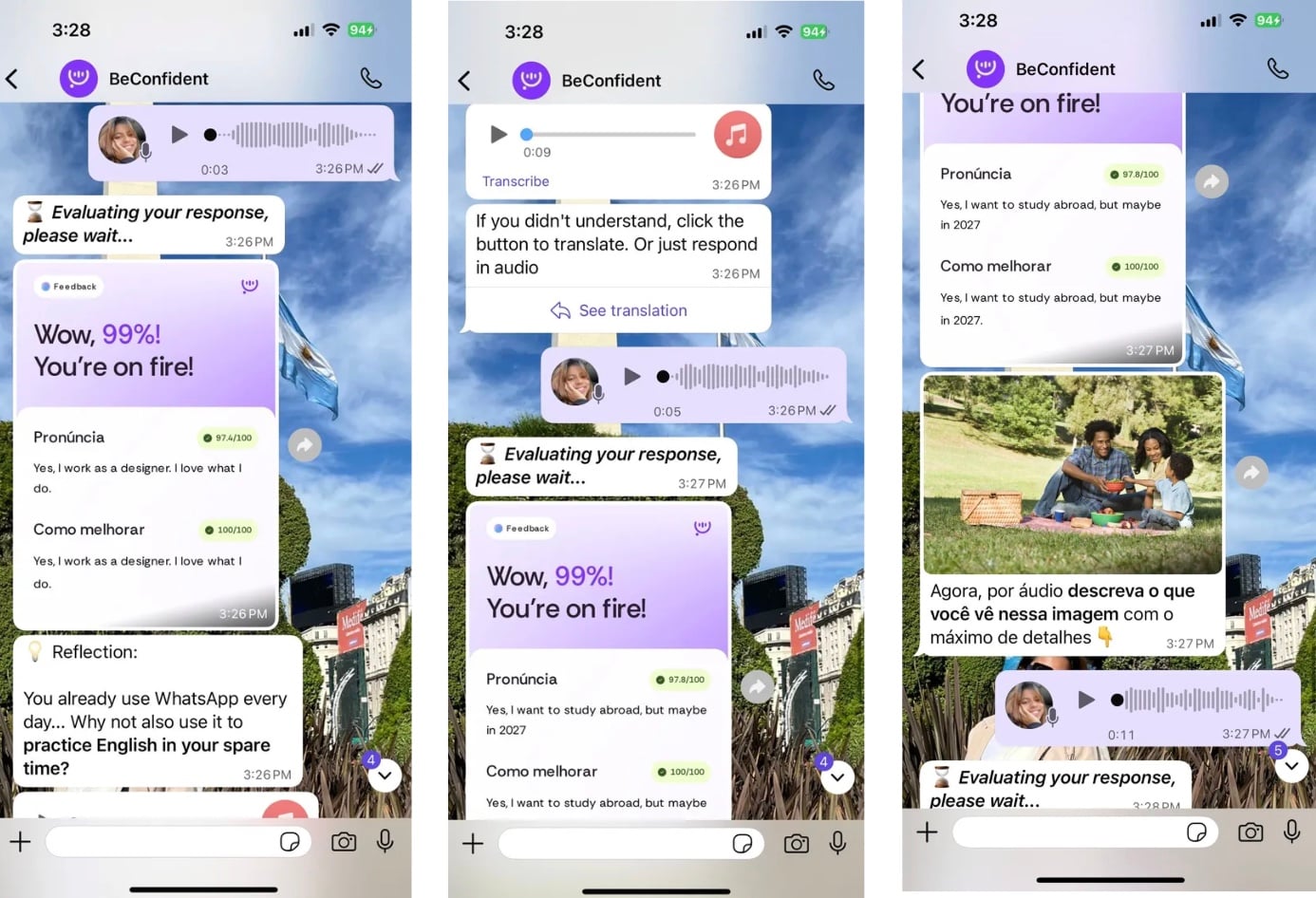
The shadowing technique improves pronunciation, rhythm, intonation, and overall fluency by copying native speakers in real time. The student chooses a native audio clip, plays it, and repeats at the same time, mimicking pauses, linking words, and intonation.
At BeConfident, AI tutors with native accents analyze speech during conversation and deliver immediate pronunciation feedback. This accelerates the fine-tuning of speech and reduces heavy accents.
2. Learn everyday conversational expressions
Native speakers use ready-made building blocks of language, called chunks, instead of building every sentence from scratch. COCA, the Corpus of Contemporary American English, lists the most frequent expressions in real conversations.
Native phrase | Translation | Context | Usage |
What's up? | What's happening? / How's it going? | Informal greeting | Daily |
No big deal | No problem | Downplay situations | Frequent |
I'm good | I'm fine | Answer to "How are you?" | Daily |
Fair enough | That makes sense / Reasonable | Partial agreement | Professional |
Memorizing and repeating these expressions out loud facilitates quick responses and reduces mental translation, making speech flow more naturally.
3. Think in English with AI-supported self-talk
Using self-talk in English helps the brain create quicker and more natural responses. The student describes what they do on a daily basis, for example: "I'm making coffee" or "I need to check my emails".
BeConfident transforms this self-talk into applied practice. The student can practice alone, then bring the same topics to conversations with the AI and receive corrections in vocabulary, structure, and pronunciation.
4. Record your own speech and get pronunciation feedback
Recording 2- to 3-minute audio clips on simple topics allows you to compare your own speech with that of native speakers. The student identifies differences in rhythm, pauses, intonation, and clarity. AI tools can now give immediate feedback on intonation, timing, and stressed syllables.
At BeConfident, every conversation generates an automatic analysis. The student receives reports on pronunciation, grammar, and naturalness, showing strengths and weaknesses in an objective way.
Try conversation techniques for free and track your evolution in real time.
5. Master fillers and natural intonation
Fillers are words that fill pauses and keep the conversation flowing. Native speakers use "um", "well", "you know", and "I mean" to buy time and organize ideas without sounding stuck.
A sentence like "Well, I think... you know... it's a good idea" sounds much closer to real usage than "I think it is a good idea" spoken with a neutral intonation and robotic rhythm.
6. Create immersion without relying on mental translation
Watching TV shows and movies in English without Portuguese subtitles forces the brain to process directly in the language. This habit reduces word-for-word translation, which usually causes stumbling when speaking.
The student can start with movies they already know and then move on to new content. The initial focus should be on intonation, recurring expressions, and general context, not on understanding 100% of the words.
7. Reduce the fear of making mistakes with 24/7 free practice
The fear of making mistakes usually blocks speech, even when the student understands well. AI platforms already show up to a 70% increase in completion rates compared to traditional methods, partly because they offer individualized and constant practice.
BeConfident creates a judgment-free environment. The student practices with AI as many times as they want, builds confidence, and then takes that security to meetings, interviews, and travels. Many report that after about a month of consistent use, they can already speak with fewer hesitations.
8. Simulate professional and travel scenarios
Practicing specific situations accelerates fluency in real-world contexts. Examples include presentations, meetings, negotiations, airport check-ins, and ordering at restaurants.
At BeConfident, the student chooses tutors with professional profiles like lawyer, engineer, or photographer and practices technical vocabulary from their own field, making conversation more relevant for work.
9. Systematically review recurring errors
Keeping track of frequent mistakes in grammar, pronunciation, and phrase usage helps turn weaknesses into clear study goals. A weekly review of these points, followed by targeted practice, increases speaking naturalness.
BeConfident automatically organizes these errors by category. The student can visualize which patterns hinder fluency the most and target their training exactly on those items.
10. Use the "tell me something new" trigger to expand your repertoire
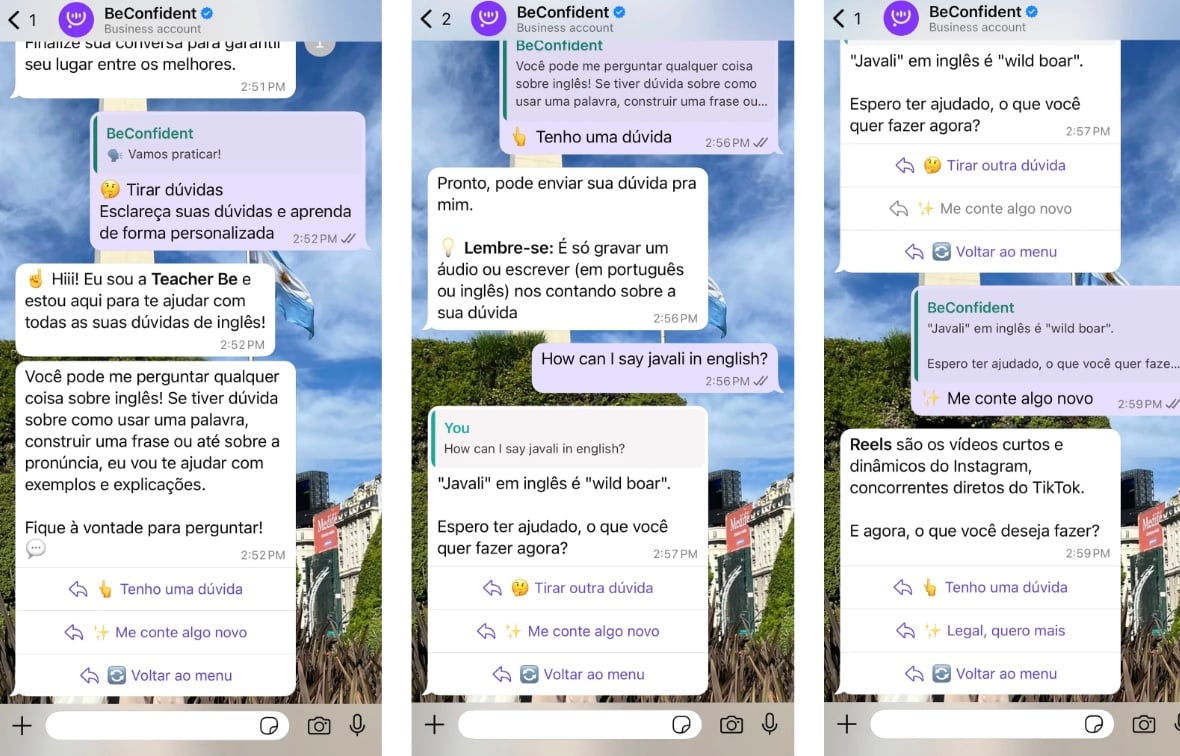
Asking a native speaker or an AI to bring up fun facts about culture, regional expressions, or unexpected topics expands vocabulary and conversation starters. This practice also stimulates more spontaneous responses.
The "Tell me something new" feature from BeConfident offers short daily content with a cultural and linguistic focus, always accompanied by conversation practice.
11. Combine structured paths with free conversation
Joining applied theory and immediate practice yields higher retention. Each point of pronunciation, grammar, or vocabulary needs to appear in real conversations shortly after studying.
BeConfident's learning paths bring together exposure to content, guided practice, and free conversation in sequence. The student avoids accumulating theory without practical use.
12. Track your progress with streaks and rankings
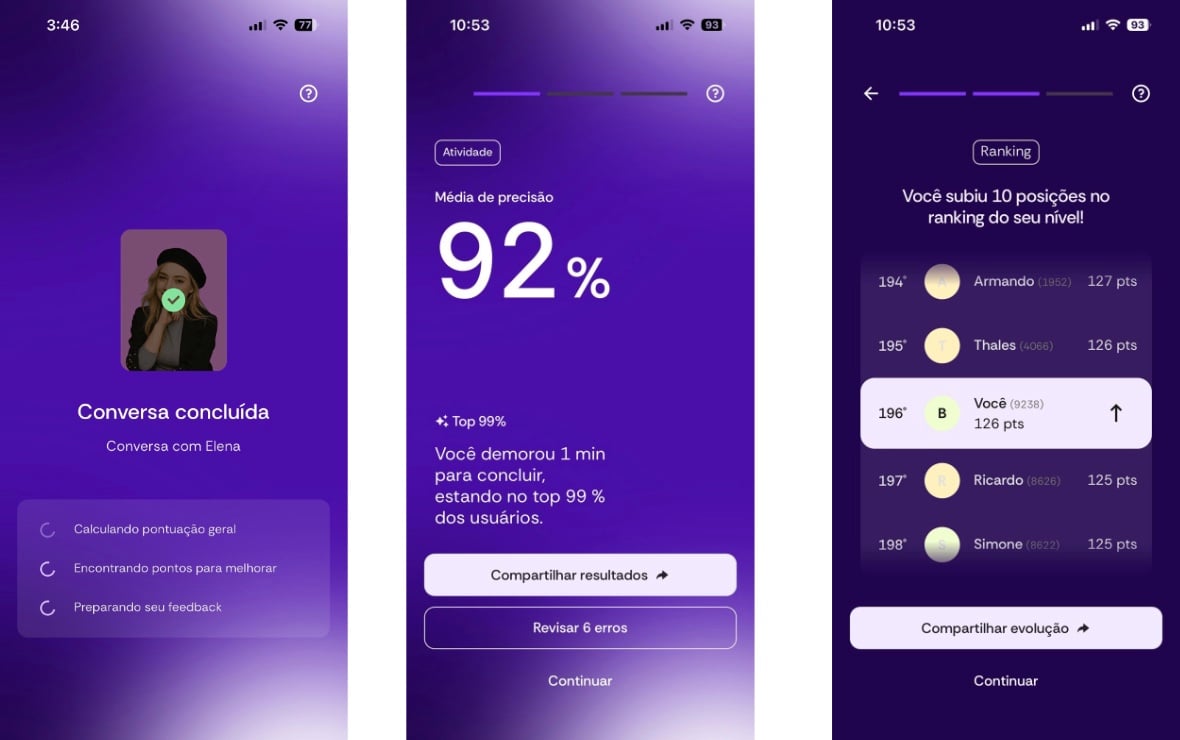
Monitoring consecutive days of study and hours of practice helps maintain consistency. Visual progress indicators reinforce the habit and show concrete results.
In BeConfident's "My Growth" menu, the student tracks streaks, rankings, practice hours, and certificates. This data turns fluency into a measurable goal.
How to practice speaking alone
The student can set up a simple routine of individual practice with AI support.
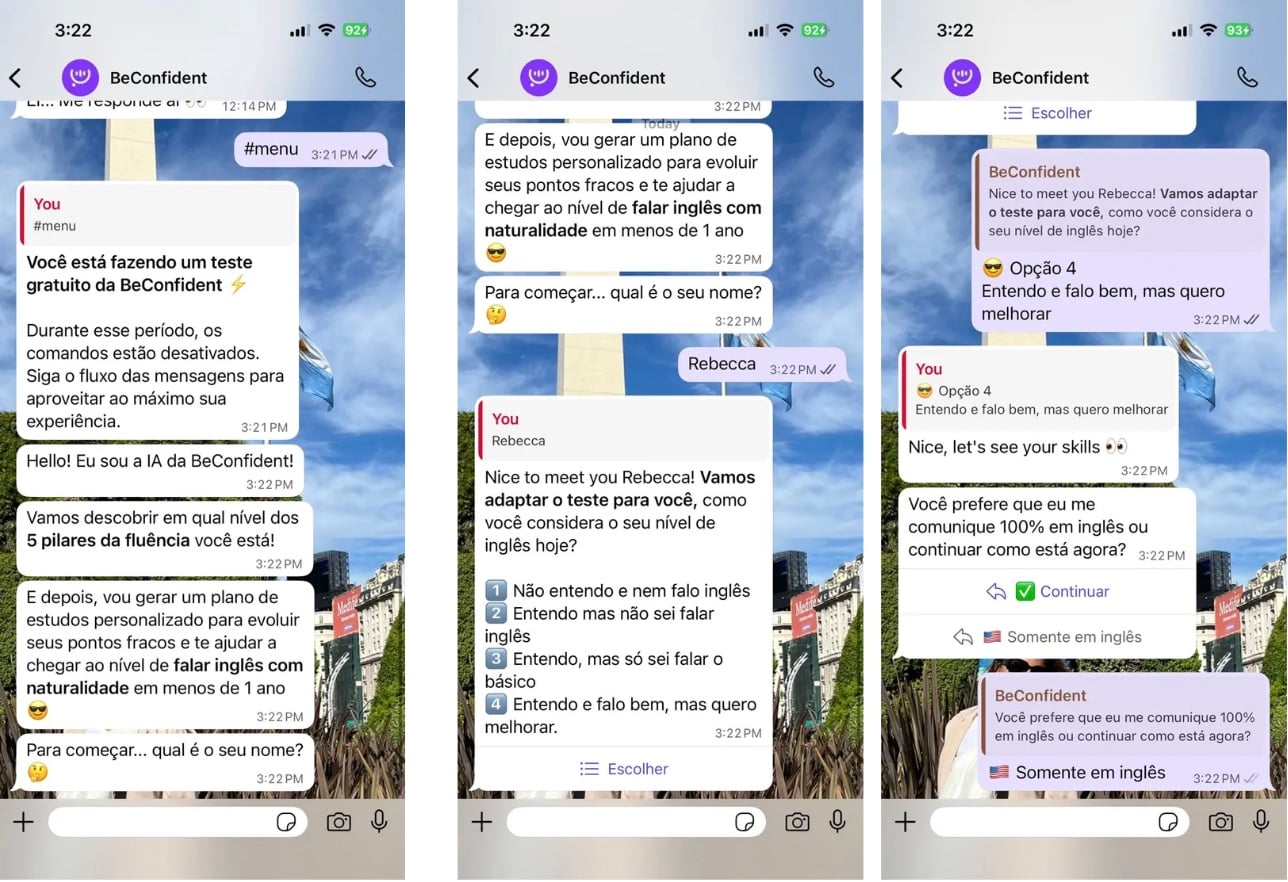
1. Take the free BeConfident CEFR test to identify your current level.
2. Practice shadowing with AI tutors with native accents.
3. Use self-talk to describe daily activities in English.
4. Record audios and compare them with the AI's automatic feedback.
How to unblock yourself when speaking English
A few adjustments to your routine reduce speech blocks and increase confidence.
1. Reduce mental translation by using pre-fabricated chunks.
2. Use natural fillers to buy time, like "well" and "you know".
3. Practice free conversation 24/7 with AI in a judgment-free environment.
4. Review errors automatically compiled by the platform.
How to speak English without fear
Working on fear requires gradual practice in controlled environments.
1. Start with private practice, since AI does not judge mistakes.
2. Focus on clear communication, not perfect grammar in every sentence.
3. Rehearse specific scenarios before real-world situations.
4. Record and celebrate small progress to maintain confidence.
BeConfident vs. competitors: why use personalized AI?
Different platforms meet different needs. Duolingo prioritizes gamification and vocabulary but offers little real conversation. Cambly relies on human tutors, usually has a higher cost, and varies in quality. Traditional schools require commuting, fixed schedules, and group exposure, which increases the embarrassment of making mistakes.
Studies show that students achieve up to twice the fluency with unlimited practice supported by AI compared to traditional methods. Testimonials from BeConfident report detailed feedback that does not appear in common classes and a confidence boost sufficient to seek promotions and new opportunities.
Take the free test and evaluate personalized AI in practice.
Frequently Asked Questions
How long does it take to speak more naturally with these techniques?
With daily practice of 15 to 30 minutes using shadowing, self-talk, and AI conversation, many B1-B2 students report a noticeable improvement in 4 to 6 weeks. Consistency and real speaking practice matter more than total theory study time.
Does BeConfident work for A1-A2 beginners?
BeConfident's AI adapts to the CEFR level identified in the free test. The student starts at the detected level and gradually progresses to more complex conversations, always with feedback adjusted to their learning stage.
What is the difference between BeConfident and ChatGPT for English practice?
BeConfident is focused on English teaching and speaking practice. The AI tutors are trained to correct pronunciation, grammar, and fluency, in addition to offering structured learning paths, detailed feedback, and integrated progress tracking during conversation.
How to practice English conversation alone effectively?
An efficient routine combines daily self-talk, shadowing with native audio, recordings for self-assessment, and AI conversation. BeConfident gathers these techniques in a single platform, with structured practice and 24/7 instant feedback.
Can I use BeConfident on WhatsApp and smartwatch?
Yes. The AI works on its own app, WhatsApp, and smartwatch, allowing practice during activities like cooking or walking. The student can send voice notes, text, or make simulated calls at any time.
Conclusion: how to achieve more natural fluency with these techniques and BeConfident
Mastering techniques to speak English naturally in conversation requires consistent practice with specific methods. Shadowing, self-talk, using native chunks, and AI conversation lessen barriers, speed up responses, and build confidence.
A simple daily plan includes 15 minutes of structured path and 15 minutes of free conversation with AI. In about 4 to 6 weeks, many students already report greater naturalness in meetings, travels, and everyday situations.
Take the free test and start practicing today, joining thousands of students who have already reduced their fear of speaking English with the support of personalized AI.
Written by: Luan Cavallaro, Founder & CMO, BeConfident
Key Takeaways from This Article
Practicing shadowing with AI improves pronunciation, rhythm, and intonation by mimicking native speakers simultaneously, which builds a more natural fluency.
Memorizing daily conversational chunks like "What's up?" and "No big deal" allows you to speak like a native without assembling sentences word by word.
Using self-talk in daily activities in English rewires the brain for fast responses and reduces mental translation.
Applying fillers like "well" and "you know" with natural intonation helps buy time and sounds more authentic in conversation.
Practicing with BeConfident offers 24/7 conversation with personalized AI, instant feedback, and structured learning paths to gain fluency in just a few weeks: start your free trial now.
What does it mean to speak English naturally?
Speaking English naturally means prioritizing intonation, rhythm, and real everyday expressions, not just perfect grammar. This includes using fillers like "you know" and "well" and applying idiomatic chunks that native speakers use in casual and professional conversations. Portuguese speakers score, on average, 130 points lower in speaking than in reading, which shows that isolated theory does not guarantee oral fluency.
BeConfident addresses this directly with over 200,000 paying students, an RA1000 rating on Reclame Aqui, and 3 million global users. The personalized AI offers 24/7 conversation practice with native accents, with no scheduling limits and without the pressure of a classroom setting.
12 techniques to speak English naturally in conversation
1. Use AI shadowing for more natural pronunciation
The shadowing technique improves pronunciation, rhythm, intonation, and overall fluency by copying native speakers in real time. The student chooses a native audio clip, plays it, and repeats at the same time, mimicking pauses, linking words, and intonation.
At BeConfident, AI tutors with native accents analyze speech during conversation and deliver immediate pronunciation feedback. This accelerates the fine-tuning of speech and reduces heavy accents.
2. Learn everyday conversational expressions
Native speakers use ready-made building blocks of language, called chunks, instead of building every sentence from scratch. COCA, the Corpus of Contemporary American English, lists the most frequent expressions in real conversations.
Native phrase | Translation | Context | Usage |
What's up? | What's happening? / How's it going? | Informal greeting | Daily |
No big deal | No problem | Downplay situations | Frequent |
I'm good | I'm fine | Answer to "How are you?" | Daily |
Fair enough | That makes sense / Reasonable | Partial agreement | Professional |
Memorizing and repeating these expressions out loud facilitates quick responses and reduces mental translation, making speech flow more naturally.
3. Think in English with AI-supported self-talk
Using self-talk in English helps the brain create quicker and more natural responses. The student describes what they do on a daily basis, for example: "I'm making coffee" or "I need to check my emails".
BeConfident transforms this self-talk into applied practice. The student can practice alone, then bring the same topics to conversations with the AI and receive corrections in vocabulary, structure, and pronunciation.
4. Record your own speech and get pronunciation feedback
Recording 2- to 3-minute audio clips on simple topics allows you to compare your own speech with that of native speakers. The student identifies differences in rhythm, pauses, intonation, and clarity. AI tools can now give immediate feedback on intonation, timing, and stressed syllables.
At BeConfident, every conversation generates an automatic analysis. The student receives reports on pronunciation, grammar, and naturalness, showing strengths and weaknesses in an objective way.
Try conversation techniques for free and track your evolution in real time.
5. Master fillers and natural intonation
Fillers are words that fill pauses and keep the conversation flowing. Native speakers use "um", "well", "you know", and "I mean" to buy time and organize ideas without sounding stuck.
A sentence like "Well, I think... you know... it's a good idea" sounds much closer to real usage than "I think it is a good idea" spoken with a neutral intonation and robotic rhythm.
6. Create immersion without relying on mental translation
Watching TV shows and movies in English without Portuguese subtitles forces the brain to process directly in the language. This habit reduces word-for-word translation, which usually causes stumbling when speaking.
The student can start with movies they already know and then move on to new content. The initial focus should be on intonation, recurring expressions, and general context, not on understanding 100% of the words.
7. Reduce the fear of making mistakes with 24/7 free practice
The fear of making mistakes usually blocks speech, even when the student understands well. AI platforms already show up to a 70% increase in completion rates compared to traditional methods, partly because they offer individualized and constant practice.
BeConfident creates a judgment-free environment. The student practices with AI as many times as they want, builds confidence, and then takes that security to meetings, interviews, and travels. Many report that after about a month of consistent use, they can already speak with fewer hesitations.
8. Simulate professional and travel scenarios
Practicing specific situations accelerates fluency in real-world contexts. Examples include presentations, meetings, negotiations, airport check-ins, and ordering at restaurants.
At BeConfident, the student chooses tutors with professional profiles like lawyer, engineer, or photographer and practices technical vocabulary from their own field, making conversation more relevant for work.
9. Systematically review recurring errors
Keeping track of frequent mistakes in grammar, pronunciation, and phrase usage helps turn weaknesses into clear study goals. A weekly review of these points, followed by targeted practice, increases speaking naturalness.
BeConfident automatically organizes these errors by category. The student can visualize which patterns hinder fluency the most and target their training exactly on those items.
10. Use the "tell me something new" trigger to expand your repertoire
Asking a native speaker or an AI to bring up fun facts about culture, regional expressions, or unexpected topics expands vocabulary and conversation starters. This practice also stimulates more spontaneous responses.
The "Tell me something new" feature from BeConfident offers short daily content with a cultural and linguistic focus, always accompanied by conversation practice.
11. Combine structured paths with free conversation
Joining applied theory and immediate practice yields higher retention. Each point of pronunciation, grammar, or vocabulary needs to appear in real conversations shortly after studying.
BeConfident's learning paths bring together exposure to content, guided practice, and free conversation in sequence. The student avoids accumulating theory without practical use.
12. Track your progress with streaks and rankings
Monitoring consecutive days of study and hours of practice helps maintain consistency. Visual progress indicators reinforce the habit and show concrete results.
In BeConfident's "My Growth" menu, the student tracks streaks, rankings, practice hours, and certificates. This data turns fluency into a measurable goal.
How to practice speaking alone
The student can set up a simple routine of individual practice with AI support.
1. Take the free BeConfident CEFR test to identify your current level.
2. Practice shadowing with AI tutors with native accents.
3. Use self-talk to describe daily activities in English.
4. Record audios and compare them with the AI's automatic feedback.
How to unblock yourself when speaking English
A few adjustments to your routine reduce speech blocks and increase confidence.
1. Reduce mental translation by using pre-fabricated chunks.
2. Use natural fillers to buy time, like "well" and "you know".
3. Practice free conversation 24/7 with AI in a judgment-free environment.
4. Review errors automatically compiled by the platform.
How to speak English without fear
Working on fear requires gradual practice in controlled environments.
1. Start with private practice, since AI does not judge mistakes.
2. Focus on clear communication, not perfect grammar in every sentence.
3. Rehearse specific scenarios before real-world situations.
4. Record and celebrate small progress to maintain confidence.
BeConfident vs. competitors: why use personalized AI?
Different platforms meet different needs. Duolingo prioritizes gamification and vocabulary but offers little real conversation. Cambly relies on human tutors, usually has a higher cost, and varies in quality. Traditional schools require commuting, fixed schedules, and group exposure, which increases the embarrassment of making mistakes.
Studies show that students achieve up to twice the fluency with unlimited practice supported by AI compared to traditional methods. Testimonials from BeConfident report detailed feedback that does not appear in common classes and a confidence boost sufficient to seek promotions and new opportunities.
Take the free test and evaluate personalized AI in practice.
Frequently Asked Questions
How long does it take to speak more naturally with these techniques?
With daily practice of 15 to 30 minutes using shadowing, self-talk, and AI conversation, many B1-B2 students report a noticeable improvement in 4 to 6 weeks. Consistency and real speaking practice matter more than total theory study time.
Does BeConfident work for A1-A2 beginners?
BeConfident's AI adapts to the CEFR level identified in the free test. The student starts at the detected level and gradually progresses to more complex conversations, always with feedback adjusted to their learning stage.
What is the difference between BeConfident and ChatGPT for English practice?
BeConfident is focused on English teaching and speaking practice. The AI tutors are trained to correct pronunciation, grammar, and fluency, in addition to offering structured learning paths, detailed feedback, and integrated progress tracking during conversation.
How to practice English conversation alone effectively?
An efficient routine combines daily self-talk, shadowing with native audio, recordings for self-assessment, and AI conversation. BeConfident gathers these techniques in a single platform, with structured practice and 24/7 instant feedback.
Can I use BeConfident on WhatsApp and smartwatch?
Yes. The AI works on its own app, WhatsApp, and smartwatch, allowing practice during activities like cooking or walking. The student can send voice notes, text, or make simulated calls at any time.
Conclusion: how to achieve more natural fluency with these techniques and BeConfident
Mastering techniques to speak English naturally in conversation requires consistent practice with specific methods. Shadowing, self-talk, using native chunks, and AI conversation lessen barriers, speed up responses, and build confidence.
A simple daily plan includes 15 minutes of structured path and 15 minutes of free conversation with AI. In about 4 to 6 weeks, many students already report greater naturalness in meetings, travels, and everyday situations.
Take the free test and start practicing today, joining thousands of students who have already reduced their fear of speaking English with the support of personalized AI.