




How to use AI to learn technical English in engineering
How to use AI to learn technical English in engineering
How to use AI to learn technical English in engineering
Written by: Luan Cavallaro, Founder & CMO, BeConfident
Key takeaways from this article
Brazilian engineers can overcome low English proficiency by using AI to learn specific technical vocabulary from areas such as civil, mechanical, and electrical.
ChatGPT helps create custom glossaries, simulate meetings, and correct professional reports.
Pronunciation practice with instant feedback in tools like ELSA Speak and conversation simulations improves technical fluency without judgment.
BeConfident offers personalized conversation, integration with WhatsApp, and learning tracks for engineering professionals, focusing on technical language use.
Adopt a daily 30-day routine with BeConfident to achieve technical fluency in weeks: Start your 30-day routine for free.
Why AI is the best way to learn technical English in 2026
Gamified apps like Duolingo prioritize entertainment over real conversational fluency. Platforms like Cambly charge by the hour, with varying quality depending on the tutor. Traditional schools require fixed schedules and high costs. BeConfident overcomes these limitations with more than 200,000 paying students, an RA 1000 reputation on Reclame Aqui, and 3 million global users.
The table below compares essential features for engineers and shows how BeConfident combines affordability with technical personalization.
Feature | BeConfident | Duolingo | Cambly |
Technical conversation | ✓ | ✓ (advanced) | ✓ |
Available 24/7 on WhatsApp | ✓ | ✗ | ✗ |
Affordable price | ✓ | ✓ | ✗ |
Personalized technical feedback | ✓ | ✓ (adaptive AI) | Variable |
After understanding these differences between the platforms, the next step is to apply AI to your daily life with practical strategies focused on real-world engineering situations.
Practical strategies for using AI in technical engineering English
1. Create personalized glossaries by field
Civil engineering requires terms like "shear force" and "reinforced concrete". Mechanical engineering uses terms like "torque", "fatigue", and "yield strength". Electrical engineering demands vocabulary like "circuit breaker", "transformer", and "capacitor". Specialized apps like Fenls Civil Terms 2026 offer complete glossaries.
Prompts you can copy and paste:
"List 20 essential structural materials terms in English for civil engineering, with technical definitions and example sentences"
"Create a glossary of 15 mechanical engineering terms related to engines, including pronunciation and context of use"
"Generate technical electrical engineering vocabulary for power systems with practical examples"
2. Simulate technical meetings and projects
Use prompts to discuss specifications, negotiate with international clients, and present technical outcomes. Prompts for simulations:
"Simulate a meeting where I need to explain finite element analysis to an American client"
"Practice negotiating an infrastructure project timeline with British stakeholders"
3. Edit professional reports and emails
Use the first prompt for formal and more extensive documents, such as full technical reports: "Correct this technical report in professional English, maintaining engineering terminology: [your text]".
Use the second prompt for shorter and more direct communications with clients, such as emails about specifications: "Review this email to an international client about technical specifications, improving clarity and formality". Reports require detailed technical precision, while emails prioritize clarity and conciseness.
4. Train pronunciation with instant feedback
ELSA Speak 2026 offers detailed phonetic analysis and identifies specific pronunciation problems. Talkio AI provides more than 400 tutors with real-time feedback.
Use BeConfident via WhatsApp to practice technical conversation with immediate corrections. Simulate real-world scenarios like a "finite element analysis discussion" or a "project status update" to align training with your professional routine.
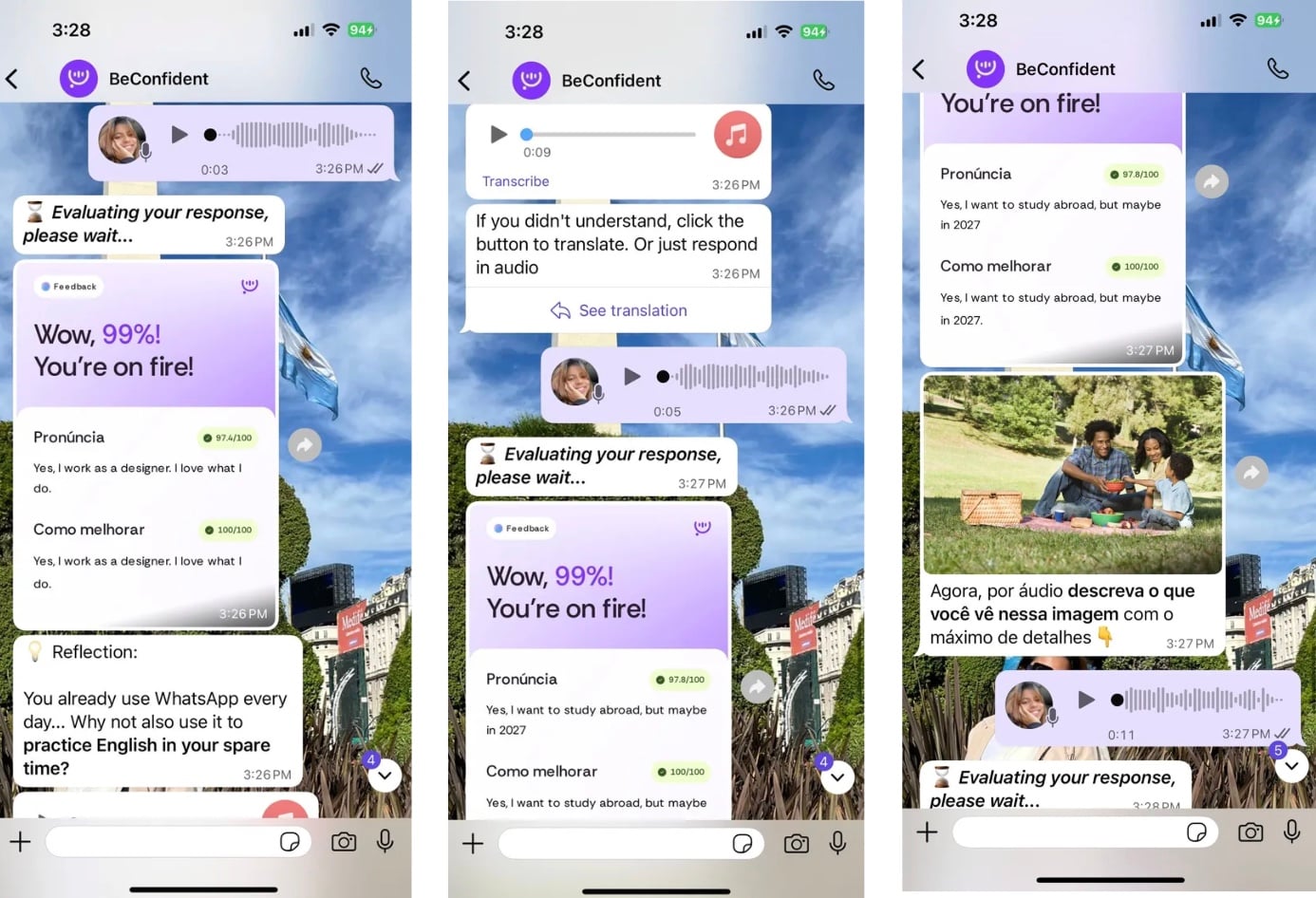
The best AI for technical English: BeConfident as your private tutor
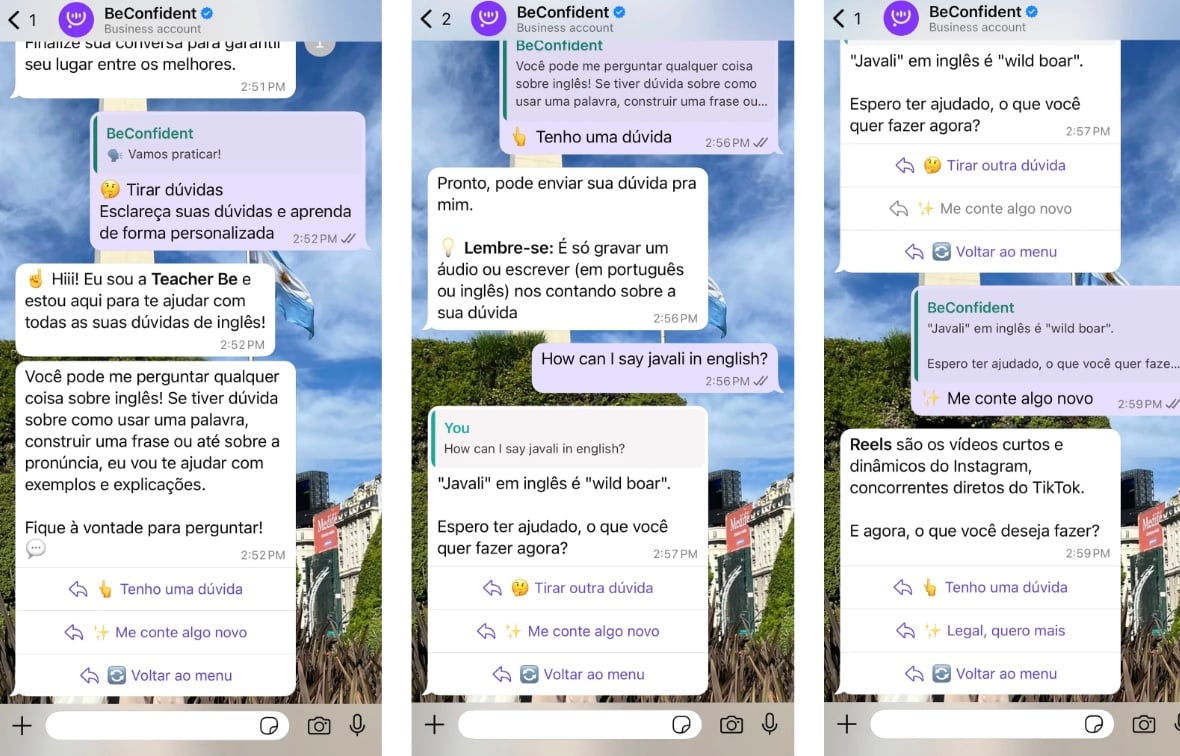
BeConfident offers structured lesson paths featuring technical vocabulary, 24/7 conversation practice with diverse native accents, and detailed reviews of grammar and pronunciation mistakes. The "I have a question" feature allows you to clarify technical terms immediately.
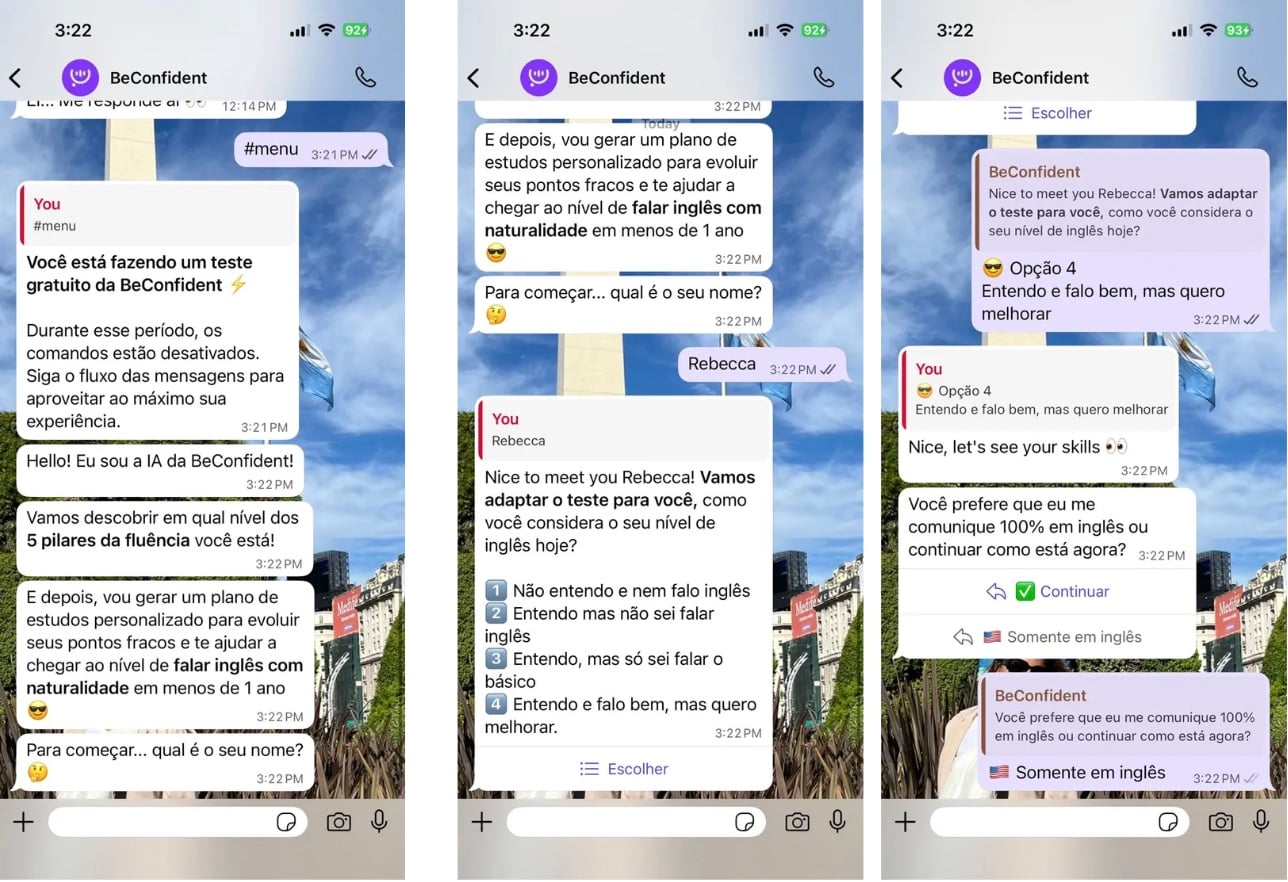
The free test evaluates your current CEFR level and identifies weak points. Following the personalized analysis, you can access structured tracks that integrate applied theory with immediate conversational practice. Take your free CEFR assessment to experience real conversation.
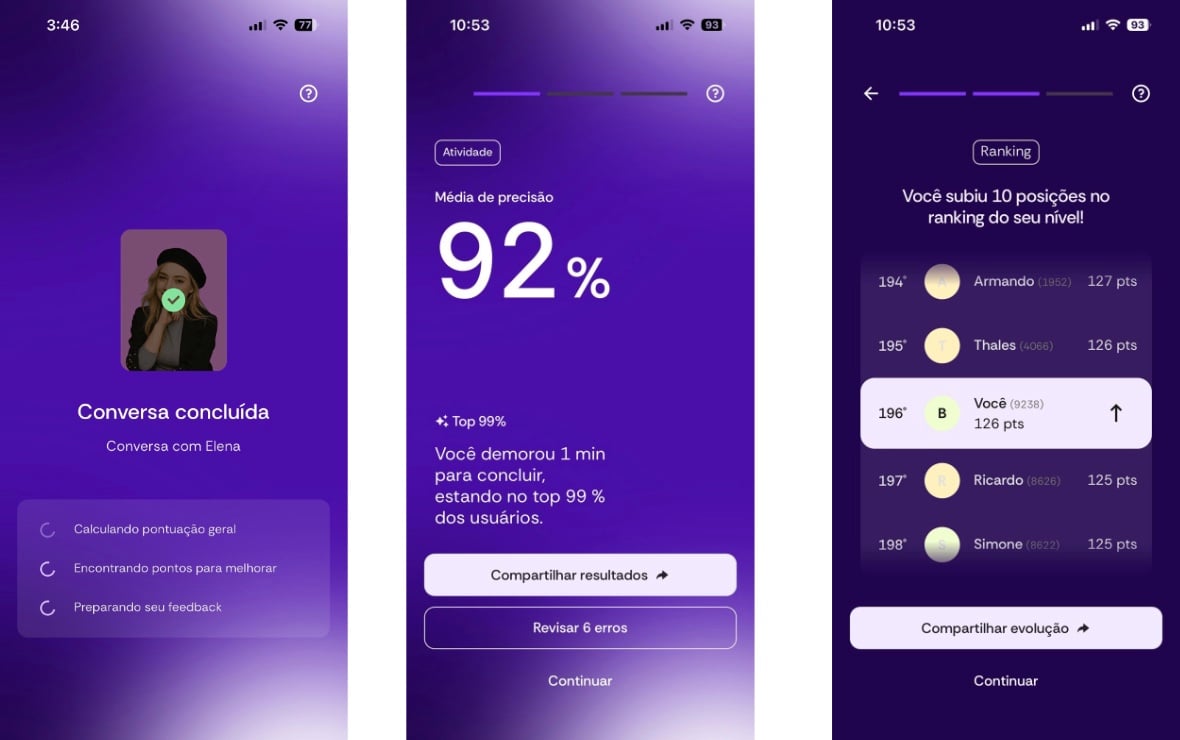
AI tutors with specific personalities simulate authentic professional interactions. Instant feedback corrects mistakes without judgment, which is essential for engineers who need to overcome embarrassment when speaking English in technical contexts. Practice without judgment, try it for free.
Related questions
How to use ChatGPT to learn technical English?
Configure ChatGPT with specific prompts, for example: "Act as a technical English tutor for civil engineering. Correct my grammar and suggest more precise vocabulary." Use this tutor to practice explaining complex concepts, simulating presentations, and correcting documents. When you need continuous conversation practice focused on engineering, migrate to BeConfident for specialized feedback.
What is the best AI to learn technical English in engineering?
BeConfident stands out in conversational personalization for engineers. BeConfident offers technical practice without social risks, specialized tutors, and integration with WhatsApp and smartwatch.
How to use AI in engineering for English?
A daily 15-minute routine builds consistent progress. Use the morning to learn new technical vocabulary, your lunch break to simulate a quick meeting, and the evening to review mistakes. Apply AI to real-world professional scenarios like "explaining load calculations" or "discussing project delays". BeConfident automates this routine with personalized reminders.
30-day daily routine for technical fluency
The 30-day routine follows a simple and direct progression. In the first 10 days, you build vocabulary foundation with 10 daily technical terms per field. This base creates a minimum repertoire to communicate confidently.
From day 11 to day 20, you apply this vocabulary in context. Simulate 5-minute meetings about real projects to transform passive knowledge into active speech.
From day 21 to day 30, you integrate everything into complete technical presentations via BeConfident. This step consolidates technical fluency and builds confidence for real situations.
Throughout the entire process, track your progress in the "My Progress" section. Monitor consecutive streaks, accumulated practice hours, and earned certificates. Start your routine and track your progress to begin your transformation.
FAQ
Is there a free AI for technical engineering English?
ChatGPT offers a limited free version for basic corrections. For advanced technical conversation, BeConfident provides a complete free trial with a CEFR assessment and a first-hand experience of specialized tutoring.
Does BeConfident work specifically for civil engineers?
BeConfident serves civil engineers and other growing professionals with custom conversational practice for professional and technical topics. Instant feedback helps refine complex sentences in a judgment-free environment.
How long does it take to see results in technical English?
With 15 to 30 minutes of daily practice, many engineers report significant improvement in 2 to 4 weeks. Technical conversational fluency typically develops within 2 to 3 months of consistent use.
Does AI replace face-to-face classes for technical English?
AI offers distinct advantages, such as 24/7 availability, reduced cost, total personalization, and a judgment-free environment. For engineers with busy schedules, this approach is usually more efficient than traditional methods.
How does BeConfident differ from other AI apps?
BeConfident focuses on fluent conversation, not gamification. The platform offers tutors with specific technical personalities, WhatsApp and smartwatch integration, and structured learning tracks for engineering professionals.
Generic methods limit the career growth of Brazilian engineers in a global market. Using AI as a 24/7 personal tutor accelerates technical English mastery in weeks, not years. Transform your career with a free trial and convert language limitations into professional growth opportunities.
Written by: Luan Cavallaro, Founder & CMO, BeConfident
Key takeaways from this article
Brazilian engineers can overcome low English proficiency by using AI to learn specific technical vocabulary from areas such as civil, mechanical, and electrical.
ChatGPT helps create custom glossaries, simulate meetings, and correct professional reports.
Pronunciation practice with instant feedback in tools like ELSA Speak and conversation simulations improves technical fluency without judgment.
BeConfident offers personalized conversation, integration with WhatsApp, and learning tracks for engineering professionals, focusing on technical language use.
Adopt a daily 30-day routine with BeConfident to achieve technical fluency in weeks: Start your 30-day routine for free.
Why AI is the best way to learn technical English in 2026
Gamified apps like Duolingo prioritize entertainment over real conversational fluency. Platforms like Cambly charge by the hour, with varying quality depending on the tutor. Traditional schools require fixed schedules and high costs. BeConfident overcomes these limitations with more than 200,000 paying students, an RA 1000 reputation on Reclame Aqui, and 3 million global users.
The table below compares essential features for engineers and shows how BeConfident combines affordability with technical personalization.
Feature | BeConfident | Duolingo | Cambly |
Technical conversation | ✓ | ✓ (advanced) | ✓ |
Available 24/7 on WhatsApp | ✓ | ✗ | ✗ |
Affordable price | ✓ | ✓ | ✗ |
Personalized technical feedback | ✓ | ✓ (adaptive AI) | Variable |
After understanding these differences between the platforms, the next step is to apply AI to your daily life with practical strategies focused on real-world engineering situations.
Practical strategies for using AI in technical engineering English
1. Create personalized glossaries by field
Civil engineering requires terms like "shear force" and "reinforced concrete". Mechanical engineering uses terms like "torque", "fatigue", and "yield strength". Electrical engineering demands vocabulary like "circuit breaker", "transformer", and "capacitor". Specialized apps like Fenls Civil Terms 2026 offer complete glossaries.
Prompts you can copy and paste:
"List 20 essential structural materials terms in English for civil engineering, with technical definitions and example sentences"
"Create a glossary of 15 mechanical engineering terms related to engines, including pronunciation and context of use"
"Generate technical electrical engineering vocabulary for power systems with practical examples"
2. Simulate technical meetings and projects
Use prompts to discuss specifications, negotiate with international clients, and present technical outcomes. Prompts for simulations:
"Simulate a meeting where I need to explain finite element analysis to an American client"
"Practice negotiating an infrastructure project timeline with British stakeholders"
3. Edit professional reports and emails
Use the first prompt for formal and more extensive documents, such as full technical reports: "Correct this technical report in professional English, maintaining engineering terminology: [your text]".
Use the second prompt for shorter and more direct communications with clients, such as emails about specifications: "Review this email to an international client about technical specifications, improving clarity and formality". Reports require detailed technical precision, while emails prioritize clarity and conciseness.
4. Train pronunciation with instant feedback
ELSA Speak 2026 offers detailed phonetic analysis and identifies specific pronunciation problems. Talkio AI provides more than 400 tutors with real-time feedback.
Use BeConfident via WhatsApp to practice technical conversation with immediate corrections. Simulate real-world scenarios like a "finite element analysis discussion" or a "project status update" to align training with your professional routine.
The best AI for technical English: BeConfident as your private tutor
BeConfident offers structured lesson paths featuring technical vocabulary, 24/7 conversation practice with diverse native accents, and detailed reviews of grammar and pronunciation mistakes. The "I have a question" feature allows you to clarify technical terms immediately.
The free test evaluates your current CEFR level and identifies weak points. Following the personalized analysis, you can access structured tracks that integrate applied theory with immediate conversational practice. Take your free CEFR assessment to experience real conversation.
AI tutors with specific personalities simulate authentic professional interactions. Instant feedback corrects mistakes without judgment, which is essential for engineers who need to overcome embarrassment when speaking English in technical contexts. Practice without judgment, try it for free.
Related questions
How to use ChatGPT to learn technical English?
Configure ChatGPT with specific prompts, for example: "Act as a technical English tutor for civil engineering. Correct my grammar and suggest more precise vocabulary." Use this tutor to practice explaining complex concepts, simulating presentations, and correcting documents. When you need continuous conversation practice focused on engineering, migrate to BeConfident for specialized feedback.
What is the best AI to learn technical English in engineering?
BeConfident stands out in conversational personalization for engineers. BeConfident offers technical practice without social risks, specialized tutors, and integration with WhatsApp and smartwatch.
How to use AI in engineering for English?
A daily 15-minute routine builds consistent progress. Use the morning to learn new technical vocabulary, your lunch break to simulate a quick meeting, and the evening to review mistakes. Apply AI to real-world professional scenarios like "explaining load calculations" or "discussing project delays". BeConfident automates this routine with personalized reminders.
30-day daily routine for technical fluency
The 30-day routine follows a simple and direct progression. In the first 10 days, you build vocabulary foundation with 10 daily technical terms per field. This base creates a minimum repertoire to communicate confidently.
From day 11 to day 20, you apply this vocabulary in context. Simulate 5-minute meetings about real projects to transform passive knowledge into active speech.
From day 21 to day 30, you integrate everything into complete technical presentations via BeConfident. This step consolidates technical fluency and builds confidence for real situations.
Throughout the entire process, track your progress in the "My Progress" section. Monitor consecutive streaks, accumulated practice hours, and earned certificates. Start your routine and track your progress to begin your transformation.
FAQ
Is there a free AI for technical engineering English?
ChatGPT offers a limited free version for basic corrections. For advanced technical conversation, BeConfident provides a complete free trial with a CEFR assessment and a first-hand experience of specialized tutoring.
Does BeConfident work specifically for civil engineers?
BeConfident serves civil engineers and other growing professionals with custom conversational practice for professional and technical topics. Instant feedback helps refine complex sentences in a judgment-free environment.
How long does it take to see results in technical English?
With 15 to 30 minutes of daily practice, many engineers report significant improvement in 2 to 4 weeks. Technical conversational fluency typically develops within 2 to 3 months of consistent use.
Does AI replace face-to-face classes for technical English?
AI offers distinct advantages, such as 24/7 availability, reduced cost, total personalization, and a judgment-free environment. For engineers with busy schedules, this approach is usually more efficient than traditional methods.
How does BeConfident differ from other AI apps?
BeConfident focuses on fluent conversation, not gamification. The platform offers tutors with specific technical personalities, WhatsApp and smartwatch integration, and structured learning tracks for engineering professionals.
Generic methods limit the career growth of Brazilian engineers in a global market. Using AI as a 24/7 personal tutor accelerates technical English mastery in weeks, not years. Transform your career with a free trial and convert language limitations into professional growth opportunities.