




How to increase English vocabulary: 9 practical tips
How to increase English vocabulary: 9 practical tips
How to increase English vocabulary: 9 practical tips
Written by: Luan Cavallaro, Founder & CMO, BeConfident
Key takeaways from this article
Actively practicing English for 10 to 20 minutes a day with spaced repetition (SRS) and conversation generates up to 90% vocabulary retention, outperforming passive methods.
Combining Anki for memorization with thematic immersion and active production in real dialogues helps automate the use of words in speech.
Focusing on 5 to 10 thematic words per day and systematically reviewing mistakes accelerates progress.
Using AI tutors 24 hours a day solves issues like lack of time, absence of a practice partner, and getting blocked when speaking.
BeConfident integrates contextualized SRS, unlimited conversation, and progress tracking to develop true fluency: Try it free now.
Why active daily practice beats passive methods
Watching a series in English leads to a different kind of learning than participating in an English conversation. Active methodologies can retain up to 90% of knowledge, while passive methods average around 5%. This type of active approach increases engagement and retention.
Learning vocabulary effectively requires integration with the four pillars of English: listening, speaking, reading, and writing. Vocabulary acts as the foundation that connects these skills and enables communication in both professional and personal contexts.
When you practice active conversation, your brain creates stronger neural connections, contextualizes words in real situations, and develops conversational automatism. This process explains why professionals who master conversational English have advantages in their careers, networking, and international travel.
A step-by-step plan for a 10 to 20-minute daily routine
Step 1: choose thematic words. Select 5 to 10 words linked to your goals, such as professional vocabulary for meetings, travel terms for exchange programs, or pop culture expressions for entertainment.
Step 2: use SRS with Anki. Implement spaced repetition to review words at planned intervals. Create flashcards with sentences and context, not just isolated translations.
Step 3: create controlled immersion. Consume content in English, like podcasts and series, focusing on the words you studied. Pause when necessary to identify their use in a real context.
Step 4: practice active production through conversation. Use the words in real dialogues. BeConfident offers AI tutors with different accents and personalities that adapt to your topics of interest. This approach reduces the limitations of tools like Duolingo, which does not deepen conversation, and Anki, which does not offer a conversational context.
This final step transforms passive knowledge into an active skill. Try it for free and start learning English today to experience conversation with immediate feedback.
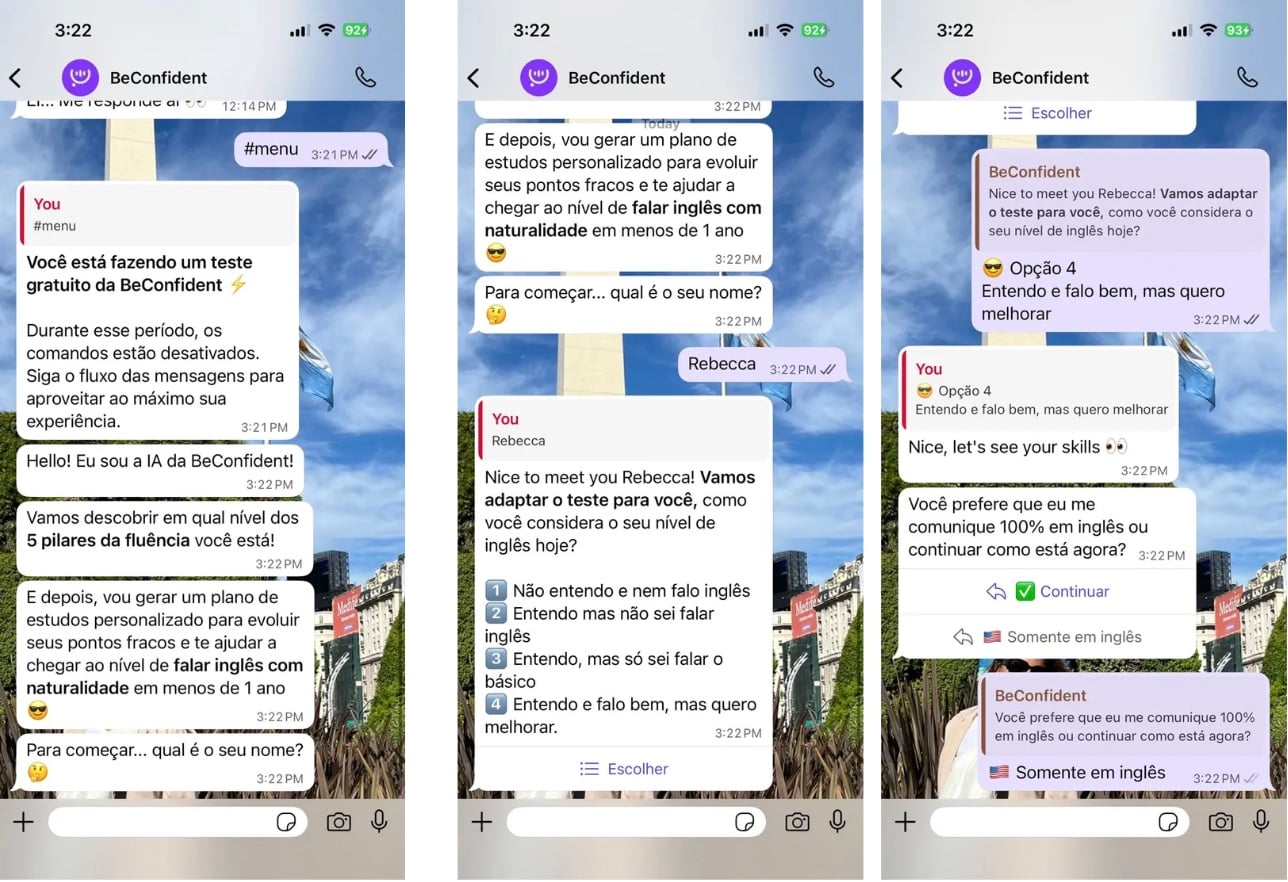
9 key tips to expand your English vocabulary through daily practice
1. Use a word of the day in context. Choose one new word a day and use it in three different sentences. Practice with BeConfident's AI tutors to confirm that the usage sounds natural.
2. Apply SRS with a personalized Anki. Adjust review intervals according to difficulty. Use about seven days for easy words and one to three days for difficult words.
3. Create weekly thematic immersion. Set a theme per week, such as business, travel, or technology. Consume content related to the theme and practice the corresponding vocabulary in conversations.
4. Lead purposeful conversations. Use BeConfident's "Tell me something new" feature to expand your vocabulary with varied and contextualized topics, without relying solely on lists.
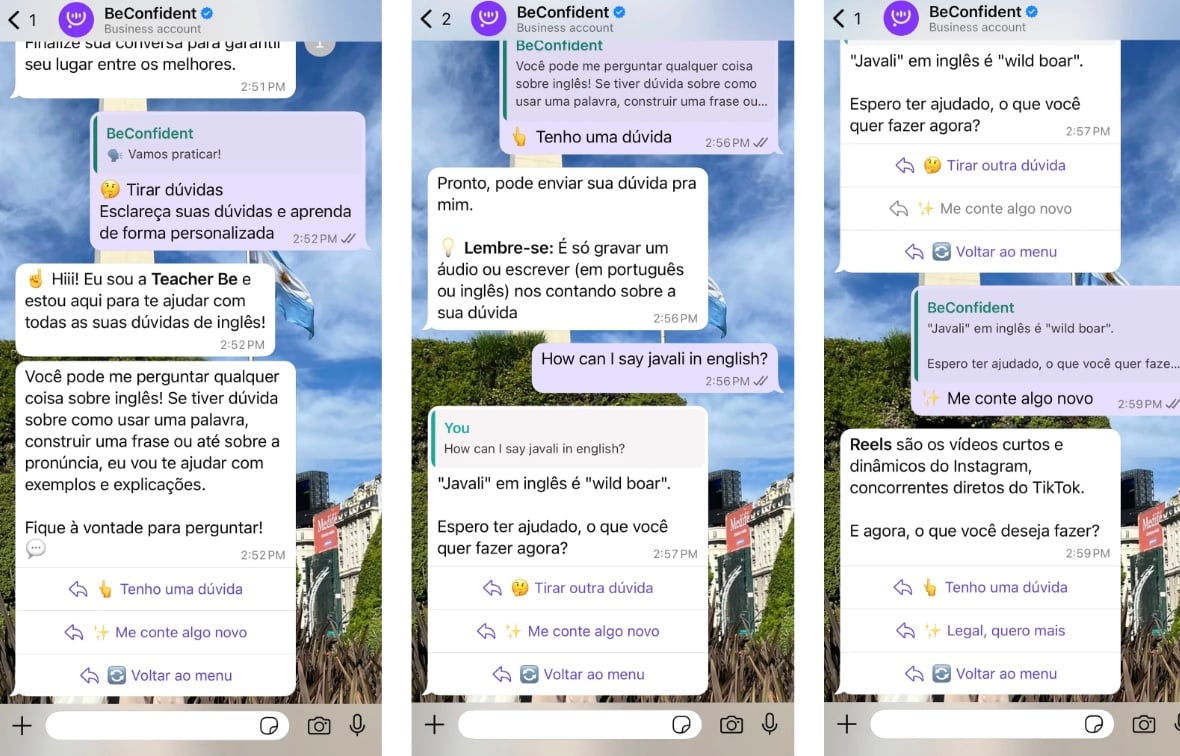
5. Conduct a systematic review of mistakes. Go to the "Review errors" menu to identify difficulty patterns in grammar, pronunciation, and idioms. Reinforce these areas in new conversations.
6. Maintain multi-channel practice. Toggle between the app, WhatsApp, and smartwatch to stay consistent even on busy days. Use short sessions so you do not break the routine.
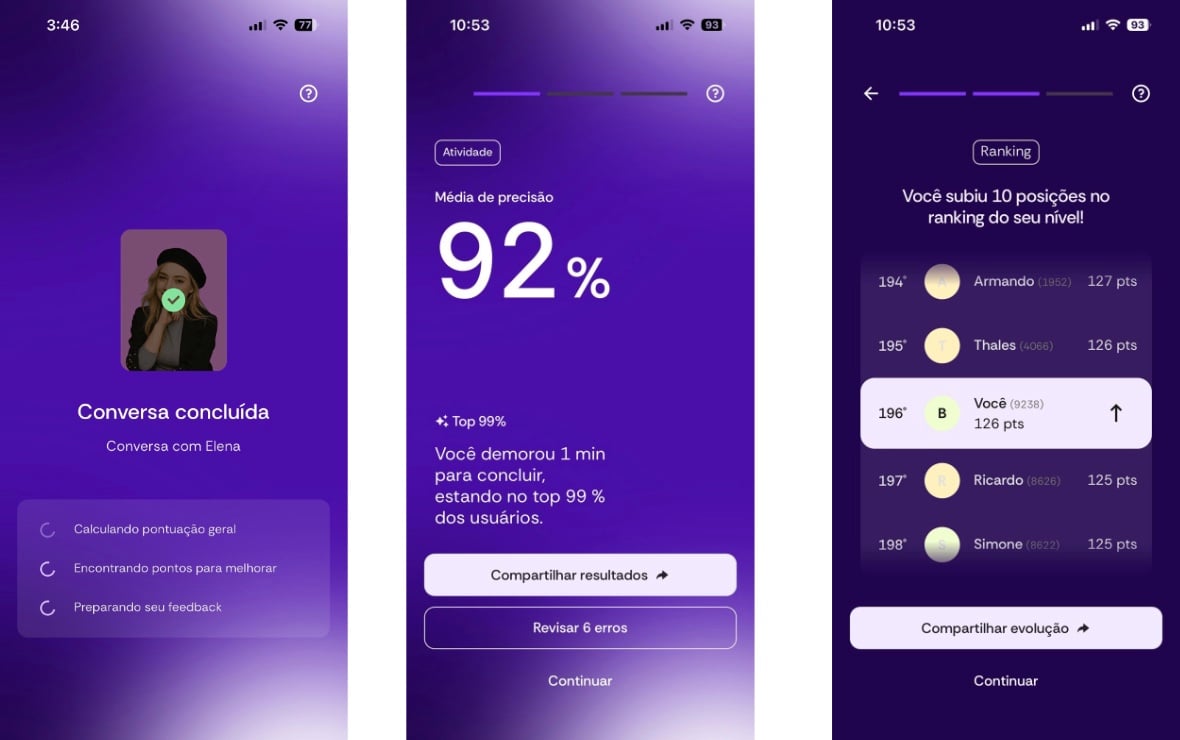
7. Organize structured thematic lists. Group vocabulary by context, such as 20 professional words, 20 travel words, and 20 pop culture words. Use these lists as a basis for simulated dialogues.
8. Use instant feedback. Take advantage of real-time corrections to adjust pronunciation, grammar, and the naturalness of expressions. Correcting errors immediately increases retention.
9. Track streaks in the My Progress menu. Monitor consecutive days of practice, total hours, and certificates earned. These indicators help maintain motivation and measure real progress.
Common problems and solutions with BeConfident
Problem: "I forget words when it's time to speak"
Solution: use the "Review errors" feature to reinforce problematic vocabulary in dialogues with real context.
Problem: "I don't have time to study"
Solution: practice via WhatsApp during commutes or use the smartwatch for quick 5 to 10-minute sessions.
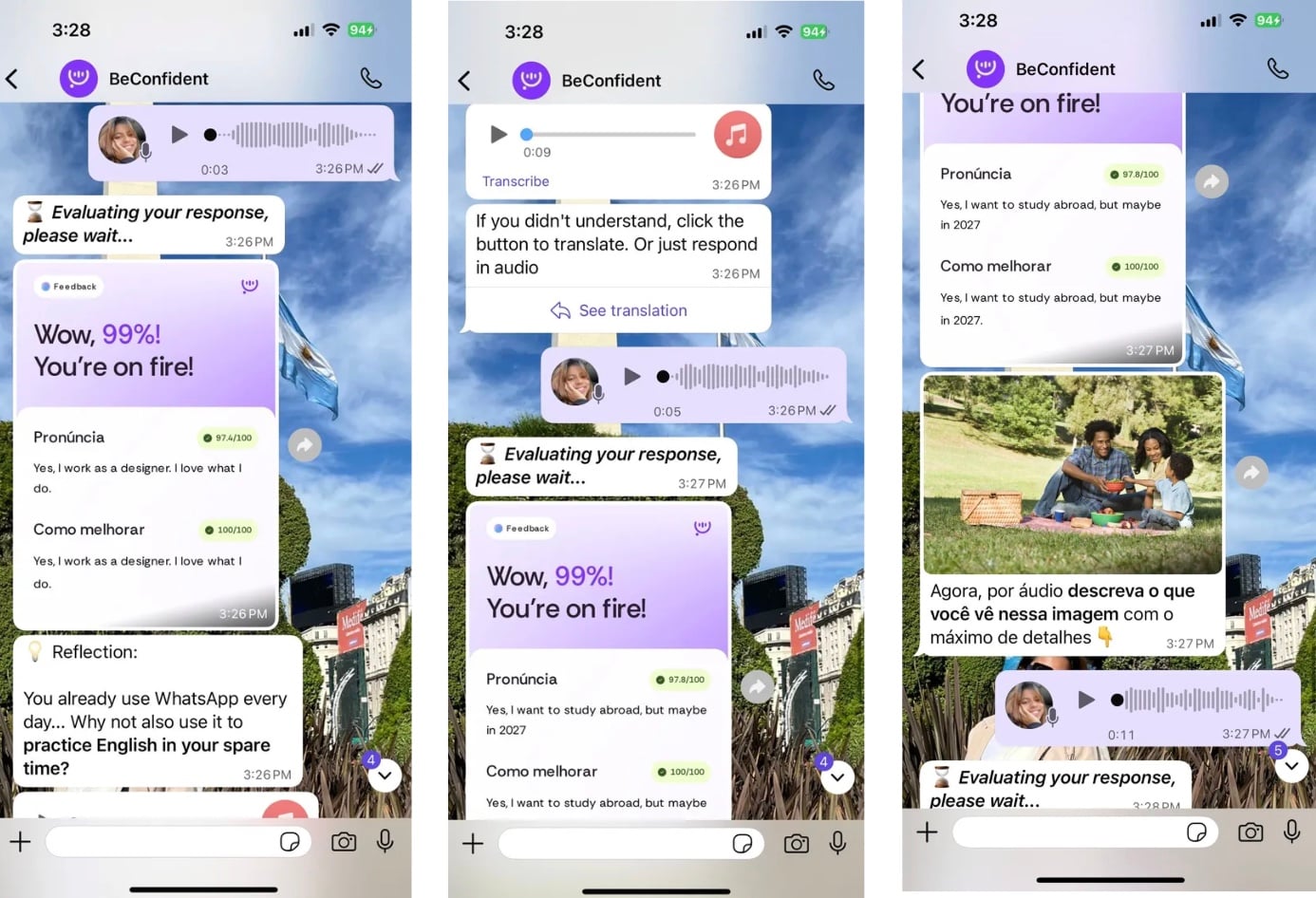
Problem: "I don't have anyone to practice with"
Solution: use AI tutors available 24/7, with different personalities and native accents, to train whenever possible.
Comparison with competitors: Duolingo prioritizes gamification and does not deepen conversation. Anki offers spaced repetition, but without a dialogue context. Traditional schools tend to have higher costs and rigid hours. BeConfident combines contextualized SRS, unlimited conversation, and an affordable price in a single platform.
Student testimonials show practical results, such as "Constant practice with AI helped me solve my frustration of forgetting words at crucial moments" and "In a month I was already speaking naturally, without locking up."
Essential lists: 20 to 30 words per theme for long-tail searches
Professional vocabulary:
Negotiate, leverage, stakeholder, deliverable, milestone, workflow, benchmark, scalable, ROI, KPI, synergy, implementation, optimization, compliance, accountability, strategic, innovative, collaborative, efficient, sustainable, competitive, analytical, leadership, performance, productivity, revenue, budget, forecast, proposal, presentation, meeting.
Travel vocabulary:
Check-in, boarding pass, layover, itinerary, accommodation, reservation, concierge, amenities, sightseeing, landmark, currency exchange, customs, departure, arrival, terminal, gate, baggage claim, rental car, GPS, directions, tourist attraction, souvenir, guidebook, hostel, hotel, restaurant, menu, tip, receipt, emergency, pharmacy.
Pop culture vocabulary:
Binge-watch, streaming, viral, trending, influencer, content creator, podcast, playlist, algorithm, social media, hashtag, meme, selfie, story, post, like, share, comment, follow, unfollow, block, DM, live stream, collaboration, brand deal, sponsorship, merchandise, fan base, hype, aesthetic, vibe.
How BeConfident solves recurring difficulties
BeConfident addresses the core difficulties in learning vocabulary with personalized AI technology. With over 140,000 paid students and an RA 1000 reputation on Reclame Aqui, the platform offers a complete solution for anyone seeking conversational fluency.
Try it for free and start learning English today and use your free time as an opportunity to develop consistent conversation.
Frequently Asked Questions (FAQ)
How to expand English vocabulary effectively?
Expanding vocabulary effectively requires a combination of spaced repetition, contextualized immersion, and regular conversational practice.
An efficient method involves learning 10 to 20 words per week through specific topics, using flashcards with real sentences, consuming content related to the topic, and practicing the words in dialogues. BeConfident integrates these elements into a single platform, allowing you to learn vocabulary and apply it immediately in conversations with AI tutors.
How long does it take to achieve fluency in English?
Adults typically need 600 to 1,200 total hours to reach fluency, distributed across CEFR levels: A1 (80 to 120 hours), A2 (180 to 200 hours), B1 (350 to 400 hours), and B2 (500 to 600 hours). With a daily practice of 30 minutes, it is possible to reach B2 in about a year. The consistency and quality of practice have a greater impact than the volume of hours. Methods that unite structured vocabulary and active conversation accelerate the process.
Is Anki enough to increase vocabulary?
Anki works very well for spaced repetition and memorization, but it is not enough for conversational fluency. The app helps retain words in memory, but it does not develop usage in real context, pronunciation, or natural speech.
To build professional vocabulary, it is worth combining SRS, such as Anki, with active conversational practice. BeConfident fills this gap by offering an environment where you apply the studied vocabulary in dialogues with immediate feedback.
Does Anitta's method for learning English work?
Anitta's method, which uses immersion in music and pop culture, works well for initial motivation and becoming familiar with the sounds of English. This approach, however, has a limited reach for broad vocabulary and conversational fluency.
Music exposes you to colloquial expressions and improves pronunciation, but it does not cover technical, professional vocabulary, or structured dialogue skills. For complete results, it is worth combining this cultural inspiration with systematic methods of active learning and conversation with feedback.
How many words do I need to know to be fluent in English?
For basic conversational fluency at the B2 level, you need about 3,000 to 4,000 active words. For advanced fluency at C1 and C2 levels, vocabulary usually reaches 8,000 to 10,000 words. The quality of usage matters more than the word count. Knowing how to use words in context, with proper pronunciation and naturalness, has a greater impact. Focusing on thematic vocabulary linked to your professional, travel, or personal goals yields more consistent results than memorizing random lists.
Conclusion: measure your success and move forward
Measuring progress when increasing English vocabulary through daily practice requires clear criteria. You can maintain a streak of 30 consecutive days, take periodic CEFR tests to track level progression, and practice vocabulary in increasingly complex contexts.
Signs of success include using new words spontaneously in conversations, understanding idioms in context, and feeling more confident speaking about specific topics. At advanced levels, exploring different accents and technical vocabulary further expands fluency.
BeConfident offers tools for this journey, from the initial test that identifies your CEFR level to detailed tracking in the My Progress menu. With over 140,000 students and an RA 1000 reputation, the platform shows that increasing English vocabulary through daily practice with conversational AI helps unlock real fluency.
Try it for free and start learning English today. Use 10 to 20 minutes a day to generate measurable progress toward the conversational fluency that supports your career, travel, and personal goals.
Written by: Luan Cavallaro, Founder & CMO, BeConfident
Key takeaways from this article
Actively practicing English for 10 to 20 minutes a day with spaced repetition (SRS) and conversation generates up to 90% vocabulary retention, outperforming passive methods.
Combining Anki for memorization with thematic immersion and active production in real dialogues helps automate the use of words in speech.
Focusing on 5 to 10 thematic words per day and systematically reviewing mistakes accelerates progress.
Using AI tutors 24 hours a day solves issues like lack of time, absence of a practice partner, and getting blocked when speaking.
BeConfident integrates contextualized SRS, unlimited conversation, and progress tracking to develop true fluency: Try it free now.
Why active daily practice beats passive methods
Watching a series in English leads to a different kind of learning than participating in an English conversation. Active methodologies can retain up to 90% of knowledge, while passive methods average around 5%. This type of active approach increases engagement and retention.
Learning vocabulary effectively requires integration with the four pillars of English: listening, speaking, reading, and writing. Vocabulary acts as the foundation that connects these skills and enables communication in both professional and personal contexts.
When you practice active conversation, your brain creates stronger neural connections, contextualizes words in real situations, and develops conversational automatism. This process explains why professionals who master conversational English have advantages in their careers, networking, and international travel.
A step-by-step plan for a 10 to 20-minute daily routine
Step 1: choose thematic words. Select 5 to 10 words linked to your goals, such as professional vocabulary for meetings, travel terms for exchange programs, or pop culture expressions for entertainment.
Step 2: use SRS with Anki. Implement spaced repetition to review words at planned intervals. Create flashcards with sentences and context, not just isolated translations.
Step 3: create controlled immersion. Consume content in English, like podcasts and series, focusing on the words you studied. Pause when necessary to identify their use in a real context.
Step 4: practice active production through conversation. Use the words in real dialogues. BeConfident offers AI tutors with different accents and personalities that adapt to your topics of interest. This approach reduces the limitations of tools like Duolingo, which does not deepen conversation, and Anki, which does not offer a conversational context.
This final step transforms passive knowledge into an active skill. Try it for free and start learning English today to experience conversation with immediate feedback.
9 key tips to expand your English vocabulary through daily practice
1. Use a word of the day in context. Choose one new word a day and use it in three different sentences. Practice with BeConfident's AI tutors to confirm that the usage sounds natural.
2. Apply SRS with a personalized Anki. Adjust review intervals according to difficulty. Use about seven days for easy words and one to three days for difficult words.
3. Create weekly thematic immersion. Set a theme per week, such as business, travel, or technology. Consume content related to the theme and practice the corresponding vocabulary in conversations.
4. Lead purposeful conversations. Use BeConfident's "Tell me something new" feature to expand your vocabulary with varied and contextualized topics, without relying solely on lists.
5. Conduct a systematic review of mistakes. Go to the "Review errors" menu to identify difficulty patterns in grammar, pronunciation, and idioms. Reinforce these areas in new conversations.
6. Maintain multi-channel practice. Toggle between the app, WhatsApp, and smartwatch to stay consistent even on busy days. Use short sessions so you do not break the routine.
7. Organize structured thematic lists. Group vocabulary by context, such as 20 professional words, 20 travel words, and 20 pop culture words. Use these lists as a basis for simulated dialogues.
8. Use instant feedback. Take advantage of real-time corrections to adjust pronunciation, grammar, and the naturalness of expressions. Correcting errors immediately increases retention.
9. Track streaks in the My Progress menu. Monitor consecutive days of practice, total hours, and certificates earned. These indicators help maintain motivation and measure real progress.
Common problems and solutions with BeConfident
Problem: "I forget words when it's time to speak"
Solution: use the "Review errors" feature to reinforce problematic vocabulary in dialogues with real context.
Problem: "I don't have time to study"
Solution: practice via WhatsApp during commutes or use the smartwatch for quick 5 to 10-minute sessions.
Problem: "I don't have anyone to practice with"
Solution: use AI tutors available 24/7, with different personalities and native accents, to train whenever possible.
Comparison with competitors: Duolingo prioritizes gamification and does not deepen conversation. Anki offers spaced repetition, but without a dialogue context. Traditional schools tend to have higher costs and rigid hours. BeConfident combines contextualized SRS, unlimited conversation, and an affordable price in a single platform.
Student testimonials show practical results, such as "Constant practice with AI helped me solve my frustration of forgetting words at crucial moments" and "In a month I was already speaking naturally, without locking up."
Essential lists: 20 to 30 words per theme for long-tail searches
Professional vocabulary:
Negotiate, leverage, stakeholder, deliverable, milestone, workflow, benchmark, scalable, ROI, KPI, synergy, implementation, optimization, compliance, accountability, strategic, innovative, collaborative, efficient, sustainable, competitive, analytical, leadership, performance, productivity, revenue, budget, forecast, proposal, presentation, meeting.
Travel vocabulary:
Check-in, boarding pass, layover, itinerary, accommodation, reservation, concierge, amenities, sightseeing, landmark, currency exchange, customs, departure, arrival, terminal, gate, baggage claim, rental car, GPS, directions, tourist attraction, souvenir, guidebook, hostel, hotel, restaurant, menu, tip, receipt, emergency, pharmacy.
Pop culture vocabulary:
Binge-watch, streaming, viral, trending, influencer, content creator, podcast, playlist, algorithm, social media, hashtag, meme, selfie, story, post, like, share, comment, follow, unfollow, block, DM, live stream, collaboration, brand deal, sponsorship, merchandise, fan base, hype, aesthetic, vibe.
How BeConfident solves recurring difficulties
BeConfident addresses the core difficulties in learning vocabulary with personalized AI technology. With over 140,000 paid students and an RA 1000 reputation on Reclame Aqui, the platform offers a complete solution for anyone seeking conversational fluency.
Try it for free and start learning English today and use your free time as an opportunity to develop consistent conversation.
Frequently Asked Questions (FAQ)
How to expand English vocabulary effectively?
Expanding vocabulary effectively requires a combination of spaced repetition, contextualized immersion, and regular conversational practice.
An efficient method involves learning 10 to 20 words per week through specific topics, using flashcards with real sentences, consuming content related to the topic, and practicing the words in dialogues. BeConfident integrates these elements into a single platform, allowing you to learn vocabulary and apply it immediately in conversations with AI tutors.
How long does it take to achieve fluency in English?
Adults typically need 600 to 1,200 total hours to reach fluency, distributed across CEFR levels: A1 (80 to 120 hours), A2 (180 to 200 hours), B1 (350 to 400 hours), and B2 (500 to 600 hours). With a daily practice of 30 minutes, it is possible to reach B2 in about a year. The consistency and quality of practice have a greater impact than the volume of hours. Methods that unite structured vocabulary and active conversation accelerate the process.
Is Anki enough to increase vocabulary?
Anki works very well for spaced repetition and memorization, but it is not enough for conversational fluency. The app helps retain words in memory, but it does not develop usage in real context, pronunciation, or natural speech.
To build professional vocabulary, it is worth combining SRS, such as Anki, with active conversational practice. BeConfident fills this gap by offering an environment where you apply the studied vocabulary in dialogues with immediate feedback.
Does Anitta's method for learning English work?
Anitta's method, which uses immersion in music and pop culture, works well for initial motivation and becoming familiar with the sounds of English. This approach, however, has a limited reach for broad vocabulary and conversational fluency.
Music exposes you to colloquial expressions and improves pronunciation, but it does not cover technical, professional vocabulary, or structured dialogue skills. For complete results, it is worth combining this cultural inspiration with systematic methods of active learning and conversation with feedback.
How many words do I need to know to be fluent in English?
For basic conversational fluency at the B2 level, you need about 3,000 to 4,000 active words. For advanced fluency at C1 and C2 levels, vocabulary usually reaches 8,000 to 10,000 words. The quality of usage matters more than the word count. Knowing how to use words in context, with proper pronunciation and naturalness, has a greater impact. Focusing on thematic vocabulary linked to your professional, travel, or personal goals yields more consistent results than memorizing random lists.
Conclusion: measure your success and move forward
Measuring progress when increasing English vocabulary through daily practice requires clear criteria. You can maintain a streak of 30 consecutive days, take periodic CEFR tests to track level progression, and practice vocabulary in increasingly complex contexts.
Signs of success include using new words spontaneously in conversations, understanding idioms in context, and feeling more confident speaking about specific topics. At advanced levels, exploring different accents and technical vocabulary further expands fluency.
BeConfident offers tools for this journey, from the initial test that identifies your CEFR level to detailed tracking in the My Progress menu. With over 140,000 students and an RA 1000 reputation, the platform shows that increasing English vocabulary through daily practice with conversational AI helps unlock real fluency.
Try it for free and start learning English today. Use 10 to 20 minutes a day to generate measurable progress toward the conversational fluency that supports your career, travel, and personal goals.