




7 platforms to practice English alone in 2026
7 platforms to practice English alone in 2026
7 platforms to practice English alone in 2026
Written by: Luan Cavallaro, Founder & CMO, BeConfident
Key takeaways from this article
Constant practice: English fluency depends on daily contact with conversation, and not just studying rules and vocabulary lists.
Online alternatives: it is possible to practice speaking even without face-to-face partners, using tutor platforms, language exchanges, communities, and digital courses.
Strategic use of leisure: series, movies, podcasts, and news in English become efficient training when used in an active way.
Combination of methods: mixing AI, human teachers, and controlled immersion usually generates better value for money and more consistent results.
BeConfident as an ally: BeConfident offers 24/7 English conversation practice with AI, with a free trial available at this link.
The challenge of practicing: why "having no one to practice English with" is so common for fluency
The lack of conversation partners is one of the main causes of blockages in English speaking. Many students can read, write, and understand well, but freeze when speaking because they barely practice out loud.
Traditional schools usually prioritize grammar and written exercises, with little real speaking time. The classroom environment can also generate anxiety and embarrassment, which reduces participation. To gain fluency, the brain needs repetition in contexts close to real life, with mistakes, corrections, and resumption of conversation.
1. BeConfident: guided conversation practice for those who have no one to practice English with
BeConfident is a platform focused on English conversation practice, with affordable prices and intensive use of artificial intelligence. There are over 140,000 paying students and 2 million users in more than 100 countries, with an RA 1000 reputation on Reclame Aqui, which indicates a good experience for those looking for consistency.
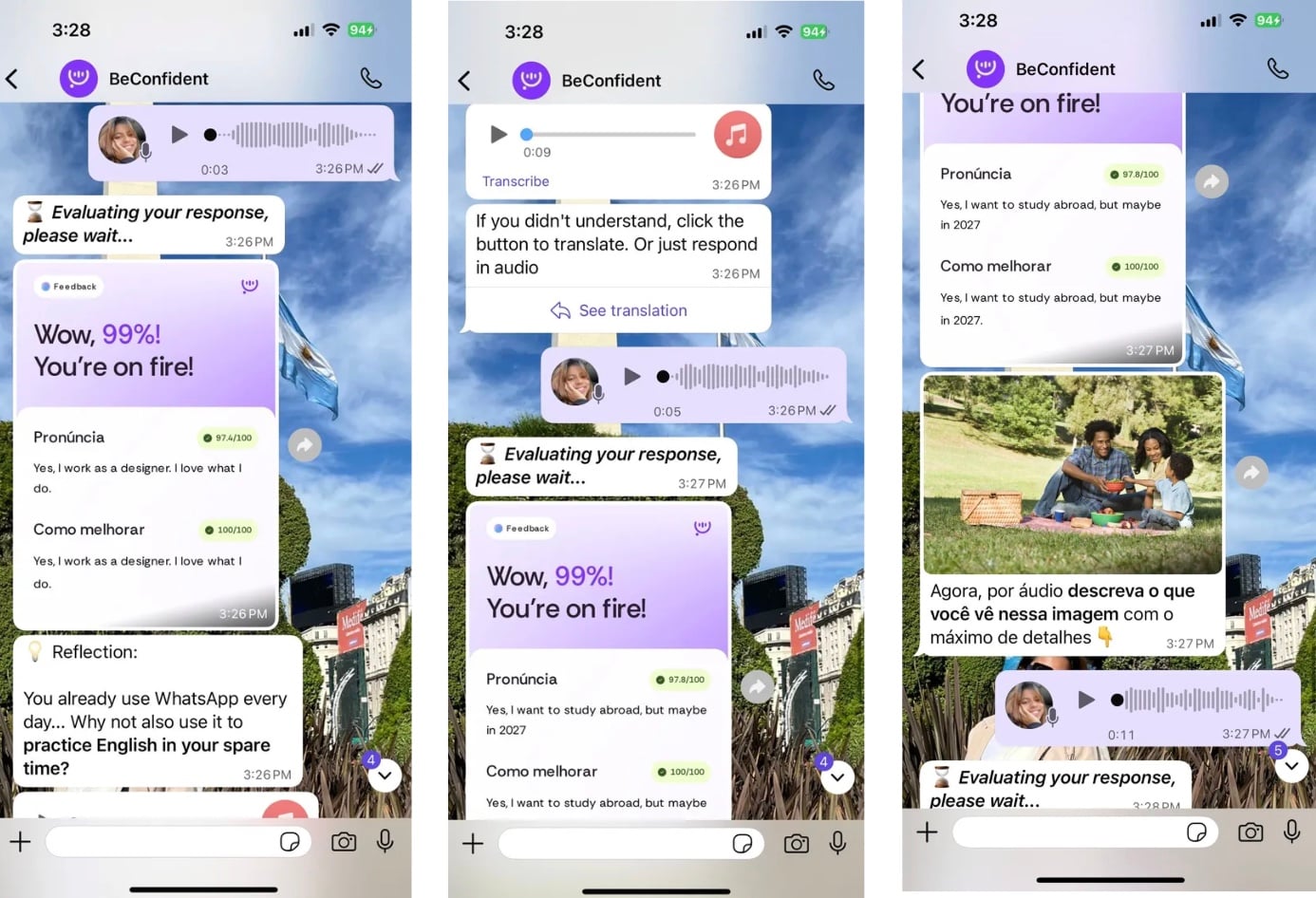
BeConfident's AI tutors have varied personalities and accents, adapt to your topics of interest, and give immediate feedback on grammar, pronunciation, and naturalness. This reduces the sense of judgment and allows you to test sentences, correct mistakes, and repeat as many times as necessary.
The platform offers:
24/7 practice through the app, WhatsApp, or smartwatch.
Structured paths that combine applied theory with guided conversations.
Quick features like "I have a question" for specific queries and "Tell me something new" to expand repertoire.
With lower costs than traditional in-person courses, BeConfident allows frequent practice, adapted to the schedule of those who work, study, or have little fixed time available.
Start a free trial of BeConfident and practice English in real conversations with AI today.
2. Online human tutor platforms: real conversation with guidance
Online education platforms have expanded access to native and bilingual teachers in different time zones and values. Preply offers live classes with a focus on real-time interaction, allowing you to choose tutors aligned with your objectives.
Italki connects millions of students with teachers for one-on-one conversation classes, focusing on practical goals such as interviews, meetings, or trips. For those who need to reduce cost, QQEnglish works with teachers from the Philippines and uses the Callan Method, based on guided repetition to gain speed in speaking.
These platforms offer:
Schedule flexibility: possibility to schedule classes on specific days and times.
Individual monitoring: direct correction of mistakes in pronunciation, vocabulary, and structure.
Personalization: choice of teachers by area of interest, accent, and teaching style.
The point of attention is the cost, which increases if you seek daily practice with human teachers.
3. Language exchange apps: swapping Portuguese for English
Language exchange apps create trades where you help someone with Portuguese and receive help with English. HelloTalk and Tandem connect speakers from different countries interested in chatting informally.
These apps usually offer:
Text and audio messages to practice writing and pronunciation.
Voice and video calls for longer conversations.
Collaborative correction made by native speakers.
The big advantage is free access to everyday English and cultural expressions. The limitation is that the quality of conversations depends heavily on the chosen partner, the time available, and the balance between helping and receiving help.
4. Online communities and discussion forums: group practice at no cost
Communities on platforms like Reddit, Discord servers focused on languages, and Facebook groups gather people who want to practice English together. There are specific spaces for beginners, intermediates, and advanced learners.
In general, these communities offer:
Voice rooms for group chats via video conference.
Pronunciation and vocabulary challenges with weekly themes.
Exchange of materials, such as conversation scripts and lists of useful expressions.
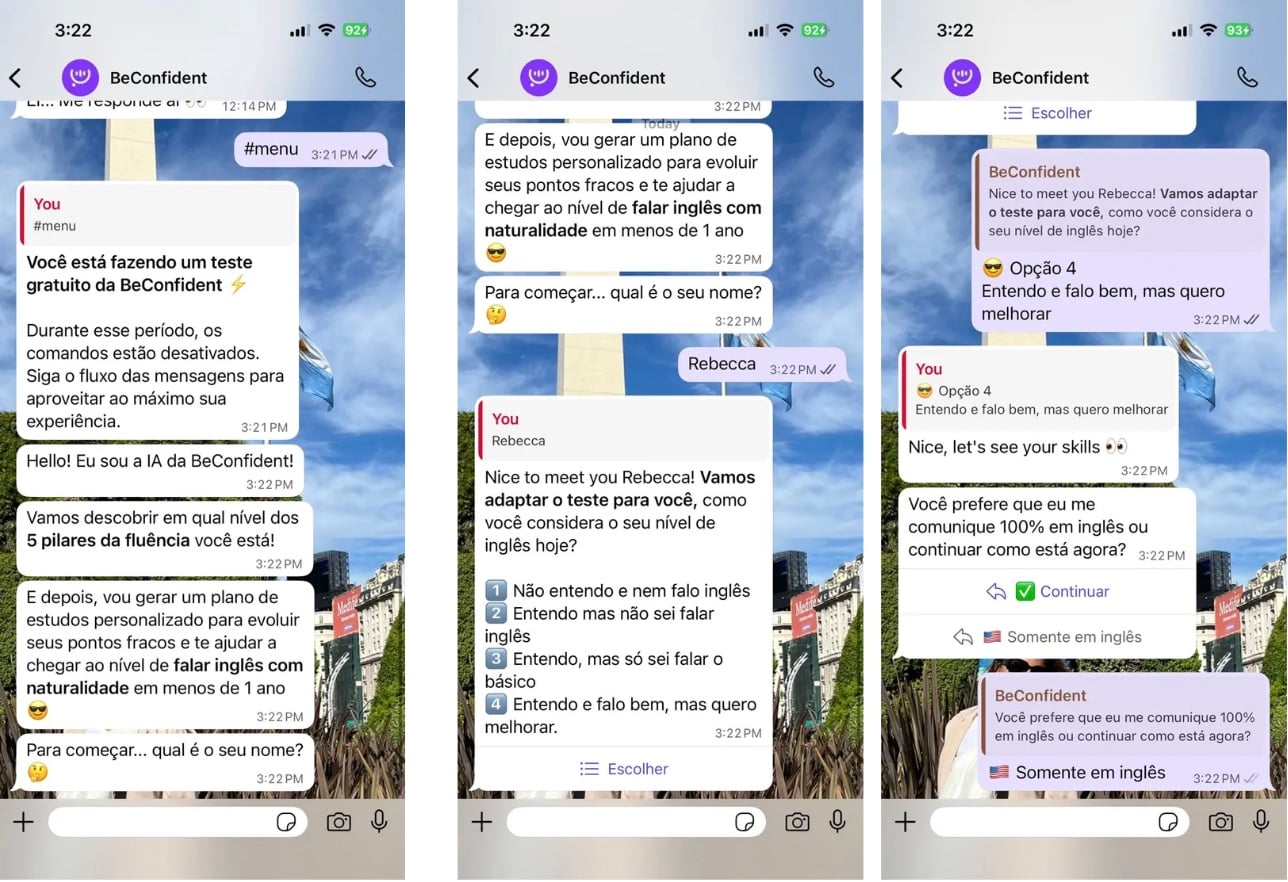
The challenge is the irregularity: active sessions won't always be available at the time you can participate, and feedback tends to be less structured. Take the free BeConfident trial and experience guided English conversation on WhatsApp, 24/7.
5. Gamified apps and self-study: consolidating vocabulary and structure
Self-study apps help create a routine and vocabulary base to support conversation. Duolingo offers short lessons and spaced repetition exercises, useful for memorizing simple words and structures.
Busuu complements with guided conversation exercises and corrections from the community itself. Kultivi offers complete video courses, from basic to advanced, for those who prefer to follow a structured program with no fixed hours.
These solutions work well for:
Building initial vocabulary and reviewing content in a light way.
Maintaining daily contact with English in small blocks of time.
On the other hand, they do not replace real conversations, as interaction is usually limited to multiple-choice, writing, or isolated speaking answers, without continuous dialogue.
6. Active consumption of English media: leisure that turns into speaking practice
Watching, listening, and reading in English makes contact with the language more frequent and sustainable. In 2026, the volume of free content is vast, making it easy to adapt study to your interests.
To make the best use of this type of practice, you can:
Watch series and movies with English subtitles and, when possible, advance to no subtitles.
Listen to podcasts and lectures on topics you already know, to focus on the language and not just the content.
Use shadowing, repeating snippets out loud to copy rhythm, intonation, and pronunciation.
Read news out loud, writing down new expressions and creating your own sentences with them.
Participating in English comments on videos and posts adds quick, contextualized writing practice, which reinforces vocabulary in real situations.
7. Immersion courses and exchanges: intensive progress in a short time
For those who can invest more time and resources, exchanges and intensive courses provide intense contact with the language in a predominantly English environment. Programs like Fluencypass combine classes, activities, and frequent conversation.
Even without traveling, it is possible to create a "controlled immersion" by setting aside a few hours a day just to listen, read, speak, and think in English, reducing the use of Portuguese during this period. When this strategy is combined with online conversation sessions, fluency gain tends to be faster.
Physical immersion remains a relevant shortcut, but for most people, the combination of digital resources and consistent practice offers a better balance of cost, time, and results.
Comparison: choosing the best solution for your conversation practice
Platform | Cost | Availability | Personalization |
BeConfident | Low | 24/7 | High |
Italki/Preply | Variable | Variable | High |
Free apps | Free | 24/7 | Low |
Exchange | Variable | Irregular | Low |
The choice depends on goals, budget, and study style. For those seeking frequent practice with controlled cost, AI solutions like BeConfident offer a balance between personalization, intensity, and schedule flexibility.
Frequently asked questions about how to practice English without anyone to talk to
Is it possible to achieve English fluency practicing only with AI?
Yes, especially when the AI offers natural conversations, varied contexts, and clear feedback. BeConfident uses AI tutors with different profiles and accents, allowing you to simulate different situations, repeat important topics, and monitor your own evolution. Still, whenever possible, combining AI with human interactions expands the social and cultural repertoire.
How much time a day should I practice conversation to see results?
Practicing 15 to 30 minutes of focused conversation daily usually generates visible progress over a few weeks. Consistency is more important than long, sporadic sessions. With BeConfident, you can fit short practices throughout the day, like in traffic or during breaks between tasks, without depending on fixed schedules.
How to overcome anxiety and embarrassment when speaking English?
Anxiety decreases with gradual exposure in environments where making mistakes does not cause embarrassment. Practicing with AI helps with this since there is no social judgment. Starting with familiar topics, using simple sentences, and tracking small progress makes the process smoother. On BeConfident, feedback is objective and improvement-oriented, contributing to progressively building confidence.
What are the signs that I am making progress in conversation?
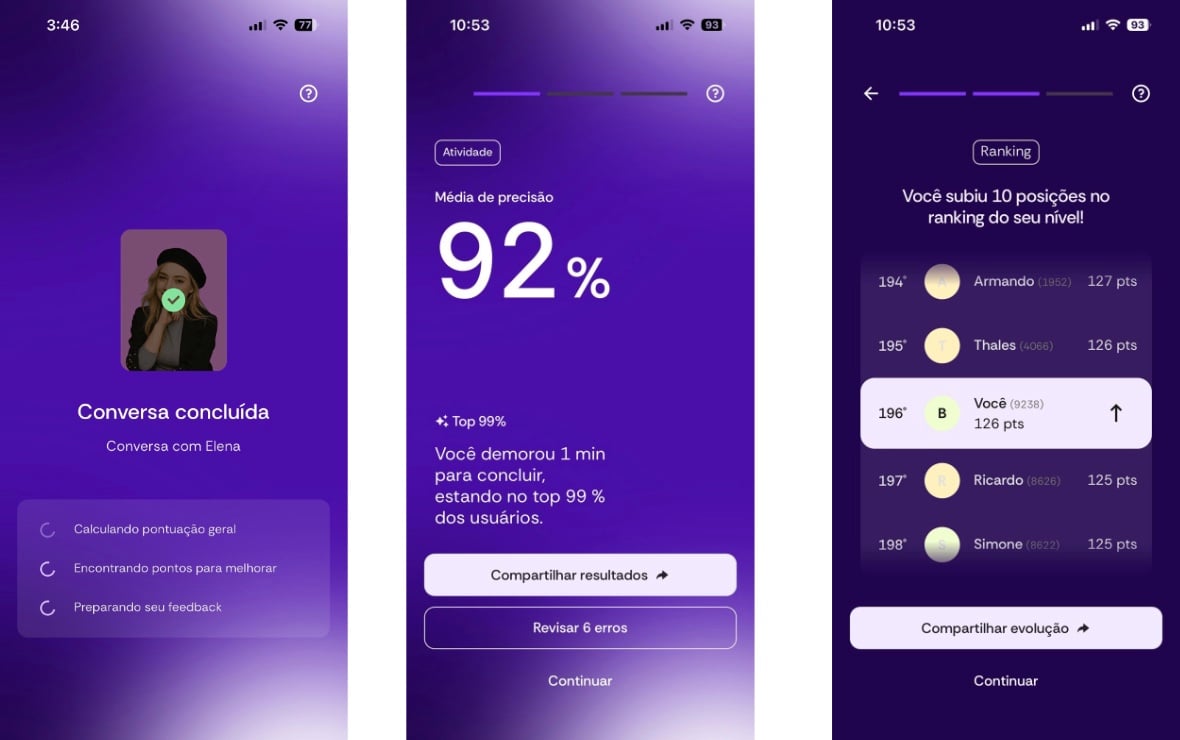
Some clear signs are: starting to think in English in everyday situations, being able to explain yourself even without knowing the exact word, making fewer long pauses to construct sentences, and keeping conversations going longer. BeConfident also offers metrics, such as practice hours and pronunciation quality, which reinforce the perception of progress.
Is it worth combining different practice methods?
Yes, combining methods tends to generate more complete results. Gamified apps help with vocabulary; English media improves listening and reading; and AI or human teachers develop oral fluency. BeConfident works well as the main conversation Hub, complemented by series, podcasts, reading, and when possible, interaction with human speakers.
Conclusion: practical paths to move past "I have no one to practice with"
The lack of conversation partners doesn't have to be a definitive obstacle to your English fluency. The seven strategies presented show that in 2026, there are accessible paths to practice speaking in different formats, intensities, and price ranges.
BeConfident helps fill the daily practice gap by providing 24/7 English conversation with an AI that adapts to your profile and routine. This allows you to turn free moments into consistent training, with immediate feedback and a focus on real communication.
Fluency comes from the active use of the language. Every conversation, every correction, and every new phrase spoken out loud gets you closer to the confidence needed to use English in professional, academic, and personal situations.
Take the free BeConfident trial now and start having someone to practice English with every day, right from your phone.
Written by: Luan Cavallaro, Founder & CMO, BeConfident
Key takeaways from this article
Constant practice: English fluency depends on daily contact with conversation, and not just studying rules and vocabulary lists.
Online alternatives: it is possible to practice speaking even without face-to-face partners, using tutor platforms, language exchanges, communities, and digital courses.
Strategic use of leisure: series, movies, podcasts, and news in English become efficient training when used in an active way.
Combination of methods: mixing AI, human teachers, and controlled immersion usually generates better value for money and more consistent results.
BeConfident as an ally: BeConfident offers 24/7 English conversation practice with AI, with a free trial available at this link.
The challenge of practicing: why "having no one to practice English with" is so common for fluency
The lack of conversation partners is one of the main causes of blockages in English speaking. Many students can read, write, and understand well, but freeze when speaking because they barely practice out loud.
Traditional schools usually prioritize grammar and written exercises, with little real speaking time. The classroom environment can also generate anxiety and embarrassment, which reduces participation. To gain fluency, the brain needs repetition in contexts close to real life, with mistakes, corrections, and resumption of conversation.
1. BeConfident: guided conversation practice for those who have no one to practice English with
BeConfident is a platform focused on English conversation practice, with affordable prices and intensive use of artificial intelligence. There are over 140,000 paying students and 2 million users in more than 100 countries, with an RA 1000 reputation on Reclame Aqui, which indicates a good experience for those looking for consistency.
BeConfident's AI tutors have varied personalities and accents, adapt to your topics of interest, and give immediate feedback on grammar, pronunciation, and naturalness. This reduces the sense of judgment and allows you to test sentences, correct mistakes, and repeat as many times as necessary.
The platform offers:
24/7 practice through the app, WhatsApp, or smartwatch.
Structured paths that combine applied theory with guided conversations.
Quick features like "I have a question" for specific queries and "Tell me something new" to expand repertoire.
With lower costs than traditional in-person courses, BeConfident allows frequent practice, adapted to the schedule of those who work, study, or have little fixed time available.
Start a free trial of BeConfident and practice English in real conversations with AI today.
2. Online human tutor platforms: real conversation with guidance
Online education platforms have expanded access to native and bilingual teachers in different time zones and values. Preply offers live classes with a focus on real-time interaction, allowing you to choose tutors aligned with your objectives.
Italki connects millions of students with teachers for one-on-one conversation classes, focusing on practical goals such as interviews, meetings, or trips. For those who need to reduce cost, QQEnglish works with teachers from the Philippines and uses the Callan Method, based on guided repetition to gain speed in speaking.
These platforms offer:
Schedule flexibility: possibility to schedule classes on specific days and times.
Individual monitoring: direct correction of mistakes in pronunciation, vocabulary, and structure.
Personalization: choice of teachers by area of interest, accent, and teaching style.
The point of attention is the cost, which increases if you seek daily practice with human teachers.
3. Language exchange apps: swapping Portuguese for English
Language exchange apps create trades where you help someone with Portuguese and receive help with English. HelloTalk and Tandem connect speakers from different countries interested in chatting informally.
These apps usually offer:
Text and audio messages to practice writing and pronunciation.
Voice and video calls for longer conversations.
Collaborative correction made by native speakers.
The big advantage is free access to everyday English and cultural expressions. The limitation is that the quality of conversations depends heavily on the chosen partner, the time available, and the balance between helping and receiving help.
4. Online communities and discussion forums: group practice at no cost
Communities on platforms like Reddit, Discord servers focused on languages, and Facebook groups gather people who want to practice English together. There are specific spaces for beginners, intermediates, and advanced learners.
In general, these communities offer:
Voice rooms for group chats via video conference.
Pronunciation and vocabulary challenges with weekly themes.
Exchange of materials, such as conversation scripts and lists of useful expressions.
The challenge is the irregularity: active sessions won't always be available at the time you can participate, and feedback tends to be less structured. Take the free BeConfident trial and experience guided English conversation on WhatsApp, 24/7.
5. Gamified apps and self-study: consolidating vocabulary and structure
Self-study apps help create a routine and vocabulary base to support conversation. Duolingo offers short lessons and spaced repetition exercises, useful for memorizing simple words and structures.
Busuu complements with guided conversation exercises and corrections from the community itself. Kultivi offers complete video courses, from basic to advanced, for those who prefer to follow a structured program with no fixed hours.
These solutions work well for:
Building initial vocabulary and reviewing content in a light way.
Maintaining daily contact with English in small blocks of time.
On the other hand, they do not replace real conversations, as interaction is usually limited to multiple-choice, writing, or isolated speaking answers, without continuous dialogue.
6. Active consumption of English media: leisure that turns into speaking practice
Watching, listening, and reading in English makes contact with the language more frequent and sustainable. In 2026, the volume of free content is vast, making it easy to adapt study to your interests.
To make the best use of this type of practice, you can:
Watch series and movies with English subtitles and, when possible, advance to no subtitles.
Listen to podcasts and lectures on topics you already know, to focus on the language and not just the content.
Use shadowing, repeating snippets out loud to copy rhythm, intonation, and pronunciation.
Read news out loud, writing down new expressions and creating your own sentences with them.
Participating in English comments on videos and posts adds quick, contextualized writing practice, which reinforces vocabulary in real situations.
7. Immersion courses and exchanges: intensive progress in a short time
For those who can invest more time and resources, exchanges and intensive courses provide intense contact with the language in a predominantly English environment. Programs like Fluencypass combine classes, activities, and frequent conversation.
Even without traveling, it is possible to create a "controlled immersion" by setting aside a few hours a day just to listen, read, speak, and think in English, reducing the use of Portuguese during this period. When this strategy is combined with online conversation sessions, fluency gain tends to be faster.
Physical immersion remains a relevant shortcut, but for most people, the combination of digital resources and consistent practice offers a better balance of cost, time, and results.
Comparison: choosing the best solution for your conversation practice
Platform | Cost | Availability | Personalization |
BeConfident | Low | 24/7 | High |
Italki/Preply | Variable | Variable | High |
Free apps | Free | 24/7 | Low |
Exchange | Variable | Irregular | Low |
The choice depends on goals, budget, and study style. For those seeking frequent practice with controlled cost, AI solutions like BeConfident offer a balance between personalization, intensity, and schedule flexibility.
Frequently asked questions about how to practice English without anyone to talk to
Is it possible to achieve English fluency practicing only with AI?
Yes, especially when the AI offers natural conversations, varied contexts, and clear feedback. BeConfident uses AI tutors with different profiles and accents, allowing you to simulate different situations, repeat important topics, and monitor your own evolution. Still, whenever possible, combining AI with human interactions expands the social and cultural repertoire.
How much time a day should I practice conversation to see results?
Practicing 15 to 30 minutes of focused conversation daily usually generates visible progress over a few weeks. Consistency is more important than long, sporadic sessions. With BeConfident, you can fit short practices throughout the day, like in traffic or during breaks between tasks, without depending on fixed schedules.
How to overcome anxiety and embarrassment when speaking English?
Anxiety decreases with gradual exposure in environments where making mistakes does not cause embarrassment. Practicing with AI helps with this since there is no social judgment. Starting with familiar topics, using simple sentences, and tracking small progress makes the process smoother. On BeConfident, feedback is objective and improvement-oriented, contributing to progressively building confidence.
What are the signs that I am making progress in conversation?
Some clear signs are: starting to think in English in everyday situations, being able to explain yourself even without knowing the exact word, making fewer long pauses to construct sentences, and keeping conversations going longer. BeConfident also offers metrics, such as practice hours and pronunciation quality, which reinforce the perception of progress.
Is it worth combining different practice methods?
Yes, combining methods tends to generate more complete results. Gamified apps help with vocabulary; English media improves listening and reading; and AI or human teachers develop oral fluency. BeConfident works well as the main conversation Hub, complemented by series, podcasts, reading, and when possible, interaction with human speakers.
Conclusion: practical paths to move past "I have no one to practice with"
The lack of conversation partners doesn't have to be a definitive obstacle to your English fluency. The seven strategies presented show that in 2026, there are accessible paths to practice speaking in different formats, intensities, and price ranges.
BeConfident helps fill the daily practice gap by providing 24/7 English conversation with an AI that adapts to your profile and routine. This allows you to turn free moments into consistent training, with immediate feedback and a focus on real communication.
Fluency comes from the active use of the language. Every conversation, every correction, and every new phrase spoken out loud gets you closer to the confidence needed to use English in professional, academic, and personal situations.
Take the free BeConfident trial now and start having someone to practice English with every day, right from your phone.