




How to unlock advanced English conversation: 7 techniques
How to unlock advanced English conversation: 7 techniques
How to unlock advanced English conversation: 7 techniques
Written by: Luan Cavallaro, Founder & CMO, BeConfident
Key takeaways from this article
Advanced shadowing with TED Talks reduces hesitation and improves pronunciation, intonation, and confidence in 10 daily minutes.
Subtitless immersion and narrating your daily routine in English reduce mental translation and train the brain for more natural fluency.
Idioms and phrasal verbs in context make you sound more natural in professional and social conversations.
AI practice on tools like BeConfident outperforms ChatGPT and HelloTalk for speaking, providing 24/7 pronunciation feedback without judgment.
A 30-day plan with streaks and metrics builds a consistent routine and measurable progress; take a free trial at BeConfident and track your evolution in 30 days.
Do you master grammar, but freeze in real conversations? Many people hesitate out of fear of mispronouncing, translate mentally before speaking, and end up avoiding situations where they need to use English spontaneously.
This pattern indicates a conversational block typical of advanced learners. The following 7 techniques form a practical system to unlock your speaking in 30 days of daily practice.
BeConfident allows you to practice conversation via app, WhatsApp, or smartwatch, which integrates learning continuously into your routine. Start your free trial and practice English on your smartwatch today
Step 1: Use advanced shadowing to lose the fear of speaking
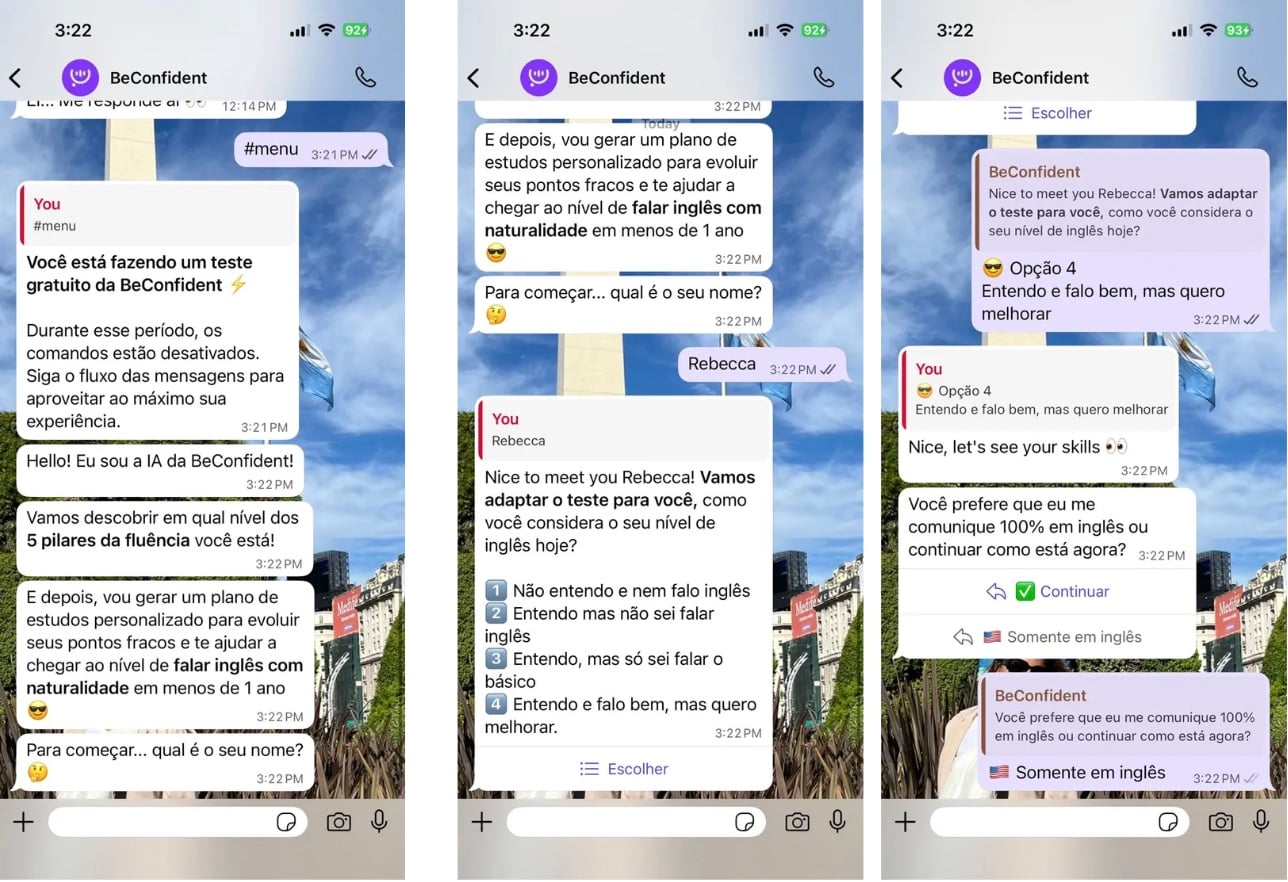
Shadowing significantly improves speaking competence, showing progress in pronunciation, fluency, vocabulary, intonation, and confidence. For advanced learners, this technique reduces hesitation and fear of making mistakes because it brings your speaking closer to a native's speech patterns.
Here is how to apply it in a structured way:
1. Choose a TED Talk related to your professional field, such as engineering, business, or technology. This ensures useful vocabulary for your real conversations.
2. Play clips of up to 30 seconds and repeat phrase by phrase, mimicking rhythm and intonation. This immediate repetition trains both ear and vocal muscles simultaneously.
3. Record your voice while shadowing and compare it with the original. This comparison helps identify clear differences in pronunciation and intonation.
4. Practice 10 minutes a day and gradually increase the speed of the content. This increase forces the brain to process English at a speed closer to natural speech.
5. Focus on idioms and connectors that native speakers use frequently. These elements reduce an otherwise "robotic" sound and make your speech flow more smoothly.
Practical example: an engineer can shadow talks on technological innovation. This combines technical updates with relevant pronunciation practice for meetings and presentations.
BeConfident offers personalized AI shadowing that analyzes accents and gives instant pronunciation feedback. You record your voice, receive specific corrections, and accelerate the process of unlocking your speech.
Step 2: Create screen-free immersion to think in English
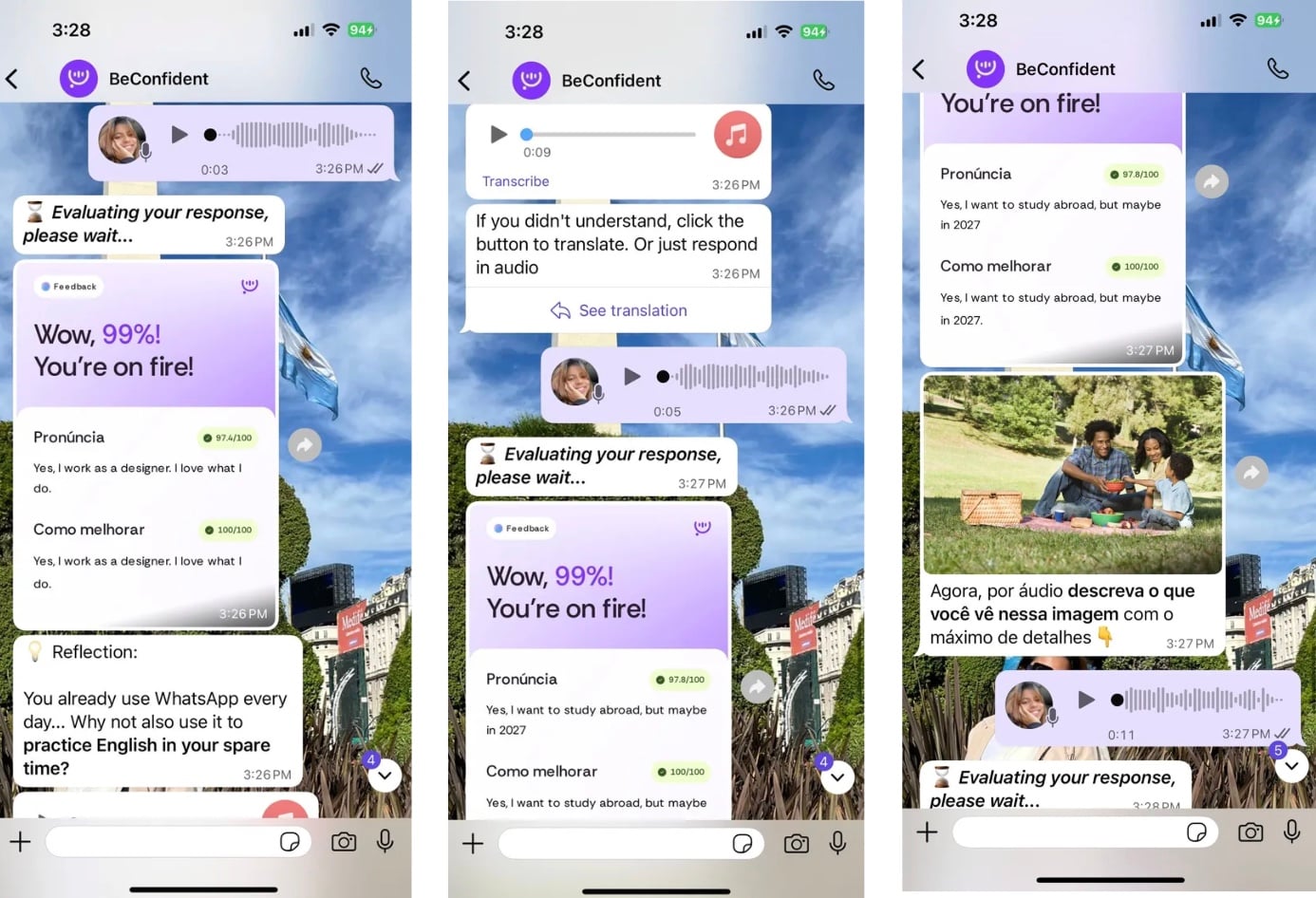
Shadowing improves pronunciation, but if you still translate mentally before speaking, the hesitation remains. Mental translation is one of the main enemies of fluency. Techniques to stop translating in your head before speaking English are essential for smoother and more enjoyable conversations.
Forced immersion trains the brain to process information directly in English. This process reduces the mental filter that delays responses and increases insecurity.
Immersion strategies for advanced level work best in combination:
1. Change the language of your phone, computer, and applications to English. This change forces daily contact with commands and messages in the target language.
2. Listen to podcasts during routine activities like running errands, commuting, and house chores. This habit turns idle time into constant language exposure.
3. Watch TV shows without subtitles, even if you miss some details at first. Repetition improves comprehension and gets your ear used to different accents.
4. Narrate your day out loud in English for 5 minutes daily. This active practice reduces mental translation because it requires spontaneous output.
5. Read the news only in English in the morning. This contact early in the day helps put the brain into "English mode" and template learning throughout the day.
At BeConfident, immersion tracks are available 24 hours a day. You can practice English conversation in the app, on WhatsApp, or on your smartwatch, making it easy to fit the language into your routine.
Step 3: Use idioms and phrasal verbs in real contexts
Many advanced learners sound too formal because they only use neutral vocabulary. Idiomatic expressions and phrasal verbs are essential for more natural-sounding speech.
Learning these expressions in context makes memorization longer-lasting and facilitates spontaneous use.
A simple process helps organize this learning:
1. List 5 idiomatic expressions per week related to your professional field. This selection ensures immediate relevance.
2. Use tools like NotebookLM (2026) to generate custom dialogues containing these expressions. These dialogues demonstrate how the phrases appear in real-world scenarios.
3. Practice each expression in 3 different contexts, such as formal, informal, and professional. This variation increases your flexibility when speaking.
4. Record yourself using the expressions in simulated situations. This recording allows you to notice if the usage feels natural or forced.
5. Incorporate at least one new expression a day into real conversations. This daily use consolidates active vocabulary.
Practical example: instead of saying "start a conversation," use "break the ice" in networking contexts. Instead of "understand," use "get the hang of it" in informal situations.
BeConfident features idiomatic expressions contextually. AI tutors simulate real situations where these expressions appear naturally, which accelerates their integration into your active vocabulary.
Step 4: Choose the right AI practice (BeConfident vs. ChatGPT and HelloTalk)
Conversational AI practice has changed how we learn languages, but different tools yield different results for those who are already advanced and want to unlock speaking fluency.
The choice of AI tool defines whether you are just studying English or actually practicing conversation consistently. Here is how each option behaves on key points for advanced speaking:
ChatGPT: works well for text, but is limited for oral practice. It doesn't offer real-time pronunciation feedback or accent correction.
HelloTalk: connects with native speakers, but can create anxiety and embarrassment. Scheduling options are limited, the quality of partners varies, and many users lack a teaching focus.
BeConfident: offers unlimited practice 24 hours a day, instant pronunciation and accent feedback, tutors with specific personalities, integration with WhatsApp and smartwatch, and a judgment-free environment.
The unique advantages of BeConfident complement each other:
- Tutors specializing in different accents, such as American, British, South African, Canadian, and Indian, allowing you to focus on the accent most relevant to your career.
- Immediate feedback on grammar, pronunciation, and naturalness, correcting errors right at the moment they occur.
- A system of streaks that helps maintain consistency and transforms sporadic practice into a daily habit.
- Practice during daily activities via smartwatch, which reduces the excuse of lack of time and fits training into your routing.
BeConfident already brings together over 3 million users and holds an RA 1000 reputation on Reclame Aqui, focusing on unlocking conversation at more advanced levels. Experience judgment-free practice with your free trial.
Step 5: Unlock your brain with daily prompts
Specific prompts reduce perfectionism because they require quick and spontaneous responses. This practice trains fluency and organization of ideas in real-time.
Some examples for professional situations:
- "Argue why you deserve a promotion."
- "Explain a complex project to a lay client."
- "Negotiate a tight deadline with your boss."
Some examples for social situations:
- "Tell a funny story that happened to you."
- "Politely defend a controversial opinion."
- "Describe your favorite movie without giving away the ending."
Set aside 10 minutes a day to respond to a different prompt. Focus on keeping speech flowing, not on getting everything right. Record your answers to track progress over the weeks.
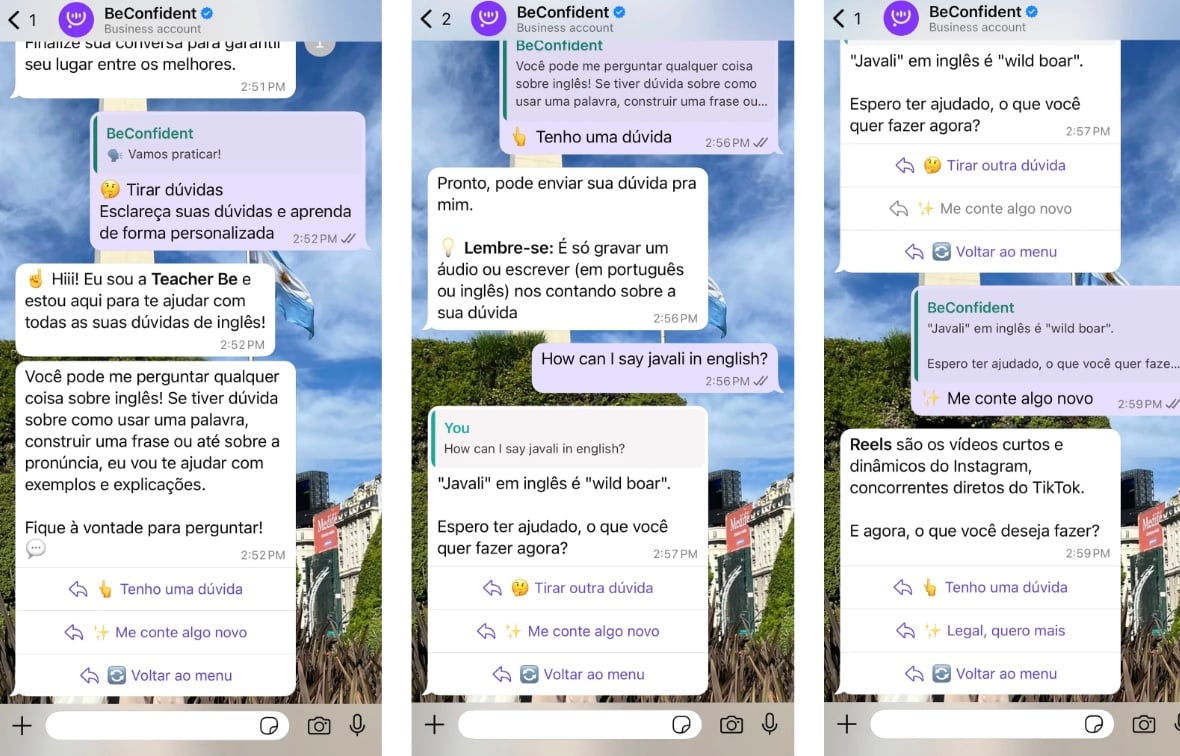
On BeConfident, "Teacher Be" suggests prompts aligned with your goals and answers questions during practice, keeping the conversation flow more natural.
Step 6: Follow a 30-day plan with streaks for consistency
Daily prompts are powerful, but without a structured plan, practice tends to become irregular. For an upper-intermediate B2 level, estimate 600 to 750 hours of practice, but effective methods and intensive practice accelerate progress.
A 30-day plan organizes these techniques into clear steps:
Week 1: build confidence with shadowing. Spend 5 minutes on shadowing and 10 minutes on basic prompts daily.
Week 2: incorporate immersion. Keep up shadowing and add subtitles-free immersion and your first AI conversations.
Week 3: focus on idioms. Use conversational AI focused on idioms and phrasal verbs in context.
Week 4: consolidate natural fluency. Engage in more advanced conversational AI and simulations of real situations.
Set a daily goal of 15 minutes, broken down as:
- 5 minutes of shadowing.
- At least 10 minutes of AI conversation.
Those with more time available can expand these blocks, maintaining the same proportion.
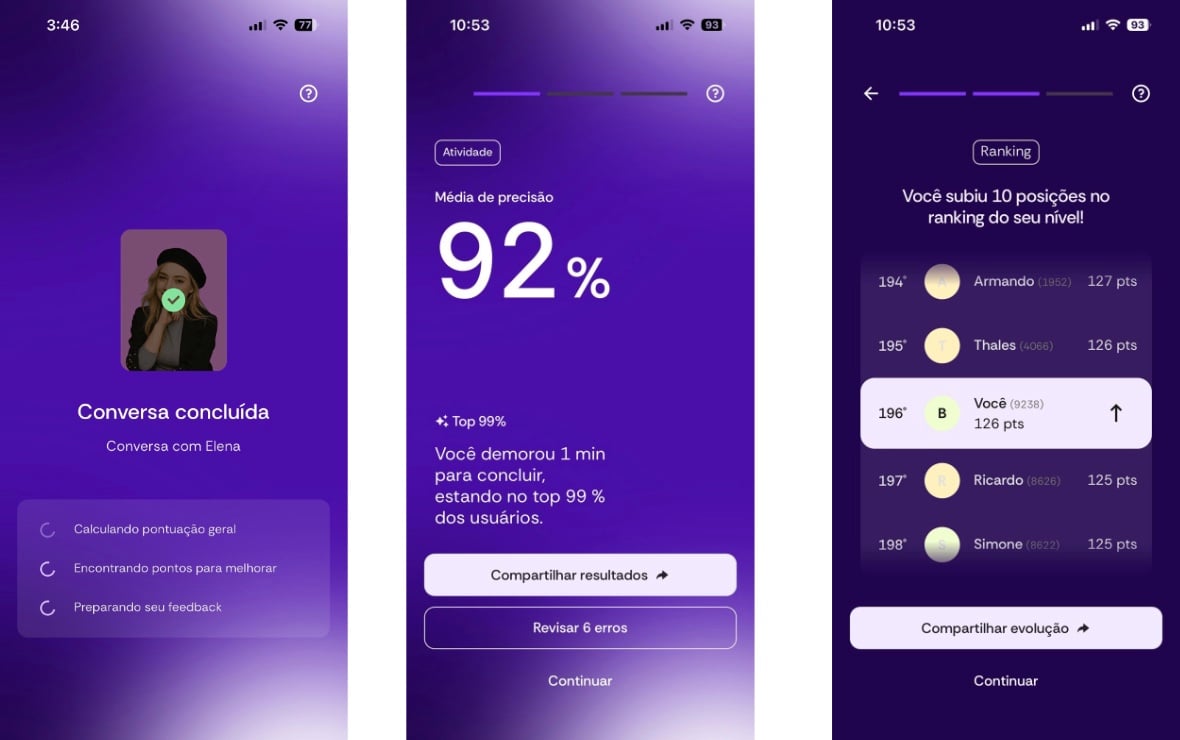
The "My Progress" system on BeConfident records streaks, practice hours, and positions in internal rankings. This gamification increases motivation during the 30 days and helps maintain regularity.
Step 7: Track progress metrics and maintain results
Measuring results makes progress more visible and helps adjust the plan after the initial 30 days.
Some useful indicators include:
- Response time in conversations, focusing on reducing long pauses.
- Number of idiomatic expressions used per conversation.
- Pronunciation feedback provided by the AI over time.
- Certificates and achievements earned within the platform.
The "My Progress" menu on BeConfident displays practice hours, consecutive days, and certificates. This data allows you to track your trajectory toward conversational fluency and maintain momentum after the 30-day plan.
FAQ: Common questions about unlocking conversation
How to use ChatGPT to practice speaking English?
ChatGPT helps with text practice, but does not analyze pronunciation or accents in real-time. To train speaking effectively, you need a tool that listens to your speech and offers immediate corrections. BeConfident does this analysis with AI tutors focused on oral conversation, with detailed feedback on pronunciation, intonation, and flow.
How long does it take to reach B2 in speaking?
With consistent daily practice of 15 to 30 minutes focused on speaking, advanced students can reach B2 conversational fluency in about 3 to 6 months. The method influences this timeframe. AI practice offers instant feedback and 24-hour availability, which tends to speed up the process compared to methods dependent on fixed schedules and human partners.
Does AI practice work for the advanced level?
AI practice works well for advanced learners who already understand grammar and vocabulary, but freeze when speaking. AI creates a judgment-free environment with immediate feedback and unlimited practice, which are important factors for overcoming psychological blocks. Unlike apps focused on basic lessons, conversational AI lets you practice complex and professional scenarios.
Is B2 considered advanced?
B2 is an upper-intermediate level in the CEFR. This level allows individuals to interact with fluency and spontaneity in conversations with native speakers without excessive effort. Many universities and international companies require at least B2, which represents functional conversational fluency for professional and academic contexts.
Is it possible to become fluent in 3 months?
Reaching complete fluency (C1 or C2) in 3 months is unlikely, but it is possible to make substantial conversational progress in that period. With intensive daily practice of 1 to 2 hours focused on speaking, B1 or B2 students can become more natural and confident speakers within 90 days. The focus lies in prioritizing oral practice, using instant feedback, and maintaining consistency.
Conclusion: Put your fluency plan into practice today
Unlocking conversational skills in advanced English requires a clear method and constant practice. The 7 techniques presented, which include shadowing, immersion, idiomatic expressions, AI practice, daily prompts, a structured plan, and progress metrics, form a direct path to overcoming blocks in 30 days.
The key differentiator is consistent practice without shame, backed by immediate feedback and 24-hour availability. Thousands of Brazilians have already improved their conversational fluency by following this type of structured routine.
Written by: Luan Cavallaro, Founder & CMO, BeConfident
Key takeaways from this article
Advanced shadowing with TED Talks reduces hesitation and improves pronunciation, intonation, and confidence in 10 daily minutes.
Subtitless immersion and narrating your daily routine in English reduce mental translation and train the brain for more natural fluency.
Idioms and phrasal verbs in context make you sound more natural in professional and social conversations.
AI practice on tools like BeConfident outperforms ChatGPT and HelloTalk for speaking, providing 24/7 pronunciation feedback without judgment.
A 30-day plan with streaks and metrics builds a consistent routine and measurable progress; take a free trial at BeConfident and track your evolution in 30 days.
Do you master grammar, but freeze in real conversations? Many people hesitate out of fear of mispronouncing, translate mentally before speaking, and end up avoiding situations where they need to use English spontaneously.
This pattern indicates a conversational block typical of advanced learners. The following 7 techniques form a practical system to unlock your speaking in 30 days of daily practice.
BeConfident allows you to practice conversation via app, WhatsApp, or smartwatch, which integrates learning continuously into your routine. Start your free trial and practice English on your smartwatch today
Step 1: Use advanced shadowing to lose the fear of speaking
Shadowing significantly improves speaking competence, showing progress in pronunciation, fluency, vocabulary, intonation, and confidence. For advanced learners, this technique reduces hesitation and fear of making mistakes because it brings your speaking closer to a native's speech patterns.
Here is how to apply it in a structured way:
1. Choose a TED Talk related to your professional field, such as engineering, business, or technology. This ensures useful vocabulary for your real conversations.
2. Play clips of up to 30 seconds and repeat phrase by phrase, mimicking rhythm and intonation. This immediate repetition trains both ear and vocal muscles simultaneously.
3. Record your voice while shadowing and compare it with the original. This comparison helps identify clear differences in pronunciation and intonation.
4. Practice 10 minutes a day and gradually increase the speed of the content. This increase forces the brain to process English at a speed closer to natural speech.
5. Focus on idioms and connectors that native speakers use frequently. These elements reduce an otherwise "robotic" sound and make your speech flow more smoothly.
Practical example: an engineer can shadow talks on technological innovation. This combines technical updates with relevant pronunciation practice for meetings and presentations.
BeConfident offers personalized AI shadowing that analyzes accents and gives instant pronunciation feedback. You record your voice, receive specific corrections, and accelerate the process of unlocking your speech.
Step 2: Create screen-free immersion to think in English
Shadowing improves pronunciation, but if you still translate mentally before speaking, the hesitation remains. Mental translation is one of the main enemies of fluency. Techniques to stop translating in your head before speaking English are essential for smoother and more enjoyable conversations.
Forced immersion trains the brain to process information directly in English. This process reduces the mental filter that delays responses and increases insecurity.
Immersion strategies for advanced level work best in combination:
1. Change the language of your phone, computer, and applications to English. This change forces daily contact with commands and messages in the target language.
2. Listen to podcasts during routine activities like running errands, commuting, and house chores. This habit turns idle time into constant language exposure.
3. Watch TV shows without subtitles, even if you miss some details at first. Repetition improves comprehension and gets your ear used to different accents.
4. Narrate your day out loud in English for 5 minutes daily. This active practice reduces mental translation because it requires spontaneous output.
5. Read the news only in English in the morning. This contact early in the day helps put the brain into "English mode" and template learning throughout the day.
At BeConfident, immersion tracks are available 24 hours a day. You can practice English conversation in the app, on WhatsApp, or on your smartwatch, making it easy to fit the language into your routine.
Step 3: Use idioms and phrasal verbs in real contexts
Many advanced learners sound too formal because they only use neutral vocabulary. Idiomatic expressions and phrasal verbs are essential for more natural-sounding speech.
Learning these expressions in context makes memorization longer-lasting and facilitates spontaneous use.
A simple process helps organize this learning:
1. List 5 idiomatic expressions per week related to your professional field. This selection ensures immediate relevance.
2. Use tools like NotebookLM (2026) to generate custom dialogues containing these expressions. These dialogues demonstrate how the phrases appear in real-world scenarios.
3. Practice each expression in 3 different contexts, such as formal, informal, and professional. This variation increases your flexibility when speaking.
4. Record yourself using the expressions in simulated situations. This recording allows you to notice if the usage feels natural or forced.
5. Incorporate at least one new expression a day into real conversations. This daily use consolidates active vocabulary.
Practical example: instead of saying "start a conversation," use "break the ice" in networking contexts. Instead of "understand," use "get the hang of it" in informal situations.
BeConfident features idiomatic expressions contextually. AI tutors simulate real situations where these expressions appear naturally, which accelerates their integration into your active vocabulary.
Step 4: Choose the right AI practice (BeConfident vs. ChatGPT and HelloTalk)
Conversational AI practice has changed how we learn languages, but different tools yield different results for those who are already advanced and want to unlock speaking fluency.
The choice of AI tool defines whether you are just studying English or actually practicing conversation consistently. Here is how each option behaves on key points for advanced speaking:
ChatGPT: works well for text, but is limited for oral practice. It doesn't offer real-time pronunciation feedback or accent correction.
HelloTalk: connects with native speakers, but can create anxiety and embarrassment. Scheduling options are limited, the quality of partners varies, and many users lack a teaching focus.
BeConfident: offers unlimited practice 24 hours a day, instant pronunciation and accent feedback, tutors with specific personalities, integration with WhatsApp and smartwatch, and a judgment-free environment.
The unique advantages of BeConfident complement each other:
- Tutors specializing in different accents, such as American, British, South African, Canadian, and Indian, allowing you to focus on the accent most relevant to your career.
- Immediate feedback on grammar, pronunciation, and naturalness, correcting errors right at the moment they occur.
- A system of streaks that helps maintain consistency and transforms sporadic practice into a daily habit.
- Practice during daily activities via smartwatch, which reduces the excuse of lack of time and fits training into your routing.
BeConfident already brings together over 3 million users and holds an RA 1000 reputation on Reclame Aqui, focusing on unlocking conversation at more advanced levels. Experience judgment-free practice with your free trial.
Step 5: Unlock your brain with daily prompts
Specific prompts reduce perfectionism because they require quick and spontaneous responses. This practice trains fluency and organization of ideas in real-time.
Some examples for professional situations:
- "Argue why you deserve a promotion."
- "Explain a complex project to a lay client."
- "Negotiate a tight deadline with your boss."
Some examples for social situations:
- "Tell a funny story that happened to you."
- "Politely defend a controversial opinion."
- "Describe your favorite movie without giving away the ending."
Set aside 10 minutes a day to respond to a different prompt. Focus on keeping speech flowing, not on getting everything right. Record your answers to track progress over the weeks.
On BeConfident, "Teacher Be" suggests prompts aligned with your goals and answers questions during practice, keeping the conversation flow more natural.
Step 6: Follow a 30-day plan with streaks for consistency
Daily prompts are powerful, but without a structured plan, practice tends to become irregular. For an upper-intermediate B2 level, estimate 600 to 750 hours of practice, but effective methods and intensive practice accelerate progress.
A 30-day plan organizes these techniques into clear steps:
Week 1: build confidence with shadowing. Spend 5 minutes on shadowing and 10 minutes on basic prompts daily.
Week 2: incorporate immersion. Keep up shadowing and add subtitles-free immersion and your first AI conversations.
Week 3: focus on idioms. Use conversational AI focused on idioms and phrasal verbs in context.
Week 4: consolidate natural fluency. Engage in more advanced conversational AI and simulations of real situations.
Set a daily goal of 15 minutes, broken down as:
- 5 minutes of shadowing.
- At least 10 minutes of AI conversation.
Those with more time available can expand these blocks, maintaining the same proportion.
The "My Progress" system on BeConfident records streaks, practice hours, and positions in internal rankings. This gamification increases motivation during the 30 days and helps maintain regularity.
Step 7: Track progress metrics and maintain results
Measuring results makes progress more visible and helps adjust the plan after the initial 30 days.
Some useful indicators include:
- Response time in conversations, focusing on reducing long pauses.
- Number of idiomatic expressions used per conversation.
- Pronunciation feedback provided by the AI over time.
- Certificates and achievements earned within the platform.
The "My Progress" menu on BeConfident displays practice hours, consecutive days, and certificates. This data allows you to track your trajectory toward conversational fluency and maintain momentum after the 30-day plan.
FAQ: Common questions about unlocking conversation
How to use ChatGPT to practice speaking English?
ChatGPT helps with text practice, but does not analyze pronunciation or accents in real-time. To train speaking effectively, you need a tool that listens to your speech and offers immediate corrections. BeConfident does this analysis with AI tutors focused on oral conversation, with detailed feedback on pronunciation, intonation, and flow.
How long does it take to reach B2 in speaking?
With consistent daily practice of 15 to 30 minutes focused on speaking, advanced students can reach B2 conversational fluency in about 3 to 6 months. The method influences this timeframe. AI practice offers instant feedback and 24-hour availability, which tends to speed up the process compared to methods dependent on fixed schedules and human partners.
Does AI practice work for the advanced level?
AI practice works well for advanced learners who already understand grammar and vocabulary, but freeze when speaking. AI creates a judgment-free environment with immediate feedback and unlimited practice, which are important factors for overcoming psychological blocks. Unlike apps focused on basic lessons, conversational AI lets you practice complex and professional scenarios.
Is B2 considered advanced?
B2 is an upper-intermediate level in the CEFR. This level allows individuals to interact with fluency and spontaneity in conversations with native speakers without excessive effort. Many universities and international companies require at least B2, which represents functional conversational fluency for professional and academic contexts.
Is it possible to become fluent in 3 months?
Reaching complete fluency (C1 or C2) in 3 months is unlikely, but it is possible to make substantial conversational progress in that period. With intensive daily practice of 1 to 2 hours focused on speaking, B1 or B2 students can become more natural and confident speakers within 90 days. The focus lies in prioritizing oral practice, using instant feedback, and maintaining consistency.
Conclusion: Put your fluency plan into practice today
Unlocking conversational skills in advanced English requires a clear method and constant practice. The 7 techniques presented, which include shadowing, immersion, idiomatic expressions, AI practice, daily prompts, a structured plan, and progress metrics, form a direct path to overcoming blocks in 30 days.
The key differentiator is consistent practice without shame, backed by immediate feedback and 24-hour availability. Thousands of Brazilians have already improved their conversational fluency by following this type of structured routine.