




How to lose the fear of making mistakes when speaking English: 7 techniques
How to lose the fear of making mistakes when speaking English: 7 techniques
How to lose the fear of making mistakes when speaking English: 7 techniques
Written by: Luan Cavallaro, Founder & CMO, BeConfident
Key takeaways from this article
Accepting mistakes as a natural part of learning helps eliminate perfectionism and unlock fluency in spoken English.
Practicing alone with a mirror, recordings, and shadowing native audio increases confidence without exposure to external judgment.
Using specialized AI as tutors with native accents allows for personalized conversations and instant feedback on pronunciation.
Following a 10-minute daily plan for 2 weeks, progressing from personal to professional topics, builds consistent progress with regular reviews.
BeConfident outperforms traditional methods by offering unlimited 24/7 practice and proven results by millions of users: try it for free now and start practicing without feeling embarrassed about making mistakes.
Why the fear of making mistakes paralyzes us and how to change your mindset
Perfectionism is often the main villain of English fluency. Many Brazilians grew up in educational environments where teachers penalized mistakes, which created an association between speaking English and exposing oneself to judgment. This classroom memory persists into adulthood and causes competent professionals to freeze up during international presentations.
The fundamental shift in mindset is simple: effective communication matters more than grammar perfection. Native speakers frequently make mistakes and continue to communicate well. The problem is not with your mistakes, but with the lack of safe and personalized practice opportunities that traditional methods offer.
To put this mindset shift into practice, start by accepting mistakes as a natural part of learning. When you understand that every mistake serves as a stepping stone to fluency, the pressure decreases and confidence builds gradually.
7 practical steps to lose the fear of making mistakes when speaking English
Step 1: accept mistakes as part of learning
Changing your relationship with mistakes is an immediate move. Instead of seeing every error as a failure, treat the mistake as valuable feedback. Native Americans make grammatical errors on a daily basis and continue to communicate clearly, which shows that making a mistake does not prevent good communication.
To internalize this idea, set a daily goal: consciously make at least 3 mistakes when practicing English. This goal reduces the pressure for absolute correctness, normalizes making mistakes, and accelerates learning.
Step 2: practice in front of the mirror and record voice audios alone
Practicing in front of the mirror reduces the fear of external judgment and offers immediate visual feedback. Speaking out loud in front of the mirror helps build confidence and decreases hesitation when starting sentences in English.
Record 2-minute audio clips about daily topics, like your morning routine or plans for the week. Afterwards, listen to the content with a focus on noticing improvements and patterns, without excessive self-criticism. This practice creates familiarity with your own voice in English and makes the act of speaking more natural.
Step 3: shadowing technique with native audio
Shadowing means simultaneously repeating what you hear, as if your voice were a shadow of the original audio. This technique works on rhythm, intonation, and fluency in real-time.
Choose podcasts, movies, or series with a natural speaking speed. Start with 30-second segments of shadowing, focusing on rhythm and intonation, not on the perfection of each word. Over time, this practice trains your brain to process and reproduce English faster and reduces hesitation in spontaneous conversation.
Step 4: use AI for personalized conversation
Generic AI tools offer basic conversation, but specialized platforms like BeConfident deliver an experience focused on learning English. BeConfident offers AI tutors with distinct personalities and native American, British, and Australian accents, plus instant feedback on pronunciation and grammar.
You can practice via the app, WhatsApp, or smartwatch, and choose topics aligned with your professional or personal needs. This flexibility allows you to train for real situations safely and through repetition.
Try the AI tutors for free and choose the accent and personality that best fit your goal.
Step 5: set daily goals and follow a 2-week plan
A short, consistent routine yields better results than long and sporadic sessions. Establish a daily routine of 10 minutes divided into 3 minutes of shadowing, 4 minutes of AI conversation, and 3 minutes of reviewing mistakes.
This structure guarantees practice in listening, speaking, and reviewing in every session. In week 1, focus on personal topics such as hobbies, family, and routine to build confidence with familiar vocabulary. In week 2, transition to professional or travel topics and apply the confidence built in the previous stage.
Daily consistency builds linguistic muscle memory and makes speaking English increasingly automatic.
Step 6: progress to simulated phone calls without judgment
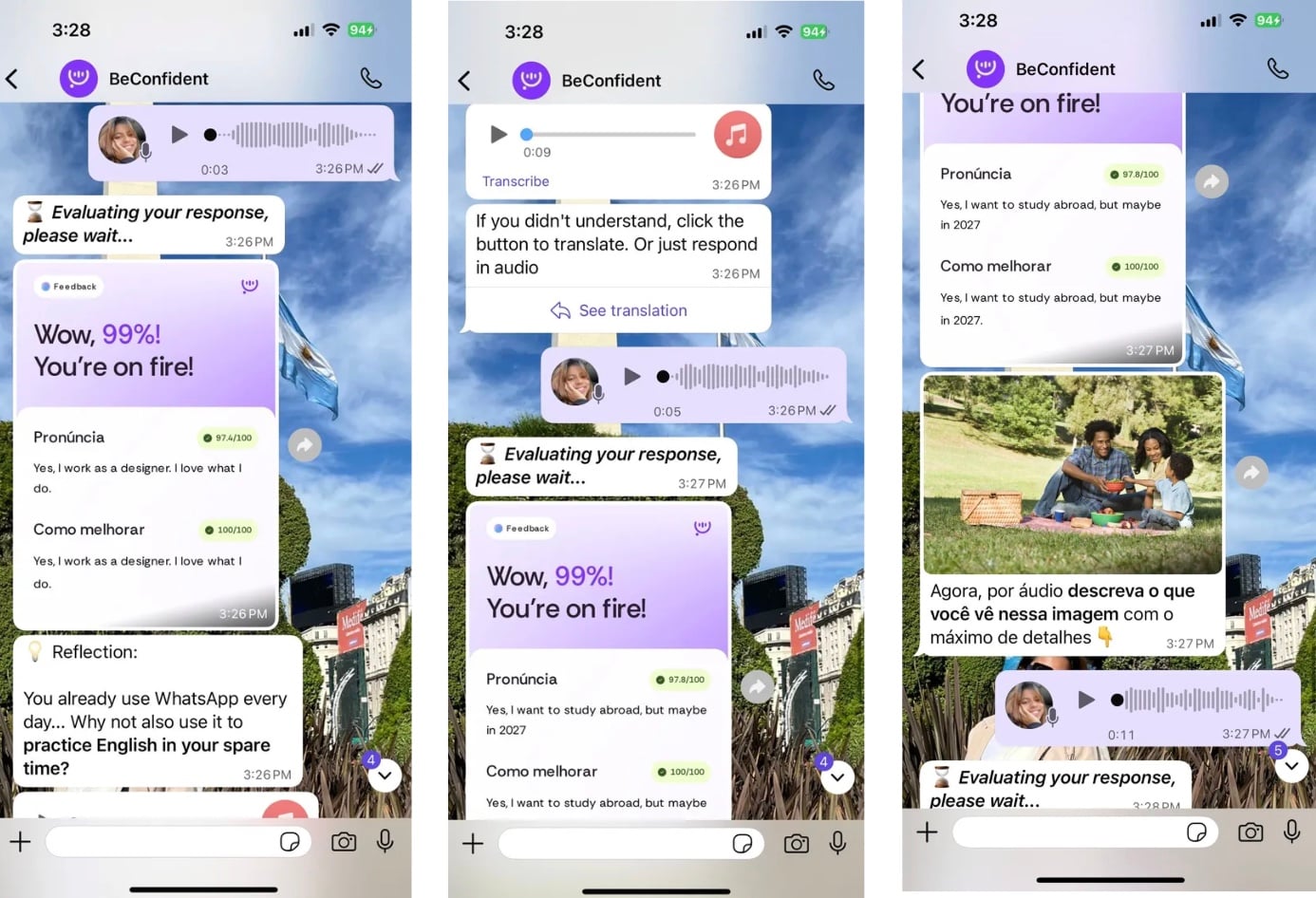
After building confidence in text conversations, progressing to simulated phone calls with AI helps you get closer to real-life situations. BeConfident allows you to make "calls" where you can mute the conversation, ask for repetitions, or request instant translations.
Practice specific scenarios like job interviews, hotel reservations, and business negotiations. This controlled, judgment-free environment accelerates your adaptation to contexts that usually cause more anxiety.
Step 7: review mistakes and track your evolution
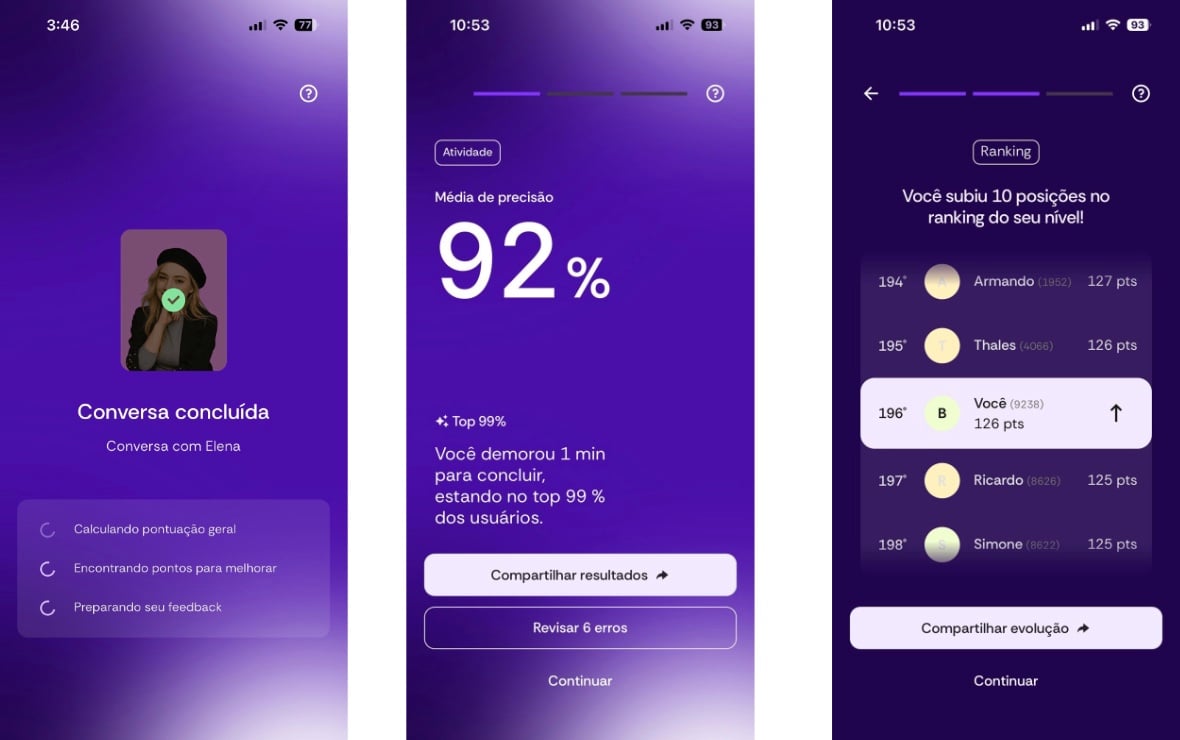
Reviewing what you have already practiced consolidates learning. Use the My Evolution Menu in BeConfident to track consecutive days of practice, accumulated hours, and certificates earned.
Frequently review feedback on grammar, pronunciation, and native expressions. This systematic review turns mistakes into stable knowledge and creates a continuous loop of improvement.
Comparison of methods: why BeConfident's AI practice stands out
Method | Conversation practice | Cost/accessibility | Personalized feedback |
|---|---|---|---|
BeConfident | Unlimited 24/7 | Fraction of traditional cost | Instant and detailed |
Traditional schools | Little, with rigid schedules | High cost, with fixed schedules | Limited to class time |
Duolingo | Basic and gamified | Free, yet superficial | Automated and generic |
Cambly/Italki | Good, but limited hourly | High hourly payment | Varies by tutor |
BeConfident has already reached 200,000 paying students and 3 million total users in more than 100 countries, maintaining an RA 1000 reputation on Reclame Aqui, numbers that show how consistent practice with AI helps transform fear into real confidence.
Implementation plan: integrate it into your routine
Applying the method to your daily life requires a simple starting point. Start tomorrow with a 10-minute checklist: open BeConfident, choose a tutor with a personality aligned with your goal, start a conversation with the topic "Tell me something new," and practice for 7 minutes. Then, set aside 3 minutes to review the feedback.
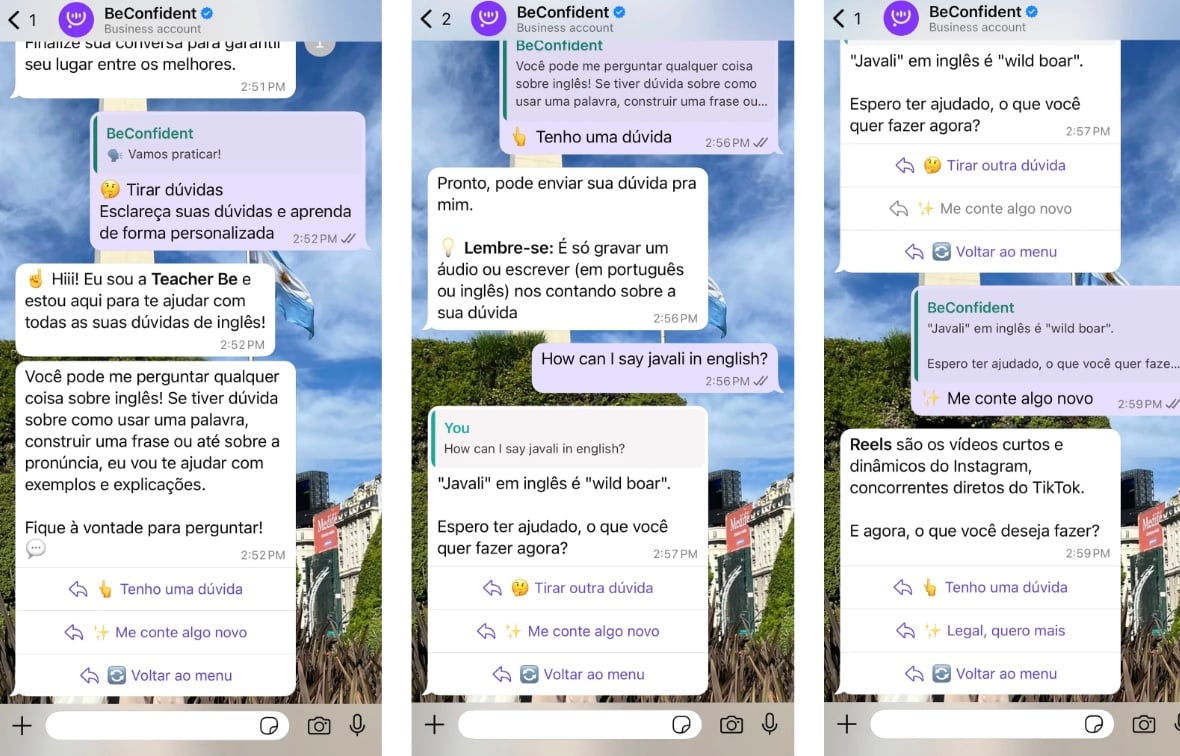
Personalizing the tutors increases the relevance of your practice. Professionals can focus on technical presentations, travelers on regional accents, and those interested in pop culture on idiomatic expressions. The platform's flexibility allows you to adjust the learning experience to your real context.
Frequently asked questions
How long does it take to lose the fear of speaking English?
With daily 10-minute practice using the 7 steps presented, most students report significant improvement in confidence within about 2 weeks. BeConfident accelerates this process by offering a judgment-free environment and instant feedback, which allows you to make mistakes without feeling embarrassed and learn from them on the spot.
Is BeConfident better than ChatGPT for practicing conversation?
BeConfident was developed specifically for English language learning. While ChatGPT offers generic conversation, BeConfident brings together tutors with defined personalities, diverse native accents, detailed feedback on pronunciation and grammar, and structured pathways that combine theory and conversation practice.
Does BeConfident work for beginners or only intermediate learners?
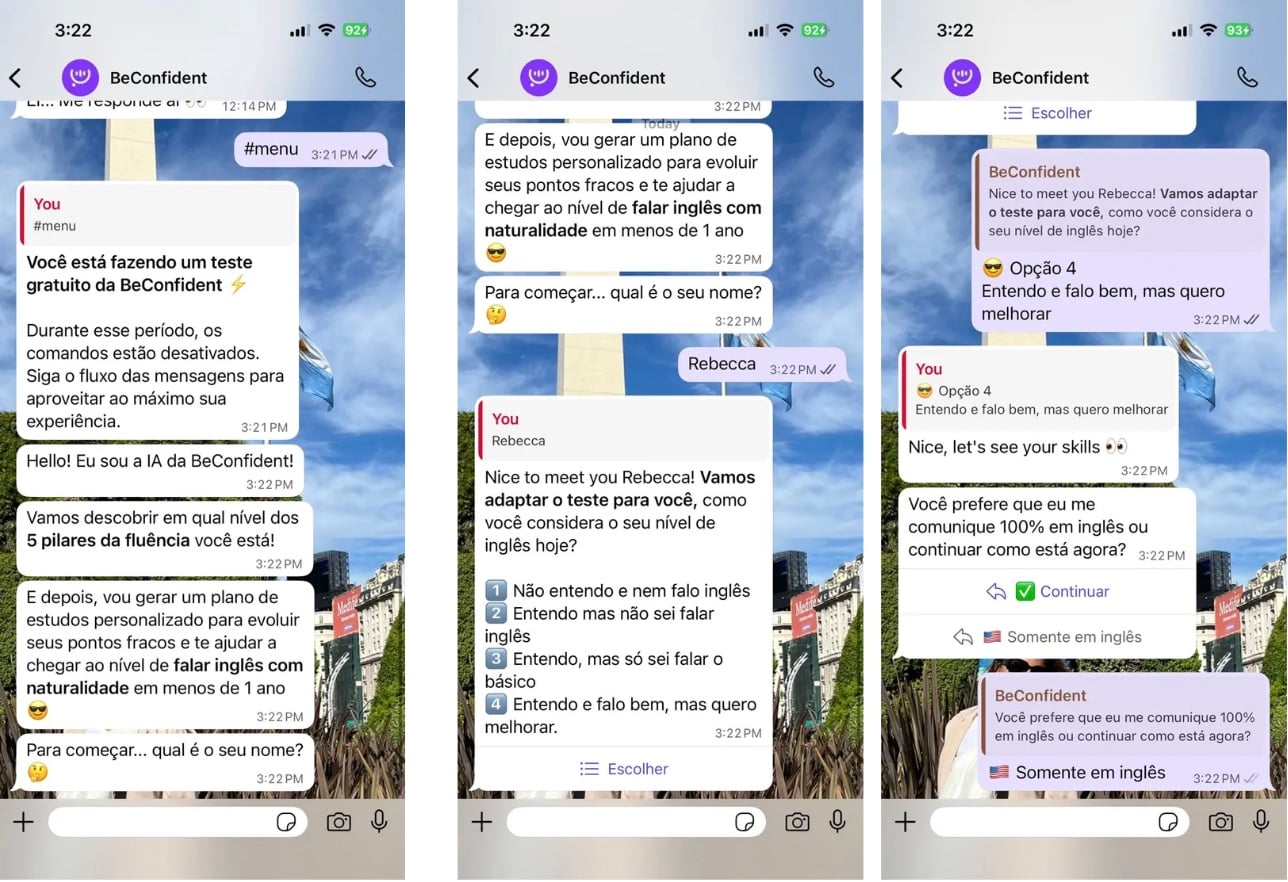
BeConfident caters to all levels, from beginners to advanced. The free test identifies your current level based on the CEFR standard and personalizes the content according to this diagnostic. Beginners receive support in Portuguese when needed, while intermediate and advanced levels can focus on idiomatic expressions, technical vocabulary, and fine-tuning pronunciation.
How does the BeConfident free trial work?
The free trial allows you to experience the complete methodology. You answer questions about your experience in English and Portuguese, complete exercises covering the main pillars of fluency, and receive an analysis of your current level along with an identification of strengths and areas to develop. This initial experience already shows the potential of the platform.
What if I make a lot of mistakes during practice?
Making many mistakes is part of the process in BeConfident. Every mistake generates personalized feedback that accelerates learning. The AI environment eliminates human judgment and allows you to practice freely. The more mistakes you make and correct, the faster you develop natural fluency and confidence for real situations.
Overcoming the fear of making mistakes when speaking English requires a shift in mindset, practical techniques, and the use of appropriate tools. The 7 steps presented offer a structured path to build a lighter relationship with spoken English. BeConfident stands out as a complete solution for conversation practice without judgment, featuring personalization, accessibility, and results proven by millions of users.
Start your free trial now, your confident fluency is only a few clicks away.
Written by: Luan Cavallaro, Founder & CMO, BeConfident
Key takeaways from this article
Accepting mistakes as a natural part of learning helps eliminate perfectionism and unlock fluency in spoken English.
Practicing alone with a mirror, recordings, and shadowing native audio increases confidence without exposure to external judgment.
Using specialized AI as tutors with native accents allows for personalized conversations and instant feedback on pronunciation.
Following a 10-minute daily plan for 2 weeks, progressing from personal to professional topics, builds consistent progress with regular reviews.
BeConfident outperforms traditional methods by offering unlimited 24/7 practice and proven results by millions of users: try it for free now and start practicing without feeling embarrassed about making mistakes.
Why the fear of making mistakes paralyzes us and how to change your mindset
Perfectionism is often the main villain of English fluency. Many Brazilians grew up in educational environments where teachers penalized mistakes, which created an association between speaking English and exposing oneself to judgment. This classroom memory persists into adulthood and causes competent professionals to freeze up during international presentations.
The fundamental shift in mindset is simple: effective communication matters more than grammar perfection. Native speakers frequently make mistakes and continue to communicate well. The problem is not with your mistakes, but with the lack of safe and personalized practice opportunities that traditional methods offer.
To put this mindset shift into practice, start by accepting mistakes as a natural part of learning. When you understand that every mistake serves as a stepping stone to fluency, the pressure decreases and confidence builds gradually.
7 practical steps to lose the fear of making mistakes when speaking English
Step 1: accept mistakes as part of learning
Changing your relationship with mistakes is an immediate move. Instead of seeing every error as a failure, treat the mistake as valuable feedback. Native Americans make grammatical errors on a daily basis and continue to communicate clearly, which shows that making a mistake does not prevent good communication.
To internalize this idea, set a daily goal: consciously make at least 3 mistakes when practicing English. This goal reduces the pressure for absolute correctness, normalizes making mistakes, and accelerates learning.
Step 2: practice in front of the mirror and record voice audios alone
Practicing in front of the mirror reduces the fear of external judgment and offers immediate visual feedback. Speaking out loud in front of the mirror helps build confidence and decreases hesitation when starting sentences in English.
Record 2-minute audio clips about daily topics, like your morning routine or plans for the week. Afterwards, listen to the content with a focus on noticing improvements and patterns, without excessive self-criticism. This practice creates familiarity with your own voice in English and makes the act of speaking more natural.
Step 3: shadowing technique with native audio
Shadowing means simultaneously repeating what you hear, as if your voice were a shadow of the original audio. This technique works on rhythm, intonation, and fluency in real-time.
Choose podcasts, movies, or series with a natural speaking speed. Start with 30-second segments of shadowing, focusing on rhythm and intonation, not on the perfection of each word. Over time, this practice trains your brain to process and reproduce English faster and reduces hesitation in spontaneous conversation.
Step 4: use AI for personalized conversation
Generic AI tools offer basic conversation, but specialized platforms like BeConfident deliver an experience focused on learning English. BeConfident offers AI tutors with distinct personalities and native American, British, and Australian accents, plus instant feedback on pronunciation and grammar.
You can practice via the app, WhatsApp, or smartwatch, and choose topics aligned with your professional or personal needs. This flexibility allows you to train for real situations safely and through repetition.
Try the AI tutors for free and choose the accent and personality that best fit your goal.
Step 5: set daily goals and follow a 2-week plan
A short, consistent routine yields better results than long and sporadic sessions. Establish a daily routine of 10 minutes divided into 3 minutes of shadowing, 4 minutes of AI conversation, and 3 minutes of reviewing mistakes.
This structure guarantees practice in listening, speaking, and reviewing in every session. In week 1, focus on personal topics such as hobbies, family, and routine to build confidence with familiar vocabulary. In week 2, transition to professional or travel topics and apply the confidence built in the previous stage.
Daily consistency builds linguistic muscle memory and makes speaking English increasingly automatic.
Step 6: progress to simulated phone calls without judgment
After building confidence in text conversations, progressing to simulated phone calls with AI helps you get closer to real-life situations. BeConfident allows you to make "calls" where you can mute the conversation, ask for repetitions, or request instant translations.
Practice specific scenarios like job interviews, hotel reservations, and business negotiations. This controlled, judgment-free environment accelerates your adaptation to contexts that usually cause more anxiety.
Step 7: review mistakes and track your evolution
Reviewing what you have already practiced consolidates learning. Use the My Evolution Menu in BeConfident to track consecutive days of practice, accumulated hours, and certificates earned.
Frequently review feedback on grammar, pronunciation, and native expressions. This systematic review turns mistakes into stable knowledge and creates a continuous loop of improvement.
Comparison of methods: why BeConfident's AI practice stands out
Method | Conversation practice | Cost/accessibility | Personalized feedback |
|---|---|---|---|
BeConfident | Unlimited 24/7 | Fraction of traditional cost | Instant and detailed |
Traditional schools | Little, with rigid schedules | High cost, with fixed schedules | Limited to class time |
Duolingo | Basic and gamified | Free, yet superficial | Automated and generic |
Cambly/Italki | Good, but limited hourly | High hourly payment | Varies by tutor |
BeConfident has already reached 200,000 paying students and 3 million total users in more than 100 countries, maintaining an RA 1000 reputation on Reclame Aqui, numbers that show how consistent practice with AI helps transform fear into real confidence.
Implementation plan: integrate it into your routine
Applying the method to your daily life requires a simple starting point. Start tomorrow with a 10-minute checklist: open BeConfident, choose a tutor with a personality aligned with your goal, start a conversation with the topic "Tell me something new," and practice for 7 minutes. Then, set aside 3 minutes to review the feedback.
Personalizing the tutors increases the relevance of your practice. Professionals can focus on technical presentations, travelers on regional accents, and those interested in pop culture on idiomatic expressions. The platform's flexibility allows you to adjust the learning experience to your real context.
Frequently asked questions
How long does it take to lose the fear of speaking English?
With daily 10-minute practice using the 7 steps presented, most students report significant improvement in confidence within about 2 weeks. BeConfident accelerates this process by offering a judgment-free environment and instant feedback, which allows you to make mistakes without feeling embarrassed and learn from them on the spot.
Is BeConfident better than ChatGPT for practicing conversation?
BeConfident was developed specifically for English language learning. While ChatGPT offers generic conversation, BeConfident brings together tutors with defined personalities, diverse native accents, detailed feedback on pronunciation and grammar, and structured pathways that combine theory and conversation practice.
Does BeConfident work for beginners or only intermediate learners?
BeConfident caters to all levels, from beginners to advanced. The free test identifies your current level based on the CEFR standard and personalizes the content according to this diagnostic. Beginners receive support in Portuguese when needed, while intermediate and advanced levels can focus on idiomatic expressions, technical vocabulary, and fine-tuning pronunciation.
How does the BeConfident free trial work?
The free trial allows you to experience the complete methodology. You answer questions about your experience in English and Portuguese, complete exercises covering the main pillars of fluency, and receive an analysis of your current level along with an identification of strengths and areas to develop. This initial experience already shows the potential of the platform.
What if I make a lot of mistakes during practice?
Making many mistakes is part of the process in BeConfident. Every mistake generates personalized feedback that accelerates learning. The AI environment eliminates human judgment and allows you to practice freely. The more mistakes you make and correct, the faster you develop natural fluency and confidence for real situations.
Overcoming the fear of making mistakes when speaking English requires a shift in mindset, practical techniques, and the use of appropriate tools. The 7 steps presented offer a structured path to build a lighter relationship with spoken English. BeConfident stands out as a complete solution for conversation practice without judgment, featuring personalization, accessibility, and results proven by millions of users.
Start your free trial now, your confident fluency is only a few clicks away.