




English conversation for travel: essential phrases
English conversation for travel: essential phrases
English conversation for travel: essential phrases
Written by: Luan Cavallaro, Founder & CMO, BeConfident
Key takeaways from this article
Master the 10 essential travel phrases, such as "Where is the gate?" and "Can you help me?", for quick situations at the airport, hotels, and restaurants.
Practice realistic two-way dialogues for common scenarios such as immigration, check-in, ordering at restaurants, and asking for directions, including potential answers from native speakers.
Prepare for emergencies and shopping with specific vocabulary, such as expressing when you're feeling unwell, searching for souvenirs, and holding casual conversations that enrich your trip.
Understand that lists of isolated phrases are not enough, because AI tutors with native accents and instant feedback help handle real-life variations and unexpected situations.
Use BeConfident for unlimited 24/7 practice with pronunciation analysis and personalized simulations, starting your free practice to gain confidence when speaking English during your trip.
Most commonly used English phrases for travel
These are the 10 essential phrases that every traveler needs to master:
"Where is the gate?" /wer ɪz ðə ɡeɪt/ – Where is the gate?
"How much does this cost?" /haʊ mʌtʃ dʌz ðɪs kɔst/ – How much does this cost?
"I have a reservation" /aɪ hæv ə ˌrezərˈveɪʃən/ – I have a reservation
"Where is the bathroom?" /wer ɪz ðə ˈbæθrum/ – Where is the bathroom?
"Can you help me?" /kæn ju help mi/ – Can you help me?
"I don't understand" /aɪ doʊnt ˌʌndərˈstænd/ – I don't understand
"Check, please" /tʃek pliz/ – Check, please
"How do I get to...?" /haʊ du aɪ ɡet tu/ – How do I get to...?
"I'm lost" /aɪm lɔst/ – I'm lost
"Thank you very much" /θæŋk ju ˈveri mʌtʃ/ – Thank you very much
These phrases help in quick situations, but isolated phrases do not prepare you for real answers from native speakers. You need to practice full dialogues to gain confidence.
The next step is to apply these phrases to specific travel scenarios and practice complete conversations with BeConfident to master day-to-day interactions.
English for airport and immigration
The airport is the setting where many travelers feel the most anxiety. This anxiety increases in busy airports where quick and clear communication in English becomes essential to make connections, locate gates, and pass through immigration without delays.
Immigration Dialogue:
Officer: "What's the purpose of your visit?" /wʌts ðə ˈpɜrpəs ʌv jʊr ˈvɪzɪt/ – What's the purpose of your visit?
You: "Tourism. I'm here for vacation." /ˈtʊrɪzəm aɪm hir fɔr veɪˈkeɪʃən/ – Tourism. I'm here for vacation.
Officer: "How long will you stay?" /haʊ lɔŋ wɪl ju steɪ/ – How long will you stay?
You: "Two weeks." /tu wiks/ – Two weeks.
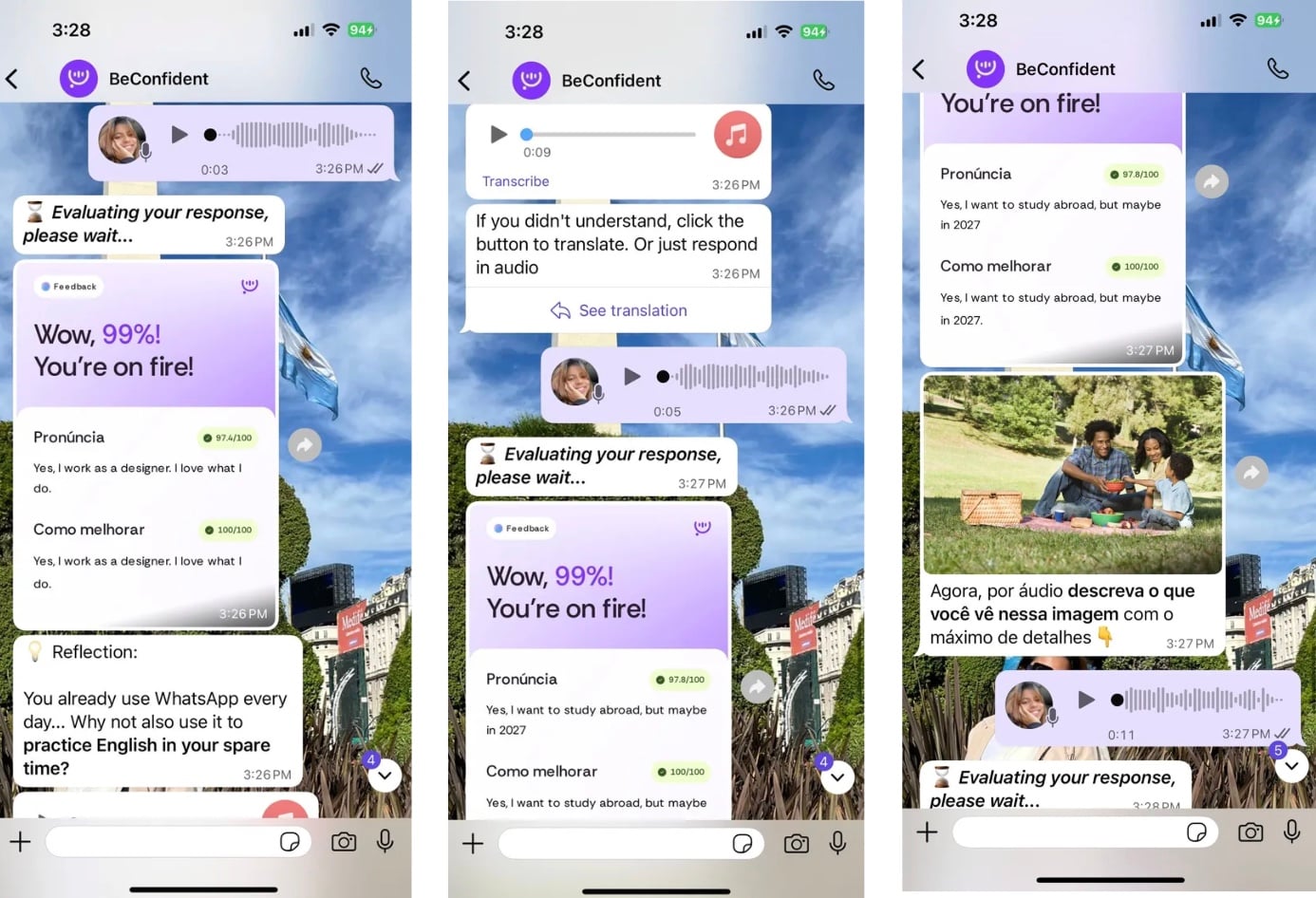
AI tutors can simulate American, British, or officers from other countries, preparing you for different accents and question styles.
Check-in and check-out at the hotel
The hotel often generates unexpected situations that required conversation beyond the basics. This dialogue shows a common problem and how to resolve it in English:
Receptionist: "Good evening. How can I help you?" /ɡʊd ˈivnɪŋ haʊ kæn aɪ help ju/ – Good evening. How can I help you?
You: "I have a reservation under Silva." /aɪ hæv ə ˌrezərˈveɪʃən ˈʌndər ˈsɪlvə/ – I have a reservation under Silva.
Receptionist: "The air conditioning isn't working in your room." /ði er kənˈdɪʃənɪŋ ˈɪzənt ˈwɜrkɪŋ ɪn jʊr rum/ – The air conditioning isn't working in your room.
You: "Can you fix it or give me another room?" /kæn ju fɪks ɪt ɔr ɡɪv mi əˈnʌðər rum/ – Can you fix it or give me another room?
Unexpected situations like this show why practicing with AI makes a difference. You can simulate dozens of hotel situations, test alternative responses, and repeat until you feel secure.
How to order at a restaurant in English
The restaurant is one of the main social interaction moments during travel. This dialogue helps you order your meal and ask for the bill clearly:
Waiter: "Are you ready to order?" /ɑr ju ˈredi tu ˈɔrdər/ – Are you ready to order?
You: "I'd like the grilled chicken, please." /aɪd laɪk ðə ɡrɪld ˈtʃɪkən pliz/ – I'd like the grilled chicken, please.
Waiter: "How would you like it cooked?" /haʊ wʊd ju laɪk ɪt kʊkt/ – How would you like it cooked?
You: "Well done, and can I have the check when you have a chance?" /wel dʌn ænd kæn aɪ hæv ðə tʃek wen ju hæv ə tʃæns/ – Well done, and can I have the check when you have a chance?
BeConfident allows you to practice variations of this dialogue, such as complaining about cold food, asking for substitutions, or making special requests, which broadens your range for any dining situation.
Asking for directions and transportation
Knowing how to get around is essential to enjoy your trip. This dialogue shows how to ask for instructions in a straightforward way:
You: "Excuse me, how do I get to Times Square?" /ɪkˈskjuz mi haʊ du aɪ ɡet tu taɪmz skwer/ – Excuse me, how do I get to Times Square?
Local: "Take the subway, line 4-5-6 to 42nd Street." /teɪk ðə ˈsʌbweɪ laɪn fɔr faɪv sɪks tu ˈfɔrtiˌsekənd strit/ – Take the subway, line 4-5-6 to 42nd Street.
You: "Is it far from here?" /ɪz ɪt fɑr frʌm hir/ – Is it far from here?
Local: "About 15 minutes by subway." /əˈbaʊt ˈfɪfˌtin ˈmɪnəts baɪ ˈsʌbweɪ/ – About 15 minutes by subway.
With BeConfident's AI, you can train asking for directions in different cities and with various accents, which increases your confidence in using the subway, bus, taxi, or ride-sharing apps.
Shopping and emergencies
Preparing vocabulary for emergencies and shopping prevents you from freezing up in sensitive moments. These examples show useful phrases:
Medical Emergency:
You: "I need help. I don't feel well." /aɪ nid help aɪ doʊnt fil wel/ – I need help. I don't feel well.
Attendant: "What's wrong?" /wʌts rɔŋ/ – What's wrong?
You: "I have a headache and feel dizzy." /aɪ hæv ə ˈhedˌeɪk ænd fil ˈdɪzi/ – I have a headache and feel dizzy.
Shopping:
Salesperson: "Can I help you find something?" /kæn aɪ help ju faɪnd ˈsʌmθɪŋ/ – Can I help you find something?
You: "I'm looking for a souvenir for my family." /aɪm ˈlʊkɪŋ fɔr ə ˌsuvəˈnɪr fɔr maɪ ˈfæməli/ – I'm looking for a souvenir for my family.
Practicing these scenarios with different accents helps you react calmly in medical, pharmacy, or busy store situations.
Casual conversations with native speakers
Casual conversations make travel richer and create genuine connections. This dialogue shows a typical icebreaker chat:
Native: "Where are you from?" /wer ɑr ju frʌm/ – Where are you from?
You: "I'm from Brazil. This is my first time in New York." /aɪm frʌm brəˈzɪl ðɪs ɪz maɪ fɜrst taɪm ɪn nu jɔrk/ – I'm from Brazil. This is my first time in New York.
Native: "How do you like it so far?" /haʊ du ju laɪk ɪt soʊ fɑr/ – How do you like it so far?
You: "It's amazing! The city is so vibrant." /ɪts əˈmeɪzɪŋ ðə ˈsɪti ɪz soʊ ˈvaɪbrənt/ – It's amazing! The city is so vibrant.
These conversations create positive memories and increase your spontaneous fluency. BeConfident offers practice with AI tutors simulating different personalities and interests, helping you vary topics and responses.
Why lists are not enough: practice with AI
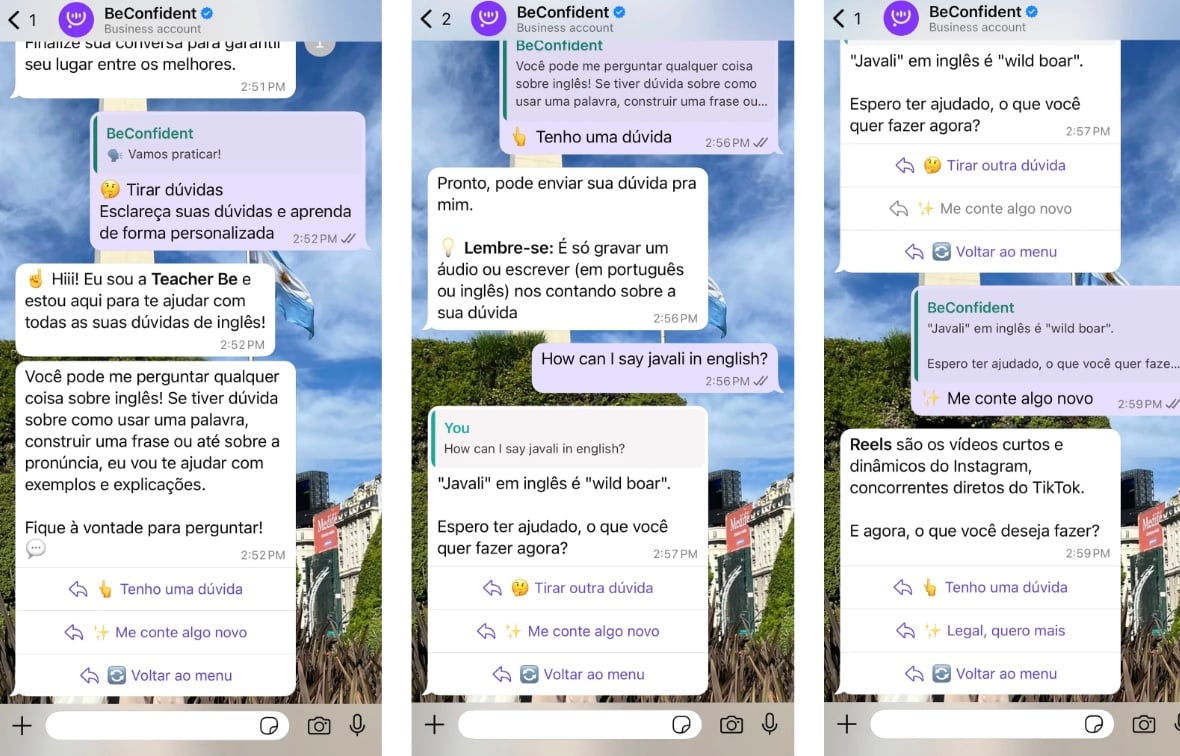
Static list of phrases have clear limitations. They do not prepare you for how native speakers actually reply, variations in accent, or unexpected situations. AI tutors provide real-time speech analysis and adaptive learning paths, with immersive roleplaying that simulates real scenarios like hotel check-ins.
BeConfident presents itself as a solution focused on English conversation for travel:
3 million total users and over 200,000 paying students in more than 100 countries trust the platform.
RA 1000 on Reclame Aqui, reflecting maximum reputation.
Personalized AI tutors with native accents, such as American, British, Australian, Canadian, South African, and Indian.
Instant feedback on pronunciation, grammar, and fluency.
Conversation practice covering all the scenarios presented in this article.
In comparison with other options, BeConfident prioritizes continuous conversation with AI, without depending on fixed schedules or hourly payments.
vs. Duolingo: focused on gamification, with less emphasis on full conversations.
vs. Cambly: higher hourly cost and variable quality among human tutors.
vs. traditional schools: rigid schedules, commuting, and high monthly fees.
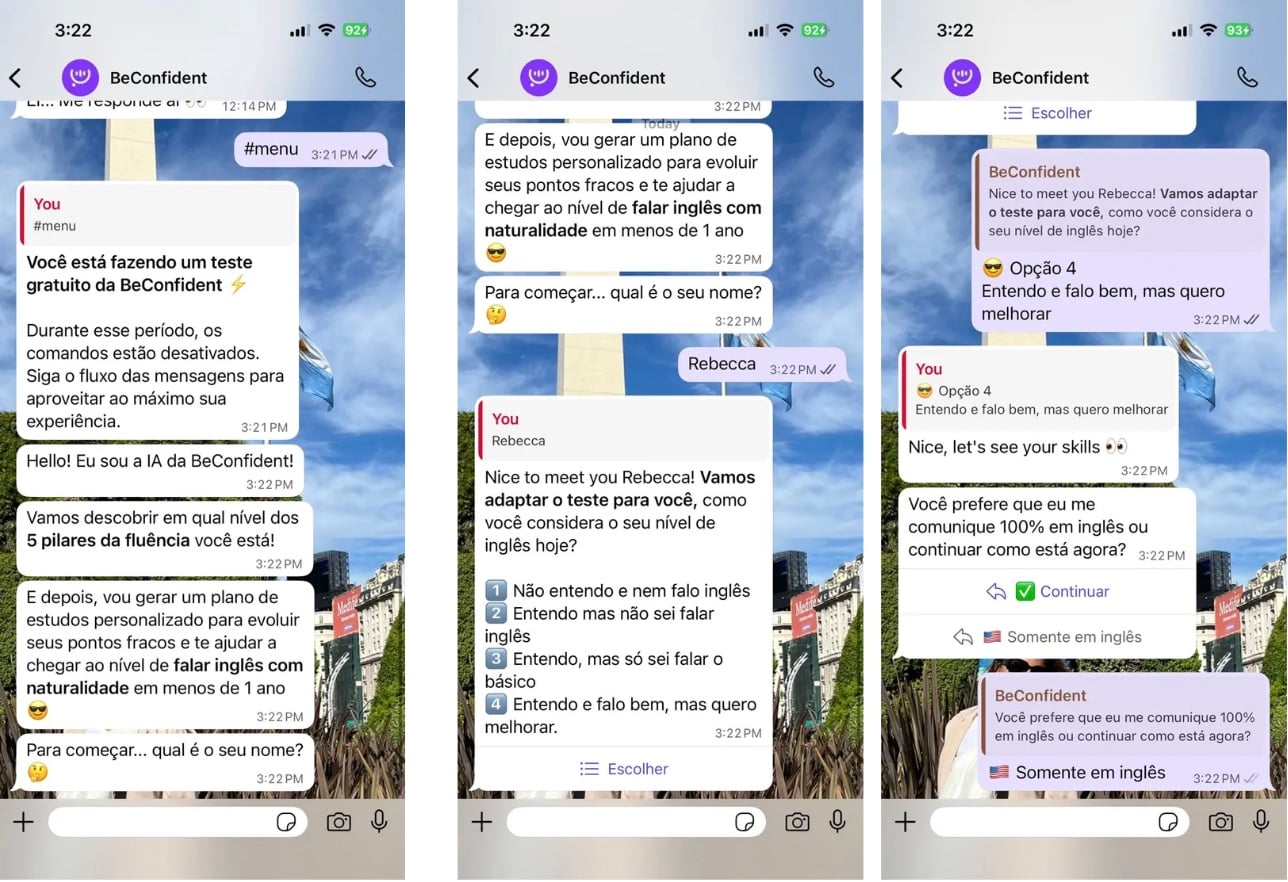
With BeConfident's free trial, you can already practice conversations and receive a personalized analysis of your CEFR level.
Final tips for travel fluency
A few habits can accelerate your preparation to speak English when traveling:
Memorize the essential phrases in this guide and then apply them in full dialogues.
Practice daily with BeConfident, even if only for 10 minutes.
Record your own audio files repeating the dialogues to adjust your pronunciation.
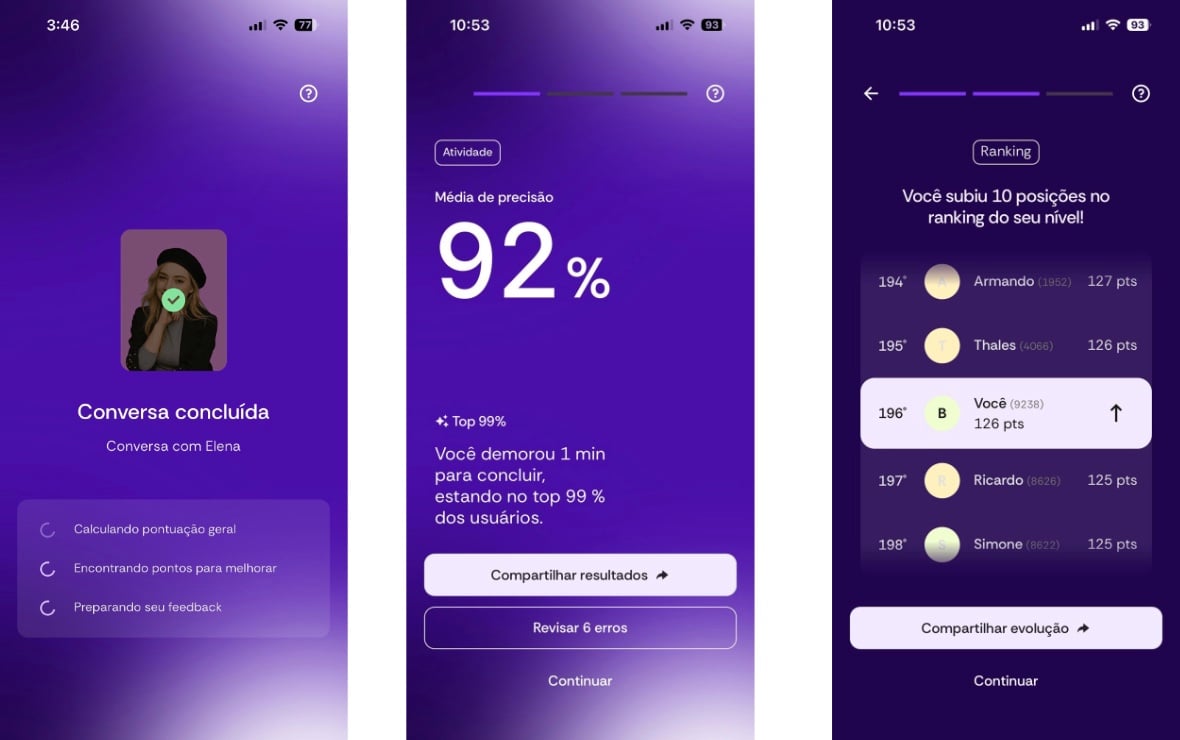
Use the "My Progress Menu" to track your streak and your position in the ranking.
Simulate real-life situations before the trip, including unexpected events at the airport, hotel, and health-related issues.
Confidence comes from consistent practice, not just memorizing lists. With BeConfident, you practice anytime and anywhere, which increases your confidence to handle varied travel situations.
Frequently Asked Questions
How do I pass through immigration without being fluent in English?
The first step is to prepare basic dialogues about the purpose of your trip, duration of stay, and accommodation details. Next, practice short, direct answers. BeConfident offers specific immigration simulations with different accents for officers, helping you get used to the most common questions and reply with less nervousness.
What are the essential phrases for international travel?
The 10 most important phrases include asking for directions, making reservations, asking for help, asking about prices, and finding restrooms. Beyond these phrases, practicing complete dialogues for situations like checking into hotels, ordering at restaurants, and medical emergencies guarantees real preparation. Practicing with AI allows you to train both the phrases and the potential answers from native speakers.
How can I improve my English pronunciation for travel?
Improving pronunciation requires practice with real-time feedback. BeConfident's AI tutors analyze your speech and offer specific corrections for each word. Practicing with different native accents prepares you for diverse destinations. Recording yourself speaking and comparing it to native speakers, focusing on sounds that can be difficult such as 'th', 'r', and 'v', accelerates your fine-tuning.
What should I do if I don't understand what a native speaker is saying?
Using phrases like "Could you repeat that, please?" or "I don't understand, could you speak slower?" helps keep the conversation going. Practicing these situations with BeConfident, which simulates different speech speeds and accents, increases your listening comprehension. Asking for specific clarification and blending verbal language with gestures also facilitates understanding.
With realistic dialogues and constant practice on BeConfident, you can travel with more safety and communicate in different contexts. English will stop being a barrier and become a tool to get the most out of every destination. Start your free trial today and prepare to converse with confidence on your next trip.
Written by: Luan Cavallaro, Founder & CMO, BeConfident
Key takeaways from this article
Master the 10 essential travel phrases, such as "Where is the gate?" and "Can you help me?", for quick situations at the airport, hotels, and restaurants.
Practice realistic two-way dialogues for common scenarios such as immigration, check-in, ordering at restaurants, and asking for directions, including potential answers from native speakers.
Prepare for emergencies and shopping with specific vocabulary, such as expressing when you're feeling unwell, searching for souvenirs, and holding casual conversations that enrich your trip.
Understand that lists of isolated phrases are not enough, because AI tutors with native accents and instant feedback help handle real-life variations and unexpected situations.
Use BeConfident for unlimited 24/7 practice with pronunciation analysis and personalized simulations, starting your free practice to gain confidence when speaking English during your trip.
Most commonly used English phrases for travel
These are the 10 essential phrases that every traveler needs to master:
"Where is the gate?" /wer ɪz ðə ɡeɪt/ – Where is the gate?
"How much does this cost?" /haʊ mʌtʃ dʌz ðɪs kɔst/ – How much does this cost?
"I have a reservation" /aɪ hæv ə ˌrezərˈveɪʃən/ – I have a reservation
"Where is the bathroom?" /wer ɪz ðə ˈbæθrum/ – Where is the bathroom?
"Can you help me?" /kæn ju help mi/ – Can you help me?
"I don't understand" /aɪ doʊnt ˌʌndərˈstænd/ – I don't understand
"Check, please" /tʃek pliz/ – Check, please
"How do I get to...?" /haʊ du aɪ ɡet tu/ – How do I get to...?
"I'm lost" /aɪm lɔst/ – I'm lost
"Thank you very much" /θæŋk ju ˈveri mʌtʃ/ – Thank you very much
These phrases help in quick situations, but isolated phrases do not prepare you for real answers from native speakers. You need to practice full dialogues to gain confidence.
The next step is to apply these phrases to specific travel scenarios and practice complete conversations with BeConfident to master day-to-day interactions.
English for airport and immigration
The airport is the setting where many travelers feel the most anxiety. This anxiety increases in busy airports where quick and clear communication in English becomes essential to make connections, locate gates, and pass through immigration without delays.
Immigration Dialogue:
Officer: "What's the purpose of your visit?" /wʌts ðə ˈpɜrpəs ʌv jʊr ˈvɪzɪt/ – What's the purpose of your visit?
You: "Tourism. I'm here for vacation." /ˈtʊrɪzəm aɪm hir fɔr veɪˈkeɪʃən/ – Tourism. I'm here for vacation.
Officer: "How long will you stay?" /haʊ lɔŋ wɪl ju steɪ/ – How long will you stay?
You: "Two weeks." /tu wiks/ – Two weeks.
AI tutors can simulate American, British, or officers from other countries, preparing you for different accents and question styles.
Check-in and check-out at the hotel
The hotel often generates unexpected situations that required conversation beyond the basics. This dialogue shows a common problem and how to resolve it in English:
Receptionist: "Good evening. How can I help you?" /ɡʊd ˈivnɪŋ haʊ kæn aɪ help ju/ – Good evening. How can I help you?
You: "I have a reservation under Silva." /aɪ hæv ə ˌrezərˈveɪʃən ˈʌndər ˈsɪlvə/ – I have a reservation under Silva.
Receptionist: "The air conditioning isn't working in your room." /ði er kənˈdɪʃənɪŋ ˈɪzənt ˈwɜrkɪŋ ɪn jʊr rum/ – The air conditioning isn't working in your room.
You: "Can you fix it or give me another room?" /kæn ju fɪks ɪt ɔr ɡɪv mi əˈnʌðər rum/ – Can you fix it or give me another room?
Unexpected situations like this show why practicing with AI makes a difference. You can simulate dozens of hotel situations, test alternative responses, and repeat until you feel secure.
How to order at a restaurant in English
The restaurant is one of the main social interaction moments during travel. This dialogue helps you order your meal and ask for the bill clearly:
Waiter: "Are you ready to order?" /ɑr ju ˈredi tu ˈɔrdər/ – Are you ready to order?
You: "I'd like the grilled chicken, please." /aɪd laɪk ðə ɡrɪld ˈtʃɪkən pliz/ – I'd like the grilled chicken, please.
Waiter: "How would you like it cooked?" /haʊ wʊd ju laɪk ɪt kʊkt/ – How would you like it cooked?
You: "Well done, and can I have the check when you have a chance?" /wel dʌn ænd kæn aɪ hæv ðə tʃek wen ju hæv ə tʃæns/ – Well done, and can I have the check when you have a chance?
BeConfident allows you to practice variations of this dialogue, such as complaining about cold food, asking for substitutions, or making special requests, which broadens your range for any dining situation.
Asking for directions and transportation
Knowing how to get around is essential to enjoy your trip. This dialogue shows how to ask for instructions in a straightforward way:
You: "Excuse me, how do I get to Times Square?" /ɪkˈskjuz mi haʊ du aɪ ɡet tu taɪmz skwer/ – Excuse me, how do I get to Times Square?
Local: "Take the subway, line 4-5-6 to 42nd Street." /teɪk ðə ˈsʌbweɪ laɪn fɔr faɪv sɪks tu ˈfɔrtiˌsekənd strit/ – Take the subway, line 4-5-6 to 42nd Street.
You: "Is it far from here?" /ɪz ɪt fɑr frʌm hir/ – Is it far from here?
Local: "About 15 minutes by subway." /əˈbaʊt ˈfɪfˌtin ˈmɪnəts baɪ ˈsʌbweɪ/ – About 15 minutes by subway.
With BeConfident's AI, you can train asking for directions in different cities and with various accents, which increases your confidence in using the subway, bus, taxi, or ride-sharing apps.
Shopping and emergencies
Preparing vocabulary for emergencies and shopping prevents you from freezing up in sensitive moments. These examples show useful phrases:
Medical Emergency:
You: "I need help. I don't feel well." /aɪ nid help aɪ doʊnt fil wel/ – I need help. I don't feel well.
Attendant: "What's wrong?" /wʌts rɔŋ/ – What's wrong?
You: "I have a headache and feel dizzy." /aɪ hæv ə ˈhedˌeɪk ænd fil ˈdɪzi/ – I have a headache and feel dizzy.
Shopping:
Salesperson: "Can I help you find something?" /kæn aɪ help ju faɪnd ˈsʌmθɪŋ/ – Can I help you find something?
You: "I'm looking for a souvenir for my family." /aɪm ˈlʊkɪŋ fɔr ə ˌsuvəˈnɪr fɔr maɪ ˈfæməli/ – I'm looking for a souvenir for my family.
Practicing these scenarios with different accents helps you react calmly in medical, pharmacy, or busy store situations.
Casual conversations with native speakers
Casual conversations make travel richer and create genuine connections. This dialogue shows a typical icebreaker chat:
Native: "Where are you from?" /wer ɑr ju frʌm/ – Where are you from?
You: "I'm from Brazil. This is my first time in New York." /aɪm frʌm brəˈzɪl ðɪs ɪz maɪ fɜrst taɪm ɪn nu jɔrk/ – I'm from Brazil. This is my first time in New York.
Native: "How do you like it so far?" /haʊ du ju laɪk ɪt soʊ fɑr/ – How do you like it so far?
You: "It's amazing! The city is so vibrant." /ɪts əˈmeɪzɪŋ ðə ˈsɪti ɪz soʊ ˈvaɪbrənt/ – It's amazing! The city is so vibrant.
These conversations create positive memories and increase your spontaneous fluency. BeConfident offers practice with AI tutors simulating different personalities and interests, helping you vary topics and responses.
Why lists are not enough: practice with AI
Static list of phrases have clear limitations. They do not prepare you for how native speakers actually reply, variations in accent, or unexpected situations. AI tutors provide real-time speech analysis and adaptive learning paths, with immersive roleplaying that simulates real scenarios like hotel check-ins.
BeConfident presents itself as a solution focused on English conversation for travel:
3 million total users and over 200,000 paying students in more than 100 countries trust the platform.
RA 1000 on Reclame Aqui, reflecting maximum reputation.
Personalized AI tutors with native accents, such as American, British, Australian, Canadian, South African, and Indian.
Instant feedback on pronunciation, grammar, and fluency.
Conversation practice covering all the scenarios presented in this article.
In comparison with other options, BeConfident prioritizes continuous conversation with AI, without depending on fixed schedules or hourly payments.
vs. Duolingo: focused on gamification, with less emphasis on full conversations.
vs. Cambly: higher hourly cost and variable quality among human tutors.
vs. traditional schools: rigid schedules, commuting, and high monthly fees.
With BeConfident's free trial, you can already practice conversations and receive a personalized analysis of your CEFR level.
Final tips for travel fluency
A few habits can accelerate your preparation to speak English when traveling:
Memorize the essential phrases in this guide and then apply them in full dialogues.
Practice daily with BeConfident, even if only for 10 minutes.
Record your own audio files repeating the dialogues to adjust your pronunciation.
Use the "My Progress Menu" to track your streak and your position in the ranking.
Simulate real-life situations before the trip, including unexpected events at the airport, hotel, and health-related issues.
Confidence comes from consistent practice, not just memorizing lists. With BeConfident, you practice anytime and anywhere, which increases your confidence to handle varied travel situations.
Frequently Asked Questions
How do I pass through immigration without being fluent in English?
The first step is to prepare basic dialogues about the purpose of your trip, duration of stay, and accommodation details. Next, practice short, direct answers. BeConfident offers specific immigration simulations with different accents for officers, helping you get used to the most common questions and reply with less nervousness.
What are the essential phrases for international travel?
The 10 most important phrases include asking for directions, making reservations, asking for help, asking about prices, and finding restrooms. Beyond these phrases, practicing complete dialogues for situations like checking into hotels, ordering at restaurants, and medical emergencies guarantees real preparation. Practicing with AI allows you to train both the phrases and the potential answers from native speakers.
How can I improve my English pronunciation for travel?
Improving pronunciation requires practice with real-time feedback. BeConfident's AI tutors analyze your speech and offer specific corrections for each word. Practicing with different native accents prepares you for diverse destinations. Recording yourself speaking and comparing it to native speakers, focusing on sounds that can be difficult such as 'th', 'r', and 'v', accelerates your fine-tuning.
What should I do if I don't understand what a native speaker is saying?
Using phrases like "Could you repeat that, please?" or "I don't understand, could you speak slower?" helps keep the conversation going. Practicing these situations with BeConfident, which simulates different speech speeds and accents, increases your listening comprehension. Asking for specific clarification and blending verbal language with gestures also facilitates understanding.
With realistic dialogues and constant practice on BeConfident, you can travel with more safety and communicate in different contexts. English will stop being a barrier and become a tool to get the most out of every destination. Start your free trial today and prepare to converse with confidence on your next trip.