




How to understand native English accents: 7 strategies
How to understand native English accents: 7 strategies
How to understand native English accents: 7 strategies
Written by: Luan Cavallaro, Founder & CMO, BeConfident
Key Takeaways from This Article
Connected speech phenomena such as linking, elision, and reductions (gonna, wanna) create greater difficulty in understanding natives, even for advanced AI systems.
Scottish, Nigerian, and Indian accents are usually the most challenging, while the American accent tends to be more accessible for Brazilians due to Hollywood's influence.
Seven practical strategies include gradual immersion without subtitles, shadowing, and analysis of reductions, which can unlock comprehension in about 4 to 6 weeks.
Active pronunciation practice and targeted exposure to specific accents (American, British, Australian) accelerate listening and oral fluency.
BeConfident offers 24/7 AI tutors with 6 native accents and instant feedback for unlimited practice: Try it free now.
Why Our Ears Block with Native Accents
The main reason for having difficulty with a native accent in English is the way natives connect sounds in speech. Linking connects sounds between words ("law and order" becomes [lɔːr ən ɔːdə]), while elision omits sounds completely. Assimilation alters pronunciations ("ten cars" becomes [teŋ kɑːz]), and intrusion inserts extra sounds between vowels.
Word | American Accent | British Accent | Australian Accent |
water | wadder | waw-tuh | wawdah |
going to | gonna | gonna | gonna |
schedule | skedjool | shedual | skedual |
dance | dæns | dɑːns | dɐːns |
Scottish (69.8% accuracy) and Indian (71.2%) accents appear among the most challenging, followed by Nigerian (68.5%). Even advanced AI systems show difficulty with these variations, which explains why many Brazilians report the same type of mental block.
7-Step Practical Strategies to Improve Comprehension
The following strategies help improve listening comprehension based on recent studies on the effectiveness of shadowing and active immersion.
1. Gradual immersion without subtitles
Set aside 15 minutes daily to watch BBC News or Netflix in English, without subtitles. Gradually increase the time until you reach 30 minutes.
2. Shadowing with authentic audio
Repeat out loud at the same time as you listen, even without understanding every word. Shadowing consistently improves pronunciation, fluency, and oral confidence. This practice reduces anxiety when facing unfamiliar vocabulary.
3. Analysis of reductions in connected speech
Identify frequent reductions, such as "want to" → "wanna", "going to" → "gonna", and "have to" → "hafta". Practice recognizing these forms in real dialogues and repeat out loud to anchor the sound pattern.
4. Focused exposure to specific accents
Organize your study by weeks. Dedicate one week to each main accent, such as American, British, and Australian. Use YouTube channels featuring native creators from each region to hear everyday vocabulary.
5. Active pronunciation instead of passive listening
Turn every listening session into a speaking practice. Speak along with the audio, mimicking the native speakers' natural intonation, rhythm, and pauses. Record your own voice and compare it to the original to notice fine adjustments.
6. Targeted use of free YouTube content
Channels like BBC Learning English and Rachel's English offer specific exercises for connected speech and reductions. Build a short playlist with videos on linking, elision, and rhythm, and review it frequently.
7. Conversation with AI available 24/7
Use AI tutors that simulate real native accents and provide immediate feedback. This approach allows you to practice without judgment, at any time, and repeat as many times as necessary.
Accent Difficulty Comparison: American, British, and Others
The difficulty ranking usually places Scottish and Nigerian accents among the most complex, followed by Indian and then Australian. The British Cockney accent includes phenomena like th-fronting ("thin" becomes "fin") and h-dropping ("house" becomes "ouse"), which makes comprehension even more demanding for intermediate learners.
The American English accent tends to be more familiar to Brazilians because of movies and TV shows, but it presents its own challenges, such as the cot-caught merger, where about 40% of Americans pronounce "cot" and "caught" the same way. The British accent maintains more vowel distinctions, but frequently uses glottal stops, which alters the perception of consonants like the "t" in the middle of a word.
How to Improve Your Own English Accent
To get closer to a native English accent, it is worth combining shadowing with AI feedback. A good practice is to train on specific phenomena like the American cot-caught merger, where words like "father" and "bother" sound identical in many dialects. It is also worth focusing on linking between words and vowel reductions in unstressed syllables. Consistent exposure with immediate correction accelerates this fine-tuning.
AI Tools to Practice Native Accents
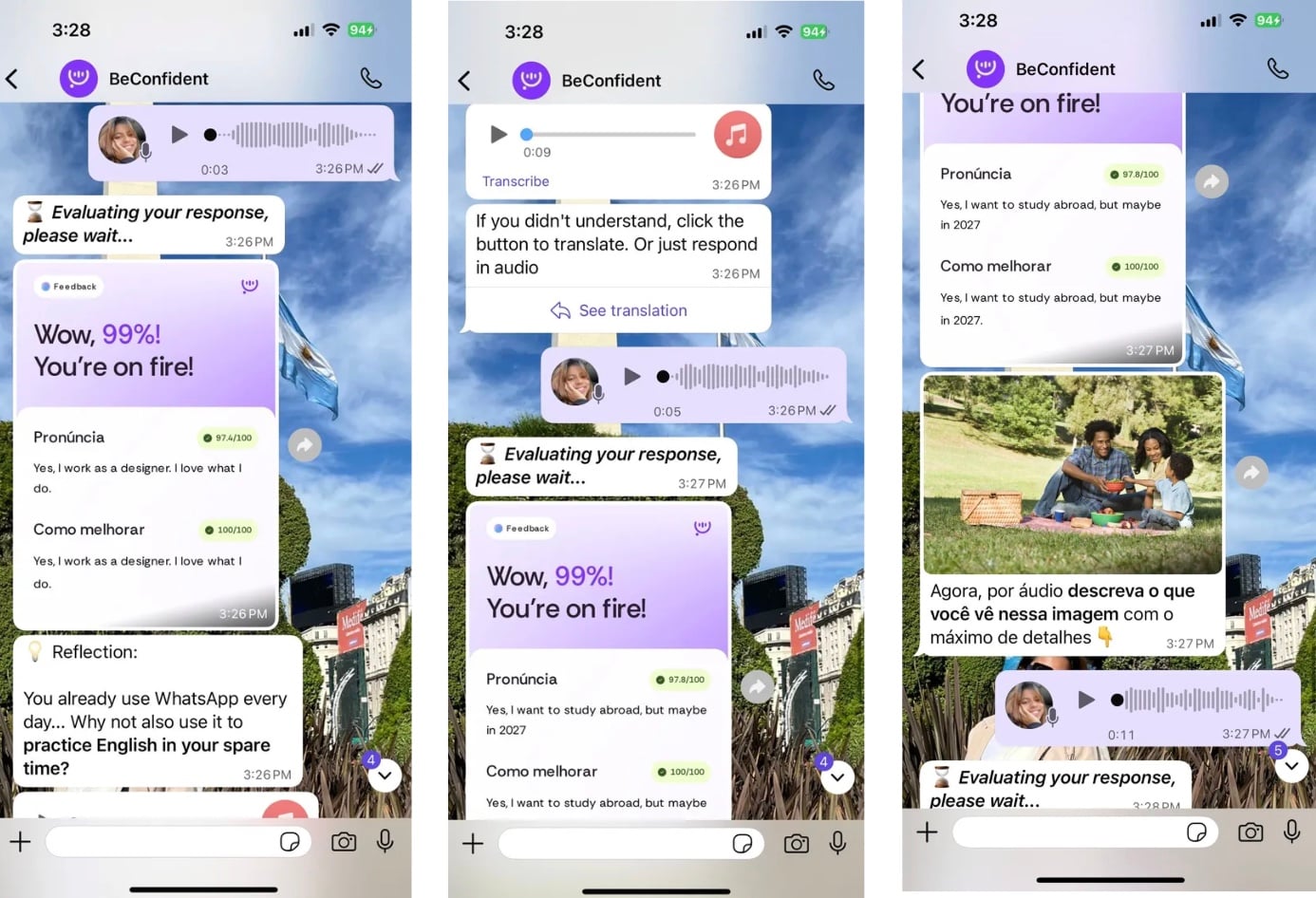
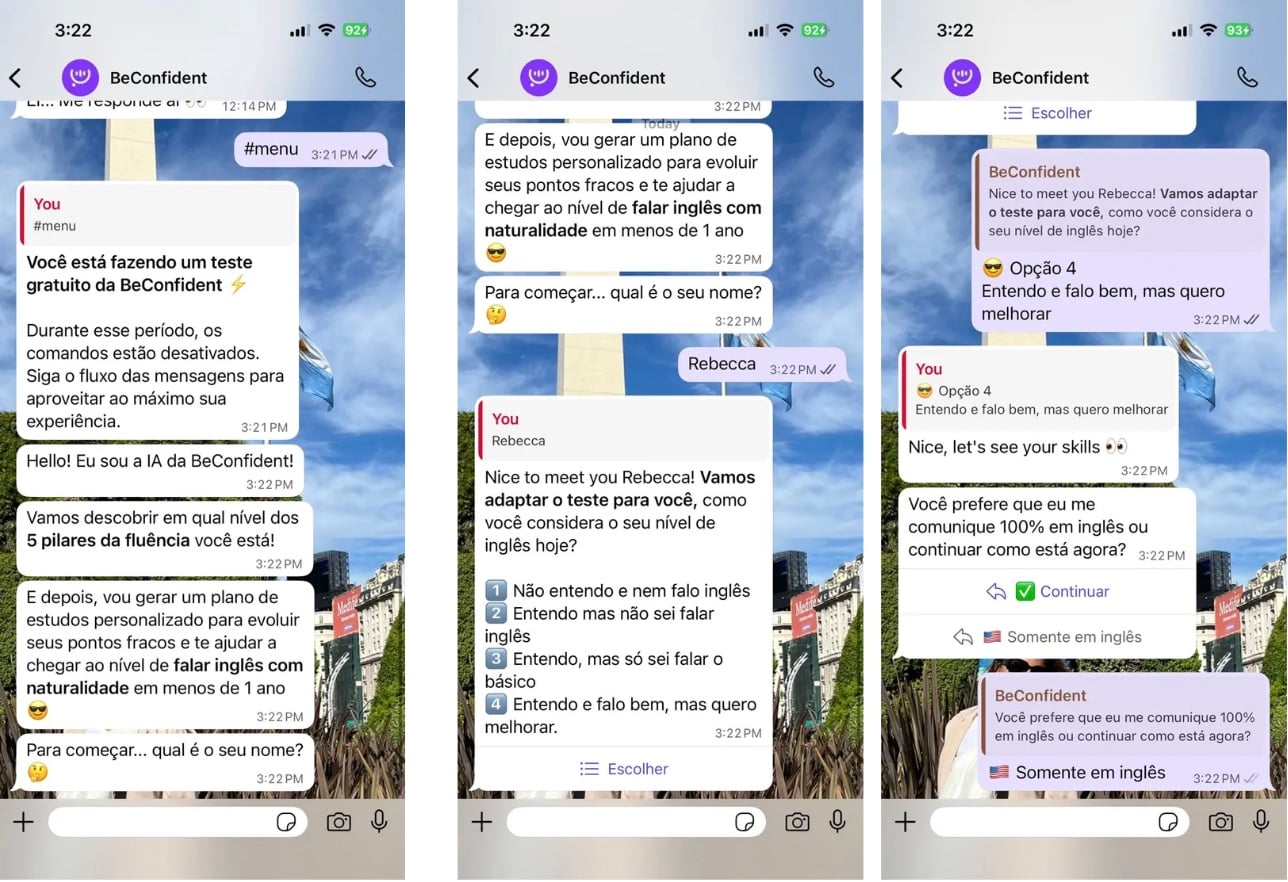
BeConfident offers AI tutors with American, British, Australian, Canadian, South African, and Indian native accents. Duolingo prioritizes gamification and structured exercises, with very little real conversation, while Cambly charges by the hour and displays variation in teacher quality. BeConfident focuses on unlimited 24/7 conversation practice via app, WhatsApp, and smartwatch.
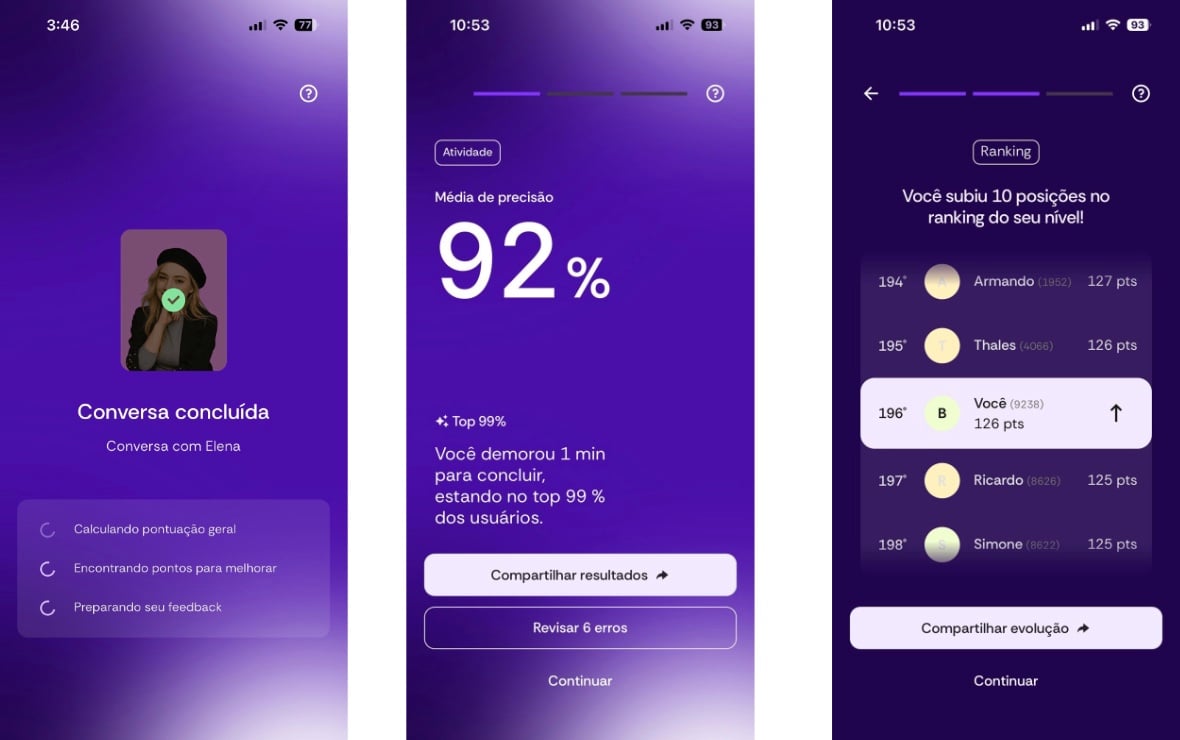
Reports from students indicate rapid confidence gains: "I had a lot of trouble speaking, despite reading and listening well. I got BeConfident and within a month I was already speaking naturally, without getting stuck." and "When trying to interact with foreigners at work, I didn't know what to say. Daily practice gave me the confidence to finally converse and get my promotion.".
With over 200,000 paying students, 3 million total users, and an RA 1000 reputation on Reclame Aqui, BeConfident stands out as a more complete alternative compared to generic tools.
Try it free and start learning English today, with personalized conversation with AI.
30-Day Plan for Listening Fluency and Fixing Common Errors
Weeks 1 and 2: Daily immersion of 15 to 30 minutes with authentic English audio, combined with basic shadowing.
Weeks 3 and 4: Use of specific BeConfident tracks by accent, focusing on American, British, and Australian.
After Week 4: Daily conversations with AI tutors, tracking progress through the "My Evolution" feature.
Common Error: Focusing only on the most popular accents and ignoring others.
BeConfident Solution: Ensuring exposure to 6 different native accents throughout the month.
Common Error: Maintaining little conversation practice and relying only on listening and reading.
BeConfident Solution: Using AI available 24/7 for unlimited speaking practice with immediate feedback.
FAQ
Which English accent is the hardest to understand?
Scottish, Nigerian, and Indian accents are usually considered the most challenging, with comprehension rates between 68% and 71% even for advanced AI systems. The Australian accent, although it has elongated vowels and its own rhythm, tends to be more accessible, with about 84% accuracy in automatic tests.
How to practice English without a conversation partner?
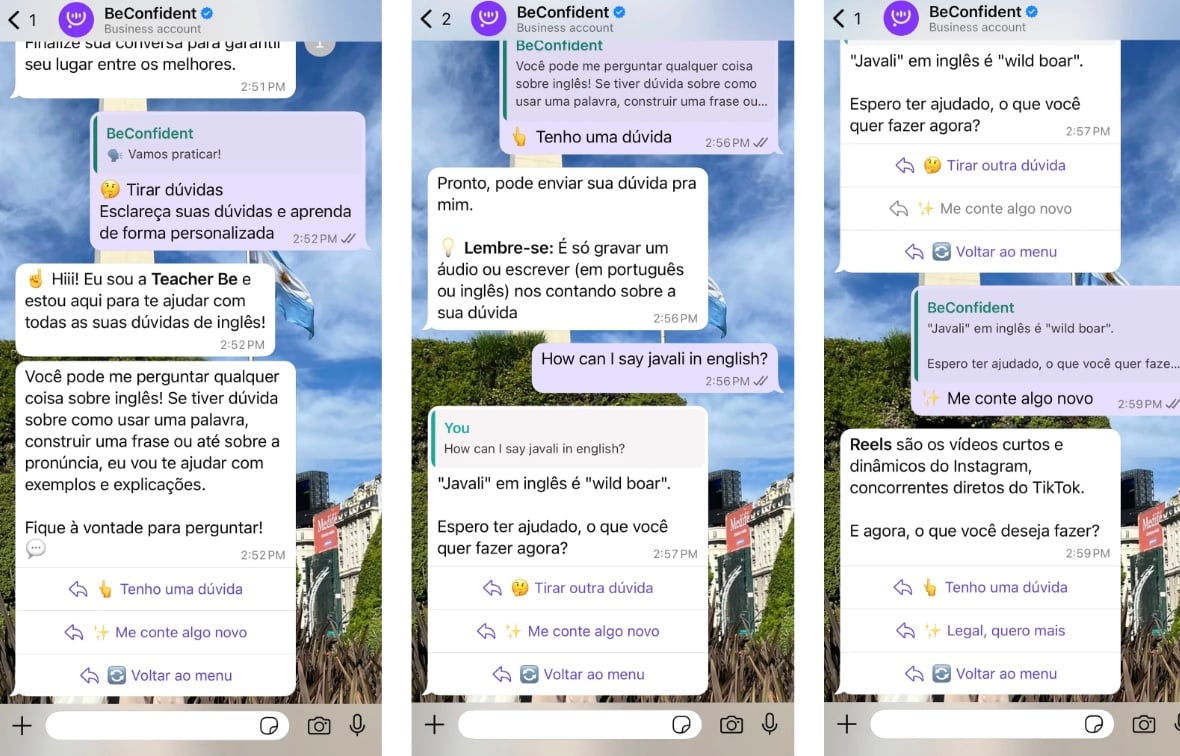
BeConfident's AI tutors simulate conversations with natives from different countries and offer instant feedback on pronunciation, grammar, and fluency. You can practice 24/7 via the app, WhatsApp, or smartwatch, without relying on fixed schedules with human teachers.
Is it possible to improve my English accent on my own?
It is possible to improve your accent with structured practice. Using shadowing combined with AI feedback helps adjust pronunciation and intonation. The technique consists of simultaneously repeating what you hear, which aligns your speech pattern closer to a native standard. Studies indicate that daily practice with immediate correction can generate a close alignment with native accents within a few weeks.
How long does it take to understand native accents fluently?
With organized practice using the seven strategies presented, many B1-B2 level students achieve about 80% comprehension of major accents, such as American and British, in 4 to 6 weeks. More complex accents, like Scottish, usually require 2 to 3 months of consistent exposure.
What is the difference between American and British accents for Brazilians?
The American accent uses a strong "r" sound and features vowel mergers like the cot-caught merger. The British accent maintains more distinctions between vowels but frequently utilizes glottal stops. Brazilians generally consider the American accent more familiar due to exposure in movies and TV shows, but both require specific practice with connected speech and reductions.
Meaningful comprehension of native accents in English is an achievable goal with methodology and consistency. The seven strategies presented, combined with practice with AI tutors, help develop the confidence to understand any native accent. BeConfident combines advanced technology and structured methodology to accelerate this progress.
Try it free and start learning English today and advance your listening comprehension in weeks, with a clear plan and continuous tracking.
Written by: Luan Cavallaro, Founder & CMO, BeConfident
Key Takeaways from This Article
Connected speech phenomena such as linking, elision, and reductions (gonna, wanna) create greater difficulty in understanding natives, even for advanced AI systems.
Scottish, Nigerian, and Indian accents are usually the most challenging, while the American accent tends to be more accessible for Brazilians due to Hollywood's influence.
Seven practical strategies include gradual immersion without subtitles, shadowing, and analysis of reductions, which can unlock comprehension in about 4 to 6 weeks.
Active pronunciation practice and targeted exposure to specific accents (American, British, Australian) accelerate listening and oral fluency.
BeConfident offers 24/7 AI tutors with 6 native accents and instant feedback for unlimited practice: Try it free now.
Why Our Ears Block with Native Accents
The main reason for having difficulty with a native accent in English is the way natives connect sounds in speech. Linking connects sounds between words ("law and order" becomes [lɔːr ən ɔːdə]), while elision omits sounds completely. Assimilation alters pronunciations ("ten cars" becomes [teŋ kɑːz]), and intrusion inserts extra sounds between vowels.
Word | American Accent | British Accent | Australian Accent |
water | wadder | waw-tuh | wawdah |
going to | gonna | gonna | gonna |
schedule | skedjool | shedual | skedual |
dance | dæns | dɑːns | dɐːns |
Scottish (69.8% accuracy) and Indian (71.2%) accents appear among the most challenging, followed by Nigerian (68.5%). Even advanced AI systems show difficulty with these variations, which explains why many Brazilians report the same type of mental block.
7-Step Practical Strategies to Improve Comprehension
The following strategies help improve listening comprehension based on recent studies on the effectiveness of shadowing and active immersion.
1. Gradual immersion without subtitles
Set aside 15 minutes daily to watch BBC News or Netflix in English, without subtitles. Gradually increase the time until you reach 30 minutes.
2. Shadowing with authentic audio
Repeat out loud at the same time as you listen, even without understanding every word. Shadowing consistently improves pronunciation, fluency, and oral confidence. This practice reduces anxiety when facing unfamiliar vocabulary.
3. Analysis of reductions in connected speech
Identify frequent reductions, such as "want to" → "wanna", "going to" → "gonna", and "have to" → "hafta". Practice recognizing these forms in real dialogues and repeat out loud to anchor the sound pattern.
4. Focused exposure to specific accents
Organize your study by weeks. Dedicate one week to each main accent, such as American, British, and Australian. Use YouTube channels featuring native creators from each region to hear everyday vocabulary.
5. Active pronunciation instead of passive listening
Turn every listening session into a speaking practice. Speak along with the audio, mimicking the native speakers' natural intonation, rhythm, and pauses. Record your own voice and compare it to the original to notice fine adjustments.
6. Targeted use of free YouTube content
Channels like BBC Learning English and Rachel's English offer specific exercises for connected speech and reductions. Build a short playlist with videos on linking, elision, and rhythm, and review it frequently.
7. Conversation with AI available 24/7
Use AI tutors that simulate real native accents and provide immediate feedback. This approach allows you to practice without judgment, at any time, and repeat as many times as necessary.
Accent Difficulty Comparison: American, British, and Others
The difficulty ranking usually places Scottish and Nigerian accents among the most complex, followed by Indian and then Australian. The British Cockney accent includes phenomena like th-fronting ("thin" becomes "fin") and h-dropping ("house" becomes "ouse"), which makes comprehension even more demanding for intermediate learners.
The American English accent tends to be more familiar to Brazilians because of movies and TV shows, but it presents its own challenges, such as the cot-caught merger, where about 40% of Americans pronounce "cot" and "caught" the same way. The British accent maintains more vowel distinctions, but frequently uses glottal stops, which alters the perception of consonants like the "t" in the middle of a word.
How to Improve Your Own English Accent
To get closer to a native English accent, it is worth combining shadowing with AI feedback. A good practice is to train on specific phenomena like the American cot-caught merger, where words like "father" and "bother" sound identical in many dialects. It is also worth focusing on linking between words and vowel reductions in unstressed syllables. Consistent exposure with immediate correction accelerates this fine-tuning.
AI Tools to Practice Native Accents
BeConfident offers AI tutors with American, British, Australian, Canadian, South African, and Indian native accents. Duolingo prioritizes gamification and structured exercises, with very little real conversation, while Cambly charges by the hour and displays variation in teacher quality. BeConfident focuses on unlimited 24/7 conversation practice via app, WhatsApp, and smartwatch.
Reports from students indicate rapid confidence gains: "I had a lot of trouble speaking, despite reading and listening well. I got BeConfident and within a month I was already speaking naturally, without getting stuck." and "When trying to interact with foreigners at work, I didn't know what to say. Daily practice gave me the confidence to finally converse and get my promotion.".
With over 200,000 paying students, 3 million total users, and an RA 1000 reputation on Reclame Aqui, BeConfident stands out as a more complete alternative compared to generic tools.
Try it free and start learning English today, with personalized conversation with AI.
30-Day Plan for Listening Fluency and Fixing Common Errors
Weeks 1 and 2: Daily immersion of 15 to 30 minutes with authentic English audio, combined with basic shadowing.
Weeks 3 and 4: Use of specific BeConfident tracks by accent, focusing on American, British, and Australian.
After Week 4: Daily conversations with AI tutors, tracking progress through the "My Evolution" feature.
Common Error: Focusing only on the most popular accents and ignoring others.
BeConfident Solution: Ensuring exposure to 6 different native accents throughout the month.
Common Error: Maintaining little conversation practice and relying only on listening and reading.
BeConfident Solution: Using AI available 24/7 for unlimited speaking practice with immediate feedback.
FAQ
Which English accent is the hardest to understand?
Scottish, Nigerian, and Indian accents are usually considered the most challenging, with comprehension rates between 68% and 71% even for advanced AI systems. The Australian accent, although it has elongated vowels and its own rhythm, tends to be more accessible, with about 84% accuracy in automatic tests.
How to practice English without a conversation partner?
BeConfident's AI tutors simulate conversations with natives from different countries and offer instant feedback on pronunciation, grammar, and fluency. You can practice 24/7 via the app, WhatsApp, or smartwatch, without relying on fixed schedules with human teachers.
Is it possible to improve my English accent on my own?
It is possible to improve your accent with structured practice. Using shadowing combined with AI feedback helps adjust pronunciation and intonation. The technique consists of simultaneously repeating what you hear, which aligns your speech pattern closer to a native standard. Studies indicate that daily practice with immediate correction can generate a close alignment with native accents within a few weeks.
How long does it take to understand native accents fluently?
With organized practice using the seven strategies presented, many B1-B2 level students achieve about 80% comprehension of major accents, such as American and British, in 4 to 6 weeks. More complex accents, like Scottish, usually require 2 to 3 months of consistent exposure.
What is the difference between American and British accents for Brazilians?
The American accent uses a strong "r" sound and features vowel mergers like the cot-caught merger. The British accent maintains more distinctions between vowels but frequently utilizes glottal stops. Brazilians generally consider the American accent more familiar due to exposure in movies and TV shows, but both require specific practice with connected speech and reductions.
Meaningful comprehension of native accents in English is an achievable goal with methodology and consistency. The seven strategies presented, combined with practice with AI tutors, help develop the confidence to understand any native accent. BeConfident combines advanced technology and structured methodology to accelerate this progress.
Try it free and start learning English today and advance your listening comprehension in weeks, with a clear plan and continuous tracking.