




English expressions to use in the workplace
English expressions to use in the workplace
English expressions to use in the workplace
Written by: Luan Cavallaro, Founder & CMO, BeConfident
Key takeaways from this article
Mastering expressions like "Let’s get started," "touch base," and "circle back" facilitates meetings and daily communications in the corporate environment.
Using phrases like "You’re on mute" and "Can you share your screen?" in virtual meetings reduces communication noise in remote work.
Knowing terms like KPI, ROI, and stakeholder helps in discussions about performance and strategy in professional contexts.
Applying corporate jargon like "game changer" and "low-hanging fruit" makes your participation in brainstorms more natural for global teams.
Practicing these expressions with BeConfident accelerates fluency in real work scenarios.
Top 10 most used expressions at work
These expressions appear in almost every meeting, email, or call. They form the foundation of day-to-day corporate English.
1. Let’s get started /lɛts ɡɛt ˈstɑrtɪd/ - Let's begin
Example: "Let’s get started with today’s agenda."
2. On the same page /ɑn ðə seɪm peɪdʒ/ - In sync, aligned
Example: "Are we all on the same page about the deadline?"
3. Touch base /tʌtʃ beɪs/ - Get in touch, make contact
Example: "I’ll touch base with you next week."
4. Get the ball rolling /ɡɛt ðə bɔl ˈroʊlɪŋ/ - Start, get things started
Example: "Let’s get the ball rolling on this project."
5. ASAP /ˈeɪsæp/ - As soon as possible
Example: "Please send me the report ASAP."
6. Keep me in the loop /kip mi ɪn ðə lup/ - Keep me informed
Example: "Keep me in the loop about any changes."
7. Circle back /ˈsɜrkəl bæk/ - Return to the topic later
Example: "Let’s circle back on this tomorrow."
8. Move the needle /muv ðə ˈnidəl/ - Generate real impact
Example: "This strategy will really move the needle."
9. Think outside the box /θɪŋk ˈaʊtˌsaɪd ðə bɑks/ - Think outside the box
Example: "We need to think outside the box for this campaign."
10. Win-win situation /wɪn wɪn ˌsɪtʃuˈeɪʃən/ - Advantageous situation for everyone
Example: "This partnership is a win-win situation."
Once you master these general phrases, it becomes easier to apply them in specific contexts. The next step is to use this vocabulary in meetings, where clarity and objectivity are essential.
Expressions for meetings
These expressions structure the conversation, show alignment, and help you disagree professionally.
1. Shall we get down to business? - Shall we get down to business?
2. Let’s dive right in - Let's dive right in
3. Can we table this for now? - Can we shelve this for now?
4. I’d like to piggyback on that - I would like to elaborate on that
5. Let’s take this offline - Let's discuss this separately
6. Can you walk us through this? - Can you explain this to us step-by-step?
7. I’m afraid I have to push back on that - I need to disagree with that
8. Let’s wrap this up - Let's finish up
9. Can we circle back to the main point? - Can we go back to the main point?
10. I’ll take the action item - I will be responsible for this task
Example:
Manager: "Shall we get down to business? I’d like to walk you through the quarterly results."
Team member: "Sure, let’s dive right in. Can you break down the numbers by department?"
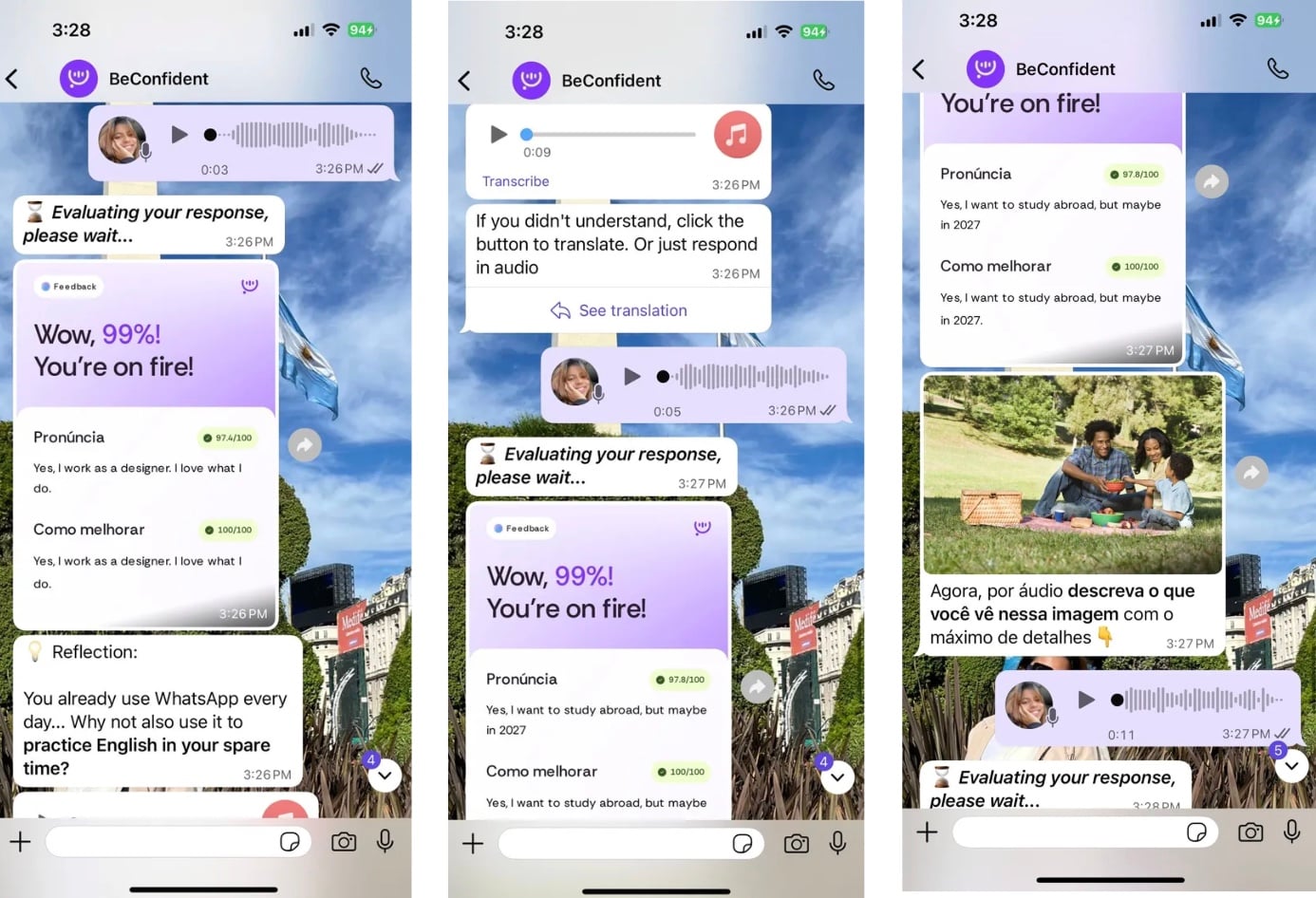
Practicing these phrases in meeting simulations on BeConfident helps you gain the confidence to speak with managers and clients.
Productivity and deadlines
These expressions describe project status and urgency. They allow you to show if the team is ahead, behind, or under pressure, and what needs to happen next.
1. Meet the deadline - Meet the deadline
2. We’re on track - We are on the right track
3. Behind schedule - Late / Behind schedule
4. Ahead of schedule - Early / Ahead of schedule
5. Time is of the essence - Time is essential
6. Cut to the chase - Get straight to the point
7. Fast-track this project - Speed up this project
60. We’re up against it - We are under pressure
9. Crunch time - Decisive moment
10. Deliver on time - Deliver on time
11. Stay on top of it - Maintain control over
12. Keep the momentum going - Keep up the pace
When talking about deadlines, you can combine these phrases. For example: "We’re behind schedule, so we need to fast-track this project to meet the deadline."
Communication with colleagues
These expressions facilitate requests for help, quick alignments, and day-to-day collaboration.
1. Can you give me a hand? - Can you lend me a hand?
2. I’m swamped - I am overwhelmed / swamped
3. Let’s brainstorm - Let's brainstorm
4. I’m all ears - I'm listening
5. Can you cover for me? - Can you cover for me?
6. I’ll have your back - I'll support you
7. Let’s collaborate on this - Let's collaborate on this
8. Can you bring me up to speed? - Can you update me?
9. I’m tied up right now - I'm busy right now
10. Let’s sync up later - Let's align later
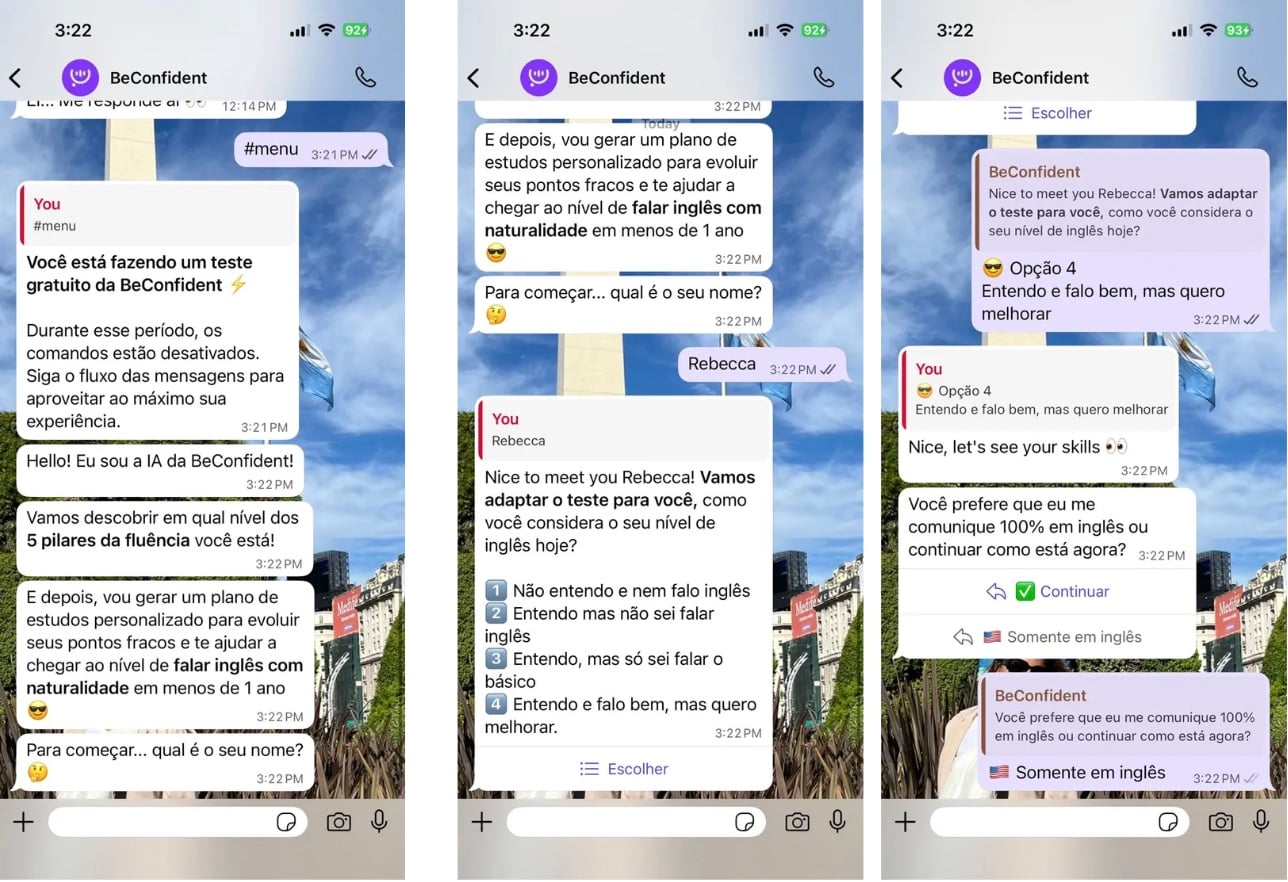
Start a free trial on BeConfident to practice these interactions in short and frequent dialogues.
These phrases work well in face-to-face conversations. However, remote work has created new communication challenges that require another set of expressions.
Virtual meetings and hybrid work
The remote work consolidated in 2026 brought its own vocabulary. New expressions have entered dictionaries to reflect the digital reality and are now part of daily calls.
1. You’re on mute - You are on mute
2. Can you share your screen? - Can you share your screen?
3. I’m having connection issues - I'm having connection problems
4. Let’s take this to breakout rooms - Let's go to the separate rooms
5. Can everyone see my screen? - Can everyone see my screen?
6. You’re breaking up - Your voice is cutting out
7. Touch grass - Go outside, connect with the real world
8. Brain rot - Mental decline due to excessive screen time
9. Let’s go hybrid on this - Let's do this in a hybrid way
10. Async communication - Asynchronous communication
Essential corporate terms
These terms appear in reports, presentations, and conversations with leadership. Understanding the meaning of each one prevents strategic misunderstandings.
1. Stakeholder - Interested party
2. KPI (Key Performance Indicator) - Key performance indicator
3. ROI (Return on Investment) - Return on investment
4. Bandwidth - Capacity, availability
5. Deliverables - Deliverables
6. Milestone - Milestone, important step
7. Pipeline - Funnel, process
8. Onboarding - Integration of new employees
9. Burnout - Professional exhaustion / burnout
10. Scalable - Scalable
11. Synergy - Synergy
12. Leverage - Use as an advantage
Corporate jargon to impress
This jargon appears in informal presentations, talks with leadership, and brainstorms. It shows familiarity with today's business English.
1. Game changer - High-impact change
2. Low-hanging fruit - Easy opportunities
3. Move the goalposts - Change the rules of the game
4. Raise the bar - Raise the standard
5. Hit the ground running - Start at a fast pace
6. Think big picture - Think of the big picture
7. Drill down - Delve into the details
8. Take it to the next level - Take it to the next level
9. Best practice - Established best practice
10. Value proposition - Value proposition
Vocabulary for negotiations and presentations
Some specific phrases strengthen your posture in presentations and corporate negotiations and convey confidence.
1. Set clear expectations - Set clear expectations
2. Find a middle ground - Find a compromise / middle ground
3. We’ve got to cover our costs - We need to cover our costs
4. Is there any flexibility? - Is there any flexibility?
5. That’s beyond our budget - That is beyond our budget
6. We’re happy to accept your offer - We are happy to accept your offer
7. Address the issue - Address the issue
8. Sign off on something - Approve something
9. Can you meet me in the middle? - Can you find a middle ground?
10. Close the deal - Close the deal
Negotiation dialogue:
Client: "That’s a bit beyond our current budget. Is there any flexibility?"
Sales rep: "I understand. Let’s find a middle ground that works for both parties."
After seeing isolated phrases, it is easier to understand how they appear in full conversations. The following dialogues show these expressions in action.
Complete dialogues in real scenarios
Scenario 1 - Status meeting:
Manager: "Let’s get started. Can you bring me up to speed on the project?"
Employee: "Sure, we’re on track to meet the deadline. However, I want to raise a red flag about the budget."
Manager: "Thanks for the heads up. Let’s circle back on this after the meeting."
Scenario 2 - Client presentation:
Presenter: "This solution is a real game changer for your industry."
Client: "Can you walk us through the ROI projections?"
Presenter: "Absolutely. Let me drill down into the numbers."
Scenario 3 - Project follow-up:
Team Lead: "I’ll touch base with the stakeholders and keep you in the loop."
Colleague: "Perfect. Let’s sync up tomorrow to make sure we’re on the same page."
Anyone who practices these dialogues out loud with BeConfident gains agility to respond naturally in similar situations at work.
How to practice for real fluency with BeConfident
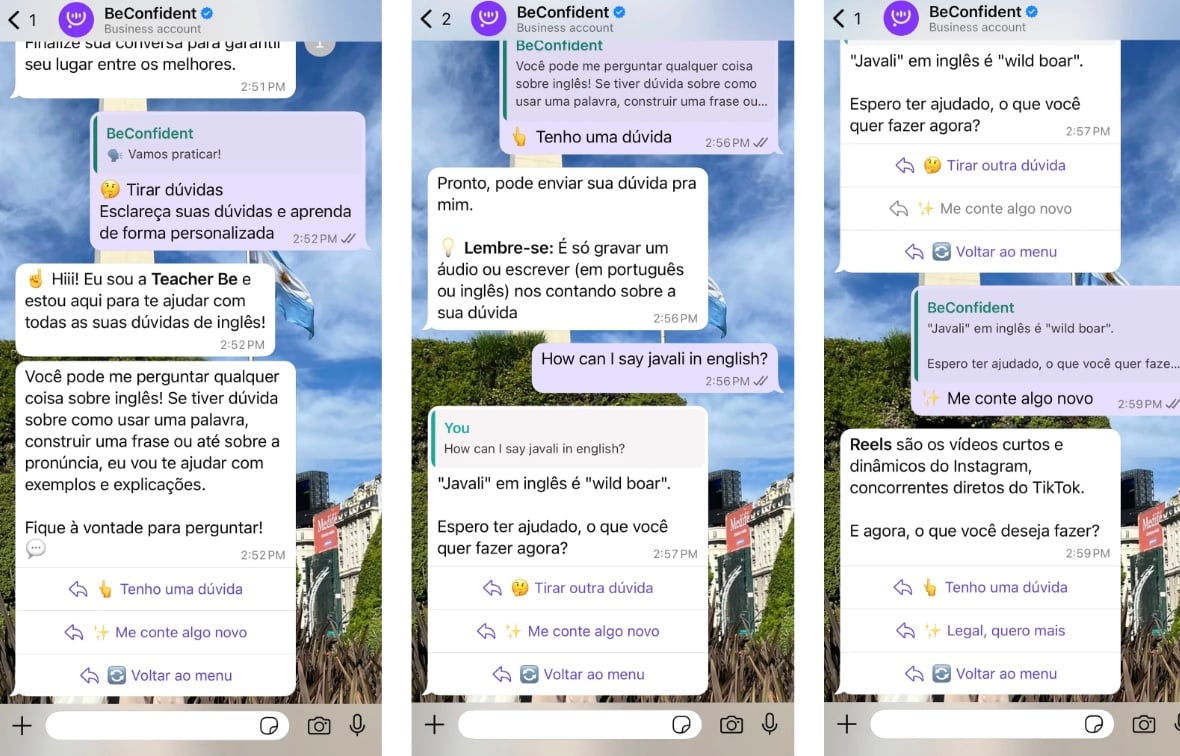
BeConfident focuses on practical conversation with AI tutors, instead of just grammar exercises or hourly classes. The platform has over 200,000 paying students, an RA 1000 reputation on Reclame Aqui, and allows practice 24/7 via app, WhatsApp, or smartwatch.
The AI tutors simulate native American, British, South African, Canadian, Australian, and Indian accents. They adapt to your interests and needs, offer instant feedback without judgment, and allow you to practice professional and technical topics in realistic scenarios.
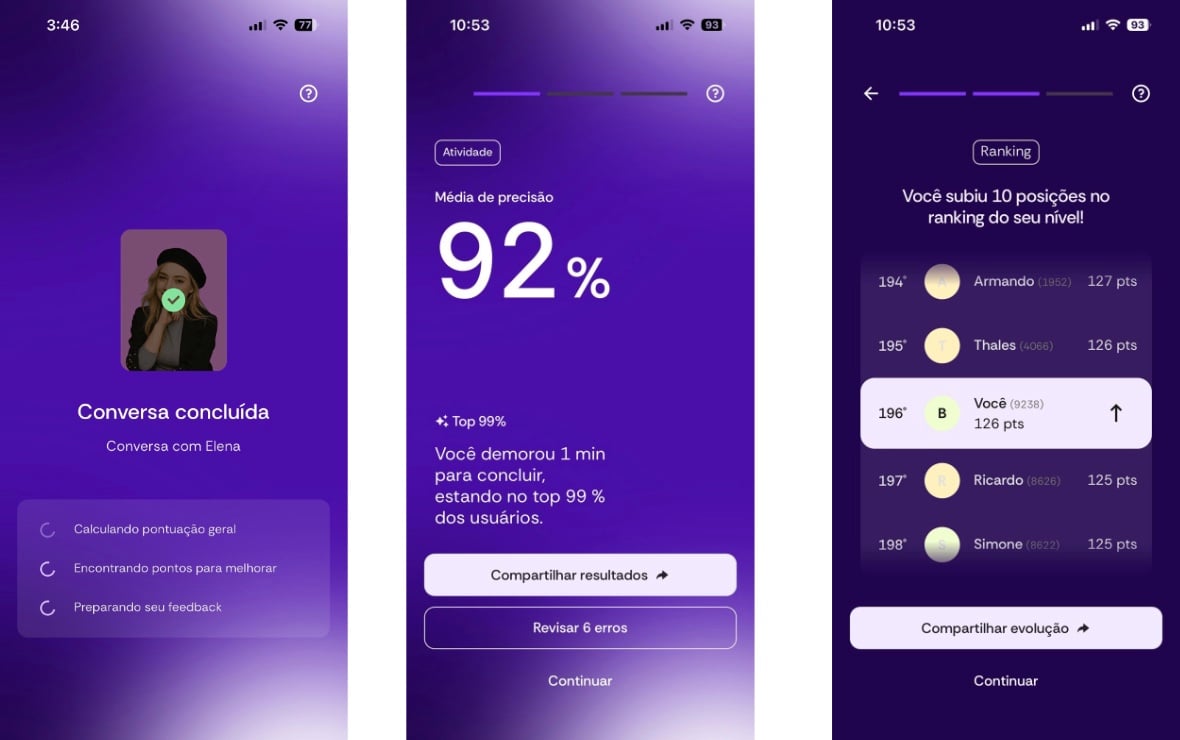
Take a free test on BeConfident to turn these expressions into a speaking habit in your professional daily life.
Frequently asked questions
What are the most commonly used English expressions at work?
The 10 most common expressions include "Let’s get started", "On the same page", "Touch base", "Get the ball rolling", "ASAP", "Keep me in the loop", "Circle back", "Move the needle", "Think outside the box", and "Win-win situation". These expressions appear daily in corporate meetings, emails, and presentations.
How to use English expressions in virtual meetings?
For online meetings, use phrases like "You’re on mute", "Can you share your screen?", "Let’s take this to breakout rooms", and "Can everyone see my screen?". With hybrid work, expressions like "Let’s go hybrid on this" and "async communication" are also used to describe new ways of working.
What is the difference between corporate jargon and formal expressions?
Formal expressions like "Set clear expectations" and "Address the issue" are suitable for official presentations and negotiations. Jargon like "Game changer" and "Low-hanging fruit" are more casual and work best in brainstorms and conversations among close colleagues.
How to practice these expressions to sound natural?
Consistent conversational practice is the key to sounding natural. Use each expression in a real context, practice pronunciation, and create dialogues. BeConfident offers AI tutors that simulate real corporate situations, allowing you to practice negotiations, meetings, and presentations with instant feedback.
What expressions to use in professional negotiations?
In negotiations, use "Find a middle ground", "Is there any flexibility?", "We’ve got to cover our costs", "Can you meet me in the middle?", and "Close the deal". These phrases demonstrate professionalism and a willingness to find solutions that benefit all parties.
Conclusion: advancing in your career with fluent English
Mastering these over 80 English expressions increases your confidence to participate in meetings, negotiate with clients, and present projects in global contexts. Constant practice in situations close to reality accelerates this process.
BeConfident offers a direct path to this conversational fluency, with realistic corporate scenarios, personalized feedback, and 24/7 availability.
Try BeConfident for free today and start applying this vocabulary in your work with more confidence.
Written by: Luan Cavallaro, Founder & CMO, BeConfident
Key takeaways from this article
Mastering expressions like "Let’s get started," "touch base," and "circle back" facilitates meetings and daily communications in the corporate environment.
Using phrases like "You’re on mute" and "Can you share your screen?" in virtual meetings reduces communication noise in remote work.
Knowing terms like KPI, ROI, and stakeholder helps in discussions about performance and strategy in professional contexts.
Applying corporate jargon like "game changer" and "low-hanging fruit" makes your participation in brainstorms more natural for global teams.
Practicing these expressions with BeConfident accelerates fluency in real work scenarios.
Top 10 most used expressions at work
These expressions appear in almost every meeting, email, or call. They form the foundation of day-to-day corporate English.
1. Let’s get started /lɛts ɡɛt ˈstɑrtɪd/ - Let's begin
Example: "Let’s get started with today’s agenda."
2. On the same page /ɑn ðə seɪm peɪdʒ/ - In sync, aligned
Example: "Are we all on the same page about the deadline?"
3. Touch base /tʌtʃ beɪs/ - Get in touch, make contact
Example: "I’ll touch base with you next week."
4. Get the ball rolling /ɡɛt ðə bɔl ˈroʊlɪŋ/ - Start, get things started
Example: "Let’s get the ball rolling on this project."
5. ASAP /ˈeɪsæp/ - As soon as possible
Example: "Please send me the report ASAP."
6. Keep me in the loop /kip mi ɪn ðə lup/ - Keep me informed
Example: "Keep me in the loop about any changes."
7. Circle back /ˈsɜrkəl bæk/ - Return to the topic later
Example: "Let’s circle back on this tomorrow."
8. Move the needle /muv ðə ˈnidəl/ - Generate real impact
Example: "This strategy will really move the needle."
9. Think outside the box /θɪŋk ˈaʊtˌsaɪd ðə bɑks/ - Think outside the box
Example: "We need to think outside the box for this campaign."
10. Win-win situation /wɪn wɪn ˌsɪtʃuˈeɪʃən/ - Advantageous situation for everyone
Example: "This partnership is a win-win situation."
Once you master these general phrases, it becomes easier to apply them in specific contexts. The next step is to use this vocabulary in meetings, where clarity and objectivity are essential.
Expressions for meetings
These expressions structure the conversation, show alignment, and help you disagree professionally.
1. Shall we get down to business? - Shall we get down to business?
2. Let’s dive right in - Let's dive right in
3. Can we table this for now? - Can we shelve this for now?
4. I’d like to piggyback on that - I would like to elaborate on that
5. Let’s take this offline - Let's discuss this separately
6. Can you walk us through this? - Can you explain this to us step-by-step?
7. I’m afraid I have to push back on that - I need to disagree with that
8. Let’s wrap this up - Let's finish up
9. Can we circle back to the main point? - Can we go back to the main point?
10. I’ll take the action item - I will be responsible for this task
Example:
Manager: "Shall we get down to business? I’d like to walk you through the quarterly results."
Team member: "Sure, let’s dive right in. Can you break down the numbers by department?"
Practicing these phrases in meeting simulations on BeConfident helps you gain the confidence to speak with managers and clients.
Productivity and deadlines
These expressions describe project status and urgency. They allow you to show if the team is ahead, behind, or under pressure, and what needs to happen next.
1. Meet the deadline - Meet the deadline
2. We’re on track - We are on the right track
3. Behind schedule - Late / Behind schedule
4. Ahead of schedule - Early / Ahead of schedule
5. Time is of the essence - Time is essential
6. Cut to the chase - Get straight to the point
7. Fast-track this project - Speed up this project
60. We’re up against it - We are under pressure
9. Crunch time - Decisive moment
10. Deliver on time - Deliver on time
11. Stay on top of it - Maintain control over
12. Keep the momentum going - Keep up the pace
When talking about deadlines, you can combine these phrases. For example: "We’re behind schedule, so we need to fast-track this project to meet the deadline."
Communication with colleagues
These expressions facilitate requests for help, quick alignments, and day-to-day collaboration.
1. Can you give me a hand? - Can you lend me a hand?
2. I’m swamped - I am overwhelmed / swamped
3. Let’s brainstorm - Let's brainstorm
4. I’m all ears - I'm listening
5. Can you cover for me? - Can you cover for me?
6. I’ll have your back - I'll support you
7. Let’s collaborate on this - Let's collaborate on this
8. Can you bring me up to speed? - Can you update me?
9. I’m tied up right now - I'm busy right now
10. Let’s sync up later - Let's align later
Start a free trial on BeConfident to practice these interactions in short and frequent dialogues.
These phrases work well in face-to-face conversations. However, remote work has created new communication challenges that require another set of expressions.
Virtual meetings and hybrid work
The remote work consolidated in 2026 brought its own vocabulary. New expressions have entered dictionaries to reflect the digital reality and are now part of daily calls.
1. You’re on mute - You are on mute
2. Can you share your screen? - Can you share your screen?
3. I’m having connection issues - I'm having connection problems
4. Let’s take this to breakout rooms - Let's go to the separate rooms
5. Can everyone see my screen? - Can everyone see my screen?
6. You’re breaking up - Your voice is cutting out
7. Touch grass - Go outside, connect with the real world
8. Brain rot - Mental decline due to excessive screen time
9. Let’s go hybrid on this - Let's do this in a hybrid way
10. Async communication - Asynchronous communication
Essential corporate terms
These terms appear in reports, presentations, and conversations with leadership. Understanding the meaning of each one prevents strategic misunderstandings.
1. Stakeholder - Interested party
2. KPI (Key Performance Indicator) - Key performance indicator
3. ROI (Return on Investment) - Return on investment
4. Bandwidth - Capacity, availability
5. Deliverables - Deliverables
6. Milestone - Milestone, important step
7. Pipeline - Funnel, process
8. Onboarding - Integration of new employees
9. Burnout - Professional exhaustion / burnout
10. Scalable - Scalable
11. Synergy - Synergy
12. Leverage - Use as an advantage
Corporate jargon to impress
This jargon appears in informal presentations, talks with leadership, and brainstorms. It shows familiarity with today's business English.
1. Game changer - High-impact change
2. Low-hanging fruit - Easy opportunities
3. Move the goalposts - Change the rules of the game
4. Raise the bar - Raise the standard
5. Hit the ground running - Start at a fast pace
6. Think big picture - Think of the big picture
7. Drill down - Delve into the details
8. Take it to the next level - Take it to the next level
9. Best practice - Established best practice
10. Value proposition - Value proposition
Vocabulary for negotiations and presentations
Some specific phrases strengthen your posture in presentations and corporate negotiations and convey confidence.
1. Set clear expectations - Set clear expectations
2. Find a middle ground - Find a compromise / middle ground
3. We’ve got to cover our costs - We need to cover our costs
4. Is there any flexibility? - Is there any flexibility?
5. That’s beyond our budget - That is beyond our budget
6. We’re happy to accept your offer - We are happy to accept your offer
7. Address the issue - Address the issue
8. Sign off on something - Approve something
9. Can you meet me in the middle? - Can you find a middle ground?
10. Close the deal - Close the deal
Negotiation dialogue:
Client: "That’s a bit beyond our current budget. Is there any flexibility?"
Sales rep: "I understand. Let’s find a middle ground that works for both parties."
After seeing isolated phrases, it is easier to understand how they appear in full conversations. The following dialogues show these expressions in action.
Complete dialogues in real scenarios
Scenario 1 - Status meeting:
Manager: "Let’s get started. Can you bring me up to speed on the project?"
Employee: "Sure, we’re on track to meet the deadline. However, I want to raise a red flag about the budget."
Manager: "Thanks for the heads up. Let’s circle back on this after the meeting."
Scenario 2 - Client presentation:
Presenter: "This solution is a real game changer for your industry."
Client: "Can you walk us through the ROI projections?"
Presenter: "Absolutely. Let me drill down into the numbers."
Scenario 3 - Project follow-up:
Team Lead: "I’ll touch base with the stakeholders and keep you in the loop."
Colleague: "Perfect. Let’s sync up tomorrow to make sure we’re on the same page."
Anyone who practices these dialogues out loud with BeConfident gains agility to respond naturally in similar situations at work.
How to practice for real fluency with BeConfident
BeConfident focuses on practical conversation with AI tutors, instead of just grammar exercises or hourly classes. The platform has over 200,000 paying students, an RA 1000 reputation on Reclame Aqui, and allows practice 24/7 via app, WhatsApp, or smartwatch.
The AI tutors simulate native American, British, South African, Canadian, Australian, and Indian accents. They adapt to your interests and needs, offer instant feedback without judgment, and allow you to practice professional and technical topics in realistic scenarios.
Take a free test on BeConfident to turn these expressions into a speaking habit in your professional daily life.
Frequently asked questions
What are the most commonly used English expressions at work?
The 10 most common expressions include "Let’s get started", "On the same page", "Touch base", "Get the ball rolling", "ASAP", "Keep me in the loop", "Circle back", "Move the needle", "Think outside the box", and "Win-win situation". These expressions appear daily in corporate meetings, emails, and presentations.
How to use English expressions in virtual meetings?
For online meetings, use phrases like "You’re on mute", "Can you share your screen?", "Let’s take this to breakout rooms", and "Can everyone see my screen?". With hybrid work, expressions like "Let’s go hybrid on this" and "async communication" are also used to describe new ways of working.
What is the difference between corporate jargon and formal expressions?
Formal expressions like "Set clear expectations" and "Address the issue" are suitable for official presentations and negotiations. Jargon like "Game changer" and "Low-hanging fruit" are more casual and work best in brainstorms and conversations among close colleagues.
How to practice these expressions to sound natural?
Consistent conversational practice is the key to sounding natural. Use each expression in a real context, practice pronunciation, and create dialogues. BeConfident offers AI tutors that simulate real corporate situations, allowing you to practice negotiations, meetings, and presentations with instant feedback.
What expressions to use in professional negotiations?
In negotiations, use "Find a middle ground", "Is there any flexibility?", "We’ve got to cover our costs", "Can you meet me in the middle?", and "Close the deal". These phrases demonstrate professionalism and a willingness to find solutions that benefit all parties.
Conclusion: advancing in your career with fluent English
Mastering these over 80 English expressions increases your confidence to participate in meetings, negotiate with clients, and present projects in global contexts. Constant practice in situations close to reality accelerates this process.
BeConfident offers a direct path to this conversational fluency, with realistic corporate scenarios, personalized feedback, and 24/7 availability.
Try BeConfident for free today and start applying this vocabulary in your work with more confidence.