




100+ basic English phrases for Brazilian beginners
100+ basic English phrases for Brazilian beginners
100+ basic English phrases for Brazilian beginners
Written by: Luan Cavallaro, Founder & CMO, BeConfident
Key Takeaways from This Article
Mastering difficult sounds like “th”, short and long vowels, and the American R helps to achieve a more natural pronunciation and reduces a strong Brazilian accent.
Using essential phrases for greetings, asking for help, and daily routines covers most real-life situations for beginners.
Avoiding false cognates like “actually” and “pretend” reduces misunderstandings in conversations.
Practicing dialogues and phrases for travel, shopping, and work through repetition increases speaking confidence.
BeConfident offers unlimited practice with an AI that corrects pronunciation in real time, start your free trial now and begin speaking English with more confidence.
Essential Pronunciation Tips for Brazilians 🚀
Mastering a few specific sounds makes speaking English much easier from the very start.
The “th” sound: Place your tongue between your teeth. “Think” /θɪŋk/ is not “tink”, “thank” /θæŋk/ is not “tank”.
Distinct vowels: “Ship” /ʃɪp/ (navio) and “sheep” /ʃiːp/ (ovelha) have different sounds. The short “i” and the long “ee” change the meaning completely.
American R: In “car” /kɑːr/, the R is pronounced forcefully, unlike in Brazilian Portuguese.
Dangerous false cognates: “Actually” /ˈæktʃuəli/ means “na verdade” (in fact), not “atualmente” (currently). “Pretend” means “fingir” (to fake), not “pretender” (to intend).
BeConfident uses AI to correct your pronunciation in real time with various native accents and creates a safe environment to make mistakes and adjust.
Practice your pronunciation now. Take the BeConfident free trial.
👋 Greetings and Introductions
English phrase | PT translation | Phonetic pronunciation |
Hello, how are you? | Olá, como você está? | /həˈloʊ haʊ ɑːr juː/ |
Nice to meet you | Prazer em conhecê-lo | /naɪs tuː miːt juː/ |
What’s your name? | Qual é o seu nome? | /wʌts jʊr neɪm/ |
My name is... | Meu nome é... | /maɪ neɪm ɪz/ |
Where are you from? | De onde você é? | /wɛr ɑːr juː frʌm/ |
I’m from Brazil | Eu sou do Brasil | /aɪm frʌm brəˈzɪl/ |
Good morning | Bom dia | /ɡʊd ˈmɔːrnɪŋ/ |
Good afternoon | Boa tarde | /ɡʊd ˌæftərˈnuːn/ |
Good evening | Boa noite | /ɡʊd ˈiːvnɪŋ/ |
See you later | Até mais tarde | /siː juː ˈleɪtər/ |
Practical dialogue:
A: “Hello, I’m Maria. What’s your name?”
B: “Hi Maria, nice to meet you. I’m John.”
Practice this dialogue with AI on BeConfident, with various accents and a free trial.
🆘 Survival and Help Phrases
English phrase | PT translation | Phonetic pronunciation |
Excuse me | Com licença | /ɪkˈskjuːz miː/ |
Can you help me? | Você pode me ajudar? | /kæn juː hɛlp miː/ |
I don’t understand | Eu não entendo | /aɪ doʊnt ˌʌndərˈstænd/ |
Could you repeat that? | Você poderia repetir? | /kʊd juː rɪˈpiːt ðæt/ |
I’m sorry | Desculpe | /aɪm ˈsɔːri/ |
Where is the bathroom? | Onde fica o banheiro? | /wɛr ɪz ðə ˈbæθruːm/ |
I need help | Eu preciso de ajuda | /aɪ niːd hɛlp/ |
Call the police | Chame a polícia | /kɔːl ðə pəˈliːs/ |
I’m lost | Estou perdido | /aɪm lɔːst/ |
Thank you very much | Muito obrigado | /θæŋk juː ˈvɛri mʌtʃ/ |
🏠 Daily Life at Home
English phrase | PT translation | Phonetic pronunciation |
I’m hungry | Estou com fome | /aɪm ˈhʌŋɡri/ |
I’m thirsty | Estou com sede | /aɪm ˈθɜːrsti/ |
What time is it? | Que horas são? | /wʌt taɪm ɪz ɪt/ |
I’m tired | Estou cansado | /aɪm ˈtaɪərd/ |
I like this | Eu gosto disso | /aɪ laɪk ðɪs/ |
I don’t like that | Eu não gosto disso | /aɪ doʊnt laɪk ðæt/ |
Can I have some water? | Posso tomar água? | /kæn aɪ hæv sʌm ˈwɔːtər/ |
I’m going to sleep | Vou dormir | /aɪm ˈɡoʊɪŋ tuː sliːp/ |
Good night | Boa noite | /ɡʊd naɪt/ |
See you tomorrow | Até amanhã | /siː juː təˈmɔːroʊ/ |
Practice daily conversations with AI via the BeConfident free trial.
🛒 Shopping and Dining Out
English phrase | PT translation | Phonetic pronunciation |
How much is this? | Quanto custa isso? | /haʊ mʌtʃ ɪz ðɪs/ |
I would like... | Eu gostaria de... | /aɪ wʊd laɪk/ |
Can I have the menu? | Posso ver o cardápio? | /kæn aɪ hæv ðə ˈmɛnjuː/ |
The check, please | A conta, por favor | /ðə tʃɛk pliːz/ |
Do you accept credit cards? | Vocês aceitam cartão? | /duː juː ækˈsɛpt ˈkrɛdɪt kɑːrdz/ |
Where can I pay? | Onde posso pagar? | /wɛr kæn aɪ peɪ/ |
I’m just looking | Só estou olhando | /aɪm dʒʌst ˈlʊkɪŋ/ |
Can I try this on? | Posso experimentar? | /kæn aɪ traɪ ðɪs ɔːn/ |
This is delicious | Está delicioso | /ðɪs ɪz dɪˈlɪʃəs/ |
I’m allergic to... | Sou alérgico a... | /aɪm əˈlɜːrdʒɪk tuː/ |
✈️ Travel and Airport
English phrase | PT translation | Phonetic pronunciation |
Where is gate 5? | Onde fica o portão 5? | /wɛr ɪz ɡeɪt faɪv/ |
When does the flight leave? | Quando sai o voo? | /wɛn dʌz ðə flaɪt liːv/ |
I have a reservation | Tenho uma reserva | /aɪ hæv ə ˌrɛzərˈveɪʃən/ |
Can I see your passport? | Posso ver seu passaporte? | /kæn aɪ siː jʊr ˈpæspɔːrt/ |
How long is the flight? | Quanto tempo dura o voo? | /haʊ lɔːŋ ɪz ðə flaɪt/ |
Where is the taxi stand? | Onde fica o ponto de táxi? | /wɛr ɪz ðə ˈtæksi stænd/ |
I’m here for vacation | Estou aqui a turismo | /aɪm hɪr fɔːr veɪˈkeɪʃən/ |
How do I get to downtown? | Como chego ao centro? | /haʊ duː aɪ ɡɛt tuː ˈdaʊntaʊn/ |
Is this seat taken? | Este lugar está ocupado? | /ɪz ðɪs siːt ˈteɪkən/ |
I missed my flight | Perdi meu voo | /aɪ mɪst maɪ flaɪt/ |
💼 Basic Work Vocabulary
English phrase | PT translation | Phonetic pronunciation |
What do you do for work? | O que você faz no trabalho? | /wʌt duː juː duː fɔːr wɜːrk/ |
I work in... | Eu trabalho em... | /aɪ wɜːrk ɪn/ |
Nice to meet you | Prazer em conhecê-lo | /naɪs tuː miːt juː/ |
Can we schedule a meeting? | Podemos marcar uma reunião? | /kæn wiː ˈskɛdʒuːl ə ˈmiːtɪŋ/ |
I need to make a call | Preciso fazer uma ligação | /aɪ niːd tuː meɪk ə kɔːl/ |
Could you send me an email? | Você poderia me enviar um email? | /kʊd juː sɛnd miː æn ˈiːmeɪl/ |
I’ll be right back | Já volto | /aɪl biː raɪt bæk/ |
Have a good day | Tenha um bom dia | /hæv ə ɡʊd deɪ/ |
I’m in a meeting | Estou em reunião | /aɪm ɪn ə ˈmiːtɪŋ/ |
Let me check | Deixe-me verificar | /lɛt miː tʃɛk/ |
⏰ Numbers, Time, and Directions
English phrase | PT translation | Phonetic pronunciation |
It’s three o’clock | São três horas | /ɪts θriː əˈklɑːk/ |
Turn left | Vire à esquerda | /tɜːrn lɛft/ |
Turn right | Vire à direita | /tɜːrn raɪt/ |
Go straight | Vá em frente | /ɡoʊ streɪt/ |
It’s on the corner | Fica na esquina | /ɪts ɔːn ðə ˈkɔːrnər/ |
How far is it? | Quão longe fica? | /haʊ fɑːr ɪz ɪt/ |
It’s five minutes away | Fica a cinco minutos | /ɪts faɪv ˈmɪnɪts əˈweɪ/ |
Can you show me on the map? | Pode me mostrar no mapa? | /kæn juː ʃoʊ miː ɔːn ðə mæp/ |
I’m looking for... | Estou procurando... | /aɪm ˈlʊkɪŋ fɔːr/ |
Is it close? | É perto? | /ɪz ɪt kloʊs/ |
10 Essential English Phrases for Beginners
Mastering a small group of phrases greatly accelerates the start of your conversational journey. If you are starting from scratch, master these 10 phrases first:
Hello, my name is... (Olá, meu nome é...)
How are you? (Como você está?)
Thank you (Obrigado)
Excuse me (Com licença)
I don’t understand (Não entendo)
Can you help me? (Você pode me ajudar?)
Where is...? (Onde fica...?)
How much? (Quanto custa?)
I would like... (Eu gostaria de...)
See you later (Até mais)
30 Easy Phrases for Conversation
Expanding your vocabulary with simple phrases allows you to hold short conversations more naturally.
About you: I’m from Brazil, I work in..., I like music, I have two children
Useful questions: What’s your favorite food? Do you speak Portuguese? How long have you been here?
Polite expressions: You’re welcome, No problem, Have a nice day, Take care
Why Practicing with BeConfident Accelerates Your English?
Memorizing phrases is the first step, but using those phrases in real conversations requires guided practice.
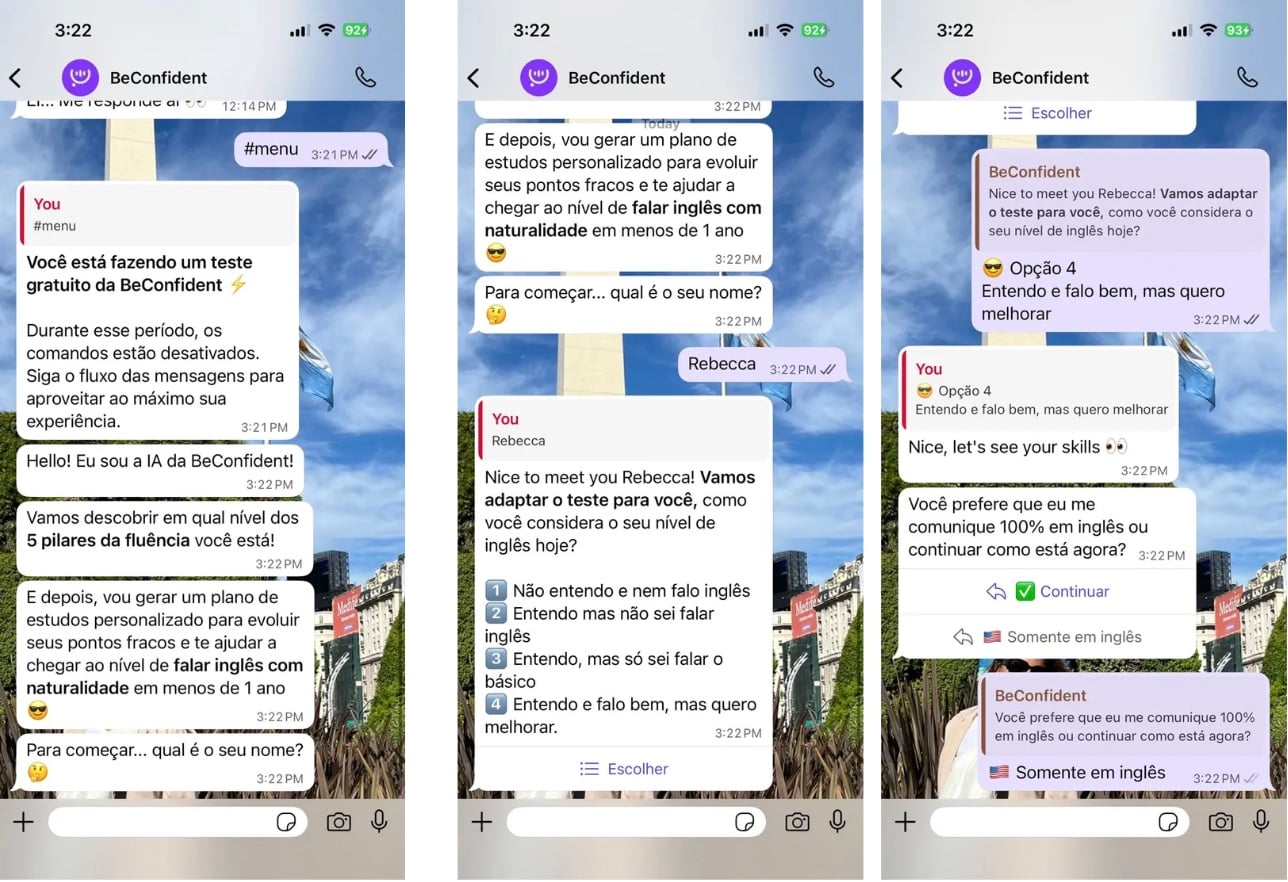
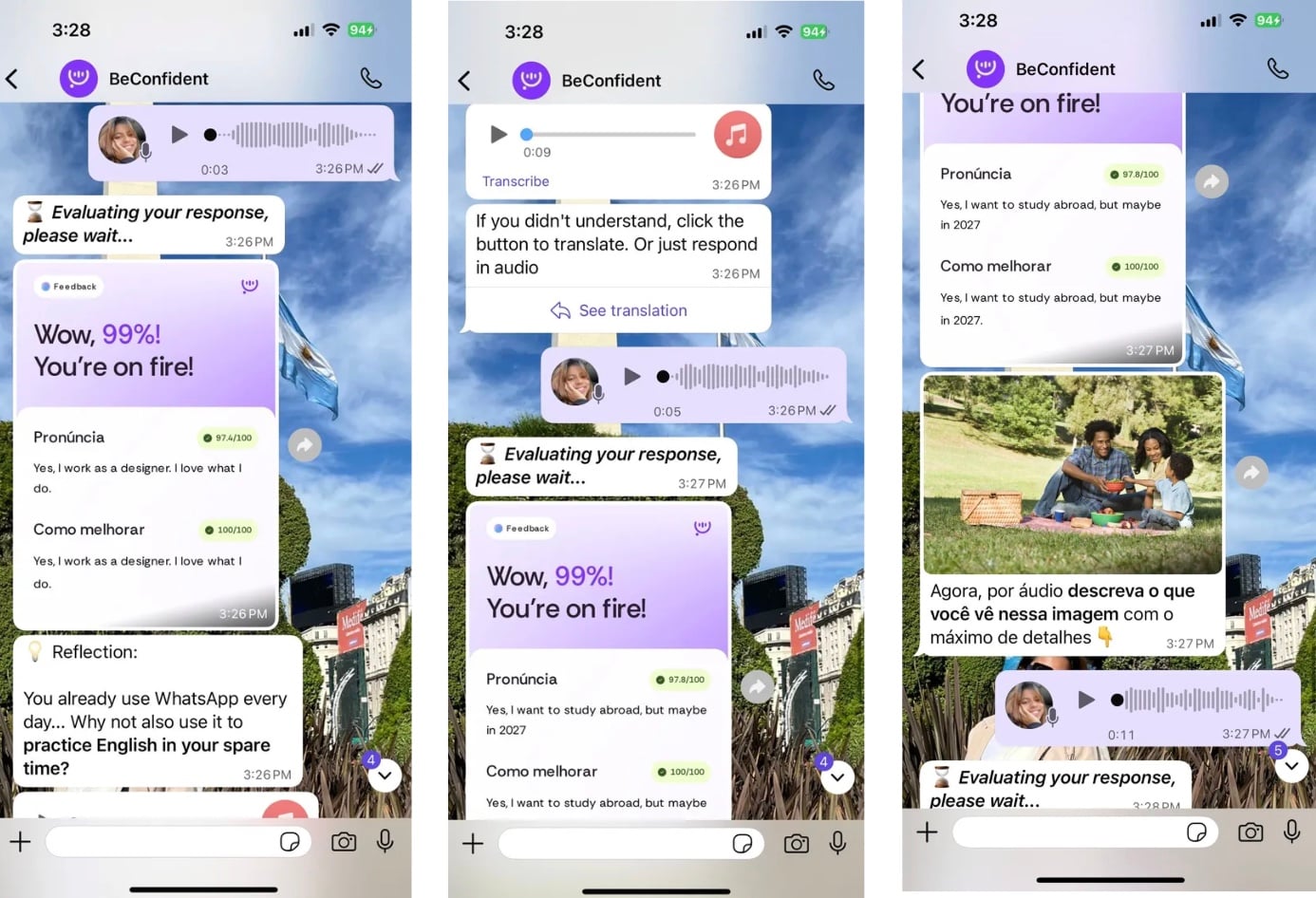
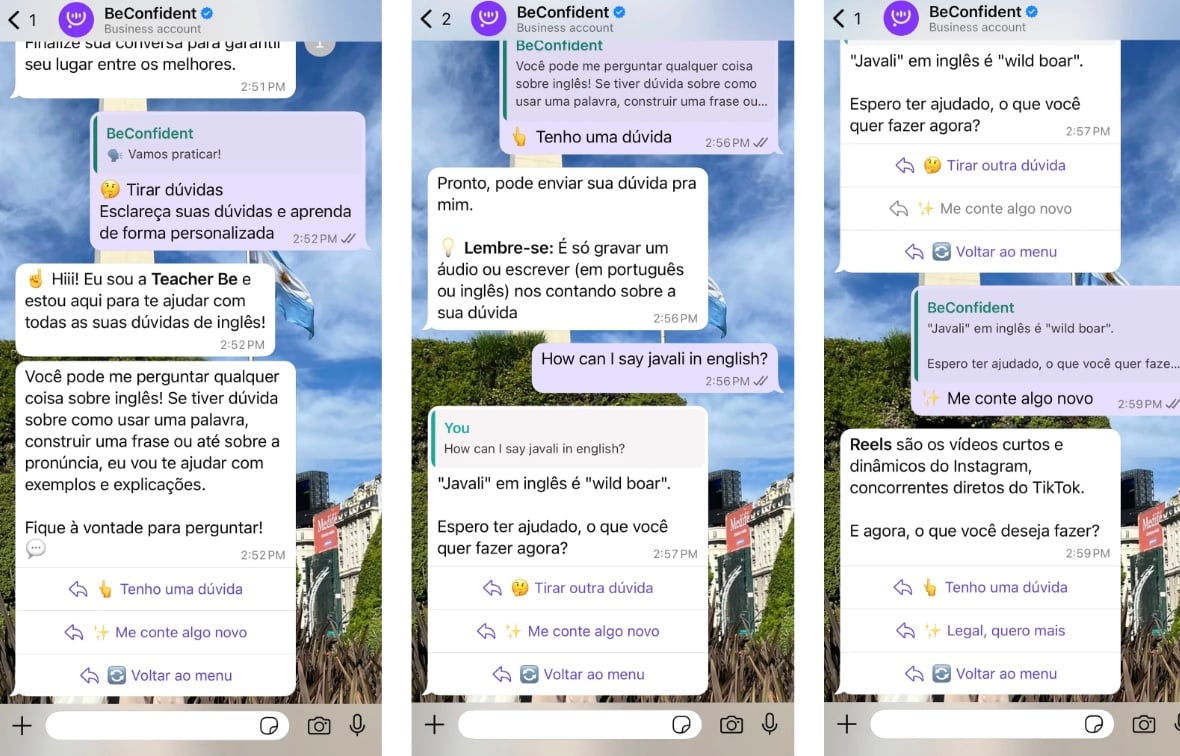
BeConfident offers AI tutors with different personalities and native accents, such as American, British, and South African. You practice anytime, receive immediate feedback on pronunciation and grammar, and gain confidence through unlimited conversations.
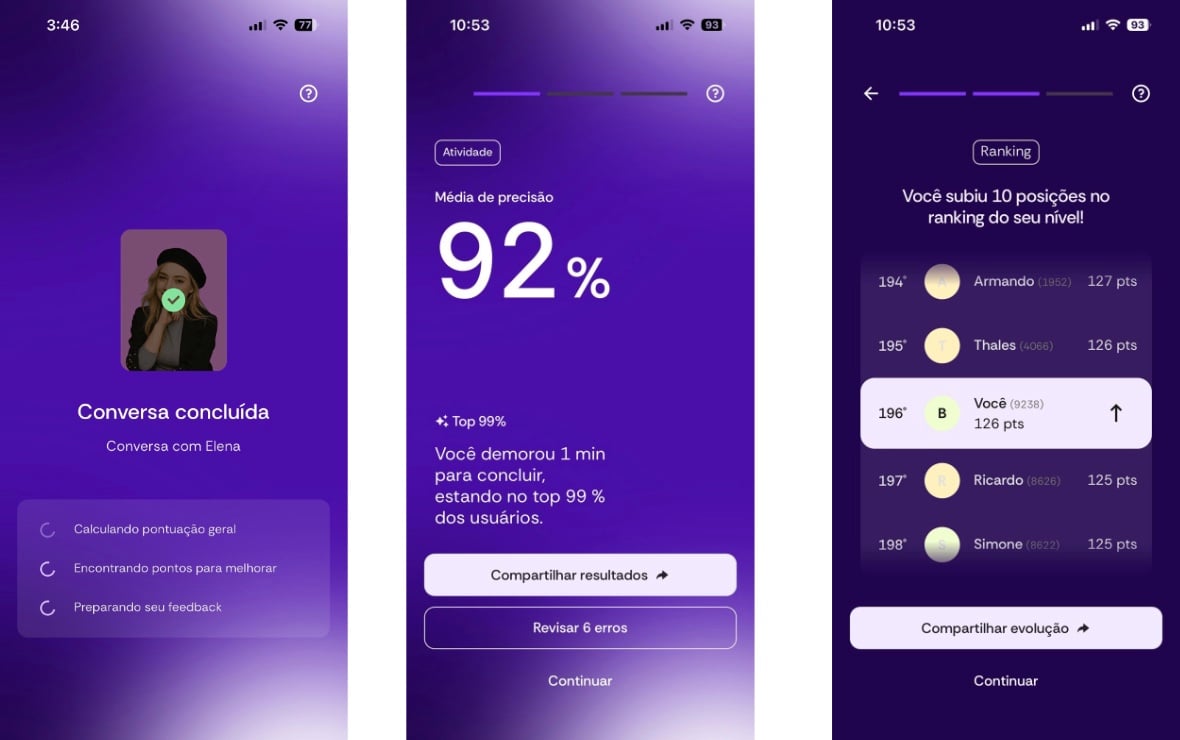
The platform focuses on practical conversation, whereas Duolingo prioritizes theoretical exercises and Cambly charges by the minute. BeConfident integrates into your daily routine, has a good reputation on Reclame Aqui, and has already shown great results for many students.
Try it for free and start learning English today.
Frequently Asked Questions (FAQ)
What are the 50 most important English phrases for beginners?
The 50 essential phrases include greetings like “Hello” and “How are you?”, basic needs like “I need help” and “Where is...?”, expressions of politeness like “Thank you” and “Excuse me”, personal introductions like “My name is...” and “I’m from...”, as well as survival phrases like “I don’t understand” and “Can you repeat?”. This set covers most of the situations that beginners face.
How to practice English pronunciation without feeling embarrassed?
Practicing with AI before speaking with real people reduces insecurity. AI tutors create a judgment-free environment, provide instant corrections, and allow for unlimited repetition until your speech feels more natural.
Which English phrases are essential for travel?
For travel, you should prioritize phrases like “Where is...?” (Onde fica...?), “How much?” (Quanto custa?), “I have a reservation” (Tenho reserva), “Can you help me?” (Pode me ajudar?), “I don’t speak English well” (Não falo inglês bem), and emergency phrases like “I need a doctor” (Preciso de médico).
How to avoid false cognates in basic conversations?
Memorizing the most common false cognates reduces errors. Some examples are “actually” = na verdade (not “atualmente”), “pretend” = fingir (not “pretender”), and “push” = empurrar (not “puxar”). Repeating these words in sentences helps to solidify their correct usage.
How long does it take to speak basic English fluently?
With daily conversation practice, many beginners reach basic fluency in about 3 to 6 months. Speaking from day one, rather than focusing solely on grammar, greatly accelerates this process.
From Beginner to Fluent: Start Today
Turning basic phrases into real conversations requires constant practice and targeted feedback. Consistency is worth more than long, sporadic study sessions.
BeConfident reduces common barriers to learning English, such as fixed schedules, high costs, and the fear of judgment. With AI tutors available 24 hours a day, you can practice at your own pace and develop confidence gradually.
Try it for free and start learning English today and see how many Brazilians have already unlocked their English speaking skills.
Written by: Luan Cavallaro, Founder & CMO, BeConfident
Key Takeaways from This Article
Mastering difficult sounds like “th”, short and long vowels, and the American R helps to achieve a more natural pronunciation and reduces a strong Brazilian accent.
Using essential phrases for greetings, asking for help, and daily routines covers most real-life situations for beginners.
Avoiding false cognates like “actually” and “pretend” reduces misunderstandings in conversations.
Practicing dialogues and phrases for travel, shopping, and work through repetition increases speaking confidence.
BeConfident offers unlimited practice with an AI that corrects pronunciation in real time, start your free trial now and begin speaking English with more confidence.
Essential Pronunciation Tips for Brazilians 🚀
Mastering a few specific sounds makes speaking English much easier from the very start.
The “th” sound: Place your tongue between your teeth. “Think” /θɪŋk/ is not “tink”, “thank” /θæŋk/ is not “tank”.
Distinct vowels: “Ship” /ʃɪp/ (navio) and “sheep” /ʃiːp/ (ovelha) have different sounds. The short “i” and the long “ee” change the meaning completely.
American R: In “car” /kɑːr/, the R is pronounced forcefully, unlike in Brazilian Portuguese.
Dangerous false cognates: “Actually” /ˈæktʃuəli/ means “na verdade” (in fact), not “atualmente” (currently). “Pretend” means “fingir” (to fake), not “pretender” (to intend).
BeConfident uses AI to correct your pronunciation in real time with various native accents and creates a safe environment to make mistakes and adjust.
Practice your pronunciation now. Take the BeConfident free trial.
👋 Greetings and Introductions
English phrase | PT translation | Phonetic pronunciation |
Hello, how are you? | Olá, como você está? | /həˈloʊ haʊ ɑːr juː/ |
Nice to meet you | Prazer em conhecê-lo | /naɪs tuː miːt juː/ |
What’s your name? | Qual é o seu nome? | /wʌts jʊr neɪm/ |
My name is... | Meu nome é... | /maɪ neɪm ɪz/ |
Where are you from? | De onde você é? | /wɛr ɑːr juː frʌm/ |
I’m from Brazil | Eu sou do Brasil | /aɪm frʌm brəˈzɪl/ |
Good morning | Bom dia | /ɡʊd ˈmɔːrnɪŋ/ |
Good afternoon | Boa tarde | /ɡʊd ˌæftərˈnuːn/ |
Good evening | Boa noite | /ɡʊd ˈiːvnɪŋ/ |
See you later | Até mais tarde | /siː juː ˈleɪtər/ |
Practical dialogue:
A: “Hello, I’m Maria. What’s your name?”
B: “Hi Maria, nice to meet you. I’m John.”
Practice this dialogue with AI on BeConfident, with various accents and a free trial.
🆘 Survival and Help Phrases
English phrase | PT translation | Phonetic pronunciation |
Excuse me | Com licença | /ɪkˈskjuːz miː/ |
Can you help me? | Você pode me ajudar? | /kæn juː hɛlp miː/ |
I don’t understand | Eu não entendo | /aɪ doʊnt ˌʌndərˈstænd/ |
Could you repeat that? | Você poderia repetir? | /kʊd juː rɪˈpiːt ðæt/ |
I’m sorry | Desculpe | /aɪm ˈsɔːri/ |
Where is the bathroom? | Onde fica o banheiro? | /wɛr ɪz ðə ˈbæθruːm/ |
I need help | Eu preciso de ajuda | /aɪ niːd hɛlp/ |
Call the police | Chame a polícia | /kɔːl ðə pəˈliːs/ |
I’m lost | Estou perdido | /aɪm lɔːst/ |
Thank you very much | Muito obrigado | /θæŋk juː ˈvɛri mʌtʃ/ |
🏠 Daily Life at Home
English phrase | PT translation | Phonetic pronunciation |
I’m hungry | Estou com fome | /aɪm ˈhʌŋɡri/ |
I’m thirsty | Estou com sede | /aɪm ˈθɜːrsti/ |
What time is it? | Que horas são? | /wʌt taɪm ɪz ɪt/ |
I’m tired | Estou cansado | /aɪm ˈtaɪərd/ |
I like this | Eu gosto disso | /aɪ laɪk ðɪs/ |
I don’t like that | Eu não gosto disso | /aɪ doʊnt laɪk ðæt/ |
Can I have some water? | Posso tomar água? | /kæn aɪ hæv sʌm ˈwɔːtər/ |
I’m going to sleep | Vou dormir | /aɪm ˈɡoʊɪŋ tuː sliːp/ |
Good night | Boa noite | /ɡʊd naɪt/ |
See you tomorrow | Até amanhã | /siː juː təˈmɔːroʊ/ |
Practice daily conversations with AI via the BeConfident free trial.
🛒 Shopping and Dining Out
English phrase | PT translation | Phonetic pronunciation |
How much is this? | Quanto custa isso? | /haʊ mʌtʃ ɪz ðɪs/ |
I would like... | Eu gostaria de... | /aɪ wʊd laɪk/ |
Can I have the menu? | Posso ver o cardápio? | /kæn aɪ hæv ðə ˈmɛnjuː/ |
The check, please | A conta, por favor | /ðə tʃɛk pliːz/ |
Do you accept credit cards? | Vocês aceitam cartão? | /duː juː ækˈsɛpt ˈkrɛdɪt kɑːrdz/ |
Where can I pay? | Onde posso pagar? | /wɛr kæn aɪ peɪ/ |
I’m just looking | Só estou olhando | /aɪm dʒʌst ˈlʊkɪŋ/ |
Can I try this on? | Posso experimentar? | /kæn aɪ traɪ ðɪs ɔːn/ |
This is delicious | Está delicioso | /ðɪs ɪz dɪˈlɪʃəs/ |
I’m allergic to... | Sou alérgico a... | /aɪm əˈlɜːrdʒɪk tuː/ |
✈️ Travel and Airport
English phrase | PT translation | Phonetic pronunciation |
Where is gate 5? | Onde fica o portão 5? | /wɛr ɪz ɡeɪt faɪv/ |
When does the flight leave? | Quando sai o voo? | /wɛn dʌz ðə flaɪt liːv/ |
I have a reservation | Tenho uma reserva | /aɪ hæv ə ˌrɛzərˈveɪʃən/ |
Can I see your passport? | Posso ver seu passaporte? | /kæn aɪ siː jʊr ˈpæspɔːrt/ |
How long is the flight? | Quanto tempo dura o voo? | /haʊ lɔːŋ ɪz ðə flaɪt/ |
Where is the taxi stand? | Onde fica o ponto de táxi? | /wɛr ɪz ðə ˈtæksi stænd/ |
I’m here for vacation | Estou aqui a turismo | /aɪm hɪr fɔːr veɪˈkeɪʃən/ |
How do I get to downtown? | Como chego ao centro? | /haʊ duː aɪ ɡɛt tuː ˈdaʊntaʊn/ |
Is this seat taken? | Este lugar está ocupado? | /ɪz ðɪs siːt ˈteɪkən/ |
I missed my flight | Perdi meu voo | /aɪ mɪst maɪ flaɪt/ |
💼 Basic Work Vocabulary
English phrase | PT translation | Phonetic pronunciation |
What do you do for work? | O que você faz no trabalho? | /wʌt duː juː duː fɔːr wɜːrk/ |
I work in... | Eu trabalho em... | /aɪ wɜːrk ɪn/ |
Nice to meet you | Prazer em conhecê-lo | /naɪs tuː miːt juː/ |
Can we schedule a meeting? | Podemos marcar uma reunião? | /kæn wiː ˈskɛdʒuːl ə ˈmiːtɪŋ/ |
I need to make a call | Preciso fazer uma ligação | /aɪ niːd tuː meɪk ə kɔːl/ |
Could you send me an email? | Você poderia me enviar um email? | /kʊd juː sɛnd miː æn ˈiːmeɪl/ |
I’ll be right back | Já volto | /aɪl biː raɪt bæk/ |
Have a good day | Tenha um bom dia | /hæv ə ɡʊd deɪ/ |
I’m in a meeting | Estou em reunião | /aɪm ɪn ə ˈmiːtɪŋ/ |
Let me check | Deixe-me verificar | /lɛt miː tʃɛk/ |
⏰ Numbers, Time, and Directions
English phrase | PT translation | Phonetic pronunciation |
It’s three o’clock | São três horas | /ɪts θriː əˈklɑːk/ |
Turn left | Vire à esquerda | /tɜːrn lɛft/ |
Turn right | Vire à direita | /tɜːrn raɪt/ |
Go straight | Vá em frente | /ɡoʊ streɪt/ |
It’s on the corner | Fica na esquina | /ɪts ɔːn ðə ˈkɔːrnər/ |
How far is it? | Quão longe fica? | /haʊ fɑːr ɪz ɪt/ |
It’s five minutes away | Fica a cinco minutos | /ɪts faɪv ˈmɪnɪts əˈweɪ/ |
Can you show me on the map? | Pode me mostrar no mapa? | /kæn juː ʃoʊ miː ɔːn ðə mæp/ |
I’m looking for... | Estou procurando... | /aɪm ˈlʊkɪŋ fɔːr/ |
Is it close? | É perto? | /ɪz ɪt kloʊs/ |
10 Essential English Phrases for Beginners
Mastering a small group of phrases greatly accelerates the start of your conversational journey. If you are starting from scratch, master these 10 phrases first:
Hello, my name is... (Olá, meu nome é...)
How are you? (Como você está?)
Thank you (Obrigado)
Excuse me (Com licença)
I don’t understand (Não entendo)
Can you help me? (Você pode me ajudar?)
Where is...? (Onde fica...?)
How much? (Quanto custa?)
I would like... (Eu gostaria de...)
See you later (Até mais)
30 Easy Phrases for Conversation
Expanding your vocabulary with simple phrases allows you to hold short conversations more naturally.
About you: I’m from Brazil, I work in..., I like music, I have two children
Useful questions: What’s your favorite food? Do you speak Portuguese? How long have you been here?
Polite expressions: You’re welcome, No problem, Have a nice day, Take care
Why Practicing with BeConfident Accelerates Your English?
Memorizing phrases is the first step, but using those phrases in real conversations requires guided practice.
BeConfident offers AI tutors with different personalities and native accents, such as American, British, and South African. You practice anytime, receive immediate feedback on pronunciation and grammar, and gain confidence through unlimited conversations.
The platform focuses on practical conversation, whereas Duolingo prioritizes theoretical exercises and Cambly charges by the minute. BeConfident integrates into your daily routine, has a good reputation on Reclame Aqui, and has already shown great results for many students.
Try it for free and start learning English today.
Frequently Asked Questions (FAQ)
What are the 50 most important English phrases for beginners?
The 50 essential phrases include greetings like “Hello” and “How are you?”, basic needs like “I need help” and “Where is...?”, expressions of politeness like “Thank you” and “Excuse me”, personal introductions like “My name is...” and “I’m from...”, as well as survival phrases like “I don’t understand” and “Can you repeat?”. This set covers most of the situations that beginners face.
How to practice English pronunciation without feeling embarrassed?
Practicing with AI before speaking with real people reduces insecurity. AI tutors create a judgment-free environment, provide instant corrections, and allow for unlimited repetition until your speech feels more natural.
Which English phrases are essential for travel?
For travel, you should prioritize phrases like “Where is...?” (Onde fica...?), “How much?” (Quanto custa?), “I have a reservation” (Tenho reserva), “Can you help me?” (Pode me ajudar?), “I don’t speak English well” (Não falo inglês bem), and emergency phrases like “I need a doctor” (Preciso de médico).
How to avoid false cognates in basic conversations?
Memorizing the most common false cognates reduces errors. Some examples are “actually” = na verdade (not “atualmente”), “pretend” = fingir (not “pretender”), and “push” = empurrar (not “puxar”). Repeating these words in sentences helps to solidify their correct usage.
How long does it take to speak basic English fluently?
With daily conversation practice, many beginners reach basic fluency in about 3 to 6 months. Speaking from day one, rather than focusing solely on grammar, greatly accelerates this process.
From Beginner to Fluent: Start Today
Turning basic phrases into real conversations requires constant practice and targeted feedback. Consistency is worth more than long, sporadic study sessions.
BeConfident reduces common barriers to learning English, such as fixed schedules, high costs, and the fear of judgment. With AI tutors available 24 hours a day, you can practice at your own pace and develop confidence gradually.
Try it for free and start learning English today and see how many Brazilians have already unlocked their English speaking skills.