




Business English: templates for emails
Business English: templates for emails
Business English: templates for emails
Written by: Luan Cavallaro, Founder & CMO, BeConfident
Key Takeaways from This Article
Using formal greetings like "Dear [Name]" and "I hope this email finds you well" establishes credibility right from the beginning of the professional email.
Writing clear sentences to introduce subjects, such as "I am writing to..." and "Please find attached...", ensures efficient and direct communication.
Making polite requests with "Could you please..." and follow-ups like "Just checking in" keeps projects moving without sounding intrusive.
Ending with professional phrases like "Best regards" and "I look forward to hearing from you" leaves a positive impression and strengthens relationships.
Practice these sentences in real conversations with BeConfident, using 24/7 AI tutors: start your first AI business conversation and transform emails into professional fluency.
How to Start a Professional Email in English
A proper greeting sets the professional tone of the email and positions the relationship with the recipient. The table below organizes five essential greetings by level of formality, from more formal openings to phrases that create immediate rapport.
English | PT-BR Translation | Example | Action on BeConfident |
Dear [Name], | Prezado [Nome], | Dear Mr. Johnson, | Practice formal greetings with your AI tutor |
Good morning/afternoon, | Bom dia/Boa tarde, | Good morning team, | Simulate morning meetings in English |
I hope this email finds you well | Espero que este email o encontre bem | I hope this email finds you well and in good health | Practice expressions of courtesy |
Thank you for your email | Obrigado pelo seu email | Thank you for your prompt response | Practice professional thank-yous |
I am writing to... | Estou escrevendo para... | I am writing to follow up on our meeting | Practice purpose introductions |
After setting the tone with an appropriate greeting, the next step is to introduce the subject of the email clearly and directly. This transition shows the reader why you are writing and what they can expect from the rest of the message.
Phrases to Introduce the Subject
Presenting the subject objectively helps the reader quickly understand the purpose of the communication. The phrases below organize different types of introductions, such as analysis, continuity, or sending documents.
I would like to discuss... - I would like to discuss... (for topics that require analysis)
This email is regarding... - This email is regarding... (for specific references)
I am reaching out about... - I am reaching out about... (more informal tone)
Following our conversation... - Following our conversation... (for continuity)
As per our agreement... - As per our agreement... (for confirmations)
I wanted to update you on... - I wanted to update you on... (for reports)
Please find attached... - Please find attached... (for documents)
I am pleased to inform you... - I am pleased to inform you... (good news)
Unfortunately, I must inform you... - Unfortunately, I must inform you... (bad news)
I would like to bring to your attention... - I would like to bring to your attention... (important issues)
An effective professional email follows a logical progression. After the greeting and the introduction of the subject, you develop the content with requests, sending attachments, or specific guidelines, always with clarity and courtesy.
Phrases to Make Requests or Attachments
Making requests politely and objectively demonstrates professionalism and facilitates prompt responses. The following phrases help to request information, send documents, and confirm receipt.
Could you please provide... - Could you please provide... (polite request)
I would appreciate if you could... - I would appreciate if you could... (respectful tone)
Please find the attached document - Please find the attached document (formal sending)
I am attaching the requested files - I am attaching the requested files (response to request)
Would it be possible to... - Would it be possible to... (diplomatic question)
I need your assistance with... - I need your assistance with... (direct request)
Could you confirm receipt of... - Could you confirm receipt of... (verification)
Please review the attached proposal - Please review the attached proposal (request for review)
I would be grateful if you could... - I would be grateful if you could... (formal tone)
Kindly send me the updated version - Kindly send me the updated version (courteous request)
After making requests or sending attachments, many emails require a follow-up. This follow-up step keeps the workflow active and shows that you are keeping track of what was agreed upon.
Phrases for Follow-ups and Replies
Following up professionally keeps projects on track without pressuring the recipient. The phrases below help to resume conversations, express gratitude for replies, and record commitments.
I wanted to follow up on... - I wanted to follow up on... (continuity)
Just checking in to see... - Just checking in to see... (friendly tone)
I haven't heard back from you - I haven't heard back from you (polite reminder)
As promised, I am sending... - As promised, I am sending... (fulfillment of commitment)
Thank you for getting back to me - Thank you for getting back to me (gratitude for reply)
I apologize for the delayed response - I apologize for the delayed response (apology)
Further to our discussion... - Further to our discussion... (formal continuation)
I wanted to circle back on... - I wanted to circle back on... (topic review)
Per your request... - Per your request... (meeting a request)
I am writing to confirm... - I am writing to confirm... (verification)
In many cases, the follow-up leads to scheduling meetings to delve deeper into the topic. Having ready-made phrases to propose, confirm, or reschedule meetings facilitates this transition.
English Phrases for Scheduling Meetings
Coordinating meetings clearly helps avoid rework and ensures alignment between parties. The following phrases cover everything from the first invitation to necessary reschedulings.
I would like to schedule a meeting - I would like to schedule a meeting (initial proposal)
Are you available for a call on... - Are you available for a call on... (calendar check)
Let's set up a time to discuss... - Let's set up a time to discuss... (collaborative proposal)
Would next Tuesday work for you? - Would next Tuesday work for you? (specific suggestion)
I am available at your convenience - I am available at your convenience (flexibility)
Please let me know your availability - Please let me know your availability (request for times)
I suggest we meet to... - I suggest we meet to... (purposeful proposal)
The meeting is scheduled for... - The meeting is scheduled for... (confirmation)
I need to reschedule our meeting - I need to reschedule our meeting (necessary change)
Looking forward to our discussion - Looking forward to our discussion (positive anticipation)
Practice scheduling with AI tutors who simulate real business situations, from proposing times to handling last-minute reschedulings.
After setting up meetings, many emails proceed to negotiations and formal proposals. In this phase, the choice of words directly influences the perception of value and trust.
Phrases for Negotiations and Proposals
Conducting negotiations with precise language helps present conditions, demonstrate flexibility, and reinforce benefits. The phrases below support building clear proposals.
I would like to propose... - I would like to propose... (idea presentation)
We are prepared to offer... - We are prepared to offer... (concrete proposal)
This proposal includes... - This proposal includes... (detailed breakdown)
We believe this solution... - We believe this solution... (argumentation)
The terms are as follows... - The terms are as follows... (specification)
We are open to negotiation - We are open to negotiation (flexibility)
Please consider our offer - Please consider our offer (request for analysis)
We look forward to your feedback - We look forward to your feedback (anticipation of response)
This represents excellent value - This represents excellent value (selling point)
We can accommodate your requirements - We can accommodate your requirements (adaptability)
At the end of any negotiation or information exchange, the email closing solidifies the tone of the relationship. A clear closing indicates next steps and reinforces availability.
Closing Phrases and Sign-offs
Ending emails professionally creates a consistent impression with the rest of the message. The following phrases combine appreciation, anticipation of response, and appropriate farewells.
Thank you for your time and consideration - Thank you for your time and consideration (formal thank you)
I look forward to hearing from you - I look forward to hearing from you (anticipation of response)
Please don't hesitate to contact me - Please don't hesitate to contact me (availability)
Best regards, - Best regards, (formal closing)
Kind regards, - Kind regards, (friendly professional tone)
Sincerely, - Sincerely, (very formal)
Thank you in advance - Thank you in advance (appreciation for future action)
I appreciate your prompt attention - I appreciate your prompt attention (polite urgency)
Have a great day - Have a great day (positive closing)
Looking forward to our collaboration - Looking forward to our collaboration (partnership expectation)
In addition to these structural phrases that organize an email from start to finish, the corporate environment in English uses many idioms. These expressions appear in emails, meetings, and quick messages and do not always have a literal translation.
Most Common English Phrases at Work
These expressions show up frequently in corporate communications and are essential for professional fluency. The table below highlights idioms that represent specific cultural concepts in the English business environment.
English | PT-BR Translation | Context of Use |
Please keep me in the loop | Please keep me in the loop | Project tracking |
Let's touch base | Let's touch base | Informal meetings |
I'll get back to you | I'll get back to you | Promise of response |
Moving forward | Moving forward | Future planning |
As discussed | As discussed | Reference to previous conversations |
3 Ready-to-Use Business Email Templates in English
These three templates cover common situations in the corporate environment and serve as a base for you to adapt to your context.
1. Meeting Follow-up
Subject: Follow-up on Today's Meeting Dear [Name], Thank you for taking the time to meet with me today. I wanted to follow up on our discussion regarding [topic]. As agreed, I will [action item] by [deadline]. Please let me know if you need any additional information. I look forward to our continued collaboration. Best regards, [Your name]
2. Business Proposal
Subject: Business Proposal - [Company Name] Dear [Name], I hope this email finds you well. I am writing to present a business proposal that I believe will be of great value to your organization. Our solution offers [key benefits] and can help you achieve [specific goals]. Please find the detailed proposal attached for your review. I would appreciate the opportunity to discuss this further at your convenience. Thank you for your consideration. Sincerely, [Your name]
3. Request for Information
Subject: Request for Information - [Topic] Dear [Name], I hope you are doing well. I am reaching out to request information regarding [specific topic]. Could you please provide details about [specific requirements]? This information will help us [purpose/goal]. I would be grateful if you could send this by [deadline]. Please let me know if you need any clarification. Thank you in advance for your assistance. Best regards, [Your name]
Personalize these templates with AI tutors specializing in English for business and practice the pronunciation of each phrase until it sounds natural on real calls.
How to Translate These Phrases Into Spoken Fluency with AI
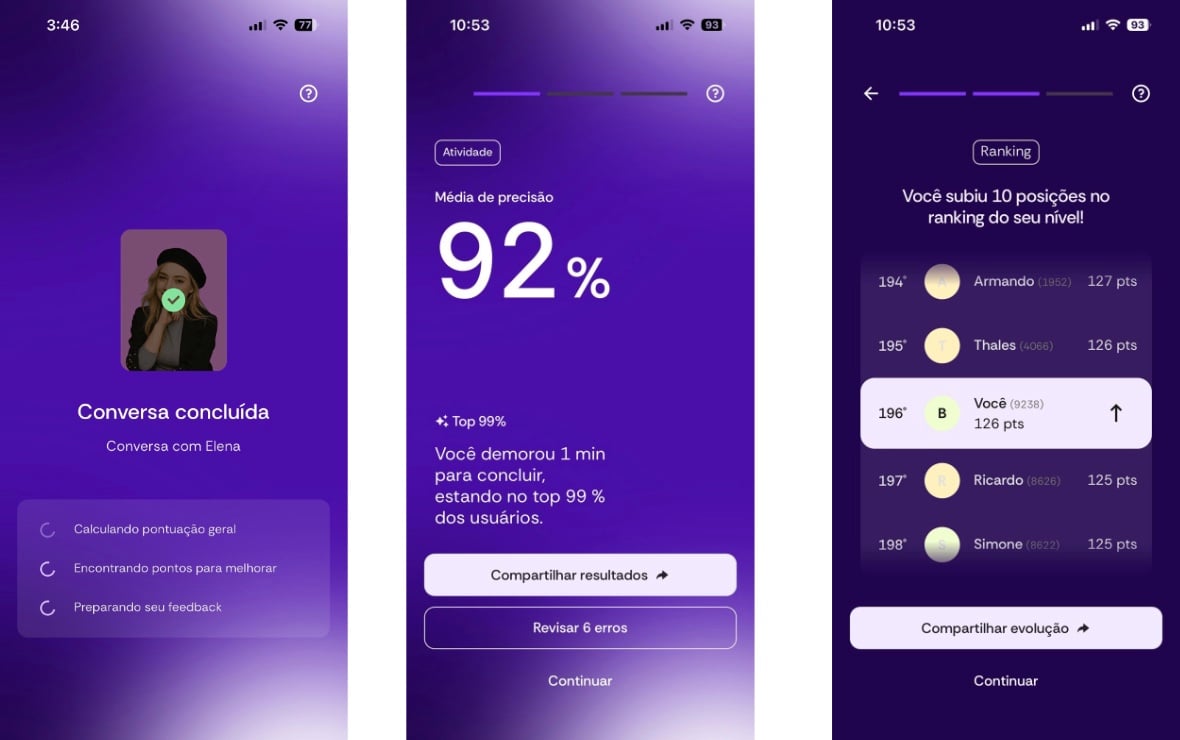
Translating lists of phrases into natural speech requires practice in situations that resemble daily work life. BeConfident offers specific prompts to train these situations in real conversation.
"Simulate a business negotiation with me" - Practice proposal phrases in a real context.
"Correct my pronunciation of this presentation" - Get immediate feedback on delivery.
"Let's practice a meeting follow-up" - Exercise professional follow-ups.
"Simulate a business call" - Practice telephone conversations.
"Help me write a formal email" - Receive assistance in writing messages.
With AI tutors available 24/7 in the app, on WhatsApp, or on your smartwatch, you can practice these phrases right when you need them, like before a meeting or right after receiving a challenging email. This contextual practice, added to the streak system that encourages daily consistency and the My Evolution dashboard that shows your mastery in each phrase category, converts theoretical knowledge into practical fluency.
Frequently Asked Questions
How to write a professional email in English?
Writing a professional email in English requires a formal greeting with "Dear + name", a clear statement of purpose, concise language, and a closing with appreciation and availability. Reviewing grammar and tone before sending reduces communication noise.
What are the most important phrases for business emails?
Essential phrases include greetings like "Dear" and "Good morning", subject introductions like "I am writing to" and "This email is regarding", polite requests like "Could you please" and "I would appreciate", and professional closings like "Best regards" and "Thank you for your time".
How to follow up in English without being intrusive?
Following up without being intrusive requires a respectful tone and a clear reference to prior communication. Phrases like "I wanted to follow up on" or "Just checking in to see" work well when you add context and, if possible, some extra value in the message.
What is the difference between "Dear" and "Hi" in professional emails?
Using "Dear" indicates a more formal tone and is suitable for first contacts or official communications. Using "Hi" indicates a more casual tone and is suitable for pre-existing relationships or less formal environments.
How to end a business email in English?
Ending a business email in English with "Best regards" creates a standard professional tone. Using "Sincerely" indicates greater formality, and using "Kind regards" conveys warmth while remaining professional. Including your full name and contact information facilitates responses.
Mastering ready-made phrases in English for professional business emails is only the first step; the real challenge is using these phrases naturally in live situations, without time to look at lists.
More than 200,000 students in over 100 countries, supported by an RA 1000 reputation, use BeConfident to practice precisely these scenarios, such as negotiations, presentations, and complex follow-ups with AI. Start your first AI English meeting simulation and advance to barrier-free professional communication.
Written by: Luan Cavallaro, Founder & CMO, BeConfident
Key Takeaways from This Article
Using formal greetings like "Dear [Name]" and "I hope this email finds you well" establishes credibility right from the beginning of the professional email.
Writing clear sentences to introduce subjects, such as "I am writing to..." and "Please find attached...", ensures efficient and direct communication.
Making polite requests with "Could you please..." and follow-ups like "Just checking in" keeps projects moving without sounding intrusive.
Ending with professional phrases like "Best regards" and "I look forward to hearing from you" leaves a positive impression and strengthens relationships.
Practice these sentences in real conversations with BeConfident, using 24/7 AI tutors: start your first AI business conversation and transform emails into professional fluency.
How to Start a Professional Email in English
A proper greeting sets the professional tone of the email and positions the relationship with the recipient. The table below organizes five essential greetings by level of formality, from more formal openings to phrases that create immediate rapport.
English | PT-BR Translation | Example | Action on BeConfident |
Dear [Name], | Prezado [Nome], | Dear Mr. Johnson, | Practice formal greetings with your AI tutor |
Good morning/afternoon, | Bom dia/Boa tarde, | Good morning team, | Simulate morning meetings in English |
I hope this email finds you well | Espero que este email o encontre bem | I hope this email finds you well and in good health | Practice expressions of courtesy |
Thank you for your email | Obrigado pelo seu email | Thank you for your prompt response | Practice professional thank-yous |
I am writing to... | Estou escrevendo para... | I am writing to follow up on our meeting | Practice purpose introductions |
After setting the tone with an appropriate greeting, the next step is to introduce the subject of the email clearly and directly. This transition shows the reader why you are writing and what they can expect from the rest of the message.
Phrases to Introduce the Subject
Presenting the subject objectively helps the reader quickly understand the purpose of the communication. The phrases below organize different types of introductions, such as analysis, continuity, or sending documents.
I would like to discuss... - I would like to discuss... (for topics that require analysis)
This email is regarding... - This email is regarding... (for specific references)
I am reaching out about... - I am reaching out about... (more informal tone)
Following our conversation... - Following our conversation... (for continuity)
As per our agreement... - As per our agreement... (for confirmations)
I wanted to update you on... - I wanted to update you on... (for reports)
Please find attached... - Please find attached... (for documents)
I am pleased to inform you... - I am pleased to inform you... (good news)
Unfortunately, I must inform you... - Unfortunately, I must inform you... (bad news)
I would like to bring to your attention... - I would like to bring to your attention... (important issues)
An effective professional email follows a logical progression. After the greeting and the introduction of the subject, you develop the content with requests, sending attachments, or specific guidelines, always with clarity and courtesy.
Phrases to Make Requests or Attachments
Making requests politely and objectively demonstrates professionalism and facilitates prompt responses. The following phrases help to request information, send documents, and confirm receipt.
Could you please provide... - Could you please provide... (polite request)
I would appreciate if you could... - I would appreciate if you could... (respectful tone)
Please find the attached document - Please find the attached document (formal sending)
I am attaching the requested files - I am attaching the requested files (response to request)
Would it be possible to... - Would it be possible to... (diplomatic question)
I need your assistance with... - I need your assistance with... (direct request)
Could you confirm receipt of... - Could you confirm receipt of... (verification)
Please review the attached proposal - Please review the attached proposal (request for review)
I would be grateful if you could... - I would be grateful if you could... (formal tone)
Kindly send me the updated version - Kindly send me the updated version (courteous request)
After making requests or sending attachments, many emails require a follow-up. This follow-up step keeps the workflow active and shows that you are keeping track of what was agreed upon.
Phrases for Follow-ups and Replies
Following up professionally keeps projects on track without pressuring the recipient. The phrases below help to resume conversations, express gratitude for replies, and record commitments.
I wanted to follow up on... - I wanted to follow up on... (continuity)
Just checking in to see... - Just checking in to see... (friendly tone)
I haven't heard back from you - I haven't heard back from you (polite reminder)
As promised, I am sending... - As promised, I am sending... (fulfillment of commitment)
Thank you for getting back to me - Thank you for getting back to me (gratitude for reply)
I apologize for the delayed response - I apologize for the delayed response (apology)
Further to our discussion... - Further to our discussion... (formal continuation)
I wanted to circle back on... - I wanted to circle back on... (topic review)
Per your request... - Per your request... (meeting a request)
I am writing to confirm... - I am writing to confirm... (verification)
In many cases, the follow-up leads to scheduling meetings to delve deeper into the topic. Having ready-made phrases to propose, confirm, or reschedule meetings facilitates this transition.
English Phrases for Scheduling Meetings
Coordinating meetings clearly helps avoid rework and ensures alignment between parties. The following phrases cover everything from the first invitation to necessary reschedulings.
I would like to schedule a meeting - I would like to schedule a meeting (initial proposal)
Are you available for a call on... - Are you available for a call on... (calendar check)
Let's set up a time to discuss... - Let's set up a time to discuss... (collaborative proposal)
Would next Tuesday work for you? - Would next Tuesday work for you? (specific suggestion)
I am available at your convenience - I am available at your convenience (flexibility)
Please let me know your availability - Please let me know your availability (request for times)
I suggest we meet to... - I suggest we meet to... (purposeful proposal)
The meeting is scheduled for... - The meeting is scheduled for... (confirmation)
I need to reschedule our meeting - I need to reschedule our meeting (necessary change)
Looking forward to our discussion - Looking forward to our discussion (positive anticipation)
Practice scheduling with AI tutors who simulate real business situations, from proposing times to handling last-minute reschedulings.
After setting up meetings, many emails proceed to negotiations and formal proposals. In this phase, the choice of words directly influences the perception of value and trust.
Phrases for Negotiations and Proposals
Conducting negotiations with precise language helps present conditions, demonstrate flexibility, and reinforce benefits. The phrases below support building clear proposals.
I would like to propose... - I would like to propose... (idea presentation)
We are prepared to offer... - We are prepared to offer... (concrete proposal)
This proposal includes... - This proposal includes... (detailed breakdown)
We believe this solution... - We believe this solution... (argumentation)
The terms are as follows... - The terms are as follows... (specification)
We are open to negotiation - We are open to negotiation (flexibility)
Please consider our offer - Please consider our offer (request for analysis)
We look forward to your feedback - We look forward to your feedback (anticipation of response)
This represents excellent value - This represents excellent value (selling point)
We can accommodate your requirements - We can accommodate your requirements (adaptability)
At the end of any negotiation or information exchange, the email closing solidifies the tone of the relationship. A clear closing indicates next steps and reinforces availability.
Closing Phrases and Sign-offs
Ending emails professionally creates a consistent impression with the rest of the message. The following phrases combine appreciation, anticipation of response, and appropriate farewells.
Thank you for your time and consideration - Thank you for your time and consideration (formal thank you)
I look forward to hearing from you - I look forward to hearing from you (anticipation of response)
Please don't hesitate to contact me - Please don't hesitate to contact me (availability)
Best regards, - Best regards, (formal closing)
Kind regards, - Kind regards, (friendly professional tone)
Sincerely, - Sincerely, (very formal)
Thank you in advance - Thank you in advance (appreciation for future action)
I appreciate your prompt attention - I appreciate your prompt attention (polite urgency)
Have a great day - Have a great day (positive closing)
Looking forward to our collaboration - Looking forward to our collaboration (partnership expectation)
In addition to these structural phrases that organize an email from start to finish, the corporate environment in English uses many idioms. These expressions appear in emails, meetings, and quick messages and do not always have a literal translation.
Most Common English Phrases at Work
These expressions show up frequently in corporate communications and are essential for professional fluency. The table below highlights idioms that represent specific cultural concepts in the English business environment.
English | PT-BR Translation | Context of Use |
Please keep me in the loop | Please keep me in the loop | Project tracking |
Let's touch base | Let's touch base | Informal meetings |
I'll get back to you | I'll get back to you | Promise of response |
Moving forward | Moving forward | Future planning |
As discussed | As discussed | Reference to previous conversations |
3 Ready-to-Use Business Email Templates in English
These three templates cover common situations in the corporate environment and serve as a base for you to adapt to your context.
1. Meeting Follow-up
Subject: Follow-up on Today's Meeting Dear [Name], Thank you for taking the time to meet with me today. I wanted to follow up on our discussion regarding [topic]. As agreed, I will [action item] by [deadline]. Please let me know if you need any additional information. I look forward to our continued collaboration. Best regards, [Your name]
2. Business Proposal
Subject: Business Proposal - [Company Name] Dear [Name], I hope this email finds you well. I am writing to present a business proposal that I believe will be of great value to your organization. Our solution offers [key benefits] and can help you achieve [specific goals]. Please find the detailed proposal attached for your review. I would appreciate the opportunity to discuss this further at your convenience. Thank you for your consideration. Sincerely, [Your name]
3. Request for Information
Subject: Request for Information - [Topic] Dear [Name], I hope you are doing well. I am reaching out to request information regarding [specific topic]. Could you please provide details about [specific requirements]? This information will help us [purpose/goal]. I would be grateful if you could send this by [deadline]. Please let me know if you need any clarification. Thank you in advance for your assistance. Best regards, [Your name]
Personalize these templates with AI tutors specializing in English for business and practice the pronunciation of each phrase until it sounds natural on real calls.
How to Translate These Phrases Into Spoken Fluency with AI
Translating lists of phrases into natural speech requires practice in situations that resemble daily work life. BeConfident offers specific prompts to train these situations in real conversation.
"Simulate a business negotiation with me" - Practice proposal phrases in a real context.
"Correct my pronunciation of this presentation" - Get immediate feedback on delivery.
"Let's practice a meeting follow-up" - Exercise professional follow-ups.
"Simulate a business call" - Practice telephone conversations.
"Help me write a formal email" - Receive assistance in writing messages.
With AI tutors available 24/7 in the app, on WhatsApp, or on your smartwatch, you can practice these phrases right when you need them, like before a meeting or right after receiving a challenging email. This contextual practice, added to the streak system that encourages daily consistency and the My Evolution dashboard that shows your mastery in each phrase category, converts theoretical knowledge into practical fluency.
Frequently Asked Questions
How to write a professional email in English?
Writing a professional email in English requires a formal greeting with "Dear + name", a clear statement of purpose, concise language, and a closing with appreciation and availability. Reviewing grammar and tone before sending reduces communication noise.
What are the most important phrases for business emails?
Essential phrases include greetings like "Dear" and "Good morning", subject introductions like "I am writing to" and "This email is regarding", polite requests like "Could you please" and "I would appreciate", and professional closings like "Best regards" and "Thank you for your time".
How to follow up in English without being intrusive?
Following up without being intrusive requires a respectful tone and a clear reference to prior communication. Phrases like "I wanted to follow up on" or "Just checking in to see" work well when you add context and, if possible, some extra value in the message.
What is the difference between "Dear" and "Hi" in professional emails?
Using "Dear" indicates a more formal tone and is suitable for first contacts or official communications. Using "Hi" indicates a more casual tone and is suitable for pre-existing relationships or less formal environments.
How to end a business email in English?
Ending a business email in English with "Best regards" creates a standard professional tone. Using "Sincerely" indicates greater formality, and using "Kind regards" conveys warmth while remaining professional. Including your full name and contact information facilitates responses.
Mastering ready-made phrases in English for professional business emails is only the first step; the real challenge is using these phrases naturally in live situations, without time to look at lists.
More than 200,000 students in over 100 countries, supported by an RA 1000 reputation, use BeConfident to practice precisely these scenarios, such as negotiations, presentations, and complex follow-ups with AI. Start your first AI English meeting simulation and advance to barrier-free professional communication.