




Best English conversation phrases for beginners
Best English conversation phrases for beginners
Best English conversation phrases for beginners
Written by: Luan Cavallaro, Founder & CMO, BeConfident
Key takeaways from this article
Mastering 10 basic phrases like "Hello!" and "How are you?" helps to start any conversation with more confidence.
Using time-based greetings like "Good morning" and "Good afternoon", and simple introductions creates a good first impression.
Keeping dialogues flowing with casual questions about one's day, work, and interests shows genuine engagement.
Learning practical phrases to ask for help, shop, and ask for directions is essential for travel and real-life situations.
Turning these 100+ phrases into natural speech requires constant practice. BeConfident offers this training with AI 24/7. Try it for free now and put the phrases to use.
What are 10 English phrases for beginners?
The 10 basic conversational phrases in English form the foundation of any simple dialogue. Mastering this group makes all the next steps easier.
1. Hello! (Olá!) [phonetics: /həˈloʊ/], use when meeting anyone. After the initial greeting, move on to:
2. Nice to meet you (Prazer em conhecê-lo) [phonetics: /naɪs tu mit ju/], ideal for introductions. Next, maintain the connection with:
3. How are you? (Como você está?) [phonetics: /haʊ ɑr ju/], universal question of courtesy.
4. I'm fine, thank you (Estou bem, obrigado) [phonetics: /aɪm faɪn θæŋk ju/], standard polite response.
5. Excuse me (Com licença) [phonetics: /ɪkˈskjuz mi/], use to ask for attention or to apologize.
6. Could you help me? (Você poderia me ajudar?) [phonetics: /kʊd ju hɛlp mi/], essential phrase to ask for help.
7. Thank you very much (Muito obrigado) [phonetics: /θæŋk ju ˈvɛri mʌtʃ/], clear expression of gratitude.
8. I don't understand (Eu não entendo) [phonetics: /aɪ doʊnt ˌʌndərˈstænd/], phrase that encourages the other person to speak more slowly.
9. Could you repeat, please? (Você poderia repetir, por favor?) [phonetics: /kʊd ju rɪˈpit pliz/], direct request for repetition.
10. See you later (Até mais tarde) [phonetics: /si ju ˈleɪtər/], casual and friendly farewell.
Formal and informal greetings create a solid foundation for any conversation. Practicing these phrases daily until they become automatic accelerates fluency.
Practice these 10 phrases with a free trial, receive instant pronunciation feedback, and gain confidence to use everything out loud.
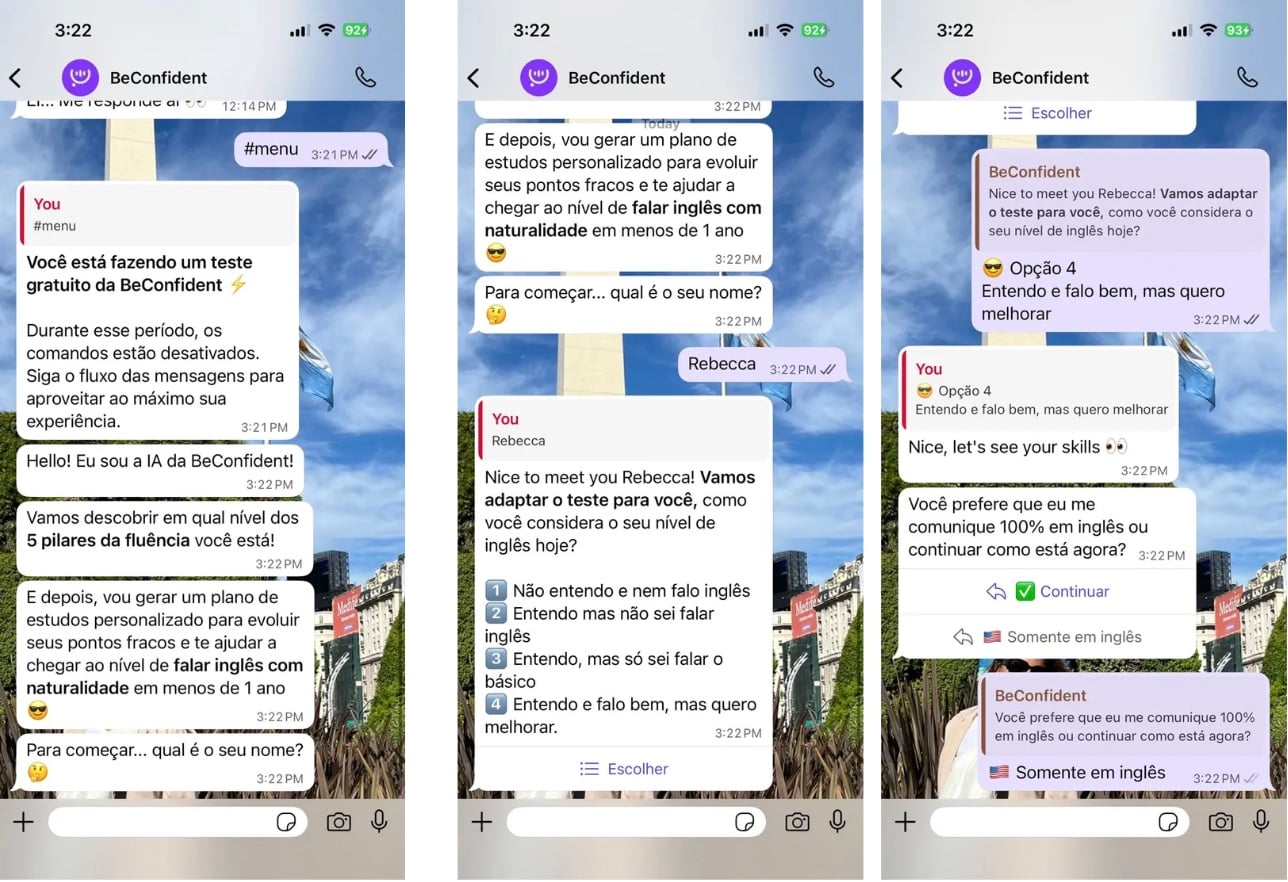
Greetings and basic introductions
Mastering greetings and basic introductions makes the first seconds of any conversation easier and opens space for real connections.
11. Good morning (Bom dia) [phonetics: /gʊd ˈmɔrnɪŋ/], use until 12 PM.
12. Good afternoon (Boa tarde) [phonetics: /gʊd ˌæftərˈnun/], use from 12 PM to 6 PM.
13. Good evening (Boa noite) [phonetics: /gʊd ˈivnɪŋ/], use after 6 PM to greet someone.
14. My name is... (Meu nome é...) [phonetics: /maɪ neɪm ɪz/], straightforward introduction.
15. I'm from Brazil (Eu sou do Brasil) [phonetics: /aɪm frʌm brəˈzɪl/], simple way to share where you're from.
16. What's your name? (Qual é o seu nome?) [phonetics: /wʌts jʊr neɪm/], shows interest in the other person.
17. Where are you from? (De onde você é?) [phonetics: /wɛr ɑr ju frʌm/], keeps the conversation going.
18. Pleased to meet you (Prazer em conhecê-lo) [phonetics: /plizd tu mit ju/], more formal option than "Nice to meet you".
Practical dialogue:
A: "Good morning! My name is Carlos. I'm from Brazil."
B: "Good morning, Carlos! Nice to meet you. I'm Sarah from Canada."
A: "Pleased to meet you too, Sarah!"
Casual questions to start a conversation
Asking casual questions after introductions keeps the conversation alive and shows genuine interest in the other person.
19. How's your day? (Como está seu dia?) [phonetics: /haʊz jʊr deɪ/], simple question of interest.
20. What do you do? (O que você faz?) [phonetics: /wʌt du ju du/], question about work or profession.
21. Do you like...? (Você gosta de...?) [phonetics: /du ju laɪk/], way to discover interests.
22. What's your favorite...? (Qual é seu... favorito?) [phonetics: /wʌts jʊr ˈfeɪvərɪt/], question that deepens the topic.
23. Have you been to...? (Você já foi para...?) [phonetics: /hæv ju bɪn tu/], great for talking about travel.
24. What do you think about...? (O que você acha de...?) [phonetics: /wʌt du ju θɪŋk əˈbaʊt/], invitation for an opinion.
25. That's interesting! (Que interessante!) [phonetics: /ðæts ˈɪntrəstɪŋ/], response that shows engagement.
Practical dialogue:
A: "How's your day going?"
B: "Pretty good, thanks! What do you do for work?"
A: "I'm an engineer. What about you?"
B: "That's interesting! I work in marketing."
Phrases to ask for help and directions
Using clear phrases to ask for help and directions increases your confidence when traveling and in daily life.
26. Can you help me? (Você pode me ajudar?) [phonetics: /kæn ju hɛlp mi/], direct request for help.
27. Where is...? (Onde fica...?) [phonetics: /wɛr ɪz/], location question.
28. How do I get to...? (Como chego a...?) [phonetics: /haʊ du aɪ gɛt tu/], request for directions.
29. Is it far from here? (É longe daqui?) [phonetics: /ɪz ɪt fɑr frʌm hɪr/], question about distance.
30. Could you show me? (Você poderia me mostrar?) [phonetics: /kʊd ju ʃoʊ mi/], request for demonstration.
31. I'm lost (Estou perdido) [phonetics: /aɪm lɔst/], useful phrase in an emergency.
32. Can you write it down? (Você pode escrever?) [phonetics: /kæn ju raɪt ɪt daʊn/], written request for clarity.
Daily conversations and routine
Talking about routine and simple situations helps to start an English conversation naturally.
33. What time is it? (Que horas são?) [phonetics: /wʌt taɪm ɪz ɪt/], basic time question.
34. What's the weather like? (Como está o tempo?) [phonetics: /wʌts ðə ˈwɛðər laɪk/], universal small talk topic.
35. I have to go (Eu tenho que ir) [phonetics: /aɪ hæv tu goʊ/], polite way to end a conversation.
36. What are you doing? (O que você está fazendo?) [phonetics: /wʌt ɑr ju ˈduɪŋ/], shows interest in the current activity.
37. I'm busy right now (Estou ocupado agora) [phonetics: /aɪm ˈbɪzi raɪt naʊ/], clear way to set boundaries.
38. Let's meet later (Vamos nos encontrar depois) [phonetics: /lɛts mit ˈleɪtər/], invitation for a future meeting.
Practice real dialogues with a free trial, use simulated native accents and repeat the phrases out loud to achieve naturalness.
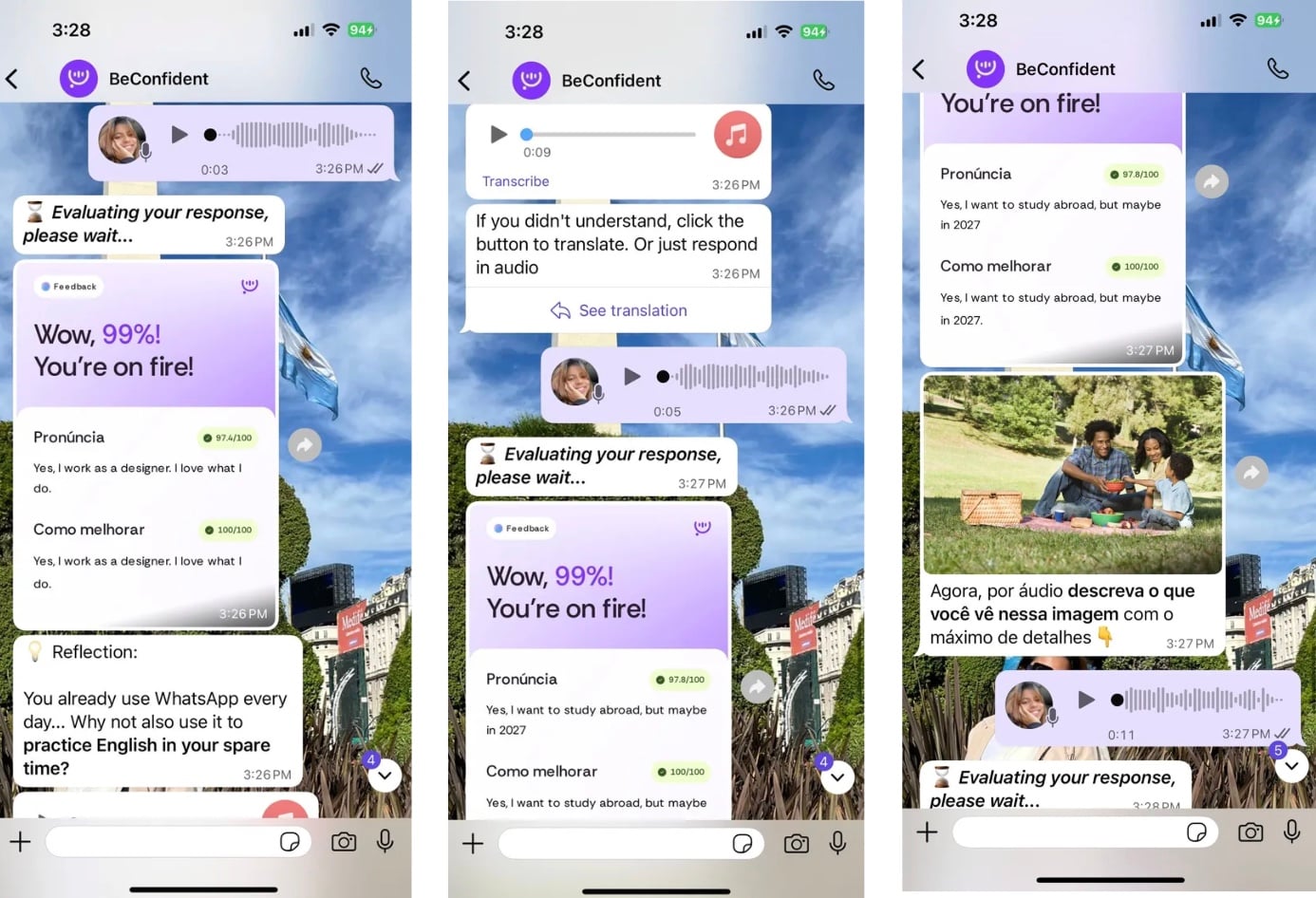
Expressing opinions and feelings
Expressing opinions and feelings makes dialogues in English between two people deeper and more authentic.
39. I think that... (Eu acho que...) [phonetics: /aɪ θɪŋk ðæt/], introduction of personal opinion.
40. I feel... (Eu me sinto...) [phonetics: /aɪ fil/], expressing emotions.
41. I agree (Eu concordo) [phonetics: /aɪ əˈgri/], signal of agreement.
42. I disagree (Eu discordo) [phonetics: /aɪ ˌdɪsəˈgri/], polite way to disagree.
43. That's a good point (Esse é um bom ponto) [phonetics: /ðæts ə gʊd pɔɪnt/], recognition of a good idea.
44. I'm not sure (Não tenho certeza) [phonetics: /aɪm nɑt ʃʊr/], expressing doubt.
45. What do you mean? (O que você quer dizer?) [phonetics: /wʌt du ju min/], request for clarification.
Phrases for shopping and restaurants
Using specific phrases when shopping and in restaurants avoids misunderstandings and makes the experience smoother.
46. How much is this? (Quanto custa isso?) [phonetics: /haʊ mʌtʃ ɪz ðɪs/], direct price question.
47. I'd like to buy... (Eu gostaria de comprar...) [phonetics: /aɪd laɪk tu baɪ/], clear indication of buying intent.
48. Can I have the menu? (Posso ver o cardápio?) [phonetics: /kæn aɪ hæv ðə ˈmɛnju/], initial request in a restaurant.
49. I'll have... (Eu vou querer...) [phonetics: /aɪl hæv/], phrase to place an order.
50. The check, please (A conta, por favor) [phonetics: /ðə tʃɛk pliz/], requesting the bill.
51. Do you accept credit cards? (Vocês aceitam cartão?) [phonetics: /du ju ækˈsɛpt ˈkrɛdɪt kɑrdz/], question about payment method.
52. Where's the bathroom? (Onde fica o banheiro?) [phonetics: /wɛrz ðə ˈbæθrum/], essential question anywhere.
Farwells and endings
Ending conversations naturally and politely leaves a good final impression.
53. It was nice talking to you (Foi bom conversar com você) [phonetics: /ɪt wʌz naɪs ˈtɔkɪŋ tu ju/], warm farewell.
54. Have a good day (Tenha um bom dia) [phonetics: /hæv ə gʊd deɪ/], positive wish.
55. Take care (Se cuide) [phonetics: /teɪk kɛr/], caring farewell.
56. See you soon (Até breve) [phonetics: /si ju sun/], shows expectation of meeting again.
57. Goodbye (Tchau) [phonetics: /gʊdˈbaɪ/], more formal farewell.
58. Bye (Tchau) [phonetics: /baɪ/], casual farewell.
Quick professional and travel phrases
Using specific phrases for work and travel helps you communicate clearly in more objective contexts.
59. I have a meeting (Tenho uma reunião) [phonetics: /aɪ hæv ə ˈmitɪŋ/], common phrase in a professional environment.
60. What's your job? (Qual é seu trabalho?) [phonetics: /wʌts jʊr dʒɑb/], useful question in networking.
61. I'm here on business (Estou aqui a negócios) [phonetics: /aɪm hɪr ɑn ˈbɪznəs/], explanation for a work trip.
62. I'm on vacation (Estou de férias) [phonetics: /aɪm ɑn veɪˈkeɪʃən/], phrase for a leisure trip.
63. Where's the airport? (Onde fica o aeroporto?) [phonetics: /wɛrz ði ˈɛrpɔrt/], important transport question.
64. What time does it leave? (Que horas sai?) [phonetics: /wʌt taɪm dʌz ɪt liv/], question about departure time.
Practicing spoken language as a rehearsal before writing strengthens syntactic knowledge and improves pronunciation through repetition out loud. Practicing these phrases regularly out loud solidifies learning.
How to turn these phrases into real fluency?
Having more than 60 essential phrases is an important step forward, but fluency comes when these expressions enter your daily life automatically. Memorizing lists is only the first step.
The real challenge lies in using these phrases naturally in real conversations. Many Brazilians can read and understand English but freeze when it's time to speak. The fear of making mistakes in traditional classes and the lack of constant practice keep many people trapped in theory.
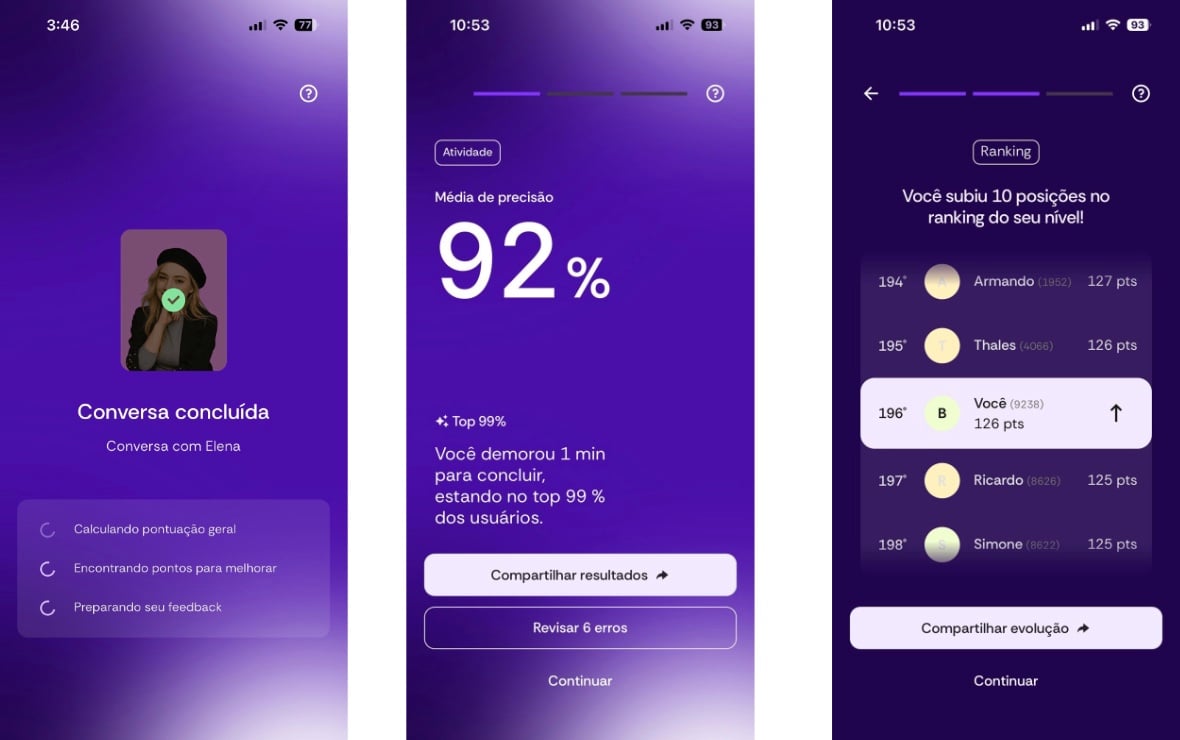
BeConfident offers a different path with artificial intelligence that simulates real conversations 24/7. The platform, which has an RA 1000 reputation on Reclame Aqui, brings together features that accelerate practice:
• AI tutors with personality who practice these phrases in real contexts.
• Instant feedback on pronunciation and grammar, without judgment.
• Multiple native accents, such as American, British, and Australian.
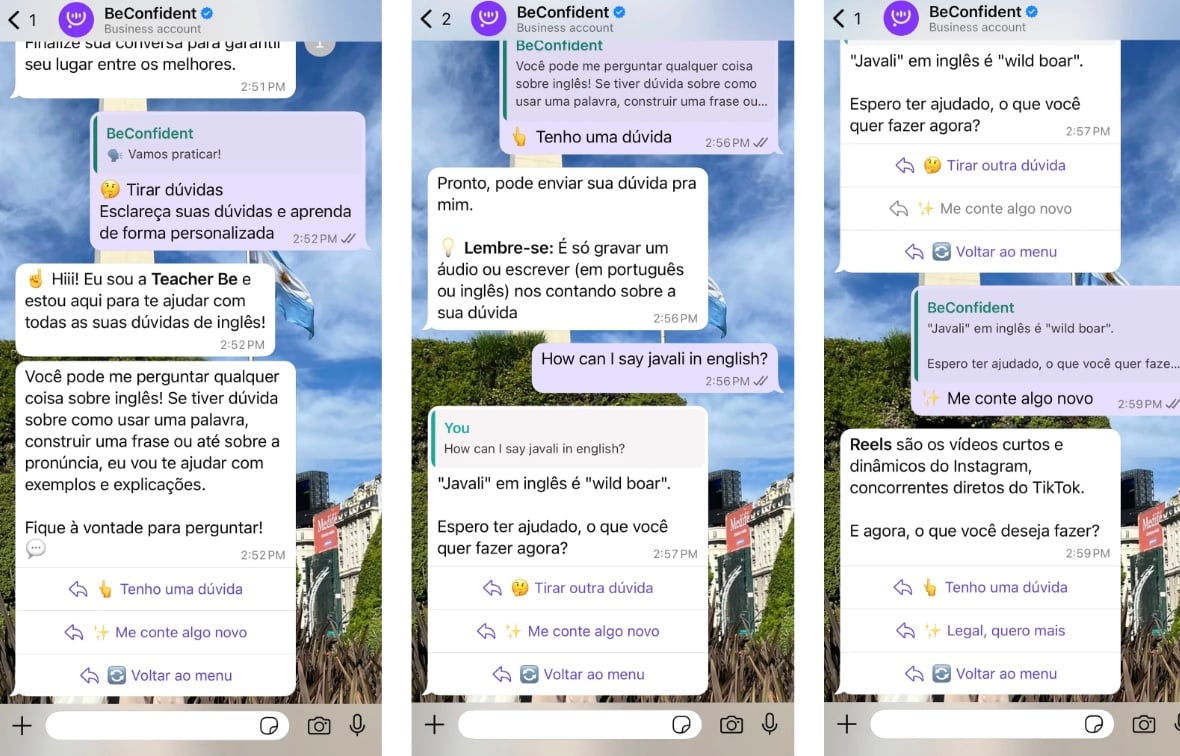
• Unlimited practice via app, WhatsApp, or smartwatch.
In addition to these 64 numbered phrases, the article features over 40 additional expressions in dialogues and practical examples, totaling more than 100 essential phrases for your initial vocabulary.
Transform these phrases into natural conversations with a free trial and start practicing today in simulated situations.
Frequently Asked Questions
What are 20 essential English phrases for beginners?
The 20 most essential phrases include basic greetings, such as "Hello" and "Good morning", introductions like "My name is" and "Nice to meet you", courtesy questions like "How are you?", requests for help like "Can you help me?" and "Where is...?", expressions of gratitude such as "Thank you" and "You're welcome", and farewells like "Goodbye" and "See you later". This set covers most basic conversational situations.
How to start a conversation in English without feeling embarrassed?
Using simple greetings like "Hello" or "Good morning", followed by a basic introduction like "My name is..." and a polite question like "How are you?", reduces initial insecurity. Frequently practicing these phrases until they become automatic increases confidence. BeConfident offers a judgment-free environment to practice with AI before real conversations.
How many phrases do I need to know to speak basic English?
Knowing between 50 and 100 well-chosen phrases allows you to maintain basic conversations in English. The key point is not just the quantity, but mastering each phrase with the correct pronunciation and understanding in which situations to use them. Focusing on the quality of practice yields more results than just memorizing long lists.
How to improve English phrase pronunciation?
Practicing with native audio, using phonetics as a guide, and repeating out loud daily improves pronunciation. Recording your own voice to compare with native speakers helps you identify fine-tuning. BeConfident offers instant pronunciation feedback with AI tutors that simulate diverse native accents.
What is the difference between learning phrases and traditional grammar?
Learning ready-to-use phrases accelerates fluency because you practice complete structures in a real context. The study of traditional grammar presents isolated rules that can be harder to apply in conversation. The most efficient combination is learning practical phrases and, in parallel, gradually understanding the grammar behind them.
Mastering the best English conversational phrases for beginners represents the first step toward real fluency. These 100+ expressions, organized by practical context, form a solid foundation to communicate with greater confidence.
The secret is to practice these phrases constantly until they sound natural in your speech. BeConfident makes this practice more structured and personalized, connecting you with AI tutors available 24/7 for guided conversations.
Take the first step toward fluency with a free trial today and start putting these phrases into practice.
Updated on March 20, 2026
Written by: Luan Cavallaro, Founder & CMO, BeConfident
Key takeaways from this article
Mastering 10 basic phrases like "Hello!" and "How are you?" helps to start any conversation with more confidence.
Using time-based greetings like "Good morning" and "Good afternoon", and simple introductions creates a good first impression.
Keeping dialogues flowing with casual questions about one's day, work, and interests shows genuine engagement.
Learning practical phrases to ask for help, shop, and ask for directions is essential for travel and real-life situations.
Turning these 100+ phrases into natural speech requires constant practice. BeConfident offers this training with AI 24/7. Try it for free now and put the phrases to use.
What are 10 English phrases for beginners?
The 10 basic conversational phrases in English form the foundation of any simple dialogue. Mastering this group makes all the next steps easier.
1. Hello! (Olá!) [phonetics: /həˈloʊ/], use when meeting anyone. After the initial greeting, move on to:
2. Nice to meet you (Prazer em conhecê-lo) [phonetics: /naɪs tu mit ju/], ideal for introductions. Next, maintain the connection with:
3. How are you? (Como você está?) [phonetics: /haʊ ɑr ju/], universal question of courtesy.
4. I'm fine, thank you (Estou bem, obrigado) [phonetics: /aɪm faɪn θæŋk ju/], standard polite response.
5. Excuse me (Com licença) [phonetics: /ɪkˈskjuz mi/], use to ask for attention or to apologize.
6. Could you help me? (Você poderia me ajudar?) [phonetics: /kʊd ju hɛlp mi/], essential phrase to ask for help.
7. Thank you very much (Muito obrigado) [phonetics: /θæŋk ju ˈvɛri mʌtʃ/], clear expression of gratitude.
8. I don't understand (Eu não entendo) [phonetics: /aɪ doʊnt ˌʌndərˈstænd/], phrase that encourages the other person to speak more slowly.
9. Could you repeat, please? (Você poderia repetir, por favor?) [phonetics: /kʊd ju rɪˈpit pliz/], direct request for repetition.
10. See you later (Até mais tarde) [phonetics: /si ju ˈleɪtər/], casual and friendly farewell.
Formal and informal greetings create a solid foundation for any conversation. Practicing these phrases daily until they become automatic accelerates fluency.
Practice these 10 phrases with a free trial, receive instant pronunciation feedback, and gain confidence to use everything out loud.
Greetings and basic introductions
Mastering greetings and basic introductions makes the first seconds of any conversation easier and opens space for real connections.
11. Good morning (Bom dia) [phonetics: /gʊd ˈmɔrnɪŋ/], use until 12 PM.
12. Good afternoon (Boa tarde) [phonetics: /gʊd ˌæftərˈnun/], use from 12 PM to 6 PM.
13. Good evening (Boa noite) [phonetics: /gʊd ˈivnɪŋ/], use after 6 PM to greet someone.
14. My name is... (Meu nome é...) [phonetics: /maɪ neɪm ɪz/], straightforward introduction.
15. I'm from Brazil (Eu sou do Brasil) [phonetics: /aɪm frʌm brəˈzɪl/], simple way to share where you're from.
16. What's your name? (Qual é o seu nome?) [phonetics: /wʌts jʊr neɪm/], shows interest in the other person.
17. Where are you from? (De onde você é?) [phonetics: /wɛr ɑr ju frʌm/], keeps the conversation going.
18. Pleased to meet you (Prazer em conhecê-lo) [phonetics: /plizd tu mit ju/], more formal option than "Nice to meet you".
Practical dialogue:
A: "Good morning! My name is Carlos. I'm from Brazil."
B: "Good morning, Carlos! Nice to meet you. I'm Sarah from Canada."
A: "Pleased to meet you too, Sarah!"
Casual questions to start a conversation
Asking casual questions after introductions keeps the conversation alive and shows genuine interest in the other person.
19. How's your day? (Como está seu dia?) [phonetics: /haʊz jʊr deɪ/], simple question of interest.
20. What do you do? (O que você faz?) [phonetics: /wʌt du ju du/], question about work or profession.
21. Do you like...? (Você gosta de...?) [phonetics: /du ju laɪk/], way to discover interests.
22. What's your favorite...? (Qual é seu... favorito?) [phonetics: /wʌts jʊr ˈfeɪvərɪt/], question that deepens the topic.
23. Have you been to...? (Você já foi para...?) [phonetics: /hæv ju bɪn tu/], great for talking about travel.
24. What do you think about...? (O que você acha de...?) [phonetics: /wʌt du ju θɪŋk əˈbaʊt/], invitation for an opinion.
25. That's interesting! (Que interessante!) [phonetics: /ðæts ˈɪntrəstɪŋ/], response that shows engagement.
Practical dialogue:
A: "How's your day going?"
B: "Pretty good, thanks! What do you do for work?"
A: "I'm an engineer. What about you?"
B: "That's interesting! I work in marketing."
Phrases to ask for help and directions
Using clear phrases to ask for help and directions increases your confidence when traveling and in daily life.
26. Can you help me? (Você pode me ajudar?) [phonetics: /kæn ju hɛlp mi/], direct request for help.
27. Where is...? (Onde fica...?) [phonetics: /wɛr ɪz/], location question.
28. How do I get to...? (Como chego a...?) [phonetics: /haʊ du aɪ gɛt tu/], request for directions.
29. Is it far from here? (É longe daqui?) [phonetics: /ɪz ɪt fɑr frʌm hɪr/], question about distance.
30. Could you show me? (Você poderia me mostrar?) [phonetics: /kʊd ju ʃoʊ mi/], request for demonstration.
31. I'm lost (Estou perdido) [phonetics: /aɪm lɔst/], useful phrase in an emergency.
32. Can you write it down? (Você pode escrever?) [phonetics: /kæn ju raɪt ɪt daʊn/], written request for clarity.
Daily conversations and routine
Talking about routine and simple situations helps to start an English conversation naturally.
33. What time is it? (Que horas são?) [phonetics: /wʌt taɪm ɪz ɪt/], basic time question.
34. What's the weather like? (Como está o tempo?) [phonetics: /wʌts ðə ˈwɛðər laɪk/], universal small talk topic.
35. I have to go (Eu tenho que ir) [phonetics: /aɪ hæv tu goʊ/], polite way to end a conversation.
36. What are you doing? (O que você está fazendo?) [phonetics: /wʌt ɑr ju ˈduɪŋ/], shows interest in the current activity.
37. I'm busy right now (Estou ocupado agora) [phonetics: /aɪm ˈbɪzi raɪt naʊ/], clear way to set boundaries.
38. Let's meet later (Vamos nos encontrar depois) [phonetics: /lɛts mit ˈleɪtər/], invitation for a future meeting.
Practice real dialogues with a free trial, use simulated native accents and repeat the phrases out loud to achieve naturalness.
Expressing opinions and feelings
Expressing opinions and feelings makes dialogues in English between two people deeper and more authentic.
39. I think that... (Eu acho que...) [phonetics: /aɪ θɪŋk ðæt/], introduction of personal opinion.
40. I feel... (Eu me sinto...) [phonetics: /aɪ fil/], expressing emotions.
41. I agree (Eu concordo) [phonetics: /aɪ əˈgri/], signal of agreement.
42. I disagree (Eu discordo) [phonetics: /aɪ ˌdɪsəˈgri/], polite way to disagree.
43. That's a good point (Esse é um bom ponto) [phonetics: /ðæts ə gʊd pɔɪnt/], recognition of a good idea.
44. I'm not sure (Não tenho certeza) [phonetics: /aɪm nɑt ʃʊr/], expressing doubt.
45. What do you mean? (O que você quer dizer?) [phonetics: /wʌt du ju min/], request for clarification.
Phrases for shopping and restaurants
Using specific phrases when shopping and in restaurants avoids misunderstandings and makes the experience smoother.
46. How much is this? (Quanto custa isso?) [phonetics: /haʊ mʌtʃ ɪz ðɪs/], direct price question.
47. I'd like to buy... (Eu gostaria de comprar...) [phonetics: /aɪd laɪk tu baɪ/], clear indication of buying intent.
48. Can I have the menu? (Posso ver o cardápio?) [phonetics: /kæn aɪ hæv ðə ˈmɛnju/], initial request in a restaurant.
49. I'll have... (Eu vou querer...) [phonetics: /aɪl hæv/], phrase to place an order.
50. The check, please (A conta, por favor) [phonetics: /ðə tʃɛk pliz/], requesting the bill.
51. Do you accept credit cards? (Vocês aceitam cartão?) [phonetics: /du ju ækˈsɛpt ˈkrɛdɪt kɑrdz/], question about payment method.
52. Where's the bathroom? (Onde fica o banheiro?) [phonetics: /wɛrz ðə ˈbæθrum/], essential question anywhere.
Farwells and endings
Ending conversations naturally and politely leaves a good final impression.
53. It was nice talking to you (Foi bom conversar com você) [phonetics: /ɪt wʌz naɪs ˈtɔkɪŋ tu ju/], warm farewell.
54. Have a good day (Tenha um bom dia) [phonetics: /hæv ə gʊd deɪ/], positive wish.
55. Take care (Se cuide) [phonetics: /teɪk kɛr/], caring farewell.
56. See you soon (Até breve) [phonetics: /si ju sun/], shows expectation of meeting again.
57. Goodbye (Tchau) [phonetics: /gʊdˈbaɪ/], more formal farewell.
58. Bye (Tchau) [phonetics: /baɪ/], casual farewell.
Quick professional and travel phrases
Using specific phrases for work and travel helps you communicate clearly in more objective contexts.
59. I have a meeting (Tenho uma reunião) [phonetics: /aɪ hæv ə ˈmitɪŋ/], common phrase in a professional environment.
60. What's your job? (Qual é seu trabalho?) [phonetics: /wʌts jʊr dʒɑb/], useful question in networking.
61. I'm here on business (Estou aqui a negócios) [phonetics: /aɪm hɪr ɑn ˈbɪznəs/], explanation for a work trip.
62. I'm on vacation (Estou de férias) [phonetics: /aɪm ɑn veɪˈkeɪʃən/], phrase for a leisure trip.
63. Where's the airport? (Onde fica o aeroporto?) [phonetics: /wɛrz ði ˈɛrpɔrt/], important transport question.
64. What time does it leave? (Que horas sai?) [phonetics: /wʌt taɪm dʌz ɪt liv/], question about departure time.
Practicing spoken language as a rehearsal before writing strengthens syntactic knowledge and improves pronunciation through repetition out loud. Practicing these phrases regularly out loud solidifies learning.
How to turn these phrases into real fluency?
Having more than 60 essential phrases is an important step forward, but fluency comes when these expressions enter your daily life automatically. Memorizing lists is only the first step.
The real challenge lies in using these phrases naturally in real conversations. Many Brazilians can read and understand English but freeze when it's time to speak. The fear of making mistakes in traditional classes and the lack of constant practice keep many people trapped in theory.
BeConfident offers a different path with artificial intelligence that simulates real conversations 24/7. The platform, which has an RA 1000 reputation on Reclame Aqui, brings together features that accelerate practice:
• AI tutors with personality who practice these phrases in real contexts.
• Instant feedback on pronunciation and grammar, without judgment.
• Multiple native accents, such as American, British, and Australian.
• Unlimited practice via app, WhatsApp, or smartwatch.
In addition to these 64 numbered phrases, the article features over 40 additional expressions in dialogues and practical examples, totaling more than 100 essential phrases for your initial vocabulary.
Transform these phrases into natural conversations with a free trial and start practicing today in simulated situations.
Frequently Asked Questions
What are 20 essential English phrases for beginners?
The 20 most essential phrases include basic greetings, such as "Hello" and "Good morning", introductions like "My name is" and "Nice to meet you", courtesy questions like "How are you?", requests for help like "Can you help me?" and "Where is...?", expressions of gratitude such as "Thank you" and "You're welcome", and farewells like "Goodbye" and "See you later". This set covers most basic conversational situations.
How to start a conversation in English without feeling embarrassed?
Using simple greetings like "Hello" or "Good morning", followed by a basic introduction like "My name is..." and a polite question like "How are you?", reduces initial insecurity. Frequently practicing these phrases until they become automatic increases confidence. BeConfident offers a judgment-free environment to practice with AI before real conversations.
How many phrases do I need to know to speak basic English?
Knowing between 50 and 100 well-chosen phrases allows you to maintain basic conversations in English. The key point is not just the quantity, but mastering each phrase with the correct pronunciation and understanding in which situations to use them. Focusing on the quality of practice yields more results than just memorizing long lists.
How to improve English phrase pronunciation?
Practicing with native audio, using phonetics as a guide, and repeating out loud daily improves pronunciation. Recording your own voice to compare with native speakers helps you identify fine-tuning. BeConfident offers instant pronunciation feedback with AI tutors that simulate diverse native accents.
What is the difference between learning phrases and traditional grammar?
Learning ready-to-use phrases accelerates fluency because you practice complete structures in a real context. The study of traditional grammar presents isolated rules that can be harder to apply in conversation. The most efficient combination is learning practical phrases and, in parallel, gradually understanding the grammar behind them.
Mastering the best English conversational phrases for beginners represents the first step toward real fluency. These 100+ expressions, organized by practical context, form a solid foundation to communicate with greater confidence.
The secret is to practice these phrases constantly until they sound natural in your speech. BeConfident makes this practice more structured and personalized, connecting you with AI tutors available 24/7 for guided conversations.
Take the first step toward fluency with a free trial today and start putting these phrases into practice.
Updated on March 20, 2026