




12 best English dialogues about travel to practice
12 best English dialogues about travel to practice
12 best English dialogues about travel to practice
Written by: Luan Cavallaro, Founder & CMO, BeConfident
Key takeaways from this article
Many travelers face language barriers, but mastering essential travel dialogues in English reduces this obstacle and increases confidence.
Practicing with AI like BeConfident simulates native American, British, and Australian accents in real scenarios such as the airport, hotel, and restaurant, without public exposure.
The 12 dialogues cover critical travel situations, such as immigration, check-in, directions, shopping, emergencies, and current 2026 slang, with detailed phonetics and vocabulary.
Memorizing scripts is the first step. Role-playing with AI prompts and improvisation build more natural fluency in 2 to 4 weeks with 10 to 15 minutes daily.
With BeConfident, over 200,000 students overcome the language barrier via app, WhatsApp, or smartwatch. Try it free now and travel with more security when communicating.
Most used English phrases for travel (top 20)
Before diving into the full dialogues, it's worth mastering a set of short phrases that appear on almost every trip. The following table organizes 20 expressions by usage scenario, such as airport, transportation, shopping, and hotel, to help you prioritize what to study according to your itinerary.
English phrase | Phonetics | Translation | Scenario |
Where is the gate? | /wer ɪz ðə ɡeɪt/ | Where is the gate? | Airport |
Where is the check-in counter? | /wer ɪz ðə ˈtʃek ɪn ˈkaʊntər/ | Where is the check-in counter? | Airport |
What time is boarding? | /wʌt taɪm ɪz ˈbɔːrdɪŋ/ | What time is boarding? | Airport |
Can I have an aisle seat? | /kæn aɪ hæv ən aɪl siːt/ | Can I have an aisle seat? | Airport |
I need a taxi | /aɪ niːd ə tæksi/ | I need a taxi | Transportation |
How much is the fare? | /haʊ mʌtʃ ɪz ðə fer/ | How much is the fare? | Transportation |
Can you take me to the airport? | /kæn juː teɪk miː tu ði ˈerpɔːrt/ | Can you take me to the airport? | Transportation |
Where is the bus stop? | /wer ɪz ðə bʌs stɑːp/ | Where is the bus stop? | Transportation |
How much is this? | /haʊ mʌtʃ ɪz ðɪs/ | How much is this? | Shopping |
Do you have it in medium? | /duː juː hæv ɪt ɪn ˈmiːdiəm/ | Do you have it in medium? | Shopping |
Can I try it on? | /kæn aɪ traɪ ɪt ɑːn/ | Can I try it on? | Shopping |
Do you accept credit cards? | /duː juː əkˈsept ˈkredɪt kɑːrdz/ | Do you accept credit cards? | Shopping |
I have a reservation | /aɪ hæv ə rezərˈveɪʃən/ | I have a reservation | Hotel |
Is breakfast included? | /ɪz ˈbrekfəst ɪnˈkluːdɪd/ | Is breakfast included? | Hotel |
What time is check-out? | /wʌt taɪm ɪz ˈtʃek aʊt/ | What time is check-out? | Hotel |
Can I have a late check-out? | /kæn aɪ hæv ə leɪt ˈtʃek aʊt/ | Can I have a late check-out? | Hotel |
Do you speak English? | /duː juː spiːk ˈɪŋɡlɪʃ/ | Do you speak English? | General |
I need help | /aɪ niːd help/ | I need help | Emergency |
Can you repeat, please? | /kæn juː rɪˈpiːt pliːz/ | Can you repeat, please? | General |
Thank you | /θæŋk juː/ | Thank you | General |
1. Dialogue 1: Airport Immigration
The first contact in another country usually happens at immigration. This dialogue helps you answer the most common questions with short, clear phrases.
Officer: Good evening. Purpose of your visit?
You: Tourism. I'm here for a vacation.
Officer: How long will you be staying?
You: Two weeks.
Officer: Where will you be staying?
You: At the Marriott Hotel downtown.
Officer: Welcome to the United States. Enjoy your stay.
Vocabulary | Phonetics | Translation |
Purpose | /ˈpɜːrpəs/ | Purpose |
Tourism | /ˈtʊrɪzəm/ | Tourism |
Vacation | /vəˈkeɪʃən/ | Vacation |
Downtown | /ˈdaʊntaʊn/ | Downtown |
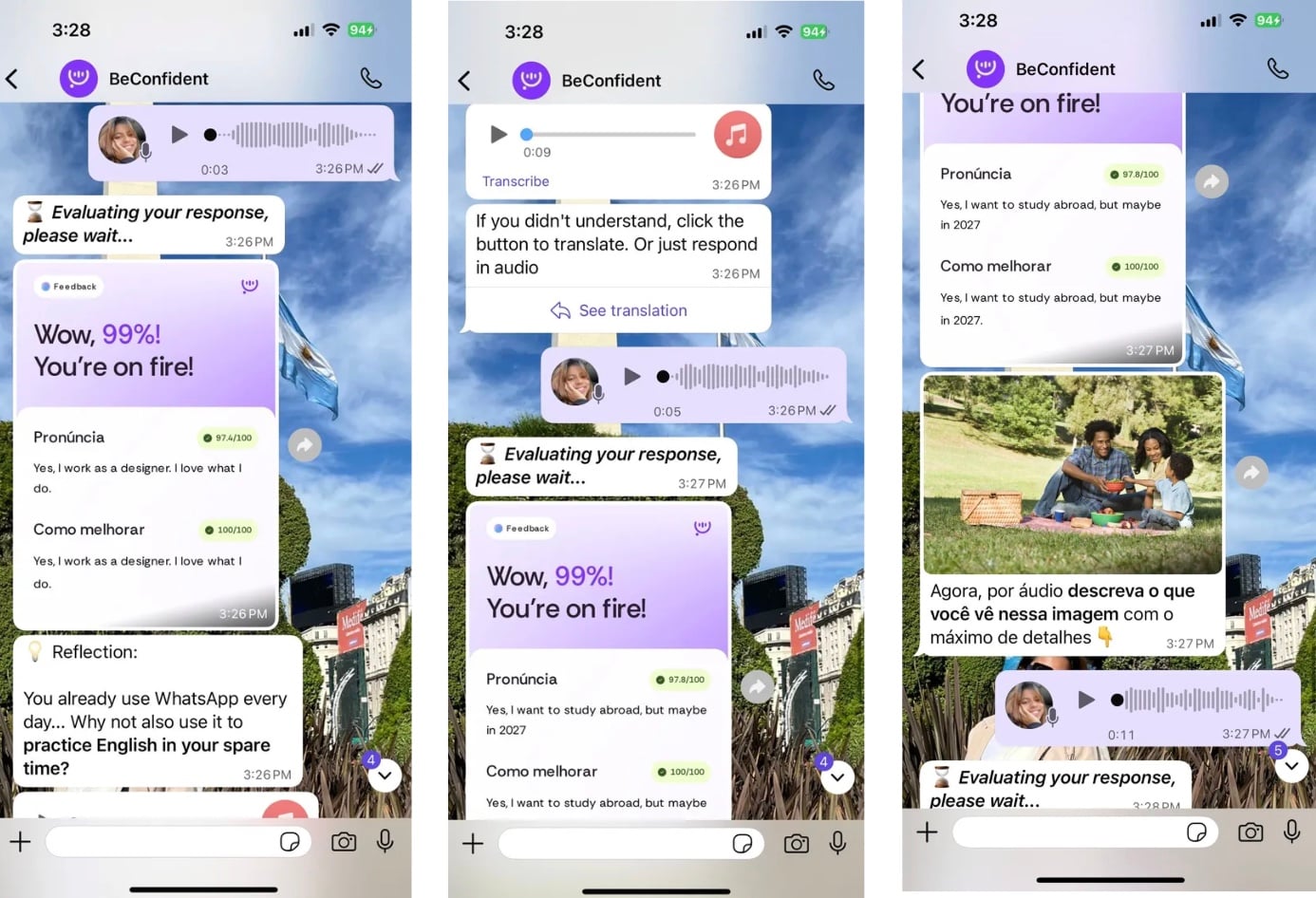
Prompt for BeConfident's AI: "Role-play this dialogue with me as an American immigration officer. Be formal but friendly, and correct my pronunciation whenever I make a mistake."
2. Dialogue 2: Hotel Check-In
After immigration, the next step is usually checking in. This dialogue focuses on confirming a reservation, room type, and breakfast.
Receptionist: Good afternoon. How can I help you?
You: I have a reservation under Silva.
Receptionist: Let me check... Yes, a double room for three nights?
You: That's correct.
Receptionist: Is breakfast included?
You: Yes, it should be.
Receptionist: Perfect. Here's your key card. Room 405.
Vocabulary | Phonetics | Translation |
Reservation | /rezərˈveɪʃən/ | Reservation |
Double room | /ˈdʌbəl ruːm/ | Double room |
Key card | /kiː kɑːrd/ | Key card |
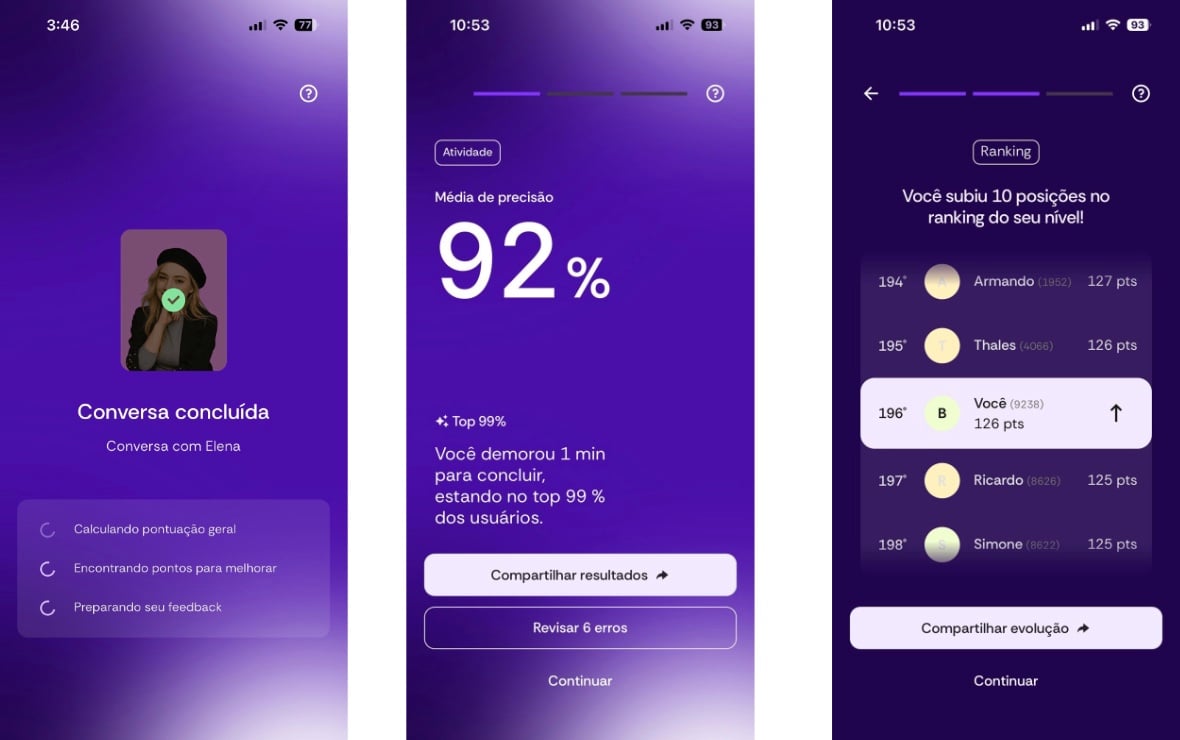
BeConfident Tip: record this dialogue in the BeConfident app to receive detailed feedback on pronunciation and intonation for each sentence.
3. Dialogue 3: Asking for Directions
Asking for directions with confidence avoids unnecessary detours. This dialogue shows how to ask about a route, subway line, and travel time.
You: Excuse me, how do I get to Times Square?
Local: Take the subway. The nearest station is two blocks away.
You: Which line should I take?
Local: Take the red line northbound.
You: How long does it take?
Local: About 15 minutes.
You: Thank you so much!
Vocabulary | Phonetics | Translation |
Subway | /ˈsʌbweɪ/ | Subway |
Blocks | /blɑːks/ | Blocks |
Northbound | /ˈnɔːrθbaʊnd/ | Northbound |
4. Dialogue 4: Restaurant
Ordering at a restaurant requires specific vocabulary. This dialogue covers requesting a table, the waiter's recommendation, main course, and drink.
Waiter: Good evening. Table for how many?
You: Table for two, please.
Waiter: Right this way. Here are your menus.
You: What do you recommend?
Waiter: The salmon is very popular.
You: I'll have the salmon, medium rare.
Waiter: And to drink?
You: Water, please.
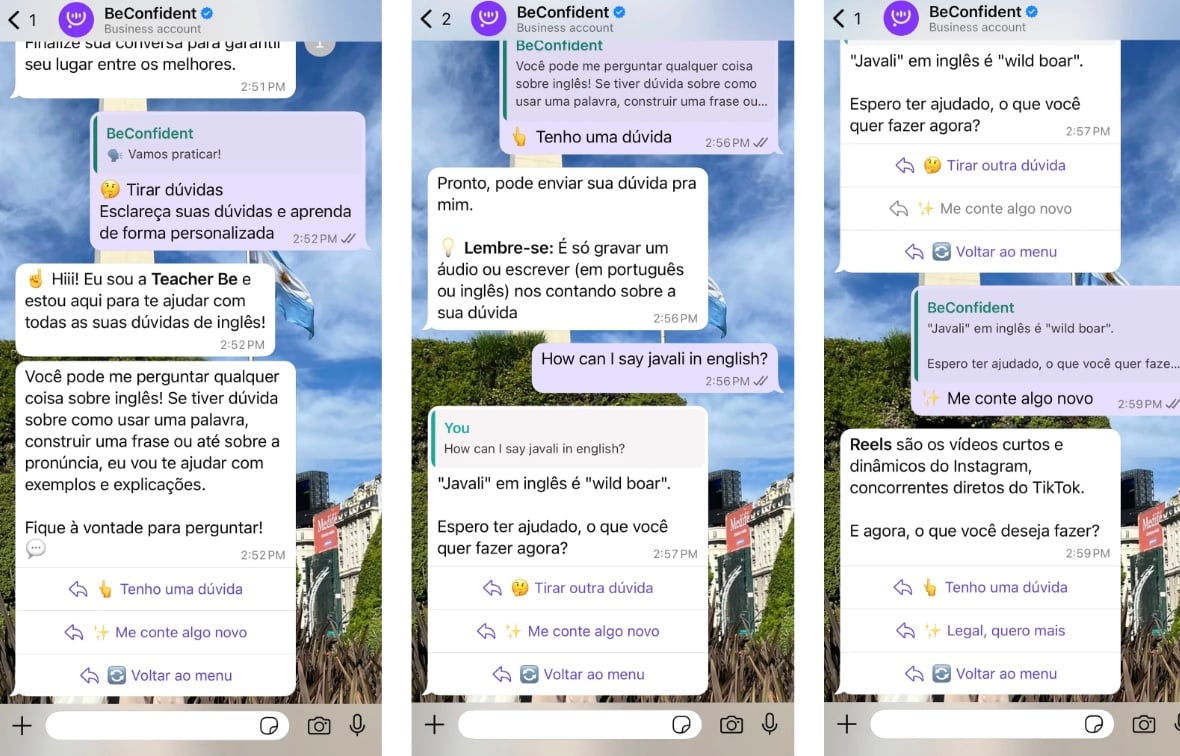
Prompt for BeConfident's AI: "Simulate being a waiter at a high-end restaurant in New York. Use an American accent and help me practice making more complex orders."
5. Dialogue 5: Taxi and Transportation
Quick conversations with drivers are frequent when traveling. This dialogue focuses on destination, travel time, and approximate cost.
You: Taxi! Are you available?
Driver: Yes, where to?
You: To the airport, please. Terminal 2.
Driver: That'll be about 30 minutes with traffic.
You: How much will it cost?
Driver: Around 45 dollars.
You: That's fine. Let's go.
Vocabulary | Phonetics | Translation |
Available | /əˈveɪləbəl/ | Available |
Terminal | /ˈtɜːrmɪnəl/ | Terminal |
Traffic | /ˈtræfɪk/ | Traffic |
6. Dialogue 6: Shopping
Shopping in another country requires vocabulary of price, size, and payment. This dialogue shows how to ask about value, size, fitting room, and payment method.
You: How much is this t-shirt?
Seller: It's 25 dollars.
You: Do you have it in medium?
Seller: Let me check... Yes, here you go.
You: Can I try it on?
Seller: Of course. The fitting room is over there.
You: I'll take it. Do you accept credit cards?
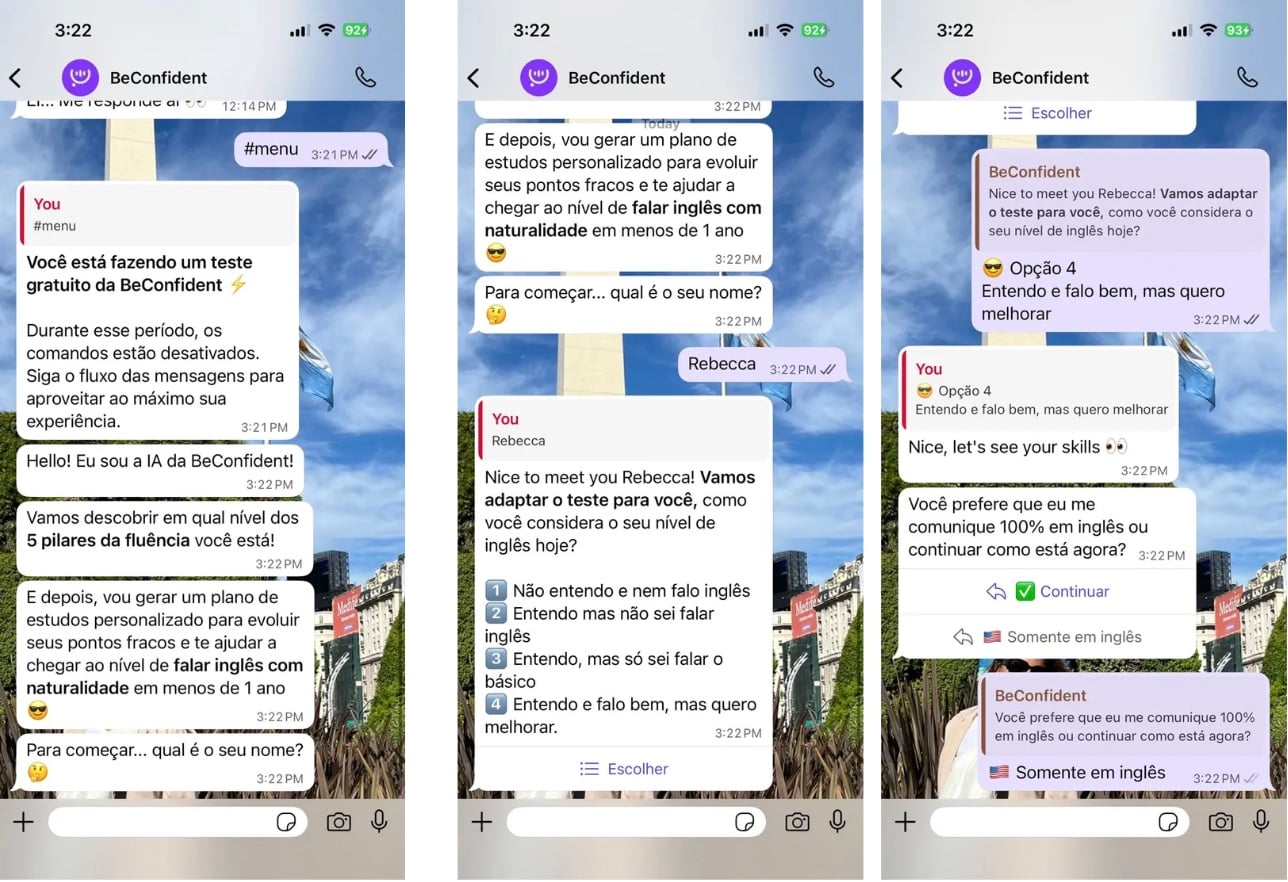
With BeConfident, you can practice more complex negotiations with AI tutors specialized in different accents. Try it for free and practice negotiating in English before your next trip.
7. Dialogue 7: Emergency or Being Lost
Unexpected events are part of any trip. This dialogue helps you ask for help when you are lost and check if the area is safe.
You: Excuse me, I'm lost. Can you help me?
Local: Of course. Where are you trying to go?
You: I'm looking for the British Museum.
Local: You're quite far. Take the tube to Russell Square.
You: Is it safe to walk at night?
Local: This area is generally safe, but take a taxi to be sure.
You: Thank you for your help.
Vocabulary | Phonetics | Translation |
Lost | /lɔːst/ | Lost |
Tube | /tuːb/ | Tube (UK Subway) |
Generally | /ˈdʒenərəli/ | Generally |
8. Dialogue 8: Sightseeing
Guided tours require attention to schedules and rules. This dialogue focuses on stop length, photos, and returning to the hotel.
Guide: Welcome to our city tour. First stop is the cathedral.
You: How long will we stay there?
Guide: About 30 minutes for photos and exploring.
You: Is photography allowed inside?
Guide: Yes, but no flash photography.
You: What time do we return to the hotel?
Guide: We'll be back by 6 PM.
9. Dialogue 9: Price Negotiation
Street markets usually allow bargaining. This dialogue shows how to decline a price, make a counter-offer, and close the deal.
Vendor: Beautiful handmade scarf, only 50 dollars!
You: That's too expensive. What's your best price?
Vendor: For you, 40 dollars.
You: I can pay 25 dollars.
Vendor: How about 30? It's genuine silk.
You: Deal. I'll take it.
Vendor: Thank you! Enjoy your purchase.
Prompt for BeConfident's AI: "Practice bargaining with me as a street vendor in Bangkok. Use typical bidding expressions and teach me local slang."
10. Dialogue 10: Hotel Check-Out
The moment of check-out requires clarity about extra charges. This dialogue covers a review of the stay, minibar, final bill, and payment method.
You: I'd like to check out, please. Room 405.
Receptionist: How was your stay?
You: Excellent, thank you.
Receptionist: Any charges from the minibar or room service?
You: No, nothing additional.
Receptionist: Here's your final bill. Will you pay by card?
You: Yes, credit card, please.
11. Dialogue 11: Flight Delay
Flight delays require specific vocabulary for passenger rights. This dialogue shows how to ask about the reason, vouchers, and the new schedule.
You: Excuse me, my flight to São Paulo is delayed?
Agent: Yes, there's a 3-hour delay due to weather.
You: Will you provide meal vouchers?
Agent: Yes, and we'll arrange hotel accommodation if needed.
You: What's the new departure time?
Agent: 11:30 PM instead of 8:30 PM.
You: Thank you for the information.
Vocabulary | Phonetics | Translation |
Delayed | /dɪˈleɪd/ | Delayed |
Vouchers | /ˈvaʊtʃərz/ | Vouchers |
Accommodation | /əˌkɑːməˈdeɪʃən/ | Accommodation |
12. Dialogue 12: 2026 Travel Slang
Understanding current slang helps keep up with informal conversations. This dialogue shows common expressions in 2026 in the context of restaurants.
Local: That restaurant is absolutely fire!
You: Fire? You mean it's good?
Local: Yeah, it's amazing! The food slaps.
You: I'm not familiar with that expression.
Local: "Slaps" means it's really delicious. Very trendy word now.
You: Thanks for teaching me! I'm still learning.
Local: No worries, you're doing great!
This dialogue illustrates how online language learning is growing fast, with a market expected to reach $115 billion by 2025, driven by the need to understand current slang and cultural expressions.
From script to natural fluency: how to practice with AI
Memorizing dialogues is only the first step. Fluency comes when you practice in a structured way and gradually increase the difficulty level. This guide with BeConfident organizes that evolution.
1. Memorize: read each dialogue out loud 5 times to fix the structure and key vocabulary.
2. Role-play: with the foundation memorized, use the AI prompts to simulate real situations and focus on pronunciation and intonation without worrying about remembering every word.
3. Improvise: after practicing with support, create variations of the dialogues with different scenarios to apply what you learned in new contexts and gain more natural fluency.
BeConfident offers structured class paths with 24-hour conversation practice, which increases exposure time to the language compared to gamified-only methods. With over 200,000 paying students and an RA 1000 reputation on Reclame Aqui, you can practice with confidence.
Try it for free and start practicing travel English today and use these dialogues as a foundation for real-life situations.
Frequently Asked Questions
What are the most commonly used English phrases for travel?
Essential phrases include "Where is...?", "How much is this?", "I need help", "Do you speak English?", and "Thank you". These expressions cover most basic situations in airports, hotels, restaurants, and public transportation. BeConfident offers personalized practice with these phrases in real contexts through AI tutors with different accents.
How to practice travel dialogues on your phone?
A practical way is using voice conversation apps, such as BeConfident, which allows training via app, WhatsApp, or smartwatch. You record audio, receive instant feedback on pronunciation and grammar, and practice role-play with AI at any time. This approach simulates real conversations and tends to be more effective than just written exercises.
What is the difference between American and British accents for travel?
American English uses terms like "elevator" instead of "lift" in British, "subway" instead of "tube," and "gas station" instead of "petrol station." For global travel, it's worth practicing vocabulary and pronunciation of both. BeConfident offers tutors with American, British, Australian, Canadian, South African, and Indian accents to broaden this preparation.
How to overcome the embarrassment of speaking English on travels?
Practicing in a non-judgmental environment before traveling reduces anxiety. BeConfident allows conversation with an AI that corrects mistakes without embarrassment, helping to build confidence gradually. You can start with simple dialogues and move on to more complex situations, repeating until you feel more secure. Many natives appreciate the effort to communicate, even with errors.
How long do I need to master English for travel?
With focused practice of 10 to 15 minutes a day, you will master essential phrases in about 2 to 4 weeks. To reach basic conversational fluency, the average is between 2 and 3 months of consistent practice. BeConfident accelerates this process with personalized feedback and unlimited practice, favoring a faster evolution compared to just theoretical methods.
Conclusion: take these dialogues on your next trip
Mastering these 12 essential dialogues works like an extra passport for travel with fewer language barriers. With complete translations, detailed phonetics, and specific AI prompts, you can simulate real situations even before leaving home.
BeConfident transforms these scripts into more natural conversations through continuous practice with AI tutors specialized in native accents. By repeating, receiving correction, and improvising, you gain confidence to communicate in different destinations.
Is your next trip coming up and you still feel insecure about speaking English? Try it for free and start learning English today and use these dialogues as a starting point to speak with more confidence.
Written by: Luan Cavallaro, Founder & CMO, BeConfident
Key takeaways from this article
Many travelers face language barriers, but mastering essential travel dialogues in English reduces this obstacle and increases confidence.
Practicing with AI like BeConfident simulates native American, British, and Australian accents in real scenarios such as the airport, hotel, and restaurant, without public exposure.
The 12 dialogues cover critical travel situations, such as immigration, check-in, directions, shopping, emergencies, and current 2026 slang, with detailed phonetics and vocabulary.
Memorizing scripts is the first step. Role-playing with AI prompts and improvisation build more natural fluency in 2 to 4 weeks with 10 to 15 minutes daily.
With BeConfident, over 200,000 students overcome the language barrier via app, WhatsApp, or smartwatch. Try it free now and travel with more security when communicating.
Most used English phrases for travel (top 20)
Before diving into the full dialogues, it's worth mastering a set of short phrases that appear on almost every trip. The following table organizes 20 expressions by usage scenario, such as airport, transportation, shopping, and hotel, to help you prioritize what to study according to your itinerary.
English phrase | Phonetics | Translation | Scenario |
Where is the gate? | /wer ɪz ðə ɡeɪt/ | Where is the gate? | Airport |
Where is the check-in counter? | /wer ɪz ðə ˈtʃek ɪn ˈkaʊntər/ | Where is the check-in counter? | Airport |
What time is boarding? | /wʌt taɪm ɪz ˈbɔːrdɪŋ/ | What time is boarding? | Airport |
Can I have an aisle seat? | /kæn aɪ hæv ən aɪl siːt/ | Can I have an aisle seat? | Airport |
I need a taxi | /aɪ niːd ə tæksi/ | I need a taxi | Transportation |
How much is the fare? | /haʊ mʌtʃ ɪz ðə fer/ | How much is the fare? | Transportation |
Can you take me to the airport? | /kæn juː teɪk miː tu ði ˈerpɔːrt/ | Can you take me to the airport? | Transportation |
Where is the bus stop? | /wer ɪz ðə bʌs stɑːp/ | Where is the bus stop? | Transportation |
How much is this? | /haʊ mʌtʃ ɪz ðɪs/ | How much is this? | Shopping |
Do you have it in medium? | /duː juː hæv ɪt ɪn ˈmiːdiəm/ | Do you have it in medium? | Shopping |
Can I try it on? | /kæn aɪ traɪ ɪt ɑːn/ | Can I try it on? | Shopping |
Do you accept credit cards? | /duː juː əkˈsept ˈkredɪt kɑːrdz/ | Do you accept credit cards? | Shopping |
I have a reservation | /aɪ hæv ə rezərˈveɪʃən/ | I have a reservation | Hotel |
Is breakfast included? | /ɪz ˈbrekfəst ɪnˈkluːdɪd/ | Is breakfast included? | Hotel |
What time is check-out? | /wʌt taɪm ɪz ˈtʃek aʊt/ | What time is check-out? | Hotel |
Can I have a late check-out? | /kæn aɪ hæv ə leɪt ˈtʃek aʊt/ | Can I have a late check-out? | Hotel |
Do you speak English? | /duː juː spiːk ˈɪŋɡlɪʃ/ | Do you speak English? | General |
I need help | /aɪ niːd help/ | I need help | Emergency |
Can you repeat, please? | /kæn juː rɪˈpiːt pliːz/ | Can you repeat, please? | General |
Thank you | /θæŋk juː/ | Thank you | General |
1. Dialogue 1: Airport Immigration
The first contact in another country usually happens at immigration. This dialogue helps you answer the most common questions with short, clear phrases.
Officer: Good evening. Purpose of your visit?
You: Tourism. I'm here for a vacation.
Officer: How long will you be staying?
You: Two weeks.
Officer: Where will you be staying?
You: At the Marriott Hotel downtown.
Officer: Welcome to the United States. Enjoy your stay.
Vocabulary | Phonetics | Translation |
Purpose | /ˈpɜːrpəs/ | Purpose |
Tourism | /ˈtʊrɪzəm/ | Tourism |
Vacation | /vəˈkeɪʃən/ | Vacation |
Downtown | /ˈdaʊntaʊn/ | Downtown |
Prompt for BeConfident's AI: "Role-play this dialogue with me as an American immigration officer. Be formal but friendly, and correct my pronunciation whenever I make a mistake."
2. Dialogue 2: Hotel Check-In
After immigration, the next step is usually checking in. This dialogue focuses on confirming a reservation, room type, and breakfast.
Receptionist: Good afternoon. How can I help you?
You: I have a reservation under Silva.
Receptionist: Let me check... Yes, a double room for three nights?
You: That's correct.
Receptionist: Is breakfast included?
You: Yes, it should be.
Receptionist: Perfect. Here's your key card. Room 405.
Vocabulary | Phonetics | Translation |
Reservation | /rezərˈveɪʃən/ | Reservation |
Double room | /ˈdʌbəl ruːm/ | Double room |
Key card | /kiː kɑːrd/ | Key card |
BeConfident Tip: record this dialogue in the BeConfident app to receive detailed feedback on pronunciation and intonation for each sentence.
3. Dialogue 3: Asking for Directions
Asking for directions with confidence avoids unnecessary detours. This dialogue shows how to ask about a route, subway line, and travel time.
You: Excuse me, how do I get to Times Square?
Local: Take the subway. The nearest station is two blocks away.
You: Which line should I take?
Local: Take the red line northbound.
You: How long does it take?
Local: About 15 minutes.
You: Thank you so much!
Vocabulary | Phonetics | Translation |
Subway | /ˈsʌbweɪ/ | Subway |
Blocks | /blɑːks/ | Blocks |
Northbound | /ˈnɔːrθbaʊnd/ | Northbound |
4. Dialogue 4: Restaurant
Ordering at a restaurant requires specific vocabulary. This dialogue covers requesting a table, the waiter's recommendation, main course, and drink.
Waiter: Good evening. Table for how many?
You: Table for two, please.
Waiter: Right this way. Here are your menus.
You: What do you recommend?
Waiter: The salmon is very popular.
You: I'll have the salmon, medium rare.
Waiter: And to drink?
You: Water, please.
Prompt for BeConfident's AI: "Simulate being a waiter at a high-end restaurant in New York. Use an American accent and help me practice making more complex orders."
5. Dialogue 5: Taxi and Transportation
Quick conversations with drivers are frequent when traveling. This dialogue focuses on destination, travel time, and approximate cost.
You: Taxi! Are you available?
Driver: Yes, where to?
You: To the airport, please. Terminal 2.
Driver: That'll be about 30 minutes with traffic.
You: How much will it cost?
Driver: Around 45 dollars.
You: That's fine. Let's go.
Vocabulary | Phonetics | Translation |
Available | /əˈveɪləbəl/ | Available |
Terminal | /ˈtɜːrmɪnəl/ | Terminal |
Traffic | /ˈtræfɪk/ | Traffic |
6. Dialogue 6: Shopping
Shopping in another country requires vocabulary of price, size, and payment. This dialogue shows how to ask about value, size, fitting room, and payment method.
You: How much is this t-shirt?
Seller: It's 25 dollars.
You: Do you have it in medium?
Seller: Let me check... Yes, here you go.
You: Can I try it on?
Seller: Of course. The fitting room is over there.
You: I'll take it. Do you accept credit cards?
With BeConfident, you can practice more complex negotiations with AI tutors specialized in different accents. Try it for free and practice negotiating in English before your next trip.
7. Dialogue 7: Emergency or Being Lost
Unexpected events are part of any trip. This dialogue helps you ask for help when you are lost and check if the area is safe.
You: Excuse me, I'm lost. Can you help me?
Local: Of course. Where are you trying to go?
You: I'm looking for the British Museum.
Local: You're quite far. Take the tube to Russell Square.
You: Is it safe to walk at night?
Local: This area is generally safe, but take a taxi to be sure.
You: Thank you for your help.
Vocabulary | Phonetics | Translation |
Lost | /lɔːst/ | Lost |
Tube | /tuːb/ | Tube (UK Subway) |
Generally | /ˈdʒenərəli/ | Generally |
8. Dialogue 8: Sightseeing
Guided tours require attention to schedules and rules. This dialogue focuses on stop length, photos, and returning to the hotel.
Guide: Welcome to our city tour. First stop is the cathedral.
You: How long will we stay there?
Guide: About 30 minutes for photos and exploring.
You: Is photography allowed inside?
Guide: Yes, but no flash photography.
You: What time do we return to the hotel?
Guide: We'll be back by 6 PM.
9. Dialogue 9: Price Negotiation
Street markets usually allow bargaining. This dialogue shows how to decline a price, make a counter-offer, and close the deal.
Vendor: Beautiful handmade scarf, only 50 dollars!
You: That's too expensive. What's your best price?
Vendor: For you, 40 dollars.
You: I can pay 25 dollars.
Vendor: How about 30? It's genuine silk.
You: Deal. I'll take it.
Vendor: Thank you! Enjoy your purchase.
Prompt for BeConfident's AI: "Practice bargaining with me as a street vendor in Bangkok. Use typical bidding expressions and teach me local slang."
10. Dialogue 10: Hotel Check-Out
The moment of check-out requires clarity about extra charges. This dialogue covers a review of the stay, minibar, final bill, and payment method.
You: I'd like to check out, please. Room 405.
Receptionist: How was your stay?
You: Excellent, thank you.
Receptionist: Any charges from the minibar or room service?
You: No, nothing additional.
Receptionist: Here's your final bill. Will you pay by card?
You: Yes, credit card, please.
11. Dialogue 11: Flight Delay
Flight delays require specific vocabulary for passenger rights. This dialogue shows how to ask about the reason, vouchers, and the new schedule.
You: Excuse me, my flight to São Paulo is delayed?
Agent: Yes, there's a 3-hour delay due to weather.
You: Will you provide meal vouchers?
Agent: Yes, and we'll arrange hotel accommodation if needed.
You: What's the new departure time?
Agent: 11:30 PM instead of 8:30 PM.
You: Thank you for the information.
Vocabulary | Phonetics | Translation |
Delayed | /dɪˈleɪd/ | Delayed |
Vouchers | /ˈvaʊtʃərz/ | Vouchers |
Accommodation | /əˌkɑːməˈdeɪʃən/ | Accommodation |
12. Dialogue 12: 2026 Travel Slang
Understanding current slang helps keep up with informal conversations. This dialogue shows common expressions in 2026 in the context of restaurants.
Local: That restaurant is absolutely fire!
You: Fire? You mean it's good?
Local: Yeah, it's amazing! The food slaps.
You: I'm not familiar with that expression.
Local: "Slaps" means it's really delicious. Very trendy word now.
You: Thanks for teaching me! I'm still learning.
Local: No worries, you're doing great!
This dialogue illustrates how online language learning is growing fast, with a market expected to reach $115 billion by 2025, driven by the need to understand current slang and cultural expressions.
From script to natural fluency: how to practice with AI
Memorizing dialogues is only the first step. Fluency comes when you practice in a structured way and gradually increase the difficulty level. This guide with BeConfident organizes that evolution.
1. Memorize: read each dialogue out loud 5 times to fix the structure and key vocabulary.
2. Role-play: with the foundation memorized, use the AI prompts to simulate real situations and focus on pronunciation and intonation without worrying about remembering every word.
3. Improvise: after practicing with support, create variations of the dialogues with different scenarios to apply what you learned in new contexts and gain more natural fluency.
BeConfident offers structured class paths with 24-hour conversation practice, which increases exposure time to the language compared to gamified-only methods. With over 200,000 paying students and an RA 1000 reputation on Reclame Aqui, you can practice with confidence.
Try it for free and start practicing travel English today and use these dialogues as a foundation for real-life situations.
Frequently Asked Questions
What are the most commonly used English phrases for travel?
Essential phrases include "Where is...?", "How much is this?", "I need help", "Do you speak English?", and "Thank you". These expressions cover most basic situations in airports, hotels, restaurants, and public transportation. BeConfident offers personalized practice with these phrases in real contexts through AI tutors with different accents.
How to practice travel dialogues on your phone?
A practical way is using voice conversation apps, such as BeConfident, which allows training via app, WhatsApp, or smartwatch. You record audio, receive instant feedback on pronunciation and grammar, and practice role-play with AI at any time. This approach simulates real conversations and tends to be more effective than just written exercises.
What is the difference between American and British accents for travel?
American English uses terms like "elevator" instead of "lift" in British, "subway" instead of "tube," and "gas station" instead of "petrol station." For global travel, it's worth practicing vocabulary and pronunciation of both. BeConfident offers tutors with American, British, Australian, Canadian, South African, and Indian accents to broaden this preparation.
How to overcome the embarrassment of speaking English on travels?
Practicing in a non-judgmental environment before traveling reduces anxiety. BeConfident allows conversation with an AI that corrects mistakes without embarrassment, helping to build confidence gradually. You can start with simple dialogues and move on to more complex situations, repeating until you feel more secure. Many natives appreciate the effort to communicate, even with errors.
How long do I need to master English for travel?
With focused practice of 10 to 15 minutes a day, you will master essential phrases in about 2 to 4 weeks. To reach basic conversational fluency, the average is between 2 and 3 months of consistent practice. BeConfident accelerates this process with personalized feedback and unlimited practice, favoring a faster evolution compared to just theoretical methods.
Conclusion: take these dialogues on your next trip
Mastering these 12 essential dialogues works like an extra passport for travel with fewer language barriers. With complete translations, detailed phonetics, and specific AI prompts, you can simulate real situations even before leaving home.
BeConfident transforms these scripts into more natural conversations through continuous practice with AI tutors specialized in native accents. By repeating, receiving correction, and improvising, you gain confidence to communicate in different destinations.
Is your next trip coming up and you still feel insecure about speaking English? Try it for free and start learning English today and use these dialogues as a starting point to speak with more confidence.